Loose Watercolor Florals: Paint a Bold Blue Bloom | Brenda Jones | Skillshare

Playback Speed


1.0x


  • 0.5x
  • 0.75x
  • 1x (Normal)
  • 1.25x
  • 1.5x
  • 1.75x
  • 2x

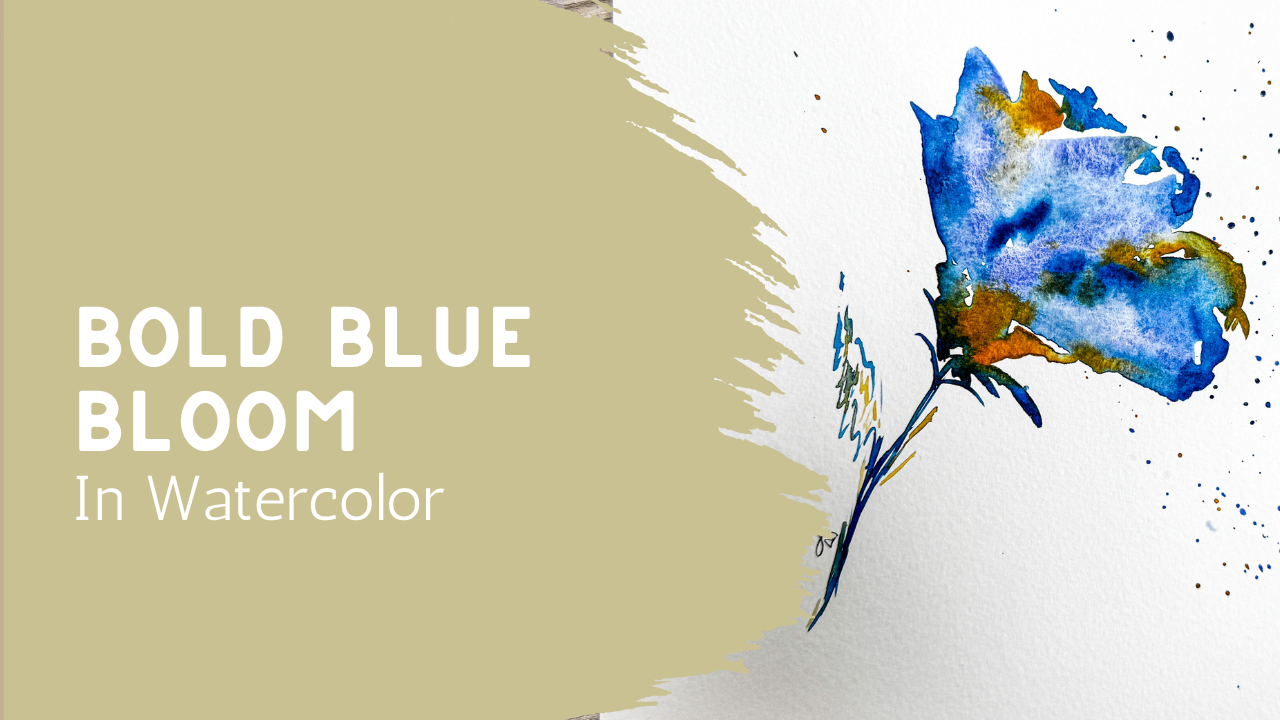
Loose Watercolor Florals: Paint a Bold Blue Bloom

teacher avatar Brenda Jones, Watercolor Artist & Teacher

Watch this class and thousands more

Get unlimited access to every class
Taught by industry leaders & working professionals
Topics include illustration, design, photography, and more

Watch this class and thousands more

Get unlimited access to every class
Taught by industry leaders & working professionals
Topics include illustration, design, photography, and more

Lessons in This Class

    • 1.

      Welcome to Class

      1:23

    • 2.

      Paint a Bold Blue Watercolor Bloom

      13:45

    • 3.

      Final Thoughts & Class Project

      1:39

  • --
  • Beginner level
  • Intermediate level
  • Advanced level
  • All levels

Community Generated

The level is determined by a majority opinion of students who have reviewed this class. The teacher's recommendation is shown until at least 5 student responses are collected.

6

Students

1

Project

About This Class

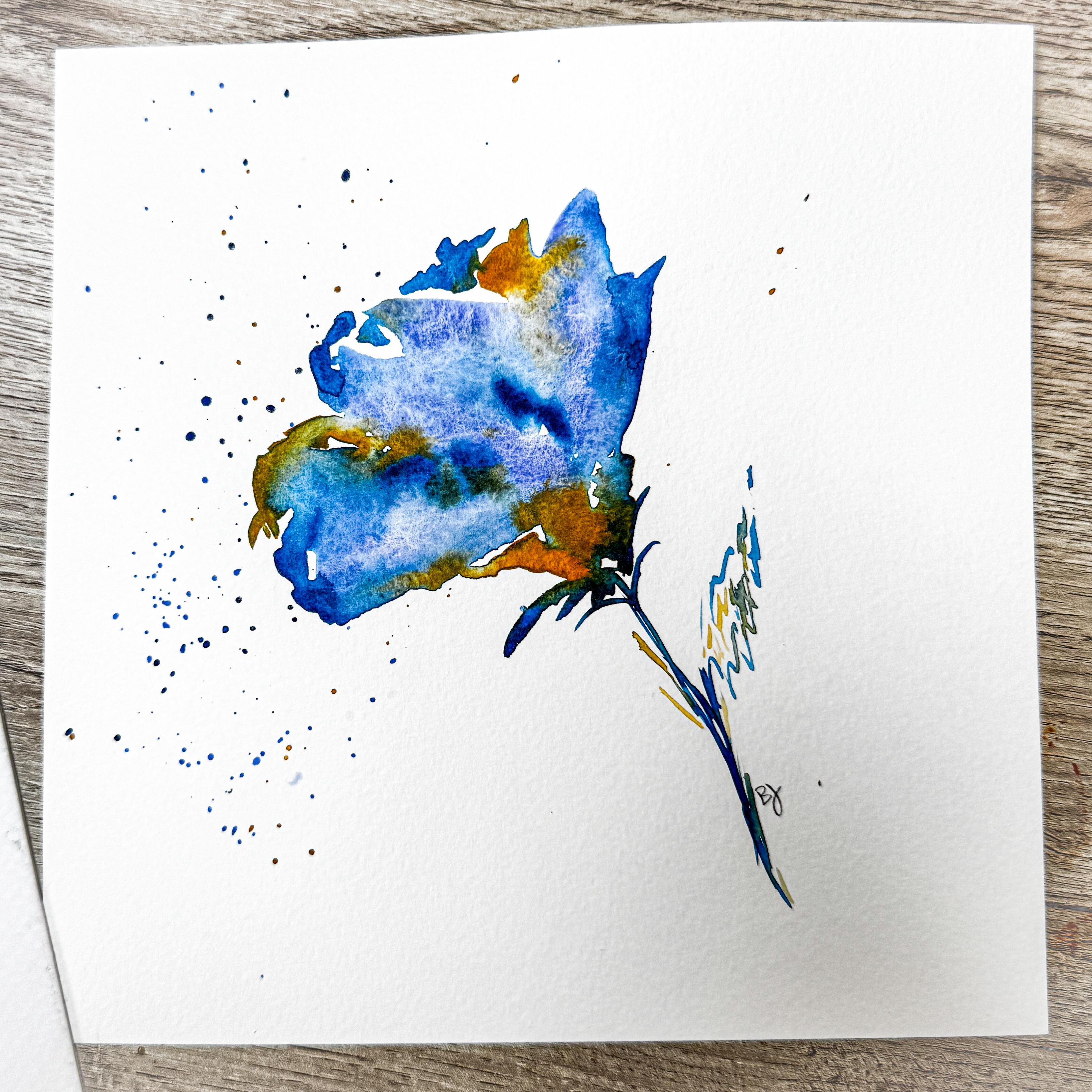
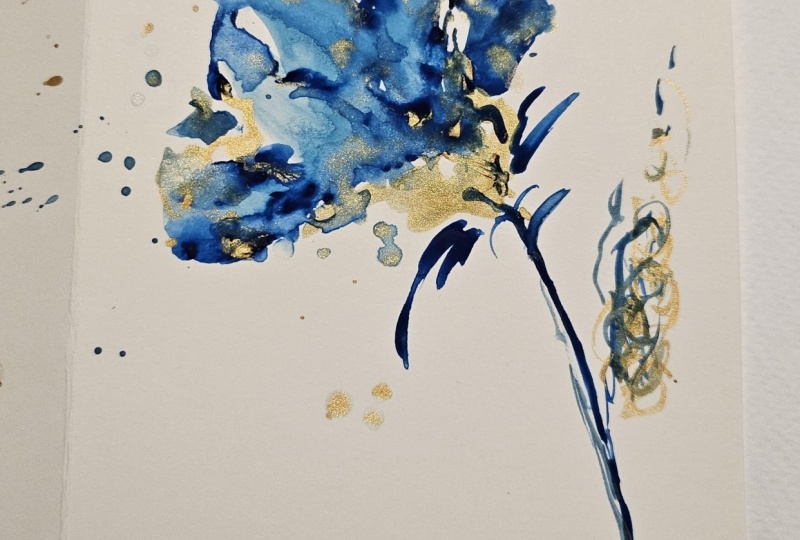
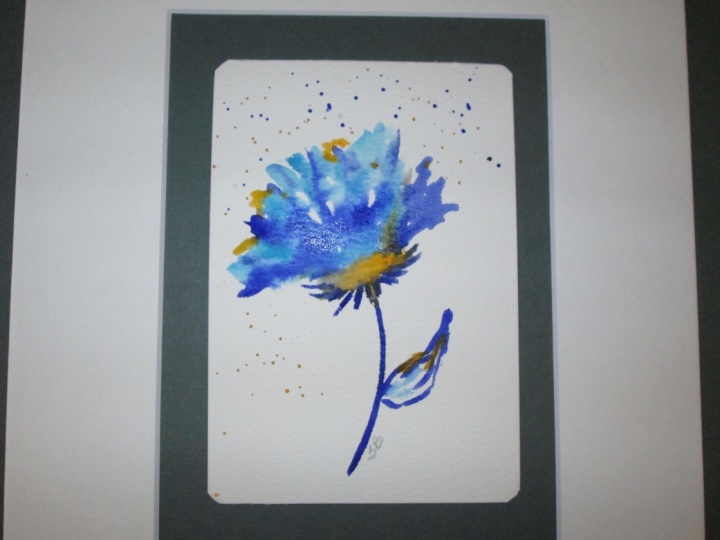
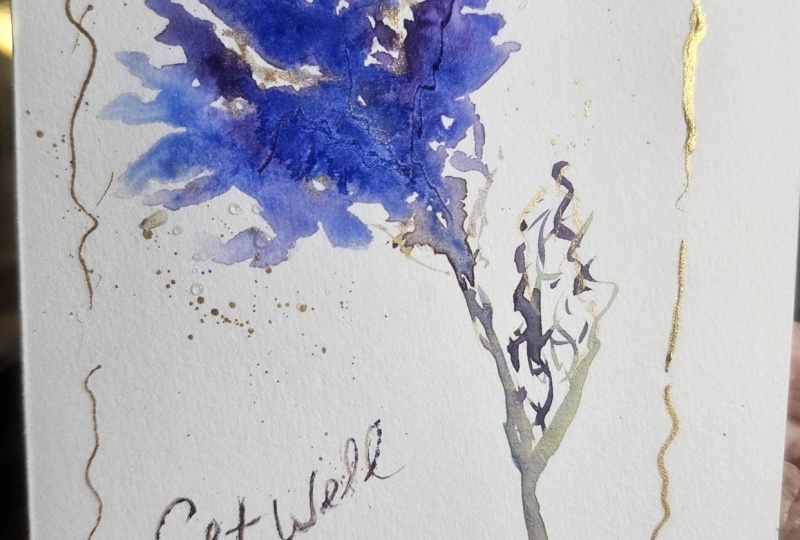
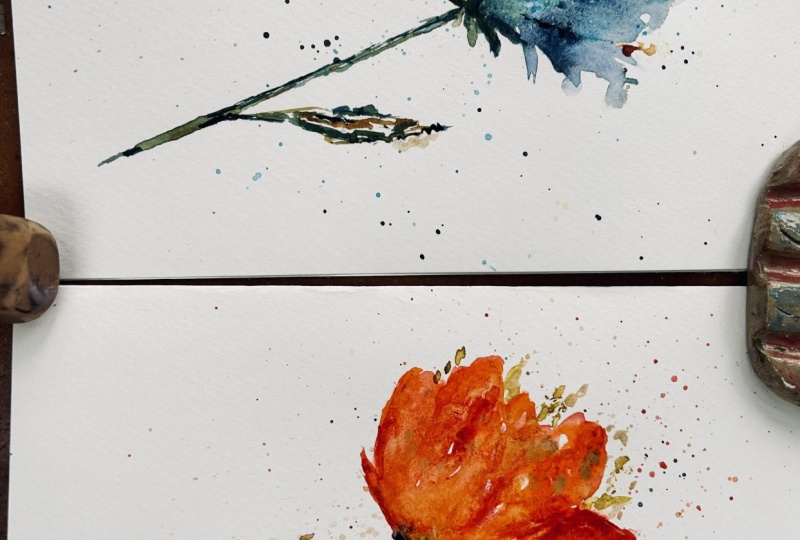
Discover how a single loose watercolor flower can create a dramatic, expressive painting using bold color, soft edges, and plenty of negative space.

In this beginner-friendly class, we'll paint one striking blue bloom while exploring wet-on-wet watercolor techniques that allow beautiful color transitions to happen naturally on the paper. Instead of focusing on tiny details, you'll learn how to let the paint move, blend, and create unexpected beauty.

This simple project is perfect for building confidence while creating a modern floral painting with a strong focal point.

In this class you'll learn how to:

• Paint a loose expressive watercolor flower
• Blend multiple colors wet into wet
• Create soft transitions and natural texture
• Use negative space to strengthen your composition
• Finish with expressive paint splatter for added energy

This class is designed for beginners as well as anyone who enjoys loose, atmospheric watercolor painting. I'll guide you through the process step by step while encouraging you to embrace the natural movement of watercolor.

Materials you'll need:

• 100% cotton watercolor paper
• Watercolor paints
• Round watercolor brushes
• Water container
• Mixing palette
• Paper towel

When you've finished, upload your painting to the Project Gallery. I love seeing how each student interprets these loose techniques and will personally stop by to leave encouragement and feedback.

If you enjoy learning with me, be sure to follow my Skillshare profile so you'll be notified whenever I publish a new watercolor class. Reviews are always appreciated and help other students discover my classes.

Meet Your Teacher

Teacher Profile Image

Brenda Jones

Watercolor Artist & Teacher

Teacher
Level: Beginner

Class Ratings

Expectations Met?
    Exceeded!
  • 0%
  • Yes
  • 0%
  • Somewhat
  • 0%
  • Not really
  • 0%

Why Join Skillshare?

Take award-winning Skillshare Original Classes

Each class has short lessons, hands-on projects

Your membership supports Skillshare teachers

Learn From Anywhere

Take classes on the go with the Skillshare app. Stream or download to watch on the plane, the subway, or wherever you learn best.

Transcripts

1. Welcome to Class: So happy you're here. In today's class, we're going to be creating this bold, expressive blue, watercolor bloom using one of my favorite approaches to watercolor painting. Instead of trying to control every brushstroke, we're going to let the paint and the water work together, creating beautiful blends, soft edges, and unexpected textures along the way. One of the things I love most about this project is that it reminds us that we don't have to paint every petal perfectly to create something that feels full of life. We'll focus on capturing the feeling of a flower rather than every tiny detail, allowing the watercolor to tell us the part of the story for us. As we paint together, I'll show you how to build rich color, create soft transitions, and embrace some of those happy surprises that happen when pigment and water begin to mix on paper. Those little moments are often what makes loose watercolor so exciting. Whether you're just beginning your watercolor journey or you've been painting with me for a while. I hope this class encourages you to relax, trust the process, and enjoy watching the painting unfold one brushstroke at a time. Gather your supplies and get comfortable. Let's paint this beautiful expressive big blue bloom together. 2. Paint a Bold Blue Watercolor Bloom: Okay, today's class is going to be really fun. It's just playing with watercolor and seeing what happens and allowing the watercolor to mix and blend together. This is going to be a really fun one. You might need to practice this one a couple times until you find the right techniques. But it's just what is what is. I'm just going to be using my eight by eight square because I'm hoping to be finished and be able to put it into a frame, something like this. I'm going to just quickly mark some little dots on the corners so that I have just a general guide as to where the painting is going to be within. Don't mind my dog in the background who's rolling around. I'm going to be taking my paint now. I'm just going to use some fresh clean water and I'm putting down some little dots and I am going to be making a couple little dots here. And just kind of in a shape of a petal, so kind of an oval. Then maybe I'll put a couple more droplets of water here. The reason that we're doing this, it doesn't really matter what shape it is, is just to give you a little bit of extra water on your paper as you are painting, which is going to allow everything to just flow together. So I'm going to show you this once I have all of this down here so that you can see what I'm referring to. Because we are going to be using a lot of water in this particular painting. I want to make sure that you can see this. I'm going to bring it up close to you. So here you can see that I have these little droplets and in the shape of a three different petals, the first petal, a second petal, and a third petal, then the stem is going to come down like this. It is taking up, as you can see, it is taking up if my edges of my frame are going to be from my mat or going to be from here to here and down to this point and over to this dot. You can get the idea that this is taking up the majority of this upper left hand corner. Okay, now that you have seen what I'm talking about, I'm going to use my 1 " brush. I don't usually get this out. If you don't have this 1 " brush, maybe you have a brush like this. This is a big floppy mop brush or a squirrel hair style brush. If you don't have something like this, maybe you have a brush that's similar to this. Is a size 16 round, maybe whatever the largest brush that you have whatever that is, get out your largest brush. I'm just going to happen to use my flat brush because I feel like it. But you use whatever brush you have. Then I have some paints already pulled out here. I'm going to go with lavender. And this blue, almost like a navy blue. Then I'm also going to add in some of this golden color and then I might use some of my brown. But those are the colors. I'm going to grab hold of this lavender color, filling up my paint brush with all of that color. Then I'm going to come in here and just allow some of this. This is where you just have to play. You just have to see what's going to happen. You have to let go of all of the right ways of doing things, where your rules are. Skip all of that because that's not important right now. Right now it's just about playing. I'm just going to lay this down and touch into some of these little dots. See if I add in a little bit of that paint, it just changes those little dots of water. I'm just going to let this flow and I'm going to create a little thing like that. Yours is going to look different and then I'm going to make another one over here. Then I'm going to pick up some more paint, and I'm going to just create another flow stem over there, a little petal, maybe add another one over here, something like that. There's no right or wrong. I'm going to rinse that off and then I'm going to come in and I'm going to pick up this really beautiful darker blue color, and I'm just going to add in a little bit onto the edges. Maybe I'm going to put some up in here. Maybe I'm going to add in just a little bit up here. I'm going to touch it into the top there. I'm going to leave some white spaces. Maybe I'm going to put it in there. There's no right or wrong. Yours is going to look different from mine. We're just playing around and seeing what happens when different colors blend. Picking up some more of that color. Get some really dark right from the pan and just adding in some just to see what happens when you blend it right in. Something like that. I'm going to rinse this off. I'm going to move over to my smaller brush, is just a size eight. I'm going to pick up some of this mustard color, and I'm going to bring some of that down into here. I'm going to let that touch. Just creating the base of that flour. Maybe I'm going to bring some of it up into here, allowing it to flow up here. Maybe I want to have some of it coming over here. You just do it wherever your heart tells you to take it. I got to pick up some of that blue that blended down in and just lift it up and brush it off onto my rag just so I can get some more of that golden color here. Don't mess it. Don't mess with it too much. Allow it to just flow. You're really just creating something and seeing what happens when this water and the paint blend together. Get some more of that such beautiful beautiful blue, and just adding in a little bit more. Put some down here as the base. I'm not going to be using any green for my stem. I'm going to use this blue, so I'm just going to bring that down here. Put a little bend to it. Put off some little tiny little leaves or whatever you want to call them on that side. That might be done. Like, that's what I'm talking about is. This is a really quick painting. You don't want to mess with it too much. There's a lot of water here. I'm just going to let that flow. And you see how this darker color, the mustard kind of came up into the flour, and I love that. That's so cool. My add a little bit more darker right up here at the top. Yeah, I think that was needed. Kind of balanced the whole thing. Maybe I'm going to add a little splatter. Right up here at the top here. Soften out some of that that landed inside. Pick up some more lavender. Now, the important thing is to let this dry naturally. You don't want to use your heat gun on this. You want this to just dry naturally. I'm going to splatter some of that lavender. And I'm just going to pick up some of that gold and just add just a little bit splatter. Not much. I really like that gold mixed in, so I'm just going to add a little bit more here where I felt like I lost some of it. But if you don't need to, then please don't add it. If yours doesn't need it. You really need to listen to your painting and see what your painting is asking for. Now, you do need to be careful because we use blue and yellow, the base colors, even though it's of this mustard color, it's still yellow. When you would mix those two together, you would get green. I don't want to mix them too much, but I do like the color combination next to each other. I'm just going to pick this up and let that flow a little bit. I have some water on the edges. Just let those flow together a little bit. Now, as I let this dry, I'm going to be watching it. I I feel like there's just too much water, I can always come in with a dry brush and just pick up some of that water that's on the outside edge of any of these locations that I feel like that's too much. Maybe it's too dark or too much water. You can make your decision. I don't want to take a pickup too much because I actually like it there. I just wanted to show you that you could pick it up if you wanted to. This is a very abstract kind of style of painting, but I really like it and I feel like it's really, just a beautiful way of creating a painting where you just let the paint flow and see what happens. This maybe helps you understand why I say that you might need to practice this a couple of different times until you land on one that you really like because sometimes the first one that you do isn't great, and that's okay. Because you're doing something that's so very abstract, you just have to see what happens. And you can tell my gold is coming down into here and it's really mixing, which is really creating a great look, but I'm not going to touch that. I'm leaving that alone. I'm letting that just blend. Really pretty. Really, really pretty. I like that a lot. I think I want to have this be a little lighter. I'm just going to pick up that puddle. Maybe add a little bit more of that mustard back in here. Okay. Kind of the illusion of a leaf. Go on with my mustard and do the same thing. Okay, I cannot wait to see yours because everyone's is going to look so different. So I'm going to let this dry completely. And then when it is dry, I will come back and show you what it looks like finished and we will see what it looks like in a frame.