Transcripts
1. Introduction : Five per cent of ACOs in the tourism and hospitality
sectors believe AI will have a significant impact on their business models
during the next five years, at least eight on the top without chasing
genes in the world, Kevin included VR in their
marketing strategies. Increase their online revenue
up to 135 per cent overall, has led to significant changes
in travelers needs and preferences with the focus on the health and safety
flexibility and of course, value of hospitality
business will need to adapt to these changes to meet
the needs of the travelers. Can this post pandemic world, hotels will deal with the
different type of customer. One who has evolved to the digital environment and expects the digital solutions. This implies that
digital transformation of what else is no
longer a possibility. This digital transformation,
it's no longer nice-to-have, but rather requirements
to meet both owners, managers, and guests standards. And keep up with
the modern times. And without meeting
certain expectations will be hard to keep up. In this high competition
businesses and most important hospitality professionals
will need to gain the skills to keep up with the evolving
digital environment. Hello, my name is Amanda, and I feel I can be working in hospitality business
for the last 15 years. Why we recently concentrating
on digital transformation. So join me for this
in-depth course on Frascati digital transformation
through intelligence, I will take you
through everything you need to understand about digital transformation and
artificial intelligence in our hospitality
sector will guide you through the digital
transformation stages of AI technologies that can be used in the
hospitality business. Reasons why and how
digital transformation in this business must
be implemented to stay on top of the
competitive market. Also, in this course, we will be discussing
the most required skills for hoteliers in these piano. So let us get into it. And thank you one more thing
for choosing my class. Thank you and see you then.
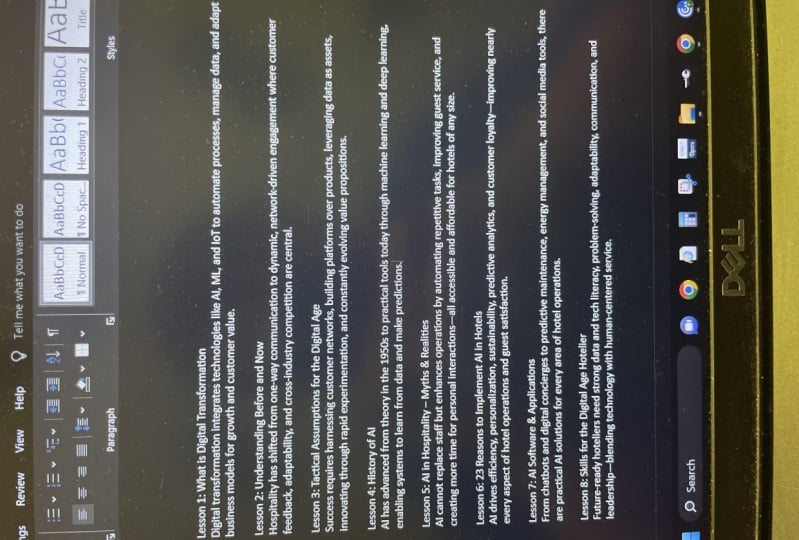
2. 1 lesson what is a digital transformation: What is the digital
transformation and why it's important for
the future business. Digital transformation is
a process of integrating digital technology across
all outlets of the company, which has profound impact
on how that company runs and provides value to its clients, guests
with customers, it entails utilizing
digital tools like artificial intelligence,
machine learning, and the Internet of Things to streamline the
company operations, improve customer
service experience, and encourage innovation
and extension. So numerous tests including
process automation, data management,
and data analysis and the adaptation
for the business, for the new business
models can be a part of the digital
transformation for Business frequently needs to adapt their operations
fundamentally, including how they engage with the customers,
brides, goods, and all the services and
oversee in kernel procedures, businesses may benefit significantly from
digital transformation, as I mentioned before, with a better
customer experience and enhance productivity and efficiency and the change to access new markets and
new income sources. Of course, it also needs
a sizable investment in the technology as well as creation of fresh
capabilities within the firm. So you would ask
lights so important. Well, hospitality is one of the biggest sectors
of today's economy. According to the latest
research studies, demand for global
hospitality market size and share was valued at
approximately 3,000, 953 billion in 2020, 1/4000 billion in 2022. The market expected to
grow and reach over 6,700 billions by 2028, the COVID pandemic has had significant impact on
the travelers industry, with many travelers
changing needs and preferences as a result
of this crisis, overall, pandemic has led to
significant changes in our customer needs and
their preferences with focus on the health and
safety flexibility and the value of
hospitality business will need to adapt
to these changes in order to meet the
needs of travelers. In this new era world, hotels will now deal with a
different type of customer, one who has evolved to the digital environment and
expect digital solutions. This implies is that digital transformation of hotels is no longer a possibility. It's no longer nice-to-have, but rather a requirement to need both our guests standards and
keep up with modern times. And without meeting
certain expectations will be hard to give. In this competition. This digital age, customers
will have different needs, different explanations, and
dividends, emotional levels. Of course, I'm hotels with the basic technologies will fail with time
together techniques. Hotels are using artificial
intelligence, me, environment decisions that
can improve performance and also streamline
business processes. It can be recognizing, trying to demands and
desires and assist for Collier's riding and
excellent guest experience. And most important, it
can assist you in scaling your business to new heights and increase sales and profits. Of course
3. 2 lesson understanding before and now: Welcome to Lesson one day, standing before a
noun and vitamins of strategy that is
changing and how digital technologies have
a significant impact on how we interact with an added
value for our customers. It's possible that we
raised in a society where business sent out
broadcast messages and the delivery of the
goods to the customers. Whether the relationships,
the more precaution, customers, comments
and reviews make them more influential
than marketing. Celebrities. And their active
participation, yes, emerge as the key factor
and business success. Because of the
digital technologies, our understanding of
competitiveness is changing. In addition to competing
with businesses, with our industry, we are also up against
competitors from outsides. It's who are learning guardians away where they're
innovative digital services. So taken together,
we can see how digital forces are
reshaping five key domains. Something strategy. According to David Rogers book, the Digital
Transformation Playbook, where he's mentioning
five domains of the digital transformation. Customer value, competition,
innovation, and Latin. And we're going to look into
each one of them, customers. Because domain of
digital transformation is customize our customers, our initial area of digital transformation
customers where view in the old theory as generic individualist who might be targeted for marketing
and conditions. So purchase and mass production, making one product to serve
as many clients as possible. And mass communication,
using consistent message and medium to reach
as many customers as possible at the same time. Where the two main components of their dominance
and has market model. We are transitioning to abode in a digital
era that is best represented by customer networks rather than mass nuggets. So customers are
dynamically connected and interacting in this phrenic,
which is transforming. How would they connect to businesses and the,
to one another? That's the most today are
continuously communicating with influencing and developing brands and the reputations
of the businesses. Their use of digital
technologies is altering how they find excess by
and utilize things, as well as how they share, engage with it, and stay
connected to these businesses. Business, being forced to reevaluate their traditional
marketing strategies, as well as their consumers. To this purchase, which may vary from utilizing social
media and search engines, devices or laptops to
visiting your store and requesting customer
care in a live online chat. So businesses need to understand that customers are more than simply targets for CLL and
that it's dynamic network. Customer might be the
best focus group, brand champion or
innovation pipeline. They will cover you discover the second domain or the
digital transformation. They use competition. And now they're almost collaborate
and compete with one another. Competition and
collaboration have traditionally being
considered binary opposites. Battled with the rival companies that closely
resembled their own. And they collaborate with the supply chain partners
who are distributed, they are products or supply necessity inputs
or they're manufacturing. So today's industry boundaries are becoming more acceptable. And one of our biggest threats come from asymmetric competitors and companies from outside
our sector who don't resemble us yet provide rival
value to our customers. Partnerships and supply chains are being burned by digital. This interpretation in one of our longtime business partners begins directly
serving our findings. That partner may end up being our biggest level due to
communication difficulties from outside our industry or intelligent connected
business models. We can also needs to work
with a direct competitor. And the same time, the power of the platform. Businesses models, which enable organizations to create and
capture significant value by facilitating the connection
between other businesses or customers is most importantly being applied
by digital technologies. The site of opposition. As significantly shifted as
a result of these changes. Competition is
increasingly joking Braam influence
between enterprises with wire the different
business strategies, each trying to gain more leverage in servicing
that final customer, rather than, as you know, some conflict between
similar levels. The next domain of digital
transformation is that. So how information
is created NH, and use by the companies? Historically,
information was produced by cellular gland measurements, ranging from customer surveys to inventories out
without the business, internal processes, manufacturing operations,
sales and marketing. The inflammation that resulted was primarily utilize
for decision-making, for casting and evaluation. In contracts. We are currently dealing
with data plugged. The majority of data that is
made available to businesses comes not from methodical
planning like I could study, but rather from every decision
and direction writers that takes place inside or
outside of these businesses. So every organization today
has access to a flood of unstructured data that is generated without
prior planning. And that can be increasingly used with the new
analytical tools. Thanks to our social media, mobile devices and sensors, every item in the
company's supply chain. So this big data tools give businesses the
ability to make huge forecast or
unexpected patterns and business activity and
open up new value sources. Data is no longer
just the domain of particular business
intelligence division. It's now the life blood
of every department and the strategic asset that will be developed and use overtime. Every organization must
use data to operate effectively itself apart from competitors and
create new value. So the fourth domain, or the digital transformation,
is innovation. The procedure by
which organizations great nest and introduce
new ideas to the market. Innovation used to be managed solely with an eye
towards result. Because conducting
marketing research was challenging and expensive, managers typically replied on their understanding
and intuition when making judgments
about new inventions. Why eating feeler was crucial, sustaining a significant cost. The start ups today
have demonstrated to us that potential of digital
technology to enable that. And I'm fundamentally different
method of the invention, one that I squared experimentation
and ongoing learning. We can get market feedback
from the very beginning of our innovation process and all
the way through to launch, launch and even later. Thanks to digital
tools that allow guest ingredients easier
and quicker than before. This new innovation strategy is centered on
methodical trails and functionally available
prototypes that optimized learning while
minimizing expense, multiple consumptions and
checked and design choices are determined with validation
from actual customers. These methods in wall, the interactive development of words using methodology
that's saves time, lower the cost of pillars, and enhances
organizational learning. I'll post the final domain, value, the value company
provides to its customers. The value proposition is the final area of
digital transformation. The value proposition,
the company was once thought to be
pretty consistent. The fundamental value
and Company provided to its clients was considered
to be constant, then determined by its name. For example, Lycos
business provides Transportation Safety Board and the status in any
kind of degrees. So products may be updated, marketing campaigns
and they knew it. Or operations enhance. The business was considered successful if it had districts value proposition identified
as such points of markets. The distinction, such
as rice or brand, and concentrated on executing and delivering this interaction. That value proposition to
science over the years. Relying on consistent
value propositions in the digital age brings a challenge and eventually a disruption
from new competitors. Although industries
will defer precise time and nature of the authorization brought about new technology. Those who predict this will
happen a little later on. I'm most likely
to be random one. So the only reliable
answer to a change in business environment
is to pursue a course or this evolution looking to every technological
advancement as an opportunity to
broader and enhance our value proposition to
the client's business needs to concentrate on grasping
emerging opportunities. Divesting from the
running services of the image and
adjusting view to leave, to remain ahead of the curve
of the change rather than waiting until it
becomes a matter of life or death
for their business
4. 3 lesson tactical assumption for digital age: This section I
will be discussing practical assumptions
on the Digital Age. Business nowadays obviously need frameworks for developing their own strategies to successfully adapt and
flourish in the digital age. As each of these five domains
based in this position. So every one of the domain has a central strategic
ideas that can serve as a foundation for
our digital strategy. These five domains can
serve as your guide. Much like engineers dates traditional
manufacturing managers. Showing you how your traditional celebration
limitations are shifting now and how new changes are presenting themselves
to expand our business. So this one is employee
customer networks. So every organization needs and harness the power potential
of the gland networks as they became less like isolated individuals and more like mostly centered networks. This involves learning
to engage, empower, and co-create with glands
after their first purchase. It essentialists capitalizing
all the ways in which satisfied consumers
influence others and generally it's
new business rosters. So utilizing customer networks, meaning this is the
direct collaboration with your customers to develop and effective customer strategy, you must first recognize key principles,
such as customers. The Chicken said. The vented marketing funnels the digital path to purchasing. Decision, essentially habits
or customer networks, which is accessing, engage in customizing, connecting,
and collaborating. So while discussing
the second domain, competition, When you to understand that we need
to build platforms, not just the products, businesses must develop
the ability to deal with a symmetric competitors who are shifting the relative
importance of competition, collaboration across
all industries if they wants to myosin
competition in the digital age. So they must also be aware of growing significance
of the strategies for creating platforms
or other products. So understanding
thing, platform, business models, direct and
indirect network effects. Competition between
organizations, the dynamic of mediation and this intermediation and
competitive value drains is necessary for creating
competitive or the digital age. So moving towards and
the data domain and an era where data is accessible
and frequently free, it's crucial for
businesses to learn how to transform it into a truth
strategic advantage. To do that, it is necessary to gather the
appropriate data and use it effectively in order to produce long-term
economic value. So effective collaboration
with the data partners may be the first step in creating
robust data assets. As seen here, Peter, close relationship with
the sales distributor then whether Company
relationships, which is most consumers. In order to develop an
effective data set and g, you must first
recognize it before. Templates for generating
data value and the new sources and analytical
potential of the big data. The significance, of course, in data driving decision-making, and the risk associated with the data
security and privacy. The fourth one,
domain is innovation, because digitalization makes
it so simple, gouache, and affordable to test ideas, businesses today must embrace
this week experimentation. So this requires a radically
different approach to innovation that focus
on interactive learning, to very new ideas. Innovations in the
digital age wise, understanding of
both parallel trails with the bad examples. There's groups and controls and the merchant experiments designed for why the research. To successfully
scaled up an idea and understanding minimal vehicle prototypes and products, you must be skilled and all
for scaling strategies. The fifth domain, value. Businesses must learn how
to continuously outer their value propositions if they want to or less than a
generation in this digital age. This implies that as new technologies we define
opportunities and demands. They must learn how to look beyond their current
business model and narrow in on how they can best give
value to their customers. Understanding the various
key concepts on her neck and the three possible ways out of declining wagon position. And the crucial steps to make effectively analyze our
current value propositions. You identify emerging threats and opportunities
and synthesized the next step in
its evolutions are necessary for rapidly adapting
our value proposition. Memorize this vitamin, and
discuss main key takeaways. This lesson and typical
assumptions for each domain. So customers need mentioned
it invented marketing funnel, also path to purchase and core behaviors
of customer network. While speaking
about competition, we need to mention
platform business models, indirect and direct
network effects, disintermediation, disintermediation and
competitive value drugs. While we speaking
about the data, we need to mention templates
for better value drivers of big data and data
driven decision-making. Innovation part. We need to mention divergent, convergent experimentation,
minimum viable prototype, and the scaling up. While speaking about value and how to adapt your
value proposition. It would be the concept of market value out of
big lining market. And the absolute value. Rather evolution uses for
business than the other one
5. 4 lesson history of AI: So before going any further, I need to give you a
basic understanding of the history of artificial
intelligence and what it is. Just in case you're brand
new to all of these terms. So the capacity of machine or computer system to
perform operations that would typically
require human intellect, such as problem-solving,
decision-making, and learning is known as
artificial intelligence or AI. The first attempts to
explore the idea of building intelligent robots
were made in the 1950s, which is when history
can be discovered. So yeah, it didn't start to improve significantly
until 1990s due to development
and machine-learning and as well as the
development of the Internet. While speaking about AI, we would need to empathize with the three
definitions, AI ML. And let's start with a math ML. First to machine learning. So machine learning
is a subfield of EI that involves
the development of algorithms that allow
a machine to learn from data rather than being
explicitly programmed. Machine learning algorithms use statistical models to make
predictions or decisions, and they improve over time as they are exposed
to more data. While discussing VL or. So, deep learning is
a type of machine learning that involves the
use of neutral networks, which are complex
mathematical models inspired by the structure and
function of the human brain. So these networks are
made up of the layers of interconnected neurons which process and transmit
information. So deep learning algorithms, without being
explicitly programmed, are trained using
large amounts of labeled data and are able to learn and make
decisions on their own. So simplified AI, ML and
yield can be described as technologies that enable
machines to perform tasks that would normally
require human intelligence, such as problem-solving,
decision-making, and learning. These technologies out there
and machines to process and analyze large amounts of data in order to make predictions
or decisions. And they have the potential to transform many
aspects of our lives. In recent years, ai, machine learning and deep
learning have become increasingly
important and widely used in variety of fields, including computer
science, data analysis, neutral language
processing, and robotics. These technologies
have the potential to revolutionize many
aspects of our lives. From healthcare and education to transportation
communication. And for sure, our
hospitality business, which is already happening
6. 5 lesson AI revolutionizing the hospitality business. Myths & false believes: Welcome to the lesson I, revolutionizing the
hospitality business. Or do you need to add
what you need to know? I answered fuel
misleading questions related to this topic. Why some of the companies could still think this
is not worthy of implementing as one of the fastest evolving
is the industries. Hospitality sector is taking advantage of the
introduction for artificial intelligence or AI to redefine the way hotels and other hospitality business. So EI offers a range of options
to optimize operations, increase efficiency, and provide
better customer service. And 94% of C-level executives, according to the hotel,
hotel technology news, think that artificial
intelligence will have an influence on their business over
the next five years. How other, barely 49 of
respondents said that the adoption rate of AI in the hotel sector was
ordinary or below average. And INDC worldwide was pelican, estimated only a few years ago. With that, by 2019, 60% of hotels will
have your CI globally. And the speed of
implementation has obviously been stopped down
by because of the pandemic. But many hotels have just recently started the
technology projects. Well, in reality,
the integration of AI in the hotel sectors
disquiet final part behind. And this can be because of
a lot of false beliefs. So let's discuss the
false beliefs to give you a more clear understanding of all digitalization
situations. So again, AI will replace
present of hotels that there is a
workforce shortage. And across the sector. This does not mean that, yeah, it can be used to
replace human employees. While I support concerns
wrong service delivery, cleaning may
significantly improved over the next ten years. It can never, never be fully
replaced by human presence. In fact, in Japanese
hotel that use 247 rhomboids as its
whole hundred percent. I want false, tried, and failed. I can minimize manual work
question on your team. Imagined VI search handled more than 80 per
cent of repetitions, inquiries for your
visitors, your stuff. They scan now be more centered, which naturally is three-tenths relationship
with another question, how about managing it? Well, implementing more
and more into what else? You would think that running
DCI only can be managed? My data scientists. Whether this is a mic. While developing AI technology requires extensive knowledge
of programming languages, many of today's AI
software solutions are programmable by users. So many applications
such as digital concert, etiquette, that AAC system. So replying using the
same information that front desk or support
staff utilized. For example, facebook,
allows you to add the chat bot to your bench minutes without
any programming skills. While IT experts on adequate to connect with your
existing systems. Also, applications are intended to easily communicate
with end-users, your employees, and visitors. So the next question would
be that puts raise it. And is it an expensive? So a common among
older guy, I think he, i is that it requires a huge investment to
provide any returns. While the eye level of robotics, let's say like drones, self-driving cars, and other provost are
obviously quite expensive. They aren't only
applications that might improve your hotel
operations that are there use low-cost
apps available to hospitality business
that can pay for it themselves within
the first year of using businesses that your CI powered chatbots in customer
support operations. Roughly 30% of their investment when compared to enterprise
and then to not UCI. Like Siri, Alexa and Cortana. All a Beveridge systems that are quiet popular in the
polls across them In today's world and
many dramatically broke your hotel business experience to one more question
that everyone's asking. Is it only for big hotels? Now, it's not in its false, regardless of the
size of your hotel, the height can be integrated. So small fulfills can
potentially leave benefits of a. And depending on how it's used. For example, facial recognition mean my fight the
frontiers from the guests, identity, duration,
abstain, and so on. This input, all the
visitor experience, regardless of hotel size
or the number of guests. If it's still considered. Similarly, can upsell with depending on fast
encounters with the guest. What matters here is not
the size of the hotel, but rather the
information from Brian, visitors and biotas
stays. One more question. Is it cold and impersonal way to communicate with the guest? Your visitors taste are
evolving as their preferences. Many of these
developments are being driven by Millennials
and Generation Z. While baby boomers
prefer human contact, younger generations are more hopefully about
artificial intelligence. And you have already
began to recognize the next-generation
visitors went to self-serve and waste. So guests may benefit from seamless real-time advantages as AI evolves into
practical applications. These visitors are also
aware that AI can provide more customized service and
be available 20 h a day, seven days a week, making it easier to
obtain. All these answers. Let some edits from automating everyday operations
such as reservations, check-ins to delivering more
personalized experience and strengthen security with
the facial recognition and other advantages features, ai is already transforming
the hospitality business. With AI managers and owners
can take their businesses to the next level and ensure their customers receive the
highest level of service. By leveraging the
power of the AI, hotel managers and owners
can see in the competition, improve operations and provide the better customer experience. What areas should
take advantage of potential resented by ARE to
enhance their operations, maximize efficiency, and provide superior
customer service. The quality advantage develops, it's predicted to have major
influence on their hotels. And by the way of AI, it's already transforming
the way hotels and other hospitality
organizations operate. And it will only become more
critical in the future. And to remain competitive, hotel managers and owners
should professionally embrace the opportunities ai presents to improve
their operations. In the next section, I will discuss many reasons why hotels should
consider implementing AI on their daily basis and how they could help
to their operations
7. 6 lesson 23 reasons why hotels should implement ai: Artificial intelligence,
AI is increasingly being adopted by the business
in variety of industries. The hotel business exception. There are several reasons
why hotels should consider implementing AI
in their daily operations. Before adult industry has witnessed the significant
change in the past few years. Online travel agent, she's cow increased competition or so-called else to offer
more value to customers. Ai is already being used in hotels like me,
you and Hilton. I'm going to experience and engagement by analyzing
data providers, buy online services, companies. So here I'm going to mention 23 reasons why were those
should implement AI. So the first one,
increased efficiency, can automate routine tasks
and optimize processes, helping hotels to save time and reduce costs, improve
customer service. Ai can assist you with customer
inquiries and requests. It helping hotels to provide better service to
all their guests. And hence customized
experiences. Using customer data analysis. Ai me, personalized suggestions for visitors such
as recommending activities based on their preferences and
previous behaviors. May be use, for instance, to evaulate consumer data
and generate the alerts, suggestions for events or
dining establishments based on visit order references and all their previous
actions online. Increased accuracy. Yeah, it helps hotels in cans the accuracy of
their operations by lowering the risk
of mistakes like wrong reservation
or from blinks. Improved stock management. So this can help one hotel managed inventory
more efficiently by, for example, forecasting
which rooms, but likely be the man on-demand, changing and changing
price accordingly. In the hands. Marketing and SEO. Ai can finalize customer data and create targeted
marketing campaigns, as well as optimized seals
and the revenue management. Improved predictive maintenance. I can predict when
equipments such as HVAC systems or elevators
is likely to fail, allowing hotels to perform
maintenance before problems. Enhance fraud detection. Ai can detect fraudulent
activities such as unauthorized bookings
for chargebacks, helping hotels to prevent
financial losses. Energy Management. Hey, I can improve energy
consumption and hotels cutting expenses and lowering
the carbon footprint of the establishment itself. Improved predictive analytics. Artificial intelligence can
analyze that and polygons, future trends and patterns. Helping hotels in planning and preparing for
the future tense. Better supply chain management. I can streamline the acquisition and delivery of the
products and services. Assistant hotels in reducing costs and post
inoculation productivity. In growth stuff scheduling. Ai can optimize resource
allocation and start scheduling, which can save a lot of time for hotels
and a lot of money. Improved customer management can provide customer service by automating routine task and providing personalized
recommendations to what the guest. And cans. Price optimization can optimize pricing for hotel
rooms and services, helping us to maximize
the revenue and profits. In Provence, sentiment analysis. So I can analyze
customer reviews, feedbacks, helping hotels
with all this data. In a cat is marketing and sales. I can analyze customer
data, increased targeting, marketing convenience,
as well as after my sales and revenue management. Improved. Menu planning. Can analyze NACA and
customer preferences and tends to help hotels
blend and update the menu. It also can help you predict future demands for
food and beverage products and services helping hotels to blend and prepare
for future businesses. And it can help you assist
with the creation of a new menu items by analyzing data on customer
preference and tanks. Another one, improved
customer loyalty. The use of AI to provide
personalized experience and improve customer
service can help us to build much better
customer loyalty. One month, enhance
that the security. I can jump hotel sporadic
sensitive customer data, reducing the risk
of data breaches, and improves sustainability and the use of AI help hotels to reduce food waste
of time I synergies improving their
sustainability efforts, improve the efficiency
in planning. So I can assist with
the planning and execution of events such as wedding and all other
corporate events. And of course, the
most important, I would say from all these
improved happiness levels. And as I have mentioned,
for adolescents, implementing AI in
some repetitive tasks can take out nearly 80
per cent of yourself. Would it be the test? And we all know how
sometimes these tests can drain your power
while removing them. Your staff can concentrate
more on building close relationships with who
require more personal touch, like baby boomers, for example. So these 23 reasons that should give you a clear
path and understanding why and how AI knee
against your operations, all your business operations. So in the next lesson, I'm going to dive more deeply in different categories
at the examples and some main functions. Some say June and let's
jump into next lesson
8. 7 lesson AI software's and app's for a better operations: Welcome to our next lesson. In this lesson, I'm
going to discuss 28 categories are ways for a better operations that
hotels can implement. So there are hundreds
of applications and software programs that hotels or businesses can use on a daily basis to
increase the revenue. Guess a deception, and of
course, operation efficiency. So in this lesson,
are going to discuss 20 programs or options that can be used for
certain actions. Some of them might be repeated,
mentioned a few times. And just because they can many different
functionalities and can assist with wide
variety of operations. So let's dive in. So the first one is a chatbots. Chatbots are our
software programs that are designed to stimulate
conversations with human users. It can be used in hotels to
answer customer questions. Why right information
about the hotel. It's immunities and assist
with booking and reservation. So there are a lot
of companies and software platforms
that offer chatbots for use in industry. The first one, I want
to discuss this haptic. Haptic is chat bot platform
that allows hotel to create, but it's nice that boards to assist with booking
reservations. The next one is because the reservation
management system that includes chatbot feature to assist with the bookings
and customer inquiries. Of course. Another one is trust. Trust you is the
customer feedback and reviews management platform that includes chatbot feature to also assist customers
with their request. Next one is HotelTonight. Hotel booking platform
that includes chat bot feature classes with bookings and other services. Next, hotel way. So that you can
integrate easily on your own website with
already built and 15,000 answers related to
the hospitality industry. One more, guest chat. The main functions of
this product is a form of digital technology which
can respond integrity lead to human interactions
that can be deployed on behalf of hotel or any other business in the hotel industry with
WhatsApp integration. So another one is curtailed as what also has option
of the chatbox that price many
possibilities automated messages based on PMS data
and booking engine module. Direct links to the
hotel mobile app, integrations to the
Facebook manager, my messenger, live inventory ability and the
Maps integration. Some other ones like quick text and the buck-boost
also doing the same. So these are just few samples
of many chat bot platforms. All products available for
use in the hotel industry. Chatbots can be available
tool for hotels looking to automate
routine tasks and improve customer service, even increasing sales
with faster responses. So at the next one,
I would like to discuss this guest
experience management. So AI can be used to manage
and track guest requests, such as request for service or extra towels helping hotels to provide better
customer service. Theme platform like
Catholic bucchero that I mentioned before, more restaurants and
spur reservation and trust you mentioned
or also can be used to help with the
customer management plus programs like Amadeus and my little sister travel
technology company that offers a guest service
management solution that includes chatbot feature
to assist with bookings, all reservations and
other customer service. And one more is Southern. Siberia is the travel
technology company that offers the same guests service management solution more widely for all hospitality
and travel solutions. Others like cloud beds and easy front desk and PMS,
property management. These are property
management systems that can do basically
everything. This system that are just few
examples from many guests. Service management
platforms available for users inside the hotel. Guest service management can be a valuable tool for
hotels looking to improve customer service and provide a more personalized experience
to the other guests. Let's discuss personalization. Ai can be used to analyze
customer data and create personalized
recommendations for guests, such as suggesting activities
or restaurants based on their interests
and behaviors. There are several
companies and of course, software solutions that offer personalization for use in
the hospitality industry. Example, Expedia. And it's a level looking. They uses GI Joe personalize the customer experience
by suggesting all hotels, flights, and activities based On the customer best
bookings and preferences. Also, revival. Hotel search and comparison
website that uses DA to personalized customer
experience by suggesting what else based
on the customer best. Of course, searches and
all their bookings. Another one is kayak, or search engine that uses the same functions as
the customer experience, suggesting flights,
hotels based on their best references
and as bookings. Another one is c, one thing, one table is actually a restaurant reservation
platform that uses NIH, personalize the
customer experience by suggesting restaurants and the based on their
past dissertations and based on database searches. One more hotel tonight. So HotelTonight is the
hotel booking platform that uses AI to personalize the customer experience
by suggesting hotels based on the customer pays bookings and references. Coptic. Here's a chat bot platform
that allows hotel to create personalized chatbots with
to assist with the bookings, restorations, and
customer service. Amazon Alexa. And of course, the next thing is a virtual assistant that can be integrated
into a hotel rooms, also to allow guests
to make requests or Control Room functions
using voice commands. Alexa can also provide personalized
recommendations to guess based on their request. And previous researches. Also, Google Assistant. Google Assistant
is same as Alexa. Is it virtualized
system that can be also integrated
into hotel rooms and allow us to make requests to control
the room functions. We using voice commands
as Alexa also, it provides personalized
recommendations based on their
previous experiences. So leukemia is reservation
management system that includes chat
bot feature itself. I sit you what bookings and
customer inquiries were here. I can also provide all these
personalized recommendations based on declined
Maria's bookings. Trust you? It's the customer feedback and review management platform that includes Jamboard feature and I assist customers
with requests. You can also provide
recommendations and based on their best
feedbacks and researchers. So the next one
that we're going to discuss is predictive
maintenance. Of course, can be used to
predict when equipments such as HVAC systems on elevators
is likely to fail, allowing hotels to perform maintenance before
problems occur. Many companies and
software platforms that offer predictive maintenance AI for use inside the hotels. For example, like boomerang,
figs, and upkeep, which are predictive
maintenance platforms that you'll see H on the list either from hotel equipment. And we predict when
maintenance is needed. They can be used to optimize
maintenance of equipment, such as, as I mentioned, the HVAC systems, elevators
and other appliances. Ibm maximum asset
management platform that includes predictive
maintenance feature also help What else? Optimized maintenance
and equipments. The same as before. It's computerized maintenance
management system. And it's a software
platform that help hotels to manage and optimize
maintenance of equipment. So these are just few examples of many other ones
that you can find. That it's available for
use inside the hotels. So predictive maintenance can be a valuable tool for
hotels looking to optimize maintenance
on that equipment and reduce unplanned downtime. While discussing the other one. It's fraud detection. Of course, can be
used to detect fraud, fraudulent activity such
as an authorized bookings or judge next job with us
pediment, financial losses. There are several companies
and software programs that offer fraud detection EA
for use inside your hotel. Platforms like significant risk if fight fraud.net
and throws them. So sift is fraud
detection platform that uses AI to analyze data from hotel transactions and identify patterns that may
indicate fraudulent activity For example, the
Lloyd's FM services. Organizations lower
their total cost of travel and reviewing the various fraud drivers and finding the right balance
between fraud losses, labor expenses, and
remember experiences. Also, many BMS systems provide fraud detection options
in their services too. So next one is voice recognition
and virtual assistants. They mentioned a
little bit about them for voice recognition
systems can be used in hotels to allow us
to make a request or ask for information
using natural language. Virtual assistance, as
I mentioned before, such as Amazon Alexa
or Google Assistant, can be integrated into hotel rooms to allow
guests to make requests or Control
Room functions using only voice commands. These are just few companies
and software platforms that offer voice recognition
for usage inside the hotel. So as I mentioned,
Amazon, Alexa, Google Assistant, apple's
Siri, and Pixabay. There are virtual assistant
that use voice recognition, as I mentioned, to control the room functions
using voice commands. Also. These can provide personalized
recommendations based on their previous request and
their previous offenses. Also. Other one is like you can defy its Western recognition
platform that can be integrated
into our systems, allow guests to make a request, control room
functions, and voiced. Voice recognition and
virtual assistant. Consistency can be
a valuable tool for hotels looking to
provide more convenient, intuitive experience
to their cast and make them feel more at home. So next one that we need to discuss is the roof management. The AI can be used to
optimize use of hotel rooms, such as by predicting
which room are likely to be in demand and adjust
prices accordingly. So rho management can be a valuable tool
for hotels looking to provide a more convenient and intuitive experience
you there, yes. The same applications as I
mentioned before, like Amazon, Alexa Siri, or Google Assistant. How and if I can be used to collect all these
data information, apart from moist recognitions and the virtual
assistance and chat boys. Management tools like
predictive maintenance could include,
would include this. Also smart smart thermostats,
smart locks tools. And the companies like Honeywell echo be sensitive
and that all authors, smart thermostats and use of the eye to
optimize temperature on quite a little rooms based on the preferences and
occupancy of the hotel. Smart thermostats can be a valuable tool
for hotels looking to optimize energy consumption
and reduce the cost. Of course, while speaking
about smart locks needs to, I can mention also
few like oboes, Quizlet, and lock it run. These companies offer
smart locks and they use CMA to optimize its security and accessibility of hotel rooms. While discussing
marketing and sales. We need to end it mentioned that it can be useful for us to analyze customer data and create targeted
marketing campaigns, as well as to optimize sales
and revenue management. So the companies, like travel technology company that uses it to optimize for
Dell marketing and sales. And I think she's
based on data from past bookings and preferences. Another one is revenue. Revenue is the customer
engagement platform that uses the H optimize
hotel marketing. And sales strategy is based
on data of the bookings. Do it, don't use revenue
management platform that uses also dropped mice, hotel pricing and
availability based on data from previous bookings
and market demand. Delta who reports is the review and
comparison platform for hotel technology solutions. And it's inclusive feature that UCA to recommend that the best marketing and SEO solutions
for hotel based on its size, location, and its needs. Hotel operation
management platform that includes a feature It uses AI to optimize
hotel marketing and sales strategies based on data from the S bookings and
customer preferences. Also companies like rate
again, double-click. Ideas. Saved mine, terror
dressed you loud. That's called the Expedia
booking.com and TripAdvisor. All of these companies
price tools to increase the efficiency of
hotel operations, of course, by adopting these technologies can improve marketing
and sales efforts, increase of course bookings, and improve your revenue. Discuss energy
management can be used, of course, also to reduce costs. And he'll put it use
hotels, carbon footprint, and companies like grid point, and they're not building IQ. Reading graze the sense that I looked on in Honeywell,
Siemens, Johnson Controls, and IBM offer energy
management software is it uses the army to optimize energy consumptions and
the hotels based on data from past usage and occupancy. By adopting these technologies
would also, of course, can reduce the energy
consumption and cost, improve there environmental
sustainability. And these softwares also
includes features to help hotels track and reduce their
carbon emissions. Let's discuss also
predictive analytics. Ai possible, of course, to use to analyze that
and make predictions, as I mentioned a
few times before. So predict future trends
and patterns and help with us to plan and prepare
for these future tense. As I mentioned
before, technologies. What else can improve their
revenue management with this? They're marketing their sales
efforts in Greece bookings. But these companies like Duetto, ideas log that scored the Expedia Booking supervisor
and site minder interests you like the game, revenues, Hotel reports for it, and many other as well. These are only travel and hotel revenue
management companies. There are other tools to
track predictive analytics. For example, for food and
beverage department demands can be predicted using
platforms like observe. And it's the restaurant
management platform that includes a feature that UCC
how to predict customers, demands and optimize food
and beverage inventory. Also, jaws. And this is a company that
offers table cause for restaurants that
includes sufficient that uses the IQ predict
customer demand also, optimizing the same foods rich in mentoring that
you need to track. Also young pingo. And it's a customer
feedback platform that uses the AI to analyze customer reviews and make recommendations for improving food and
beverage offerings. Minimize, minimize its the restaurant management
platform that includes feature that you see
theater or optimize food and beverage
pricing based on data, the best sales and
market demands. One more. Just like kitchen. Kitchen, that is the restaurant
management platform. That includes a feature that uses AI to optimize
food and beverage inventory based on data from the best customer
preferences, as I mentioned. And also other ones
like those, stable. And adopting these technologies, hotel and restaurants can improve the inventory
management, pricing, customer
satisfaction of force. For example, while
speaking about even Department and
event management. And the platforms
that can be used to optimize even
marketing and sales data, which is based on data from the best events and
the best customers. So these ones would be the companies like everyone
Brian does our events, social tables,
inevitably, even more. Meetings, Booker, meeting, pool Meetings, select
Meeting can't. So next one is supply management and
inventory management. So well, yeah, it can be used to optimize the biggest meant and distribution of
goods and services. Helping hotels to reduce
costs and improve efficiency. Also optimize the management
of hotel inventory Such as by predicting which item are likely to be in demand and
adjust stock levels. What platforms like e to
open? Lean logistics. Amber rose in four, can access the GDS software, the SAP or alkalotic layers
and blue jays solutions. So polymer chain management
platforms that use the CID optimizing
medical management and forecast when forecasting
based on data from past sales and
marketing demands. What else can improve inventory management
and forecasting, reduce the cost, and improve overall efficiency
of its supply chain. And companies like thread gecko, other here, right, bro
inflow, easiest top. Stitch labs, software inventory, unleash software, visible, and net suit managed inventory. So now you would ask what
is the difference between supply chain
management platforms and inventory management
platform systems? Supply chain
management platforms and inventory
management platforms are similar in that
they both use EI. So optimizing
inventory management, forecasting based on data from past ceos and I can
demonstrate power there. These are some key differences between two types of
these two systems. So the scope, AI supply chain management
platforms typically have wider scope than inventory
management platforms as they cover all aspects
of the supply chain, from sourcing and production to distribution and delivery and inventory
management platforms. On the other hand, typically focus specifically on managing inventory
levels and forecasting. The second, be features. And features. Supply chain management
platforms generally have more advanced features than inventory
management platform. Platforms as they
are designed to handle a wide range of
tasks and processes. So these features may include
supply chain planning, demand forecasting, supply
and management, and more. Inventory management
platforms typically have more basic features, such as inventory
tracking and podcasting, order processing, and
reordering, and target audience. Supply chains management
platforms are typically geared towards larger business with the complex supply chains. While inventory management
platforms are often designed for smaller business with simple inventory
management needs. In summary, supply chain
management platforms are more comprehensive system than to cover all aspects
of the supply chain. While inventory
management platforms are focused
specifically on magic, managing inventory
levels and forecasting. The next thing that we need
to discuss, it, scheduling. And yeah, it can be
used, of course, the optimized stuff scheduling
and resource allocations helping us to save time and
of course reduce the cost. And companies like when it work workforce
deputy shift boards went to work shift planning, which humanity shifts how and blend day and
Asana platforms. All these ones use to
optimize scheduled planning based on data from class schedules and
employee availability. These platforms can help hotels to improve their
schedule planning, of course, reduce the cost and increase employee
satisfaction. And how do we work with, as well as scheduling. Platforms typically work by using artificial
intelligence algorithms. Optimize scheduled planning
based on data from S, schedules and employee
availability. So here an overview of the
process so that the input, the first step is to input
data about the schedules, employee availability, and any other relevant
information into the system. This may include
information about employee skill sets
preference is N by saints. The second step is
optimization algorithm that analyzes the data and use it to generate optimized
schedules that meet the needs of the business and the
preferences of the employees. The third one would be
a schedule creation. Once the optimized schedule
have been generated, the system can
automatically create and publish and the schedules
or employees to view them. What one would be? Communication and collaboration? So the system may also include features for communication
and collaboration, such as the ability
for employees to request scheduled change or swap shifts with
other employees. Sounds nice now. So let's jump into one war
and its price optimization. I was mentioning a little
bit before about that. Awesome. So of course, the
AI can be used to optimize the pricing for
hotel room services. And he'll put else to maximize
revenues and profits. So what we can do, the
price optimization, companies can help
hotels increase their operational efficiency
and the number of ways, which I will mention though. So optimizing the pricing,
price optimization, the blood firms use data
from the previous sales and market demands to generate optimized pricing
strategies for hotels. And this helps with all to
increase the revenue by setting the prices
African additive time and maximize profit
at the same time. The second reason is
why it's improving competitiveness by using
AI optimize pricing, hotels can stay competitive in the market and attract
more customers. Of course, reduce manual effort. Optimization. Bi platforms
automate the pricing process, which can hear can save
hotels time and effort that would otherwise be spent on manually setting the prices. Also providing
data-driven insights. Price optimization
platforms provide data driven insights that can help hotels make
informed decisions about their pricing strategies. So companies like Plato, revenue, gain,
mass is k scanner, wrong boss, graphic
trends, price trend still, rice, math and mutual boss provides these
kind of functions. Another thing that we'll be discussing is
sentiment analysis. And it can be used to analyze customer reviews
and feedback and helping hotels to understand
customer sentiment and identify areas for
this hotel improvements. So let's discuss a bit of sentiment analysis history
and what it is exactly. The concept of
sentiment analysis has a long history dating back to early days of linguistic
and psychology. So early works in
sentiment analysis focused on the
identification of sentiment laden words and phrases
and the development of dictionaries and
lexicons to classify them. So the first computational
approaches to sentiment analysis were
developed in 1950s and 1960s using rule-based systems
to classified as positive, negative, or neutral sentiment. These early systems
were limited to their ability to
accurately classify text as the yield on the predefined rules
and guarded to adapt to a new varied languages. So in the 1990s '20s, advantages in
machine learning and natural language processing
lead to development of more sophisticated sentiment
analysis algorithms that could learn data from
and adapt to new language. These approaches which use techniques such as support
vector machines and decision trees
improve the accuracy of sentiment analysis
significantly. So what did this exactly? So sentiment analysis is a
process of analyzing text or spoken language to determine the sentiment of emotion
expressed in the words. It is a sub-field of natural
language processing, or NLP, that uses machine-learning
algorithms to automatically classify text as positive, negative, or neutral. Sentiment. Sentiment analysis can be applied to a wide
range of applications, including social
media monitoring, customers feedbacks,
feedback analysis, market research, and much more. So, it is commonly
used to understand the sentiment of a
particular group of people, such as customers or employees. The words particular product, service, or brand itself. So there are several methods for performing sentiment
analysis included. Rule-based approaches,
chin learning approaches, and the hybrid approaches
that combine the two. The choice of methods depends on the specific needs and
goals of the application. There are several ways in which sentiment analysis can be
used in hotel operations. First one is customer feedback. By analyzing customer
feedbacks from reviews, surveys, and other sources. Where del can use sentiment
analysis to understand how customers feel about
different aspects of their experience
at the hotel. This can help hotels to
identify areas of strength and weaknesses and make improvements where
it's necessary. The second would be
social media monitoring. So by using Sentiment analysis to analyze social media posts and comments. What else can get a sense of how customers feel about
their brand and services. This can help with those also identify opportunities to
engage with the customers. And this is any
negative sentiment, the one that would be
its employee sentiment. Sentiment analysis can also be used to understand how employees feel about their work environment
and job satisfaction. This can help hotels
identify areas also where that they can improve employee
engagement and retention. So is it sentiment analysis similar to review
analysis you would ask? And sentiment analysis
and review analysis are similar in that they both involve analysis of
decks to understanding the sentiment or emotion
expressed in the words. However, these are some key differences
between these two. So sentiment analysis is the
broader term that refers to the analysis of
any text or spoken language to understand sentiment
expressed in the world. So what do you do analysis,
on the other hand, specifically refers
to the analysis of customer reviews and ratings. So sentiment analysis can be performed using
variety of methods, including rule-based approaches, machine learning approaches, and hybrid approaches
that combine the two. Review analysis may
use similar methods, but it's often more
focused on understanding the specific aspect
of the product or service that customers are
discussing in their reviews. Sentiment analysis
can be applied to a wide range of
applications, including, as I mentioned, social
media monitoring, customer feedback analysis,
market research, and more. 3d view analysis is
more commonly applied to analysis of
customer reviews and ratings for products or services with the goal of understanding
customer sentiment. And then the defined
areas for improvement. And so while companies
flying clear bridge, Medallia and Cx, company
focus more on analyzing customer feedbacks
and extracting insights about
customer sentiments. While programs like
brands with for a dog walker focuses more on
analyzing social media posts and few more that would need
to mention its net base representing it takes text
metrics and new matrix. Let's go now into social
media management. So used to monitor and respond to customer inquiries and complaints on
social media platforms, helping hotels to improve
their online reputation. So social media management
and the AI companies provide tools that help hotels manage and optimize your
social media presence. These tools can perform
variety of functions, including scheduling and
publishing social media posts. So many social media
management platforms allow hotels to
schedule and publish those social media
boast in advantage, saving time and effort, and also engaging
with the customers. Social media
management platforms can help with Elsa respond to the customer comments and messages and timely and
personalized manner, of course. Also analyzing social
media performance. These platforms can provide ai driven insights into the effectiveness of a
hotel social media efforts, including metrics such as engagement, reach
and conversions. Also, identifying trends
and opportunities. Social media management
platforms can help hotels identify trends and opportunities in their
social media presence, such as popular topics
or suitable hashtags. And by using social
media management tools, what else can improve? Presents, as I mentioned, engage more effectively
with the customers. Analyze All overall
social media efforts and which helps
increase of operations. And of course even use social media platforms
that we'll see our will help businesses manage,
optimizing the presence. And dislike forms would be like what suits
Buffer Sprout Social. Social be learnable, send the bone and
course schedule later, social violet and many others. So let's discuss
predictive forecasting. And EI, of course, use to predict future demand for hotels, rooms, and services So it's helping
hotels to plan and prepare for these future
coming businesses. To predict. The forecasting platforms
can be used in a variety of hotel operations to help improve decision-making and
overall efficiency. So some examples would include pricing and
revenue management. So predictive forecasting, but forums, as mentioned before, and revenue management by providing accurate forecast
of demand and revenues. This can help What else maximize revenue and of course
improve profit. The companies that
would include this one would be ideas or the size. Because again,
double-click, drift east and the revenue as handsome
as resource allocation. So predictive forecasting
platforms can help with an optimized
allocation of resources, such as staffing
inventory by providing accurate forecasts in occupancy and give him some demands. Demand forecasting. Predictive forecasting
platforms help hold those. Forecast demands. Optimize
inventory management, as I mentioned before. Also providing
predictions of bookings and overall occupancy,
sales and marketing. So predictive forecasting
platforms optimize this sales marketing efforts by providing insights into
trends and patterns. All the customers behaviors,
guest service management. So predictive forecasting
help hotels and optimize the guest service management by providing accurate forecasts
of demand and occupancy, which can help What else? Appropriately improve
guest satisfaction. And of course, inside
the room management, this can help hotels
optimized management by brining accurate
forecast occupancy. That would help with
else to allocate rooms, the Shipley and improve sales. So let's discuss
quality control. And as I mentioned before, use it can be used
to monitor and improve the quality of hotel
services and amenities, helping hotels to ensure high level of customer
satisfaction. So quality control,
control management, the process of ensuring that
the products or services provided by business needs
certain standards of quality. In the hotel industry, in quality control
management is critical to maintaining a high level of customer satisfaction
and loyalty. So here is some examples of
how AIR quality and flows processes and can be used in the hotel operations as
automated inspections. Quality control processes can automate the
inspection processes, allowing cartels to quickly and accurately identify problems
and take corrective actions. Real-time feedback
and analytics. In AI supported quality
control processes can provide real-time feedback
and analytics to help with identifying and fixing
problems more quickly. More Goblin still, the
guests are still inside. The third one would be
predictive maintenance. And these can use
predictive maintenance to identify potential
problems before they occur. Alone kudos to take
proactive actions to prevent issues from
arising at all. The quality assurance. Quality control processes can help hotels to ensure
that the products and services meet the highest
standards of quality. By automating the
inspection processes and providing real-time feedback and analytics at the same time. Simply by adopting
these technologies can improve the
quality of services, the best experience, and identify and fix
problems more quickly. And this word control
processes can help hotels to streamline
their operations and increase, of course, efficiency and make more informed decisions
about the future.
9. 8 lesson Most required hotelier skills for a digital age: Welcome to our last
lesson was required hotelier skills for
NIH or digital age. So the age of artificial
intelligence, hoteliers will need to
possess a range of skills in order to effectively utilize and manage this technology
in their businesses. As the hospitality industry continues to evolve and change, hoteliers will need to adapt
and acquire new skills in order to be successful in this digital age of hospitality. So the increasing use of AI in hotels operations
will require hoteliers to have a
different set of skills and capabilities than in the past. So they will need to
change their way of thinking and acquire new skills in order to be successful. Of course, some of the most important skills for
hoteliers will discuss now. The first one would be data
analysis and data literacy. In the age of the eye, it's important for
hoteliers to have a wide range data
literacy skills in order to effectively leverage technology and data driven
approaches in their work. So this includes the ability to understand and analyze
large amounts of data, as well as the ability
to use tools and softwares to extract insights and information decision making. One key aspect of data literacy for hoteliers is the ability to understand and work with
data from various sources, such as reservation systems, customer feedbacks, platforms,
and social media posts. Hoteliers needs to be able to combine and analyze this
data in order to gain a holistic view of their
businesses and identify trends and patterns that can inform their
strategies and operations. And another important aspect of data literacy is
the ability to use data visualization tools and techniques to communicate
insights effectively. Hoteliers need to
be able to present data in a clear
and intuitive way. Using charts, routes, and
other visualizations to help stakeholders understand
complex datasets and make informed decisions. And finally,
hoteliers need to be able to use all AI and machine learning techniques to
analyze and predict future trends and all the
buttons that will occur. This requires a
strong foundation in statistics analysis and
understanding of how to use algorithms and
predictive models to extract insights from
this huge amount of data. Overall, a wide range of data literacy skills is
essential for this age. And as it enables them effectively use
technology and data to drive their business
towards and stay competitive and increasingly
complex and fast paced. Interesting. Next one that would be its
technology literacy. In the age of three, I need to be comfortable working with
technology and be able to adapt to new technologies as they emerge in
the age of eight, essential for hoteliers
to have wide range of technology literacy
skills in order to effectively leverage
and integrate technology into their work. This includes not
only understanding of the various technologies, but also the ability to use them effectively and stay up to
date with new developments. One key aspect of technology literacy for
hoteliers is the ability to use various softwares and tools to manage and
analyze the data, such as customer relationship
management systems, reservations, and data
visualization tools. So hoteliers needs
to be able to use these technologies
effectively and efficiently and effectively
gather and analyze the data in order to inform their decision-making and
driving business performance. And another important aspect of technology literacy
is the ability to use digital platforms to engage with the customers and promotes
hotel and your businesses. So this includes
using social media and other online channels
to reach potential guests As clients, as well as
using technology to deliver a seamless, personalized
customer experience. Finally, to the
layers and forth, does need to be able to use
AI and machine learning techniques to analyze and predict future trends
and the patterns. This requires a strong foundation
in computer science and understanding of how to use algorithms and predictive models to extract insights
from the data. So overall, wide range of technology literacy
skills is essential in this digital age as it
enables them effectively use and in the great technology into their work in order
to stay competitive, deliver high-quality
experience to their guests. One more skill, it's
interpersonal skills. So despite the increasing role of technology in the
hospitality industry, interpersonal skills
will remain crucial for hoteliers skills in order
to effectively manage and lead teams and gives
you the guest build strong relationships
with everyone together. So these skills are
essential for building a successful and
sustainable business in the hospitality industry. One key aspect of interpersonal skills for
hoteliers is the ability to effectively communicate and collaborate with the team
members and stakeholders. This includes the ability
to listen, actively, give, and receive feedback, and work effectively in
a team environment. Hoteliers also needs to be able to build strong relationships
with the guest, with your team
members, Of course, and the suppliers and partners in order to
create a positive, supportive network that can help drive success
of the business. Another important aspect of interpersonal skills
is the ability to manage and lead
teams that activity. This includes the ability to
motivate and inspire others, delegate tasks and
responsibilities, and provide guidance and
support to your team members. Hoteliers needs to
be able to create a positive and
inclusive culture that fosters collaborations
and encourage innovation. And finally, needs
to be able to adapt their communication
style and approach to different situations
and different audiences. So this requires crucial
awareness and sensitivity, as well as the ability to effectively communicate
with people from diverse backgrounds and varying levels of
knowledge and experience. Next, skill that we need to
discuss is problem-solving. So hoteliers need to
be able, of course, to identify problems and find solutions using k.
Whatever that means, implementing new technologies or adjusting in existing systems, be better serve their customers. This requires strong
analytical skills, as well as the ability to think creatively and critically. So in the age of
data and the AI, it's important for hoteliers
to have a wide range of problem-solving
skills in order to effectively navigate the
challenges and opportunities. The rapidly changing
hospitality business. So these skills are essential for identifying and
addressing problems, as well as for finding innovative solutions that drive business performance,
customer satisfaction. So one key aspect of problem-solving skills for
hoteliers is the ability to identify and analyze problems in a systematic
and logical way. This includes gathering and
evaluating relevant data, breaking down complex
problems into smaller ones, more manageable
pieces, and using critical thinking and
creative thinking to generate potential solutions. And the portfolios
also need to be able to evaluate the pros and cons of different options and
choose the best course of action based on specific needs
and goals to the business. Another important aspect
of problem-solving skills is the ability to implement and manage
change effectively. So this includes the ability to communicate and persuade others, as well as to anticipate and address potential challenges
and barriers to change. Hoteliers needs to be able to lead and manage
change in the way That is inclusive,
collaborative, and transparent in order to create a positive and
supportive environment for innovation and growth. Finally, yours needs to be
able to adapt and learn from their experiences in order to continuously improve their problem-solving skills
and overall approach. This requires an openness to
new ideas and willingness to learn from failures
as well as your success. So overall, mine drainage of problem-solving
skills is essential for hoteliers in
the digital age. And it enables them effectively navigate the challenges
and opportunities of the rapidly changing
hospitality industry and drive businesses performance
and customer satisfaction. So one more skill that we need to discuss is adaptability. The use of AI in the hospitality industry
is constantly evolving. And hoteliers will
need to be able to adapt to new technologies and changing customer needs in order to stay competitive
in the business. So these skills are essential for staying competitive
and delivering high-quality experience
to the guest and constantly
evolving environment. So one key aspect of
adaptability skills for hoteliers is the ability to be flexible and
open to change. So this includes ability to adapt to new
technologies, processes, and business models
as they emerge, as well as the
ability to quickly respond to changing customer
needs and preferences. So hoteliers also need to be able to continuously
learn and grow in order to stay up to date with the latest
developments in the census tree. And another important aspect of adaptability
skills is the ability to do this island and proactive in the face of
challenges and syntax. So this includes the ability to maintain a positive and
optimistic mindset, as well as to
bounce back quickly from failures and setbacks
and learn from them. So we will need to be able to
stay focused and motivated, even in the face of
uncertainty and change. Finally, hoteliers needs
to be able to adapt to their communication styles and to different
situations and audiences. This requires crucial
awareness and sensitivity, as well as the ability to effectively communicate
with people from different backgrounds and with varying levels of
knowledge and experiences. One more very important
skill on his communication. As hotels work with AI
technologies and systems, they will need to be
able to effectively communicate with both
their colleagues and their customers about their
technologies and being used in benefits and
benefits, right? So one key aspect of
communication skill for hoteliers is the ability to listen effectively
and efficiently. So this includes
the ability to pay attention to what
others are saying. Simply. The show empathy and understanding and ask
clarifying questions. So we need also to
variable clearly and consistently convey information
and ideas to others, whatever in person or through
written communication. Another important aspect of communication skill
is the ability to adapt your style and approach to different situations
and different audiences. So this requires cultural
awareness and sensitivity, as well as the ability to effectively communicate with
people, as I mentioned, from different backgrounds and varying levels of knowledge and their different
experiences too. So we need to be able also to use videos, channels
of communication, such as emails for
social media to reach and engage with the guest
and our colleagues too. And then finally,
hoteliers need to be able to communicate
and collaborate. As I said, with our team
members and our stakeholders. Of course, this includes
the ability to give and receive feedback
as well as to work effectively in our
team environment. One more skill,
strategic thinking. In the age of AI, hoteliers will need to be
able to think strategically and consider how AI can be
used to improve operations, reduce costs, and
increase efficiency One key aspect of strategic thinking skills
for hoteliers is the ability to analyze and understand the market and industry in
which they're operating. This includes identifying
trends and patterns, understanding the customer
needs and preferences, and analyzing the competition. We would need to be able to use this information to
develop and implement long term business
strategies that align with goals and values
of the organization. And one more important aspect of strategic thinking skills is the ability to anticipate
and respond to change. This includes being proactive in identifying and addressing potential challenges
and opportunities, as well as being agile and adaptable in the face
of unexpected changes. So portfolios need to
be able to continuously monitor and adjust
the strategies in order to stay
ahead of competition and meet the evolving
needs of their customers. Finally, we need to be able
to think creatively and wait in order to develop and implement new ideas and approaches then drive
performance and growth. This requires openness to new ideas and willingness
to take calculated risks. This will be important
for leveraging AI to improve efficiency and reduce cost and increase efficiency. And one more skill,
it's leadership. Strong leaders who can inspire and motivate their
teams to embrace and effectively use
these technologies be required of hoteliers who are able to successfully
integrate and manage AI technologists
in their operations. So building and maintaining profitable and
long-lasting business requires certain abilities. Setting and communicate
and clear expectations for team members is a
crucial component of effective leadership
for hoteliers, of course, order to foster team members, growth
and development. These integrals defining
roles and duties, establishing
performance criteria, and offering regular
feedbacks and support. So a positive and
inclusive atmosphere that promotes collaboration
and creativity must also be fostered. And hoteliers must be able to inspire and motivate others. The capacity to adapt
and effectively handle change is the key
component of good leadership. Along with being
Gabriel and adaptable. In the face of
unforeseen developments. This and deals being
proactive and recognizing, dissolving possible obstacles
and opportunities to stay ahead of the competition and satisfy it changing
guest expectations. Hoteliers must be able to visually evaluate and
modify their strategy. I finally, hoteliers must be capable of strategic thinking and decision-making based on data analysis in order
to obtain and Interbrand predictive information
in order to inform decision-making and excellent
analytical abilities. The ability to keep updated on emerging
technologies and trends, as well as the
ability to innovate and reacts to a shifting
consumer demands. And market trends
ultimately determined, which will tell us we'll be more successful in digital era. What tells me is successfully utilized to improve the
business operations and improve client is experienced by having a variety of abilities, such as data analysts, analysis, interpretation, problem-solving, flexibility, communication,
and leadership. Hoteliers mean
position themselves for success in the era of AI by gaining the skills and using a bribe
them Linux strategy. And we may gain a
competitive edge and position themselves for
a long-term success by using AI to streamline
operations expenses and boost our operation
 Diemante, Hospitality Expert, Digital Designer