Transcripts
1. Introduction: Welcome to my class on how
to paint a realistic rose. We are going to be painting
a garden rose today, one of my very favorite roses, they're so beautiful and we are going to be painting
in a realistic style. So that means that we're gonna
be using a lot of layers. Now, if you're a beginner, this class is totally
fine for you. This class is for all levels. I am going to be going
through step-by-step. However, if you've never
picked up a paintbrush before and you're
not really sure about what materials to use. I highly recommend checking out my beginner's guide to
watercolor painting. I'll link it in the
details of this class. Otherwise, this is the perfect
class for any level i, o, by the way, I'm Nikki, I'm a watercolor artist, calligrapher and just
basically mixed media artists. I love to dabble in all
sorts of different mediums, but watercolor is definitely
one of my favorites. And today I'm teaching
you how to do the beautiful garden rose.
2. Class Project: For your class project, you are just painting
along with me today. Feel free to change up the colors of the
rows if you'd like. I am going to be using
a pink rose today. We are going to be sketching it. But if you have trouble
sketching or you just don't feel
like drawing today. I also included in the class resources and a line drawing of the rose that you can just trace
if you want to. We don't judge people
for tracing here. Do whatever is best for you. Please post in the
class projects after you finish your rows. Just take a simple photo
of it and upload it. I love to see what
you guys create. It means so much
to me to see that. And it's also just
really neat to see how a one rows can be interpreted differently among so
many different artists. So please be sure to post, and I can't link to paint a realistic garden
rose with you.
3. Supplies: Alright, let's talk
about supplies. I wanted to give you guys an overview of what supplies
I'm going to be using today. So the first thing is I'm
using a watercolor block and I highly recommend this
because we're gonna be doing a lot of layers today. So watercolor block works
really well because it absorbs, there's all of this paper underneath and it absorbs
the water for you. You don't have
watercolor paper block, makes sure that you
tape your paper down. Otherwise it's gonna
be really warps. So if you don't have a
block, tape your paper down. The other thing we're
going to be using water. I like to use two cups of water. I really recommend
you do so as well. One is for cool tones and
one is for warm tones. That way our water does not get murky and our paints
don't get murky. Also paper towel. I love to use a
paper towel them, especially if I need to let
off a little bit of paint. I use it every
single time I paint, so I really recommend
having that. And then a variety
of brushes today. These are the brushes
I'm going to be using. I have a size six and size
for a size 23 over 0, but a size one would
work just fine, or a size 0 would work as well. You need a small
brush for details. And then you're going
to want something. You don't need a 42, but
definitely one of those. And then a six is just for the first layer that
we're going to put down. Then I have my color palette
and we're gonna be working with some blush
pink tones today. But if you want to paint
your rose a different color, feel free to use whatever
color you'd like. And you're also going to need a pencil because we're
going to be sketching. And I like to use
a gummy eraser. But you can, you don't
have to have a gum eraser, but this helps pull up any pencil marks that are
a little bit too dark. Alright, let's get
started with painting.
4. Let's Paint!: After a little bit
further googling, I realized that
this might actually be called a Dutch rose, garden rose the metros, I'm not quite sure, but it's super cute and it's the rows that we're going
to be painting today. The first thing we need to do is start sketching out our rows. I'm going to start in the middle because the middle is pretty tight and you want to
keep it pretty light. And I'm just going to make
a circle because it'll help me to know the basic shapes. I start with a
circle and then I'm starting with that outer pedal. It just kind of curves around. This petal is actually going to go all the way around up here. Lots of C curves. It's important to
get this part right. Like I said in the beginning, if you struggle with sketching, feel free to trace it. I have the line drawing in the project or the
project resources. So we have this guy out here and then we have another one. Obviously it doesn't
have to be perfect. I'm already messing up. But try to get it as
similar as possible. Then we have another
one coming down here that we have
this big petal. And then it curves in. Then we have this
other petal folded in. I'm sorry, you guys, I'm not the best
teacher for drawing. I'll teach you
watercolor all day. But for drawing, I just
go by basic shapes. And sometimes if you
squint your eyes, that helps a little bit
because it'll blur it and you can kinda see
the general shape more. But I'm just following along all these petals
that are layering the inside of this until we get to the middle where it's really, really tight. 21 more. And then the middle is just
all these tiny little lines. It's like folded over itself. Remember to keep your
pencil lines really light, minor, a little bit dark here, but I want you to be able
to see what I'm drawing. Those are all those tiny, tiny petals inside
of the garden rose. So I actually do think
this is a garden rose. It just hasn't opened yet. That will save us a
lot of extra layering. Okay? I have the basic shape of
the inside of this petal. And then there's this one that's kind of starting
to open out here. And make sure when
the petal folds over on itself that you're
getting that as well. Because you'll see
it's going to create this really beautiful look when we start to
watercolor paint it. Then I have one more
petal out here. And I'm actually going to
add in an extra petal. If you do add an extra petals or you're struggling
a little bit, just make sure everything
is curving into the middle. Bottle. Keep it looking realistic. I have the basic shape of
the inside and now I'm going to do these outer
petals that are opening up. We have one up top
here, simple C-shape. Then we have an inner one
that's not all the way on the outside coming in and it has a little bit of a jagged edge where that pedal
has some texture. Then there's a second
one that's coming down. Still has that like jagged edge. Make sure you keep
this gap right here because that
gap is going to be important when we start
adding in all of our shading. Then there's also a gap here. Just lightly add that in, going back out here
to our outside petal. Also, if you're having a
hard time following me, but you do want to
draw it yourself. Just pause this
tutorial or this class. When I showed the rows and you'll be able to just
draw it from there. This is a really outer one. We aren't going to put
the water droplet on it. That's a class for another day. And last petal here. There we are going to make those extend just a
little bit longer. Little jaggedy edge. Okay, so we have drawn our
rows and just go in and make sure that
everything is pretty clear where the
petals are going. There's no instance of o. That pedal doesn't
make any sense. I want to make sure
everything makes sense. This is a little too dark. So what I'm gonna do is I have
a gummy eraser and I just lightly tap and it pulls
up the pencil mark. You don't want to scrub your
paper a lot because you're going to start removing
the texture of your paper. Texture in watercolor paper is very important because
that allows us to get lots of layers and allows the paper to really
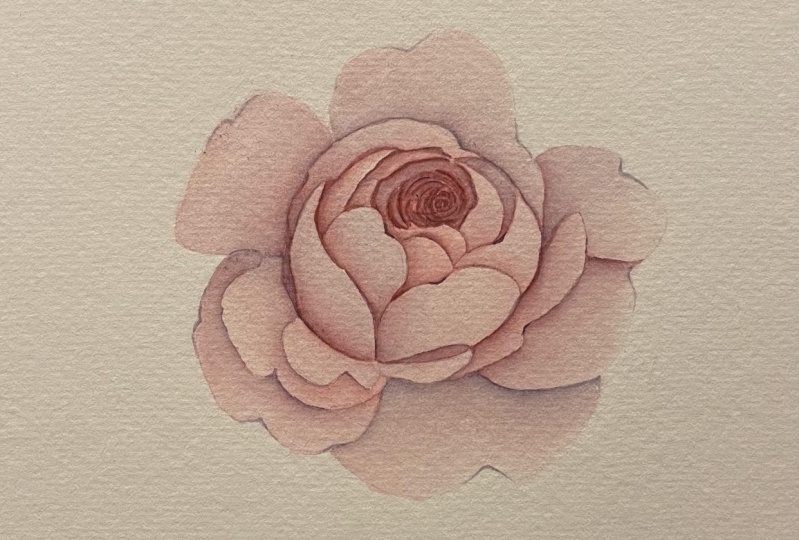
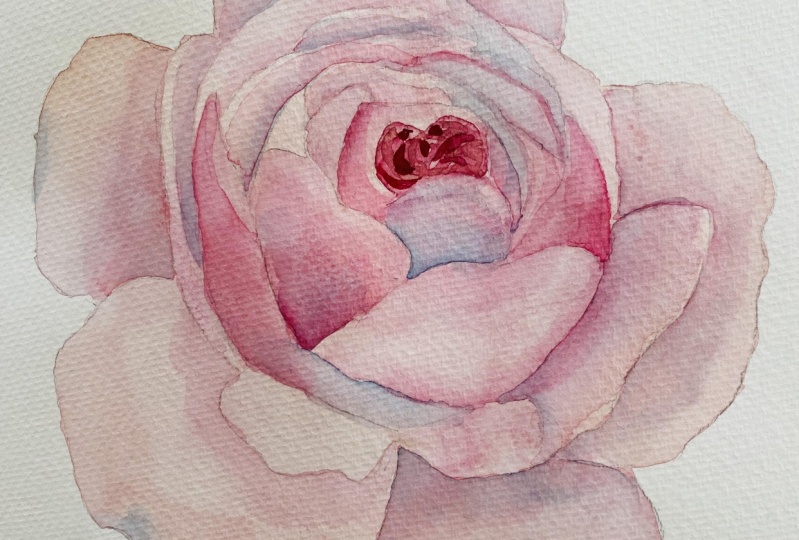
soak up all that water. Alright, that's good enough. We're going to mix up our color. Now, the rows that I, that I used as the inspiration photo
is really light pink. Kinda wanna make a
fleshy tone pink. I'm grabbing some opera rose. And you guys can make
any color that you want. But this is a class, so you might want to
follow along with me. I have opera rose here. You can grab any
pink that you have. And what I'm doing
is I'm just making the base layer that
we want to put down. This can be really watery. We can have a lot
of water in it. I'm grabbing a
little yellow ochre. Don't ask me how I know that
this dark color on hair, but it I know it is a little
bit of regular yellow, maybe a little more pink. And actually going to, I might grab my
other palette later, but a little bit of red. And we are going to grab a lot of water on our
brush now you don't want your brush totally
dripping with water. This is why you don't do
this on top of your artwork. You don't want a
dripping with water, but you do want it to have a
significant amount of water. And all we're doing is just
painting this base layer. This will be our
very lightest layer. We're not using really any, I guess wet on dry technique, but we're just painting
along our pencil lines. Moving the water around. This is a really light wash. You don't want it to be really
dark because like I said, this is going to be
our lightest layer. I'm not even adding more paint, I'm just adding more water so that I can get this
light layer down. Now these pencil lines are
probably going to show up because they're showing
through my lightest layer. Probably should have made
them a little lighter, but That's okay. I want you guys to
be able to see it. Alright? Something you can do here is if you look
at your painting, if you want to
pull up any color, I know I do this
in all my classes, but just rinse off your brush, then lightly dry it off
on your paper towel. And just press it down on
your paper and you'll be able to pull up anywhere that
you want to pull up color. I don't really need
to pull up color here because it's really light. But I do want to add in a
little bit of pops of color, so I know that the center is
going to be a little darker. Now this paper is wet and so is my watercolor paint
on my paintbrush. So it's going to bleed
a bit when I tap it in. Make sure you're
mindful of that. There's gonna be some
shadows down here. And up here a little bit. Now I'm just going
to let this dry. And we are, like I
said in the beginning, or working with a
lot of layers today, there's going to be a lot of
instances of me stopping, waiting for this to dry
and coming back to it. If you want to speed up
the process at home, feel free to grab a
hairdryer and you can you can dry your
painting that way. But just make sure that you don't hold it too close
to the paper because it can burn the paper or make
it a warp in a weird way. I, sometimes, if I'm
working on a block, I just go and put it in the sun. And then that helps
it dry really fast. So we're going to let this
dry and we're going to come back and paint
our second layer. Alright, we're back to
paint our second layer. And like I said, we're working in
a lot of layers. So grab a cup of coffee, tea, wine, whatever you need. We're gonna be here for a
little while, but it's fine. I'm mixing up a color
that's slightly darker than the one
that we have right now. And I am going to start putting in some of the darker
values and the painting. When you're painting
in a realistic style, It's all about the shadows
and variation in saturation. That is what's going
to drop people's eye in and make it seem
realistic to them. If you haven't just one tone, it's going to look really flat and it's not going to look real. That's our job right now, is to add in more shadows
and more variation in color, which is really going
to draw someone's IN. I'm going to start
in the middle. And I have that
peachy tone color. As you can see in the center, it's a lot darker, so we're just going
to fill that in. It's okay if it's just one tone right now, because we're going, because this is technically
the lightest value that's inside of this area. And we're just going to go
like that and leave that be. Now we're going to go around to our next area that maybe has a little bit of a darker shade. And I can see here that
there is a shadow. So what I'm going to do is
have some paint on my brush. Pretty saturated. I'm going to rinse my
brush off and then just pull some water in there. And grabbing pigment again
and doing the same thing. Wherever there's a shadow, making it a little bit darker. We don't want to just go right ahead and start painting
this because it'll bleed. And that's something that's
really important right now. Now that we're getting into
more shadows and details. We don't want our
painting to bleed, that we want to keep
our layers separate. And that's how we're going to
have to wait when it dries, wait for it to dry. Now I'm mixing up just
a lighter pink color for these outside petals. I'm actually going to
switch to my size two brush before is just a little
too big right now. Mixing up a pink, something that you
guys can do if you're afraid that you don't
have enough paint mixed up or you might not be using the right shade is you
can mix it up and have a little paper on the side
where you kinda just test out your colors before you go ahead and put it
on your painting. Does make a difference. If you're painting,
colors are not right. Okay. I have a light wash here, but it's darker than
what's already there. And I'm just going to paint
along the edge of this petal. And now I'm going to,
I've put in my color, I'm going to rinse off my
brush to flick it off. I don't want too much water. And then just lightly blend. And there are some
different shadows. There's actually more
of a shadow right here. You can just add in little
bits of color if it needs it. But this outside of the petal is going to be
really, really light. We're going to keep
it. The color that is, is we're just gonna go around
and do that same thing. Almost a grayish tone. We can add that a
little bit later. We are using more of
a blush tone than the flower that
was in the photo. Right now we're just working on accentuating some
of these petals. This one is y and
this one is wet, so we can't touch this. We can't touch this. We can work on this petal. As you can see from the photo, is a little bit darker than the outside petals out
a little bit more pink. I'm just painting the outside. Then rinsing off my brush, getting just water and
lightly blending it in. So what you should be seeing is the outside is going to
be a little bit darker. Then the inside petals is
gonna be a little lighter. And what pedal can we
work with right now? We can work on this
outside petal. So grabbing that
same lighter pink, I'm just outlining against
this other inside puddle. Going to rinse off my brush
and then lightly blend. And this one, we can actually
do this petal as well. This is all about lots
and lots of layers. I use a lot of layers to get
my stuff to look realistic. Some people paint in
different styles, but this is how I like to paint. I find it to make my paintings really
interesting to look at. Again, just rinsing
off my brush. I have only water on my brush and I'm just
lightly blending. Something else that you
can do is just water on your brush going along the
outside and coming down, down, down until you touch this. And what that's gonna
do is just make it bleed and I like to
just do it myself. But you can do it
that way as well. Trying to think what
we can touch here. We can go for this petal. Just outlining the bottom. The bottom of it would
have the most color. And then adding in the
light or the water. And we could work on some
of these little petals. For these little yellow petals, it looks like there's a
little more yellow in them. So I might add a little
more yellow to my pink. And I have a small brush and
I'm going to come in here, just do that same
little outline. Rinse it off, and
just add water. We have a lot of petals over here that are folding
on top of each other. So just start painting
them one-by-one. And the center is dry. Now, we can do the
same thing here. Make that a little more pink because it is closer
to the center. It's going to have more color. But we do want it to stay this little edge
pretty light up here. Things are drying fast today. Summertime. Going to go back to that
really light pink outline. Oh, oh, actually
that is dry outline, that outer petals. Same thing. We're just trying to bring
more color into our painting. Now this pole right
here is folded over. It's really, really
light in the picture. Now, the part that's folded
over is going to be, have access to the sun more
so it's going to be lighter. This inside is
going to be darker. You can just paint in
a darker tone here. Will, don't worry. We're
going to come in and add more shadows later. Now since this is mostly dry, we can add a shadow under here because technically I'm just touching my paper to make
sure it's dry before I paint, so I don't ruin anything. This there'll be a shadow here. Let me go back to my size
two brush, grab that light, light pink and maybe
a little darker. I'm just lightly painting around that jaggedy
edge of the petal. Then coming in with
just my water. We're definitely
going to be adding some pretty dark shadows here, but not quite yet. We can paint this guy. I'm going to grab
a smaller brush. It's throwing me off a little
bit because I am painting in a different color than
what the picture is. So it is helpful if you stick with the
same color because, you know, we're like what's
supposed to be, what color? We can paint this guy, I'm going between my size
0 and my size two brush. I'm just going to lightly
outlined the bottom. Then rinsing off my brush
and moving my paint around. If it seems too
dark or too light, just lightly tap in more color. Since this is already wet, it'll just nicely
bleed and blend. If you feel like it needs help, just kinda do a
scrubbing motion. Another petal back here. And I think that is just about all that we
can touch right now. We're going to let it dry and then we're going to come back. Now we're moving into a little like the next
layer of shadows. I'm actually going
to switch out. I need my other color palette, which is super messy, but I just love it. And I want to use this one because I am going
to be using in or bringing in a little bit
of gray tones a little bit. Because if we just
do this all pink, we're not going to get the different variations and
shade that we really want. What I have to do is re-mix
that my paint over here. As you guys might
have remembered, we haven't actually
painted all of our petals yet because
some of them are too wet. So we need to come
back and add in some color to just kinda define some of
these other petals. Since we didn't do that before. Painting in. We don't have to get too crazy because we're actually going to be using a darker shade to
kinda show where they're at. This one has not
been painted yet, so we're going to paint this one and adding a little
more color over here. Okay. All right. So I think I want to add, this looks really flat to me. I'm going to add in just a little darker
shade of that pink. Just rinsing off my
brush and blending. There's also another
puddle in here. Sometimes it gets hard to see. Like you want to make
your pencil lines light, but then if they're too light, you can't really see what
you're supposed to be painting. Add another shade up here. If you're having
trouble seeing where shadows are in the picture, just squinting your eyes. It usually helps a ton. Now I want to start adding in. We talked about the darker shade that maybe has a little
bit of gray in it. So you can add
black if you want, but sometimes when
you add black, it really meets your color down. I like to do is I grab
the opposite of my color. Since we're working with
kind of a fleshy pink, something that's going to
mute it down is a blue, just a really light blue, which you can see in the
bottom right hand corner. That is going to be art, little bit of a darker shade. I'm going to start off
with my size two brush. And I'm going to add it right in here because this
is a darker shadow. Just painting it in. And I want a shadow around here. So I'm outlining it. And then or anything else
that brush and just adding in water to move it around because we
want it to look soft. I'm gonna do the same
thing over here. It's layer upon
layer upon layer. And then finally, it's a masterpiece when we can't
touch this petal and, but we can touch this one. Going to do the same thing. The outer petals have a
little grayish tone to them. So that's why I'm adding this. As you notice, I do. If I have a lot of
water on my brush, I just lightly tap it on my paper towel because you
don't want the water to be dripping off and you want
control over it so that you're able to outline this. And technically, I
can see this petal is going to be darker than these two because it's
underneath that. We'll work on that later, but that's something
to remember. Smoothing it around. This petal needs
the same treatment. Outlining, adding in color. We can't touch that
pedal right now, but we can get in here. Just right here. Could use
a little different color. Oops, these are touching.
Should not have done that. And let's see. It's hard to remember. Sometimes it's good to work from one side to the other so you remember
what's what and what's not. You can also touch your paper, but I don't recommend
doing that a lot because sometimes
you can get your oil, oils on your hands onto the paper and then that's
not good for the paper. There's definitely a
darker shadow in here. Okay. And make a shadow here where this is folding over because it's all folding
over to the center. Lightly. Sometimes you don't need to come in there and blend. If it's a really tight space, it's not going to make
sense to blend it because you want there to
be some definition and not going to
make just a line. So this is a shadow here. They're definitely
be a shadow here. And this would have a shadow. You don't wanna get too crazy
if you're using a dark, if it's black, the color, definitely don't get
too crazy with Eric. It's going to look really funky. You want to use the
darker colors sparingly. Most of the colors
should come from the original colors are most of the variation so that pink tone. But then it's important
to come in with a little bit different tone to get some of these other values. This is the nice part of
the painting because most everything is drying quickly and were able to
keep on working. When you first start and you
put that first layer down, you really can't do that
much for a little bit. But now we're in a good
place where I'm just jumping all over the painting in different places that
are dry out another. And then I'm just layering
more shadows here. And you can go too far. I have done it many times. And you end up
ruining a painting. You'll just have
to experiment and get used to where your limit is. It's just like anything in life. You have to you just have to do it and then
you'll, you'll know. Oh, I went too far on that. Then to add a darker shade
in here because this is a really shaded area
inside of this rose. Now we can add
something over here, going back to my size two brush, as you can see, I changed
up my brushes a lot. Lately. Just drawing a line makes
sure there's water. You don't want this to be really thick paint that's really dry, or you're not gonna be able to blend it when you come
in with the water. Something else you can do to add a little bit of interests here is grabbing that
same shaded color or a slightly darker
pink and making just a little line here
where the petal would fold over and give
a little shadow. After awhile of
painting in this style, you guys will notice
that you start to see the world like this. So if you're out on a
garden, you'll say, oh, well if I put a shadow
right here, are, that's where the shadow
is on the flower. It's really, I mean, at
least that happens to me. It's really funny. Now we can add this shadow. So remember I told you that this petal is gonna
be a lot darker. Obviously, it's not
going to be crazy dark, but it is going to
be significantly darker than these other ones
because it's underneath. And we need to show that
because if we don't, it doesn't make sense, right? So grab a color that is the pinky tone to add
a little more blue. Or if you're using block
little more black, makes sure that you don't have too much water on your brush. And then just lightly. Oh, okay. That one's kind of dry. Lightly. Come in here and then
grab your water. That's still not looking
quite as dark enough for me. I think it's just sweat. No, that's not what
I'm going to get. An even darker color. I think I might just
add a touch of black. And just dab dotted in. And because this is all wet, it'll just bleed and blend. Sometimes you have to
help it a little bit. We don't want any
harsh lines, lines. That's why we use the scrubbing
motion and lots of water. Maybe just a little bit more. Dot, dot, not a lot. I hope you guys
share what you paint because I absolutely love
seeing what you guys make. It's cool to see how different each
person's style can be. I think the outside leaves for now are
looking pretty good, but we really need to focus
in on this center part because there's not a lot
of definition and married. Now, it looks kind of like I
don't know what's going on. I'm going to grab
that a pinkish tone, little darker to put
some shadows in here. This is an area that
definitely can use a shadow. And it's not looking exactly
like the painting right now. And that's okay because I like to use photos
as a guideline and then explore on my own the
thing that I'm looking for when I'm looking at a photo is where are the shadows at? What's the general
shape of the flower? The petals fall. Most petals are falling in, and then we have
these five petals on the outside that
are falling open. These are just basic structure
and guidelines for you. And that will be
helpful when you just want to draw your own flower. But you have to follow
the laws of nature, I like to say because It's not
going to look realistic if your like one petal this way and the other ones this way and they keep alternating. That's just not how
things work in nature. Nature is very repetitive. It has a pattern organized. So you want to see
that in your painting, but you don't have
to follow exactly what the picture looks
like. Unless you want to. You can totally
do that to darken this petal and maybe add
a little more pink to it. It's just not standing out very much and we need it to stand
out a little bit more. There we go. And that same color I'm going to bring over
here for this puddle. Now I can see that my colors
are getting funky because I'm not keeping with the same colors because I
started adding in that purple. So just make sure your colors
are staying on point C, minds a little bit muted. I don't want it to be muted, so I'm adding in a
little more hot pink. Okay, that's better. There was a puddle
here and that pedal would definitely be darker. We can start to put a little bit of details in the center. And as you can see
from the photo, that center area is really dark. It's almost it's not black, but it still has pink
undertones to it. So we want to make sure that we incorporate those
pink undertones. I'm mixing a, I'm grabbing
the same pink and some purple and a little bit
of black to get that tone. Okay. And there's a significant
amount of water in this, so I'm just going to be sure to lightly dab on my paper towel. And then I'm just making these teeny lines are
almost like C curves. Because it's that
center of the rose. That is really, really has just a ton of little tiny petals because
it hasn't opened up yet. We are going to come in here and add various shades
because right now it's looking very boring because
we're only using one shade. Okay? That's good enough
for right now. We'll come in and add
some darker shades later. We really need to define some
of these petals over here. And to do that,
I'm going to grab a darker shade and
just make lines. You don't want to grab
the same shade every single time or that
won't look real. So alternate between
maybe a more peachy tone, more pink tone. But still in the same vein
of the original color. This petal comes down here. Still keeping a little edge of the lightest color
that we had on there. It's really cool because you can see the more
dark colors you add, the more the outside
looks white. And, but remember how pink it
was when we first started. It's just an illusion
to your eye, but that's how I teach
painting white flowers, is that no flour
is actually white. It's just an
illusion that you're working up from a
lighter shades. So you could paint it
like a really light blue. But then as you add
in darker shades, it's going to make
it look white. For this puddle. I'm going to put just a
couple of little lines. We're going to blend these
and then just grabbing water. Just really blending
this in. Yeah. I don't even want lines there. I thought I did, but I don't. Again, making this a
little darker here. Meticulous work. And I am you guys can't see
me but I'm squinting my eyes. It's kinda see where we
need another shadow. Adding that here. Here we go. And this pedal could
use just a little dark. And this is a separate
petal from this one for grabbing that grayish,
pinkish tone again. And then just putting
a light shadow here. Grabbing our water,
blending it around. You could even dab in
a little bit more. Just lightly tapping
and because it's wet, it's going to bleed
really easily. Maybe you put
another shadow down here or darken my shadow. But I don't think I want to add anything darker down here, or I am going to go
a little too far. Add something maybe right here. And we're going to let this dry and then come back
for another layering. We are getting pretty close
to being done with this. I don't want to ruin it. I know I talked a
little bit about how you can just keep adding
and adding and adding. And I do think that you should experiment to see where your, I guess settling point is
with your own artwork. But we are going to be almost
done with this painting. I do. We do need to add in a couple more details though to give it just that little extra, judge. One of the details is in here. We have the same color
for all of the shadows, but I want to add some
just a little darker. We're going back
to that same kind of Bhavesh almost tone, but add a little more black, maybe a little blue. And I don't want too much on my brush because I want
to have control over it. And I'm just adding in. Some of these are gonna be darker shadows, not all of them. Otherwise, we're going to lose some of the
interesting parts of this. That's kinda, the name of
the game is the variation. I did this wrong. It should have been more
like that. That's okay. That's okay. Alright. Gonna get more
of a red color and just add some darker
areas around the edges. And don't want to
blend it too much. Sometimes you got to a
point where you need harsher lines because of
everything is blended, then it's not like it
looks too blended. If that makes sense. I'm gonna come in with
that darker color again and start to put in some more defining shadows
around some of these petals. This one needs that. I'm heavily looking at my
pain or my picture right now because I need to see where some of
these shadows are. The reason I need to see them is because I'm
having a hard time determining what pedal
is what in here. Because I can't see
my pencil lines, which it's good that I
can see my pencil lines, but I'm also needing to
look at the picture, which is just going to tap in a little bit of a
darker shade in here. And maybe go back to
that more pinkish tone. And I'm going to add,
That's pretty dark. Let's see, maybe we
can make it work. You can always rinse off
your brush, dry it off, and pull some color
up if it's too much. I'm okay with that. I
think it looks good. But since I just did that darker than I want to
add a darker shadow, shadow in the same
color down here. I hope this tutorial is easy
for you guys to follow. I know it's a lot of
repetitive action, but it's how you end up
painting how you want. Or painting in a
realistic style. Sorry. Going to add
another shadow over here. It's tons of layering. But personally, once I got this right and started to really like the way my art work looked. It was addicting. It's so addicting. I always think, Oh,
I wonder if I could paint that or, Oh,
what about that? And it's just amazing
what we can do, what artists can do. It's really cool. If you're feeling
frustrated right now. Everybody starts
at the beginning. I was, I struggled a lot with this style of painting when
I first started doing it. Over time. You'll get it. I promise you if you just stick
with it, you will get it. So don't be hard on yourself. Let yourself be a beginner
or wherever you're at. There's no pressure. Watercolor painting
is fun and relaxing. It's, it's almost a
form of meditation for me because I
can really just let go and get into my painting
and just be their focus. And just lightly scan
your painting to see if you need to
define any areas. For me, I can see that
it's really hard to tell these puddles
in here apart. So I'm just adding
a light line here. And same thing up here. Find that a little bit more. Maybe add a little
more pink over here. It looks to gray to me. And shadow never really
worked in my mind. I'm going to add just along the top here
where it would be the darkest shadow out a little bit of this
same color that I had on the inside here. And this needs a shadow. That's what I'm missing. Okay. Sometimes stepping away from your painting and coming back to it is really helpful. There we go. It's like something
doesn't look right. All about those shadows, baby. Sorry, that might
have been loud. I kinda yelled that. Adding in. Now as you can see, I'm starting to not blend a ton because I do want to
have some of those more. In your face, shadows that
are a little bit darker, they stick out a
little bit more. This is that that puddle
that's folded over. Going to add a little bit
more dark shadows in here. I really discovered my point of no return with a pet painting. I was doing a giveaway
and of a pet painting and somebody or the person
that one, I'm sorry. They had a cat and I
was painting the cat. And I just kept going
and going and going. And when I sent it to them, they're like, oh, like
they weren't that excited. And I thought, Oh my gosh, I think I went too far and
so I repainted the cat. And I remember I stopped before I stopped
on the other painting. And I learned that
lesson sometimes more because I definitely overdid it with
that cat painting. And I was happy to learn that because I didn't
really know that before. I guess I didn't think that you could put too much
into your painting. But you definitely can. As I say that, I can see that I think I've
reached that point. You could keep going forever with these
kinds of paintings, in my opinion, and I
definitely have before. But I don't want to go too far as like as I keep painting. But I do want to make sure
that this puddle down here is looking like it's
underneath this one. I'm adding in that shadow. You can always pull paint off
if the paint is still wet. That is the thing
about watercolor. And the point of no return is, if you like this, I can't change this. I can only add
layers on top of it. That's the thing about
watercolor painting. It's different
from acrylic where you can just paint over it. So that's why you
don't want to go too far in your painting. I actually do want
to add in just where these little the puddle kinda has some texture on the edge. Just a light line. Maybe blend it a little bit. We don't want it
to be too harsh. One more down here
is our painting. Please let me know if you
enjoyed this tutorial. I love to see what
you guys paints. Please post your class project in the class project section. If you're on Instagram
and you post your work, I'd love if you've tagged me
so I can connect with you and just see your
beautiful artwork on my Instagram is
lavender and see. Thank you so much for
watching this class. And if you can
leave me a review, I would greatly appreciate it. Reviews helped my classes, these seen by more people. And it helps in sharing
this class with other, other people who may
really want to do it. So thanks again. I hope you have an amazing day.
 Nikki Hess, Artist & Corgi Mama