Transcripts
1. Introduction: Welcome to the thrilling
and captivating world of watercolor painting. As a beginner, mastering
the Art of creating a loose yet accurate landscape can feel overwhelming
and daunting. Where do you start? What
techniques do you use? How do you bring your
vision to life on paper? In Watercolor,
Landscape Essentials, Mont-Saint-Michel Abbey, you'll discover all the
essential processes and techniques you need to turn any photograph into a stunning and
impressionistic landscape. With my guidance, you'll
learn how to create a masterpiece that not only captures the
essence of the scene, but also showcases your
unique creative style. I'll demonstrate my entire
process in real time, from the initial drawing
and composition of the scene to the careful
layering of shadows, light, and the final addition
of details and highlights. You'll watch as your
paintings come to life and your skills improve with
each passing lesson. Join me on this
exhilarating adventure into the world of watercolors. And you'll learn how to create awe-inspiring landscapes
with ease and precision. Whether you're an
experienced artist or a curious beginner, this class will equip
you with the tools and techniques to unlock your
full creative potential. I'm excited to get started. So let's unleash your
inner artist together
2. Materials Required: Before we get started
on the painting, I want to talk a bit
about materials. So these are the ones that I
use and I'm actually using 100% cotton watercolor paper
for this particular scene. And it's cold press or
media and textured paper. So when you touch the paper, you'd be able to tell
because there is a bit of texture it
slightly rough, medium or rough paper is
completely fine, smooth paper. I don't really recommend for beginners when you're
trying to paint landscapes. It's just a little
bit difficult because the paper dries
unevenly at times. And you can also use normal cellulose paper or just
labeled watercolor paper, but cotton paper is going to
get you the best results, colors, and layering effects. I don't use too many brushes
in this particular painting. In most of my paintings, I
don't use too many anyhow, so just wanted to show you the ones that you're gonna need most and just to be aware of. So these are watercolor mop
brushes and as you can see, they have a larger belly. This allows you to pick
up a lot of water if your painting things like
a large area of sky, big area of grass
here on one go. These are your best bet. You can completely paint a lot of these sections was
just loading up a few times. Whereas if you're using
a brush like this, you can have a lot of trouble. So these are your
smaller brushes for detailing getting in small bits and pieces like tree trunks. So this year,
typical round brush, it's scott, a smaller
points on the head. And this is a flat
brush, kinda similar. I use this almost in the
same way as the round brushes gives a slightly
different shape. And this is a fan brush
which I used to feather in some nice little bits of grasses you can see here in the distance.
And what have you. Now going over to paints? You can see my palette here, and I barely clean
out my palette. But most importantly,
you're going to need a few essential colors, cerulean blue, I've
used that for the sky. This is just a bit of gray and perhaps a bit of
purple mixed in there, like a bit of darker color, bluish purple in there. Okay. So but mainly got
that cerulean blue, it's a light blue
color you can also use and ultramarine blue and just watered down as well if you didn't
have that over here, I've got quinacridone gold. I've also mixed in a touch
of yellow ocher in there. So let's turn light, sort of yellowish color. Or some people use hansa yellow, that works fine as watch this
very vibrant in the grass. I have got myself a
combination of yellow ocher. We've got a bit
of buff titanium, which is basically
an off white color, and a bit of green can use
all kinds greens here. I've got this green
called undersea green. But you can use olive green, hookers green, that
kind of thing. Also some of the darker colors here, basically just black. Or you can mix up your
three primaries, blue, red, and yellow together in
order to get a really, really dark color, just don't use too much
water in there. This is a bit of white gouache is opaque
watercolor paint. You can see here I've used
a bit of it to put in these little flowers and
nicely to addition at the end. And this is opaque watercolor so you can go over the top and it will basically be able to bring out some of these
highlights I've added in some yellow as well. You can put in a bit of yellow, mix it in with the gouache, but if it Watercolor
yellow and you can get some lighter yellowy
flowers as well.
3. Drawing: Let's get started
with the drawing and I'm going to put in the area just
underneath the house, here in the back. And leaving enough for the flowers and bits and
pieces here in the foreground. Now, I don't really
need to drawing many of the files are all just
a quick indication. I also thought I'd move some little bit
more to the right. Thinking of making the
whole thing of flower field is decide on that later. But I don't like green grass running
through the entire scene, like maybe a patch of it at the back or something like that. But I wanted to look a little
bit more inconsistent and a bit more more nature
like less pruned. So let's have a look at what
we need to draw in here. So there's quite,
this is quite a lot of details and things out
the back and the big things. Obviously the
background buildings and then also these
two buildings on the side of the trees are
more just abstract shapes. We don't need to worry
much about them. So I think what I will
do verse it says put in this house here,
okay, rapidly here. Putting it in. And don't have to put the
old all of them in the same, exactly the same points as
as the reference photo. What I like to do
is it tends to just draw the little, right, right, but drawing
the little points at the edges for the rooftop first. And then I connect the
dots together afterwards. Another thing I noticed is
that this side of the house might be you can you see a little bit of it
sticking out like that. So I'll just put it in like
that to give it a bit as 3D. Look there on the
side. Pretty basic. You've got these
two little areas here on the top of the roof. That's kinda please. I don't know what they
are. Like. Bits and pieces on the roof
there in the attic. And I'll just draw
in the triangle, shapes, triangle and then
a square underneath. That's all it is. It's always a little bit of a shadow running towards the left-hand side. I just indicated the British, no one there, a
couple of window. There's also a chimney here. You can see it just come
out through the roof here. And again, this is
pretty good to get in a little sense of
shadow behind it as well. These tiny little bits
of darkness there help to imply that light source. Light sources coming from
the top right-hand corner. So we've got a bit
in for the house. And then underneath
the house as well, you notice as a bit of
a shadow there and then you've got a door or something. Where's it here? Maybe
like a door there and another door here. Okay. Quick indication of that. We will some more later, some more details later. I'm also noticed
behind this house there is actually a smaller one. Smaller, something
behind they're barely see it but it's quiet. It's in the dark and it's
behind that house there. So I'll just call that in.
That could be something. I don't think with
these trees that they do look good in the photograph, but I think they can,
especially here, they just look a
bit too uniform. So I'm gonna just change
these trees up a little bit and just make them look
a bit more clumpy. A large tree or
something like that. Here on the left-hand
side. This is interesting. I think there's a car here and I will drawing the house first. It's putting the rooftop
start and rapidly about here. Get that triangular shape and three dots first and connect up the dots and make it easier for you to draw it
more competently. Again, then it comes down. Variabilities. Left, left
side thing over here, top of this rooftop there. And then we've got a lower
rooftop here running towards the right-hand
side of this structure. And of course is,
I'm kinda car here. I will put it in kind of like
the back-end of the car, simplified down like this. Maybe. You may or may not look like a car light
up but something like that. Little something to indicate it and join it up
a bit at the base, you get a lot of this
grass and stuff running around as well, these buildings. So I don't need to really join too much of the details around the sides
of the buildings. But you can see it here. Building their sum,
all these shrubs, large shrub here, K
sharp in the background. Remember to have some in the foreground what's in front of the other
shrubs as well. So you don't have all of them. All the shrubs in the
same the exact same place here on that right-hand side. I do like these trees
and the sweat lodge, that one There's really large coming up and they
joined together in this large clump of everything really just
coming across like that. This trunk coming down here. There's another one,
the growing off sometimes on little
angles like that. Here's another one. I don't want to spend too
much time drawing. I want to leave some of these
detail for the brush work. Afterwards. There we go. We've got some of
these stuff here, maybe not the Bush
years on that. In the background we have got the buildings and
this is a tricky one. This how much detail back
there in the photograph. But I want to just simplify this down. So how
can we do this? Let's firstly look at the
structure in general. No, you've got almost like a
rectangular structure here. For most of the
building like this. The Red Cross. That there are some little
parts of it like this. The rooftops there. They're very complex
building can get Easy, Easy to get caught
up and all this and start trying to put in all the little details
here and there. But remember, we only want to get
a quick indication of all this in the
background, Okay. Because it's it's more of just more just implying
what's their top part here. There's unlike another
rectangular part there. Here. Here. Even we can just get in a few bits and pieces running down like that. And I also hear that
we've got this kind of main tower.
This is important. I just wanted to put this
in more accurately there. Again, using a technique
where you just mark out the corners of the object. Okay? And then we could do it
here as well. Be that one. And let's have a look.
What else do we have? Some parts of it also
sticking up like that. Often the distance, not too
much effort, of course, and it implies all
the little details. Could, the top part is
probably the most important. Okay. Look some little
windows there as well. Putting a bit of this rooftop. Okay. I surely being careful not to overdo
it because it can be can be a thing if
you're not careful. Another large shrub here just to balance it
out little bit. Those just a space in
the center there that just needed some details. Okay. Of course,
behind the house. No. I thought it
might be good to just put it into a tree
or something there. Alright, houses a little
bit darker anyway. So this is gonna be
good. We can go in there and start the painting
4. First Wash: Alrighty, So let's go ahead
and start the painting in. The first thing I wanna
do is I want to get in some warm colors,
nice warm colors. Okay, because if we do this
first and we don't have to worry about mixing in some greens we worry
less about anyway. So here I've got a
bit of yellow ocher. I've mix it around on the
palette with a bit of this yellowy color,
hansa yellow. Okay, don't want it too vibrant. And just a little bit
of that yellow ocher running there in the background. Maybe a touch of
this brown as well, but of these seep CPS or the burnt sienna, that okay. Just a quick little
detail there for this. He's background buildings. The touch of that orangey
color, orangey yellowish color. They're cutting around
the house a little bit there in the front time
is not a huge huge deal. Okay. Really light
color as well. I don't want it to be too dark. Let's have a look around. What
else can we put in there? Well, secondly, we
have this house and bits of details in there. I'm just looking around in
the grass, for instance. For instance, here we've got
a lot of off-white color. I'm going a bit of
buff titanium. Okay. I'm just going to feather in a touch of that there quickly. I'll come back to
it in a moment, but just a little bit of that. Buff titanium and
a little bit of yellow in there as well, buff titanium in a tiny
bit of this yellow ocher. I like that and
I'll leave some of the white of the paper
exposed as well. Hopefully that can be used to imply some of these
lighter flowers later on. So I don't have to do all of it. But what I like doing as well just had you're just going over the TI thing and this yellow. And the reason why is because it's very easy once you
have a bit of yellow in there to start putting in some blue or a little bit
screen and it just turns, just turned screen anyway. Okay, but this
allows me to get in maybe some yellow highlights, lighter highlights
running through this section so that
it's not all the same. Green running through. Okay. There we are a little
bit of that spray bottle, just give it a quick
spray gear as well. Okay. I'm gonna put in a
bit of color for this house, the
top of the house. And I've got a bit of gray, just picks up, picked up
some gray from the palette, and it's just any of your three primaries mixed together or whatever you
have left on the palate. Water this down a lot. I mean, you're still
using about a 10%, 1020 per cent of paints in this. But I do want it to be you want this house to be a little
bit darker. Like this. Cotton around some of the white bits of
the house and look, some of the background stuff
is going to mix as well. Some of the background
stuff we will mix. But I wanted to leave
the right-hand side of the house illuminated
a touch like that. Okay. Just a little slight
illumination there. And we'll go and adding the rest of this
stuff further down. Okay. Rooftop cutting around the that little
structure on the roof. These two little structures
here, like Windows. We're going to move downwards. That thinking very bitter
care to put them in. Okay. You're all the, all the while. I'm doing this, I'm also
looking at the I'm also looking at the reference photo and
making sure that I'm matching, matching the tone,
the value here so that it's not too
light, It's not too dark. Alright, really important
thing to do in your paintings. I find this Wash. You've really gotta just do it
once and leave it. Bottom of the house
is we're really just going to have
some white left there. Pick, pick some of that up
in a moment to have a look. This house here in the
background as well. It's, it's a bit darker. So I can just go ahead and
darken that down as well, like this, create a sharp
edge on this house. And maybe some of it goes
into the grass. My problem. Like that. Right. No issues. Just let it do its thing. This house and the
left-hand side is a very similar color, but it's actually
a little warmer. So I'm gonna put in a
touch of brown in there. And just look, I'm just going
to get in that rooftop. I don't want to mess around
with these too much, but let's just getting
that rooftop like this. You leave the right-hand
side of it, also white. To indicate the light source coming from the right-hand side. It will go in and put in some shadows and stuff
underneath it later, but I might just a quick darken that down a little
bit down the base. Okay. Good. And wet some more
shadows and stuff later. It's have a look.
What else do we have to indicate in here? Well, look around. We have got stuff in the grass. Green and we'll
pick up some green. It's dropping some green. Flicking a bit of paint to
pick up something like this. Brush here, a little bit of little fan brush,
pick up some green, use any kind of green I'm
using undersea green, which is like a
granulating green color. And I'm going to
further some of these stuffing you that some of them may go into
the house as well. Just a little bit here in
there. That doesn't matter. Just little bit
here maybe to join on with things and none of that you can see these
bushes and stuff out here. Notice how they also have a little bit of light on them in a bit of green there
we can drop in some here and using
this also cut round, see these bits out there. I'm just going to cut
around that side of the house so that we've got
a bit of darkness there. Okay, Well, I don't
want all of these to run up to high into all the air out the back. There's background
buildings. I want this to definitely be darker though. Okay. There we go. Look, just putting in a
bit of that darker color, getting it to mix and blend
around a little bit there. This whole area in the
foreground is all wet, so you can quite
easily just pick up that brush and just
flicking some color. Work with it down
the page like that. This also helps to do, to create some little
guiding lines are suppose of perspective lines. But I wanted it to
look a bit more, just a bit more rugged. Let's put together in
terms of the in terms of all those bits and pieces off the grass and
perfectly manicured grass, it just looked too
perfect for me. When I'm doing here
is that I'm trying to indicate some darker
areas of these trees, a bit of brown and a
bit of black together. To just putting a touch of this. Hopefully to get it
to blend module, we've still got the
sky Wash left to do. But this is a bit
of darker color. Let's again look a bit of black. If you don't have
black, just use some neutral tint or
something like that, that will work fine. I'm just doing
this very quickly. I don't want to around
in there too much and make it look make
it look too detailed. Look at that. We've
got a bit there. I'm going to be good idea to get into the shadow
on the ground, just thinking what's best to do a little bit of it at the moment and come back to it pretty come
back to it later. We needed another Wash later on, but the leaves pick up another bit of green and maybe
mix some blue into it to create a way cooler blue,
something like that. Just work this one out. Maybe be the cerulean in there. Okay. Good. If you've got a little mangled
brush like this as well, that helps quite well. Just an old brush, you can just flick some
paint in there and hope, we just hope for the best. But funny enough, the
tends to just look more like leaves when you do it
this way and more natural. Like that. There's
little bits of something in there. Okay. I wanted to look more
like that here as well. Look, you've got some
more trees here and I had played around
with this before, but let's just go in there and I'm going
to use this same brush, a little bit risky because
the brush is quite worn out, but I can mix this all through. No problem at all. A bit of white maybe on that house
and it sticks out better. Okay, good. Look at that. It's all mixed together. And we've got some trees, tops of the trees. I've forgotten this one
here on the left-hand side. I'm gonna do this one as well. Just a tree coming up
on the side like this. Okay? And maybe bring it back in, dial it down here. Some of it went on, the
Roof, doesn't matter. There we go. We've got to
a tree back there as well. We've got some grasp.
It's a grass and things you use well we
can reduce well to indicate touch of
that and even a bit a yellow into that
green would look nice. Remember this area
of the ground? The foreground
here, it is still, it is still wet so I can go in and I'm just
same as always, just feathering in
a bit of color. At this point as well
because it is slightly wet. It's not going to
spread around as much. Okay. So when you going in doing some of
these wet-in-wet technique, you'll wanna do them
at different points before I put them in when it was quite
still quite wet, but at the moment,
it's more damp. And because of that,
because of that, the brushstrokes look a
tiny bit more sharper. But of course they still
kinda mix together a bit. Okay, Just trying to go maybe some slightly darker
ones in areas. Not too much, but preserving
some of these really nice, nice yellows in
this section here, we need to make sure we leave
some of this stuff, okay? But I will mix in a little the green and
things here and there. So that's not just
yellow running through this whole COVID. Okay, good. Some more green. I really enjoy
Witton bit painting. You can speed things
up and you can get this beautiful blended effect that you can't get
anywhere else. Here in the background. I also gotta be careful. Don't want to get rid of all
this yellowy light there. We've got to leave some of that. So tempting, but yeah, some more darker green here or something darker and
I'll just mixing some black into the green
to get in some of these darker parts of the shrubs or what have you there as well? Like that. Here maybe. What else do we have? Just a bit off here
and there. Okay. Alright, now let's get
into some of the sky. I'm going to pick
up cerulean blue. It's gonna be nice.
No, I sort of warships cerulean blue running
through here. The sky. Mixing up about 10% mix of
cerulean blue and 90% water. Let's drop that in
straighten the sky. You didn't notice there are
some clouds here as well. So I can actually
just pretty wet some parts of the
paper like here, maybe here, here as well. And paint when I drop
in that blue, It's, I'm going to just leave
parts of the paper exposed and let that Wash run through your
larger mop brush is gonna be better like this. Okay, really liked
you want to keep that sky is pretty much
as light as you can. Okay. I think that moving down, if it mixes in the trees a bit, It's not a huge deal. That air the trees should
more or less be dried. Okay, but you will
get a little bit of it going into the sky. And just the trick
there is just to touch it and leave it. Just don't start rubbing
away in areas of that tree. Little bit of that,
dropping a bit here. Just do it very quickly
and bring it down Here. Okay, Make it a lot more lighter than the
base of it as well. That nobody here
we come to these become to these buildings
and things here as well. And I'm going to pick
up a smaller mop brush. And I'm going to actually emphasize this even more and put a bit of extra blue here to create a
stronger focal point for the building. Cut around it. It's already dried so
there's not really much. It's not going to spreading
there any way into the sky, but I'm see how I've just got
an extra bit of blue there. That's going to create a
stronger focus in that area. Okay, let's get rid of that funny bit of
color that's dried. Dried strangely. Here, move this down. It's really just a lighter blue running down the page here. That would go still got some sharpness on
top of the buildings, which is going to come out, create a bit of a
contrast with the sky That enough of a contrast
here with the trees. And it's blended in a bit,
but don't worry about that. Cow. I think also what I might
do is maybe putting some purple for the clouds. Just some darker
clouds or something. Here. Let's try
paint still wet so I can put in a clarity
or something here. Just little little
lighter inconsistencies. In fact, I think there's
one on the right's probably bit too dark, but I'm just shifted
off a touch like this. Yeah. He's one's a
bit odd shapes so we can move this color around
while the paper's still wet. And so you want to definitely work
on all this stuff while the paper is still wet. You don't have to put these clouds and they
just something I wanna wanna do that. Okay. It more blue, bluish color, purplish color. Maybe. You're going
a bit of the brown. I just wanted to be greyish
coloured not to dark. Okay. Another one there, maybe some smaller ones
further down as well. Basic little basic
little ones like this. Joining up things. Okay, good. Just makes, it, makes it look a bit more interesting
because I've removed some details obviously
from this painting. Okay, good. So these are all looking pretty,
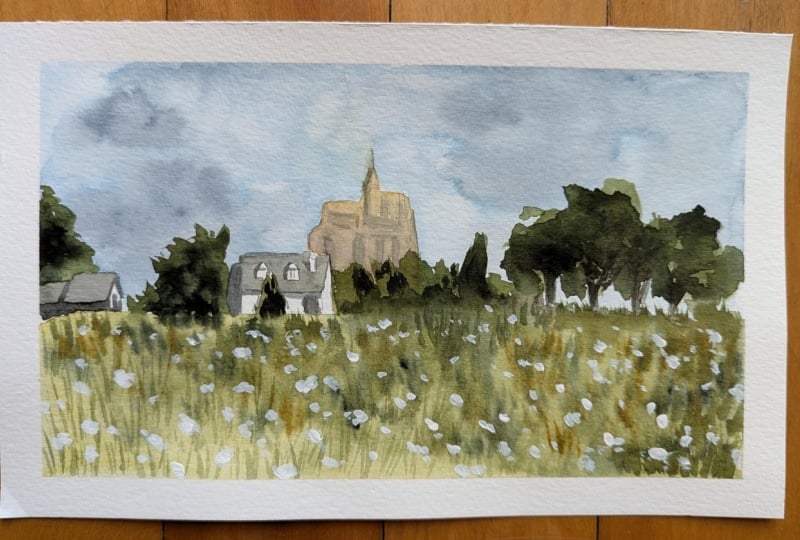
pretty decent over here. These flowers we're going
to get some in with, with a touch of GE Wash later. I think what also
helps is not just completely let yellow like we do have some dark
yellows in there. I've got a bit of
yellow ocher still when I can pick some of
this yellow ocher up, darken it down with a bit
of gray on the palette. And I can just try
to flicking a few, few strokes in here, just running through and make sure you put
them running in, in different directions as well. Like this. And these
can be bits of grass and they also couldn't
be the stems are the, of, these are some of
the flowers later. You will utilize this later. Dry the brush off,
pick up some of these slightly darker yellow. Flicking a few, few little
marks as you can see here, the pages paper's still
wet so it's going to stop, going to create too much
of a effect anyhow. But with, of course, this really lighter
yellow in the background, It's still going to carry
itself forwards like that. Now here, here, some
over here on the right. You want to put some
flowers up here as well, which some more yellow
in here as well. Okay. All this stuff
you've gotta do. All the paper is still wet and you only get one
opportunity to do it. I'm trying to give it my best
while it is still alive. And being careful
not to eliminate all of that nice
yellowy color as well. Even some of these stems,
if you look at them, they're actually kinda darker. Pick up a bit more darker, green and all feather in
a bit of that as well. Okay. Variation in Mark's
brush strokes values is what creates this
illusion of depth and detail. Using different marks,
different colors, but more importantly,
different values. Let's how you're
going to achieve a realistic look to all this. And we do have some
time later as well for some sharper brush strokes,
but this is just a bit. To get us started. You can also, while
it's drying as well, pick up a little pocket knife or a bit of a credit card
or something like that. And that actually scratch out some small details like these. Bits of grass, for
example, like this. Just running through
in the foreground. You can do it in background
as well for some bits, pieces assuming it
has not dried yet, though a lot of
that has actually, so there's not much, maybe a little bit
here you can do. Would have liked to have a
few maybe running through the house, something like that. That's good. Okay.
There's something there. They're just different
marks really that will help make it look like
there's some details, some extra details in here. But yeah, that part pretty
much already dried. Maybe just around here, might be able to get
a few little smaller, small little marks or whatever. Okay. There some of these can even appear to
be smaller flowers, often the distance as well. Okay. So scratches
through the paper. Okay. So it will
remove a little bit of the paper at times. Don't worry. Okay. Look at that tiny look like they're little flowers almost out in the back. And we'll play around
with the gouache and getting some details with
the gouache as well. But just another way to create
some marks on the paper, some interesting looking
marks on the paper
5. Second Wash: Time to put in some
of the darker colors and details with the gouache
and stuff like that. So I will firstly, I'm thinking actually do work, work on some of the
background buildings. First, I'm going to just pick up a basic gray color
from my palate. Little bit of gray color with
some maybe a bluish gray. Okay. Very, very light. There are some shadows on that
building here in the back, but there's so light that you can difficult to tell exactly. Let's just find myself
a small round brush, something like this little, tiny little round brush. There'll be this
blue gray color. Okay, lets water. Let's have a test
run. Let's try. Here. We go. That's good. It's about the
consistency we want. Okay, it's a little
bit of little bit of darkness where that building
there in the background. I'm again, it's more
just a background things so you don't that's why you
don't want to overdo it. I'm just picking out some areas that I could
potentially emphasize here. Okay. I'm putting little windows like that, but underneath that, that building here
in the back as well. Like that. Fat the roof or something. Just small details but still
quite light back there. And even the windows,
a little windows at tiny and you're not
putting on just one here. They're really back
in the distance. Let's put in a bit of this
top part of this tower that grade really
like a simple gray. Often the distance
and much to call home to a little bit of that. I'll leave that for now. Maybe I'll come back
later and do some more. But I think that'll be okay
to start off with now. And we'll work on
this building here. There is a shadow underneath it. I'm going to pick up a
bit of this gray again. Underneath the roof here, just to touch a shadow. Here. At 20 per cent paint. Rest water. Okay. It needs
to be darker than the roof. Little bit darker than the
roof anyway, like this. That across. Okay. A bit of that shadow
underneath the roof that is come over to the right,
but that doesn't matter. I mean, it's still fairly still fairly light compared to
the rest of the painting, but I could darken it down, just touch more like that. I want to emphasize that shadow. Make sure that that
just a little bit darker than the roof so
that it sticks out better. But it's that maybe I
put in a bit here on the some part of the roof top here Line or something
there. Maybe here. It's tricky because
you don't want to eliminate all that
light as well. So you have to be do
this quite sparingly. In this house as well. We do have bit more
darkness underneath. Like they're not only that, we've actually got a
car there as well, so it's cut around
it in a moment, but here it's another part
of the part of the building. They're good. Me leave that bit
white actually. Okay. This car, I'm going to put in some extra darkness
around the base like this bit of extra little
bit of extra darkness. Actually to just anchor it off to the ground
a bit like that. I'm going to leave CEO
left the windscreen kind of exposed like that as well and maybe a bit of shadow running to
the left of it. Maybe goes like a
car that's parked in front, perhaps. Okay. Okay, Good. This kind of building in the background is
actually also be darker. So I'm just picking
up this same paint. Let's just darken off that
building here in the back. Okay. Bring out the darkness in
the building and the front. Okay. Good, good, good. Okay. Darkness and some of these
other areas will grab myself a little flat
brush and see if I can indicate part of the windows. Just a bit of black
or neutral tint. There's some really
dark spots in here that we can go ahead and painting. Wonder if actually the
smaller round brush would be easier to do this. For example, here
there's actually a bit of really dark shadow. See just running across
the roof towards the back and marking out
these chimney like that. Do it once here as well. I drawing this
little shadow there, left side of that
building like that. Use well, quick
little shadow there. Couple of little windows here. Okay. Something
like that anyway. Separate touch Line, they're smaller bits down the base like it could be a window or door or something
there or he use well, just something
underneath like that. And I'll blend in maybe some of these warmer color as well so that it just doesn't
look too harsh. Be a window there
or something. Okay. Some more detail here. And these trees and darker spots perhaps running through
this stuff here. Here. Here. The trees. I can reemphasize with the beauty
of this darker color. Just bring them out. Touch this extra detail. Branches or something. A couple couple of something. I don't straight up
branches running up with where you have
to do what they are, but you can he pretty dark under that
building, if you look at it? Can actually just wringing out a bit further,
more like that. Um, yeah, something like that. We'd put a doorway or something. He use something like that. Doorway. The sun darken that house and the back there touch to bring this one bring that one
forward to more. Okay. Really just I mean,
she's see what I'm doing here is just a
little touch UPS and it's in pieces. The Majority of what we
want is already there. Just darken underneath
this roof here. Touch like that. Okay. Some more smaller bits
of grass and things. I'm going to just
dabbing or not Devin, but just pick up a bit
of darker green paint. And this is what I'm
going to flick in a few of these little marks here. This is to indicate the grass, darker bits of grass and things running here in the background. And bits and pieces. Because we do have some
time to actually get in. Now since the paint has dried, that previous layer is
dry to get in some of these lighter bits of color
and sharper color as well. To indicate details, small
little details this field. Okay. Just continuing
on, you know, even a bit of a tiny bit of
gouache in here would be fine as well if you want. But I probably leave a
lot of that to later. As we still can get in some of these darker colored
greens and things. Oops, didn't want that one. Just some marks, essentially just a fan brush
is great for this because, just because you
don't have to spend all day drawing the scene with each individual
brushstroke or whatever. You can just flick that brush through and
getting so much detail. What appears to be so
much detail really, but it's not that combination of layering that
allows you to do this. Okay. Good. Let me some some darker ones, maybe some slight few little
darker strands or whatever. Running through here. You notice that the darkest, dark or things in here
really stand out. Good. Okay, I'm going to
play with some Wash now and pick up a
little flat brush and let's squeeze out a bit of white gouache page and
paint palette like that. You made to walk Wash
and pick up into that white wash and some of the flowers highlights
and things like that. So pick up just the white, pure white first and
let's dab in a bit here. And then now this is to indicate these little flowers here
that they come through the, all the way up here. Even larger ones as well as the largest
clump of them here. I'm trying to get some more thinner ones that come across as more on an angle. Okay. The trick is, is just a dab that
across the paper and be spontaneous
with it as well. Nice little, nice little sporadic strokes of
this gouache. Okay. I mean, you can already
see as well that there are some other bits of white here that I'd left
and that's fantastic. Like you want to leave that. Use that as like
also indications of some flowers or patch of flowers or
something like that. Less, less you have to muck around with the
gouache, the better. Okay. We're gonna put in some
other colored ones as well. I do believe this looks like
there's some yellow ones in there and that
kinda thing as well. So let's extend this
out a bit more. Because I really think that it looks too boring
with all the little which you call them those little the many cured grass
off in the distance. If I can play around
with some of this stuff and see how I'm also trying
to join them on if possible, with some of the stems
that we have here in the, that we scratched out before. They loose stems and
things that's going to also help give, make more sense of
these little dots, sporadic dots and
things like that, which meant to be
flowers, more white. And I've got a lot of white.
And here I'm going to change the yellow
and just a moment. But I like to like to go
a bit liberal with the The white at first
because we can always change some of these
white ones to yellow. But to change it back to white, it's going to be quite tricky. So make sure using a lot of gouache little
thick wash with this, I've got to be watered down. I'm going to squeeze up a
little bit more white gouache. Even if you using it
straight from the palette. That's probably best. So that it just doesn't, doesn't appear to Week
stuck on like that. Some of these ones
are tiny bit weak, so I'm just going
over them again. Okay. Few little ones. Let's get some, a few little
smaller bits and pieces, little little flowers and things here and the
distance as well, and maybe even running
near to the house. See here you can just pop in a few little indications of some flowers,
little, little dots. Okay, Remember as you move out the back, everything
gets smaller. So the flowers becomes
smaller, less detailed. You want to alter
your brushstrokes appropriately to
make sure you're not overdoing it
there in the back. Okay. You're making
everything smaller and you're not being
too precious about it. When you get closer
to the front, that's when you need
to detailed more. But look at that.
Big for our field. I didn't actually anticipated do it across the
whole flower field, but I like, I really liked
this a lot more now. I think it looks more
interesting than the actual, the grass itself. I'm putting them
on top of these. So these imaginary stems
that I painted before. And it makes sense, right? The one big one here. A lot of people like
using masking fluid, but I don't I think it's an extra step that if I can
avoid all, I'll do that. Hey, good thing that Wash is nothing that the Gua
Sha is good for as also bringing back
some highlights. If you'd lost out to touch
on the house, I don't know. A bit of hues, something, maybe a bit of light hitting
the top of the house there. You can just bring that
back down the bottom, the base of the house as well. You can bring some of that back. Yeah. These tiny
little highlights that just so important. When you've got a
scene like this. I got what else have we gotten? Maybe touch a bit there as well. What else do we have on top
of this building in the back? A little bit of white there. On top of this building here and maybe further down
top of the car. You can even put in
a bit of gouache, bring it back out. Let's add in a little
bit of yellow. I have some Hansa Yellow. Hansa yellow is a
vibrant yellow mix that in better hands, a yellow with my white gouache. And there'll be able to get in some yellow yellow flowers. She changed because that's the I'm just trying
to save where we can just see you can change
some of these two yellow. But which ones? Well, I go through and I'll try not to make them
all to close to each other, but I'll change a few like this. This can also be used as a
compositional technique to move the viewer
through the scene. See, it's because your eyes
are going to follow some of these different changing
values and colors. So I can put some of
the yellow starting off around here and
then slowly moving through the scene like
this to encourage the viewer to look
through and Work, work their way through to the
right side of the scene and maybe towards the left. Like that. Yeah. Yeah. Get a bit of gray or something. Can I just flick some of these? I'm just going to draw in a
few extra stems or whatever, but I think that's
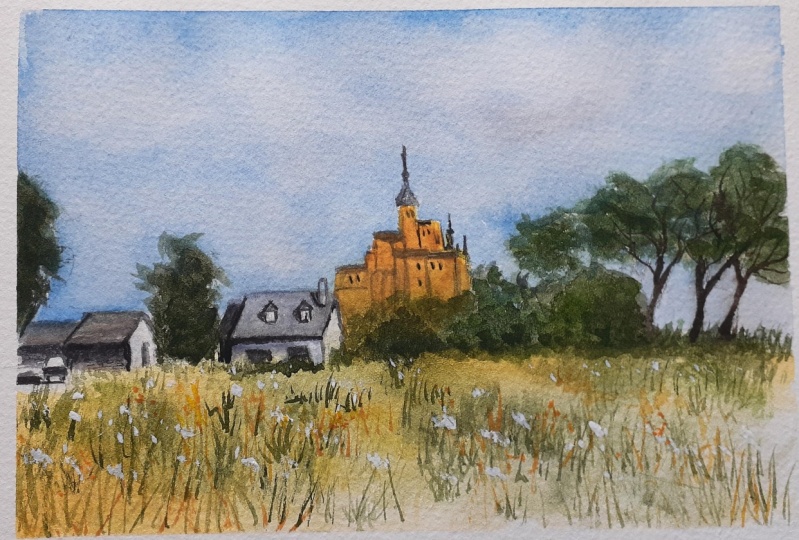
not necessary. Great. So finished this one off
 Watercolour Mentor (Darren Yeo Artist), Art Classes, Mentoring & Inspiration!