Watercolor Golden Laburnum tree, Amaltas, Cassia Fistula, Golden Chain | Lavina Agarwal | Skillshare

Playback Speed


1.0x


  • 0.5x
  • 0.75x
  • 1x (Normal)
  • 1.25x
  • 1.5x
  • 1.75x
  • 2x

Watercolor Golden Laburnum tree, Amaltas, Cassia Fistula, Golden Chain

teacher avatar Lavina Agarwal, Water Color Artist and Educator

Watch this class and thousands more

Get unlimited access to every class
Taught by industry leaders & working professionals
Topics include illustration, design, photography, and more

Watch this class and thousands more

Get unlimited access to every class
Taught by industry leaders & working professionals
Topics include illustration, design, photography, and more

Lessons in This Class

    • 1.

      Introduction

      1:23

    • 2.

      Art Supplies

      1:35

    • 3.

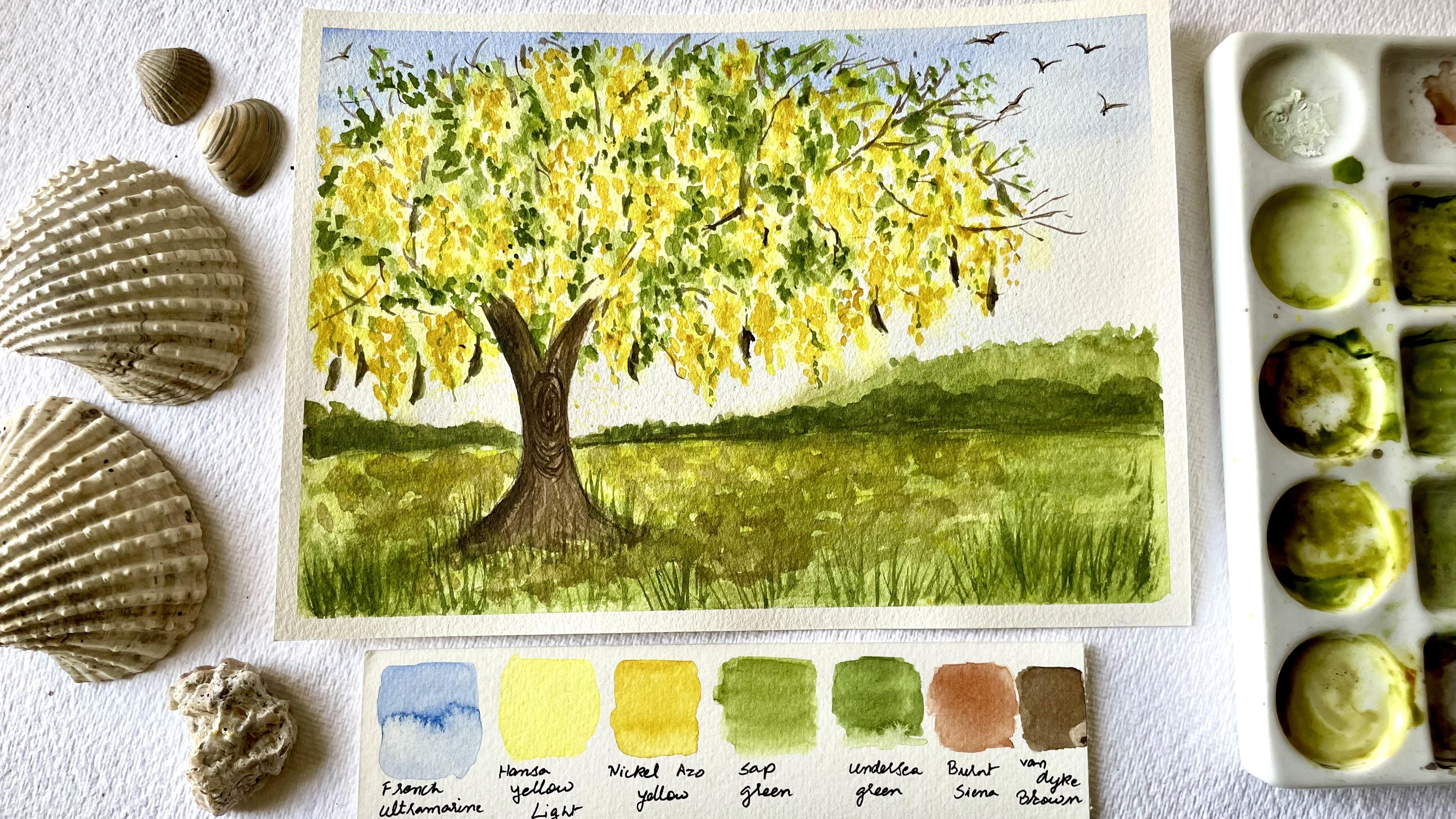
      Color Swatches

      2:11

    • 4.

      Tree Study and Sketch

      2:14

    • 5.

      Laburnum Tree - First Layer

      4:53

    • 6.

      Laburnum Tree - Second Layer

      7:03

    • 7.

      Laburnum Tree - Final Layer

      10:23

    • 8.

      Laburnum Tree - Final Thoughts

      2:07

  • --
  • Beginner level
  • Intermediate level
  • Advanced level
  • All levels

Community Generated

The level is determined by a majority opinion of students who have reviewed this class. The teacher's recommendation is shown until at least 5 student responses are collected.

182

Students

7

Projects

About This Class
About This Class

If you love nature, watercolor and wish to paint lovely trees, then this class is for you!

I love painting trees in watercolor and love to experiment with different colors and techniques for painting trees.

In this class you'll learn:

  • Art Supplies needed for the painting
  • Study of the tree structure and creating the sketch of the tree
  • Colors required for the class project.
  • Wet on Wet Technique that you can apply to any watercolor project! 

You’ll be creating:

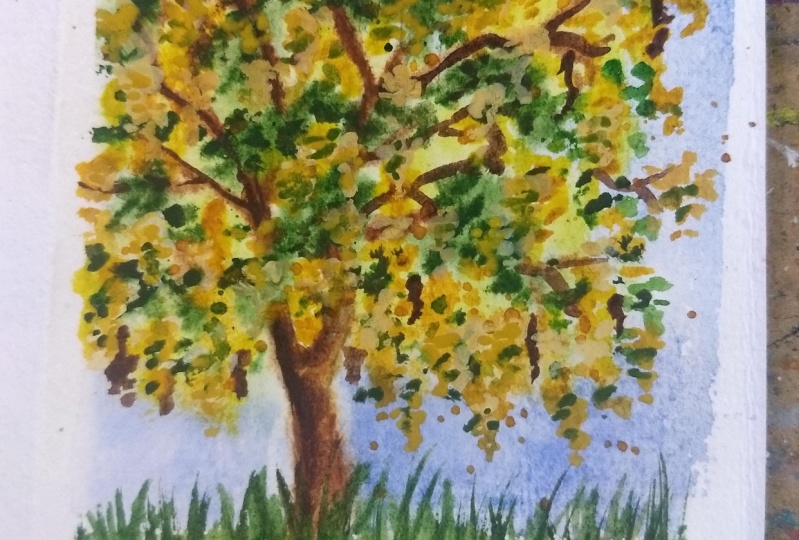
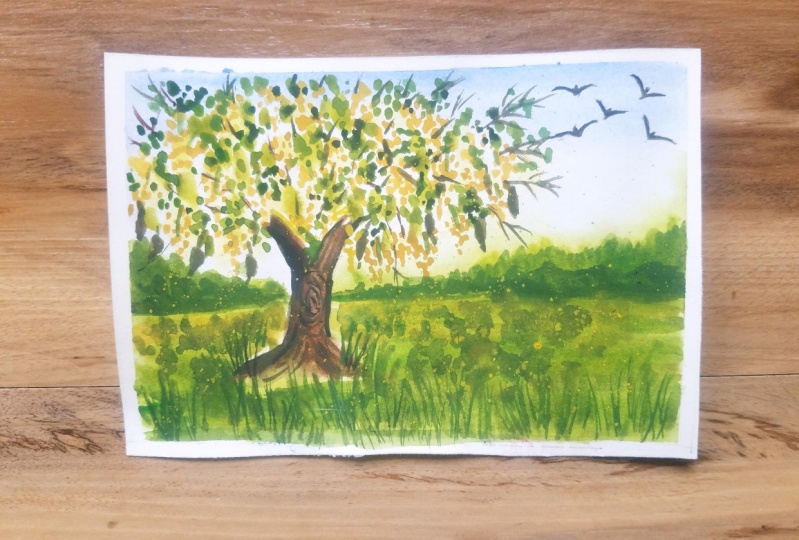
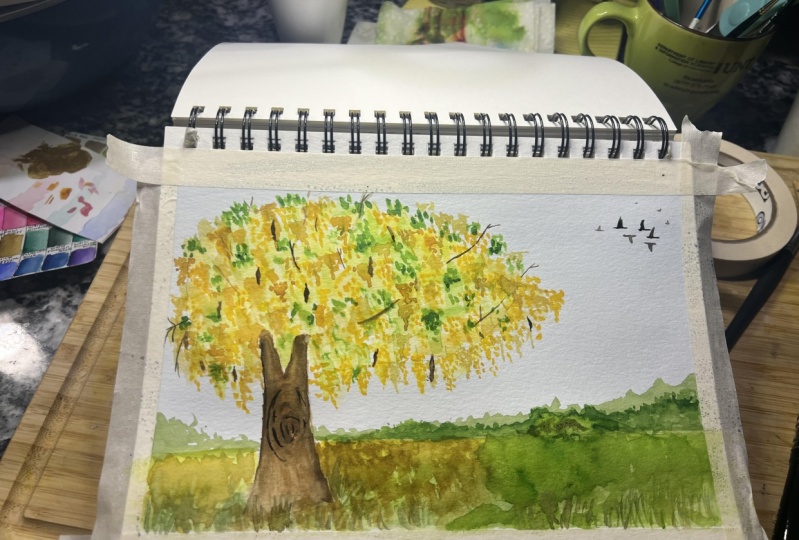
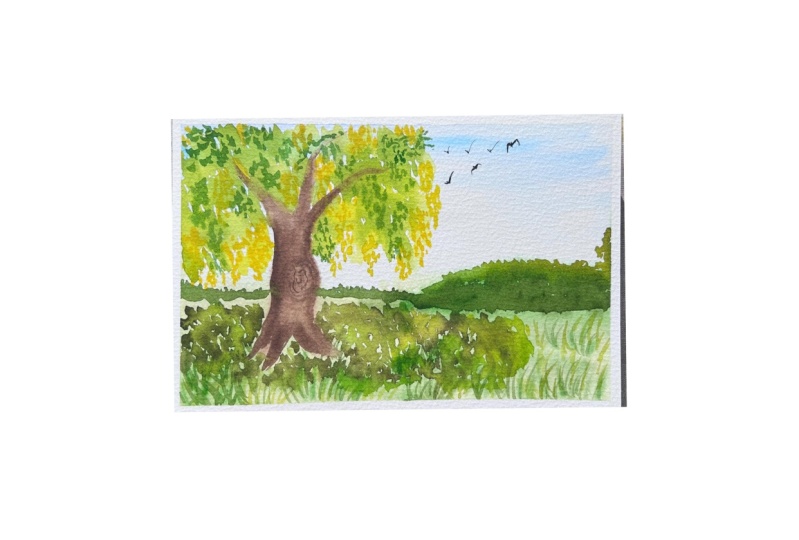
  • A beautiful Laburnum tree in watercolor using the techniques from this class.

This class is beginner friendly, so even if you’re new to watercolor, you will find the steps simple and you can create the class project with ease.

You can also find Lavina here:

Instagram: @lifes_litle_treasures 

https://www.instagram.com/invites/contact/?i=1az872vrvsnzl&utm_content=3r5ygtm

Youtube: https://www.youtube.com/channel/UCXh1cZdt7D3NXFXBhxSSosg

Background:

The laburnum tree looks like a normal tree most of the time, but in summer, when it is in full bloom, it transforms into a dazzling, golden and splendid tree covered with flowers of Sunshine. When the wind blows, it feels like golden shower is bestowed on the passerby. The ground is filled with a beautiful carpet of yellow flowers.

I have always been mesmerized by the beauty of this tree. So thought of capturing its essence in my painting and sharing the complete process with you all :)

So let us create this gorgeous tree in this quick and fun class!  

Thanks for joining in :)

Lavina

Meet Your Teacher

Teacher Profile Image

Lavina Agarwal

Water Color Artist and Educator

Teacher

Hello Friends,


I am Lavina Agarwal, a watercolor artist from India. I go by the name @lifes_litle_treasures on Instagram. 

I am a software professional during the day, and passionate watercolorist in the evenings and weekends :)

See full profile

Level: All Levels

Class Ratings

Expectations Met?
    Exceeded!
  • 0%
  • Yes
  • 0%
  • Somewhat
  • 0%
  • Not really
  • 0%

Why Join Skillshare?

Take award-winning Skillshare Original Classes

Each class has short lessons, hands-on projects

Your membership supports Skillshare teachers

Learn From Anywhere

Take classes on the go with the Skillshare app. Stream or download to watch on the plane, the subway, or wherever you learn best.

Transcripts

1. Introduction: Just down the road from where I live alone, labor grows. But come this summer, golden light is trapped within the tree. Legos of sunshine club the tree and dazzle every I and every above alpha, we would please drops gold on passes by. Even the ballpark down the street, smiles when he sees this tree. And for some moments he can feel a joy that comes for free. Hello friends. A warm welcome to this class. Here we will learn to paint this gorgeous labor node tree. It is also called as Golden Shovel or golden rain, or golden chain because of its beautiful a yellow flower, flowers which cover the entire tree. I will take you through a step-by-step process. Maybe we'll discuss all the colors that are required and all the techniques that we will be using in this class. To quickly introduce myself. I'm Latina a gerbil, a passionate watercolor artist and instructor living in India. You can connect with me on Instagram at life's little treasures. Let's create magic by painting this gorgeous tree. See you in the next section. 2. Art Supplies: Let us look at the art supplies that we will need. Here I have taken my Arches watercolor people, which is 300 GSM and a 100% cotton. And I have stuck it on this board using the masking tape. Next, we will need a pallet to mix the colors. So I'm going to use this ceramic palette here. You can use any palette that is available with you. Next, I will be using this big mop brush to wet the paper. You can even use of flat brush or a hockey brush to wet the paper. I will be using this Princeton size number six brush for creating the flavors and the tree. And also this thin liner brush or rigger brush to give the buy new details like creating the different branches. We will also need a pencil and an eraser to sketch the tree. I will also be using the spray bottle to wet our paints and also jar of clean water for our painting. I will walk you through all the watercolors that we will need in the next section. That's it for the supplies. See you in the next section. 3. Color Swatches: Let us look at the colors that we will need for this project. The first color that I'll be using is ultramarine blue. So we're using the very diluted ultramarine blue for the sky. You can take any blue. If you have cobalt blue portion blue, you can take a diluted form of any blue color. Next we will be using hansa yellow light. And this is from Daniel Smith. You can use any other light yellow that you would have. It could be lemon yellow or any other light yellow mixed we will be using Indian yellow. This is also called as nickel, SO yellow in Daniel Smith. Next we will need sap green. This is available in most of the watercolor sets. I'm using alter Daniel Smith watercolor paints in this project. You can use any watercolors that are available with you. As you progress with your creative journey, you should definitely try to invest in more good-quality water colors so that you can get even good results. But for this project you can even use student grade colors. Next, we will be using undersea green. So this is a darker green. If you do not have the exact color like undersea green, you can mix them CPR, little brown color to your sap green. This way you can create this dark green color. Maybe we'll be using some burnt sienna. Lastly, we will be using Van **** brown. It you can even use sepia if you do not have this color. You can experiment with the colors that you have and try to create similar shades. See you in the next section. 4. Tree Study and Sketch: Let us look at the structure of the lab Burnham tree. Here you can see this beautiful tree with the yellow flowers and green leaves. We have gorgeous examples where the yellow flowers are adorning the tree and it is looking like golden chain. Here we have another pretty example which is quite similar to our class project. The beautiful golden shower is hanging from the tree. And we can see the leaves in-between and the widespread drunk. We will be creating the class project. Similar to this, you can check different reference images, either on Google or Pinterest, or also some of copyright free sites like Unsplash, which have lots of reference material. For our class project, we will be having a very simple sketch. I'm just creating this horizon line here. And I will sketch a very simple tree. So this is the broad trunk for the tree. We have a V-shape on top. Now I'm creating a little dome kind of structure. So you can consider umbrella shape or a dome shape, the tree. So this is the rough shape that we will consider for the tree, but the foliage can extend beyond this. I dropped my horizon line, I just want to move it a little down. I liked the horizon line over here. This is also following the rule of thirds, where we divide the paper into three imaginary areas and the horizon line is falling on bottom-most area of the paper. This is our simple sketch. See you in the next section. 5. Laburnum Tree - First Layer: Welcome back. Now, let us work on the first layer of our beautiful golden chain or golden shower tree. I'm wetting the paper with clean water. I'm using my mop brush. You can use any flat brush or big brush to wet the paper and make sure the paper is completely wet. So I'm applying water multiple times that it is absorbed nicely by the paper. Now I'm taking my size eight round brush and picking some French ultramarine. I'm taking a diluted mix of this blue color to create our sky. As our paper is already wet, the color will blend beautifully on the paper. And I want it to be light because we are depicting a clear days guy. So as we move down, I'm just spreading the same color. I'm not taking any more color. I'm just spreading it so that it is lighter as we move down. I'm putting a very diluted blue on the lower side. So this is near the horizon and it is very light. On the top portion, I will add a little more blue watercolor dries a shade lighter. So that is why I'm putting a little more blue. I'm also taking some plain water and rewriting the tree and the ground to be sure that the paper is VET as we are going to apply the colors on this area. Now I'm taking some Hansa Yellow Light. So this is a very pretty light. Yellow color. I am a plane this on the tree in the form of small triangular shapes. This will depict the grape like structures hanging from the tree that forms the golden chain. And it looks beautiful. Make sure you cover the entire tree with these yellow florets. So this makes the Lebanon tree so beautiful and so full of this lush yellow golden chain. It feels as if it is reading gold from the sky. I will also take this diluted yellow and apply it on the ground. The florets from the tree also spread on the ground grind. It looks like we have a beautiful yellow carpet on the ground. Now I'm taking some sap green. I will take a diluted mixture of sap green and apply in-between the yellow florets to depict our leaves. I will also apply this diluted sap green on the ground to depict the grassy area that we have. Now I'm taking some undersea green to paint a distinct bushes in our scenery. These are like faraway trees or bushes. I'm using this dark green for creating this. I'm just giving the impression of bushes. Now I'm taking some burnt sienna and creating the trunk for the tree. We're done with the first layer of our painting. See you in the next section. 6. Laburnum Tree - Second Layer: Now that our first layer is completely dry, let us work on the second layer. Here. I'm taking Indian yellow, or also called as Nicholas yellow. I'm creating these small grape like structures hanging from the tree. Make sure you IDs abundantly has. The Lebanon tree is so full of them. There is hardly any leaves visible. I did abuse like a beautiful golden tree. I will also apply this Indian yellow on the ground. So this will represent the following flavors from the tree on the ground, which create a beautiful yellow carpet. Now I will take some sap green, and we will create the little leaves for the tree. I'm just doing a dab motion with the brush. This is a round brush that I'm using. And by just dabbing the brush, we are able to get this leaf-like structures. You can create these leaves on the areas where we have the earlier green color. And also you can extend it to the outer portion of the tree. Now I'm taking some concentrated sap green. This has very little water. I'm creating few leaves here in these dark leaves will depict the shadow of the leaves. Now I have mixed the sap green with water, so I have diluted it a little. I'm spreading it on the ground. By working on these different layers, we are able to achieve the depth effect on the ground. It will add to the beauty of the project. I'm just taking some plain water on my brush and blending the colors on the ground. You can see the ground is looking so pretty and it feels like it is full of lush green grass. Now I will take some undersea green and create vertical strokes. This will represent the grass as the entire ground is full of grass, but we are able to see some blades of grass which are near to us. No, I'm just applying plain water on the distinct bushes that we have created. Make sure it is not too much water. And now I will take some undersea green, give these bushes little more depth. You can add some more grass with a darker color that you have a variety of grass. We are done with the second layer of our painting. See you in the next section. 7. Laburnum Tree - Final Layer: Welcome back. Now we will work on the trunk of the tree and the branches. I have taken Van **** brown. You can also take sepia. You can create a dark brown by mixing burnt sienna and indigo. And we will work on these different branches. Now I will take some diluted when they run and apply on the trunk. So I will create the trunk with one side with darker light. So this will give the impression of shadow and it will create the texture on the trunk. I'm just picking some colors from the trunk on my kitchen table. You can also use a tissue paper and this cleared a beautiful white highlight on the trunk. I'm also creating some twig branches. Now I'm adding some seed boards. So the Lebanon tree has a beautiful collection of seeds in the form of these brown hangings. I'm just calling you to seed board. And it appeared to be hanging from the tree. Nature has such a lovely way to propagate these bunches of seed. So much beauty to the tree and also added lovely contrast. Again, using the Van **** brown, I'm adding some texture to the tree. I will give it some pattern and make a circular kind of structure. It gives a beautiful texture to our tree trunk. I'm also adding some branches. I'm keeping my brush vertical so that I can get these thin branches. And it's like a free hand drawing so you can freely add the branches wherever you feel. Now I'm taking the hansa yellow light again, filling in the gaps. So wherever there is some whitespace that is visible, I'm filling this whitespace with the diluted yellow. Hamilton show applying this light yellow on the ground to give the highlight for the yellow that we already have. Now I'm taking some sap green and creating the bushes. I'm creating a second layer of bush in front of your bushes. I'm just creating random zigzag motion. So it gives the impression of leaves. Now I will take some diluted sap green, again, reinforce the leaves. I'm doing this motion again on the tree to just highlight some of the leaves. I'm just picking some Van **** brown, again going over the seed boards to give them a little highlight. Now I'm taking a dot mix of Indian yellow and brown. So you can either use Van **** brown or CPR and mix it with the Indian yellow. We will create the shadow of the tree with this dark mix. You can see we're getting such a beautiful shadow effect by using this dark mix. So we are not covering the entire ground with this dark mix, but we are trying to replicate the effect of the tree. Like the leaves are scattered at few places and they are full at some places, we are trying to imitate the tree on the ground by this dark color. Also, you can observe that once we add the shadow, the painting gets a beautiful three-dimensional feel to it. Now I'm taking some dark green on my pointed brush. You can even use a liner brush and just draw some grasses. This will create a nice dimension to the earlier grasses that we created. You can add the grass abundantly around the tree. Now I will take some diluted hansa yellow light. I will fill my brush and tap it using another brush. So this, this is called splatter and it gives a beautiful effect to the painting. Now I'm taking some sap green on my liner brush or rigger brush. I'm creating little stems to our yellow flowers. These flowers of Cleburne DOM tree, they have little green stem visible from the yellow florets. Deliberately adding those little stems between the flowers. Now I'm taking some brown color on the liner brush and creating small v shapes to represent the boards flying in the sky. Just as a finishing touch, I'm taking the Indian yellow again. Just reinforcing the florets by doing the dot dot pattern on the floor. It's again, we are almost done with the painting. See you in the next section where we will give the final touches to the tree trunk and also do the anti-doping. 8. Laburnum Tree - Final Thoughts: Welcome back. Now I'm taking some Van **** brown on my liner brush and just going over the tree trunk in the circular motion to create the texture of the tree and make it more prominent. I'm also creating some blades of grass with this brown color to add more depth to the grass. I'm also adding some small, tiny tweaks to the tree. This gives a very fuller look to the tree. I'm also taking some brown color and creating the border for the boards. So this gives more definition to the boards. I'm adding a little highlight to the seed boards to give them more texture. Just going randomly and adding more branches. Now the most fun part of revealing our painting by removing the masking tape. Congratulations on completing this project with me. I'm so thankful that you join this project and I hope you learned something very interesting. And you are able to create this beautiful, gorgeous tree. Do upload your creations in the project section on Skillshare. I can't wait to see your creations and shared them. And if you're on Instagram, you can tag me at life's little treasures. Thank you for joining. See you again in my next class.