Transcripts
1. Decide How Long to Work Without Feeling Guilty : Have you ever started
working and then kept going longer than you meant
to even when you felt tired? Maybe you tell yourself
just a few more minutes, and suddenly the
day feels heavy. If that sounds familiar,
you are not alone. Many beginners struggle
with knowing when to stop. It can feel confusing. If you stop too early,
you might feel lazy. If you keep going,
you feel drained. That back and forth
feeling is exhausting. Here we are going to make
one simple decision, one. By the end of this,
you will know exactly when you are
stopping work today. Not roughly, not maybe clearly. I and Paul help beginners build simple
productivity habits in a calm and steady
way so they can feel safe taking
small steps forward. I used to work until I
felt completely empty. I thought that meant
I was serious, but honestly, I was just
tired and unfocused. When I learned to choose
a clear stop time, something shifted.
I felt lighter. I worked better, and I didn't
feel guilty for resting. I like this topic because
it protects your energy. It gives you permission to
be human. That matters. This will work on its own, and it also fits naturally with other simple productivity ideas if you choose to
explore more later. This is not for
advanced planners who already track every
minute of their day. This is for beginners who feel unsure about
how long to work. If you sometimes
overwork or drift without a clear ending, you
are in the right place. You only need a piece
of paper and a pen. That's it. Here's
what we will do. First, we will understand why choosing a
stop time matters. Then we will choose
today's work session. After that, we will pick
one clear stop time. Finally, you will
write it down in a simple way that feels real. If you are feeling overwhelmed right now, take a slow breath. We are going to keep
this very simple. You do not need to change
your whole life today. You only need to
decide one time. Let's begin gently.
2. #Set One Clear Stop Time for Today : Sometimes the hardest part
of working is not starting. It is stopping. You
might feel sure. Should I keep going?
Is this enough? Am I doing too little? That uncertainty
creates tension. So your small project
here is very simple. You will set one clear stop
time for today. Just one. You will build this
slowly as we go. First, you will choose what work session you
are talking about. Then you will pick one
exact time when it ends. Finally, you will write the
stop time clearly on paper. Your only material is paper
and pen. Any paper is fine. A notebook, a small, sticky note, even the
back of an envelope. You do not need a fancy planner. As we move forward, you
can work a lot with me, pause if you need to, rewind if something feels unclear.
There is no rush. By the end, your
finish project will be one short written line that shows your clear
stop time for today. That's it. One sentence. Very simple, very real. You do not need it
to look perfect. You just need it to exist. If you're here, you are already doing something
kind for yourself. That matters. Let's
understand why this works before we
write anything down.
3. Understand Why a Clear Stop Time Changes Everything : You might think the problem is laziness or lack of discipline, but often the real problem
is lack of clear ending. When there is no clear ending, your brain stays
slightly on alert. It keeps asking, should I
continue? Should I stop? That small questions
drains energy. A stop time is simply a pre decided moment
when work ends, not because you failed,
not because you gave up, but because you chose it. There are three simple
ideas behind this. First, a boundary reduces guilt. If you already
decided to stop at a certain time, you
are not quitting. You are following your plan. Second, a boundary
increases focus. If you know you are working
until a specific time, you naturally pay more
attention during that window. Third, a boundary
protects energy. You leave the session
with something left inside you instead
of feeling empty. For example, if
you tell yourself, I will work until the
afternoon, that feels vague. But if you say I will stop at five in the afternoon,
that feels clear. Clarity feels lighter. When I started using stop times, I noticed I felt calmer. Even if I only worked for a short period,
it felt complete. So here's the simple
flow we will follow. First, choose which work session you are setting a boundary for. Next, pick one exact stop time. Finally, write it down clearly
so your eyes can see it. This flow works because it turns a floating feeling into
something concrete. Instead of guessing
when to stop, you decide in advance. In simple words, we are not deciding how much to do forever. We are only deciding
when to stop today. That small shift changes
how the day feels. Now, let's start building
your one clear time.
4. Choose Today’s Work Session : Sometimes the day feels
full of random task. You might think I
have so much to do. It feels messy. That can make it hard to
choose a stop time. So we will narrow it down. All you need right
now is paper and pen. That's your only material. At the top of your paper, write this title
exactly as shown. One time boundary. Keep that title simple. Just those words. First,
think about today, not tomorrow, not next
week, just today. Example, imagine you plan to work on your laptop
this afternoon. Next, choose one
specific work session. Maybe it's writing emails, maybe it's editing a video, maybe it's studying one chapter. Choose one session only. Then, under your title, write a short sentence
that names the session. For example, right,
today's work session, editing my lesson video. Keep it simple and real. After that, read the sentence
quietly to yourself. Today's work session,
editing my lesson video. Notice how that
already feels clearer. Then pause for a moment. You have not chosen
to stop time yet. You are only choosing
the session. If you're not sure
what to choose, pick the session you
plan to start soonest. For example, today's
work session, answering client emails
or today's work session, studying math notes.
Do not overthink. This is not about picking the most important
task in your life. It is just about choosing one session to place
a boundary around. When I first started, I
would sometimes choose something very small like
today's work session, organizing my desktop
files. That was enough. Look at what you wrote. You have a title and one sentence that names
your work session. That is already a shift
from vague to specific. You just turned a floating
idea into a visible line. That small act builds calm, and we are just getting started. Now that your session is clear, we can gently decide
when it ends.
5. Pick One Exact Stop Time : Now that you know which
session you are talking about, you might feel a
little pressure. How long should I work? Is this too short? Is this too long? That is normal. Most beginners think they need to choose
the perfect amount of time. You do not need perfect. You need clear. So let's choose one
exact stop time. Look at your day today. Think about your schedule
in a simple way. If it is afternoon right now, maybe you plan to start
working at three. For this example,
let's imagine you are starting at three
in the afternoon. First, glance at the clock.
Notice the current time. Next, decide on a
reasonable stopping point. No extreme, not heroic,
just realistic. For example, you might decide I will stop at five
in the afternoon. Do not say I will work for a
while, say the exact time. Then on the same paper, under your session sentence, write stop time five
in the afternoon. Keep it that simple. If you are starting at
seven in the evening, maybe you choose stop time
eight in the evening, or if you're working
in the morning, you might write stop
time 11 in the morning. Notice something important. We are not choosing how
much you will finish. We are only choosing
when you will stop. That shift reduces pressure. When I started doing this, I often chose shorter session
than I thought I should. I would think, Is this enough? But once I honored my stop time, I felt proud instead of drained. After writing your stop time, read both lines together. Today's work session,
editing my lesson video. Stop time five in the afternoon. See how it feels more solid now. You are not promising
endless work. You are defining a container. That container protects you. This is where many people stop. They think the decision
is in their head, but we are going one step
further to make it real. Let's make this boundary
visible and final.
6. Write Your Stop Time Clearly and Commit to It : Even after picking a stop time, you might feel a tiny doubt. What if I change my mind? What if I feel guilty
later? That is okay. Doubt does not
mean you are weak. It just means you care. Now, we're going to turn this into something firm but gentle. Look at your paper again. You already have one time
boundary today's work session, editing my lesson video. Stop time five in the afternoon. First, rewrite the stop time
one more time on a new line. Slightly larger or darker. For example, I stop at
five in the afternoon. Write it slowly. Let your hand fell it. Next, read that line
out loud, if you can. I stop at five in the
afternoon. Notice the feeling. It's a choice, not a punishment. Then take a small pause. Imagine the clock. Imagine closing your laptop. Imagine standing up. After that, gently
remind yourself that stopping at that time is
success, not failure. You are not stopping
because you are tired. You are stopping because
you decided in advance. Finally, place the paper
somewhere visible on your desk beside your keyboard and your notebook that
you will open later. This is your boundary. When I first practiced this, I felt strange ending work
while I still had energy. But over time, I noticed
something powerful. Because I stopped on purpose, I returned the next
day with more focus. Look at your paper
one more time. One time boundary,
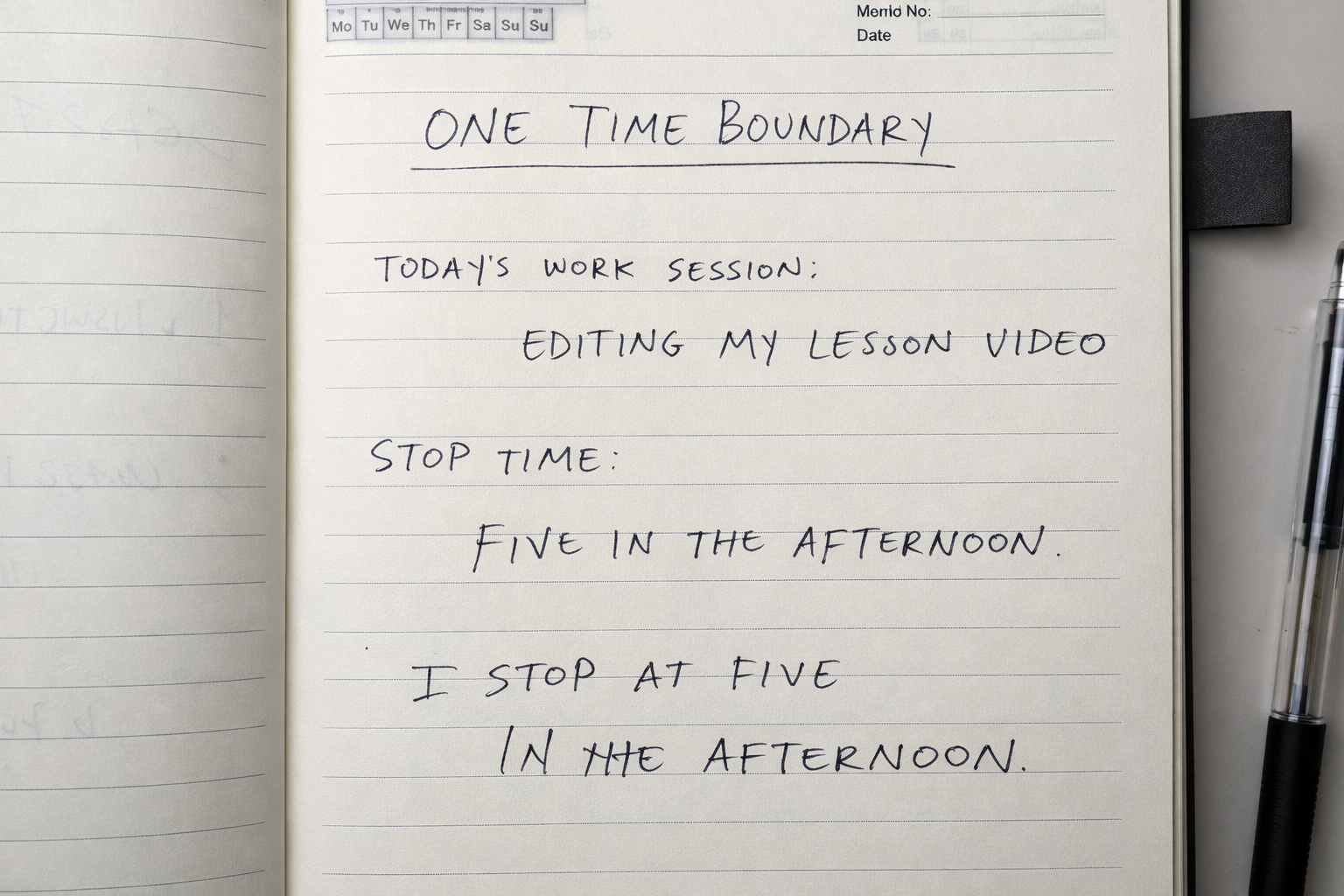
today's work session, editing my lesson video, stop time five in the afternoon. I stop at five in the
afternoon. That is complete. Before you might have worked
until you felt drained. Now you have a clear ending. You did not redesign your life. You made one calm decision. That is steady progress. Take a breath. You just created your first
clear time boundary.
7. Review Your One Clear Stop Time : Your project is
simple and powerful. You created one clear
stop time for today. You use paper and pen. At the top, you wrote your project title
One time Boundary. Then you named your session
and your stop time. Finally, you rewrote your stop
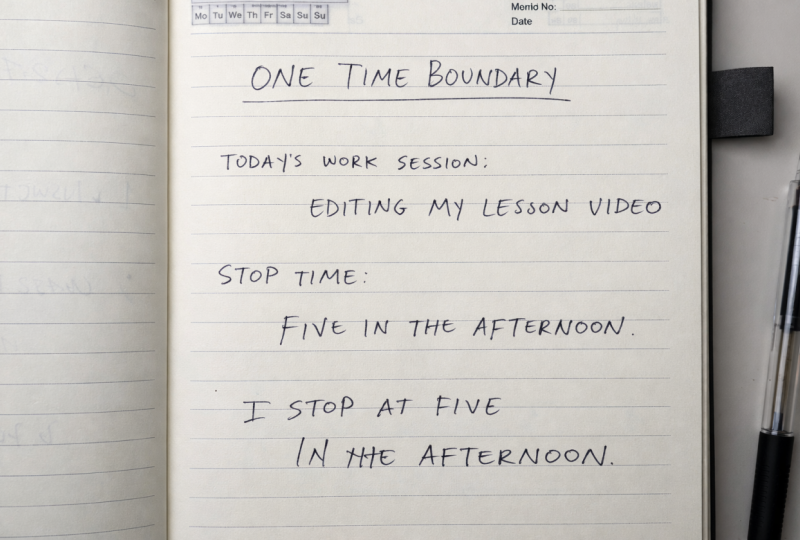
time as a clear sentence. Here is a full finished example. One time boundary.
Today's work session, editing my lesson video, stop time five in the afternoon. I stop at five in the afternoon. That is the final project. We started by
choosing the session. Then we picked one
exact stop time. Finally, we wrote it clearly
and make it visible. This works because it turns a vague feeling into
a visible boundary. It is small, but it changes
how your day feels. Completion brings calm.
To upload your project, take one photo of
your written page. Make sure the stop time is clearly visible at
the project title and a short description
like my clear stop time for today.
That is enough. The best time to upload is
right after you write it. Do not wait until
it looks perfect. Most students upload
simple imperfect pages. Even a quick two
minute version counts. No one expects perfect
handwriting here. This page is for practice. Once you upload it, you
have closed the loop.
8. Handle Doubts About Choosing a Stop Time : You made it through
everything from start to finish that is
something to feel good about. It is normal to still
have a few questions. Let's go through
some common ones. First question. What if I finish early
before my stop time? That can feel strange at first. If you finish early,
you can still stop at your chosen time because the boundary is about
time, not output. For example, if you plan to edit your lesson
video until five, but you finish at 4:30, you can use the
remaining minutes to lightly review or simply rest. The reason this works is because the boundary protects
your energy. Not just your task list. Second question. What if I feel motivated and I want to keep
going past my stop time? That is a very common feeling. If you feel motivated, you can choose to stop anyway because you are
training consistency. For example, if your paper says, I stop at five in the
afternoon and five arrives, you close your laptop. This builds trust with yourself. When you keep
promises to yourself, even small ones, your focus
grows stronger over time. Third question. What if I picked a stop time that feels
too short? That happens. If you notice that your
chosen time feels too short, you can adjust it tomorrow. For today, honor what you wrote. For example, if you wrote a
stop at eight in the evening, but you realize you only
worked for 30 minutes, that is still success. You followed your boundary. Tomorrow, you can choose a different stop time
that fits better. Here is a simple tip
that might help. If you often feel unsure, choose a stop time that feels slightly earlier than
you think you should. For example, if you believe
you need 3 hours, try two. Ending with a little energy left makes it easier to
start again tomorrow. One more mindset shift. Instead of asking,
did I do enough, ask, Did I honor my stop time. That small question
turns doubt into action. Keep coming back to
your written page. It is simple, but
it is powerful.
 Paul Nene, Helping beginners take action