Transcripts
1. Reflect at the End of the Day Without Overthinking: If you often reached the end
of the day feeling tired, unsure where your time went, or quietly worried about
tomorrow, you're not alone. Many beginners feel this way, especially when days feel
full but not satisfying. That feeling usually
comes from not pausing long enough
to gently look back. Not to judge, not to fix
everything, just to notice. Here, we are going to take
one small calm step together, a short end of day
reflection that helps tomorrow feel clearer
before you even wake up. Even if your day felt messy, the fact that you are here
means you already care. That alone is a
small win. I'm Paul. I help beginners build simple time habits that
feel human and doable, not strict or stressful. For a long time, I ended
my days scrolling, feeling behind, and hoping tomorrow would somehow
be better on its own. It rarely was. What
changed for me was learning to pause for just a few minutes at
the end of the day, not to plan a perfect life. Just to gently close the day and give tomorrow a soft
starting point. That's what we'll
do together here. This is for busy
beginners who want less mental noise at night and a clearer
head in the morning. If you already love
complex planning systems or detailed productivity tools, this may feel too simple. But if you want calm clarity, this is exactly the right place. You do not need any
apps or fancy tools, something to write on
and a few quiet minutes. As we go, we will build one simple written
reflection together. Slowly, kindly, step by step. By the end, you will have something you can
reuse every day. Let's begin gently.
2. Create a Simple End of Day Reflection Page: If planning tomorrow
feels heavy, it often helps to start
earlier than tomorrow. Not in the morning, but right
now at the end of today. The small project we
will build together is a single end of
day reflection page, one page, one place, no extras. This page will leave on paper
or in a simple notes sap. Choose one and stay with it. I recommend plain
paper if you have it because writing by hand slows
the mind in a helpful way. But digital notes
are perfectly fine. The reflection page is something you build gradually as we go. Each lesson adds
one small piece, nothing complicated, nothing
you have to memorize. By the end, your page will show three gentle things
what mattered today, what felt heavy or unfinished, and one simple
focus for tomorrow. You are welcome to pause, rewind or write along with
me. There is no rush. The final result will look
like a short, honest note. You leave yourself,
not a checklist, more like a quiet conversation. Perfection is not the go. Clarity is. If your page
feels messy or short, that is still a success. You are already doing the
work just by showing up. Let's look at the simple
idea behind why this works.
3. Why Looking Back Helps Tomorrow Feel Lighter: When days feel overwhelming, it is often because everything stays trapped in your head. Thoughts bounce around and finish things feel
louder at night. End of day reflection
is simply a way to move those thoughts out of your head and onto
something you can see. In very simple words, this practice help you close the day before
starting the next one. There are three gentle
parts to this idea. First, noticing. Calmly notice what
actually happened today, not what you wish
happened, what did. Second, releasing. You give your mind
permission to stop holding unfinished thoughts overnight
by writing them down. Third, guiding. You leave yourself one clear
direction for tomorrow, so you are not guessing
in the morning. For example, if you finish a busy day and
immediately go to sleep, your mind keeps
replaying everything. But if you write a
few honest lines, your brain feels heard. This works because clarity
reduces mental noise. When your thoughts are visible, they feel smaller
and more manageable. Here's the sinful
flow we'll follow. First, we write one short line
about what mattered today. Next, we write one short line about what felt
heavy or unfinished. Finally, we write
one gentle focus for tomorrow. That's it. Let's do it slowly together.
4. Write What Mattered Today: If you reach the end of the day feeling like nothing
meaningfully happened, that can quietly drain
your motivation. That feeling is more
common than you think. Before we do anything else, we are going to anchor the day. Take your paper or
notap at the top, write this title exactly
and keep it unchanged. End of day reflection. Under that title,
live a small space. Now, write this
line. Today, what mattered was pause for a moment. Breathe. This is not
about productivity. It's about meaning. First, write one simple thing
that mattered today. It can be very small. For example, you
might write that you finish a work task you
had been avoiding, or you might write that you had a calm meal or a short walk. Or you might write
that you showed up, even though you felt tired. Write one on a sentence,
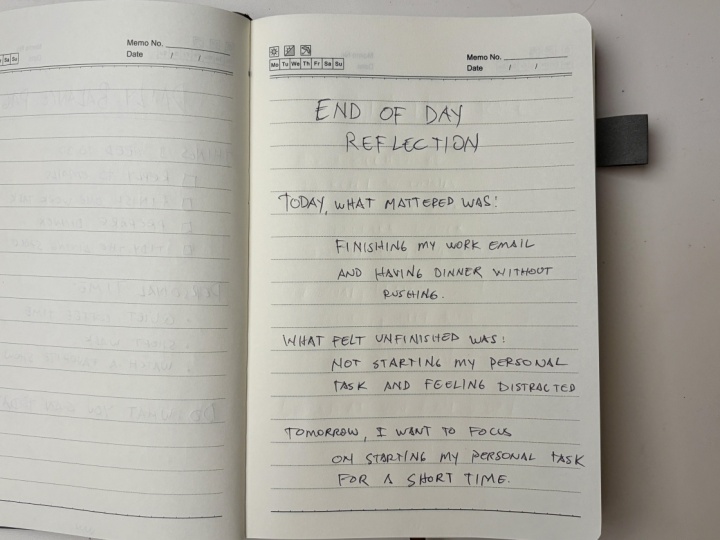
something like this. Today, what mattered
was finishing my work email and having
dinner without rushing. Next, read it once. Slowly, let it land. After that, stop.
Do not add more. One sentence is enough. When I first did this, I expected it to feel
silly, but it didn't. It felt grounding. Like the day had a
clear ending point. This small line reminds you
that your day was not empty. Even if it felt scattered, you are already doing well. You showed up and you noticed. Let's gently add the next piece.
5. Write What Felt Unfinished or Heavy : Sometimes the hardest part of the day is what you
did not finish. Those thoughts tend to
follow you into the evening. Instead of pushing them away, we are going to place
them somewhere safe. Look back at your page. Under your first sentence, leave a little space. Now, write this line. What felt unfinished or
heavy was Again, pause. This is not a compliant list. It is a release. First, choose
one thing, not everything. For example, you might write
that you did not start a task you planned or that a conversation
stayed unresolved, or that you felt mentally
tired all afternoon. Write one calm
sentence like this. What felt unfinished
or heavy was not starting my personal
task and feeling distracted. Now, stop, read it once. No fixing, no solving. Writing this down, you are
telling your mind that it does not have to keep
reminding you tonight. When I started doing this, my sleep improved without
me trying to fix anything. Just seeing the thought
writing down was enough. You are not behind.
You are aware. Let's add the final and
the most important.
6. Write One Gentle Focus for Tomorrow : I morning feels rush or unclear, it often helps to decide one
thing before the day begins. This is not a full plan. It is a gentle direction. Look at the page again.
Under your second sentence, leave a small space. Now, write this line.
Tomorrow, I want to focus on. Take your time here.
This is the calmst part. First, choose one small
focus that would make tomorrow feel better,
not perfect, better. For example, might choose starting one task
for 10 minutes, or you might choose
moving your body once, or you might choose
finishing something simple. Write one sentence like this. Tomorrow, I want to
focus on starting my personal task
for a short time. Notice how this feels different
from a long to do list. It feels later, kinder. When I began ending
my days this way, morning stopped feeling
like guesswork. I already knew where to begin. Before the date felt scattered. Now it feels guided. You have just completed
the full reflection. Slowly, calmly. Take a breath. This is enough.
7. See the Finished Reflection Page : Let's look at the full
reflection page you created. The material is simple
paper or a Noeap. The project title
stays the same, end of day reflection. Here is the complete example
shown in its finish form. End of day reflection. Today, what mattered
was finishing my work email and having
dinner without rushing. One felt unfinished
or heavy was not starting my personal task
and feeling distracted. Tomorrow, I want to focus on starting my personal
task for a short time. This is the entire project. You build it gradually. First, you anchor the day, then you release
what felt heavy. Finally, you guided tomorrow. This works because
it closes the day gently instead of carrying
everything forward. To upload your project,
take a photo or screenshot of your
completed reflection page. Add the project title and a short sentence describing
when you wrote it. The best time to create this
is at the end of the day. Even if it's late, two
or 3 minutes is enough. Keep it simple. Most people
share short imperfect pages. That is more than enough here. Once you finish, you
are ready to move.
8. Common Questions About End of Day Reflection : You made it through
the full flow. It is normal to still
have few questions. Here are some common
ones. First question. What if my day feels too
messy to reflect on? Well, that is very normal. If your day feels messy,
write exactly that. You can name one small
thing that mattered, even if the rest felt unclear because noticing anything
brings grounding. Second question, do I have
to write every night? No, if you miss a
day, nothing breaks. You can return the next evening. This works best when
it feels supportive, not forced. Third question. What if I want to write
more than one sentence? That is okay, but
start with one. If you feel like writing
more naturally, you can. The key is keeping it gentle
so it stays sustainable. A small tip that helps is writing at the same
place each evening. Your brain starts to associate that space with closing the day. One more helpful
mindset is remembering that reflection is not
about fixing your life. It is about being present with.
9. Carry This Calm Forward : You did something
important here. You learned how to end your day with clarity instead of noise. You created one simple
reflection page. You practice noticing
what mattered. You released what felt heavy. You gave tomorrow
a soft direction. If there's one thing I hope
you take with you, it's this. Closing the day gently
changes how tomorrow begins. I believe small habits work best when they
respect real life. Do not need long
routines to feel steady. You just need a few
honest minutes. There's a simple shortcut
hidden in what you already did. Notice, release, guide. When you remember
those three words, you know exactly what to write. I still smile when I see how a messy day can end
in a calm paragraph. It feels like leaving a
light on for yourself. Thank you for being here
and taking this time. When you can upload
your reflection page. Even a quick version matters. This space is for
practice, not perfection. If you have question, ask,
that is always welcome. Should feel proud of the
clarity you created today. You are building momentum
one quiet evening at a time. And tomorrow when
you start your day, you will feel the difference.
 Paul Nene, Helping beginners take action