Transcripts
1. Choose One Clear Goal When Everything Feels Like Too Much : It's easy to feel stuck when
your head is full of plans. Too many ideas,
too many shoulds, and somehow, nothing
actually moves. If you ever opened a notebook, started a blank page, and felt a little tired before you even started,
you're not alone. That overwhelmed foggy feeling is very common for
beginners who want to be productive but don't want their whole life to
turn into a project. Here's the good news. You
don't need better motivation. You don't need a perfect plan. You just need one small
goal you can see clearly. While you're here, we're
going to slow everything down and take one
simple step together. Nothing fancy,
nothing stressful. Just one clear choice. I'm Paul. I help beginners simplify everyday productivity so it feels calm, doable, and human. I used to believe productivity
meant planning far ahead. Mapping everything out and juggling too many goals at once. It looked good on paper. It felt awful in real life. What I learned the
hard way is that clarity doesn't come
from more plans. It comes from choosing less. That's why I like
teaching this topic. It gives people relief. It gives them a place to
start without pressure. As we go, you'll build one tiny project with me
using just paper and a pen. It stands on its own, and it also connects
naturally with other simple habits you
might explore later. This is a gentle
foundation, not a system. This is for real beginners, people who feel scattered, people who want to feel a
small sense of progress today. If you already have a detailed
weekly planning system and love long term roadmaps, this may feel very basic. You can still use it as
a reset or a refresher. All you need is
something to write on and something to write
with. That's it. We'll start by noticing
the goals that feel heavy. Then we'll choose just
one that matters now, and finally, we'll rewrite it so it feels simple and doable. Take a breath. You
don't need to be ready. You just need to be here.
2. Create One Small Goal You Can Actually Focus On : When everything feels important, it's hard to focus on anything. That's usually when people
either freeze or overplan. If that sounds familiar, you're doing nothing wrong. Your brain is just
trying to hold too much. So here's what we're
creating together. One small written
goal, one on paper. This project is called
One Small goal. It's not about the future. It's not about
fixing everything. It's about choosing what deserves your
attention right now. We'll build it slowly as we go. You'll add one piece at a
time in a very relaxed way. You can pause, rewind, or just listen if that
feels better today. All you need is paper and a pen, a notebook page, a sticky note, the back of an envelope, whatever you already
have nearby is perfect. The end, you'll have
one clear sentence written in simple words, a goal that feels light
instead of heavy, a goal you can actually look
at without feeling pressure. Perfection is not required here. Messy handwriting is welcome. This is practice,
not performance. You're already doing
something important by showing up and choosing
to simplify that counts. Let's talk about the
simple idea behind this so the steps feel
calm and make sense.
3. Focus on One Small Goal Instead of Many Future Plans : When beginners feel overwhelmed, it's usually not
because they're lazy. It's because their
attention is split. You might have goals about
work, health, home, money, learning, and personal life all floating around
at the same time. Each one pulls a
little bit of energy. Together, they drain you. Productivity in simple words, is about directing
your attention, not doing more, choosing
where your energy goes. The idea we're using
here is very small. You can only focus clearly on one meaningful
thing at a time. There are a few
parts to this idea. First, heavy goals
are often vague. When something feels unclear, your brain treats
it like a problem that never ends.
That's exhausting. Second, choosing one
goal creates relief. When you decide
what matters now, everything else gets
permission to wait. Third, small and simple
goals are easier to begin. Beginning creates momentum. Momentum builds confidence. For example, if
you tell yourself, you need to get organized
with everything. Your body tenses. If
you tell yourself, you're going to write
one short list today. Your shoulder relax. Same person, different focus. As we go, you'll use
a three part flow. You'll notice the
goals that feel heavy. You'll choose one that fits now. You'll rewrite it
in simple words. This flow works because it reduces mental noise
before asking you to act. It respects your energy. It gives you clarity first. Keep this in mind
as we move forward. We're not adding goals. We're choosing one. Now, let's put pen to paper in
a very gentle way.
4. Write Down the Goals That Feel Heavy Right Now : When your mind feels crowded, it's hard to know
where to start. That can feel frustrating
and a little discouraging. So we'll start with
something easy. We're not choosing yet.
We're just noticing. Grab your paper and pen. That's the only material you need for this entire project. At the top of the page, write the title
exactly like this. One small goal. If you don't have a
clean page, that's okay. I started this habit on scrap paper more times
than I can count. Now, take a moment
and think about the goals that feel
heavy or unclear. Not goals you're
excited about goals that quietly sit in
the back of your mind. First, write one goal
that's been bothering you. For example, you might write Get better at managing my time. Next, write another
one underneath it. Something like start
exercising again. Then add another if
it comes to mind. Maybe organize my work task. There's no right number here. You're just letting
these thoughts leave your head and land on the page. You paper might look
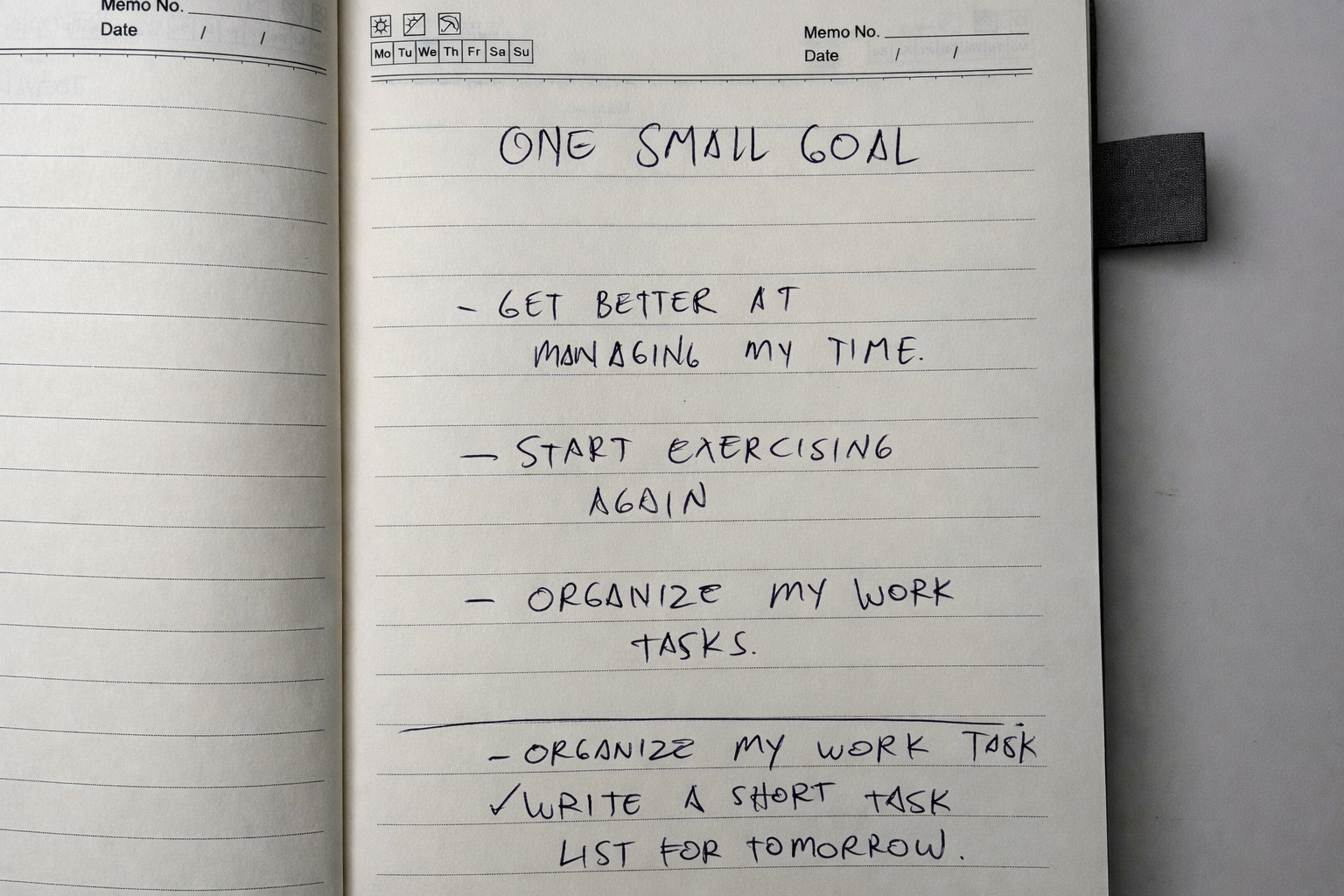
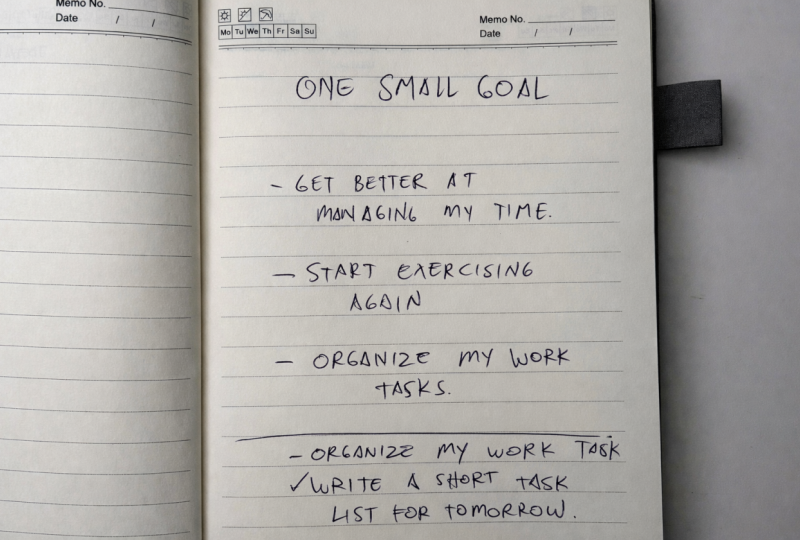
like this right now. One small go, get better at managing my time, start
exercising again, organize my work
task, take a breath, and notice how it feels
to see them written down. You're not committing
to anything. You're just being honest. When I first did this,
I was surprised by how much lighter it felt just
to write things down. No planning, no fixing. This step matters because
it gives you distance. You're no longer carrying everything in your head.
That's enough for now. You've already made
progress by noticing. In the next part, we'll
choose one thing to focus on.
5. Choose One Goal That Fits This Week: Looking at the list of goals
can bring up mixed feelings, relief, pressure,
sometimes both. If that's happening,
that's normal. Nothing has gone wrong. Now we're going to make
one gentle decision, not forever, for now. Look at the goals you wrote. Ask yourself, which one
fits today or this week? Not the most important in life, the one that feels
most possible. You don't need a reason
that sounds impressive. You just need honesty. Let's say you look
at the list and notice that managing
time feels urgent. Exercise feels
important but heavy. Organizing work
feels tied to today. You choose one. Circle it in your mind,
not on the paper. We're keeping the page simple. Now, rewrite only
that one goal on a new line exactly as it is. For example, organize
my work task. Your page now looks like
this. One small goal. Get better at managing my time, start exercising again,
organizing my work task, organize my work task. Nothing fancy change, but
something important did. You chose where your
attention goes. Everything else gets to rest. When I started doing this,
I felt guilty at first, like I was ignoring
other parts of my life. What I learned is that focus
is not neglect. It's care. You're doing well. Choosing
one thing is a scale. Now we'll make that one
goal feel even lighter.
6. Rewrite the Goal in Simple, Clear Words : Sometimes goals feel heavy
because they're written in a way that sounds
big and endless. That can quietly
drain motivation. This final part is about kindness, kindness
toward yourself. Take the goal you choose
and looked at it closely. Ask, how could you say it in
the simplest possible words? Not smarter words,
smaller words. For example, organize my
work task might feel vague, so you rewrite it as
something you can picture. Write a new line that says, write a short task
list for tomorrow. Now, your page looks like this. One small go, get
better at managing my time, start exercising again, organize my work task, organize my work task, write a short task
list for tomorrow. Read that last line slowly. Notice how your body responds. This is the heart of
the whole process. You didn't add more. You clarified. When I first rewrote
goals this way, I felt like I finally
knew what to do next. Before, there was pressure. Now there's direction. You've completed the project. You chose one small
goal and made it clear. That's a real accomplishment.
7. Share Your One Small Goal : The project you created is one written page with one
clear goal at the bottom. The only material use
is paper and a pen. The project title
is one small goal. Here is a finished example exactly as it
appears on the page. One small goal, get better at managing my time, start
exercising again, organize my work task, organize my work task, write a short task
list for tomorrow. This page was built slowly. First, the heavy goals
were written down. Then one goal was chosen. Finally, that goal was
rewritten in simple words. This works because
it moves you from mental overload to clear
focus without pressure. To share your project, upload
one photo or screenshot showing your finish page with the final clear goal visible. Add the project title and a short description if you like. The best time to
upload is right after you finish while it
still feels fresh. Simple and imperfect
is more than enough. Once it's uploaded, you're done.
8. Common Questions About Choosing One Goal : You made it all the way through. It's normal to have
a few questions. First question, what if I chose the wrong
goal? That's okay. If you choose something
that fits now, then it was the
right choice because clarity today matters more
than perfect planning. What if I have more time later? You can repeat the same
process again later because it works whenever
things feel heavy. Third question, what if
my goal still feels hard? If it feels hard, you
can make the words even smaller because simplicity
lowers resistance. Helpful tip is to read
your final goal out loud. If it sounds gentle,
you're in the right track. Remember, the page you
created is flexible. It's meant to support
you, not trap you.
9. Feel Clear by Choosing Less : And you did something
meaningful here. You slow down, you
choose one thing. You learned how to
notice heavy goals. Choose one that fits now and
rewrite it in simple words. If there's one thing I hope
you take with you, it's this. Clarity comes from
choosing less, not more. I believe small
choices done calmly, build real confidence over time. There is a simple shortcut behind everything you did here. Notice, choose, simplify. It spells NCS. That's the rhythm you
followed without even trying. Life rarely gives us
perfect conditions, but it often gives us small
moments to choose focus. Thank you for being here today. Please upload your project
when you're ready. If this helped you, I'd really appreciate if you
leave a review. Your review helps me grow as a teacher and helps other
beginners find this lesson. If questions come up later, that's completely normal.
Feel free to ask. You can be proud of yourself
by choosing clarity today. This is how momentum
quietly begins. Thank you for taking the lesson. I'll see you in the next one.
 Paul Nene, Helping beginners take action