Transcripts
1. Stop Comparing Your Drawing as a Beginner and Feel Calm Again : H if you have ever looked at someone
else's drawing and suddenly felt smaller, slower or behind,
you are not alone. Many beginners sit
down feeling okay. Then one quick look online or at someone else's sketchbook
makes everything feel heavy. That feeling can quietly
steal the joy out of drawing. If this sounds familiar, take a small breath with me. Nothing is wrong with you. This is a very common
beginner experience, and it does not mean you
lack talent or progress. It only means you are human. There is a simple way to shift your attention back to
yourself right here right now, using just paper and a pencil. You do not need to
fix your drawing. You do not need to
improve faster. You only need to notice one small thing about
your own progress. That alone is already a win. I and Paul help beginners
learn new skills in a clear and simple
way so they can feel safe trying something new. I remember very clearly how comparison used to stop
I would draw something, feel okay for a moment, then compare it to someone
else and feel like quitting. That cycle was exhausting. I like this topic
because it's not about drawing better
lines or perfect shapes. It's about protecting
your focus and energy. When you stop comparing,
drawing becomes lighter. It becomes possible
to keep going. That matters more than
any single sketch. While you are here,
we will move slowly. We will work with
one small project using paper and pencil. We will build it gently
across the lessons. By the end of this, you will have one simple sentence that reflects your own progress,
not anyone else's. This is for true beginners
who feel discouraged by comparison and want a
calmer way to keep drawing. If you are already confident
and never compare yourself, you might find this very basic, but even then, it can
be a gentle reset. You do not need special tools. You do not need
experience, paper, a pencil, and a
few quiet minutes. As we go, we will look at why
comparison slows learning, what real progress
actually looks like, and where beginners
often get confused next. We will take it one
small step at a time. If you feel overwhelmed,
that is okay. You are in the right place. Let us start gently.
2. Create a Personal Progress Note on Paper : If starting feels uncomfortable,
that makes sense. Many beginners worry
that they will do the project wrong or
not say the right thing. Well, that pressure often comes from the same
place as comparison. Let me reassure you, this
project is simple on purpose. You will not be judged, you will not be graded. You will create
one short sentence about your own learning. That's it. We will build
a personal progress note. It leaves on one piece of paper. It uses a pencil, nothing fancy. This note is not
about showing skill. It is about noticing yourself. As we move through the lessons, we will slowly shape
this note together. First, we will notice how
comparison slows learning. Then we will look at what
progress really looks like. Finally, we will
gently point out where beginners often
get confused next. Each lesson adds understanding, but the project stays simple. You are welcome to
work along as we go. You can pause, rewind, or just listen first.
There is no rush. By the end, your
finished project will be one sentence written
in your own words. It might look
plain. That's okay. What matters is that
is honest and yours. You do not need to
make it sound smart. You do not need to
explain everything. One clear sentence is enough. You are already thinking,
this seems too simple. That is a normal thought. Simple does not mean useless. Simple is often what
actually works. You are already doing the
right thing by being here. Let us take the next
gentle step together.
3. Understand Why Comparison Steals Your Focus : It can feel
frustrating to compare yourself and not
know how to stop. Many beginners think they
should just be more confident. That usually does not work. Here is a simple idea behind
this topic. Comparison pulls your attention away
from your own learning. When attention leaves,
progress slows. This matters in daily life because drawing is
not just about page. It affects how you feel
starting anything new. When comparison shows
up, it creates tension. When focus returns to
you, things soften. Comparison often works
in three quiet ways. First, it makes you look
outward instead of inward. Second, it skips over
time and effort. Third, it turns
learning into judgment. For example, if you see
a polish drawing online, you may forget how long that
person has been practicing. You may also forget
what you learned today. That gaps creates
discouragement. The simple idea we
will use is this. Progress becomes clear when you look at what
changed for you, not how you rank against others. If you notice one small
thing, you understand now. That you did not before,
that is progress. It does not need to be
visible to anyone else. We will use a short written
sentence to anchor that idea. Writing helps slow the mind. It makes learning
visible in a calm way. As we go, we will first name how comparison
slows learning, then notice what progress
actually looks like, and finally clear up the next confusion
beginners often face. This flow works
because it brings attention back to where
learning happens. Keep this in mind as we move
forward, you are not behind. You are simply in
your own place.
4. Notice How Comparison Slows Your Drawing Practice : If you have ever stopped me drawing because you
felt discouraged, that feeling makes sense. Comparison often shows up
quietly and freezes your hand. Let us start with
paper and pencil. Place the paper in front of you. This is where your personal
Progress Note will live. At the top, lightly write the title Personal
Progress Note. We will keep this style
the same throughout. You can start with any paper
you have printer paper, notebook paper, even a
scrap paper is fine. I started this way, too, with whatever was nearby. First, take a moment
to think about a recent time you compared
your drawing to someone else. You do not need details. Just notice the feeling. Next, write one short
phrase describing what comparison did to your
learning. Keep it simple. For example, you might write, I stopped drawing sooner or I felt discouraged
and rushed. After that, read the phrase
once. Do not judge it. Just notice that you
named something real. That alone is progress. Then gently erase nothing. We are not fixing or correcting. We are noticing. Finally, pause for
a breath and remind yourself that noticing
is part of learning. This first piece shows you
that comparison has an effect. Seeing it written helps take it out of your head and
place it on the page. You have already done
something important. You stayed with
your own experience instead of someone
else's results. That matters. We will
build on this next.
5. See What Real Progress Actually Looks Like : Many beginners feel
stuck because they expect progress
to look dramatic. When it does not,
comparison fills the gap. That can feel discouraging. Let us return to the same paper. The title stays at the top. The phrase you wrote stays too. Now, think about one small
thing you understand about drawing that you did
not understand before. It could be very basic. Maybe you notice shapes more, maybe you slow down a little. Next, write one short phrase
that describes this change. For example, I notice
shaves instead of guessing, or I draw slower than before. After that, read both
phrases together. One shows what slowed you down. One shows what
moved you forward. This contrast is important. It shows progress
without comparison. I remember when I first noticed
this in my own practice, my drawings did not
suddenly look better, but I felt calmer while drawing. That was real progress, even if no one else saw it. Pause again, notice how this feel different from
judging your skill. This is about
awareness, not ranking. You are building clarity. That clarity makes it
easier to keep going. We will take one last gentle
step to complete this note.
6. Clear the Next Confusion Beginners Often Have : Even after noticing progress, beginners often get confused
about what comes next. They may think they
should improve faster or reach a certain level. That pressure can
bring comparison back. The final step is
slow and reassuring. Stay with the same paper. Same title, same two phrases. Now, think about where beginners
often get confused next. This is not about failure. It is about expectation. Write one short sentence that
brings everything together. This sentence is the
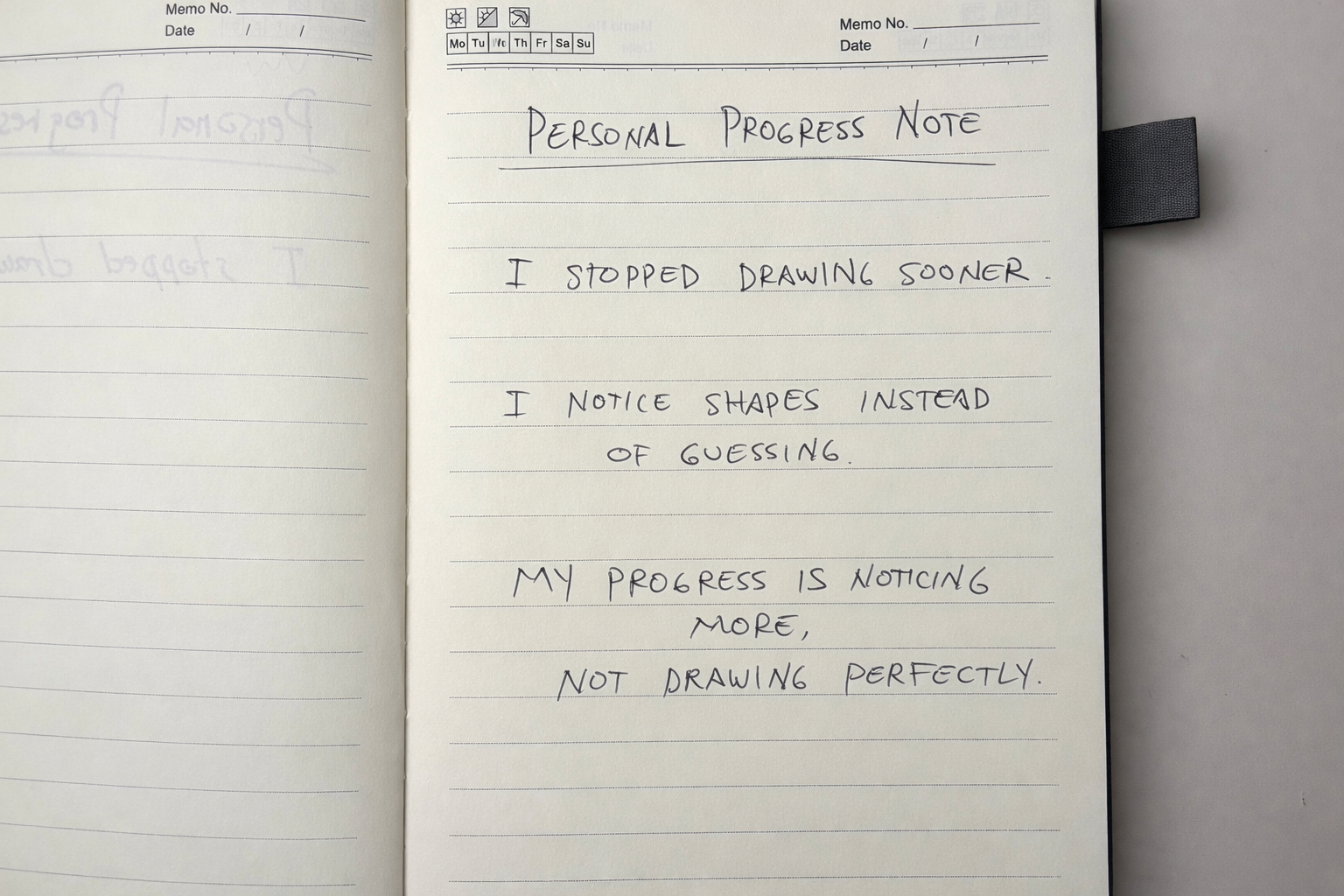
heart of your project. For example, my progress is noticing more, not
drawing perfectly. Take your time writing it. There is no rush. One
sentence is enough. Read the full note now. Title, first phrase, second
phrase, final sentence. Notice how it tells a small
story of your learning. This is your personal
progress note. It reflects your path
not anyone else's. I want to pause here
and say this clearly. You are allowed to
learn at your pace. You are allowed to
be where you are. Before, comparison may
have made you tense. Now you have something
steady to return to. You completed the final step. That is something
to be proud of.
7. Share Your Personal Progress Note : Your project is the
Personal Progress Note you created on paper
using a pencil. It captures one sentence
about what you learned, supported by two short
phrases that led you there. The primary material
is paper and pencil. Nothing else is required. A short project
description could be a simple note reflecting what I learned about my
own drawing progress. From start to finish, you first notice how comparison
slowed your learning. Then you name one real
sign of progress. Finally, you wrote
one sentence that brings clarity and
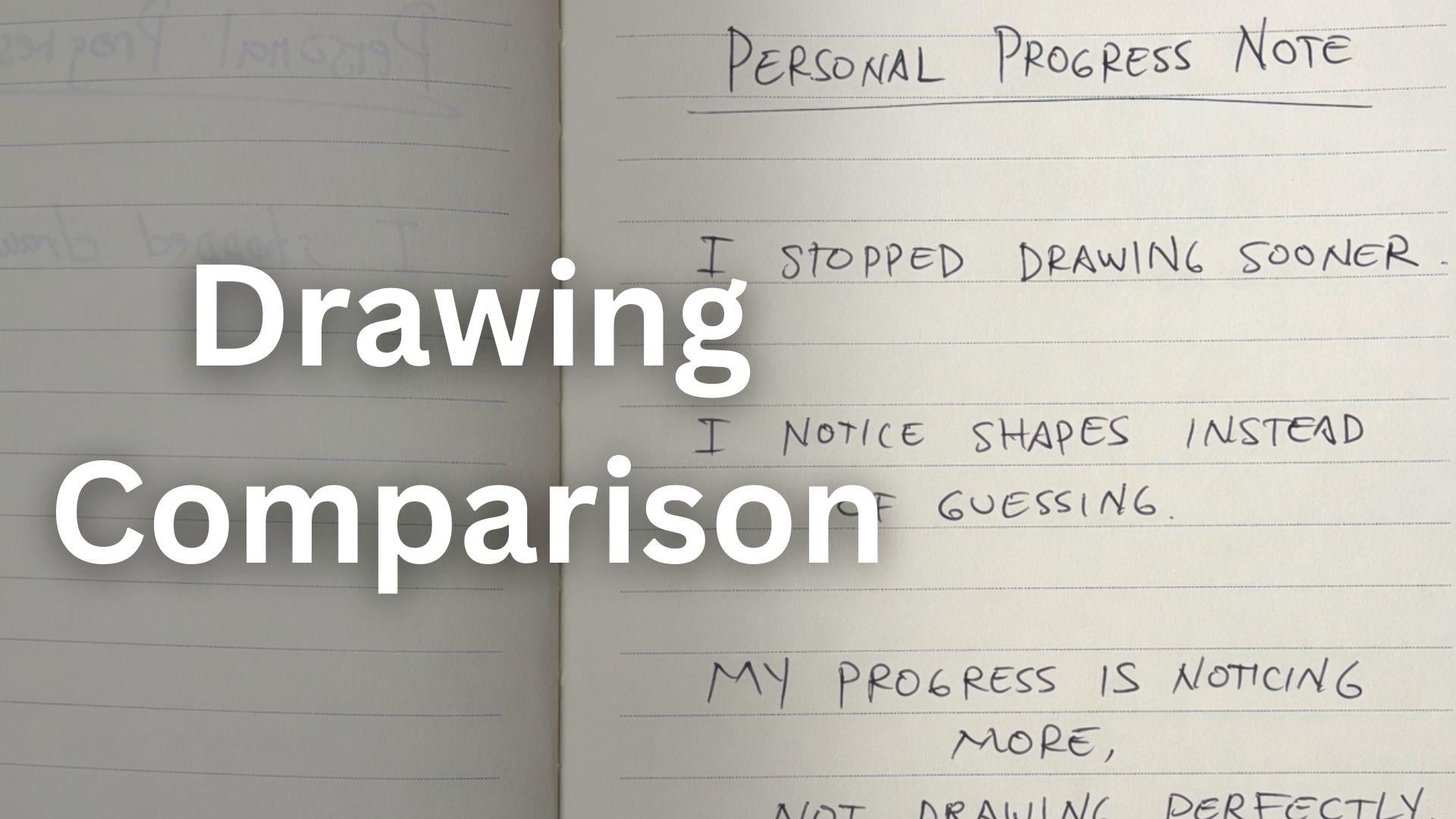
focus back to yourself. Here is one complete example. Personal Progress Note. I stopped drawing sooner when I compared
myself to others. I now not the shapes
instead of guessing. My progress is noticing
more, not drawing perfectly. This simple project works because it turns
attention inward. It does not try to
fix everything. It simply helps you finish
something and feel clear. To upload, take
one clear photo of your written note
or a screenshot if you wrote it digitally, at a project title and a short
description if you want. The best time to
create and upload is right after finishing while
the feeling is fresh. Keep it simple. Most students upload quick imperfect notes. A two or three minute
version is enough. No one expects perfection here. This space is for
practice, not performance. Once you upload it, you have
completed everything needed.
8. Common Questions Beginners Have About Comparison : You made it through
all the steps. It is normal to still
have a few questions. Let us look at some common
ones. First question. What if my sentence
feels too simple? That is completely okay. Simple is the goal here. If you notice something
real about your learning, then the sentence
is doing its job. Simple sentences are easier to return to when comparison
shows up again. Second question. What if I still compare
myself after this? That is normal, too. Comparison does not
disappear forever. If it shows up,
you can come back to your personal progress
note and read it. This helps reset your
focus because it reminds you what actually
matters in your learning. Third question, Can I
change my note later? Yes, if your
understanding grows, you can write a new sentence
on a new piece of paper. Each note reflects a
moment in your journey. That flexibility keeps
learning gentle and honest. One helpful tip is this. If you feel stuck, write what you notice instead
of what you want. Noticing keeps you grounded. Another helpful
mindset is remembering that progress often feels quiet. Quiet progress still counts.
9. Keep Your Focus and Move Forward Gently : Congratulations. You stayed with yourself from start to finish. That alone is a big step. Today, you learned how
comparison pulls attention away, how real progress
shows up quietly, and how to anchor your focus
with one clear sentence. If there's one thing I hope you take with
you, it is this. Progress lives in
noticing, not comparing. I truly believe that small honest steps are what
help beginners keep going. You show that today. A simple way to remember
this is the word note. Notice your experience,
observe what change, tell it in one sentence, is back into drawing. Many beginners
realize this is what they were already doing
once they see it clearly. I often smile when I see how a single sentence can
calm a busy mind. It is simple, but it works. Thank you for being here today. Please remember to
upload your project. If you really want to, you
can do this again anytime. One piece of paper, one
pencil, one sentence. The best time to
upload is right after you finish before
overthinking starts. If this helped you, leaving
a review would mean a lot. It helps me grow as a teacher and helps other beginners
find this lesson. If you have questions that is completely normal,
feel free to ask. You should feel proud of the
clarity you created today. That clarity builds momentum. When you think back
to the beginning, notice how the heavy feeling
of comparison has softened. That is a real change. Thank you for taking the lesson. I will see you in the next one.
 Paul Nene, Helping beginners take action