Transcripts
1. SECOND NATURE - Sustainable Secondhand 101: Hi, everyone. Welcome to second Nature. My name is Megan. I'm the owner and operator of Wild Ways Vintage in Calgary, Canada. I've set up this series, of course, is to help people to shop secondhand more effectively and more successfully. Over the years, I talked with a lot of people who have expressed a frustration or an obstacle that's prevented them from shopping second hand. Because the fashion industry is the second top polluter in our world today, it's very important to utilize secondhand clothing and home goods to make your ecological footprint that much smaller. When we use our dollar to vote, we have immense power as consumers, so it's very important that we utilize secondhand as a means to shut more sustainably. In this series of courses will talk about tips and tricks that will set you on the right path to find what you're looking for when you're shopping. Second hand will talk about the cleaning of different materials and how to properly clean home goods. From second hand shops will talk about small repairs and alterations that you could do it home, and we'll also talk about the importance of finding your personal style and a personal color palette when you're secondhand shopping. Thank you so much for joining me today. I'm really looking forward to teaching you this course and toe learning from you. I'm available on Instagram at Wild Ways Vintage and on my website, Wild Ways vintage dot com. Thanks so much for joining me today, guys, and have a great day.
2. SECOND NATURE - The Importance of Choosing Secondhand: Hi, everyone, welcome back to second nature. This is our second video, and I'm going to talk a little bit about the importance of shopping second hand. So in regards to the fashion industry, the fashion industry is the second top polluter in our world today, particularly fast fashion. It's important to know that there's a lot of companies out there that are trying to recycle products that they've made and resell them. There's companies out there that are sustainable right from the get go, and they have put into place environmental practices that are sustainable. They treat their employees properly. They pay their employees trapped properly. But the thing is, it's not always an option for everyone due to the cost involved. Thes companies that produce sustainable garments or sustainable homeware. It's wonderful that they're doing that, and it should cost more to do it the right way because for far too long, you know you can go and buy a shirt for $2. And unfortunately, what comes with that is the support of an industry that destroys our environment and has no regard whatsoever for the health on well being of its employees. So by shopping second hand. It's an affordable option for the masses. Um, if you're someone who you're looking for a way to shop sustainably. But when you look up brands that are deemed sustainable and it seems too pricey for you, it seems like this massive obstacle shopping second hand is a great way to shop sustainably and to fit within your budget.
3. SECOND NATURE - Obstacles and Solutions: Hi, everyone, welcome back to second nature. This is our third video, and I'm going to talk today about the frustrations and obstacles that people come up against that prevent them from shopping second hand. So I have been personally shopping second hand for close to 20 years. My mom and my grandma taught me to be a thrift er from a very young age, and they taught me very well. I love threating. I love hunting for treasure, but I'm also very picky about what I bring home, which is very important. You don't want to bring home a mountain of stuff that you'll just re donate or you won't have any use for on. Do you want to bring home things that you will love and we'll use for years to come. So I have a lot of experience with shopping second hand and then in starting my business about a year and 1/2 ago, I've chatted with several people who have expressed these frustrations and obstacles that they come up against that really deter them from utilizing secondhand. And it's so important in our world today that more and more people start to use second hand products as a means to shop sustainably. So this whole channel is designed to help you to do so. And I've come up with some solutions to some of the more common frustrations people have, and hopefully that will help you in your journey to be able to utilize secondhand as a means of decreasing your footprint. So I would say probably the top, um, frustration that I've heard people expresses that I don't find what I'm looking for. When I hear this, I I think it's in part due to the fact that if you're someone who's used to going into stores that sell new product, we are set up in those stores to come out with exactly what we want. We're set up for success rate from the get go. They have multiple sizes and what we're looking for. If they don't have a size, they can order it from their warehouse or from another shop. Andi, you will find what you're looking for. It's not the same when you're shopping second hand. When you shop second hand, you're going to go into a store that has a whole bunch of one of a kind items, and you're hunting. You're hunting through those items for something that will fit you something that fits your style and something that you love. And you know that you you're going to use it for a very long time. So it takes a lot more patients when you shop secondhand. There's the odd time that all walk into a thrift store, and the first thing I see I am 100% sure it's coming home with me. But it's rare. It's, I have to hunt, and I have to be patient and have an open mind. So, for example, for about seven or eight months, I've been looking for a very specific shelf for my bathroom. It's not that the design is specific. It's that the measurements are specific. It's a very, very tight little nook, and I have placed the measurements in my phone, and I always take a measuring tape with me when I go thrift ing so that if I come across something similar, I will know right away if it will fit the little space that I needed to fit. Um, so that's been seven or eight months that I've been looking for that, and I'm not giving up because it's someone who's done this for years. I know that patients pays off and that I will find secondhand three item that I'm looking for. So I'm hoping that tips and tricks that I provide you in this, of course, will help you to have that same confidence shopping second hand is something that you need patients for. And if you're just starting out, um, I highly suggest going into a thrift store with a list in mind of things that you want. So if you have on your list, um, blue jeans don't go into the dresses like don't do it. Go directly to the genes you want to your first experiences in the thrift store to be one where you feel that when you're looking for the product that you came there searching for, you have the energy necessary to really search for it. So if you go through all the genes and you find a couple pair you like or you go through the jeans and you don't find anything you like at that point, it's like, Okay, what else is on my list? Maybe I need a new shirt for work. Or maybe I need a sweater will then go to those other sections. But be sure that if you have a certain list in mind of things that you need, spend the energy you have in those sections first. Because, like I said the patients and having an open mind and, um, kind of knowing that you're the one that's going to have to hunt for this product, you want to feel that your energy is put towards the item you're searching for first, and then if you have the gumption to keep going and comb the thrift store, good on you do it. Another concern that I've heard people, um se is that you know they don't have access to thrift stores, and I totally see this is a valid a valid frustration. There's a lot of small towns or a lot of rural areas that they might not have access to thrift stores. I am fortunate enough that I live in a large city and there's there's many secondhand shops here. If you live in an area that you cannot physically get to a thrift store, there's so many secondhand shops online, there is a threat up. Posh Mark D pop on. Do they all have either online shops or APS. They provide measurements of garments. Have you come across something that fits the bill? You can actually see if it will fit your measurements, and it gives you a better idea, kind of how it will look on you. Um, and you can filter on these APS as well so that if you're going in, you're searching for a certain brand of jeans or a certain fit or a certain size. You can narrow that down and just comb that particular item. Um, so, yeah, there's online shops available online, like APS as well. And then I always suggest to people that if you're in an area that doesn't have thrift stores, um, you can create your own. And by saying that I mean clothing swaps so you can organize a family or community clothing slop where, you know, even if it's just you and a few friends get together, have have a night where you have ah, glass of wine and everybody brings some clothing that they might not be using anymore. And you can swap that you can trade it and refresh your wardrobe without spending money and refresh your wardrobe without having to travel. Another concern that I've heard people express and this is particularly true with young families is you know, I my schedule does not allow for it. You know, I have two or three small kids, and between that times family schedules, you know, kids getting fussy, your restless. I just don't find that I'm able to effectively shop secondhand. And to this I would say very similar. You can organize a clothing swap with other young families or with just one other young family, and it's kind of cool because it could be a play date for the kids, while the parents kind of go through the different clothing items available to see what would fit on bits. Social time for the parents as well, which is kind of nice, so you can turn it into, like a little family party or a social event. But it provides everybody with what they need, and it provides the kids with a fun experience as well. There are clothing stores available that are specific to kids, where which is great. Eso Maybe if you have a friend or a family member, that's OK watching your little ones for a bit and would allow you to go to a kid's thrift store. It might be the ideal place because it's so focused on kids aware that you know it's not maybe is overwhelming is a thrift store with, um, something for everyone in it. Um, And trading off baby sitting as well always helps. You know, if you if you have a neighbor or a friend that has small kids and you want to you know, Hale, watch your kid for an afternoon so you can go and do an errand swap out that way. And maybe it will allow you the time to go And, um, and coma, thrift store. Um, finding your fit. That's another Another one. I've heard a lot of people say, like, I cannot find my size in thrift stores. And I definitely sympathize with this as someone who loves vintage clothing. Vintage clothing. As wonderful as it is, and as high quality as it is, the sizing is so different. So if you're combing Iraq and you're like, OK, I know I'm a size 12 and you're going through when you find a vintage size 12 often time that's going to be a vintage, maybe size eight, and it can be quite frustrating. So always try on. Always try on aspires finding your size. If it's something that you're really really struggling with, you could enlist the help of a friend. Maybe just having a friend there to let you know that, you know, actually, this item looks great on you. Don't knock it like give it a chance. Or maybe they can help you. Maybe they'll come across something you didn't see. That can be a great way to find items that fit you and make you feel good. Make you feel confident just to have that person saying You look good. You know, don't throw this product back in the bin or don't put it back on the rack. Consider this one, um, enlist a personal shopper. There's a lot of even second hand second hand businesses that will help you find three items that you're searching for. These air usually more curated vintage or secondhand stores, but they will help us faras looking for items with your measurements or looking for colors or style eso you know, inquire email, phone talk, Teoh clerks in person and um, they'll they'll be willing to help you. So yeah, I guess that that kind of wraps up. Um, the four kind of frustrations that I typically here, But I'd be really interested in hearing from you if there's another frustration that I haven't mentioned. And, you know, it's something that you're struggling with. Its an obstacle. You face that you're finding secondhand shopping to be too time consuming, or you know that there's any number of things that could be. But please leave it in the comments I would love to hear from you. I would love to know what other things stop you from shopping second hand. And I'd love to be able to address those in a later video. I will help you come up with solutions and we'll we'll find a way for you to be successful and efficient in this. So thank you so much for joining me in the third video. And, um, if you want to reach out, reach out. I'm available on Instagram at Wild Ways Vintage and on my website, Wild Ways vintage dot com. Thanks so much. Guys, have a great one
4. SECOND NATURE - Secondhand Success: Hi, everyone, Welcome back to second Nature. This is our fourth video. So in our intro video, I mentioned that this course is designed to set you up for success when it comes to shopping second hand. And I just want to clarify that by being successful in secondhand shopping, I don't mean that you're coming away with a huge thrift hall. Um, you know, bags upon bags of clothing items. I don't necessarily think that that is a successful thrift trip. I think that oftentimes if you were coming away with massive threat tolls, it means that you don't really know exactly what you're looking for. And if you don't go into a thrift store with a list, it can be exciting, especially, but your first time thrift ing to realize that, Hey, I can get you know, these these products for substantially cheaper than I would buy them new. But I think that often times people go in and because it's, you know, items are cheaper or because some announce may be discarded the item or donated it in their mind. They're like, well, it's used, so it's it's okay if I purchase it and then re donated or purchase it and throw it away. But it's not. So keep in mind that when you're thrift ing, it doesn't mean that coming away from your thrift, you through trip with a massive threat tall. That's not thrift success, at least not to me. So I think that there are some questions that you can ask yourself when you're kind of deciding on what you're taking home and what you're going to leave. At the store. I will often dio a big trip around the whole store. I go through the home goods I go through kind of each area of the clothing section, and I will look first and foremost for my list of things that I have very specific things that I'm looking for. I'll go there first, but once I have items in my cart, I kind of do the yes, No, maybe. And so my first thing is that I go to a mirror in the store and I'll hold the items up to me and kind of have an idea. Do I want to try this on? Is it even worth trying it on or doing right now that it's just not for me? and if it's not for me, I will hang it on the side of my cart and then I'll take it back to where they have their dressing rooms, because there's always a rolling rack of things to be put back. So be a good drifter and always take your your discarded items to that area. So questions to ask yourself when you're paring down items. Ask yourself about the versatility of the clothing piece, so that's it's so important because you don't want to be overwhelmed with drifted close, it's There's no point. I think, that there's something to be said for simplicity in someone's closet. And I think that if you have pieces in your closet that are more versatile, either in how many seasons you can wear it for or how many ways you can wear it, um, the peaceful go that much further, and you'll probably have it for that many more years to come. Eso make sure it's a piece that you're going to get a lot of wear out of, and it's not just going to sit around and collect dust. Be sure that it's something that you know, I could wear it this week where it, you know, with with address over it Or, um, you know, I can wear this top dressy or where it casual with jeans and sneakers. Be sure that there's several different ways that you can wear a garment. Um, another item would be once you find your personal style. And once you find your personal color palette, it's important to stick to that on dime. Not saying, Don't be adventurous, that there's an item that you absolutely adore, and it's It's not in your color palette. I'm not saying don't get it but for the most part, used your color palette and your personal style is a tool to narrow down items in your, um, your thrift basket and to keep you on track. So for myself, over the years, I've come to realize that my style tends to be a little bit more vintage. I love the seventies. I love the sixties. I love warm colors, neutrals and kind of classic pieces, So I tend to look for those items when I'm thrift ing, and if something kind of is outside of that, I'm less likely to take it home, and it's not just because oh, I don't like it. It's just maybe I do like it. But will it go with the other things I have in my closet? Because again that goes along with versatility and color. I have found that finding my color palette has been huge for me in helping me to be a lot more picky when I'm through shopping. So I tend to go for earth tones and then warm colors. Neutrals. I have a lot of like cream colored. I wear a lot of denim, so I keep that in mind when I'm through shopping, and I have a very specific color palette that I look for. And usually if something is outside, that color palette will tend to leave it at the store. Another question you can ask yourself is, How much do I love this item? So if you're buying a shirt just for the sake of buying a shirt, leave it in the store because chances are it's going to become one of the 90% pieces in your closet. As I said before, we usually only wear a very like a 10% of the garments that we own, so it'll probably wind up in that 90% that you don't wear if you're not 100% in love with it. So make sure it's something that you love. Um and, uh, quality quality is huge like, And this is This is something that I've I thought a lot about in regards to thrift ing fast fashion pieces. I don't see anything wrong with someone threatening fast fashion. It's still reusing garments, and it's preventing those garments from going to a landfill, which is terrific for myself. I always go with vintage or like if I know that a product is high quality. I always lean towards that just because I know that that garment will last a long time and I tend toe wear it more. So think about the quality. Um, it's important to note as well that if you're thrift ing TEM souls or pants, you know, some people do thrift nineties or things like that. There there's certain things in thrift it items that you want to check right then and there in the store. So always check the armpits, always always, especially on light colored shirts. You want to make sure that there aren't any sweat stains, and I usually will kind of hang my garment up on Iraq and stretch it a little bit and see, because sometimes if it's been wrinkled, it's hard to see if there's any stains or rips. Not too long ago, I came across this beautiful 19 forties vintage dress, and I was absolutely in love with it. But when I held it up, I actually realized that one of the arms was a ripped, almost a shreds, and there would just be no way that I would be able to salvage the dress, which made me very sad. But, you know, I was grateful that I was able to recognize it before purchasing and taking it home. So always examined the clothing jeans. I always kind of flipped them inside out and have a look in the crotch area because he wanted to check S Oh, yeah, if you're if you're purchasing pants, shorts, anything like that, I always kind of do a check inside on Guy always hang garments up, regardless of what it is to see if there's any Pilling and he stains any rips. And for myself, I don't always try on based on the fact that I've become very good at recognizing when something will fit me and when it won't. Andi, I know what my measurements are as well, which is extremely handy, so you can bring a measuring tape with you, and that will help you to find products that will fit you if you don't want to try them on . Um, but definitely consider the quality. And for myself, I'm someone that I repair. I do alterations on vintage and used goods, so there's a lot of times where I'll find something. And maybe there's a very, very small stain on the sleeve. And you know, I love the blouse, though, so we'll take it home and actually just turn it into a short sleep blouse. But that's me. It's It's a gift that my grandmother gave me. She taught me to sew when I was a kid, so I'm able to do those alterations. But I'm also very conscious that if I'm taking a product home that needs repair or an alteration to be kind of current or toe look appropriate, do I have the time to actually do that? Repair alteration. If I don't, it's just going to sit there and collect us so don't take it home. And, um, I guess that that's that's pretty much it. Those are the main questions that I ask myself, too narrow products down that I have in my cart and I'm pretty good at this point. I will go in and generally all fill my heart, but I don't have to try all the products on. I'll hold them up to myself and then hang them on one side if I want them or want to try them on. It's a maybe, and hang them on the other side of its going back. And I always take the to go back pile to the dressing room so that the employees don't have to find these piles of clothes messy all over the store. It's important to be a good thrift, er so please take your products back to the right place. Um, thank you so much, guys for joining me today. The next video I'm really excited to do with you. I'm going to talk a little bit about what I take with me thrift ing, so it's not always about what you bring home with you. It's about how you set yourself up for success and what you take with you. So we're going to chat about that in the next video, and I'm going to announce our first project. Thanks so much again for joining me today and again, I'm available at Wild Ways Vintage on Instagram and on my website, Wild Ways vintage dot com.
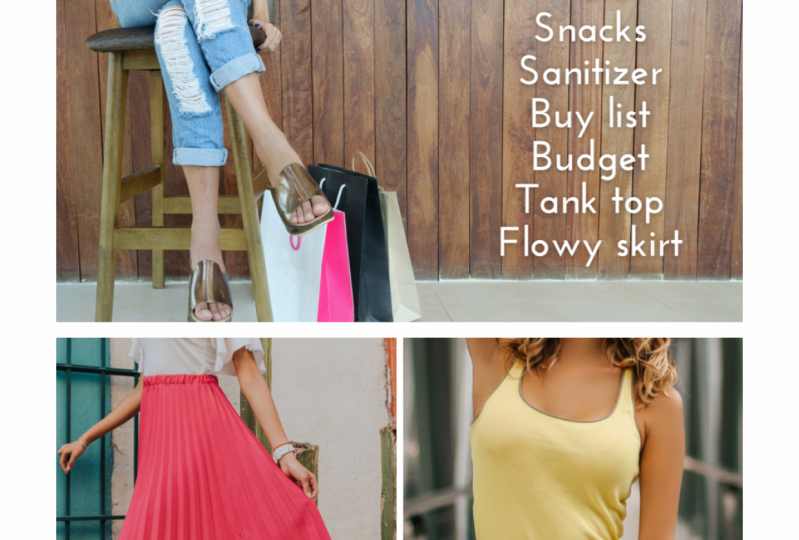
5. SECOND NATURE - Setting Yourself Up for Secondhand Success: Hi, everyone, Welcome back to second nature. This is our fifth video, and in this video, I'm so excited to talk to you about what I take with me when I'm shopping second hand. So when you shop secondhand, it's not always about what is in your bag when you leave the store. It's about what's in your bag when you go into the store. And this is especially true if you were just new to shopping second hand, you want to set yourself up for success. So I have formulated a list in my mind of things that, um, I would be really thankful for when I'm shopping second hand so I might come up against an issue or a discomfort. And if I have this with me, it's like, Thank you, Megan, Thank you. You know, look out for yourself. So I've come up with a list of things. It's different, you know. I live in Canada were temperate here, so it's different season to season. But I'm going to go over what I take with me in the winter and why I take those things with me. So first and foremost, we just had a week of minus 30 weather here. So I take hat, mitts, scarf and those little warm he pads that you can put in your boots. So your mittens, I always have those on me. So I like to take them with me when I'm thrift ing because I don't at any point want to be uncomfortable. I want to feel at ease. So if you were, you know, if you were going scripting in the winter, I highly recommend taking those items with you. Hat, mitts, scarf and warm ease. Um, I take snacks and I take water because I don't want to be a angry shopper, and I don't want to be a thirsty shopper again. I seek comfort, And if you're comfortable, you're a lot more patient, which means you're a lot more up to find what you're looking for. So definitely take snacks and water in conjunction with out. I take hand sanitizer because often the snacks I take from home I need my hands to eat with . And I can just do a little scrap of my hands and then, um, have my stack and keep going. Um, I also use it after I'm done at the thrift stores to clean up of it. So snacks, water and hand sanitizer um, audible comfort is extremely important for me. So I take headphones with me. There's times that I go into a thrift store and I don't need them. But there are times I go in, and maybe the radios really staticky or the music they're playing is awful. Or maybe there's just really loud customers, and you're just not in that kind of mood. You can pop in your headphones and just listen to your own music or an audiobook. The only thing is I would encourage you not to Blair, um, your music. And the reason I say that is because you want to be aware of your space. You want to be aware of the other shoppers around you so that you're not kind of getting in their way. Or another thing is that there's a lot of kids generally that will kind of weave in and out of the ill. So you definitely want to be aware that you're not bumping into anyone s. So if you're going to put headphones in, make sure it's at a level. But you can still be aware of your surroundings and aware of how you might be affecting others. Um, what else do I take? I take my wallet. Um, obviously, my wallet comes with me. Reusable bag. I always take a reusable bag with me. I don't see a point in going shopping for recycled goods. If you are going to put them into a plastic bag and take a plastic bag home, just take a reusable bag. Just always have one on you. It can just sit in your bag, you know, on a day to day basis. And then you'll have it if you go for groceries at the end of a shift or if you're thrift ing. So it's important to have that with you. Um, I go with a list. I go with a list. Um, I will make put a list in my phone in my notes section, or use Pinterest, but I'll formulate a list of things that I would ideally like to find, because I'm somebody that loves the hunt. I am very, very happy to go and look in the other sections of the store, but I will often go to the areas that would have what I'm looking for first. So, um, a list sets me up for success because it keeps me on track and I don't come home after being in a thrift store and getting distracted by all the other goodies and thinking, OK, I didn't bring home and I was looking for, um, CIA. Make a list. And the last thing is a good attitude. If you're having a day when you don't feel like being around other people or you feel like you just you have no interest in being patient and hunting through products and things don't go like this. Don't go. Um, when I say Set yourself up for success, That's another big thing is that if you're just not feeling it that that day, stay home and do self care, Whatever that might look like for you, maybe it's playing video games. Maybe it's doing yoga. Maybe it's watching a movie calling a friend. Whatever it might be. Just stay home, do some self care, Um, and just thrift another day. So, um, view Good thrift. Er, one thing that I I would like to say in this video is that if you are going through your products, please take the unwanted items. It's usually in the change room area, but they'll have a rack for unwanted goods, and it makes it so much easier for the staff to keep the store clean. It makes it less time consuming for them to just be able to take products and put them back in place rather than coming across a pile of clothes somewhere that, you know, they don't belong there. They have to put them back on hangers and then put them where they belong. So just be a good thrift. Er put things in the to be put back area of the store if you don't want them, or put them back where you found them. So I guess that kind of wraps up the video. Um, yeah, if you have a list in mind of items that you would like to take with you when you thrift, I would love to hear about that list on and why, why you take those items with you or why you will take those items with you. I'd be very interested because over the years, um, I have gained tips and tricks from other people that thrift headphones being one of them so we can all learn from each other. And if you have items that you take with you, that kind of make everything more comfortable and successful and efficient. Please share them with us. It's kind of our first project has just come up with a little list of things that you feel would make that, um, that first thrift trip Or maybe it's your 1,000,000 thrift trip. But come up with a list of things that make that trip more doable and makes makes you more able to have the patients you need to find what you're looking for. So please leave that in the project section. If you want to take a photo of the things that you take with you, I'm going to post my photo there, and I'd love to see yours. And I love to see kind of the explanation of why you take what you take. So posted in the project section that wraps up this first mini course, a kind of an introduction to thrift ing and secondhand shopping. So thank you so much for joining me and we will see you guys in the next many course. We're going to talk about personal style, color palette and how you kind of can figure out what your personal style is and use that as a tool when you're thrift ing. So we will see you in the next course and again, thanks for joining me. I'm available on Instagram at Wild Ways Vintage and on my website, Wild Ways vintage dot com.
 Megan Harris, Think of Our Future, Shop in Our Past!