Transcripts
1. Reset After Creative Burnout Without Falling Back Into Creative Block : When you feel burnout, it can be scary to even
think about starting again. You might worry that
if you rest too long, you'll lose your rhythm. Or if you jump back in too fast, you'll freeze up again. If that sounds familiar,
you're not alone. Creative burnout can feel
heavy and confusing. You want to create, but you
don't trust your energy yet. Here's the gentle
shift we'll make. Instead of asking, should
I start again or not? We'll focus on one
simple decision. How much to do when you return? Just how much? Not
everything, not nothing. I'm Paul, I help beginners
learn creative skills in a clear and simple way so they can feel safe trying again. I've had seasons where
I pushed too hard, got exhausted, then avoided
my sketchbook for weeks. I've also rushed back too quickly and felt back
returned almost instantly. That's why I care
about this topic. Burnout is not the end. It's usually a signal that
your pace needs adjusting. While you're here
we'll move slowly. We'll create one small
reset plan together. By the end, you'll know exactly how much to do when you
return to your art, design, writing
or creative tool. This stands on its own, and it also connects
naturally with other lessons about starting
and finishing creative work. If you're advanced
and already have stable routine, this
may feel basic. But if you're just coming
back from exhaustion, doubt, or overworking,
this is for you. You don't need special tools, just one sheet of
paper and a pen. Or the Notes app on your phone. We'll look at what
burnout really is. Then we'll build your
return plan slowly, and finally lock in the
exact amount you'll do. Take a breath.
You're not behind. You're just resetting.
2. Create Your Simple Return Plan on One Page : When you burn out, big
plans feel overwhelming. Even thinking about goals can
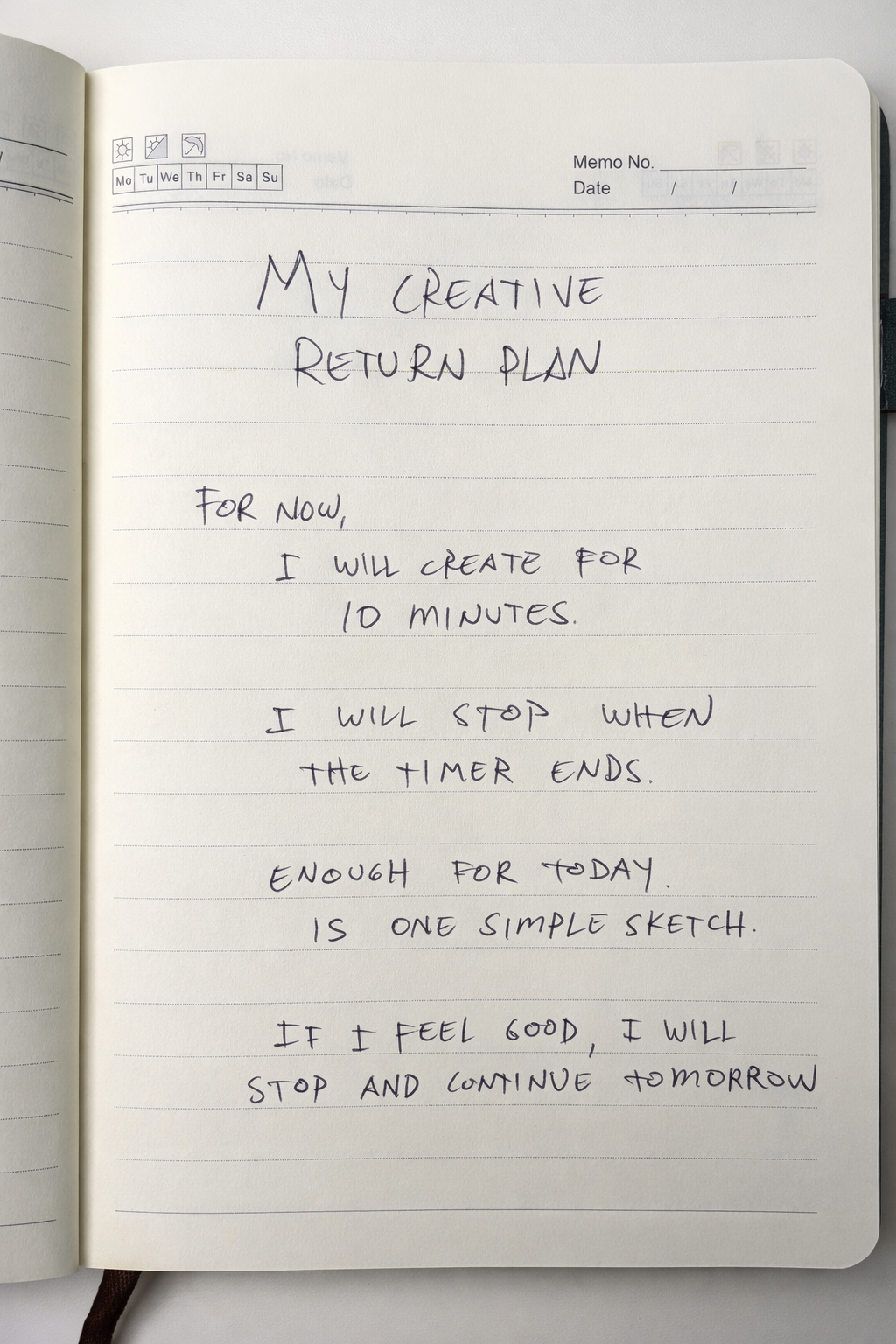
make your shoulder tense. So we're keeping this simple. You're going to create one page called My Creative Return Plan. That's it. One
page, one decision. How much you will do
when you come back. We'll build it gradually. First, we'll write
a gentle limit. Then we'll define what
counts as enough. Finally, we'll add
one stopping rule, so you don't overdo it. Your primary material is a single sheet of paper.
Any paper is fine. A notebook page works. Even a small index card works. As we move forward, you can pause and write
along with me, or you can watch first
and build it after. There's no rush. By the end, your finish page
will clearly say what you will do and
when you will stop. That clarity alone can reduce
pressure. It imperfect. Messy handwriting is welcome. This is practice,
not performance. You're already doing
something healthy by choosing to reset
instead of quitting. Now, let's understand
why this works.
3. Understand Why Doing Less Prevents Block : When you're burnout, your
mind is tired of pressure. Even if you love creating, it might associate it with
stress. That's normal. It doesn't mean you're
not creative anymore. Burnout often happens
when we do too much for too long
without clear limits. Here's the simple idea. When returning after burnout, your job is not to do more. Your job is to do
less on purpose. Less clearly defined. There are three small
parts to this idea. First, your energy needs
rebuilding, not testing. If you immediately push
hard to prove your back, you shock your system. Second, your brain needs safety when you know
exactly how much you'll do, and when you'll stop
your mind relaxes. Third, stopping on
time builds trust. You start to believe that
creating won't drain you again. For example, if you used to draw for 2 hours and
ended exhausted, you might return with 10
minutes instead because your goal is not
output, it's stability. Here's how we'll do
it step by step. You'll write a gentle limit. Then you'll define what counts
as enough for one session. Finally, you'll add a
clear stopping line so you don't cross it. This flow works because
it removes guesswork. You won't ask, Is this
enough? You'll already know. In simple words,
doing less on purpose protects you from
falling back into block. Now, let's build your page.
4. Write a Gentle Creative Limit You Can Trust : When you're returning
after burnout, even starting can feel risky. You might think, What
if I get tied again? Well, that's why we begin small. So small, it feels almost too easy. Let's
take your paper. At the top, write
this title exactly. My Creative Return Plan. Keep it simple. No
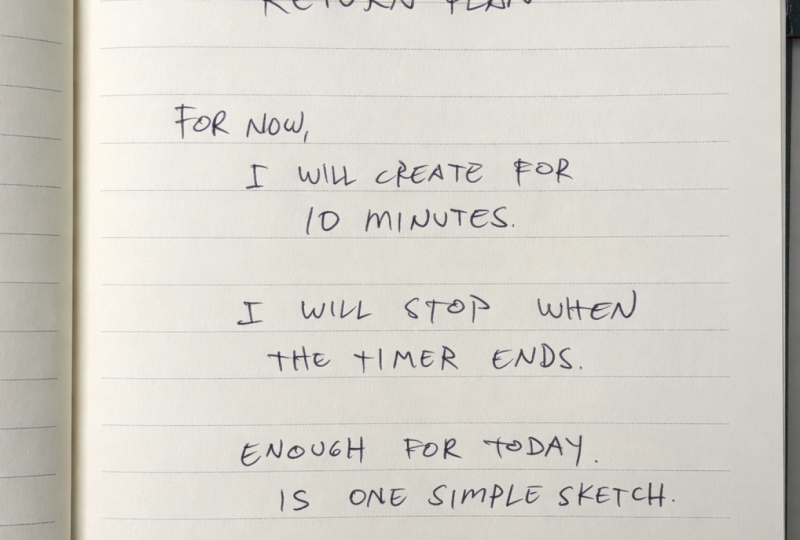
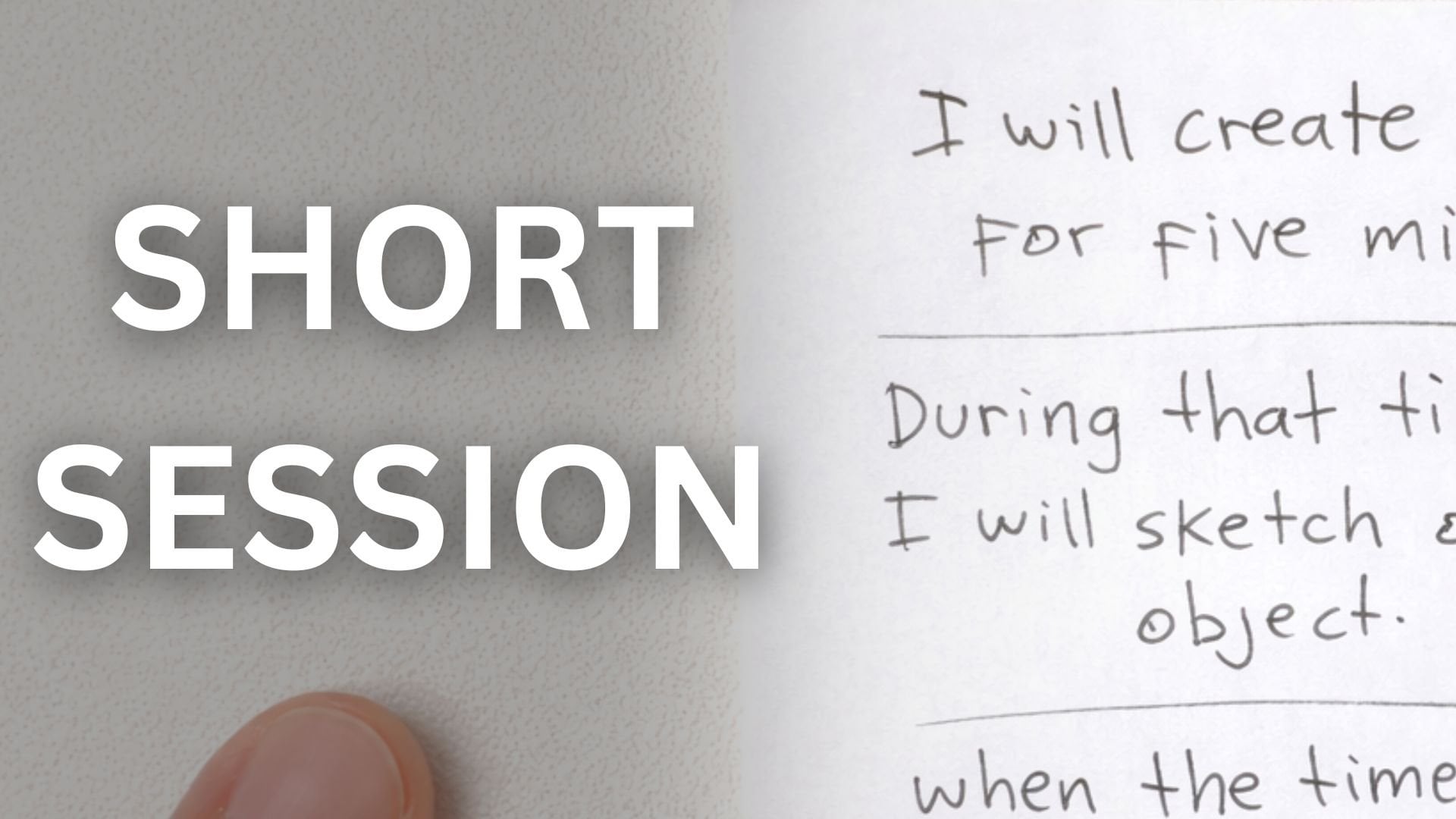
decoration needed. Now under the title, write for now, I will
create for 10 minutes. If ten feels too
much, you can write. For now, I will
create for 5 minutes. The key is that it feels
safe, not impressive. Next, leave a small space. Under that, write, I will stop when the timer ends.
That line matters. It protects you. Now, read what you wrote
quietly to yourself. My Creative Return Plan. For now, I will create
for 10 minutes. I will stop when the time ends. Notice how different that feels from I should get
back into my routine. You're not promising intensity. You're promising containment. When I first reset
after burnout, I wrote 5 minutes. It felt almost silly, but it worked because
I could keep my word. Pause for a second and
look at your page. You now have a clear time
limit and a clear stop line. That's your foundation.
You're already shifting from pressure
to structure. Next, we'll decide what counts as enough inside those minutes.
5. Define What Counts as Enough in One Session: Sometimes burnout
returns because we secretly expect too much
inside a small time block. We say 10 minutes, but we try to finish
a full project. That tension sneaks back in. So now we'll define
what enough means. Under your stopping line, right, enough for today is
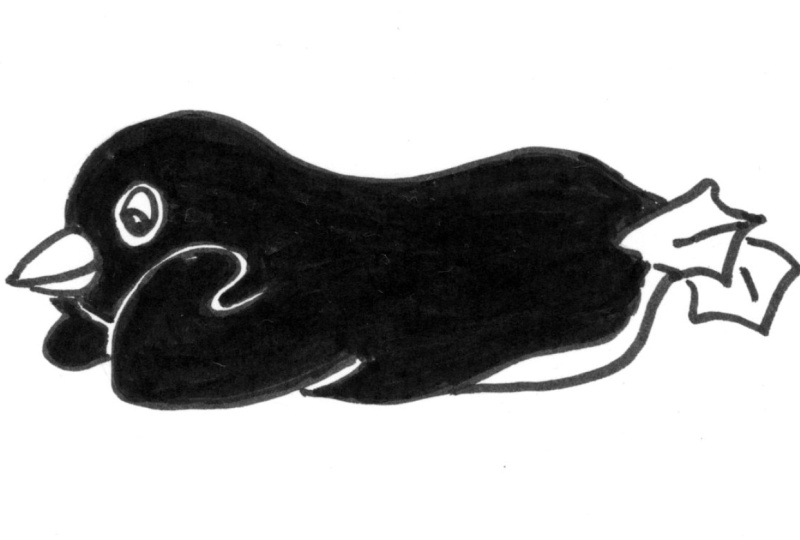
one small piece. Now, make that concrete. If you draw, right, enough for today is one simple sketch. If you design, right, enough for today is
one basic layout. If you write, right, enough for today is
one short paragraph. Let's use drawing
as our example. So the page now says my
Creative Return Plan. For now, I will create
for 10 minutes. I will stop when the timer ends. Enough for today is
one simple sketch. Read that slowly. One simple sketch,
not a masterpiece, not a finish series, just one. When I reset, I define
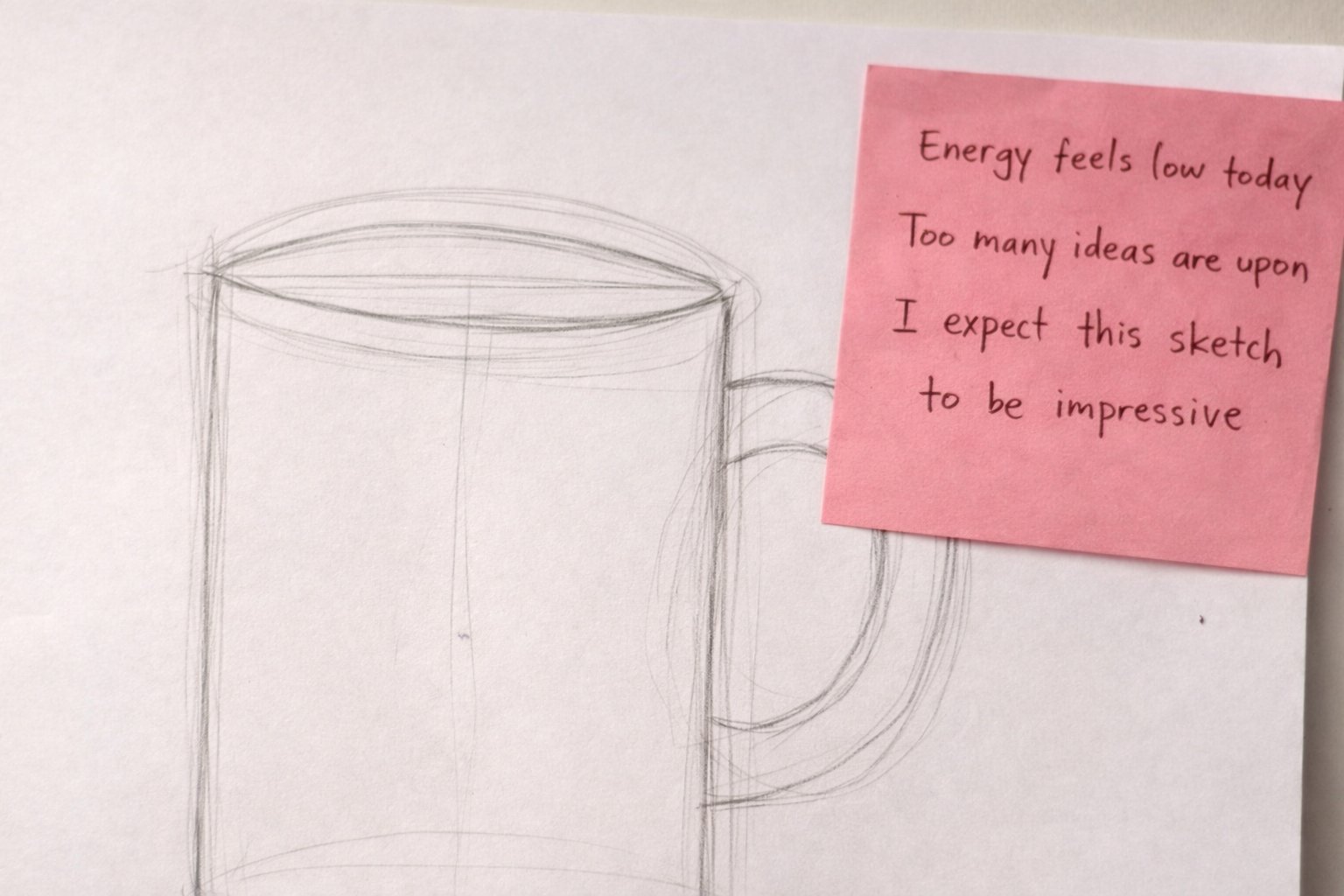
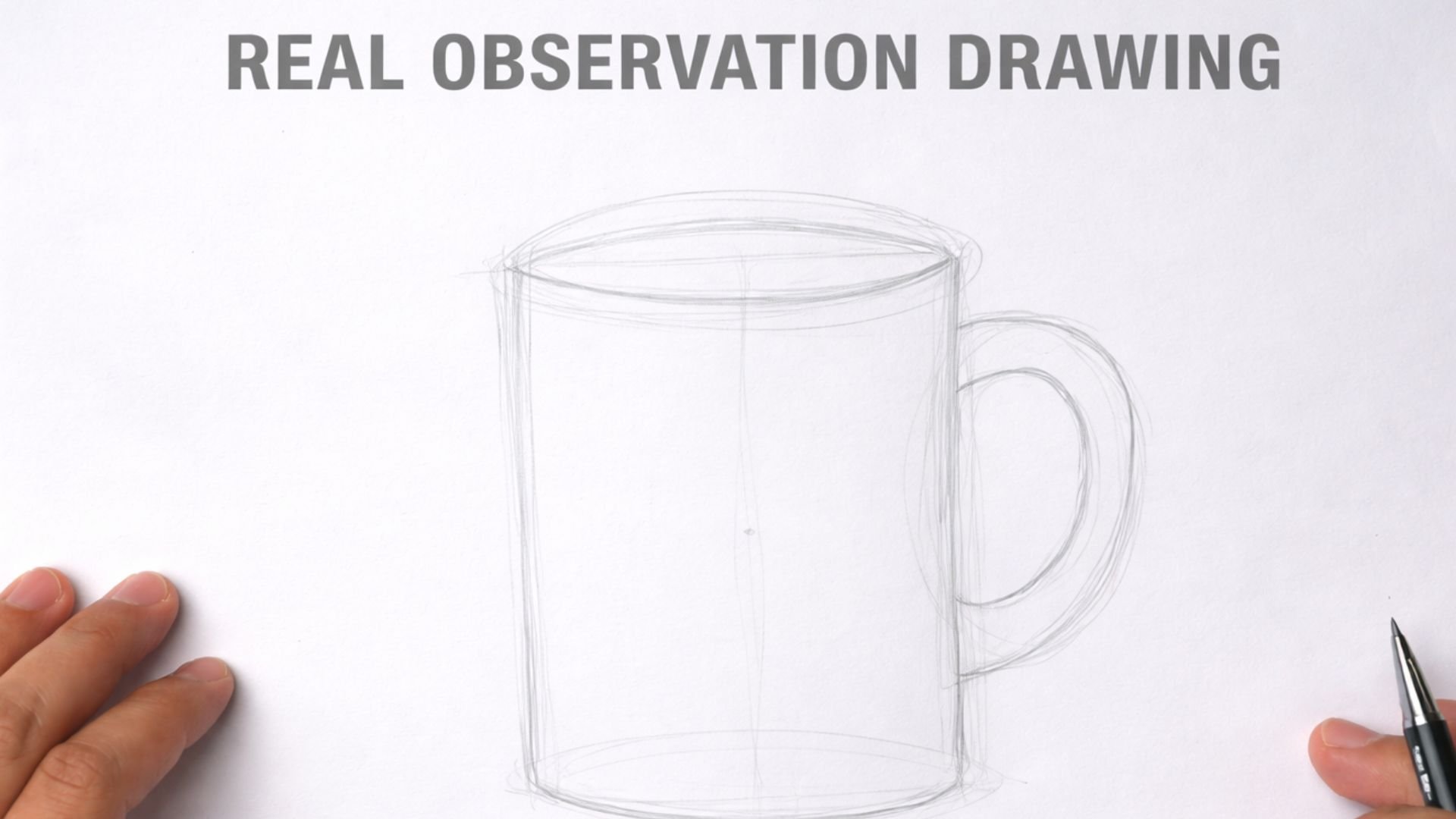
enough as one mug outline. Just the outline. No
shading, no background. That clarity removed
hidden pressure. If you're unsure what
your one small piece is, choose the smallest visible
unit of your craft. Something you can
finish in minutes. Look at your page
again. Now, you have a time limit and a clear
definition of enough. You're shrinking
the task until it feels manageable.
That's not weakness. That's strategy. Next, we'll add the final
layer that protects you from doing too much
even when you feel excited.
6. Add One Clear Stop Rule So You Don’t Overdo It : Sometimes the hardest part
is not starting again. It's stopping. You might feel a small
spark of energy and think, maybe I should keep going. That's where burnout
quietly returns. So gently close this loop. At the bottom of
your page, right, if I feel good, I will still
stop and continue tomorrow. Yes, even if you feel good. You page now reads my
Creative Return Plan. For now, I will create
for 10 minutes. I will stop when the time ends. Enough for today is
one simple sketch. If I feel good, I
will still stop and continue tomorrow. Look
at the whole page. This is not about discipline. It's about protection. When you stop, while you still
have a little energy left, you teach your mind
that creating is safe. The next day, it becomes
easier to return. When I followed this rule, I felt strange stopping
while inspired. But the next morning, I actually wanted to start
again. That was new. Take a slow breath and
read your full plan. You have moved from
burnout confusion to a clear, gentle boundary. Before you might have
thought you need motivation. Now you have structure and
structure feels steady. You have completed
the final layer.
7. Show Your Finished Creative Return Plan: Your project is one simple page called My Creative Return Plan. Your material is
one sheet of paper. Here is the finished
example we build together. My Creative Return Plan for now, I will create for 10 minutes. I will stop when the timer ends. Enough for today is
one simple sketch. If I feel good, I will still
stop and continue tomorrow. At first, you wrote the
title and your time limit. Then you added what counts
as enough for one session. Finally, you added
the rule to stop, even if you feel good. This works because it replaces vague pressure
with clear limits. To upload your project, take one photo of your
completed page. Add a title, M
Creative Return Plan, and a short sentence describing what your
one small piece is. You can create and upload it
right after finishing here. Or later today when you have a quiet moment, keep it simple. Most people upload basic pages. Even a quick version is enough, no one expect perfection. This space is for practice. Once you've uploaded,
you've officially resent.
8. Answer Common Doubts About Returning After Burnout : You made it through every
part of this process. It's normal to still
have questions. Here are a few common ones. First question, what if 10
minutes still feels too much? That's completely okay. If
10 minutes feels heavy, then you can write
5 minutes instead because the goal is
safety, not speed. If you feel tension when
you read your plan, reduce the number until
your body relaxes. Second question. What if I finish my one
small piece early? That's a good sign.
If you finish your one simple
sketch in 7 minutes, you can stop there because finishing early still
counts as success. The structure
protects your energy. Third question. What if I forget and work longer
one day? That happens. If you accidentally work longer, then return to your
written plan the next day because consistency matters
more than one slip. Here's one helpful tip. Keep your page visible
near your workspace. If you see it before starting, you're more likely to follow it. And one mindset shift. Instead of asking, am
I back to normal yet, ask, Did I respect
my limit today. That question build
trust faster.
9. Feel Steady When You Return to Creating Again : You just build something
simple and powerful. You learn that returning after burnout is not
about doing more. It's about choosing
how much to do. You wrote your time limit, you define what
counts as enough. You added a stopping
rule that protects you. If there's one thing I hope
you take with you, it's this. Stopping early is
strength, not failure. You now have a clarity where
there was uncertainty. I believe small
steady steps rebuild creativity faster than
big dramatic comebacks. A simple word that
captures what you did. Rest, reduce the time, establish what is enough, stop on purpose, trust tomorrow. That's the rhythm you
were following all along. Thank you for being here today. Please upload your my
Creative Return Plan page. And when you do, I'd really appreciate it if you
leave a review because your feedback helps me grow as ditcher and helps other
beginners find this lesson. If you have questions, that's
normal, feel free to ask. Look back to the beginning. You started feeling unsure
about how to return. Now you have a
clear, gentle plan. Clarity grows quietly over time. Thank you for
taking this lesson. I'll see you in the next one.
 Paul Nene, Helping beginners take action