Transcripts
1. Decide to Notice One Small Friction Before You Start : Sit down to create and
something feels heavy. You want to draw, paint, design or open
your creative app, but you just don't
start. It's frustrating. It can feel like laziness. It can feel like you're
losing your spark. If you are creative beginner, this feeling can quietly
grow into doubt. You might wonder
if you're just not disciplined enough or
not talented enough. Take a slow breath with me. Today, we're not fixing
your whole routine. We're not building
a perfect system. We're making one small decision. We're deciding to notice one small friction
before you start. I and Paul, I help beginners
learn new skills in a clear and simple way so they can feel safe trying
something new. I have many days where I opened my sketchbook and just
stared at the page. I told myself I should
be more motivated. But the real problem
wasn't motivation. It was something
smaller and quieter. It was friction. Sometimes my pencil
wasn't sharpened, sometimes my desk was crowded. Sometimes I was just more
tired than I wanted to admit. I teach this because
creative block is rarely about talent. It's often about energy and
tiny obstacles that pile up. Here, you'll gently understand what's really happening
behind art block. You'll build one
very small project as we go, and by the end, you'll have one clear
sentence sitting next to your workspace that makes
starting feel lighter. This works on its own, and it also connects naturally with other
lessons about starting, focusing, and finishing
creative work. If you already have strong
daily creative habit, this might feel basic. That's okay. You can
treat it as a reset. If you're a beginner
who feels stuck more often than you'd like,
this is for you. You only need your
current creative task, a sketchbook, a
tablet, a notebook, a design file, or any creative
tool you already use, and one small piece of paper. We will look at what
art block really is. Then we'll notice how
complicated system can quietly increase resistance. Finally, we'll write one
simple sentence that names today's friction and place it next to your workspace. You don't need to
change your life today. You just need to
notice one thing, and that is more
powerful than it sounds.
2. Write One Sentence That Names Today’s Friction : Sometimes projects
feels overwhelming because they sound big. This one is not big. It's very small. As we go, you'll create one
short sentence. That's it. One sentence. The project is called
Notice One Friction. You will write one
short sentence describing what makes
starting feel hard today. Then you place that sentence next to your creative
tool or workspace. Your primary material is
your current creative task. Whatever you were already
trying to work on a drawing, a painting, a design, an AI image prompt, a
digital illustration. Keep it simple. You also need a small piece of paper
or a sticky note, and a pen or pencil. If you don't have paper, you can write it on a small card, a notebook page, or
even a simple text note that you leave open
next to your project. We'll build this slowly. First, we'll understand
that art block is often about low
energy, not laziness. Next, we'll notice how complicated systems
quietly increase friction. Finally, you'll identify
one clear friction and physically place that
sentence near your workspace. The final outcome is simple. A short written sentence plays next to your creative area. When you looked at it, it will gently explain what's
really going on. You don't have to
solve it today. You only have to name it. You can pause anytime while you're here and
right along with me. Rewind if you need
to. There's no rush. Keep it simple, keep it honest. It doesn't need to
sound deep or smart. The fact that you're even
willing to look at friction instead of blaming yourself
is already a small win. Let's understand what's
really happening first.
3. Understand Why Art Block Is Often Low Energy: And you might think art block means something
is wrong with you. That's a heavy thought. But often, what's
happening is much simpler. Art block is usually low
energy plus friction. Low energy can look
like mental tiredness. It can look like
decision fatigue. It can look like staring at your materials and
feeling blank. Friction is anything
small that makes starting feel slightly
harder than it needs to be. The simple idea here is this. When energy is slow, even small friction feels big. If her energy is high, a messy desk might
not bother you. If her energy is low, that same messy desk
can feel like a wall. So instead of asking,
why am I so lazy, we ask, What friction is
sitting in front of me? Here's how to see it clearly. First, separate energy
from character. Feeling slow today does not
mean you are undisciplined. It might just mean
your brain is full. Second, notice the friction
is often practical. Your brush is 30. Your life is unorganized. Your idea feels too big. Third, understand that you don't need to fix all friction. You only need to notice one. For example, if you open
your drawing app and think, I don't even know what to draw. That confusion is friction. If you sit at your desk and
think it's so cluttered, that clutter is friction. If you tell yourself, this
piece has to be amazing. That pressure is friction. When you notice friction,
something changes. The problem becomes specific and specific feels
lighter than vague. We'll move through this gently. First, we'll look at how art block is often
just low energy. Then we'll see how
complicated systems quietly add more friction. Finally, you'll
choose one friction, write it down and place
it near your workspace. This works because clarity
reduces self blame. And when self blame goes
down, starting feels safer. So instead of fighting yourself,
you'll simply observe. Let's begin with
the first shift.
4. See That Art Block Is Low Energy, Not Laziness : You might be telling yourself I should be able to just start. That word could feel
sharp. Let's soften this. Instead of judging your block, we're going to look
at your energy. Take your current creative task. For this example, I'm working on a simple pencil sketch
in my sketchbook. That's my creative task. I place my sketchbook on
the desk in front of me. I pick up my pencil. First, I pause and
ask myself quietly. How does my energy
feel right now? In my case, I notice I
feel mentally tired, not dramatic, just
slightly foggy. Next, I say out
loud, very gently. This might be low
energy, not laziness. That sentence alone
shifts the tone. Then I look at my sketchbook and notice what I am expecting. I realize I want to create
a detailed portrait. That's ambitious for
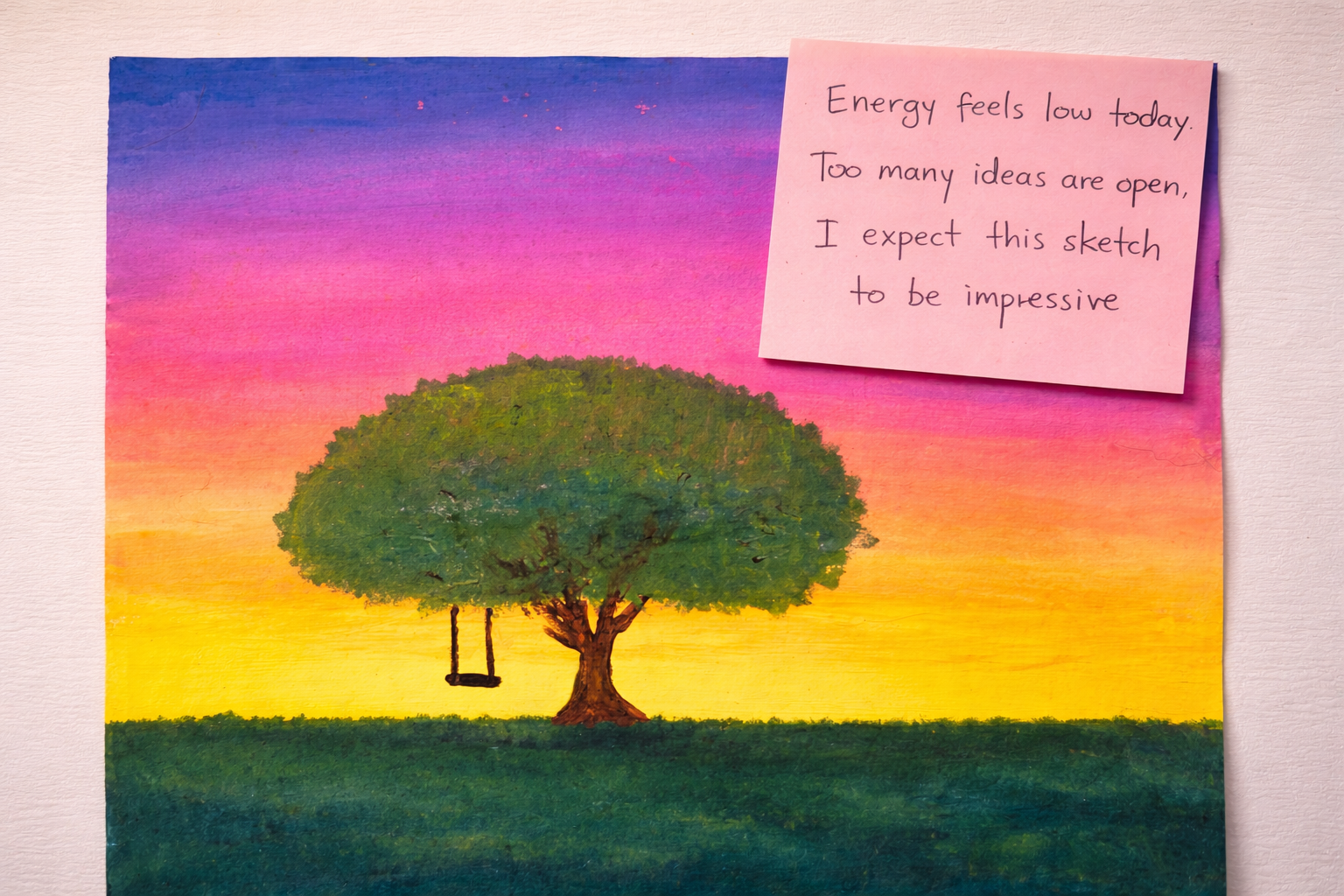
a low energy moment. After that, I write simple line on a small piece of paper, Energy feels low
today. That's it. I don't fix it. I
don't solve it. I just name it. This is the first
layer of our project. Right now, our working sentence is energy feels low today. I keep it nearby, but we're not placing it permanently yet. We're still building. Notice how different this
feels from saying I'm lazy. Low energy is temporary. Lazy feels like identity. When I started doing
this in my own practice, I felt less defensive
with myself. I wasn't fighting.
I was observing. If you're sitting with
your own project, maybe your sentence is
slightly different. Maybe you write my
brain feels full or I'm more tired than I
thought. Keep it short. Keep it honest. You don't
need to fix your energy. You only need to see it. That small shift alone
already reduces pressure. And when pressure
reduces, space opens. Let's now look at what else
might be increasing friction.
5. Notice How Complex Systems Increase Friction : Sometimes you're not
blocked because of energy. Sometimes you're blocked because anything
feels complicated. You might have too many
reference images open, too many brushes, too
many unfinished ideas. That complexity quietly
increases resistance. I look at my desk again,
my sketchbook is there, but I also see three
reference photos on my phone, a stack of old sketches and a list of future
project ideas. First, I gently move the stack of old
sketches to the side. Next, I close the extra photos and keep just one
simple reference image. Then I look at my
original sentence, Energy feels low today. Now, I add one more anus line beneath it on the
same piece of paper. Too many ideas are open at once. So now my project
looks like this. Energy feels low today. Too many ideas are open at once. I'm not reorganizing my
entire creative system. I'm just noticing friction. When I first started
simplifying like this, I realized I was often
overwhelmed by my own ambition. I thought having more options
meant being more creative, but often fewer options
made starting easier. If you're working digitally, maybe you close Era tabs. If you're painting, maybe you choose just one brush
instead of five. After that, pause again. Ask yourself, does this
feel slightly lighter? Even a tiny S is progress. Let's recap what
we've done so far. We notice low energy
without judgment. We notice complexity without
trying to fix everything, and we wrote those throats
down in simple words. Already, your block
is becoming specific. Specific problems feel smaller
than vague frustration. Now, we'll move to the
final and calm shift.
6. Write One Clear Friction and Place It Near Your Workspace : Sometimes you hesitate because you think you need
a big breakthrough. You don't. You need one clear friction named and
placed where you can see it. Take your piece of paper, read what you've written so far. Energy feels slow today. Too many ideas are open at one. Now, ask yourself quietly, what is the one friction that
feels most real right now? For me, the strongest
friction is this. I expect this sketch
to be impressive. That expectations adds pressure, and pressure adds resistance. So I add one final line
beneath the others. I expect this sketch
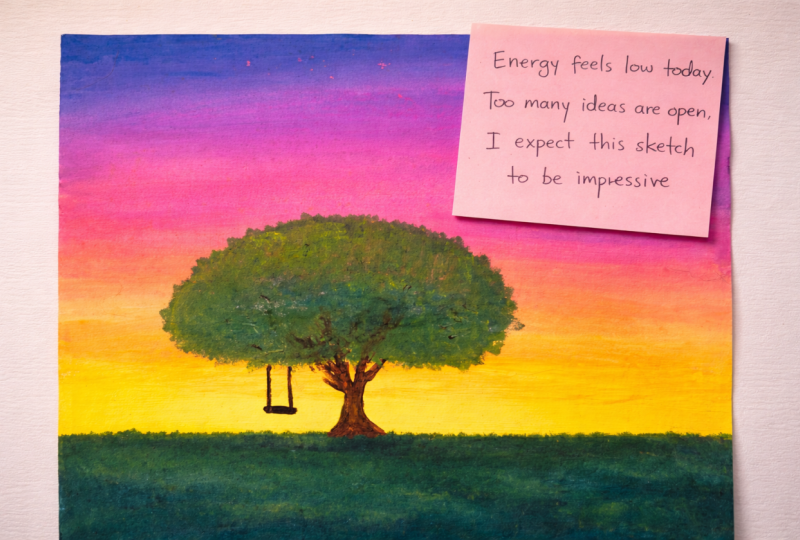
to be impressive. Now, my full sentence set reads, Energy feels slow today. Too many ideas are open at once. I expect this sketch to be
impressive. I read it slowly. Then I gently choose one of those lines as today's
main friction. In this case, I circle
in my mind the last one. I won't draw a circle on a
paper. I just acknowledge it. Finally, I place this piece of paper directly next
to my sketchbook. Not hidden, not folded,
resting beside it. I look at my workspace
and see the sentence. Instead of fighting
my block, I name it. This is the slowest and
most important moment. You are not trying to
become more disciplined. You are becoming more aware. When I started placing
these small notes near my workspace, something changed. I felt less attacked by
my own expectations. I felt like I was working with myself, not against myself. Now, with the sentence visible, I begin a very small
mark in my sketchbook, one line, not a full drawing, and it feels easier,
not perfect, easier. Before, I thought I
needed motivation. Now, I see I needed clarity. You have just completed
the final layer. You notice, you
wrote, you placed. That's the real progress.
7. Show Your Friction Sentence Beside Your Workspace : Your project is called
Notice One friction. You use your current
creative task and one small piece of paper. Here is the finish
example project. Energy feels slow today. Too many ideas are open at once. I expect this sketch
to be impressive. This sentence set
was built slowly. First, we noticed energy. Then we noticed complexity. Finally, we named
one clear friction and placed the paper
beside the sketchbook. Your final version
should look like a short written
sentence or small group of sentences placed physically next to your creative
tool or workspace. Take one photo of
that paper sitting beside your sketchbook,
tablet or desk. That is your upload. Add the project title
Notice One friction and a short description like I realize my main friction today is expecting my sketch
to be impressive. This project works because it makes something
invisible visible. When friction is visible, it feels less mysterious. And when it feels less mysterious, starting
feels lighter. Applod when you're done
writing and placing the note. Even if it took only a few
minutes, keep it simple. Most people upload
small imperfect notes. That's enough. This space is for practice,
not performance. You've completed all the steps. Once your photo is
uploaded, you've finished.
8. Answer Common Doubts About Noticing Friction : You made it all the way
through. That matters. It's normal to have
a few questions. First question. What if I don't
know what my friction is? That's very common.
If you're unsure, then you can start by writing. I'm not sure what
feels hard today, because even that
uncertainty is friction, naming confusion
reduces its power. Second question. What if I
have many friction at once? That's also normal.
If you notice many, then you can choose the
one that feels strongest right now because focusing
on one reduces overwhelm. Your paper might
last several lines, but you gently decide which
one feels most present today. Third question, what if my
friction feels emotional, like fear of being judged? That's valid. If you notice
fear, then you can write. I'm worried this won't
be good enough because honest language reduces
hidden pressure. Keep it short and real.
Here's a helpful tip. If your friction feels vague, try adding the words right now at the end of your sentence. It makes it specific
and temporary. And one more mindset shift. Friction is information,
not failure. When you see it as information, you stay curious
instead of critical.
9. Remember to Notice Before You Start : Congratulations. You did
something small and powerful. You learned that art block is often low energy plus friction. You notice how complexity
increases resistance. You wrote one honest sentence. You place it beside
your workspace. If there's one thing I hope
you take with you, it's this. Notice before you judge. Today, you practice awareness. That's a steady scale. It grows quietly. I personally believe that small clarity beats
big motivation. Big motivation fades,
small clarity stays. Here's a simple word to
remember what you did. Note, notice your energy,
observe the friction, tell the truth in one sentence, es into a small start. Note, that's it. Sometimes
the smallest notes next to your desk are the kindest thing you
can do for yourself. Thank you for being here.
Please upload your photo or your friction sentence
beside your workspace. Even a quick two
minute version counts. If this helped you,
please leave a review and write one full sentence
about how this lesson supported you because
your review helps me grow as a teacher and help other beginners
find this lesson. If you still have
question, that's completely normal. You can ask. Feel proud that you chose awareness instead of
self blame today. You started by feeling stuck. You're ending with one clear
sentence and a lighter mind. Clarity deepens over time when
you keep noticing gently. Thank you for taking this class. I'll see you in the next lesson.
 Paul Nene, Helping beginners take action