Transcripts
1. Stop Letting Your Phone Make Creative Block Worse : And sit down to draw, design, write or experiment
with a new tool, then your phone lights up, or maybe it does
not even light up. It just sits there,
quiet, waiting. And somehow that small rectangle
makes everything harder. If you feel stuck before you even begin, you are not lazy. You are distracted, and
distractions quietly make creative block feel
heavier than it really is. Here is the good news. You do not need a new planner. You do not need more willpower. You do not need a
full digital detox. You just need to move one thing. I'm, Paul, I help beginners build simple
creative habits so they can start without fear and
keep going without stress. I used to think my
problem was motivation. I tried new apps, long to do list, even
rearranging my entire room. But my biggest breakthrough came from something
embarrassingly small. I moved my phone. That tiny change gave
my mind breathing room. While you are here,
we are going to focus on one decision only. By the end, you will clearly decide whether to
move your phone out of reach before you begin
creative work. That's it. One decision, no extra rules. This works beautifully
on its own. It also connects naturally
with other lessons about starting and finishing
creative projects. This is not for advanced
productivity systems or people who want
complex focus frameworks. It is for beginners
who feel blocked, distracted, or frustrated
when they try to create. Only need a workspace and
your phone. That's it. We will gently look at what distraction really
does to create block. Then you will physically
remove one distraction. Finally, you will begin a short creative
session without it. You do not have to
overhaul your life today. Just stay with me.
One small shift can feel surprisingly
powerful. Let's begin.
2. Remove One Distraction Before You Begin : You might be thinking this feels too simple.
I understand that. When we are stuck, we often
look for big solutions, but creative block often grows because of
tiny interruptions. Here is what you will
create while you are here. You will create a
clear workspace by removing one distraction. That is the whole project. The primary material
is your workspace, a desk, a table, a small corner of your bed, even the kitchen counter, wherever you usually
try to create. Across the lesson,
you will first notice how your workspace
currently looks. Then you will move one
distraction out of reach. Finally, you will begin a short creative
session right away. At the end, you will
upload one photo of your workspace after you
remove the distraction. That photo is your proof. Your finished project
will look very simple, a clean workspace with your
creative materials ready, and your phone moved away. That's it. No decoration,
no perfection. If you want to pause the video
and work along, please do. You can rewind. You
can take your time. This is about practice,
not performance. Even if your space
is small or messy, you can still remove one thing. You are already doing something
powerful by being here. Let's gently look at what is really happening
behind the scenes.
3. Understand Why One Distraction Feels So Big: Maybe you tell yourself.
It's just my phone. I can ignore it. And
then 10 minutes later, you are scrolling.
You are not weak. Your attention is
just unprotected. Creative block often feels
like a lack of ideas, but many times it's simply a
lack of uninterrupted space. Here is a simple idea. Attention needs protection
before it can create. Let's break that into
calm clear parts. First, your brain looks
for quick rewards. If your phone is within reach, it promises something
easy and fast, a message, a notification, a short video, that tiny
promise pulls your focus. Second, creative work
feels uncertain. You start drawing or designing, you do not know if it
will turn out well. That uncertainty
feels uncomfortable. Your brain prefers the
comfort of your phone. Third, even seeing your
phone, change your posture. You see it slightly alert, slightly ready to check it. That small tension
interrupts dip focus. For example, if you sit down to sketch and your phone
is next to your pencil, you might tell yourself,
I'll just check one message. That message becomes three. Your sketch never starts. But if your phone is
physically out of reach, your brain has
fewer quick exits. You are more likely to begin. Here is how this works
in a simple flow. First, you notice
your current setup. Next, you move one
distraction out of reach. Then you begin a short
creative session immediately. This works because it removes friction before you
rely on motivation. You are not fighting yourself. You are adjusting
your environment. In simple words, this is
not about forcing focus. It is about clearing the doorway so focus
can walk in naturally. Let's move into the
first gentle action.
4. Notice How Your Phone Sits in Your Workspace : You might think your workspace
is fine. That's okay. We are not judging it. We are simply noticing. Before you change anything, take a slow look at where your phone usually rest
when you try to create. First, sit exactly where
you normally sit to work. If you draw at your
desk, sit there. If you design on your laptop
at the table, sit there. Next, place your phone
where you usually keep it. For example, you might
place it to the right of your sketchbook or directly
under your monitor. Or on top of your
drawing tablet. Then look at the full setup. Let's say workspace
looks like this, a sketchbook in a center, a to the right,
screen facing up. After that, imagine starting your creative picture yourself about to draw a
simple coffee mug. You hold your pencil, the
phone is right there. Finally, notice how
your body feels. Are you slightly
aware of the phone? Slightly ready to check it. You do not need to
fix anything yet. You just see it clearly. When I first did this,
I realized my phone was always within 5
centimeters of my hand. Of course, I kept touching it. I had made distraction
the easiest option. Take a quiet breath. See in your setup, clearly is already progress. In simple words, you just uncovered the hidden
helper of your block, not a lack of talent, not a lack of ideas, just a reachable distraction. In the next part, we will
change one small thing.
5. Move Your Phone Out of Reach Before You Begin : You might feel a
little resistance right now. That's normal. Your phone feels important. We are not throwing it away. We are just moving it. First, pick up your phone
from where it currently sits. For example, lift it from the right side
of your sketchbook. Next, choose a new place that is physically out of arms reach. This could be a
shelf behind you, a drawer, another room. Even inside your bag
across the room. Then place the phone there. For example, you
might put it inside your backpack and zip it closed. After that, return to your chair and look at
your workspace again. Now, you see your
sketchbook in the center, your pencil above it, and empty space where
the phone used to be. Finally, notice the feeling. The space looks slightly
calmer, slightly clearer. When I started doing this, I felt strange at first, almost like I was
missing something. But after a few minutes, my mind felt quieter. Was no glowing rectangle
asking for attention. Let's recap what you just did. You physically change
your environment before relying on discipline. You protected your attention instead of testing
your willpower. In other words, you remove
one easy escape route. That is powerful.
In the next part, we will gently begin
creative work right away.
6. Start a Five Minute Creative Session Without Your Phone : Sometimes after removing
a distraction, we pause. We think, Okay, now what? This is the most important
moment. You are not planning. You are beginning. First, sit back down in front
of your cleared workspace. Your phone is out of reach. Your materials are ready. Next, choose one tiny
creative action. For example, open
your sketchbook to a blank page or open your
design software to a new file. Then set a simple
intention in your mind. You will work for
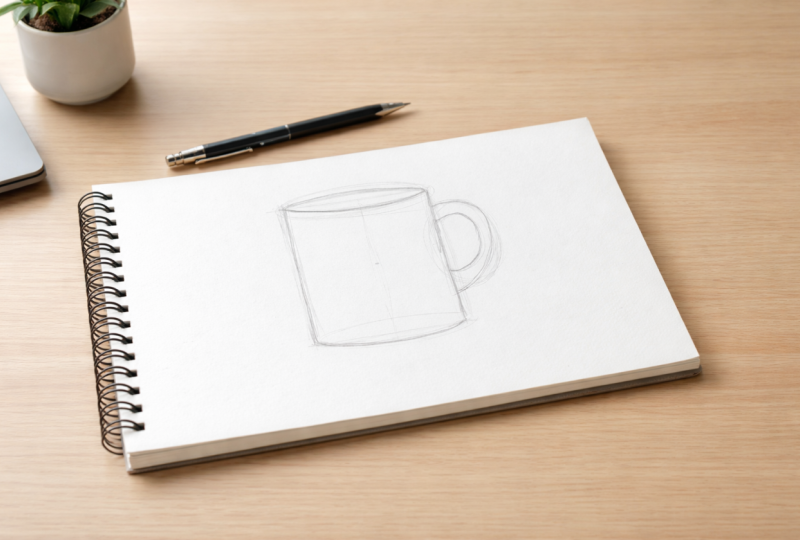
5 minutes only. Not an hour, just 5 minutes. After that, begin immediately. If you are drawing, lightly sketch the outline
of a coffee mug. Draw the curve top, then
the two sides lines, then the bottom curve,
then the small handle. Finally, keep going until
the 5 minutes feel complete. Do not check your phone. Do not adjust your
workspace again. Just stay with a simple task. This is the columns
part. There is no pressure to be brilliant. You are just present. I started doing this, I
noticed something surprising. The first few minutes
were always the hardest. But once I crossed the small bridge,
continuing felt natural. You just experienced the
shift from planning to doing. Before, your phone was
part of your workspace. Now your workspace belongs
to your creative work. Take a second to
notice the difference. Even if your drawing
is simple, you begin. That is the quiet victory. You are not someone who
waits for perfect focus. You are someone who protects
attention and starts anyway.
7. Upload Your Cleared Workspace Photo : Your project is called
Clear One distraction. The primary material
is your workspace. You will upload one
photo of your workspace after removing your phone
or one distraction. Here is the simple project
description you can use. I remove my phone
from my desk before starting and work for
5 minutes without it. Let's walk through
how this was built. First, you sat in your usual spot and notice your phone next
to your sketchbook. Next, you physically
move the phone into your bag across the room
and return to your chair. Then you began drawing a simple coffee mug for 5 minutes without
the phone nearby. Here is the final example of the completed project
setup a desk with a sketchbook open
to a page showing a simple coffee mug
outlined with a curve top, two light side lines,
a curve bottom, and a small handle on the right. A pencil rests above
the sketchbook. There is empty space
to the right side of the desk where the
phone used to be. The phone is not
visible in the photo. That is the entire project. This works because completion
builds confidence. You did not redesign your life. You removed one
distractions and began. That clarity matters
more than complexity. Upload, take clear photo of your workspace after
removing the distraction. Add the project title,
clear One distraction, add one short sentence describing what you moved
and what you worked on. The best time to
create and upload this is right after your
five minute session. Do not wait for perfection. Even a quick version is enough. Most people upload simple
imperfect projects. That is completely normal. This space is for
practice, not performance. You have already
done the real work. Now, just share the proof.
8. What If I Still Feel Distracted : You made it through everything. It is normal to have
a few questions. First question. What
if I still distracted even after moving my
phone? That can happen. If your mind still feels busy, then you can focus only on the five minute limit because a short time frame feels
safer and lighter. For example, if you start sketching the coffee mug
and your thoughts wander, simply return to drawing
the curve top line. Structure you already
created helps you continue. Second question, what
if I need my phone for reference photos or music?
That's a good concern. If you need it for reference, then you can place it
farther away but still visible because distance
reduces impulse checking. For example, set the
phone on the shelf behind your monitor instead
of beside your hand. Your project structure
stays the same. You are still removing it
from reach before beginning. Third question. What
if I forget and grab my phone anyway?
That is human. If you catch yourself
reaching for it, then you can gently stand
up and move it again because resetting
the environment is easier than judging yourself. For example, after noticing the impulse while
drawing the mug handle, simply place the phone back in your bag and continue
the outline. Here is one helpful tip
if you often forget, you can place a small
sticky note where your phone used to sit
that says, start first. That tiny reminder reinforces the workspace shift and
one more mindset shift. Instead of asking, can
I focus perfectly, ask, Did I move the distraction? That question is simpler
and leads to action.
9. Choose to Move the Phone and Begin : You did something small
but meaningful today. You saw how your phone quietly
worsened creative block. You move it out of reach. You began a five
minute session anyway. If there is one thing I hope you take with
you, it's this. Protect your attention before
you ask it to perform. You are not broken,
feel blocked. Sometimes your environment
just needs a small adjustment. Here is a simple word to
remember this rhythm. Clear. Clear your space, let distance protect your focus, enter your task, act for 5
minutes, repeat tomorrow. That's what we are
doing all along. I noticed that when
my desk felt calm, my ideas felt calmer too, not louder, just steadier. Thank you for being
here. Please applaud your project photo after your
next five minute session. The best time is right
after you finish, while the desk is still clear. If this helps you, please leave a review and share
what changed for you because your feedback
helps me grow as a teacher and help other
beginners find this lesson. If you have question, that is completely normal,
feel free to ask. Be proud of yourself. You made one clear
decision today. You chose to move
the phone and begin. At the start, distraction
felt bigger than your ideas. Now, you know how to gently shift the environment
and start anyway. Clarity often grows quietly. One small workspace at a time. Thank you for taking this class. I'll see you in the next lesson.
 Paul Nene, Helping beginners take action