Transcripts
1. Notice When to Work Instead of Forcing It : Have you ever tried
to push yourself to work when you felt
tired or foggy, and it only made things harder. It can feel frustrating. You sit down, you try to focus, and your mind just
does not cooperate. You might even feel
a little guilty, like you should be
able to just do it. Many beginners feel this way. It is very common. Here is the gentle shift
we are going to practice. Instead of forcing work, we will notice when your energy feels steady and
choose to work then. Small awareness can
change everything. I and Paul, I help beginners
learn new skills in a clear and simple way so they can feel safe trying
something new. I used to believe productivity meant pushing through
at all costs. If I felt tired, I thought
I needed more discipline. But over time, I realized
something simple. When my energy was steady, even for a short while, my work felt lighter
and clearer. When I force it,
everything felt heavy. That realization changed
how I approach my day. Here we are going to focus
on one simple decision. Work when your
energy feels steady, not when it feels forced. This lesson is basic on purpose. It is designed for beginners who feel overwhelmed or tired
of pushing themselves. If you already track your
energy in complex systems, you might find this very simple. But if you often wonder, should they push through
or wait? This is for you. You don't need any tools, no apps, no planner, just your own self observation.
We will move slowly. First, we will understand what steady energy
really feels like. Then we will pause
and notice it. Then we will write one
sentence about it. Finally, you will choose
one small action that matches that steady energy.
This works on its own. It also connects naturally with other simple
productivity lessons because awareness
is always the base. If you're feeling
overwhelmed right now, take a slow breath,
you are not behind. You are simply learning
to notice. Let's begin.
2. Create a Simple Energy Check : Sometimes the hardest part of productivity is
not doing the work. It is knowing when to start. If you have ever sat there, wondering whether
to push yourself or wait, you are not alone. That confusion can
drain energy even more. So here is what you will create. You will make one
simple energy check. That means you will pause, notice how your energy feels, write one sentence about it, and then choose one small
action that fits that energy. Your primary material
is self observation. That's it. You can
use a piece of paper, a notes app, or even
the back of a receipt. Keep it simple. We will build this energy check
gradually as we go. First, you will
notice your energy. Then you will put it
into one clear sentence. Then you will match it
with one small action. By the end, you will upload one sentence describing
your energy level. That sentence is your proof
that you practice awareness. The finished result
will look like one short sentence that shows you noticed your energy
and respected it. It is small, that is the point. You are allowed to
pause the video, rewind, and take your time. This is not about speed. It's about clarity. Keep it imperfect. This is practice,
not performance. You are already doing
something healthy by choosing to notice
instead of push. Now, let's understand
what is really happening when energy
feels steady or forced.
3. Understand What Steady Energy Feels Like : Have you ever tried to
work when your mind felt cloudy and everything
looked twice as long? That feeling can make
you doubt yourself. You might think you are lazy, but often it's not laziness. It is low or unstable energy. The simple idea here is this. Work when your
energy feels steady, not when it feels forced. Steady energy does
not mean excited. It does not mean
super motivated. It simply means your
mind feels calm enough to focus
for a short while. Let's break this into
small clear parts. First, forced
energy feels tight. Your shoulders might feel tense, your thoughts might
feel scattered. You might sigh a lot. Second, steady energy
feels neutral, not amazing, not
terrible, just steady. Your breathing feels normal. You can read a sentence
and understand it. Third, energy changes
during the day. Morning, afternoon, evening,
it shifts. That is normal. For example, if you
sit down to write and your head feels heavy and you
keep checking your phone, that may be forced energy. If you sit down and you can read a paragraph without resistance, that may be steady energy. The reason these
matters is simple. When you work with
steady energy, even small task, feel lighter. When you work
against your energy, small task, feel huge. So here is the gentle
flow we will use. First, pause and notice
how your energy feels. Next, write one clear
sentence about it. Then choose one small action
that matches that energy. This flow works
because it slows you down just enough to see clearly. Instead of reacting,
you are observing. Instead of pushing,
you are choosing. In simple words,
notice, name, match. We are not adding rules. We are creating a schedule. We are simply learning to notice and respond wisely.
Now, let's practice.
4. Pause and Notice Your Energy : Sometimes we jump into work
without checking how we feel. If that sounds familiar,
it makes sense. We are used to reacting quickly. Slowing down can feel
strange at first. That is okay. Let's
gently pause. For this practice, you only need yourself and a place
to sit for a moment. The project title
is Energy Check. First, sit comfortably. You do not need a
perfect posture. Sit. As an example, I'm sitting at my desk
in the late afternoon. Next, close your eyes for a few seconds or
soften your gaze. Notice your breathing.
In my case, I notice my breathing is a
little shallow but not rushed. Then ask yourself quietly. How does my energy
feel right now? For me, I notice my head feels slightly tired
but not foggy. My body feels calm. After that, scan your focus. Can you read a short
sentence and understand it? I pick up a book
and read one line. I understand it
without rereading. Finally, decide whether
this feels force or steady. In my example, I would say
it feels mostly steady, not high energy, not excited, but steady enough to
focus for a short while. You have now completed the first part of
your energy check. You paused and noticed that
small pause is powerful. Many people skip this. If your
energy feels low or force, that is still valuable
information. You are not failing. You are noticing. Right now, you are building awareness. That alone is progress. In the next part,
we will turn what you notice into one
clear sentence.
5. Write One Sentence About Your Energy : Sometimes we notice how we feel, but we do not put it into words. When we name it clearly, it becomes easier to act wisely. If writing feels
intimidating, keep it simple. You are only writing
one sentence. I am continuing with the
same example from before. My energy felt mostly steady, slightly tired, but clear. First, take your paper
or open the notes app. Next, write the title
Energy Check at the top. Those two words. Then write one simple sentence
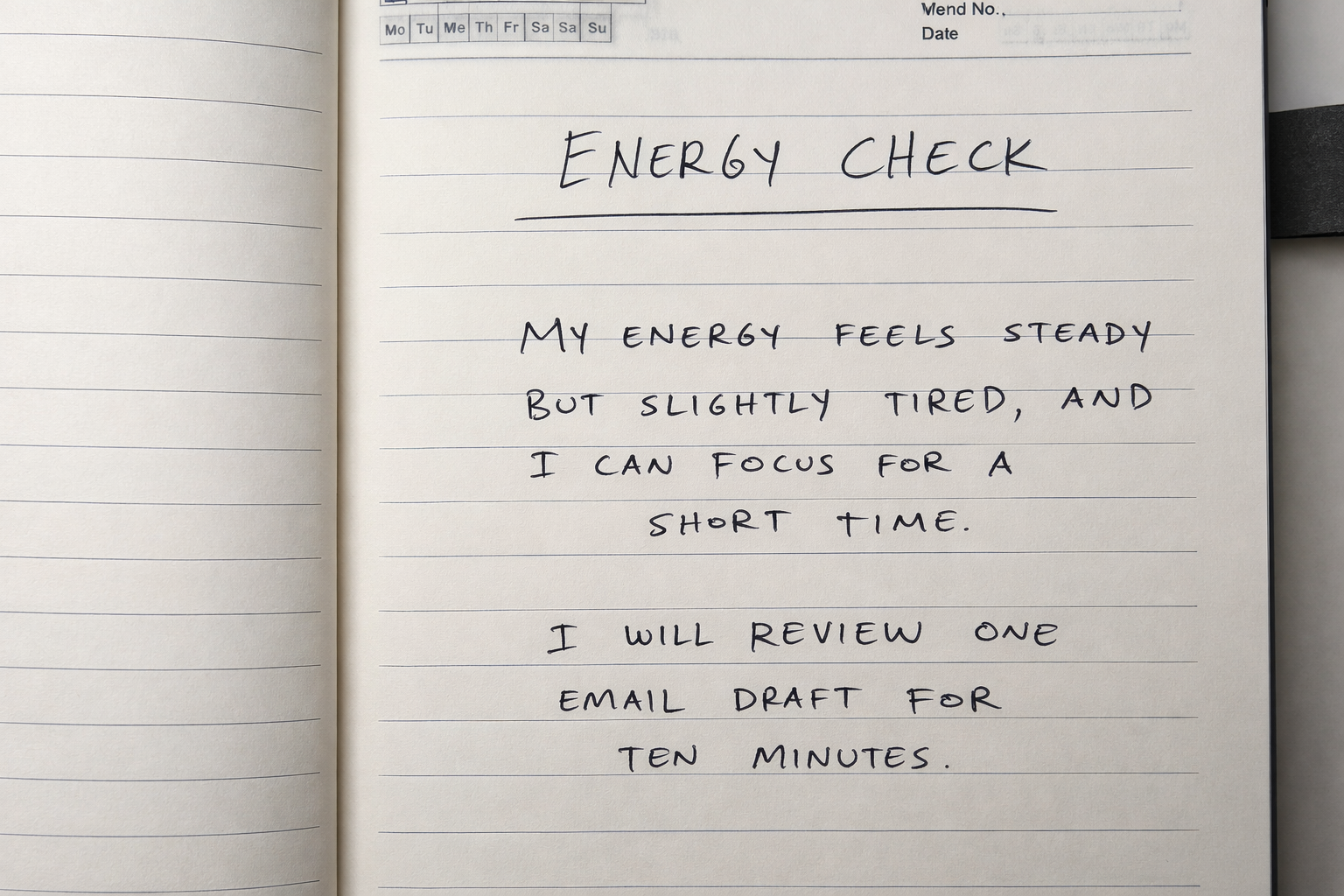
describing your energy. In my example, I write my energy feels steady
but slightly tired, and I can focus
for a short time. Notice how plain that is. No fancy language, just
honest observation. After that, read your sentence
once. Does it feel true? If yes, live it, adjust a word. For example, someone
else might write, My energy feels low and foggy
and focusing feels hard, or another person might write. My energy feels calm and clear, and I can work gently. Keep it short one sentence only. By writing it down, you are
making your energy visible. You are not guessing anymore. This is the heart of
energy awareness. You pause, you
notice, and you name. Already, you may
feel a tiny shift. Instead of fighting your state, you are understanding it. Next, we will choose one small action that
fits what you wrote.
6. Choose One Small Action That Fits Your Energy : O sometimes the mistake
is not that we work. It is that we choose
the wrong size of task. If your energy is steady
but slightly tired, a huge task may
feel overwhelming. If your energy is
clear and calm, a small task may feel too easy. So now look at your sentence. Mine says, My energy feels
steady but slightly tired. And I can focus
for a short time. First, ask yourself, what
small action fits this? Because I can focus
for a short time, I choose something small. I decide to review one
short email draft. Next, write one short follow up sentence under
your first one. In my example, I add I will review one email
draft for 10 minutes. Now, read both
sentences together. My energy feels steady
but slightly tired, and I can focus
for a short time. I will review one email
draft for 10 minutes. That feels align. It is not forcing.
It is matching. If someone wrote that their
energy feels low and foggy, their matching action might be I will tidy my
desk for 5 minutes. If someone wrote that their
energy feels calm and clear, their matching action might be I will outline one small
section of my project. Notice how the size of the
action respects the energy. Finally, sit with your
choice for a moment. Does it feel doable? Not exciting, just doable? This is the calms
part of the process. You are not pushing.
You are not quitting. You are choosing wisely. Before you might have tried
to do everything at once. Now you are working
with what is real. You have completed your
energy check. Take a breath. You now know how to
notice your energy, name it and choose a
small action that fits. That is steady progress.
7. Upload Your One Sentence Energy Check : Your primary material
was self observation. The project title
is Energy Check. Your finished example might
look like this. Energy Check. My energy feels steady but slightly tired and I can
focus for a short time. I will review one email
draft for 10 minutes. That is the full project. You began by pausing and
noticing your energy. Then you wrote one
sentence describing. Then you added one
small action that fits. This simple format works because it keeps you
grounded in reality. You are not guessing. You are
observing and responding. To upload your project,
take a photo or screenshot of your single
sentence Energy Check. Add a title Energy Check
and short descriptions, if you would like.
That is enough. The best time to create
and aplod this is right after you notice your
energy during a normal day. It only takes a few
minutes. Keep it simple. Most students applaud
short imperfect versions. Even a quick two or three minute energy check is valuable. No one expects perfection here. This space is for practice. These are all the steps. Pause, write one sentence, choose one small action. Once you upload, you will have proof that you practice
energy awareness. Next, let's answer a few common questions
that might come up.
8. Solve Common Energy Awareness Questions : You made it through
the full process. That is something to celebrate. It is normal to still
have questions. Let's gently go through
a few. First question. What if my energy is always low? That feel discouraging. If you notice that your
energy often feels low, then you can still write
your energy check sentence honestly because awareness
is still valuable. For example, if you
feel low and foggy, you can use a very small action like stretching
for a few minutes. The reason this helps is
because you are still respecting your energy
instead of forcing it. Second question. What
if I feel steady, but I still do not want to work? That is a common experience. If you feel steady
but resistant, then you can choose an even
smaller action because sometimes resistance fades
when the task feels tiny. For example, if
your energy check says you can focus
for a short time, you might choose to open a document and
write one sentence. The reason this works is that small starts feel safer
than big commitments. Third question, what if I
choose the wrong action? It's okay to experiment. If you choose an action
and it feels too heavy, then you can adjust
it to be smaller because the goal is
alignment, not perfection. For example, if reviewing one
email draft feels too much, you can read only
the first paragraph. That is still
honoring your energy. Here is one helpful tip. If you notice your energy often feels steady at the
same time of day, then you can gently
protect that time for your most meaningful
small action because patterns can
support clarity. More mindset shift,
instead of asking, How much can I
force myself to do? Try asking what fits
my energy right now. That question alone
can change your day.
9. Work With Energy Instead of Pushing : Congratulations. You practice something many people overlook. You pause, you noticed, you named, you matched. If there's one thing I hope
you take with you, it's this. Work feels lighter when
it fits your energy. You are not lazy
for feeling tired. You are human, and now you have a simple way to respond wisely. Earlier, we gently followed
a rhythm without naming it. Now you can see it clearly. The shortcut is the word calm. Check your energy, acknowledge
it in one sentence, link it to one small action,
move forward gently. Calm. That is what we
were doing all along. I once thought productivity
meant pushing harder. Now, I see that calm awareness
often gets more done. Thank you for being here today, please upload your Energy Check
sentence as your project. It can be short,
it can be simple. If this helped you,
please leave a review in a full sentence and
share how this practice supported you because
your review helps me grow as a teacher and helps other beginners
find this lesson. If you have question, that
is, feel free to ask. Be proud of the clarity
you gain today. You now know how to notice your energy instead
of fighting it. At the beginning, you may
have felt pressure to push. Now, you have a gentler option. Clarity often grows
quietly over time. The more you notice, the
more natural it becomes. Thank you for learning with me. I will see you in
the next lesson.
 Paul Nene, Helping beginners take action