Learn Sky Gradient Techniques | Oil Pastel Easy Landscape for Beginners | Michelle Gooi | Skillshare

Playback Speed


1.0x


  • 0.5x
  • 0.75x
  • 1x (Normal)
  • 1.25x
  • 1.5x
  • 1.75x
  • 2x

Learn Sky Gradient Techniques | Oil Pastel Easy Landscape for Beginners

teacher avatar Michelle Gooi, Traditional Artist

Watch this class and thousands more

Get unlimited access to every class
Taught by industry leaders & working professionals
Topics include illustration, design, photography, and more

Watch this class and thousands more

Get unlimited access to every class
Taught by industry leaders & working professionals
Topics include illustration, design, photography, and more

Lessons in This Class

    • 1.

      Intro

      1:35

    • 2.

      Material

      2:03

    • 3.

      How to make sky gradient

      7:16

    • 4.

      How to blending sky gradient without any tools

      4:18

    • 5.

      Simple ocean painting

      3:43

    • 6.

      How to draw trees in thin lines

      4:13

    • 7.

      Layering Grass

      4:15

  • --
  • Beginner level
  • Intermediate level
  • Advanced level
  • All levels

Community Generated

The level is determined by a majority opinion of students who have reviewed this class. The teacher's recommendation is shown until at least 5 student responses are collected.

3

Students

1

Project

About This Class

About This Class

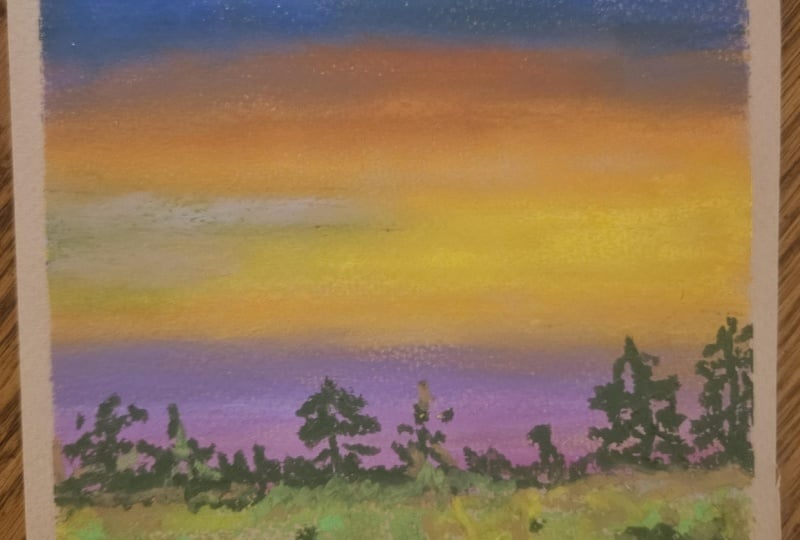
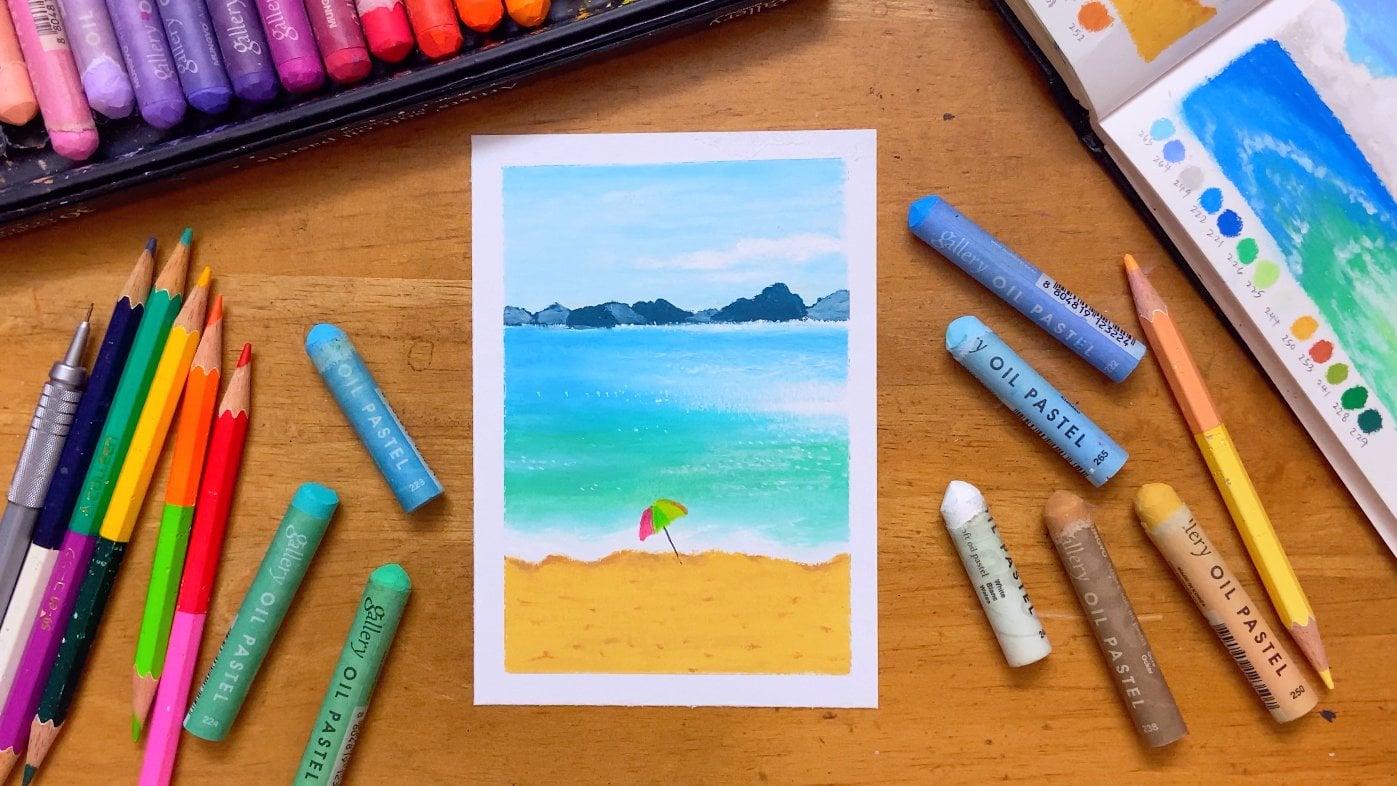
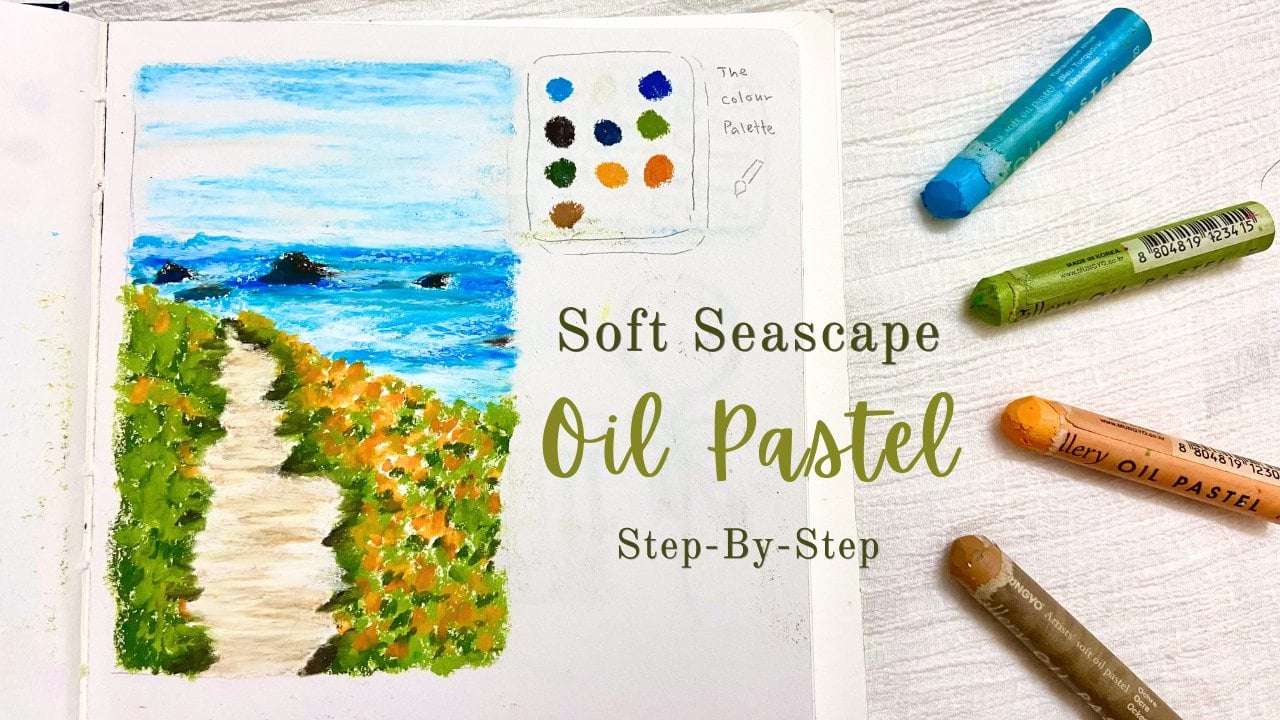
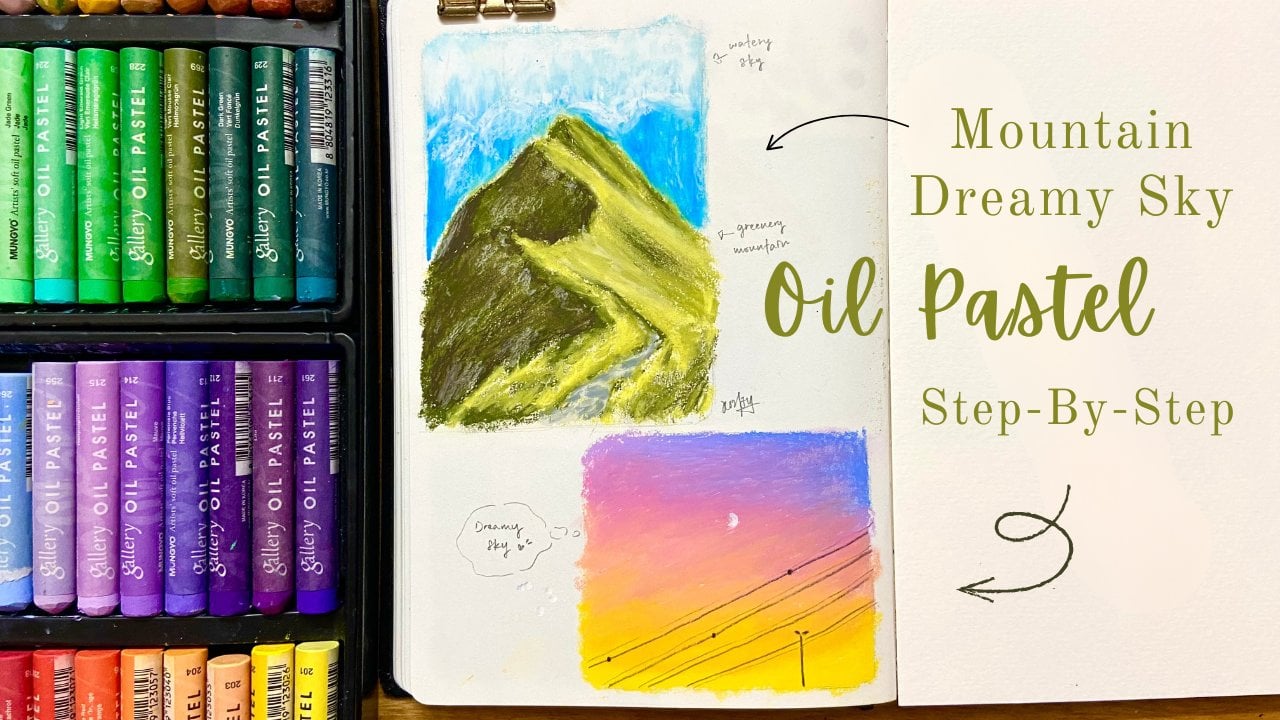
In this class, you’ll learn how to create dreamy landscape drawings with oil pastels, focusing on soft sky gradients and simple tree drawing and cozy grass field.

Whether you’re new to oil pastels or looking to improve your skills, this class will help you create smooth color transitions and bring depth to your landscapes.
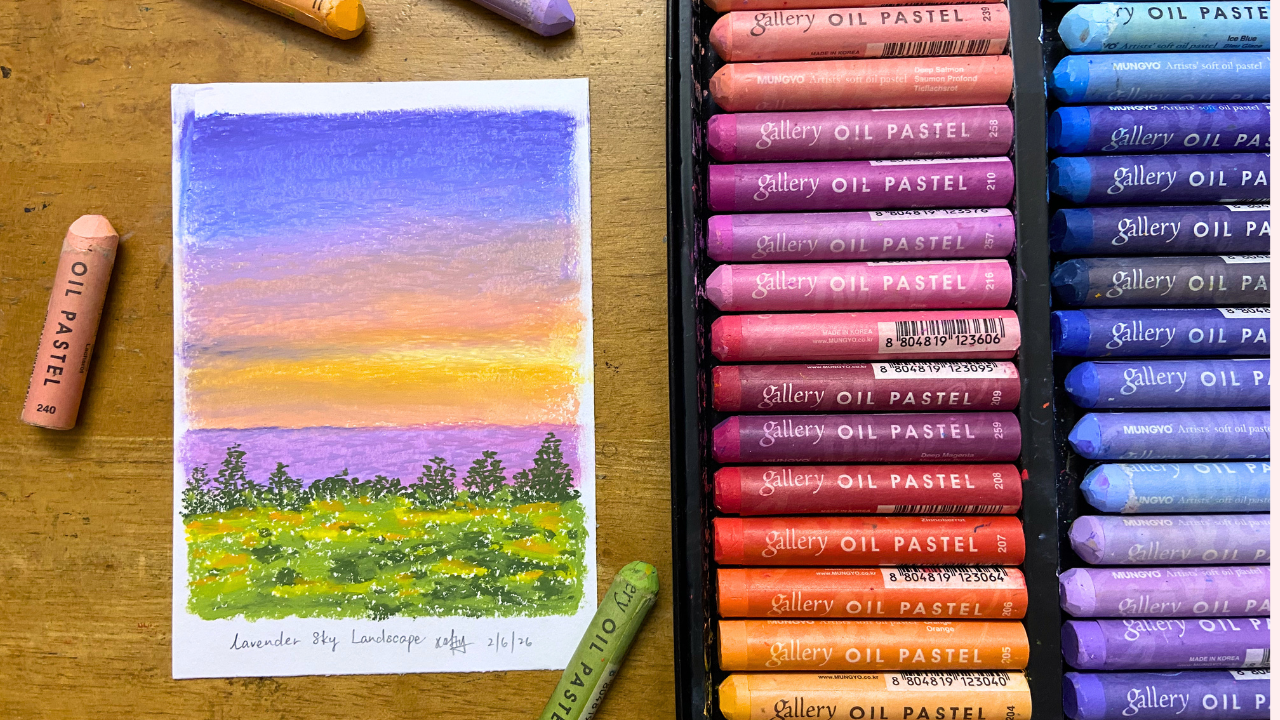
In this class you will learn:

  • Create smooth gradients in the sky using multiple colors

  • Blend oil pastels using just your fingers

  • Build depth through layering techniques

  • How to use thin lines to draw trees

  • How to draw grass and flowers using simple shapes and layering

  • Develop confidence to yourself draw with oil pastel without sketching with pencils first

Landscapes are a great way to improve your understanding of color, lighting, and composition, and oil pastels are perfect for creating soft, expressive effects.

This class is designed to be simple, relaxing, and beginner-friendly, while still teaching important foundational skills.

If you enjoy calm, aesthetic art and want to create artwork that feels soft, dreamy, and expressive, this class is perfect for you.

Thank you so much for your interest in this class!

Hi, I’m an oil pastel & also pencil art artist, a self-taught creative who learned through online courses and lots of practice—no art school required. I believe anyone can learn to draw and paint with the right guidance, and I’m here to show you that oil pastels can be fun, relaxing, and beginner-friendly. I teach food drawing with oil pastels and am working on more classes featuring landscapes, pets, animals, and human portrait. Follow my Skillshare profile to stay updated on new classes and creative lessons.

Meet Your Teacher

Teacher Profile Image

Michelle Gooi

Traditional Artist

Teacher

Hi, I'm an oil pastel & also pencil art artist, a self-taught creative who learned through online courses and lots of practice--no art school required. I believe anyone can learn to draw and paint with the right guidance, and I'm here to show you that oil pastels can be fun, relaxing, and beginner-friendly. I teach food drawing with oil pastels and am working on more classes featuring landscapes, pets, animals, and human portrait. Follow my Skillshare profile to stay updated on new classes and creative lessons.

See full profile

Level: All Levels

Class Ratings

Expectations Met?
    Exceeded!
  • 0%
  • Yes
  • 0%
  • Somewhat
  • 0%
  • Not really
  • 0%

Why Join Skillshare?

Take award-winning Skillshare Original Classes

Each class has short lessons, hands-on projects

Your membership supports Skillshare teachers

Learn From Anywhere

Take classes on the go with the Skillshare app. Stream or download to watch on the plane, the subway, or wherever you learn best.

Transcripts

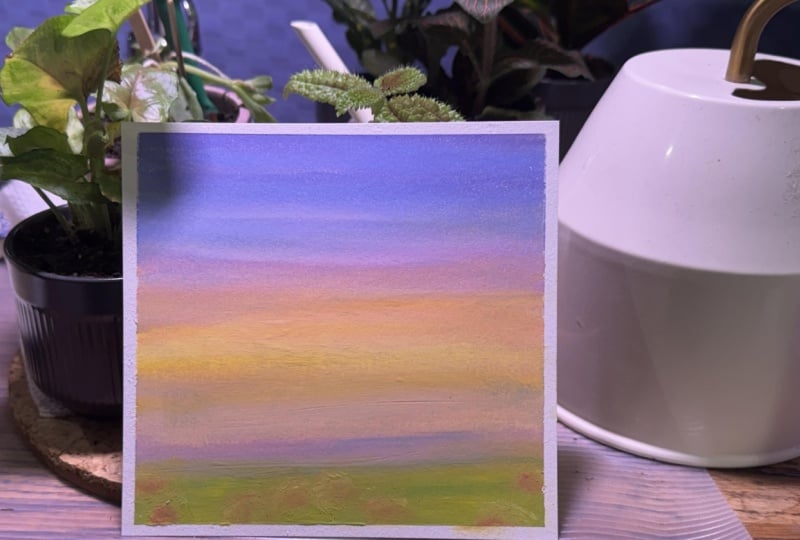
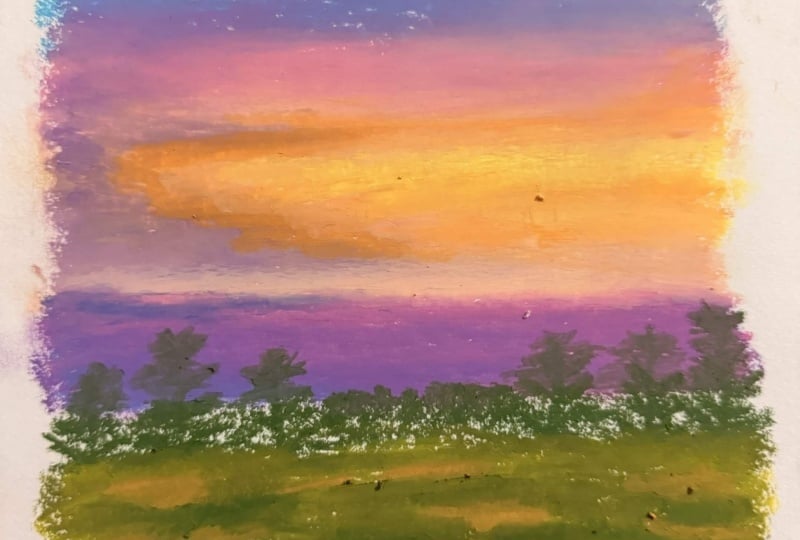
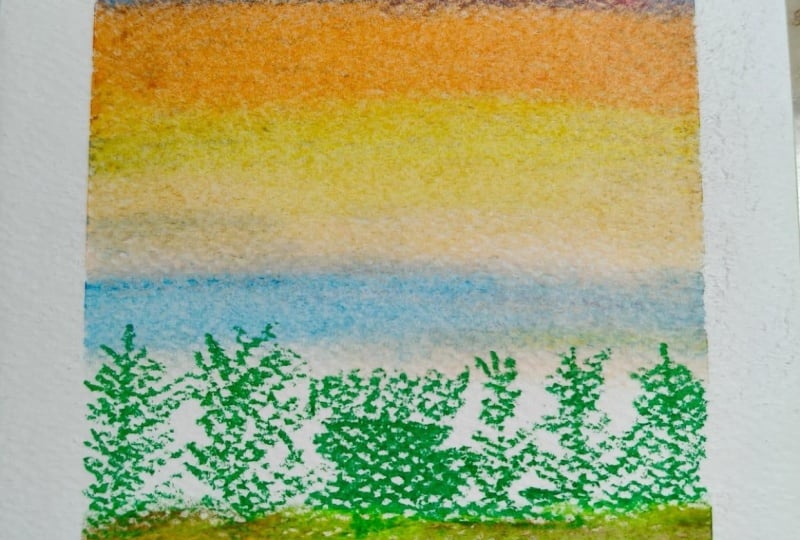
1. Intro: Hi, everyone. Welcome to my class. If you love dreaming landscape and you want to learn how to create them using oil pastel, then you are in the right place. Hi, I'm Michelle Guy an artist and content creator. I love creating soft dreamy illustrations that feel comforting and calming. I have been sharing my art journey online and helping others explore creativity in a simple and enjoyable way. In this class, you'll be drawing a beautiful sunrise landscape with gentle color transitions and a cute cozy lock simple grass field. I'll show you how to use all pastel to create smooth gradient of the sky. Soft blending without using any tools. Just use your finger is enough and layers colors to bring your landscape to life. First, we start from drawing the sky. I will show you how to blend different colors mostly to create a natural gradient. Then move on to paint the ocean with simple blending techniques and move on to the tree. I'll show you how to draw the tree with thin line and strokes and lastly, draw the grass with a cozy musical vibe. This class is perfect for beginner, hobby artists, or anyone who just want to relax and enjoy a creative moment. You no need any p experience, just come with an open mind and have fun and I'll guide you step by step through the process of building the landscape using oil pastel. I'm really excited to create this with you. Let's get started and I'll see you in the first lesson. 2. Material: This class, there's only three things we need. First is paper. I recommend paper in somewhere 100-20 grams to 200 grams is the best. But if you don't have that, it's okay. You can use whatever paper you have at the moment, or any sketchbook you have. It won't affect the outcome much like watercolor. Second is oil pastel. I use Mungo Gallery oil pastel 72 color set. If you have the budget, I recommend this brand, it's a brand from Korea. You can find it online on Amazon or any online store in your country. If you never tried I Pastel before or you're not sure you like this medium or not, you can get the 36 color set like I did before. I bought it at around USD $17. And if you already have tried I Pastel and you like to get more color, but don't have much budget, you can get the 72 color set, which you see right now. I bought it at around USD $38 the full color set is 120 colors, but I personally think the 72 colors is enough for you to draw almost anything. These are just my recommendations, but you're welcome to use any brands you like in this class. The color I'll mentioned in the class is from this MunoEPastel, but you can find the similar color of your pastel to use. The last thing you need is your finger. In this class, we won't use any tools to blend unless you have the blending tool and you feel free to use it. But I want to make it as beginner friendly as much as possible. So all you need to blend is just use your finger, and maybe you need an eraser just in case you want to erase some smudging or mistake. So that's all for the materials, and let's start drawing 3. How to make sky gradient: Now we will directly start with the oil pastel. We were not using pencil to draw sketch. Let's challenge ourselves to just start with the oil pastel to build confidence to this medium. First, we're going to use sky blue as the first color for the sky. Use light pressure to paint because we're going to apply the second color layers after this. Next, use periwinkle blue, which is a dark purple, only apply at the top of the sky. Then we use back the sky blue again to apply more color on top of it and also add some more below it. Next, use light purple violet under it, but also cover some of the sky blue color, so it will make the gradients look more natural when we do blending later. And Next, we use salmon color, which is beige, apply under the light purple and also cover some of the purple too. We want to create the smooth, natural colour transition from the blue purple to the orange, yellow part. I put more purple between the beach so the gradient will not look like two separate colours. Then I use pink to paint after the beach. Remember, don't apply too much pink. If you apply too much pink, you can put on beige color to cover it up, so it will lighten the pink colour. I add more purple at the side because you can see from the reference, there are some purple at the left side. Remember to leave space for the ocean and the grass. Sometimes we are too focused and carry away by painting the sky and forgot to leave space for the other object. Next, use pale yellow, which is a very light yellow. Don't worry to paint too much of this color because it's a very light color. We can always cover up with other darker color after. So go ahead and paint much yellow under the pink. Then we use golden yellow to paint under the pale yellow. Then use back the pale yellow to go over some of the golden yellow again. Next, also use back the beige color to paint below the golden yellow and also on top of it. There are some purple at the left side, so we're also using the light purple to paint it here. Then use Big again to paint below it. This is the part where it separates the sky and the sea. I think the pink color is not visible anymore, so I paint again the pink between the pale yellow and the beach and add more golden yellow between the pink and the pale yellow. Keep in mind that while we're painting all the colours, we are using only light pressure. But in order to blend smoothly, we also need to make sure we apply enough oil pastel on the paper or it will help to blend together. I add a little bit of periwinkle blue, which is a dark purple on here because I think it looked like have more darker purple here, but I think the color I put is too dark. So I quickly fix it with the light purple again. 4. How to blending sky gradient without any tools: Now we are going to blend the sky. Before we do the blending, make sure your finger is clean, and then we can start blending the colors. Put your paper as horizontal way, so it's easier to blend. Let's start blending from the middle where it's above the yellow color. Move your finger ups and down and slowly blending to the left side of the sky. If you think the pale yellow parts got a little bit of smudging, you can paint the color again, and you can use different finger to blend, so your sky color won't look dirty and more clean. Then we use the finger, have the light colour, or just use another clean finger if you prefer. Start blending from the middle and slowly goes to the top of the sky. If you accidentally smug the paper color to the beige color areas like me, don't worry, we can always apply back the color. But keep in mind which finger you use for blending. If some parts look not so natural, like the gradient look not very smooth, sometimes it's because the oil pastel was applied not enough. So to fix this, we can apply more oil pastel and try to blend it and see how it turned out. You can keep doing this until it's reach your expectation. So we have finished the bending. You can use eraser to erase the edges to make it look more clean and neat. If you think the pink colour is not visible enough, feel free to add more to it, or you can just stop at here and your sky is done. In next chapter, we will going to paint the ocean. 5. Simple ocean painting: Now we are going to paint the ocean. Use light purple violet to paint for the first layer, but don't paint too much at the right side. Then use pink colour to paint the right side. Also paint in light pressure. Then use sky blue to add a layer at the left side of the ocean. Make sure the pink and the purple have crossed over to each other, so the transition of the gradient will look more smooth and natural. Now, we are going to do the bending. Turn your paper in horizontal way again, use your finger to blend it, move your finger from up to down and repeat until it's blended naturally. Lastly, use pink to lightly draw a thin line on the ocean. Only draw at the right side. Then use periwinkle blue, which is the second color we use at the beginning when we paint the sky. It's a dark blue, also draw a thin line on the ocean on the left side. Then use light purple to tone it down and also like blend it a little bit. Make the pink and dark purple line connect together, and your ocean is done. 6. How to draw trees in thin lines: In this chapter, we're going to draw the tree. We don't need to draw all the tree details like in the reference. We only use a dark green color to represent the of the tree. The dark green color I'm using here is most green. We just have to roughly draw out the shape of a tree. Let me break it down with color pencil. So the shape of the tree is an inverted triangle shape. So first, we just draw a vertical straight line. Then we start to draw out the branches from the straight line and adding small leaf on the branches. Keep in mind, make it in a triangle shape. So now let's try with oil pastel. The tricky part here is we have to draw thin line as thin as possible. So use the edge of your oil pastel or any pointed angle of your oil pastel to draw. I know it's not easy to draw these tiny details. If you want to practice draw at the side first, feel free to do it. When you use oil pastel to draw the leaf on the branch, when you use oil pastel to draw the leaf on the branch, you can just apply pastel like dot, dot, dot. Do not worry that you'll mess it up. We don't trace for perfection, then it's better than perfection. So you can draw a tree like some of the tree is shorter, some is longer or smaller. Try not to draw it in all same height, so it will look more natural. No. For the center part, it looked like some bushes in the reference. We can just draw some messy strokes. Try to leave a bit of white gap in between, so it's not look like just a whole big part of green. Then we continue drawing the tree with the same techniques like before, and the tree is complete. In next chapter, we will draw the grass field, and we'll finish the drawing. Uh 7. Layering Grass: Now we are going to paint the grass. We start from the light green first, which is light olive, paint from top to bottom. Vary your pressure while painting. Try to leave some blank space for the yellow orange glass. Next, we use yellow to start draw the yellow grass, apply on the areas that we live just now, but don't cover all the white gap. Then we use dark green, which is more screen. Go back to the grass, the green grass. We are adding more depth to the grass. But don't add too much, only apply to the shadow areas. So mostly apply at the bottom and some at the middle. Then we use light olive to soften the dark green a bit. Then we use a light orange, which is golden yellow to add on the yellow grass we draw just now. There are still some white gap, so I'm using light olive to fill up the gap. At the same time, the dark green looks like got torn down by the light olive, so I add back the dark green again so the grass not look too flat. And your painting is done, you can name your painting at the bottom, put your signature down, write down the date, and tell them, I'm so proud of you make it here. No matter how your painting turn out, please give yourself some compliment and tell yourself you have done a great job and you finish the drawing. You are amazing. I will look forward to see your artwork in the project section. I encourage you to take my other oil pastel classes if you want to create more oil pastel painting. Thanks for taking my class.