Transcripts
1. Introduction: Hello everyone. My name is Lisa Heaney and
I am a recent teacher. I've always been passionate
about teaching and helping others to benefit
from my knowledge. This class, there are
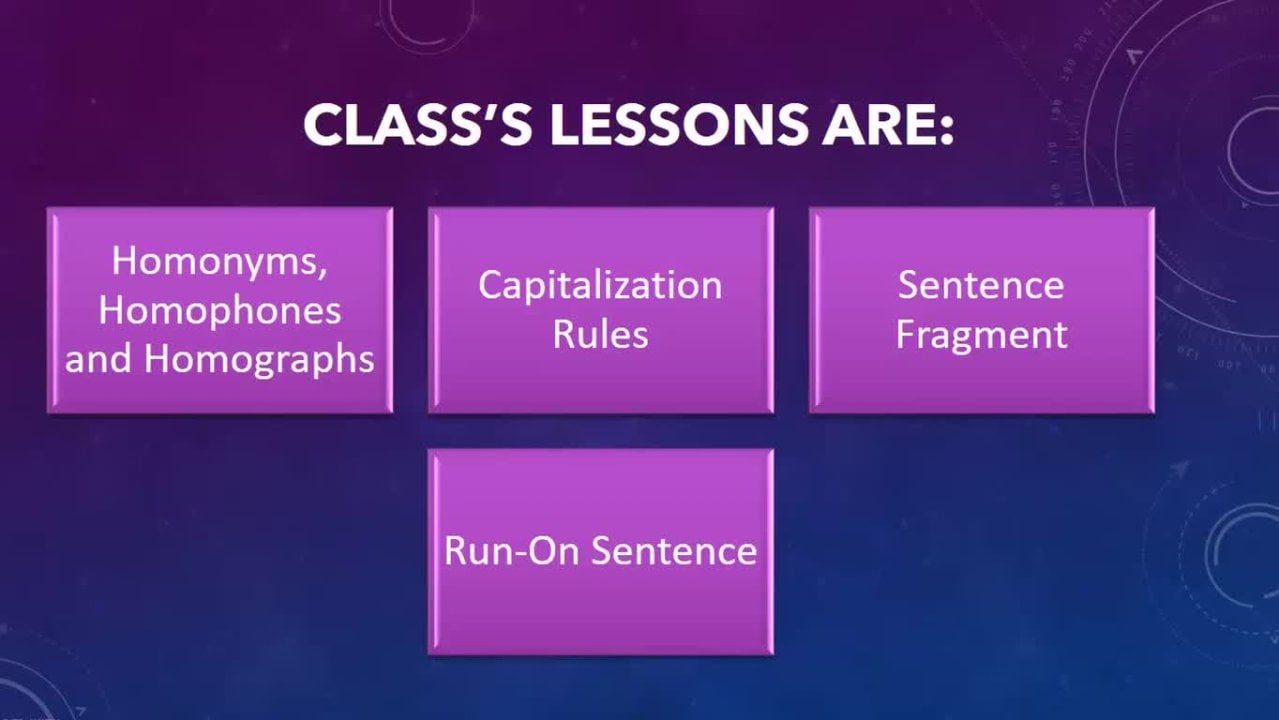
three main lessons which chart transformation
of sentence. This lesson is branched
into five or six groups. These groups are transformation from affirmative to negative, transformation from
assertion to interrogative, then transformation from x
declamatory to assertive. Also, we have transformation from imperative to assertive. We have changing the in-degree. The last one is changing from complex, simple to compound. The second lesson is inversion. This lesson also is branched
into more than one port, and the last lesson is order. The third lesson is commonly
confused words in English. I'd love to discuss
the details of these lessons in this
area or in this class. And how you can keep the
meaning of a sentence, but changing it to become
an, a different structure. So let's get started.
2. Tansformation of a Sentence: Hello. The lesson is transformation
of a sentence. This lesson is divided into
about five to six parts. I'll begin with the first part. The nature of a sentence
or the sentence can be changed without changing the meaning
of the sentence. The important condition here
that we change the forum, the sentence without changing the meaning of the first part or the first type of changing is from a theorem motive, negative. There are many rules. Rule number one, only
alone, or three words. If there are found
in any sentence, we can replace them by none. But if the noun is
a person, nothing, but if the noun is think
more than or less than. If the noun is numbered. These three words only alone, nerve only in the
affirmative form are placed. Boy, none but, nothing but, or more than, or not
less than negative four. I will give an example. In the affirmative form. Only can help us. We have here only the
noun is more hand person. In the negative form, we will use numbered. None but more herd can help us. This is the negative phone. Another example, the
affirmative form. He has only award. We have here only a
boy is the noun it is seeing the negative four. He has nothing but a bold. Nothing but is used
here because bone is. Think. Another example, the
affirmative form. He has only few rupees. Few. It represents a number,
all right, quantity. In the negative form, he has not more than few rupees. We use more than in both cases, affirmative and negative is the same meaning is
found in both cases. They tell us that we have
or has a few rupees. In both cases, the
meaning is the same and this is the most
important condition. In changing from
affirmative to negative. Rule number two,
must is replaced by cannot or cannot help, plus verb plus I-N-G. When we have most. In the third motive
for the negative form, we replace it by cannot bought or cannot help plus
verb plus I-N-G. Example, the affirmative form, we must obey our teachers. We have must, the negative four. We cannot but obey our teachers, or we cannot help
obeying our teachers. These are the two
cases are used. Cannot but the first one and cannot help in
the second one. But here, when we
use cannot vote, the verb would keep it the
same with another change it. But when we put cannot help, we put the verb will orient. Rule number three, bows with and is replaced
by not only with, but also both something
and something another. When we change it to negative, we use not on this If
someone or something, but also the other
someone or the other something do
the same action. I'll give an example. The asset method, both
Sammy and we're happy. Here we have semi and
sensor or both to persons. When we change it to negative. Not only me, but also
central where has the same meaning but we change both with end in do
not only with both, also change it from. Affirmative or negative. But in both cases, semi and Central
are happy. Happy. Number for everyone, everybody, every person, every plus a
common known replaced boy. There is no plus attached plus, but we have one of the four, or one of the four conditions are one of the four expressions. Everyone, every
body, every person, every with a common
known for example, every model, every,
every teacher. In this case we replace these depressions with
there is no plus, plus. I will give an example
to understand it. The automotive, every
mother loves head children. Every model that we have here, every plus a common noun. In the negative four, there is no mother, but loves his children. This expression change from
affirmative to negative using that is no more than
but rule number four. If you join two words, here we have an if
a joint two words and not the joining
two sentences. We are not talking about as
a coordinating conjunction. We are talking here about
and that joint too. Words for example semi and Alex, the cats and the dogs. Like this. Well we have n. In this case. We replace
it by not only with, but also if a join two words. Is it replaced the
boy not only with but also the affirmative form. He was smart and gentle. The join here two words. It's smart. Gender, these are
the two worlds. And then negative Ford. He was not only smart
but also gentle. Also the meaning is the same. Here. We replace it
by not only with but also rule number six. As soon as is it replaced void. No sooner had when? Soon as fund it centers on
an affirmative sentence. To change it to negative, we replace as soon as
boy no sooner had. Here is an example about
rule number six. Derivative. As soon as the students, so the teacher, they ran away. As soon as here. As soon as the students
in the negative. No sooner had the students, so that each year they ran away. No sooner had the
students, the teacher, they ran away isn't a
negative form of the asset. With this sentence. Number seven, absolute
superlative degree. This exhibition means using superlative adjectives
is replace the boy, not other plus attached world, plus, plus verb,
plus S plus subject. When we have
superlative adjective, it is replaced by all this form. We use no other, then attach the word, then the verb form,
then also subject. I will give an example
to understand it. The affirmative form deal. He is the biggest city in India. The biggest is the
superlative form of the adjective big deal. He is the biggest city. Now, the negative four. No other city is as
big as Delhi in India. We know of it. The attached word is city. And we use as big
as he in India. Rule number eight. Sometimes affirmative
sentences are replaced into negative
by using opposite to it. When we change from
affirmative to negative, sometimes we use the negative of the word used or the
opposite of the world, for example, big, the
opposite of it, small. Here is the explanation
for what I said. Changing from affirmative to negative is using the
opposite of the world. Another word, antonym
before the word, Of course not is used here,
changing from affirmative. Tonight, get it. We have to respect to the condition that the
meaning should be the same. To make their meaning
the same by using opposite world were
using before it not. To keep that same meaning, we use the before the opposite
word in the negative form. Not. I will give an example. I'll shell remember
moist school teachers. The negative form. I shall not forget
moist good teachers. The word here is remember. The opposite of it is forget the negative
form we use before. Not, not forget to
keep the meaning. Blessing. Now rule number one, always is replaced by never. So when we have in
the affirmative phone always to change it to negative, we'd replace always. Boy, boy, never. Example. The affirmative phone. Alex, always at tens of them. Music class always
is founded here. In the negative form. Alex never miss. The music class. Always is replaced by never. Alex always at
dance music class. And the negative for
Alex never miss. Here. We use the opposite of
attend annex at Thames means is that Alex is in the
music glasses all the time. And Alex never miss. Also keeps the same
meaning that Alex is in the music glass or fatale.
3. Last Three Rules Of Transformation: I'll continue
explaining the rules of transformation of a sentence from affirmative to negative. We reach a rule 1010. Rule ten seizes that too, with to replace the boy that
plus cannot in present. If the dance is in present, we use good nuts. If the verb dance is
in the first example, they asked formatted form. He is too weak to solve
mathematical problems. Too weak to solve is the expression that will be
changed in the negative. For the negative, he is weak, is that he cannot solve
the mathematical problems. We cannot, because week
is in the present tense, or solve also is in the present
tense or the main form. Rule 11. The asset
motive for them is replaced by not less
with negative four. When S is found in
the affirmative form, it is changed the boy not less
with them in the negative. For example, Sammy is as, as, as, as, as is the x depression that
will be changed in the negative form with not less. And then so with a negative
for semi was not less than. Both cases, we have
the same meaning that semi and rami, both wise. Rule 12 sometimes is
replaced what not? Plus always. This is an example. Yes, sir. Motive for
sometimes come to my house. Sometimes means not always. Another words. Comes to my house. Not all the times, but sometimes I'm the negative four does not always
come to my house. The negation of sometimes
both cases have the same meaning that come
to my house, but not all. Literally. 13. Many in the afternoon, motive force is replaced, but not at a few. The opposite of many is if you do make the negation
and have the same mean, to make the negation of few have the same
meaning of money. We say not their fuel. It is equal to many, not the few in them meaning, have the same meaning with men. The example, I have
many Western dresses. The negative form, I do
not have few WR, dresses. Both means is that this peak kid has many or a lot of
Western dress is not one, not two, not a few number, but a large number
of western dresses. Rule 14. You replaced by not mean. It is similar to rule 13. It is the opposite of rule 1313, where we have many. To make it negative, we use not a few. Rule 14 when we have a few in the asset with a full
to make it negative, we use nuts many, they are opposite to each other. The example is, the class
has a few good the students, the negative of it. That class does not have
many good disjoint unions. Rule 15, March in the asset
is replaced by alittle. Much. Is it replaced by we
will see the example. To understand it. Exempts the asset motive for
him he belongs much money. Then negative. He does not belong
a little money. We use a little with not it means that she have a lot or he
has a lot of money. It is the same meaning
with amphetamine, which says he belongs much money or he
has a lot of money. The last rule is rule 16. Alittle is replaced by networks also at
1516 odd opposite. When we have much in the F2 will replace
it by not let it. We have alittle in
the effort with the forum will replace
it by not much. 1516. They both rules are
opposite to each other. Here is the eggs and
then the affirmative. Ford. Sam has a little
money in the negative for those not have much money. Here is the negative of
the affirmative form. A little money. Here we reach the end of the first part of the
transformation of sentences, which is a transformation
from NSAID, my death sentence to
negative synthase. Respecting that the both cases, the affirmative
and negative four, or the booth forums and
their federal active and negative should
have the same mood.
4. Transformation From Assertive To Interrogative Sentence: Hello everyone,
transformation of a sentence. For this part we will take how to transform for an assertion symptoms to
enter a negative sentence. Regulative means
at question four. This means that
transformation from normal sentence into
our question four. Here also, we have many rules. We will begin by rule one. If the sentence is
in the affirmative, You have to replace it into
negative interrogative. If it is negative, then you have to change
it into a board. Interrogative will
give an example. The assertion forum
is he was very cruel. The interrogative form
wasn't very cruel. So here was very cruel. That effort. But the form in the
interrogative form, we replace it by the
negative and negative. Another example,
the assertion form. He is not a good person. Not a good person is the
negative form will change it, will change it to
add good person. The answer is he is
not a good person. This is negative
four, assertion. Rule number two. When we do not have an auxiliary verb sentence
replaced by using do, does or did, or does
not, or did not. When the sentence is
without an auxiliary verb, we have to put one of
these helping verbs, do, does, did, or does not. Did not. Give an example. The assertion for him,
he plays football. Please is an action verb. It is not an auxiliary verb. The interrogative form,
does he play football? We use does, because it plays is simple present verb or
plague ends with S. We use does, does he play? And we return the verb
into its main form. Does he play? We do not say Does he plays, does he play with and
we do not forget to end our question with
that question mark. Rule number three, or we have another example about
that rule number two. The assertion is, they didn't
play football yesterday, didn't play negative for
the interrogative for it. Did they play
football yesterday? The answer is, they didn't play. Rule number three is
replaced by ever. So when we have in the
assertion, the word never, it make it as an interrogative would
replace, never, buy, edit. Here is an example. The assertion is, I never
make false assumptions. The interrogative is, do you
ever make false assumptions? This is the interrogative, full rule number for every body, every one or replace the volume. Plus don't it
doesn't, Or didn't. We have in that assertion, one of these expressions
or subjects, for example, everybody,
everyone, all. Where the Enter we get
if we eliminate them and put plus don't, doesn't, or didn't get that. One that suits the example or the sentence that you are changing it into antiderivative. Here is an example. The assertion form is
everybody wish to be happy. Here we have everybody now. And the anti-derivative
for we eliminate everybody and put beside it who doesn't because we have wished and with
S wishes end with us. So we will use
doesn't, with Wish. Doesn't wish to be happy
is the aggregative. For. Now, rule number five. Every plus n M, a common known of the body. Every model, every
boy, whatever it is. Here we replace every
plus the common noun by E plus the noun itself. For example, if we
said every moth it, we use the noun
molded, and so on. Is any plus the noun plus
don't, doesn't, or didn't. The example is the
assertion forum for it. Every student wish to score, well, the noun
here is a student. Every student. The interrogative form, is there any student who desert
which the scored well, we use is any. And then out, which is student. And beside it doesn't. The answer gets a forum become, Is there any student who
doesn't wish to score well? And we ended with
a question mark. Now we will number six. Nobody, no one or none is replace the boy who
we have in the S. One of these words, nobody, no one or none, to make it into negative when
we eliminate these words and put at the beginning
example as a question word. Who here is as a question word. The assertion. Nobody could able to
achieve the goal. The antiderivative, who could ever able to achieve zygote? This is the interrogative form. And who is at the beginning
as a question word that is related in
the answer to nobody, the subject of the assertion
for rule number seven, there is no replaced by any or who for the person. What For thing. We have. There is no something continued. When we make it's interrogative, we replace it by, is there any something written? Or we use Who? If the noun is person, or when we are talking
about the person, or the antiderivative is
asking about a person, or what is the negative
sentence is asking about? I'll give an example to explain, illustrates this rule very well. The assertion is there
is no use of this book. In other words, this
book has no benefit. Interrogated for what is
the use of this group? What are the uses? Or is there any benefit
from using this book? The answer is, there
is no negative here. We can use it in two cases. What is the use of this book? Or we can use any
use of this book is a two cases or the two choices are correct
and you can use them both. Into the assertion for there
is no man happier than Alex. Here is a comparative adjective, happier than the
assertion is talking about that at x is
happier than anyone else. Assertion we use,
there is no land. The interrogative form
is happier than Alex. Or is there anyone
happier than Alex? The answer is, there is
no man happier than Alex. So Alex is more or the
most happiest one. Now, eight is no
replaced the boy. Is there any or what we
have in the assertion? It is not in the antiderivative
we use, isn't there? Or why? We can use these two choices? For example, it is no use of taking unfair
means in the exam. The interrogative is why cake
1 third means in the eggs then it is known is replaced
by the Enter or get IV form. And here we finished explaining the second part of
transformation of a sentence. And this part is talking
about the changing from assertion or a normal
sentence that content, subject, verb and object into
an antiderivative centers, which is a question
for sentence. Will continue explaining
the other rules and the other ports of transformation of
sentences by other videos.
5. Transformation From Exclamatory To Assertive Sentence: Hello everyone. Transformation of the
symptoms part three. This is the third type
of transformation. Transformation from an exit
limit to the symptoms. Too assertive sentence. We have many rules. We will begin by rule one, subject and verb of exit lemma
to the centers to be used as the subject and verb
assertive sentence at the outset of the sentence. So we use the same subjective
verb when we change from exclamatory to
assertive. Sentence. Also here, where we have how or what in the exit
lemma 2D synthase, replace it by very before the adjective or
grade before the noun. Here is an example. The execute lemma to
reform how lucky you are. Lucky is an adjective
that describes as a noun, you or the pronoun you. The assertive sentence,
you are very lucky. Here we use very before
the adjective, lucky. You are very lucky is the assertive forum for the
exec lemma to the sentence. I'll give another example. The exclamatory
sentence, waterfall, you are assertive
sentence is you are a grade for this case also is correct in changing from
Mexico limited free to ask it. Here. We have half and do what? We change them or replace
them by very great. Rule number two, sometimes the subject and the
verb maybe eclipsed. In other words, in some cases, the subject and the verb in the exclamatory sentences
are not found it. So to change them to
assertive centers, we have to put again a subject and a verb to
complete the sentence. A structure. Here is an exemption. The exit Glenn maturity form
is what a beautiful scenery. Here. If we look at this sentence, we did not find a
subject or other. There is no subject
in this sentence. There is no verb. Changed it to assertive. We have to put again a subject. For example, here. When we change it to assertive, we say, it is a very
beautiful scenery. We add it with, is it the subject
and the verb is. Usually we use it the same for them or
the same structure. In this case when we
are applying rule. Here is another example. The exclamatory forum is what? Apathy, the subject and the
verb here are eclipsed. Form. It is a great pity. We complete year the structure. We put subjects and verbs. Number three, had where
they are found in them. Exclamatory sentences,
we replace them. Boy, I wish subject to gain plus weird or had
for us that there is. In this case, we change
using this one. I wish. Then the subject,
then wet or hat, then the rest part. Now an example. The exclamatory forum
had the wings of a bird. We have here hat. And the subject here is I. The sentence, I wish I
had the wings again. We put IVs. Then the subject of the exclamatory sentences, which is I, would put hat, then the rest of the sentence, which is the wings of a bird. Another example, the exclamatory
for where I oppose it. We use here where I
is the subject in the assertive for you wish upon it. We use weird because in the exclamatory
sentences we put to it. And you put the subject, I wish the subject I, then, then the rest part, which is a poet. Now we've finished
the rules of changing the front exclamatory
to assertive. Here we will explain
the rules of changing from imperative
to assertive. Empire it is means command. This is structure,
begins with complete. The job in productive is structured or the
imperative form. We begin by other. Here we will explain
the rules to change the command sentences or imperative sentences to
assertive or simple sentence. Rule number one, add
subject plus should. In doing assertive, we have to add the subject because
in the imperative, subject is not founded. Then we add should,
then we continue. I will give an example
to understand this rule. The infinitive form,
close the door. We have your subject. The verb here is close. The assertive sentence. You should close the door. We add you as a subject. Then should the rest part, you should close the door. This is the assertive sentence. Now rule number two. Please. Kindly, if they are found in the
imperative sentence, replaces them, boy,
you are requested to. We replace the words, please. Kindly y, the x oppression
you are requested to. Now an example, the
imperative phone. Please give me a pencil. We have you, please. In the assertive centers, you are requested to
give me a pencil. Here is a complete meaning and a complete structure for
the assertive sentence. Now rule number three. If it is found in the imperative
sentence, replace it. You should not place. Do not. Buy the extra oppression. You should not. This is an example. Temperature to form, do
not run in the rain. We have here at the beginning. Do not hear some kind off making the negation or the negative form
of the imperative. Do not, do not do something. The assertive form, you should
not run in ads expression, you should not run in. Rule number four, never is replaced by you should
not also never. If this phoned in this sentence, we replace it by you should
not dissimilar to rule. When we have do not replace
it by you should not. Also when we have
never will replace it. Boy, you should note the exec limiter is
imperative sentence. It never hurt others. The assertive sentence, you
should not hurt others. Never is replaced the
hairball You should not. And we complete the structure
of assertive centers by having subject and verb and
the rest part of a sentence. Now, rule number five. Let us replace the
boy We should. We have in the
imperative sentence or when we begin the imperative
sentence with, let us, when we change it to assertive, we replace or eliminate, Let us and put rather
than we should. Here we have we as a subject and should complete the structured. I'll give an example. Let us go for shopping. Let us go for shopping. At the beginning we
have let us centers. We should go for shopping. We have here we as subject and should go is the verb structure. Number six. Legs plus a noun pronoun is
replaced by subject plus. We have left with an
out on a pronoun. We replace with them in the
assertive centers, white. Another subject plus moiety. Here is an exempt. The impact of the form. Let him go for movie. Let him him is a pronoun. When we change it to assertive, we have to put a
subject plus month. The assertive sentence. He is suitable for
the pronoun him. He might go for a movie and we complete the structure
of assertive sentence. In this example. We finished explaining
the third board of transformation of a sentence. This lesson, we learned
how to transform from exclamatory centers
to assertive centers. And then we explained
how to change if put on an empire
active sentence, too, assertive centers to
simple assertive sentences that have a structured
or that has a structure. The subject, then object, or the rest of the sentence. When we have to change, we have to use a sentence
as assertive centers. We have to change it from
exclamatory to imperative. Remember to follow these
rules that we exit plane it to change them
carefully and correctly.
6. Transformation From Superlative To Comparative Degree: Hello everyone. Transformation of centers. For, for this part, we will exit plane
change of density. We will give you the rules of
a changing between degrees. Rule number one is the superlative degree
about the best thing. Then the rule is, here. We are talking about degrees. Means you are talking
about superlative degree, where we have a
superlative adjective and how we transform it to
competitive degree, which contain a
comparative adjective for positive or unmute. For. Rule one is the
superlative degree says about the best thing. Then the rule is for
comparative use. Subject will put the
subject at the beginning, then the verb plus
adjective or the adverb. In the comparative form. We put the adjective
and the competitive. And after the adjective will put than any other plus
the rest part. To change the superlative
degree here for positive use. No other at the beginning plus the rest part after the
superlative degree. In the superlative sentence, there is port after the
superlative degree, we'll put it directly
after no other. Then the verb plus so on. Plus positive form of
the adjective or adverb, plus S plus at the end, we put the subject. Now here is an example to understand what we
said in the rule. Here is in the
superlative degree, Mount Everest is the
tallest mountain. The tallest in the
superlative degree TO list is the
superlative adjective. For the adjective tone. Mount Everest is the
subject, isn't the verb. The total list is the
superlative adjective, and mounting is the rest
after the superlative degree. Here. To change it to comparative, Mount Everest is taller than any other mountain
we put at the beginning, the subject Mt everest. Then the verb is, then the comparative degree of the adjective
which is stolen, then the expression, then
any other and the rest part, which is here, mountain. Now the positive degree we put at the
beginning, no other, no other mountain is as
tall as Mount Everest. No other ads the
beginning and there's part after the superlative
degree is mountain. So we put mountain. No other mountain is the verb. We use here as tool, as well as the subject, Mount Everest at the end. No other mountain is as
tall as Mount Everest. And these are the three
cases of degrees. At the first, if we have superlative degree
and the second case we have competitive degree. And in the third case we
have positive degree. And all the three cases
has the same meaning, which is Mount Everest is the tallest mountain
in the world. Now, rule number two
is superlative degree. One of the most. If we have this expression
in the superlative degree, one of the most is
transformed in this way. We dress for it in this way. For the comparative
degree, we put subject, then the verb plus comparative
form plus than most other, plus the rest part. For the positive degree. We put very few at the
beginning plus rest part after this relative
degree, plus verb plus. So. Then was it a form
of adjective or adverb? And at the end we
put the subject. Here is an exempt. The superlative degree is, Sandra was one of the
greatest mathematicians. Is the extra pressure
one of the greatest, one of the most that we
doped above it in the, in the previous slide. The comparative degree. Sandra, was greater than most other mathematicians will put the subject
at the beginning. Sandra, then the verb was, then the comparative degree, or the comparative
form of the adjective, which is greater than the
present than most other. And the rest part which
is here, mathematicians. Now, the positive degree. Very few mathematicians
were so great as Sandra. Very few at the beginning. Then the part which is after
the superlative degree, which has mathematicians,
very few mathematicians. Then the verb, then that basic form of the
adjective, which is great. Then the subject, sander. These are the three types
of degrees, competitive, superlative, and positive for the same sentence and
the same meaning. Now, here is a node. If we have in the
superlative degree of or in the comparative degree, we put all other,
then any other. If we have of all we put all
of it and we have off any, we put them any other in the positive for both
cases we use no other. Here is an example to
understand this node, the superlative degree, Mr. Antony is the youngest of
all women in the village. We have here of o in
the comparative degree, Mr. Anthony is younger than all other with change of
all y then all other. And the superlative form
of the adjective Young, which is the youngest boy, the comparative form,
which is younger. The positive degree here is no other man is as
long as Mr. Anthony. Now, rule number three. Simple comparative. Is it transformed
into positive by using not so plus
adjective or adverb, plus S or so with an adjective or adverb and other time
plus as if negative, second noun or pronoun
is used first. I'll give an example. The confidence for me is
a clever them malloc, clever than is the
competitive expression. So in the positive
for malloc is not so clever as the second
noun is malloc. We use it as the beginning
ends up positive form. We change it from a
noun to a subject, from normal noun to a subject because it
is the second now, malloc at the beginning, then the verb is, then the expression not clever. Malloc is not so
clever as Ronnie. Here is another example. The comparative malloc is
not a clever them run. We have the negative form. The change of the degree is, is as clever as
we eliminate not. Well, we have not in
the comparative form, we eliminate not from
the other degree. Rami is asic liver as malloc. Now rule number four. No or not less with them. Is it transformed into
positive by using plus adjective or adverb
plus example. The comparative form, getting
is not less meritorious. Then jimmy. The positive degree
is getting him in so many areas as Jimmy. Is it a subject is
as a verb, not less. Here it is found that
we'll change it by then the adjective or the adverb which is
here, meritorious. Then as the rest
part, which is Jimmy. We finished the explaining part four of transformation
of a sentence, which is about
transformation and degree between comparative, superlative, positive,
superlative. When we have relative
adjective competitive one, we have a comparative
adjective, positive. This is a normal case. We have how we
transport each case. We have something, how
we transform this thing to make it correctly as a
competitive or positive degree.
7. Transformation From Complex To Compound Sentence: Hello everyone. This is the last part of
transformation of sentence. This is part five. In this part, we will talk about that lens formation from a
complex, simple to compound. What is the meaning of complex? Complex? It means
complex sentence, which consists of two parts, the independent and dependent
clause, or subordinating. That dependent
clause is the closer that one of the
subordinating conjunctions. We will try to transform from a complex sentence
to simple sentence that consists of a subject and verb and rest part
of the sentence. Or two compound, which is, consists of two simple sentences joined together with one of the coordinating
conjunctions. Or in other words,
the farm boys. Or for, nor, yet, or. Now we will talk about that. This is rule number one. We have since when
the complex sentence that change is to be made
in the subordinate clause. When the subjects the same. In other words, in this case, we make us a change in
the subordinate clause. While in the independent clause
we remain the same order, keep it the same. Now, I will give an example. The complex sentence
is, since the boy, he worked hard, he made a
good profit in his business. Since here is the subordinate conscious
subordinating conjunction. And since the boy work the
heart is the dependent clause. This part, we will make the change to become
a simple sentence. It is, in this form. Working hard. Is a boy made good
profit in his business. The part since the
boy he worked hard, changed into working
hard into a phrase. We put to the subject, which is the boy, the same subject in
the complex sentence, we use it in the
simple sentence. The boy, we may, we keep the rest part as it is. The boy made a good
profit in his business. The same port. Only the change is
putting the subject. The compound sentence is, the boy with the hard and
he made a good profit. Here, we make. The sentence consists of
two symptoms sentences. The boy you could hard
is the first one. The subject is the boy, is the verb, and the heart is the object or the rest
of part of the sentence. The second sentence
is he made a profit. The subject is he, and the verb is made. We use the coordinating
conjunction, which is n. And in this way, It's become a compound sentence. Here are some notes or some remarks on converting
to simple sentence. We have to follow these
notes when we change it from complex sentence to
as simple sentence omit. Since as we eliminate them
from the complex sentence, the second step is putting
the verb with IMG. The subordinated clause. We take the verb in the
subordinated clause and we add for ING the right, the rest part, the rest part of the sentence we
wrote it as it is. We do not change anything in it. Use subject with the
principality clause. Principal close
remains unchanged. We take the subject from the subordinate
clause and put it in the principal close without
changing the principal close. Now, rule number two, in case. A verb to be. We have verb to be, is, was, or with the
subordinate clause. I will give an example. The complex sentence here is, since he was ill, he could not work. The subordinate clause
here was since he was in, since he was ill, is the subordinate clause
is a verb to be here, is, was to change it into
simple sentence. You being because of plus a pronoun or a noun in
the possessive form, plus. To change it to simple, we use being or because of plus a pronoun or noun
in the possessive form. Plus v. Here is the simple sentence
because of his being L. Here, do we use because of
his possessive pronoun? Then being because of his
being l could not work hard. That principle
clause is the same. We denote change. The compound close. The compound sentence is he was and therefore
couldn't word cards. To change to compound
sentence we use. And therefore, this is the note. And the dead foot is used
for showing reasons. We use a tear in the
compound sentence he was in and that foot
good network card. This is the compound sentence. And we change it from
complex than the simple. Then two compounds. We have rule number three. When the subject of
closes are different. When the subject of
the principal and subordinate clause
are different. This is the rule
that we should use. I will give an example. The complex sentence is, since the shops
being the closed, we did not go out. The subordinated clause here is, since the shops being closed, the subject in this close is the shops and the
principal close. We didn't go out. The subject in this close is V. Here we have two subjects, the shops and the pronoun. They are different. In this case. To
change it to simple, we use the verb plus I-N-G. If we have verb to
be, we use being. And when we have to
have we use having. The simple sentence is
the shops being closed. Here we have verb to be, we use being, the
shops being closed. We didn't go out. We keep that principle
close the same. The only change is the in
the subordinated clause, we eliminate the
subordinating conjunction. And we put here the verb being, verb to be, and we
add four it ING. The compound sentence here is the shops were closed and
therefore we did not go out. Also. We use, and therefore to join, to closes that
compound sentence. To join to closes we
use and therefore to change it from complex
to compound sentence. Now, rule number four. The subordinate clause is
replaced by plus verb plus MG. Example. The complex
sentence here is, you listen to the lecture. You will be able. To do with the assignment. The first case when we have to change it from
complex to simple, net IF plus the subject. The simple sentence is, we begin, we begin why? Void? We put the Y at the beginning. Then the verb with IMG. By listening. Subordinated clause in the
complex sentence is listen. We add four it ING by
listening to the lecture. And you will be able to do the assignment by
listening to the lecture, you will be able to
do the assignment. This is the simple sentence. Now, that compound sentence, to make it a
compound sentence we use to join the two clauses. The compound sentence is
listen to the lecture. You will be able, and you will able to
do the assignment. We begin by the verb listen, listen to the lecture as
a comment, a sentence. Listen to the lecture. And we use n to join the closest you will able
to do the assignment. And this is the correct
way to change this kind of complex sentence
to compound sentence. We have rule number five. To change too simple sentence. We have, if not or unless, we replace them volume
without plus verb with I-N-G. Here is an example. The complex sentence is, if you don't work hard, if not, if you do not finish, you will get poor marks
in the examination. The simple sentence is
without working, report, without pluses a verb with
I-N-G, which is working. Without working
hard, you will get full marks in the examination with keeps the principal close. Without any change, you will get four marks in
the examination. No change in this part. Only the change in the
subordinate clause. We eliminate F knot. We put spite of them without, with the verb plus
I-N-G. This rule. But we have to change
it to compound. When do we have if with NOT, or unless we have to change
it to compound sentence, we replace marked or
with or otherwise, we'll replace these two cases. If not or unless or otherwise. To join the two closes. The compound centers
of the same exemple is where you will get four marks in the
examination here we use to join the tool
closes word card. This is the first clues
or the first plot. You will get poor marks
in the examination. Is that the second book? I will continue
explaining this lesson. And Anna.
8. Complementing The Conversion Rules OF Transformation: The last rule I explained in the previous
video is rule five. It talks about how it changed too simple and
compound sentence. If we have in the
complex sentence, if not, or unless, the simple we change
or replace if not, or unless by, without
plus variable plus IN D. And this is
the example we have. If you did not work card, you will get poor marks
in the examination. There are simple sentence of this example is
without working hard, you will get poor marks
in the examination. We put Without plus the verb work with
I-N-G without working. The rule five are prime is how to change to
compound if we have, if not all, unless we use or otherwise to
join the two closest. The compound centers of
the previous example is where card or you will get
full marks in the examination. We use here. Now, I will continue. Then you rules. This is a rule six. To change from complex,
simple sentence. We follow this
rule when we have, though in the complex sentence, replace by in spite of plus possessive form of
this subject plus all EMG. The simple sentence, we
eliminate too though, and replace it by
inspite off plus the possessive form of the
subject plus verb plus I-N-G. I will give an example
to understand it. The complex sentence here is, who tried heart and soul, he couldn't succeed in life. There is the subordinate clause. To become a simple sentence. It is in the following form. In spite of his training, heart and soul, he could
not succeed in life. We put in spite off plus
possessive pronoun. It is the possessive
form of the subject he. Then we put trying
verb with I-N-G. In spite of his drying
heart and soul, he couldn't succeed in life. This is the simple form. Now, to change to compound
sentence, if we have, though in the complex sentence, the compound sentence we use
but to join the two closest. We use the coordinating
conjunction, but to join the two parts or
the two simple sentences. To form the compound sentence. Though, the complex
sentence we use. But in that compound
sentence and that compound sentence of the previous example is
he tried heart and soul, but he couldn't succeed in life. We use here. The first part is he
tried heart and soul. And the second one is he
couldn't succeed in life. We join them using rule number seven to change to two simple sentence from
complex to a simple sentence. If we have in the complex. So that replace it by in order to one of
these two choices. We replace so that
why tool or an order to the suitable
one, we use it. Here is the example. The complex sentence is, he must work hard so that he may make up for the lost time. He must work hard. Is that principle clause. So that he may make
up for the lost time is the subordinate
clause we have here, so that we will
replace that by two. In order to we will see the
simple form of this sentence. He must work hard, not change in this spot to
make up for the lost time. We use to eliminate he and May and keep make up
for the lost time. The simple sentence is, he must work hard to make
up for the lost time. This is the correct way. Also here we have
rule seven prime. It is the second part of rule
seven or the other part. The first one. We exit plane, how to change the simple we
have so that here we will learn how to change to
compound if we have so that if we have that, we change it or replace it by one or wants to join
the two closest. I will show you that example
or the compound form. The previous example. He must work hard also, this part didn't change. Wants to make up
for the lost time. We eliminate though. And put, want to put on and wants to the compound form
or the compound sentence. The previous example. The last rule,
rule number eight. To change the simple sentence. If we have plus adjective
plus that complex sentence, we have in the complex sentence
plus adjective plus that, we replace it by two
plus adjective plus two. Simple sentence we should use
to plus adjective plus two. This is the example
of this rule. The complex form is, the boy is so foolish that
he can't understand it. Foolish that plus the
adjective, foolish plus that. This is the form that
we talked about it in. In the simple form or
in the simple sentence, we will replace this expression. So foolish to that,
Y2, pleasant, the same adjective,
foolish plus two. The simple sentence. The boy is too foolish
to understand it. Here we have the subject
boy plus the verb, plus the expression
to foolish to, plus the rest part
of the symptoms. Understand it. And this is the correct
simple sentence. For that complex example.
9. Definition Of Inversion: Hello everyone. Our lesson today is
above two version. First of all, what
does inversion? Inversion just means putting
the verb before the subject. We usually do it
in question forms. For inversion it's in, it's simplest definition is it's changing the position between
the verb and the subject. Extend changing them. Usually we use this type, which is inversion, and
that question forms. I'll give a simple
example about it. Normal sentence you are
trying, you are tired. The normal sentence
here is you are tired. The subject is you, and the verb year is, our subject is you. It's before the verb. If we change this normal
sentence into question for you, tired the verb before
the subject you. Here we exit, change the position between
the verb and subject. We put the verb
before the subject. They have changed. Places is called inversion. In this case, we call
this change inversion. Most English verb tenses, when we want to use inversion, we just move the verb
before the subject. If there's more than one verb, because the verb tense
has auxiliary verbs, for example, we move
the first verb. Inversion in it's
simplest definition is the changing of the position between verb and the subject. To make inversion, we just move the verb before the subject. But when we have
more than one verb, when we have verb
phrase, for example, we move the first, the first verb in
the verb phrase. We move it with this subject. Verb tenses, where we just change the places of
the verb and subject. There are two verb
tenses where we change only the place between
the verb and subject. The present symptom. With verb to be. We use the pronoun I. You put before the
pronoun I or you, for example, are then
the plural subjects. And after the plural
subject in the inversion for after the singular
subject, is he. In this case, we
have, for example, are you or is he the inversion
of these three cases? The other verb tense is past
simple with verb to be. Verb to be in the past have
two cases or two choices. Was we used for the
gluteal subjects, was for the singular subjects. For example, where you
was, he was sheet. We put where it was
before the subject. Now here, an example. Here's very tall. He is the subject and
the verb, verb to be. So the question is, is he very tall? Here it is. An inversion, is
at the beginning, then the subject, then the
whole part of the sentence. Another example, the
girls were in that class. The girls is the subject. The verb to be ends up past
tense to make your version. And then the subject, which is the girls. The question forum is
where the girls in the class after the girls. And then the rest part of the sentence which
is in the class. With other verb tenses, we change the place
of the subject and the auxiliary verb tenses. We have an auxiliary
verb to make inversion, which changes the place between the subject and the
auxiliary verb. The first auxiliary verb, if there is more than one. In some verb tenses, we have more than
one auxiliary verb. To make inversion,
we change the place between the subject and
the first auxiliary verb. We do not move the other
parts of the bird. We keep the other parts
in their normal position. For the present
continuous tense, to make him version would
put at the beginning, the verb to be m
plus the subject. Then the verb plus I-N-G. The inversion is, is
odd, odd plus subject. We move the position or the place between the
verb to be m is odd, odd and the subject. I will give an example. He is eating pizza. He's, the subject. Is verbing present
continuous tense. The inversion is,
is he eating pizza? The auxiliary verb is
then the subject heat, then the verb plus I-N-G. Past continuous tense. Continuous tense. To make inversion, we put was
all were at the beginning, then the subject, then
the verb plus I-N-G. We move that place between verb to be was
or where the subject. And here is an example. They were playing football. They is, the subject. We're playing is the verb
in past continuous tense. Where is the auxiliary verb? In the inversion becomes, where are they playing football
or in the negative form, or in that question for where
is it the auxiliary verb? Then the subject? The verb plus I-N-G, which is playing
Perfect, intense. The past perfect tense
in the inversion for we put has or
have plus subject. Then the verb in past
participle tense. We exit, choose a
position between who or what has the subject, have or has are the
auxiliary verbs. Here is an example. Alex has gone to a
party at the subject. Has is the auxiliary
verb and the gun is the past participle
form of the main verb. Goal has gone is in the
present perfect tense. So the interrogative
sentence is, Has Alex gone to the party? Has Alex gun to upward. We move the position
or the place between hairs and Alex has
then annex them. The first participant of
the variable is gone, then the rest part, which is two apart, the past perfect tense. The past perfect
tense has forum, had plus verb in the
past participant. The inversion of this
tense is putting had. The auxiliary verb at the
beginning, isn't a subject. Then the past participants. Here it is, the exempt, but he had a gun. The subject had gone is the past perfect tense of the verb. The anti-derivative
form is, has a gun, which had at the beginning
the auxiliary verb, then the subject, then
the past participle, gun. Now, present perfect
continuous tense. The present perfect
continuous tense has foreign, has or have, plus, plus verb plus I-N-G. In the inversion, we
put the auxiliary verb, the first auxiliary verb, which is, has or have. Here we have two
auxiliary verbs, has or half, or beam. We put the first one
which is has or half, the subject, then B, and then the verb plus I-N-G. Example, he has been
waiting for you, has been waiting is the present
perfect continuous tense. The interrogative is, Has
he being waiting for you? We put has the first auxiliary
verb, then the subject. He, then mean waiting, then the rest part, which is for you waiting, we do not make any
change for them. Keep them in there
for being weighting. Only, we change the position between the first
auxiliary verb, which is has unless
object, heat. Past, perfect continuous. The past perfect
continuous tense has four, had plus B plus verb plus ion G. To make inversion we
had at the beginning, then the subject, then BIM
plus verb plus sine N G. We move had before. Thus object. Example. She had been studying a lot, had been studying is the past perfect continuous
tense of the verb. So the interrogative is had
she been studying a lot? Had is the first auxiliary verb. We move it to before the
subject, which is she. Had she be in studying, we keep them without any change. Had she be in a studying gelato? This is the inversion
of the sentence. She had been studying, yellow. Now the future cases, in future simple, the
auxiliary verb is well. The auxiliary here is well, We move with two before the
subject and the subject, then the main verb. For example, well,
they go, well, then the subject, the verb,
the future continuous. We have two auxiliaries, well, and the verb to be. We put 12 at the beginning, then the subject as m v
plus the verb, plus I-N-G. For example, will you be
going the future perfect? We put, well, then the subject, for example, then has plus the past participle
form of the verb. The future perfect form as well, plus half plus participant. Well as the first
auxiliary will move it to before this object in case of a future perfect continuous form of future perfect
continuous as well. Plus half plus B plus
verb with I-N-G. We have here with
auxiliary have and be. The first one we move it
to before the subject. For example, well,
she have been going. The fifth case is modal verbs. What do we have? Should, would, could
mass, and so on. We put the modal verb
before the subject. For example, should I go, should is the modal than
the, than the subject? I'm sorry. We put should, for example, then the subject, then the verb go. In the other example, would you go here we have
wood at the beginning, then the subject, then the
main form of the verb. These are the future
cases in the inversion. The next video, I'll
continue explaining this.
10. When Do We Use Inversion?: All continue accept planing
the lesson of inversion. There are two tenses
where we need to add do, does or did to make
the question four, we also need to change the main verb back
to the infinitive. This is usually still
called inversion. In other words, we
have only two tenses. We have to add do, does or did to make
the question four, we put do, does or did
before the subject. Then we add the
subject and do we, it should not forget to change it the main verb
back to it's imperative, or to return it to
the infinitive form. This case is also
called inversion. The two tenses are the present simple tense with any verb
except the verb to be. The simple present tense with any verb except
the verb to be, we should add do or does. To make the question four, we would do for that plural
subject or the pronoun I. Thus, for the singular subject. For example, do you go, do? Then the subject to the
verb go with the main verb? Or other example, does he go? Thus, the subject singular subject verb in the infinitive or the main form of the verb. The other tenths is simple with any verb
except verb to be. We add did in this case, where we have past
simple tense with verb. Other than verb to be, we add, did, add the beginning, did. Before the subject. We put DID, then the subject, then the main form of the verb. We return it from past
to the infinitive. For example, did we go, did then the subject, then the main verb in
the infinitive form, which is, did they
go, for example, did then the subject, then the main verb, which is go. Here is an example. Sam drinks, juice
is the subject, singular, subject,
drinks is the verb. And the drinks here is in
the simple present tense. So we should add do or does. Since we have singular
subject, we put does. Thus Sam drink the juice? The inversion is that
Sam drink juice. Thus, the subject Sam. Then return it back
to the infinitive, which is drink, then the
rest part, which is juice. I know other example, Maddie studied very hard. Mary is the subject, studied is the verb. And here, studied is in
the simple past tense. So we should add, did add the beginning or
just before the subject. The inversion is, did
Mary study very hard? Did than the subject melody that infinitive of
the verb studied, which is study,
then the rest part, which is very hard,
is a question. When do we use emergence? Of course, we use inversion. Any questions? What we also sometimes
using version? In other cases, when we
are not making a question. Inversion, It's not only
related to question form. There are other cases that
we use inversion in it. The first one is when we use a negative adverb or adverb phrase at the
beginning of the sentence. When we use a negative adverb or adverb phrase at the
beginning of the sentence, we should use the inversion. Usually, we put the
x depression at the beginning of the sentence to emphasize what we are saying. It makes our sentence sound surprising or
striking or unusual. It also sounds quite formal. If you don't want to
give this impression, you can put the
negative expression later in the sentence
in the formal way. For example, here, seldom have always see such
a beautiful word. Seldom is add that
they're getting. Here we use the inversion, have always seen, we
would have the auxiliary, then the subject, then that bus participant half sin
is present perfect tense. So the auxiliary have we move
it just before the subject. The other one. I have seldom seen
such a beautiful work. Seldom is add the wedded. Here. We do not
use the inversion. Seldom in the first
one, sell them, have always seen such
a beautiful word is at the beginning. We use inversion. It emphasizes what
you beautiful work. It is the second one. In the second sentence. All I have seldom seen
such a beautiful word. Seldom is in the normal place, so we do not use inversion. This is non-normal sentence
with no special emphasize. Here are some
negative adverbs and adverbial phrases that we
often use within inversion. The first one is
hardly, hardly heard. I got into bed when
the telephone rang. Heads gut is past perfect tense, so the inversion is had, then the subject, then
the past participle gut. Now never, never had she seen such a
beautiful site before. Also, we have had seen
past perfect tense. The auxiliary had we move, uh, just before the subject. She seldom, seldom do we see such an
amazing display of dance. The verb here is C, In the symptom in present tense. The subject we, we use do, do we see here? Do we see is the
inversion? Rarely? Rarely will you hear
such a beautiful music. Here we have future tense. Well, here we move with
before the subject, or remove 12 before the
subject, which is you, well, you here, this
is the inversion. Negative adverbs or adverb
phrases within version. This one is only then, only then did understand why
that tragedy had happened. The verb here is understood
in the simple past. So we should add did
just before the subject. Did, I understand
is the inversion. The second adverb? Not only but exemple
about not only but not only does he love
chocolate and sweets, but he also smokes. The verb is loves. Simple present tense and the
subject, he is singular. So we should add thes
before the subject. Does he love is the inversion. No sooner. Example about it. No sooner had we arrived
home then the police rang. The doorbell. Has arrived is the verb. It is in the past perfect tense. We put the auxiliary
had before the subject. We had, we are raised scarcely, scarcely had I got off the bus when it crashed
into the back of a car. Had the gut is the verb. It is in the past
perfect tensile. So we put the auxiliary verb had just before the subject on. The last one in this
slide is only later. Only later did he really
think about the situation. Here we have simple past tense. So we use did
before the subject, did Chu releasing
is the inversion. I will continue some
negative adverbs and adverbial phrases that we
often use them within version. The first one in this
slide is nowhere. Nowhere ever had such
bad service have had, is in the present perfect tense. It puts the auxiliary
have just before the subject I have ever
had is the inversion. Little, little did he know? Nu is the verb? It is in the simple past tense. So to make your own version, we put did, because we
have simple past tense. We put did just
before the subject. He. Only in this way. Example about it. Only in this way. Could the join earn
enough money to survive? Here we have a modal verb. Could we put good just before
the subject? Gentlemen? In this way, we
make the inversion. The other adverbial phrase
or negative adverb, is in no way. No way. Do I agree with
what you are saying? The verb here is equity. It is in the simple
present tense. The subject is I, so I will put due before
the subject. I do. Agree is the inversion. The last one is no account. On no account, should you do
anything without asking me? Here also, we have a modal. Should we put it
before the subject, which is here, you, should you do anything? Is the inversion. Will continue
explaining this lesson. And another video.
11. Inversion : Another Uses: Hello everyone. I came back to New exit planing the x oppressions that the inversion comes in the
second part of the sentence. In these expressions, the inversion comes
in the second part, not in the first part. Not on till, for example, not until I sojourn
with my own eyes, did I really believe
you are safe? The inversion here
is in the court. Didn't believe you are safe. It puts did then the subject, I then really
believe he was safe. In this case, the inversion is in the second part
of the sentence. Nuts. Since, not since
Lucky left college, had she had such
a wonderful time? Had she had is the
inversion had had, is that past perfect tense? We put had, then the subject, she, then that best
participate witch's hat. Here, the inversion is
in the second part. Only after only after
I'd seen her flat. Did you understand what
she wanted to live there? Did I understand why
she wanted to live? That is the inversion. Understood is the
simple past tense. So I have to add, did, Did I understand
is the inversion? Only when only when we'd all
arrived home did I feel, I feel con, is that inversion felt is
the verb, it is in there. Simple past tense. We should add just the
before the subject or did I feel is the
inversion only by, only by working extremely hard? Could afford to eat. Could we afford to. It is the inversion
here we have a modal. Could afford. Put the modern just before
the verb, the subject, which is here, we this part
and in the previous part, or I gave you many, many negative adverbs and the
adverbial phrases that we should make an inversion
centers when they are found. In other words, when we found such expressions or an adverb phrases or
negative adverbs, we should make inversion
in the sentence. I will continue by anode. We only use inversion
when the adverb modifies the whole phase and not when it
modifies the noun. This note is very important. We make an inversion
or we use inversion. The adverb modifies whole
phrase or the whole sentence. When it modifies only a
noun or a specific thing, we do not use inversion. Use it when it expresses or modifies a whole part
or a whole phrase. For example, hardly anyone pass the exam here hardly
modifies the noun, anyone. It is not modifying
the whole phase. Inversion is used here. We do not use, Did anyone pass? There is no inversion here. We put it its normal way and
you won't pass the exam. Hardly. Anyone passed
the exam, no inversion. Now, another use
for the inversion. We can use inversion instead of if in conditionals with
head, where should. This is a quote format. If in the conditional we could replace it by had,
where or should. And when we replace it, we should use inversion. For example, normal conditional. I will use here. If I had to be in, this problem wouldn't happened. We have here a conditional. Conditional with
inversion is had all this probe limb
wouldn't have happened. Here. We put had just before the subject which
is held or a bean. Here is the inversion. I know other example in
the normal condition, if we had arrived sooner, we could have prevented
this tragedy. We have here header, right. Past perfect tense. So we can change
it into inversion. We tad just before the subject, which is and we
eliminate or omit if when we make conditional
with inversion, we omit. If we arrived is the inversion
had at the beginning, then the subject, then
the verb arrived. We can also use ing version. If we put an
adverbial expression of a place at the
beginning of the sentence. This is all so quite
formal, or laterally. On the table was all
the money we had lost. On the table is an adverbial
expression of place. It is at the beginning
of this sentence. Here we will use IM version. Was. We put the auxiliary or the verb to be at
the beginning or just before the subject was
all the money we had lost. Here is the inversion. The normal sentence is all the money we had
lost was on the TV, and this is the normal sentence. And the previous one
is the aversion of it. Another example about this
usage is around the corner. Came the noise. Around the corner is an
adverbial expression of place. It is at the beginning
of the sentence. We should use inversion. The normal sentence is the knights came
around the corner. Here. We changed the position between
the subject and the verb. The last thing that I will
explain in this lesson is we can use inversion after
so plus adjective plus that. I will give an example
about this rule. So beautiful was the girl
that nobody could talk of. Anything as. Beautiful was the girl is the adjective and beautiful
is the adjective. We have that. Here we use inversion
was the girl we put was just before the
subject, which is the gerd. The normal centers of this
example is the girl was so beautiful that nobody could
talk off anything else. Here. We put so at the beginning in the inversion and the
adjective and beautiful. In this part, we make inversion. We exchange the position between the verb and the subject. Then we put that and the
rest part of this centers. I will give another
example about this rule. Delicious was the food that
we ate every last byte. So delicious was the food
that we ate every last point. At the beginning. Delicious
is the adjective, was, is the verb. The foot is the subject. Changed the position
between was the subject, which is the foot, then that does the rest
part of the sentence. This inversion is related
to the normal centers, which is, the food was so delicious that we
ate every less void. This is the inversion of
this normal sentence. Here we reach the end of our
lesson, which is inversion. I gave you all the rules
how to make inversion. And when we make inversion, how to use inversion. When we use inversion on, the rules are in this lesson. So be careful when
you use inversion.
12. Commonly Confused Words In English: Hello everyone. This lesson is about commonly
confused words in English. First, I'll begin
by an introduction. People often confuse or
misuse words in English. And it has become so many tunnel that they
might not even notice. Explore some commonly
confused words in English. In this lesson, we
will explore some of commonly confused
words in English. Here is the useful list of English word pairs
that make you confuse. The first. Third is accept. Accept. Accept means to agree
to take something or to say yes to an offer
or invitation. Accept means that
you agree about something or someone
or what someone said, for example, I will
give an example. I accept full responsibility
for the failure of the plan. The speaker agrees that he is responsible for all the
outcomes of that plan. Even if it fails. The other word is except. Except means not including
but not acceptable. So means with this difference, or in this case, only accept means to execute or getaway someone or something
from a specific group. When we have a group and we exit glued something or someone
from this single loop. In this case, we means there were accept or do
we mean the word? Except I'll give an example. It's school AND
quiet everywhere, except in the kitchen. The kitchen is the only place in the house which is not
good and not quite. So in this case, we make except for the kitchen
from the whole house. We execute the kitchen from
the old parts of the house. In this case, we means exempt. Advise versus advice. Advice is a noun which
means guidance or recommendations
offered with regard to product, future action. So advice is taking by others opinion and their
guidance to make a specific decision
or to get or why something forward
exempt then all I need some advice on
which computer to buy. Here, the speaker is asking for a house from others to tell him what
computer should he buy. Here he is asking
for an ad voice. The second one is
advised is ever, which means to offer
suggestions about the best, to give some advice
here we are asking for the best
suggestion. Example. His doctor advised him
against the smoking. Doctor is giving him
a suggestion which is useful for him that
he should stop smoking. Now, loud versus allowed. Aloud means give someone
permission to do something. When we give someone the permission to
make or do something. This way we are talking
about the verb allowed. Example, that this ident was allowed to
leave the country, means accepted for others
to leave the country. In this way, he allowed for
them to leave the country. Allowed means to accept for
them to leave the country. The other word is
allowed means audibly, not silently, or in a whisper. It is a voiced example. Children love to have
stories read aloud to them. Now, eight versus eight. The first one is eight, is at best of the verb, ate is the past tense
for the verb eat, which means to put or take
food into their mouth, chew it, and swallow it. Example. He ate every white
of the putting eight means to get food
inside the mouth and chew it. The other one, which is eight, is equivalent to
the product of 24. One more than seven, or two, less than 1088 simply is the
number or the digit eight. Mathematics, the digit eight. We are talking about it. Exemption. The two buildings
are eight meters apart here we are talking
about a distance. Here we use the number eight. When we are talking about
this test, we use numbers. So here is as a number. Now baked versus
break rate means to separate or cos two
separate into pieces as a result of blue shock
or straight re means cutting or destroying
something into small pieces. The rope broke with a loud snap. Rocc is the past tense
for the verb break. Break here is the other
word break means to make a moving vehicle slow
down or stop by using a break. Rake is an instrument or default which is found in the vehicles
such as scores, planes. We use it to slow down or stop
the motion of the vehicle. Example. He should not to break
the code abruptly on an break means to slow down
the motion of the vehicle. Boy versus boy is
app reposition. The first two envoy
is a preposition, which is used to show
the person or thing that does something exemple. We were amazed by
what she told us. We use the first one
as a preposition to give an additional
information. The other one, which is boy, means to get something
like paying money for it. The other one is, we use it to represent that way of getting money or spending money to get someone
or something. For example, at t-shirt, it means that I give
the sailor money. Gave me this t-shirt example. The bank will supply and back four good and C corps vs course. The first one means 0 or
loose in texture or green. Example, my closest
made of course, close. The other one course
is a set of glasses or plan of study on a
particular subject, usually leading to an
exam or qualification. Course is a group of lessons which are related to
the same subject. We name it course. Loop of lessons that are
related to the same subjects. For example, in math
means a course. Example. They are going away on a
training course next week. They are going to take a
course about something. There next, tweak. Every grid There's
versus emigrate. Emigrate means leave
one's own country in order to settle
permanently in. Another, means that the person leaves his own country to live permanently in
another one. Example. He's decided to emigrate and started a new life in America. He left his home and went to
America to start a new life. The second one, emigrate, means come to live permanently
in a foreign country. Here means is an
affordance country exempt then they had no
choice but to immigrate. Insured versus ensure. Ensure means make certain that something shall be the case. Example. I would ensure
that the current rise. Boy six o'clock. This means that he is very, very determined and very sure that the car will
arrive at six o'clock. The other one insured
means our range for compensation in the event of damage to or loss of property or injury to or
the death of someone. Exit change for regular
advanced payments to a company or
government agency. Insured may mean when someone makes an
insurance for his life to cover the injuries and all the other things
that will happen. As an urgent accidents. Exempt. It is advisable to ensure your life
against accident. It is a good way or a good
idea to ensure your life. Again, accidents because
the insurance cover all that payments or all the money that you could pay when
you make an accident. Or fair, they're farther means
to add greater distance. We use farther for distances. To show greater distance,
we use farther. Example, the cinema was further down the
road than I thought. He means that the cinema is at a distance more than
he thought from the road. This means that the
cinema and the road are supported by a distance
more than that. The speaker. The other sentence
or the other word, means to a greater
distance or degree or at a more advanced
level example, we accept to see further improvement
over the coming year. We have fewer versus less. Fewer means you is
to emphasize how smaller number or people
or things is fluid. We use it to show a small
number of people or things. Woman commit filler crimes
than men. So women.
13. Learn More Pairs Of Confused Words In English: We stopped this lesson, adds the words fewer and less. Sewer means used to emphasize a small number of people or things is
it means we use for, describe how number is small or how small number of
people or thing is. Xanthan? Woman commit fewer
crimes than men. This means that two women or
the crimes with respect to women are lesser than
the crimes that min do. Crimes which are related to men greater than the crimes
that are related to women. In this case, we use fluid. The number of women crimes is less than the number
of men grinds. Here we use fewer. Less means, a smaller amount of, not as much less. We use less when we are
comparing between two things. The first one, it has a smaller, then the second one. I'll give an example. Do you pay less tax if
you are self-employed? Here, we are talking about tax. Sentence said, Do you pay less? This means smaller amount of tasks of tax if
you're self-employed. Now the words four versus
44 here is at deposition, which means intended
to be given two. We use for preposition
in the sentence example. There's a phone message for you. The phone message
is to the person would inches or whom
represented by the pronoun you. To relate the phone message
with the pronoun you. Here we use the preposition
for to say that the phone message is for the
someone who is represented, y is a pronoun, you. Other for the other four is an equivalent to
the product of 22. One more than three, or six, less than ten. Simply for is the digit or
the number for mathematics, it isn't the number four. We write it in letters
by the word or you are. You form the word for which is related to the
number full in mathematics, example, stumbles
that has four legs. We mean by this example that
the horse has four legs. He works, or that horse
walks on four legs. Now is that word
forth versus fourth. Fourth means from a starting
point forward or into view. An example, April showers
bring forth may flowers. This means we are going
from April to May. May. In this way we
use the word forth. The other one fourths means
constituting number four in sequence is the sequence which is related to
the number four. We say in mathematics
or in the sequence. First, second, third,
fourth team, so forth. We use it for numbering
in a sequence. Example, he declined to make projections about
fourth-quarter earnings. Here versus here means. Bear receive with the ear. The sound made by
someone or something. Here is related to the
listening or the sounds, means that listening
to the sounds or the sounds that are
coming to the ear. This action, we represented
boy here. Example. Men love to hear
well of themselves. Men loves to hear or to take positive words or positive recommendations
about themselves. The other word here means in or to this place or position. Here. When I'm talking right now, here means that position
which is next right to me. The position which is near
to me or very close to me. I represent boy here. As example. Children here walk several
miles in school. Here. I mean, in this area or in
that place where I live, or in my country
village or whatever. I am talking about
something or a place which is related to
my area I use here. Versus peace. Peace means the freedom from
disturbance and tranquility. Peace means prevent
using violence. When we did not use violence in our actions and our
words and other types. This means peace. Everything related to love, everything related
to the calmness, all that quiet activities. This means peace. While the violence,
the loud voices, the negative words,
and other bad actions. They are the opposite
of the word peace. Exempt. They had worked for peace during the long era of conflict. The other word piece
means a portion of an object or of material
produced by cutting, cheering or breaking
the whole piece means cutting into small portions. Each portion, we name it
peace or we called it peace. Each portion of thing. We call it peace example. He cut the cake into six pieces. In other words, we mean by this sentence that the someone
or the person mentioned. This sentence cuts the
cake into six parts. Each part we name it peace. So he got this cake into
six pieces or six portions. Another pair of words, which is plane versus plane. The first one plane means not
to decorate or elaborate. Simple or ordinary ink. A character example. I want a plain black and jump
it with effiency trimmings. Plane means flat surface
on which a straight line joining any two points on
it would wholly lawyer. The other one plane. It is more related to mathematics
and physics. Example. I looked towards that plane. Six passengers had already
this, this M part. Now the words quiet
versus a quiet. Quiet means making
little or no noise. This word means to
be silent or lower our volumes to make the
atmosphere around us. Carl quite means
calmness around us. Using low voice when we
are speaking to each other or doing actions
without making noise, exemple, be quiet, or you
will walk the whole house. Be quiet means do not make
any noise or loud voices. The other words
in quiet means to the utmost or most
absolute extent or degree, absolutely
or completely. Xanthan, he was quite agree agreeable to
accepting the plan. Quiet here means
either a little bit, little bit he is agreeable
or he will accept that plan, is not agreeing
that plan a 100%. He is a little bit
or percentage, high percentage, he
will accept that plan. Versus then means introducing the second element
in comparison. We use in comparing things. When we compare between
two things, we use. Usually, then we use it at most using the comparative
adjectives, for example. And in other ways to talk about someone is
greater or higher. We use the weird example, that pain of the mind is worse
than the pain of the body. In this example, we said that the pain of mind is high it, to show that it is
higher than the body, we use the word there to compare between the pain of the mind and the
pain of the body. The word then means
at that time, at the thymine question. Then we use it when we
are narrating or we are making steps. We use next. Then. So on. I'll call you tomorrow. I should have the
details boy, then. Now the words two versus two. The first 12 means use before ever to show that it
is in the infinitive. We used to before the verb in the infinitive for all we use it to join parts in this
sentence example, there is no end to learning. The other word. Two means more than
is needed or wanted, more than is suitable or enough. Example. It is never
too old to learn. This example means that there
is no time for learning. The old people and young people.
14. Last Two Pairs Of Confusing Words: Hello everyone. In the previous video, we read the word to two means more than
is needed or wanted, more than is suitable or enough. The example of it is, it is never too old to learn. In other words, there
is no time to learn. The old junk people. All the people have
the ability to learn. So there is no age to learn. Every time and every moment in our life weekend,
learn from it. Every moment. We have a chance to learn
a new thing from our life. This is the meaning
of the word to continue explaining other new
pairs of confusing words. Here we have weak versus week. The first term means lacking the power to perform
physically demanding tasks. Lacking physical
strengthened energy, was someone has no physical
ability to do something, or he is very tired, or he has a lack of
energy in his body. We say that he is weak. Weak means he has no
energy to do something. Example, every man
has his weak side. In other words,
this example means every person has side in his life or aside in his
cataract it, which is week. Everyone is weak in side
specific domain in his life. The other word weak means
a period of seven days. Week, is simply the seven days that we have from
Monday till Sunday. This duration from
Monday to Sunday, we name it or we call
it week after a week of camping or needed
after one week. Odd after spending
seven days off camping. Houdini needed ABA week means seven days from
Monday till Sunday. Now, other pair of words. Whether versus
whether the first one means that the state of the atmosphere at
a place and time, as regards heat, dryness, sunshine, wind,
rain, and cetera. The weather is the
atmosphere state. If it is sunny, windy, rainy, and so on. We are hoping for good weather. On Sunday. We are demanding or
deciding to make a picnic or to get a vacation or go in as trip, for example. We hope for good weather in our today because no one
likes to go at risk, for example, for a beach
or for another country. And the weather is
bad because he cannot do anything in that place
that he went for it. The other words whether
means x suppressing, adopt or choice
between alternatives. Exempt, but it's all boils down to whether
you want to go or not. This is the end of our
lesson, which we discussed. Many pairs of words
which are confusing in English that are
commonly spelled, for example, but they have different meaning and
different use it. There are a lot of
pairs that we do not mentioned or didn't
mention in this lesson. But here I gathered some of most commonly confused
words in English that all of us face every day
by reading, writing. For example, speaking on and
we call fuse by using them. So I hope that you benefit
from this lesson by learning the difference between some pairs that are
confusing in English.
15. Project : Hello everyone. This is a worksheet about the previous lessons
in this section. I will begin by exercise one, which is transformation, which is about debtors
formation lesson. Exercise one transformed
the following sentences. We learned in that
transformation lesson how to transform from
one type to another. I gave you here the tile that
you should transform to it. For example,
sentence number one, up and ink the door. He asked for
permission to come in. The form of this sentence. Looks like a simple sentence. We should make it complex. Notice that it is simple because it begins with
a verbal plus I-N-G. This is the form of
a complex sentence. Plus the rest part. We omit the subject, the subordinating conjunction from the subordinate clause. We should add a
subordinating conjunction and a subject to return
it back to complex. I gave you the solution
of number one. As he opened the door, he asked for my
permission to come in. We learned that the principal
close should be the same. No changes will happen
to the principal clause. Only the changes on the
subordinate clause added the subordinating conjunction
and the subject heat, then the rest part
of the sentence. Here are a group of
sentences that you should transform them too
simple, compound or complex. I asked you in this question, to transform only two
simple compound or complex. I didn't mentioned
all the other types. The all the other
tests formations, for example, if from
affirmative to negative, from exclamatory to assertive, from infinitive too assertive, or from assertive
to interrogative, or changing in the degree. Only here I mentioned the
transformation from complex, too simple then to compound. These are the group of sentences that you
shouldn't transform them. As I mentioned, This is the continue
of the same exercise. Transform the following
sentences into simple, complex, or compound do you should follow the rules
of transformation. Then solve. This exercise. Exercise to it is
about inversion. We talked in that lesson of inversion about
what is inversion. Inversion is moving the
verb before the subject. And if we have more
than one verb, we move with the first one. Or if we have a model
with an infinitive verb, we move the model
before the subject. Here is an exercise
about inversion. You should learn at
first, what is inversion, how we do inversion, or when we do inversion? Also. I mentioned in this lesson, when do we use inversion? I mentioned a lot of adverb or phrases or expressions that you can use here in this
exercise to make inversion. I will solve the first sentence. Joan hadn't been such a
fantastic restaurant. Joanne had never been to
such a fantastic restaurant? Never. Here is an adverb. I moved it to the
beginning of the answer, and then I made the inversion. Here the verb is had
been a verbal phrase. We have two verbs had been
in the past perfect tense, so the bottom of it had
plus, plus participant. I will move the first one, which is had two before the
subject, which is shown. The inversion is had John Bean. And the answer became never had a join between two such
a fantastic rest students. This is the correct answer. Here are a group
of sentences that you should follow the example to solve them using
the inversion. Here is that continue that previous exercise
about inversion. The last exercise
is exercise three. Choose one of the words in
brackets to fill that gap. This exercise is about the
last lesson, which are, which is the commonly
confused words in English, or the words that are confusing. Why they're spending their very common
vocab or meaning. They are confusing, but each
one has a specific usage. I gave you a group
of pairs of words, and I gave you with the
meaning of each word. With an example, you should hear choose one of the two
choices in each sentence. To fill the gap. I will solve the symptoms. Number one, do you we have a space payment
by credit card. We have here accept or
not, accept, accept. We said that it
means the speaker agrees something and accept means x occluding something
or someone from a group. Here we are talking
about the acceptance or the agreement of the
payment by ACC credit card. The speaker is asking
someone if he has a problem by paying credit card or by
using decorated card. Suitable word is accept. Do you accept payment
by credit card? This is the correct answer. And you should follow that
example to complete solving all the sentences
by choosing one of the choices in each sentence. This is continue of
the previous exercise, which is about commonly
confusing words. You should choose
the correct word. I hope you benefit from these exercises and
try to solve them after watching their lessons or the videos that exit
plane the lessons. Then I will see you later and more lessons
and more exercises.
 Leila Tar