How to Blend Watercolors Smoothly | Bianca Luztre | Skillshare

Playback Speed


1.0x


  • 0.5x
  • 0.75x
  • 1x (Normal)
  • 1.25x
  • 1.5x
  • 1.75x
  • 2x

Watch this class and thousands more

Get unlimited access to every class
Taught by industry leaders & working professionals
Topics include illustration, design, photography, and more

Watch this class and thousands more

Get unlimited access to every class
Taught by industry leaders & working professionals
Topics include illustration, design, photography, and more

Lessons in This Class

    • 1.

      How to Blend Watercolors

      0:51

    • 2.

      Blending Techniques

      3:07

    • 3.

      Factors to Consider

      4:29

    • 4.

      Mini Landscape

      1:17

  • --
  • Beginner level
  • Intermediate level
  • Advanced level
  • All levels

Community Generated

The level is determined by a majority opinion of students who have reviewed this class. The teacher's recommendation is shown until at least 5 student responses are collected.

125

Students

18

Projects

About This Class

How do you blend watercolors smoothly?

Let me show you how in this short class.


What is this class about?

If you struggle with...

  • getting a smooth transition from one color to another, 
  • determining the amount of water and paint to be used, or
  • not knowing that the quality of the paper affects the behavior of pigments.

Then this class is for you! We'll tackle these concerns in this course.
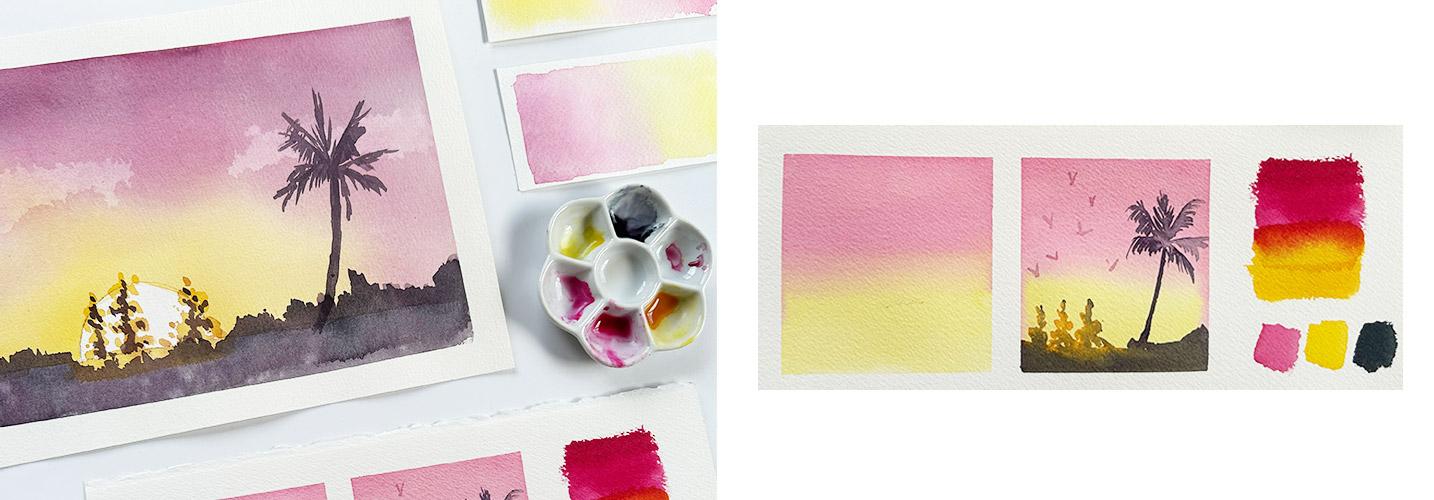
What do we do in this class?

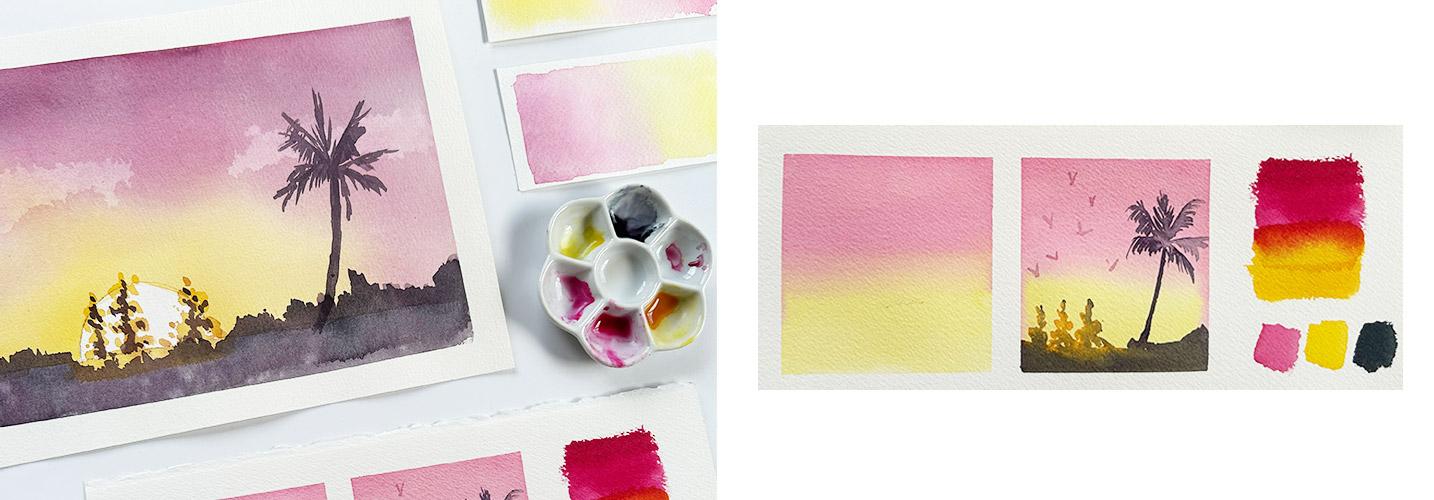
I will share with you a simple yet effective way to blend your colors smoothly so you will have a lovely gradient.

We'll start with:

  • the different blending techniques that you can apply on your watercolor projects
  • the factors that might affect how the pigments behave on paper, and
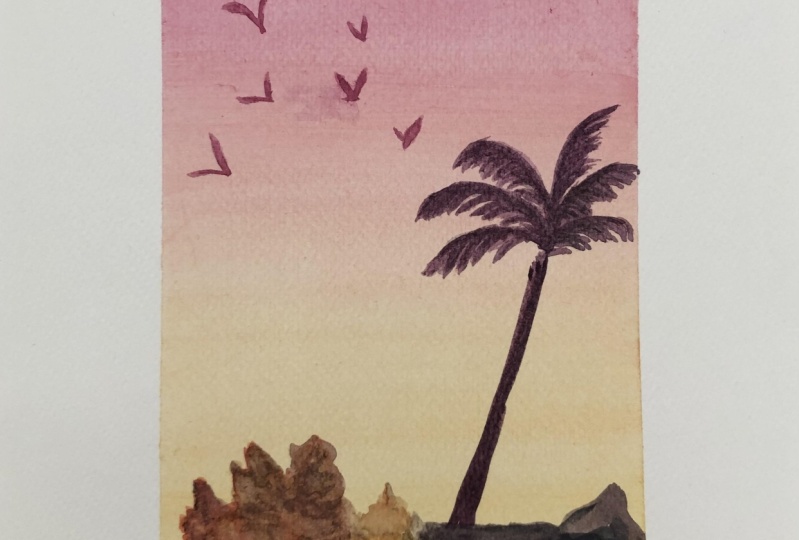
  • finally, create a mini landscape project using the smooth background we just demonstrated.
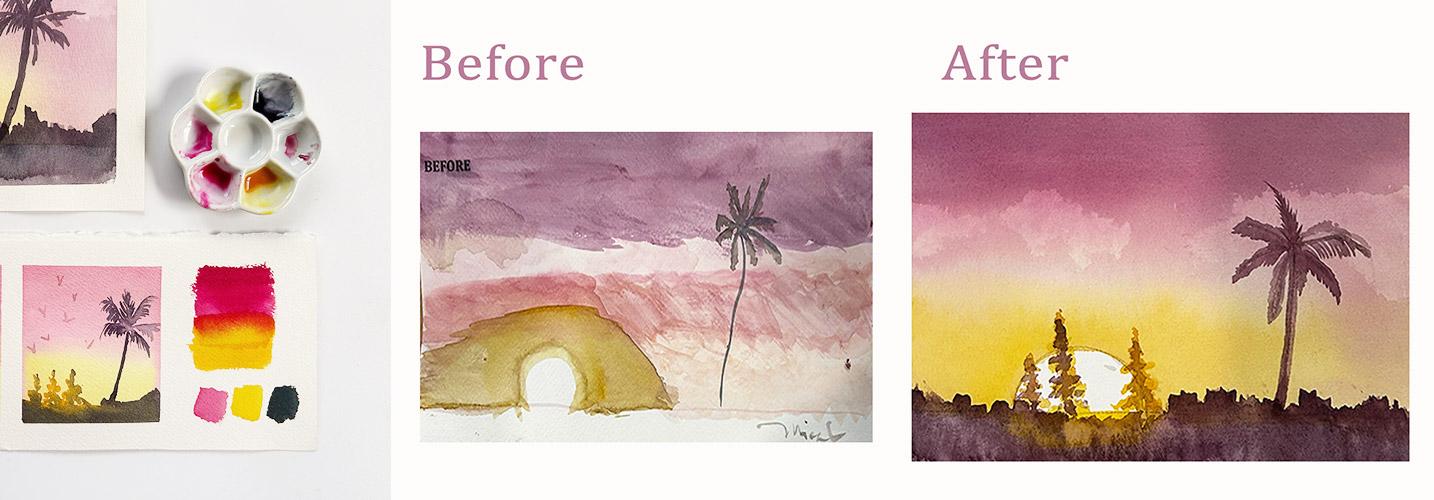
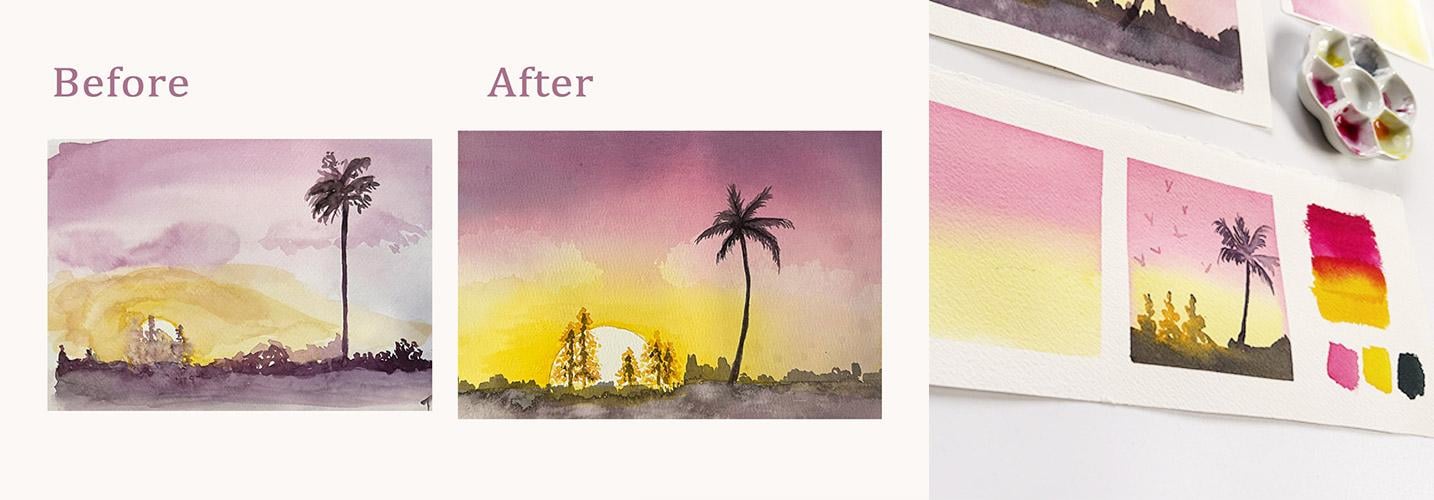
Here's a proof that the technique is effective.

A before and after the workshop work of one of my students.

If you'll look closely, the blending of the "Before" project is a bit harsh compared to her "After" the class work.

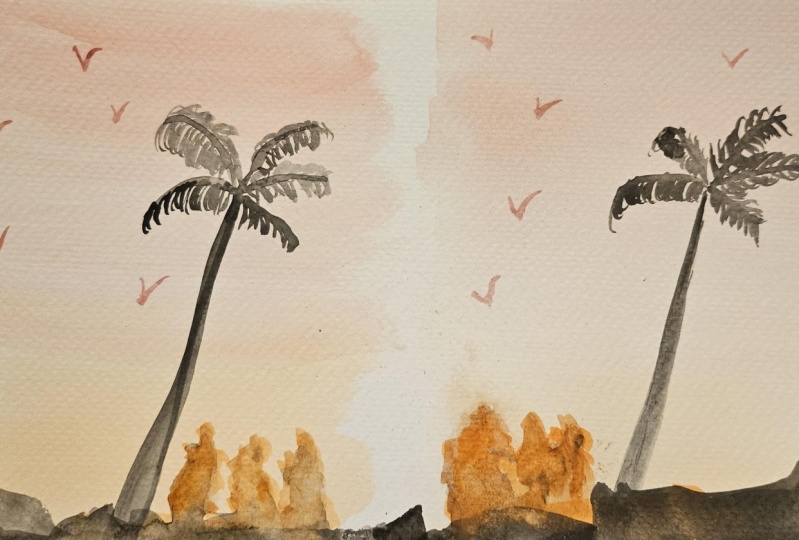
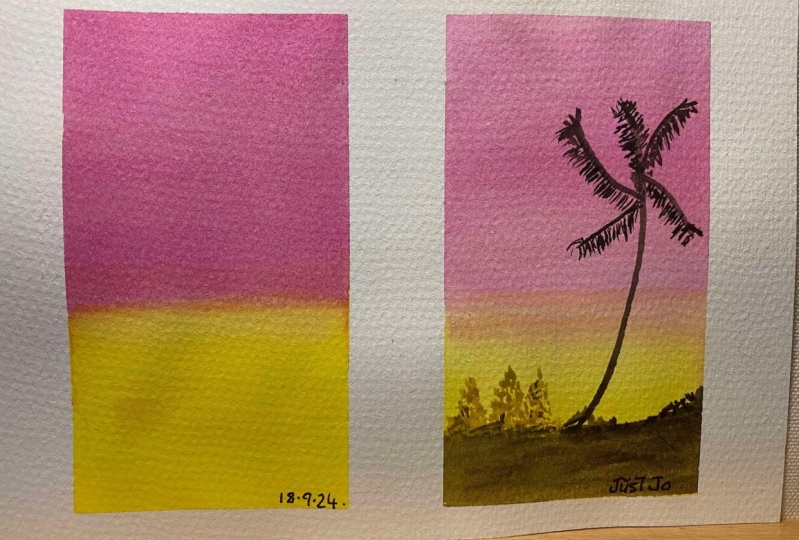
This is also to encourage you to share your mini landscapes later. :)

Who is this class for?

This class is beginner friendly but everyone's welcome to join the fun. 

Whether you've been wanting to try watercolors for the first time, you're a hobbyist or an experienced artist, I invite you to join this short class.

What do I need to get started?

Please prepare the following materials:

  • Watercolor paper (preferably 100% cotton)
  • Watercolor paints (colors used are Gamboge Nova, Quin Red and Payne's Grey)
  • Watercolor brushes (flat and round brush)
  • Masking tape (for crisp border)
  • Water jar and paper towel
  • Your passion for arts and learning new techniques!

If you're ready, see you in class and let's make this world a little bit more colorful with our artwork.

Music by: purple-planet.com

Meet Your Teacher

Teacher Profile Image

Bianca Luztre

Watercolor, Productivity, Color Mixing

Teacher

Hello, I'm Bianca Luztre, an aspiring watercolorist from the Philippines.

I've been painting with watercolors since 2018 and I made it a habit to practice painting every single day (even for just a few minutes).

I'm still a learner but I love painting so I'm happy to share everything I've learned from books, tutorials, workshops, classes, observation and experience.

I look forward to painting with you!

Here are some of my recent paintings. As you can see, I am fond of painting flowers in a loose style. This is the style that I want to develop but I also love painting landscapes and still life (as you see in the classes I offer).


See full profile

Level: All Levels

Class Ratings

Expectations Met?
    Exceeded!
  • 0%
  • Yes
  • 0%
  • Somewhat
  • 0%
  • Not really
  • 0%

Why Join Skillshare?

Take award-winning Skillshare Original Classes

Each class has short lessons, hands-on projects

Your membership supports Skillshare teachers

Learn From Anywhere

Take classes on the go with the Skillshare app. Stream or download to watch on the plane, the subway, or wherever you learn best.

Transcripts

1. How to Blend Watercolors: How do you blend watercolors smoothly so that it doesn't turn out like this? In this short class, let me share with you a simple, yet very effective way of blending your water colors smoothly. I know that this is effective because look at this before and after the workshop works of my in person students. Can you see the improvement? By applying what they learned in the workshop, they were able to paint a beautiful sunset project like this. I will also share with you some factors that might affect how the watercolor pigments behave on paper. Let's get started in the next video. 2. Blending Techniques: Right. What I have here is I prepared a puddle of Gumbo hanova and quinacridone red to achieve this consistency. You have two ways on how you can blend your watercolor smoothly. I always start with my light color. And if I am covering up something as small as this, then you can just go directly on the paper with the technique we call wet on dry. I'll start with my yellow. Let's say this is a Sunset. I'll start with the lighter color first. Then I'll go up, rinse my brush, remove excess water, and I'll change colors. I'll start from the top and then go downwards. Then I'll just leave them be. I won't touch it, I won't overwork this and let it dry. But what happens if you have a small flat brush like this, but you have to cover something as big like this. This is bigger than this one, obviously, and you will want to use wet on wet technique to make sure that the paint won't dry out before you change your colors. This is what I'll do. My water has become this color, but that's fine. It will still work. What I do is I prepare the area with clean water first. I wet it first with clean water, and then you can go ahead and do the same thing. Load my brush with the lighter color first. In this case, it's yellow. Rinse, remove excess water and switch. Okay. That's it. That's how simple it is. I'm telling you that it is effective because even my six, eight and 10-year-old students were able to do this. Just look at their work. Are they lovely? At first, they don't know how to blend their colors. They go directly on the paper using a small brush, and they didn't prepare it by wetting the area with clean water first, and hence you can see that the blending is quite harsh, and it doesn't really reflect a sunset background. So if you're working on a smaller area, you can do wet on dry. But if you're moving on to a bigger area like the sky area of something this size? This is a seven by ten paper, then you will want to switch and use the wet on wet technique. 3. Factors to Consider: Now, here are some factors that will affect how the blending of your watercolor pigments will perform on your paper. First is the amount of water. For example, you are working with watercolors for the first time and before watercolors, you were using acrylic or oil. Then your tendency, based on my experience, is to really go thick, something like this. Now it's looking like this. It's hard to spread the water, which requires you to scrub the paper more than you intend to. And then since you're not aware of the wet on wet technique, you did not prepare the second color. So now, you're just going in, grabbing that color and loading your brush with another thick consistency of paint and you go there. So the chances are you will achieve something like this. Yes, it is more vibrant, but later when this dies down, you will see the difference of what it makes. When you have more paint, and less water. If in case you did the wet on wet technique, but you're still not shaving the blending that you want, then maybe maybe it is your paper. Here we have four different papers. I have here an sla paper, a 25% cotton paper, a 50% cotton paper, and 100% quality cotton paper. Let's see how the wet wet technique works with each of this paper. Here we have the same color, Gumbo hinova and Queen red. I'll start with Oslo. Here you can see how much it buckles with a wet on wet technique. On the side, this is how it looks. What do you think? Now we go for 25% cotton paper. This is what I usually ask my students to practice their brush strokes. For example, they are painting thin lines. This is what I ask them to use. I'll go for my lighter color. And switch to Quinacerdon red. You can see that they blend really well, even if it's just a 25% cotton, but the colors are not as virt. Now what we have here is a different brand of a 50% cotton paper. I don't really like this paper and you'll see. The pigments are not really reacting that great with this paper. And it dries so fast. Can you see it? This paper is less shinier than this one, but I worked on this one first, the colors are not that vibrant. Now I'll move on to my 100% p. This is what I use on mo of my landscape paintings. This is how they look like. What do you think? I'll move it closer so you can see there are splotches like that on this paper. That's why I really hate it. I forgot the brand. I don't want to name drop, but you should really stick with 100% per. Now Go back here, you can see that this one has bled into the other color. That's why if you use a really thick paint and did not let the pigments blend with each other on a wet paper, this is, how it might look like? 4. Mini Landscape: Just for fun, let us finish this off and let's do a simple landscape painting. What I'll do is I'll use paints gray and mix a bit of pink on it. Then I'll add a coconut tree. This part is so relaxing to do. Like that. Then I'll add some pine trees. I will mix yellow and a bit of pink. It turns orange. It turns into that beautiful orange, and I will just scumble away. Add some trees, and then for the rest of the foreground, I'll just cover it up with the same color. For the bird color, you should go for the darker version of the sky. This part is pinkish, so the bird on those parts should be a dark pink two. And your simple project is dy.