Transcripts
1. Understanding Daily Time in a Simple Way: Many beginners feel unsure about where their
hours go each day. It can feel confusing and sometimes a little stressful
when the day ends, and it seems like time
just slipped away. You might even wonder if
you're doing something wrong. Well, you're not. This
feeling is very common. It usually comes from not having a clear picture of
how your time moves. Today, you learn a
simple way to see your day more clearly. I'm Paul. I teach beginners simple
skills that help them feel more confident
in their daily life. I used to struggle
with this, too. I thought I was busy all day. Yet I couldn't explain
where my time went. Once I learned a simple
way to keep track of my hours, everything
felt easier. I felt lighter, I
felt more in control. I enjoy teaching this
topic because it gives people a sense of
clarity and calm. When you understand your
day, you stop guessing. You stop feeling rushed.
Start to make sense. In this class, you learn a
simple method that helps you notice or see your time in
a clear and relaxed way. We'll look at what time
awareness really means, and we'll walk through
three small steps that anyone can follow. This class is not for
advanced planners who already track their
day in great detail. It's for beginners
who want clear starting point that doesn't
feel strict or overwhelming. All you need is your Notes
app or a small notebook. That's it. By the
end of this class, you'll be able to
see your day more clearly and understand what
actually fills your hours. You also create a tiny
project you can finish today. Here's the flow we'll follow. First, we'll explore
the main idea, then we'll move through three simple actions that
build on each other. Each one will help you see your time with more
clarity. Let's begin.
2. Seeing Your Day More Clearly: Many beginners feel unsure about how their day
gets away from them. It can feel frustrating to want a calmer day but not
know where to start. You're definitely not alone. Well, the main idea
here is simple. When you notice or see
your day as it happens, it becomes much easier to
guide your next steps. You don't need strict schedules. You don't need
complicated tools. You just need awareness. So what is time awareness? Well, time awareness means
paying attention to where your minutes go with no
judging and no pressure. It's simply noticing,
and noticing is powerful because it quietly
changes the way you move. There are three small
parts to this idea. First, you pause for a moment and notice what you're
doing right now. Second, you check the time
and make a tiny note. Third, you keep the notes simple so your mind stays clear. If you often jump between tasks, this method gently
slow things down. For example, if you usually switch between apps
without thinking, noticing time can help you step back and choose the next
move with more intention. This works because
awareness creates space, and space helps you choose. Another nice thing is that
it works even on busy days. You don't need extra hours, you only need one small
moments of attention. Here's one real
example. Imagine you start working on your laptop. Then suddenly an hour later, you can't remember
what happened. With this method, you'd pause at the start, write the time, and it becomes much easier to see that the hour had a path. It no longer feels
like it disappeared. In my experience,
simply noticing time creates a calmer rhythm. You begin to understand
yourself better and your day feels more steady. In other words, here's the
simple flow we'll use. Step one, noticing
when you're starting. Step two, write down the
time and the activity. Step three, review your notes gently so you can see
your day clearly. This flow works because it
keeps everything light. When you don't feel pressured, you're able to stay consistent, and consistency helps
you feel grounded. So the core idea is this, noticing your time gives you a clearer picture of your day, which helps you make
calmer choices. It's simple, steady and
works in real life. Now, let's walk you through the first step
in the very practical.
3. Noticing the Start of an Activity: It's common to feel lost in your day when everything
blends together. You might feel disappointed
when the day ends, unsure of what actually
happened. Not alone in this. Today's first step will
help you reconnect with your day in a calm and simple
way. Let's ease into it. The first step is noticing when you begin
something. That's it. No judging, no correcting, just noticing or see the start. Observe it. You'll need only two things your note
apps or a small notebook. A pen if you prefer
writing by hand. If you don't have
these right now, you can use a blank message
draft or even a sticky note. Anything that lets you
write a few words, you can start simple. I once used the back of
an old recipe when they didn't have a notebook
with me. It's still help. Here's how to do it.
Slowly and clearly. Step one, when you
begin an activity, pause for one breath. Step two, say to yourself, I'm writing in the name of
the activity in simple words. Step three, write
only the activity. Don't add details yet. Step four, keep the note short so it feels easy
to continue later. You could also try noticing moments like opening
your laptop. Starting a chore
or taking a break. These small beginnings
are part of your day, and noticing them helps you
understand your rhythm. Another situation is when you shift from one thing to another. If you move from replying to
messages to folding laundry, noticing that shifts
gives you clarity. Now, these steps alone bring more visibility
into your day. It's your first small win. Before we move on, let's go
back to the idea behind it. By noticing starts, you begin seeing the
shape of your day. It's the first light that
makes everything clearer. Next, we'll gently
add the time so your notes become
even more help.
4. Adding the Time in a Clear and Easy Way: Most of us feel
unsure about writing times because it seems like
it will take too long. Well, you might worry
about forgetting or that it will feel
like too much of work. These thoughts are normal, but today's steps gives
everything simple and relax. Let's continue from
the last step. Now that you can see the
start of an activity, the next step is
adding the time. This helps you see your day more clearly without needing
a detailed schedule. Here's how to do it
slowly. Step one. When you write your activity, look at the clock once. Step two, write the time in simple numbers like
920, no format rules. Step three, keep
the notes short. For example, 920, start emails. Step four, move on with your activity without
worrying about perfect notes. When I first write this,
I kept it very loose. Some days I wrote exact times. Other days I rounded up
or down. It still helped. If you want, you could
write only an hour or use a check mark
next to the time, or you can type the activity in one line in your Notes app. Example, if you often start cooking and forget
how long it takes, writing time helps you
understand your habits better. You do this because knowing your usual pacing makes
your day feel predictable. Another example is when you take a short break. Alright,
here's the thing. You are learning a new way to understand your time and
you're doing it calmly. That's an achievement already. These steps adds clarity
without pressure. When your notes shown both
the activity and the time, your day becomes
easier to understand. Next, we'll bring
everything together in a way that feels even
more steady. See there.
5. Reviewing Your Day with Calm Awareness: It's common to feel uneasy about looking back at your day. Many people worry that reviewing their notes will feel
heavy or uncomfortable. Well, this feeling
is understandable, and it usually comes from expecting too much
from yourself. Today's final step will show you a different,
much calmer way. Now that you've noticed your activities and added the time, the next step is gently
reviewing what you wrote. This brings everything together. Here's how to do it in
a slow, steady way. Step one, at the end of
the day, open your notes. Step two, look at
each line without judging yourself. Step three. Notice the flow of your
day, not the mistakes. Step four, circle or highlight one moment that felt
good or steady. Step five, notice one moment
where time slipped away. You do this because awareness
gives you direction. When you know how
your day moved, you know how to
adjust it next time. For example, if you see that your morning had
many task switches, you might choose to
slow down next time. This works because
small adjustments build better habits over time. Another example, if you see a
long block of focused work, you might feel proud of that. It shows you have a moment of natural flow in your
day. That's it. You've now connected
the whole method. You started by noticing,
you added the time, and now you're understanding
your day in a calmer way. And I believe you gain a new
sense of clarity by now. Before, your day might
have felt blurry. Now there's a shave to it, and that's a real step forward. And I believe, and I
think you're ready for the small project that
ties everything together.
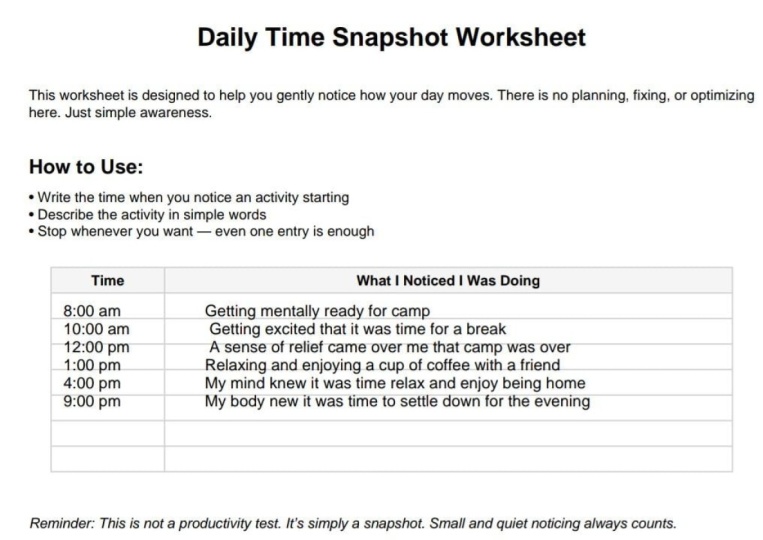
6. Create Your Daily Time Snapshot: For this project, you'll
create a simple snapshot of one day using the time awareness
method from this class. You'll end up with short, clear record that helps you see how your day actually moved.
Let's walk you through it. So for the materials,
you only need one of the following your Notes app
or a small notebook and pen. That's it. Now at the
top of your project, add a clear, simple title. For example, daily
Time Snapshot. So here are the project steps. Step one, notice the start. For example, if
you're about to begin an activity like cooking
or opening your laptop, you can write the activity
name in simple words because noticing the starts help you see where your time begins. Step two, add the time. For example, if the
clock says 11 45, you can write 11 45, start lunch because adding the time anchors the moment
without needing details. Step three, review gently. Example, at the end of the day, you can look over your
notes and lightly mark one moment
that felt steady or one place where the time
slipped away because reviewing builds
awareness, not judgment. Your completed project
might look like this, a short list of activities with times from a
part of your day. You can create your
project during the day or at the
end of the day, upload it whenever
you feel ready. Keep it simple. This does
not need to be perfect. Students upload quick, simple projects that take
only two or 3 minutes. No one expects perfection here. This space is for
practice not performance. When you're done,
upload your project and take the moment to notice
what you've learned. Next, we'll move into the
common questions that come up when starting the
habit. See you there.
7. Common Questions About Daily Time Awareness: You've reached the point and
completed the whole flow. It's normal to still
have a few questions. Let's walk you through
the most common ones. Question number one. What if
I forget to write the time? Well, if you miss an entry, you can simply write the
next one, you can remember. For example, if you're
washing dishes and forgot, you can write dishwashing around six because estimates
still help you. Question number two, what if my day feels too
chaotic to track? Well, you can focus only
on one part of your day. For example, if morning
feels too busy, you can track only
the afternoon because small section still
gives you clarity. Question number three. What
if I switch tasks often? You can write simple entries without worrying
about precision. For example, if you move
between tasks quickly, you can write mixed
task around 230 because the goal is
awareness, not accuracy. Here's another tip
that often helps. If you feel stuck, start with the next activity instead of
trying to remember the past. For example, if your
day has been blurry, you can write 410, start fresh, because starting from
now is always enough. One more mindset that helps
many beginners is this. You are not trying
to score your day. You're simply noticing it. That alone removes pressure and makes the method
easier to follow. Alright, let's wrap up
everything together.
8. Bringing Clarity Into Your Day: Congratulations on
completing this class. You learned how to understand your day with a
calmer, clearer view. That's something to celebrate. Here's a quick recap of
what you've learned. You notice the start
of the activities. You added the time, you reviewed your day with awareness
instead of pressure. If there's one thing I hope
you take with you is this. Noticing your time helps
you feel more grounded. Even one or two entries can make your day feel more steady. You made progress today,
and that matters. I believe small steps like this create long lasting change. You're building a skill that will stay useful for many years. Here's the fun shortcut to
remember the flow. Start time. Look. A simple three word
rhythm you can carry with you. Thank you for learning
with me today. Your project is the next step. You can upload it anytime. Even a small snapshot is enough. If this class help you,
I appreciate a review. It helps more beginners
find this class and gives me guidance
for my future lessons. Feel free to post questions
in the discussions board. If anything comes up,
I'm here to help. Thank you again for being
part of this class. You made real progress today. I hope you feel proud of
the clarity you created. Before we close, a quick
look back earlier, your day may have felt blurry. Now you have a simple way
to see it more clearly. That's a steady step forward. If you'd like to keep learning
simple skills like this, you're welcome to follow
me here on Skillshare. Until next time. Bye for now.
 Paul Nene, Helping beginners take action