Transcripts
1. Introduction to Whimsical Watercolor Scen Updatede: Welcome to my class on creating your own whimsical
watercolor seen. This is near and dear
to my heart because this style came out
of my need to kinda breakaway my work from my creativity and
my, I am creative. I get to work in a
creative business and I feel so
blessed about that. But sometimes I just want
to be creative just for me. And so I started
these paintings, Easter at Easter this year. And I just loved them. And I just started
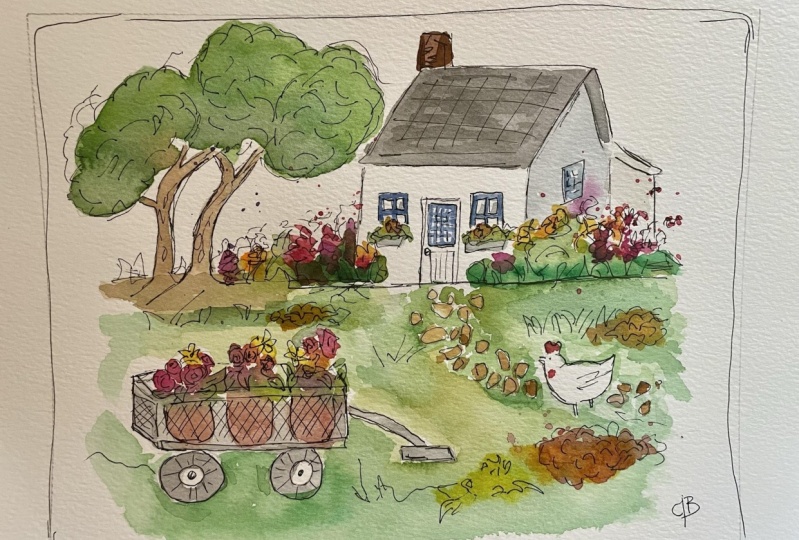
dreaming up what I would want my house to look
like one day or a garden, or kind of like the
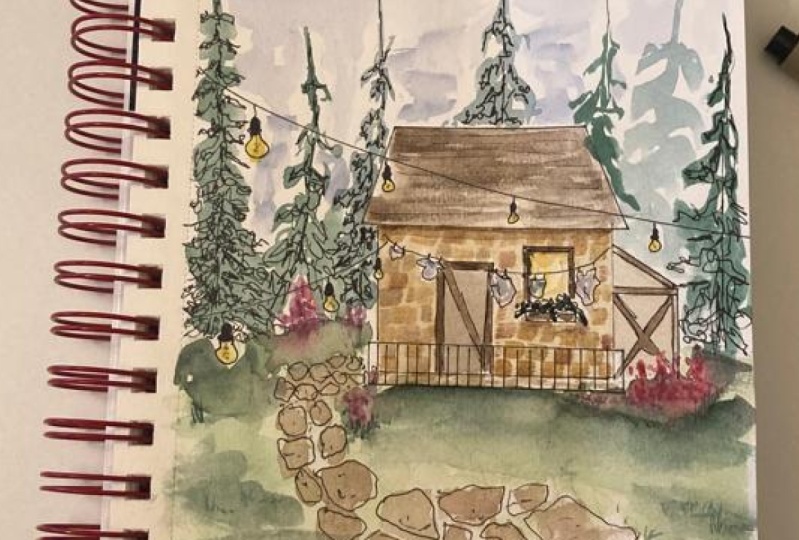
storybook fairytale land. And I'm showing you some
paintings that I've done. I've just enjoyed it so much. So I wanted to bring this class to teach others how to do it. And I think that it's a
great way to let loose, especially if you are a
creative and you want to just create for yourself or just
explore and new medium. So perfect class for you. I am listing this as
an intermediate class because I'm not going to teach you how to
use watercolors. And I'm not going to
teach you how to draw. If you maybe struggle
with those two things. I do have a beginners course
on watercolor paintings. You can take that first. But the watercolor painting
is really straightforward. We're not doing a ton of layers. It's just, we're painting one layer and then we're
sketching over it. But I did have to list it as intermediate because if somebody is brand new and coming in, it might be a bit
confusing to them. This structure, this class is, we're going to start off
by gathering inspiration. There's many places to
gather inspiration. You might find a garden in
your neighborhood that you really love or maybe places
that you've traveled to. I know I took a lot of pictures with my husband and
I were in Scotland. I gather inspiration from there. Also, Pinterest is amazing. So we are going to be
focusing mainly on Pinterest just because it's
available to everybody. And from there, we're
gathering and CFO of what we want our
painting to be. Gathering little pieces. I'll show you how to do that and then we're going
to sketch it out. And then we're
going to paint it. And then we are going to add the ink and then your
piece will be finished. I know it sounds like a lot, but it's actually a
pretty simple process. Just a really fun
creative process of dreaming and kind of creating this little
world that you love. I say this in all my videos, but I'm really excited to teach you guys this
painting style. I think it's just a great
way to get in the flow, getting your creative flow, and have a relaxing time. I know that sometimes
on a Sunday I will want to just do an
art class that isn't, I don't want to learn
something new necessarily. I just want to have fun and get my creative
juices flowing. So that's what I hope
this class is for you. I made it that way and I
hope that you love it. I can't wait to
see what you guys create it. Let's get started.
2. Class Project: The class project is
pretty straightforward. You're going to be creating the class project while
you do this class, where you're going to create your own whimsical
watercolor seen. And as you, as we go
through the class, you'll notice that you can
make it any way you want. Or you can also follow
along with what I'm drawing and painting and you can do the exact
same thing if you want. So this is really open to your creative
choices and freedom. And I just want this to be an enjoyable
experience for you, but please, please, please
post your projects. I'm absolutely love to
see what you guys create.
3. Supplies: For this class, you're going
to need a few supplies. So the first thing
we're gonna be using is you're going to need watercolor paper because we're using watercolor
paint with water, you need something that
can absorb that water. You can use watercolor, cold press, watercolor
paper, or hot press. I actually use hot press for all of the series that I
created around this. But today I am using cold press, watercolor,
colored paper. Whatever one you want to
use, that's totally fine. You're going to need
watercolor paints, brushes, and water jars. I like to use two jars
because I use one for cool colors and one for warm colors so it
doesn't mute them down. And then you will need a pen. Now, I like to use a
waterproof pen with archival ink because it doesn't bleed when I add in the paint. So that's totally up to you. I'll give instructions
when we get further along. But if you are using a pen
that is not waterproof, you'll need to paint first
and then put the pen over it, which is the order that we're
gonna do it in this class. But you can, if you
have a waterproof pen, you can do the pen first
and then paint after. Hope that wasn't too confusing. Alright, so those
are the supplies we need and we can get started.
4. Gathering Inspiration For Your Scene: Alright, one of the first things that we need to do is gather inspiration for our
piece of artwork. And a couple of
places you can go. I love Pinterest. It's just a really great
place that I like to go to dream and to think of all of these different
paintings that I wanna do. But another place that
you can go is you can get into your photos or maybe
travels that you've been on. Or locally if there's places
that you really love, like it doesn't even have to be the whole home or a whole scene. It can just be little
aspects of it. So this is our trip to Scotland. We did a 100 mile
backpacking trip. And I really liked this
little rooster right here. And maybe like this fence
and the stone here. And maybe I want
to draw some sheep in there so I could
grab that from here. I could also get
that on Pinterest. Or there's also this
beautiful little cottage that is so cute. And this is definitely
a style that I like. So you can look at your
photos from traveling. But right now, I'm going
to focus on Pinterest. So couple of things, let me get into my home feed. A couple of things is
what we are going to, or at least I'm going
to gather images that are more cottage core, that theme right
now that's really outdoorsy English garden feel. And you just start
going to search those. So let's say I'll just search cottage core
because it'll come up for sure. And we're just
looking for things that we are inspired by. I really like this
photo with all of these roses around the window. I would love to
incorporate that. I already have a cottage
core boards setup, but set up, you can name your
board wherever you want. Set up a board and then just start saving images
to that board. So I actually already have this image saved to that board. Another thing you can do is if you're not into cottage core, you could do maybe
Italian countryside. And you can start
gathering that. I actually really
like this photo, these little garden boxes. I would love to add that to my board and maybe to
a piece of artwork. Just going, I have so
many boards there we go. All right. We're just
going through here. I might, I am going to
go back to cottage core. You could also put in farm life. We're just making little
whimsical scenes. I loved the idea of having my own little cottage
one day with a farm. And that just seems so romantic and relaxing
and wonderful to me. So I really love just
creating that in my mind. What you're doing is
you're just gathering all these little aspects
that you would like to have in your own
little whimsical scene that we're going to be painting. I really like these chickens. I think that they
would be great. I'm going to add those. I do. If you do want a structure such as a
house or a cottage, I would definitely try to grab a whole picture of one just because it's going to make
it a little bit easier. If you're really good at drawing architectural
structures, then you can totally
just make up your own, but I like to at least have a starting image and
then work around that. So if I just put in cottage, Let's see what comes up. I really like this one. I can add this. And when I start to
sketch out my drawing, I can, I don't have to make
it look exactly like this. I can add more florals
around the windows, or maybe I wanna do little
garden boxes on the windows. If I needed a picture that I
would say garden window box, see if it comes up. Perfect. And I really liked this
one was all the greenery. Just add that to my board. So you guys get
the picture here. What you're doing
is just gathering as much inspiration as possible. Take as much time as
you want with this. I like to pour myself
a cup of tea or coffee or maybe
wine is your thing. And just enjoy this process. Just dream and think
about what you'd want your ideal home or garden to look like and
grab photos from that. And then we're going
to start sketching in the next section
in this class.
5. Sketching Your Scene : The next step in this process is we need to sketch
out our design. So we've already gathered
lots of inspiration photos and I've put together a little mood board
that's helpful for me. But if you have a
Pinterest board, that's totally fine
and you can use that. Just put together a
mood board because it's easier to explain
it to you guys. What I do is I've grabbed all the images
that I really loved that I want to incorporate into
my watercolor painting. I really like the house on the upper left-hand
side over here. I want to incorporate a chicken. I really liked the white
chicken with the red. I don't know what you call that. But the white and
the red chicken, I want to add a little dear, I really liked this garden
box outside of the window. So I think I'm going to add
it onto the little cottage. And that's the cool
thing about this, is you get to dream up
what you want to create, and there's no rules. You can don't put too much
pressure on yourself. It's just about having
fun and developing something that you
are excited about. And if it doesn't turn
out great the first time, you can always do it again. Down here under the garden box, there's this really pretty, I like these yellow flowers and the bright pink
ones and the fence. I might incorporate the
fence, but I'm not sure. Then on the right side there's this really cute wagon with
little buckets of flowers. I definitely want to add
that into my drawing. And then finally, this bottom
image on the bottom right, I like that stone
walkway and that's something else I want to
incorporate into my drawing. Now that you know
what you wanna do, You are going to sketch it out. Now. If you are not super confident and you're
sketching abilities, or you feel like you're
going to erase things a lot, which is totally fine. There's no shame at all in that. I recommend getting
a separate notepad and sketching out
your design first. I do this a lot when
I have a lot of ideas in my head and I don't see a clear picture of
what I want to create. And I did this recently
with a painting because I really needed to
lay it out first before I started on
my watercolor paper. And the reason you
want to do that is because if you start drawing on your watercolor paper with pencil and then you're
erasing a bunch. You're really doing some damage to the paper because
the paper is textured and the eraser can lift some of that texture
off and we don't want that. So again, if you feel
super confident, go ahead, sketch right on here. I'm going to sketch
right on here today. But if not, grab a separate piece of paper
and sketch their first. Alright, we are starting
this sketching process. And obviously all of our sketches are going to
look different because we're all thinking of a different kind of dream house or a
garden or whatever. So I'm going to sketch it out. You can follow along
with me if you want to do exactly
what I'm doing. But if you have your own ideas that you
want to sketch out, feel free to use this
time to do that. So I like to start
with the house. Just because it kinda gives
me the foundation over. I'm gonna put everything else and keep in mind perspectives. So if the house is going to be farther
off in the distance, you don't want it to be
really huge right here. Then have something
really small. This needs whatever is here, it needs to be a
little bigger and then the house a little smaller. So just keep in mind when
you're viewing something. The size of things, that kinda helps to make
it look more realistic. You don't have to
get super detailed. I'm going to need
an eraser here. But you don't have to get
super detailed because we can add a lot more detail
when we do the pen. But you just basically want
to sketch out the outline. I'm going to put the
windows in here. I'm going to grab
an eraser really quick because I made a mistake. These gummy racers are
great for watercolor paper. Because you just press them
down and they help take off the the pencil marks
without hurting the paper. But if you use it too much, it will eventually
hurt the paper. Do this a little bit. Okay? Then when we got a
little chimney here, so we're just doing the basic
outline and I do a door. I'm actually going to change
it up and not do the door exactly the same as I saw it. Not as okay. This is really just a
practice in my mind, a mindfulness
practice and getting into the flow state
with your artwork. Because I think
it's really easy to just get so judgmental about our artwork and
not just have fun. I want this to be
fun for you guys. So don't worry that
XYZ isn't perfect. Alright? And there's gonna be a
little bit of plants here. I'm just going to
make a rough outline. Actually made a mistake here. This needs to be
further like this. There we go, a
little window here. And then they have
a lot of flowers, which I love, some holly hawks. But I'll remember to
put flowers on those. I don't have to do every
small detail and make sure your pencil lines
are really, really light. Okay? So we got the house down. I know this is gonna
be a thatched roof. Sorry, not thatch. I don't know what that's called, but it's it's like
little teeny squares. So we're going to have that. And we can add
more detail later. And then I wanted to do I wanted to add
a garden box here. So I'm going to put the
little garden boxes under this, these windows. And I'll be sure to just
add some flowers in there. So we got that part and then the deer the deer is obviously we're not going to make it as big as the house, but if we want it more
in the foreground, weight now, Yeah,
like right here, we're going to do a
little bit bigger. I struggle sometimes
with drawing animals, so we'll see how this
especially dear, I don't know what it is about deer, they always throw me off. I don't like this. Okay, I'm not gonna do a dir. See that's the fun part. You get to decide what you wanna do and what you
don't want to do. I am going to make this
little wagon up here. And the wagon is closer so we can make
it a little bigger. Kinda making sure that we're keeping with the
perspective of it. I'm just putting some pots in here and just doing some rough outlines about what the flowers would look like. Nothing too detailed. We're gonna get to that later. And we got these big old wheels. Okay, maybe we'll put
the little handle down here in the grass. Alright, and then I want
to add some chickens. They kind of look a little. Maybe these ones can be
a little bigger because they're closer to the viewer. They're kinda fluffy. But maybe back here we have
really small chickens. Because it's further back. We can put another
one over here. And I wanted to put that
really cute walkway. Do that. The stones are not touching. There's grass growing
in-between them. Super cute. This style of artwork
I developed it by. I rarely just paint for myself. Everything is
usually client work or or I'm trying to
turn it into a product. And I just sat down on
Easter this year and I said, I'm just going to make
something for myself. I came up with this
series and yes, now it is a product. I do sell it as an art print and my Etsy shop or art prints. But it was really
fun to develop it. And I felt like I was in that flow state with my artwork
and it felt really good. That's all I wanted to make
this class because I want you guys to experience
that as well. Okay, so I'm gonna put because we're kind of like
we need something over here. I'm going to put a tree. Maybe kinda like an oak tree. Just a general outline will be able to fill in
more details later. Maybe I'll put two, like a little baby
tree over here. And that's the cool
thing about this tool, is you can kind of fill in. So if you see an empty spot, you can add a tree, you can add a fence
with some flowers. Whatever you want to do. I'm going to keep this pretty simple just for
teaching purposes. But this is my drawing. And now we are ready to paint. Now that we have
our sketch done, we need to start the
color and the inking. You have one or
two options here. If you have a pen like this pen, this is from the pigeon letters. All. I'll add it to the description of this class or the
info for this class. But this is waterproof ink. So I could go ahead and
sketch this all out with ink and then paint over it
and the ink would not bleed. I believe it's called
archival ink is like that. If you do not have a pen with archival ink or waterproof ink, then you're going to need to do the watercolor artwork first. For this class, I'm just
going to assume that not everyone has
the waterproof ink. So we are going to paint first and then add the ink afterwards.
6. Painting Your Scene: All right, We're going
to start painting, and I have my watercolor
palette over here. And the cool thing
about this style of painting is I don't
use a lot of layers, which means it's kind of
a quicker way to paint. Now I am going to tell you that these pencil lines
are pretty dark. So if I wasn't
teaching this class, I would come in with my gummy eraser and just press down and pick up some of this. But I want you to be able to see it because if I
make it too late, you're not gonna
be able to see it. If yours is this dark, just grab an eraser and kinda pull up some
of it a little bit. It's not the end of the world, but it does help if it's
a little bit lighter, since we are only
going to be using about one layer of
watercolor artwork. If you've done any of my
other watercolor classes, or if you've looked
at my artwork online, I use tons and tons of
layers for my artwork. And it takes hours
and hours and hours. But for this class, we end this kind of
style of painting. I just do one layer of paint
and we keep it pretty light. And then we come
in with the pen. I'm just going to
start painting and whatever you guys have drawn, feel free to grab your
watercolor paints and start painting your artwork. If anybody is, has
done the same exact, same exact drawing as I have, you can just follow
along with me. I'm just grabbing a yellowy
green for the trees. I like to paint from the left-hand side down
because I'm right handed. So I I don't get in my
own way with my paint. But if you are left-handed, you would start on the
right-hand side and paint down. So you don't end up with
your hand in your artwork. And we're just, I like to call like filling in
the colors almost like a coloring book
because we're not worrying about things
being too perfect. You can also, as I
mentioned in the beginning, you can use hot press, watercolor paper, or
you can use cold press. I'm using cold press today, but for my series that I did
with this style painting, I use hot press paper. I ended up using it just
because I had extra I needed to get rid of
it and it was awesome. I am mixing up a little
bit darker color and I'm just going to
poke it in a little bit, just to give a little variation. It's really going to come
alive when you add the ink. So honestly, in my opinion, I don't think you
can mess this up. You're just adding color. It is nice to add
some darker shades just to show where things
might be shadowed. But it's not, don't worry
about getting things perfect. That does not matter. Now, I'm going to grab
some brown for the trunk. Again, just painting it in. Normally I would speed this
up because I know you guys might be painting something
different than I am. But if you are painting
along with me, I want you to see everything. So feel free to fast
forward or pause this if you are interested
in watching me paint this, or just have me on
in your background. Art can be so meditative. And I really want this to feel meditative to you
guys and relaxing. And just like a fun class
that you do on the weekends. I'd love to learn new things, but sometimes on the
weekend I just want to do something to
fuel my creativity. And sometimes it's
hard for me to find a class on Skillshare
that's just for fun. No, not trying to
teach me a new skill. So I hope that this
feels like that for you. It's a unique style
of painting with the ink and the watercolor
and the sketching. I just want you to
have fun with it. I'm going to make
a grey roof just like the photo that I looked at. If you go a little outside
the line, that's okay. And if your watercolor
bleeds a little bit into another color,
that's also okay. And if you guys have never painted with watercolor before, I did mark this class as a intermediate level just because I'm not teaching you how to paint with watercolors. But I do have a beginner course all about painting
with watercolor. If you need that. I'm just dabbing in here where I'm going
to have some greenery. I don't have to
get too detailed. But I do want to alternate
the shades of green, so there's some interests in here when you're looking at it. But I'm going to do all those
fine details with my pen. Maybe add a little
more green here. I can't wait to see
what you guys create. I, I just loved this. I think it's so fun. Creating your own little
watercolor world. Now I'm gonna come in and
I have some finer points. So I grabbed a smaller brush. But around the windows have
kind of like a bluish. I'm gonna do a
bluish purple color outlining the windows. But making sure I leave room for the little flower
pots outside the windows. Then I have the door that
has this in there too. Homes remind me of little cottages like in
the English countryside. There we go. And maybe a gray color
for these little boxes. Sometimes I like to paint the
inside of the window panes, just add a little gray so it looks like there's a
reflection a little bit. And then obviously here, this side would be
shadowed a little bit. So I add in a little color and then I just come in with
water and move it around. So it looks shaded
compared to this side. Little things like that will really enhance your paintings. And then I want to
add in some flowers. So I'm gonna grab some
pinks and reds and purples and it's literally just like tapping and this is going to bleed a little
bit because this is wet, but I'm okay with that. Just tap, tap, tap. Little pops of color. This is a pretty color. And think about, you know, are they big blooms? Are they little tiny flowers? There are so many
flowers in this world. It's pretty amazing. And then I'm going
to add some yellow. And we can't forget
about our flower boxes. So I'm gonna start with some green just to kinda
block that in. Maybe it's coming over
the edges a little bit. Super cute. Then just popping
in some yellow. When we went to
Scotland, the gardens. Oh my gosh, they
were so incredible. People really. I mean, there's so
much rain there. I'm, I'm from
Southern California, so we're always in a drought
or having a water shortage. But there, there's so
much rain that the flowers and the plants,
they just love it. Okay, I'm pretty much done
with this for right now. We're going to add more
details later with the ink. I might add just a little, maybe a little darker
shade to the roof. So there's some interests. But I don't have to
get super fancy. Like that looks weird right now, but once we draw over
it, it'll look good. Then. To me, the sun, oops, I did that wrong. The sun is coming this way. So the shadow, we have shadow over here and then we would have a shadow over here. Adding in shadows can really
enhance your artwork a lot. All right, Now, I want to do some graphs in here
because I want the grass to go between all
these cute little stones. I've been using the
same green color, so I'm going to add a
little more yellow to it. And I'm just going to paint all around these little stones. I hope that you guys
share what you create in your class projects or the class project
section on this class. It makes me so happy
to see what you guys make and just knowing if you
enjoyed the class or not, because I want you guys to enjoy these classes so I
welcome all feedback. Hopefully you'll love it though. Just alternating the saturation of your paint in here as good. Just to make it a
little interesting. You can just poke in some
darker colors if you want to. Because when you look
at things in nature, they're usually never
one solid color. There's always some
nuances there. And then I'm just
grabbing a bunch of water and going out from there but not painting
over my chickens. Make sure you paint around
them because we need to paint them another color. So we are going to have to
wait until this dries to paint them in this chicken, especially because it's white. So we want to make
sure that we were not going to be painting it white or just gonna be using the paper. It's cool. I can see this starting
to come together. And it's a big trend right now, that cottage core trend. And at first I'm like, What the heck is that? But I was thinking, Wait, I've liked this forever, but I just didn't
call it cottage core. Are all trends kind of like it's like they get a new name and then
it's super popular. So make sure to paint around
these flowers are just leave some space so you can
paint the flowers. Like don't just leave
some white paper. And then we'll have, I think I want to add in some flowers down here
just on the ground. That's feeling a
little blank to me. So I'm going to finish up. We want the wheels of this
wagon to be in the grass. Just paint that. Like so. Another thing too, if you're painting this
and you're wanting to create an art print
or you want it to fit inside of a frame. Have the size in mind
before you paint. That's something
that we do wrong a lot where I just start painting. Then I realized that
this is never going to fit in the frame
that I wanted. So a good size is eight
by ten because that's a very common frame size. Okay. So we have all the grass and then maybe we just want to add in like a couple little
darker spots of grass. There would probably be
shadows under here because it's where the wagon is. We can just kinda leave those will enhance them
later with ink. Alright. I wanted to add some
little flowers down here. I'm gonna grab and go read it. Kinda like a yellowy
hot pinkish color. And just tapping it in, it's going to bleed
a little bit. But we can define
it with the pen. Maybe do just some
straight up yellow. Maybe we want to do a
little yellow over here. Maybe right over here. All right. Now we don't want this
to bleed too much, so we're going to wait until
this dries a little bit before we start
putting in the wheels because we're going
to use a color that probably dark gray
and we don't want that bleeding onto the green
for these little stones. I'm going to grab just a brownish gray color and
just add some color there. Make sure you kinda play
with the saturation. So maybe some of them are really light and some of
them are darker. Honestly, it doesn't matter if you paint on the green too. That's what I love about
this style of painting. I think get lends
itself really well to to making quote
unquote mistakes. Because the pen kinda defines what you
want it to and end. Okay? I'm good with those. I'm going to add a little bit of a darker shade in these windows. Just kinda helps you see
that there's light shining. That's some water to mix it in. Alright, I think we can
paint our little chickens. I'm gonna make this one brown. It's just going to look like
a brown blob right now, but that'll change later. Then this guy staying,
staying white, but he's going to have this little red thing and
a little red crown thing. Then the beak can
be yellow, orange. Dupe. Sometimes I like to
come in and even though it's a white bird, add just a little
bit of a shadow. Because no animals for
is completely white, has little nuances
of other colors. Kind of a shadow underneath because the light
would hit the top, but the bottom would
cast a shadow. Now I'm just going to
come in here and add tons of color because this is our little wagon full
of beautiful flowers. Maybe I want to
make a sunflower, so I'm going to make
it dark in the middle. Have some roses. Again. Don't worry about the detail. But you are going to
want to add like, have a plan in mind. Like, Oh, these are gonna
be bigger blooms are, these are gonna be
long skinny flowers. Because if you don't have
just a general plan, then it is kind of hard
once you start drawing, you're like, Oh wait, I
should have done this. Oops, that's okay. Like color, could we use
something really light? If you are using the archival
pen that's waterproof, you can come back
in later and add more color if you decide
that you need it. I'm going to make these vases
kind of a terracotta color. Since we're using the pen, this original wagon has this
kind of like fencing on it. And the black pen
will cover that up or be able to show
that really easily. So I'm not worried about painting these
**** like straight without making bleeding
whitespace for the fencing. Okay. I might just kinda
make this gray just to make it seem like
we just don't want it to be completely white
because it doesn't really make sense of it is a paint. These wheels, straight
black is a little harsh, so I watered it down so
it's more like a gray. And then the middle, we're
going to leave white. And I'm going to add some
greenery to these flowers because most flowers
have greenery. And this guy can also come down painted. All right. This looks pretty
good to me and I think we're ready to move on. So let this dry completely and then we'll come
back with our Pen.
7. Adding Ink : Now we're ready to
finish up our artwork. We're going to finish
it with a pen. Like I said, I like to
use these Micron pens. This one has archival
ink so it's waterproof. If I needed to add in more color anywhere I
could do it with this pen. But now I'm just going in and
sketching out the details. You can oh, as far as
size goes for your pen, I'm using a 01 size, but a 0508, those are all great. A is a lot thicker. So if you don't like
really thick pens, you want it to
look more sketchy. You might want to
do a thinner line. I'm just coming in and adding little details like you would if you were
just drawing a tree. It's really a sketch style. So you can do these little C
curves and they look fine. Sometimes I add in a couple of little leaves, leaves shapes. So you know, like those
leaves in this tree. But I really liked
the little C curves. As you can see, you just can't mess this up. That's why I like
these little wet. Then I like to do
strokes that are like kinda messy a little bit because I like that
sketch looked. But if you want something
that's more clean and crisp, you can totally do that as well. And I'm just adding in details. So for example, there
might be some knots on the tree or some veins
through the wood. This is your time to add
in all those details. So that's why I was saying that the watercolor painting
doesn't matter too much. It's fun to add
in a little depth than shadowing and stuff. But really your detail
is coming from your pen. And then the roof here. And I'm just going to draw
some lines across it. Maybe some crosshatching. And then the chimney
has some bricks in it. It's gonna kinda draw that in all of these little flowers. Now you can go in
and outline them. Now because this is so far away, you don't need a ton
of details here. But you just want to
get the general idea. So if you're having a
hard time knowing what kind of shapes to
come up with here. Maybe go outside and if there's a garden that's maybe in your
next-door neighbor's yard. Kind of squint at it and
see what shapes you see. That's kind of helpful because this is going
to be further away. So you're not looking
at really tiny details. It's almost like just making
this little flower shape, like blobby flower shapes. And then maybe you
want some grass, so that'll be just lines. There's a door here. Maybe put a little
knob for the door. Maybe some little details here. There's a lot here, so you don't have to
outline every single thing, but I'm just gonna do the edges. The garden box,
another garden box. And if you're not able, like if you're like, Wow,
she's going way too fast. You don't have to
go at my speed. This is about you and what
feels comfortable to you. I like going out a fast
speed because it makes me feel like it's a little
more sketchy looking. But if you're more
precise and you want more time or you just
need time to learn this. That's totally fine. Take your time. I like to do little
dots sometimes too. And then be mindful of where
there might be a shadow. So under the door there's probably gonna be a
little darker shadow. And then where the plants
kinda meet the grass, a little darker shadow. It's just so fun to do this. It feels so easy. Like, like I can't mess it up. I think that's why I get in such a flow state when I do
these kinds of paintings is because it's just like you can
make it whatever you want. There's no rules. Well, there's a little
bit of rules, I guess. Chicken over here. Then. All I am going to outline
these kind of more smoothly. Some depth than this chicken is. Kind of has its
head in the ground. So you don't even
have to do that much detail and people
just get the point. At least I think they do this bill chicken. In the information
for this class, I'll put the pen that I'm using in case you
want to purchase it. But there's a lot of sicker
and makes a really good pen. I like the ones from
the pigeon letters. She also is against animal
cruelty because a lot of, I don t think pens, but
a lot of paint brushes, our cruel to animals. And I didn't know that
before I bought her, her brushes, which
are cruelty free. So I really recommend those. Now that we're getting
a little bit closer, we are going to have to provide
a little more detail on the flowers because this
would be the closest to us. For roses, I kinda just
do these little C curves. Starting in the middle
and then coming out. And then I'm going to
pretend this is a dahlia. So it has more pointy petals that maybe these are some names. Maybe this is another dahlia. Maybe this is a sunflower. Yeah, these ones people
are going to see closer. We get a little more
detail and then this is the wagon here. We're going to have to
give more detail with the crosshatching. So first I would outline
the pods back here. And then I would come in
and make the crosshatching. Because this is a sketch, it can, doesn't
have to be perfect. People will get the
general point of this. And I'm trying to think, this would go probably this way. The perspective thing
is always hard. Then we'll do these guys. You will put a little
texture and the tires. Then these can be
really teeny flowers. We don't have to do too much. Even though they are closer. We don't have to do
a ton of detail. Maybe put a little leaves on
there. Can you believe it? We're almost done. You might not be almost done. That's okay. Take your time. Then sometimes I
like to just add some little grassy patches. Then sign your artwork.
There you have it. It's our little whimsical
watercolor seemed. To me. It's a lot easier than painting, a more realistic
watercolor painting, but I hope that you guys
really enjoyed this. And thank you for
painting along with me.
8. Conclusion: I hope you guys
enjoyed this class. If you could please post in the class projects
what you created. I absolutely love to see
what you guys create. Also, if you post
it on Instagram, tag me at lavender and C. I like I said, I love seeing what you
guys create and just knowing that you're
following along. And then if you could also leave a review that helps
me out so much, it gets my classes
out to other people. And especially if you
enjoyed the class, you want to share it
with other people. So I appreciate you guys
watching this class and I hope you have the
most amazing week.
 Nikki Hess, Artist & Corgi Mama