Transcripts
1. Start Drawing Daily Without Feeling Overwhelmed : Mm. If you have
ever told yourself, you want to draw more, but they skip passing without
touching your pencil, this will feel familiar. You might feel a little guilty, a little frustrated, or quietly
disappointed in yourself. Well, that feeling
can make starting feel heavier than
it needs to be. If that's you, I want
to say this gently. You are not lazy.
You are not feeling. Most beginners struggle not
because they dislike drawing, but because the idea of
doing it feels too big. When something feels big, our brain looks for a way out. You are here, we
are going to take one small kind step,
not a big commitment, not a perfect routine, just a simple way to show up
that feels possible today. Even thinking about it
is already a small win. I and Paul, I help beginners
learn new skills in a clear and simple way so they can feel safe trying
something new. I remember when I wanted
to draw regularly, but kept stopping and starting. I thought I needed
long sessions, the right mood,
and a clean desk. Most days, that meant
I did nothing at all. What changed for me
was letting go of the idea that practice
had to look serious. Once I allowed drawing to
be short and imperfect, it became easier
to return to it. That is why I enjoy
teaching this topic. It removes pressure and
gives you a calm way in. Here we will build one simple daily
drawing plan together. You will do it slowly step by step with one pencil
and one piece of paper. Nothing fancy,
nothing stressful. This is for true beginners who want consistency
without pressure. If you already draw every
day for a long session, this will feel very basic. You can still use it
as a gentle reset, but this is mainly for people
who feel stuck starting. You do not need special tools. Paper and a pencil are enough.
You do not need talent. You only need a
few quiet minutes. As we go, I will show you how
to make drawing feel small, friendly and easy to return to. Let us begin gently.
2. Create a Simple Daily Drawing Plan on Paper : If the idea of building a habit makes you tense,
you are not alone. Many beginners worry they
will not follow through. That worry can stop
them before they begin. Here is some reassurance. We are not building a strict
schedule or a long routine. We are creating one
short written plan that makes daily drawing
feel easy to start. The project you will build is called five minute drawing Plan. It is a short piece
of writing on paper. You will build it gradually
as we move forward, adding one small part at a time. You will only need
paper and a pencil. You can use a notebook, a loose sheet, or even
the back of an envelope. Use whatever you already have. We will start by understanding
why short practice works. Then we will choose a time that fits naturally
into your day. Finally, we will
make the plan so easy that it feels
safe to return to, even on busy or tired days. By the end, you will have one simple written plan you can keep near your
drawing space. It will tell you when to draw, what to do, and how
to keep it light. You are welcome to
work along as we go. You can pause, rewind
or just listen first. There is no rush. Keeping it imperfect is
part of the practice. You are already doing something kind for yourself by being here.
3. Understand Why Short Drawing Time Builds Consistency : Many beginners think the
problem is motivation. In reality, the
problem is often size. When drawing feels like it
needs a lot of time or energy, your mind quietly resist it. Drawing, in simple words, is just moving a pencil on paper while
looking at something. It does not need to
be long to be useful. The simple idea here is that short practice
removes resistance. When practice is short, your brain feels safe starting. When starting feels safe, you begin more often. When you begin more often,
consistency grows naturally. There are a few
colmps to this idea. First, short time
lowers pressure. If you tell yourself you
only need a few minutes, the task feels manageable. You are not promising too much. Second, short time builds trust. Every time you show up
for a small session, you prove to yourself that
drawing fits into your life. Third, short time
keeps energy steady. You stop waiting for
the perfect mood and start drawing as
part of your day. For example, if you
sit down to draw after breakfast
for a few minutes, you are more likely to begin than if you wait
for a free evening. The shorter plan works
because it fits real life. Here is how we will
do this together. We will write a simple plan
in three gentle moves. We will decide why short
practice works for you. We will choose one natural time. Then we will keep the plan
easy enough to repeat. This flow works because it removes pressure at every point. It does not rely on willpower. It relies on kindness
and simplicity. Keep this idea in mind
as we move forward. Short and easy is
not a compromise. It is the path.
4. Write Why Short Daily Drawing Is Enough : If you have tried to draw
regularly before and stopped, you might feel cautious
right now. That makes sense. Instead of forcing confidence, we will start by making sense of why short practice works. As we begin, take out
your paper and pencil. That is all you need.
At the top of the page, write the project title, write five minute drawing plan. If you do not like writing
titles, that is okay. This one is just
a friendly label so you know what
the page is for. Now, beneath the title, leave a little space. We are going to write
one short sentence about why a few minutes
of drawing is enough. First, gently write a line
that starts with the words. This plan works because next, finish the sentence in
your own simple words. You can copy this
example if it helps. This plan works
because short drawing feels easy to start
and easy to repeat. That's it. One sentence. If that feels too formal,
you can soften it. You might write something
like short drawing fits my day better. When I first did
this, my sentence was messy and unsure.
I still kept it. What mattered was seeing
the reason in front of me. Take a moment to
read what you wrote. Notice how it feels to say that drawing does not need
to be long to count. This part of the plan
is about permission. You are giving yourself
permission to keep drawing small. As we move forward,
remember this sentence. It will support you on days
when motivation feels low. You have already started, that is something to feel good about.
5. Choose One Gentle Time That Fits Your Day : Many people stop drawing, not because they forget, but because they never
decide when to do it. Without a time, drawing
floats around and disappear. If you feel unsure, choosing
a time, that is normal. We are not looking
for the best time. We are looking for a kind time. Bring your attention
back to your paper. Under the sentence
you wrote earlier, leave a small space. Now, write a new line that starts with the
words I will draw. Finish the sentence by naming one calm
moment in your day. You might choose after breakfast before bed or during a
quiet afternoon break. Here is an example you
can copy if you want. I will draw after
breakfast. Keep it simple. Choose a time that already
exists in your routine. When I began, I
choose a time that felt realistic, not ideal. That made all the difference. It felt natural instead of forced read your
sentence again, imagine yourself drawing at that moment for
just a few minutes. If your schedule changes
sometimes, that is okay. This plan is flexible. You are choosing
a gentle anchor, not a strict rule. This part of the
plan helps your mind know when drawing be lungs. That clarity reduces
decision stress. You are building a
path that your day can follow without effort.
6. Keep the Drawing Task Easy Enough to Return To : If you have ever
felt skipped drawing because you did not know what
to draw, this will help. Uncertainty can quietly stop us. This final part
brings everything together by keeping
the task simple. Look at your paper again. Under the time you wrote, leave a little space. Now, write a line that
starts with the words, when I sit down, I will finish the sentence with one
very easy drawing action. Should feel almost too simple. Here is an example
when I sit down. I will draw one simple
object in front of me. You could also write
something like draw lines, shapes or anything I see. Choose something
that feels safe, not impressive, not
creative, just doable. When I created my first plan, I worried it was not enough. Over time, I learned that enough is exactly what
keeps you coming back. Read your full plan
from top to bottom. Notice how come it feels. There's no pressure to perform, only an invitation to begin. Before, drawing might have
felt heavy or unclear. Now, you have a
small path forward. You have done something
important here. You turn drawing into
something friendly. Take a breath.
This is your plan.
7. Review and Upload Your Five Minute Drawing Plan : Your project is a short
written plan that helps you draw daily
without pressure. You created it using
paper and a pencil. This project title is
Five Minute drawing Plan. Here is the complete example
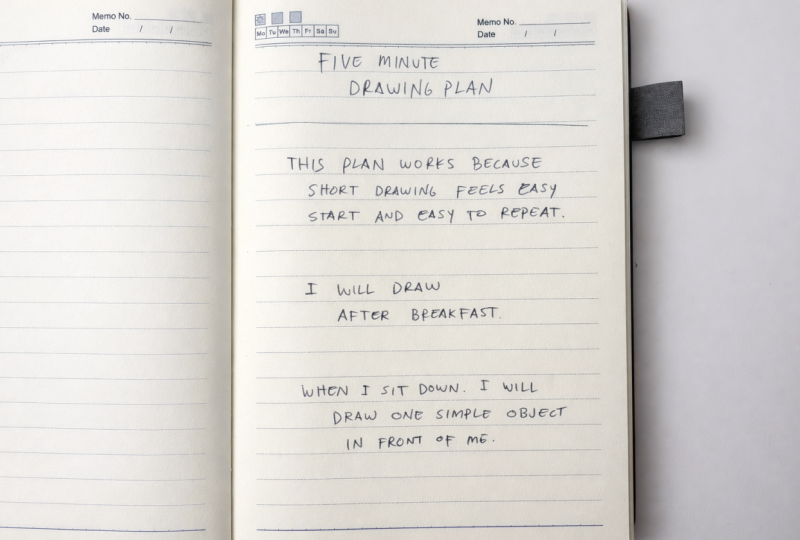
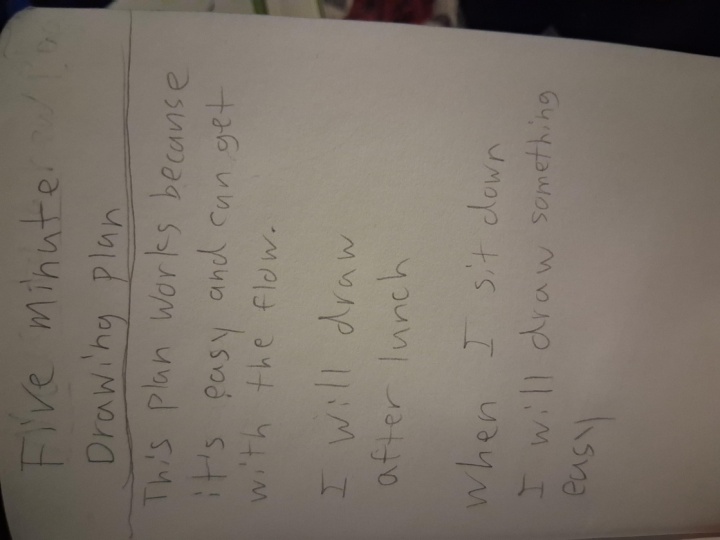
five minute drawing plan. This plan works because short drawing feels easy to
start and easy to repeat. I will draw after breakfast. When I sit down, I will draw one simple object
in front of me. That is the full project. You started by short
practice works. Then you choose one
gentle time in your day. Finally, you decided on an easy drawing action that
feels safe to return to. This works because
it removes pressure and replaces it with clarity. Completion matters
more than length here. To submit your project, upload one clear photo or screenshot of
your written plan. Add the project title and short description saying
when you plan to draw. The best time to upload is right after you
finish writing it. Do not wait for it
to feel perfect. Simple and honest is enough. Most students upload
quick imperfect plans. That is expected. This space is for
practice not performance. Once you upload, you are done. You completed the whole process.
8. Clear Common Questions About Daily Drawing Plans : You made it through
the whole process. It is normal if you have a
few questions pop up now. First question. What
if I miss a day? That happens to everyone. If you miss a day, you simply return to your plan
the next time. Short plans works because
they are easy to restart. You are not behind. You are just continuing.
Second question. Can I change my plan later? Yes, if your day changes, you can adjust the time
or drawing action. The structure stays the same. This plan supports real life, not a fixed rule. Third question. What if
my drawing feels bad? That is completely normal. The plan is not about quality. It is about showing up. If you sit down and
move your pencil, the plan is working. Here is a small tip that helps. If drawing feels heavy, remind yourself that stopping after a few minutes is allowed. That permission keeps
the habit alive. Over time, these small returns build confidence without force.
9. Keep Drawing Small and Keep Going: You did it. You created a simple daily drawing
plan from start to finish. That is something
to be proud of. You learned how short
practice removes pressure. How choosing one gentle
time helps you begin, and how keeping the task
easy makes it repeatable. If there's one thing I hope you take with
you, it is this. Drawing does not need
to be big to matter. I believe small
steps done kindly, create the strongest habits. You prove that today. A simple way to
remember this flow is the word easy easy time, easy task, easy return. That is what you build. It is interesting
how something so small can feel so relieving. Sometimes the quiet changes
are the ones that last. Thank you for being here today. When you're ready,
aplod your project. The best time is right
now while it is fresh. If you found this helpful, leaving a review means a lot. It helps me grow
as a teacher and helps other beginners
find this lesson. If questions come up, that
is normal, feel free to ask. Take a moment to notice
how your mindset shifted from pressure
to possibility. That is a real progress. I will see you as you continue forward one calm step at a time.
 Paul Nene, Helping beginners take action