Transcripts
1. Intro : Hello everybody is Stella here. Welcome back to my class. Today we're going to talk about
something very important, which is, what is a
design tech pack? Who uses it? Why do we use it? How do we use it? Most importantly, what is a good tip pack
versus a bad one? If you've never seen
a tap had before, go to my other class
where I teach you how to draw a full size tub pack for simple tote
that will be mass producible by any qualify
factory in the world. Alright, let's get started.
2. What Is A Fashion Design Tech Pack: So what is the tip pack? Essentially, it's a design
blueprint for mass production. In life. As we all know, when we want to build anything such as a house, we need a architectural
blueprint that tells the architect and the
contractors how to build it. When you try to cook anything, you need to have a recipe
unless you memorize. That tells you what
ingredients to use and how much to use a four. And then, let's say creating
this amazing gourmet soup. So essentially a tech pack is that it's an architectural
blueprint that we use in the fashion world to
create and produce handbags, shoes, jewelries, anything pretty much at
this point under the sun. So right in front of you is a diagram that shows the
thought and creative process. We start with some
kind of inspiration. It can literally be a
flash of lightning you had yesterday when
you were dreaming. Or it can also be, you will inspire by somebody else's design but you
decide, uh, you know what, I wanted to take a further, please don't ever copy
people. Make it your own. Okay, that's the mark
of a good designer. Now from this point forward, what do we do as a
creative person? We pick up a pencil and paper, we start drawing it
out, sketching it out. Most of us can do both
hand sketches and cat. In case you don't know. Cat means computer assisted design is the industry standard
to do it in Illustrator. At this point, some companies, they do ask their designer
to do it in Photoshop. But I will say 80% of
the company expect you to learn how to do
this in Illustrator. In later classes, I will
teach you specifically how to do this in Illustrator if
you don't know how to do it. Alright, coming back to this. So you had an inspiration.
You put it down. Let's say this is a sketch that you're very confident about. You are willing to
stand behind it. You show it to the
rest of the team. They love it. They're ready to rock and roll. Now what can you just
send this cat to them? I expect him to figure
out how to build it, how to cost it, how to produce it,
mass-producing. We're not talking
about ten pieces. We're talking about
300, 505,000 pieces. No, not enough. You had to break every
single element that you see that makes up this one
is Sasha multi push it. You had to break it down into digestible modules like this. And this is your tech pack. We sometimes call it
specking or spec, which literally
means specification. In a tub pack, you need to show people
all the different views of the same product so that the factory can figure out
how to create patterns, how to sew it together, how to construct it together. You need to show all
the hardware pieces that either your company needs to spend money to tour for nothing or they can
buy from the market. You also need to show
the measurements, which is so important and how big is this bag going to be? Don't be surprised, a lot of designers measurements
are always wrong. And after all of that, you had to make sure you draw this, especially for handbags. You draw this to scale. So if the bag is
nine by 12 inch, you need to draw a
nine by 12 inch. That's how big your
file is gonna be, because it will be
a lot easier and 100% accurate for the
factory to combat was costing for the
factory to combat with accurate sample That's
like 90% finished. You just had to make little
tweaks to make it perfect. You're in luck. Today's class
actually comes with a digital downloadable PDF of this presentation I'm
currently presenting to you. So feel free to
download it and study it while listening to
my little lecture. Alright, let's move
on to the next part.
3. Good Tech Pack VS. Bad Tech Pack: Now you know what
a tech pack is. I would like to begin
with showing you what a bad hip pack
really looks like. If you look at the
sketch on top, literally, don't be surprised. We still get tub pack like this by professional designers where the zero information listed to communicate the below to the factories such as the
size that it was sizes, I have absolutely no idea. What is the material,
what is the color? What are the hardware pieces
I'm supposed to purchase or, or create voting for? And how do I even constructors
like I see a circle. But my sewing this inside out? Or am I using web search? What is it? I cannot tell. Honestly, this type
of sketch is neither unqualified to be
called a tap pat is just illegible sketch, if I may be perfectly honest. In reality, this is what
we expect at the bottom, you show the concept cat. On page one, you show
it to the factory. Then starting with page two, you break everything down
into individual modules. The top handle, the front view, the backfill, the side view. These are the perforation, the little p hose where
the factory can do with stitching because we notice they are which
stitching is over. This is the actual law right over here and the
cross body strap, the bottom view, etc. So essentially the problem
with a bath tub pack is that it creates
design inefficiencies, which basically equates
too expensive chaos. I cannot stress this enough. What you are seeing
in front of you or to actual hand-drawn type packs. Nothing wrong was
hand-drawn type acts being submitted for final
production or actually naive. And they didn't even
go that far for sampling almost right
off the bag sizes. Proportions were huge problems. When you draw by hand, you had to really train yourself to draw
everything proportional. You can see this three-quarter
view is already skewed. You can also see the
top handles are way too skinny compared to
the rest of the bag. And when you have sizing
and proportional issues, you basically are forcing the factory to
create many, many, many rounds of samples to get it right around cost you money, like we're talking
about lots of money. Labor costs, material
costs, and shipping costs. Don't forget, most of
the factories are not located in the United
States anymore. The strap, beautiful, fancy design with a whole range
followed by a buckle. Perfect. It tells me the
factory needs to cut the leather at 1 " in width. Okay, fine. It's telling me
this oval circle, we need to source
something that's inches, three eighths by three-quarter
right off the back. I can tell you a lot of times either we don't find
the exact size, so we had to change the width
of the strap or the strap with the not take into account how sick the leather
is to begin with. So even if 1 " is less than
one and three-eighths, if we enter using less, let's say a cow high, it might still be a bit
too thick to go through. You see how tiny the inner
width of this Oval ring is. This hardware sits directly on top of the two
pieces I'll straps, and it is the same
width at the strap. Over here it shows you it is not the same width.
Right off the back. You are forcing a factory to figure out what
do you want me to find this law that's exactly
the same size as the strap? Or do you actually want me
to find a lot of slightly smaller than the stroke
width right on the back. That's a huge problem.
At this point. You are basically providing
either the wrong information or incomplete or very hard
to reconstruction details. You are creating communication
issues with the factory. And at this point,
again, factories 80, 90% of them having overseas
for the last 30 years, English is not their
first language. And with a tech pack like this, they will really struggled to understand what is
it that you want. And next thing you know,
you end up losing time, having to go back and forth
needlessly to figure out, well, is this what
you want for us? This is how you want
versus is this what you want on and on and on. And the worst thing is
what I've experienced, very well experienced
factory and pattern make. And when they see a
step back like this, they know you don t
know what you're doing. They just know
when that happens. Many of them, in order to save time and money on their par, they will start
calling the shots. They will interpret
your tip back. However, they want, completely
disregarding the EU, the designer, your vision and whatever it is that you're
trying to convey through this. Again, I'm showing you a tip
packs of two different bags, but this is the same
thought process going through all the factories
producing for jewelry, for, producing for shoes, producing for anything
under the sun.
4. Summary & Advantages Of Using A Good Tech Pack: Now you have seen
what a bathtub hat looks like and the
chaos it can create. Let's talk about the advantages of creating a good tip hack. These three images are
screenshots from Tampa. I did myself of a mini chain cross body or super cute with a good tip path. The first thing you need
to see right off the back, especially for
handbags, is smaller. The goods that is
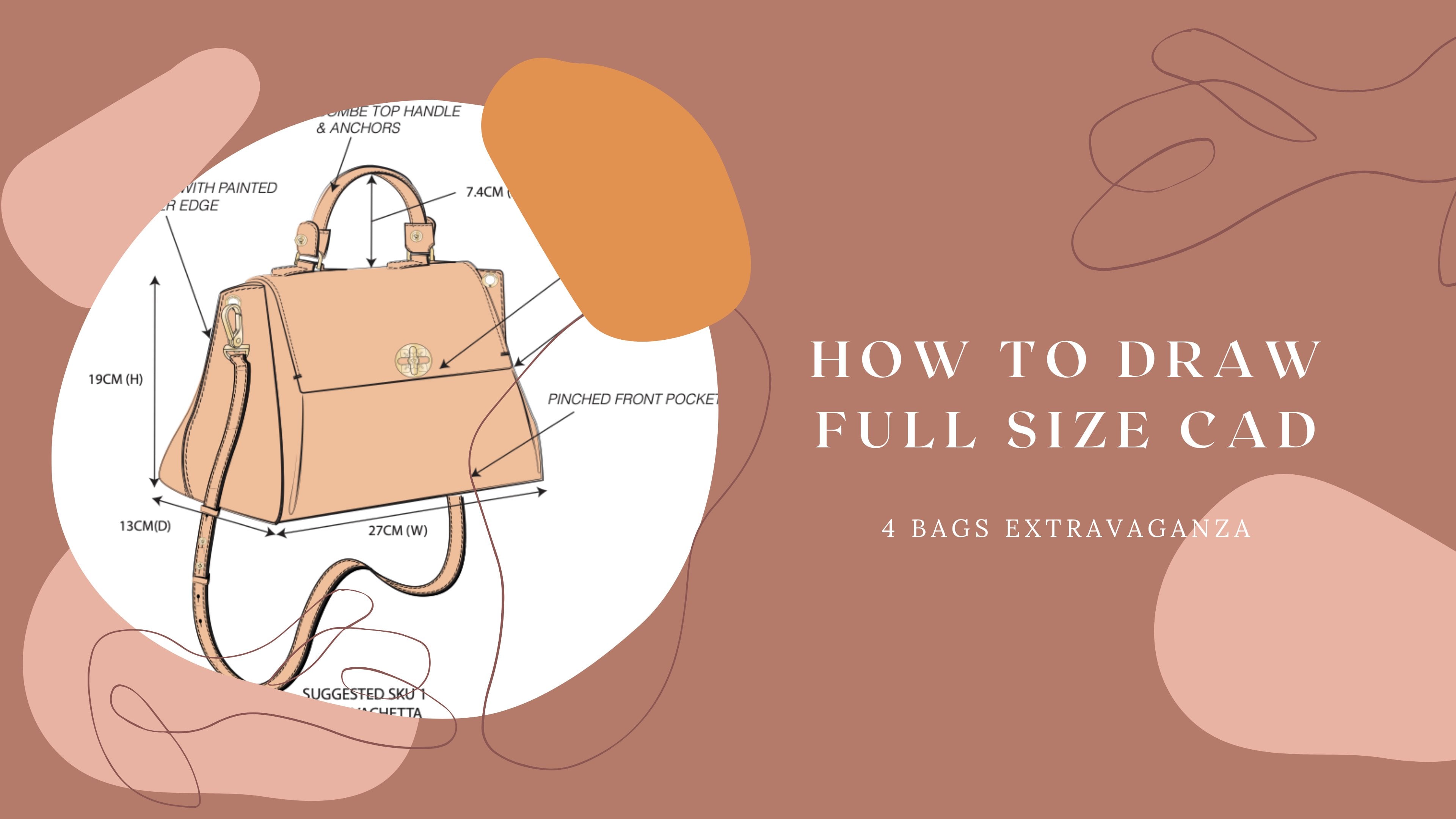
drawn full-sized, I'm talking about
one-to-one ratio. If this bag is, let's say 6 " in height
by 10 " in width. That's exactly how big
I need to draw it. Think about this wheezy week. If nobody ever
heard of this term, it basically means what
you see is what you get when you draw exactly
the size you need, what the pattern maker
will do on a factory site. They will print it out
exactly the size it is. I have seen them do this. They will literally grab
their own drafting paper, put it on top of your Top Hat, trace out the shape and
start creating pieces. I'll paper patterns, fun There. It is such an accurate process. It saves them all the time
and energy and guess what? Essentially saving
you on labor cost. So right off the back, drawing this one-to-one ratio
is very important. And just to clarify, why do I keep saying
it's especially important for handbags and smaller as it goes to
be drawn full size. In case you haven't notice bags, a small leather goods. They don't come with
standard sizes. Literally. Like the sun, the
moon is the limit. I mean, think about Lee's, those tiny little mini bad that's like the size
of her palm, is. Think about the ginormous
Balenciaga shopping bag. As long as we can put us through the sewing machine size
is in your imagination. As a result, we don't have a
size guideline for handbags. We can have a range of
sizes we tried to stick to. It is not standardized. Unlike footwear. Footwear has completely
standardized. Apparel is standardized. We know life was
size six versus a, how much we need
to give and take. Same thing with shoes, but now for bags and not for small leather goods,
even jewelry pieces. We know. Okay. If it's going to
come down the neck, that's about 12 inch
versus nine inch. If it's a choker,
it's even shorter. Yada, yada, yada,
you get a point. Now the second most important
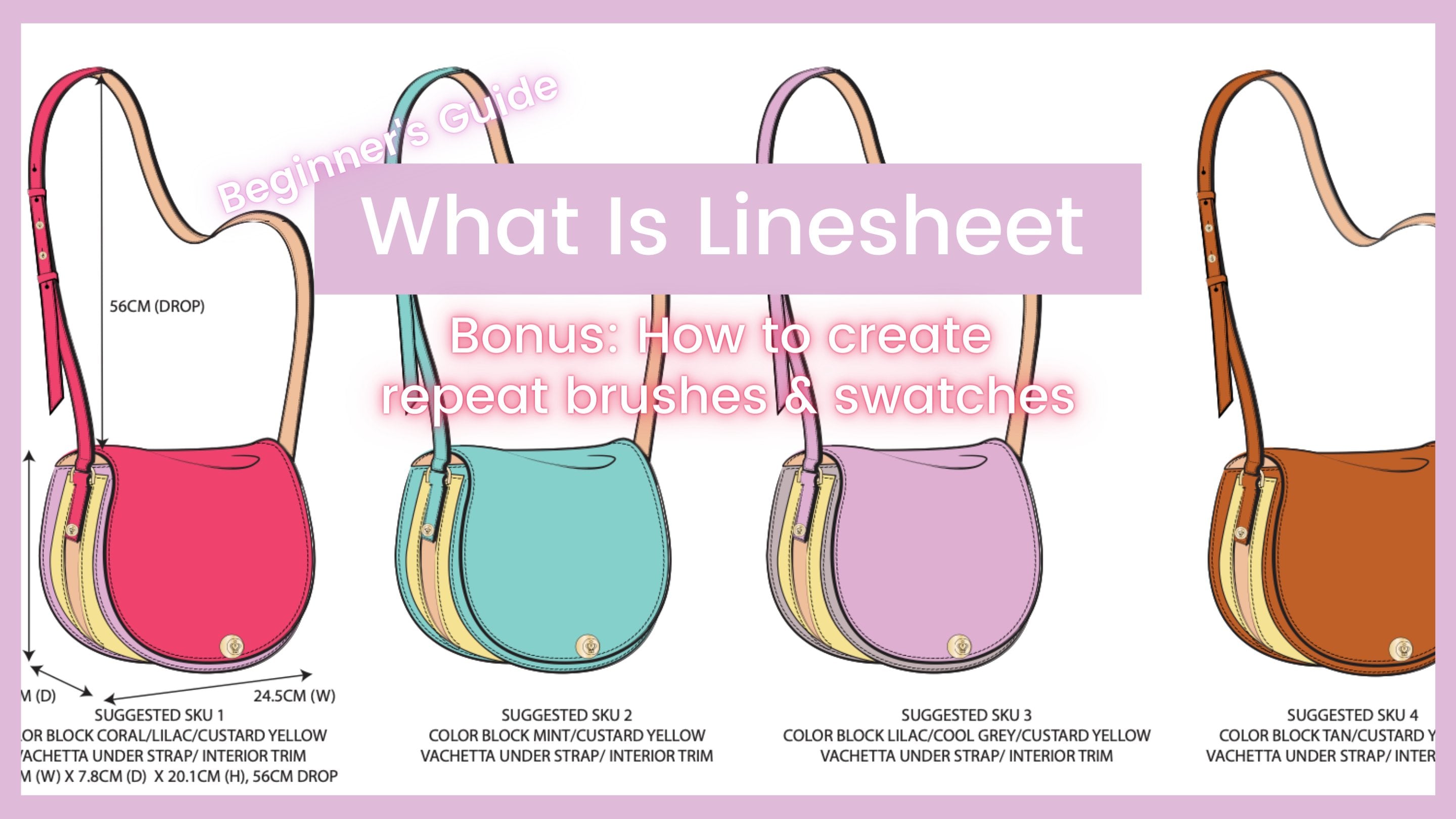
feature you need to see in a tech pack is actually what I call the color chart that showcases your concept cat. For most MIT tier, like contemporary mid
tier two luxury brands, they do expect
designers to create concept cat at its
full size value, sometimes single crunch time. We don't have time to do that, but for the most part, we are expected to do that
just because when you go through rounds and
rounds a meeting with a merchandise and
Tina Production team, we literally print
the concept cat a full-size so everybody
can stitch together, look at the size from
a sharpest point of view from a store display
for now for you to decide, does that even make sense? So, yes, you will have a color chart and
usually personally, I like to put it on page one because this is when a pattern
maker will refer back to, okay, So the finished look is
supposed to look like this. Then he or she will
go to page two when everything is broken
down into modules or individual views
and constructions. Now the third most
important part, elements that should be included in any good ToolPak is BOM. If you've never heard
of it, it literally means bills of materials. This is where you need
to list out everything, every single raw material you
need to create this back. I'm talking about leather,
the body material. Are we using leather? I will use a nylon.
What are we using? We even write down the
materials article number assigned by the raw material
factory or supplier. What about the interior? Are we using lining or not aligning our using
all trusts way? Are we using All microfiber? You had to list everything down and the type of hardware
like the twist chain. But a little, I don't
know if you can see this. Pink starts the big, I think that's around magnet. I can't remember
what I assign it. Yeah. Everything. Yes. It wasn't
magnet and the D-ring on the side hooking up
to the twisted che. Every single hardware pieces
needed to meet this bag. What it is needs to be listed. What about the stitching? What about the edge paint? Everything needs
to be listed b0m. And I usually separate out the hardware key because
in case you don't know, handbags is probably the
only non jewelry category are products that use excessive, at least in my opinion, excessive amount of hardware. So usually the BOM gets so long, I separate out the
hardware by itself and I create something
called the hardware key. In the next class, I'm actually going to go into detail about how to
create a hardware key, the BLM, the color chart, and put it on your
Illustrator file. But this is only
for you to know. The elements needed, the features needed
on a good Tap pack. So the point of doing
the BOM, the hierarchy, even the color chart to show the faculty to finish
work really is to help the factory to calculate
what we call the first cost, your cost of goods, how much it would
cost you to create this bag without having
to make a sample. Let me just repeat that
because it's so important. When you're tapped
pack is so detailed. Showing you all the
informations from color, chalk, concept cat to your
bill of materials, to your heart where key, and it is drawn up to scale. You are literally giving
every single information you can think of to the factory
for them to estimate. Very accurate first cost or your cost of goods
of how much it will cause you to make this one single product without
having to make a sample. So if handbag design
is brand new to you, or even footwear design, we usually don't receive the first cost until after we
received our first sample. The running joke
has always been, I fall in love with addressed. I cannot afford. So now imagine we're making a bag
that we don't even know how much it will cost
us until we receive the first sample just to learn that we cannot
afford anything. And it happened way too often simply because
these type of bad tech packs
were being sent to the factory over and
over and over again. It got to a point
where they just overestimate everything
in events to cover for all the mistakes that they know the factory
knows what happened because the tap X is so
inaccurately done with a very good tip pack
because everything is so accurately
create a for them. When a good factory receive it, they really can give you accurate first cost without
even having to make a sample. I myself have worked with at least five factories
who have done it. And it's saved as so
much time and energy. I remember sending this tap back over and literally the
pattern maker will sell out. You might think, I have too
many rivets on the side. So they literally told
me to can you just take our four take off or it's going to make a cost difference. I I take it off
and I redesigned, realigned or remaining pyramid
rivets along the side, coming down the side of the bag. And I think that saved me. But pretty capacity at least. So that was great. Now, let's talk about
material detail. When you do something, when you draw
something so accurate, you show them exactly
what a POC is. You show them the spinal
curvature of the flap over here. You show them where you're
going to put the hot wire, what type of fellows
to include and where fillers are
those materials. So you don't see on the
outside of the bag, it is literally so in-between
two layers of letters. So you will never see it,
but you will feel it. You know how bad? It just has such a
good health field. I really plush, very
soulful, very hard. Basically, that's the
type of filler that we add inside the leather
behind a linings. So you will never see a
filler materials costs money. When you do something
very accurately. Obviously, this is
a structure bear the factory right on
back. Well, no. Okay. Well, this will require filling material to prop it
up so it's structure, so it's hard, it's not soft, it doesn't collapse onto itself. And it will also, the factor
will be able to give you an estimate before you
commit to a sample that up. Now, the next important thing is when you draw
anything full-size, like I said before, they're able to literally print it out. And the pattern maker
will be able to create the paper patterns based on your full-size drawing. It will also be
able to calculate your material consumption
based on for size, measurements and
total hardware use. Again, this is coming
back to the cause. A good tip pack is
going to give you a really accurate
as many cars yes. Plus or minus, there's always
gonna be certain degree of inaccuracy just because
raw material prices change every six months now. But that's not
because of what you did wrong or what
the factory to run. That's simply the raw material
market and how they work, fluctuating prices,
how to deal with, but at least on you and
you cover your part, you give them very
accurate measurements was something is literally spelled out like this for the factory, your labor costs can be calculated much, much
more accurately. Remember, you pay not just
for the cost of goods, you also have to pay for the
labor that it would take a factory worker to
create your products. So they will evaluate
the complexity or the simplicity of
your construction based on the detail you
provide in your tech pack. And then they will
estimate how much time for one single worker to
cut and sew your bag. They will break down everything into individual steps that a factory worker will
have to go through to actually complete
one single back, let's say per hour, 30 min
per day post three days. And that is the labor costs. That's how they calculate
the labor costs. How many steps, how
much time would it take one single factory worker to complete this one single design? I will go into more
detail explaining this whole production
process when we get into the production
class in the future. So stay tuned. Now, last but not least, a good tip pack you can
actually sell on paper. What do I mean by that? So remember, I keep harping
about some companies. Actually, a lot of companies
nowadays require you to do the concept cat,
a full-size value. Why do they do that? Because they actually start the selling process just by showing people
this piece of paper. They might print it on
better fine art paper stock. They print it out
as false as value. They cut it like almost
a piece of cardboard. They show it to the
buyers, say, Hey, these are the styles that we want to commit to
for next season. What do you think? Do you like it in silver, patent leather or shall
we change it to blue? And I have seen many bias
literally sit there flipping through these paper cutout bags or shoes or whatever and say, oh, maybe I'll take
this versus that, not even making this up. So essentially a streamline, the communication
between design, merchandising, sales and
production team and on the snow, I had to say your tap PAP
has a life of its own once it gets out of your hand when you
finished a tech pack, you not only issue
it to your factory, most of the time you issue
to your merchandising team, your production team than one of them will issue a
to the factory on your behalf because they had
to review this with your first before the
factory get to see it because they
may even ask you, take out the rivers
that just too many or we don't like
this linked chain. Can you change it to something else, et cetera, et cetera? And I found there
they issue it to the factory and then they
also issue it to the sale. So this one single piece of
document needs to contain as much information as possible for the
rest of the teams. The design merchandises,
sales production into factory to make it
happen in real life.
 Stella Chang, Retired Handbag Design Director