Transcripts
1. Start Your Morning Without Feeling Rushed: Mornings can feel
messy and wash, and usually it doesn't
start with something big. It starts small. An alarm, a thought, a tiny
sense of pressure. You wake up already behind, and your mind starts running before your feet
touch the floor. Almost like your brain woke
up earlier than your body. If that's you, you're not doing anything wrong. This
is very common. And honestly, it happens to
more people than you think. So let's slow this
down together. Today, we're taking one
small step to change that. Not a full reset, not a life overhaul, just one small shift, nothing extreme, nothing fancy. Just a simple way to start
your day more smoothly. Kind that feels realistic, even on busy days. You don't need to
wake up earlier. You don't need a
perfect routine. You don't need
motivation, either. You just need a calm
starting point. Something steady to
lean on. I'm Paul. I help beginners build
simple habits in a clear, gentle way so life
feels more manageable. I teach this because I've
been on the other side of it. I used to wake up and
immediately check my phone, rush breakfast and feel tense before the
day even started. Sometimes nothing bad
even happened yet, but my body already
felt stressed. I didn't like how that felt. I wanted mornings that felt
steady instead of stressful, just calmer ones, and that's
why this class exists. This class is for
beginners who want a smoother start to the
day without pressure, no rules, no guilt. In this class, you'll build one simple morning routine
you can finish today. A someday today. We'll do it slowly step by step, and I'll stay with
you the whole day. This class is not for
advanced productivity systems or strict schedules. If you already love
complex routines, this may feel too
simple, and that's okay. It's for beginners who
want relief, not rules. You'll need one simple material. A single piece of paper or
a notebook page, that's it. No apps, no tools, no setup. By the end, you'll have
calm morning routine written in plain words
that you can use tomorrow. Even if tomorrow is busy, even if tomorrow is not perfect, we'll go step by step, and each step will feel light. So before we move
on, take one breath, you're not behind, you're start.
2. Understand Why Mornings Feel Overwhelming: Many mornings feel hard because too many decisions
happen at once, and most of those
decisions happen silently in your head.
What should I do first? What should I not
forget? What's urgent? Those questions
stack up quickly. And when they stack,
pressure follows. That pressure creates stress
before the day even begins. Not because the day is hard, but because the
start feels unclear. The simple idea we'll
use today is this, reduce decisions by choosing a few steady actions
ahead of time. That's it. No has, no tricks. A morning routine is
not about doing more, and this part is important. It's about doing
less on purpose, less thinking, less guessing. The idea broken
into simple parts. First, mornings work better when you start with order
instead of reaction. Not reacting to messages, not reacting to thoughts. Second, comes from repeating
a few familiar actions. Your body likes knowing
what comes next. Third, writing things downs help your mind relax because
once it's on paper, your brain doesn't have
to hold it anymore. For example, if you already know what your first
few minutes look like, you don't have to think so much. Your body just follows along. And when your body feels steady, your mind usually follows. Today's methods has
three gentle steps. Nothing hidden,
nothing complicated. First, we choose a
calm starting moment. Second, we add one steady task. Third, we connect it
into a simple flow. This works because your
brain likes predictability. Even a small plan can make
a big emotional difference. So as we move forward,
keep this in mind. We're not building a routine
to control your day. We're building one
to support it. Now, let's start
building this together.
3. Choose a Calm First Moment: Mornings feel rush when they
start without direction. And if you're ever
woken up and felt scattered right
away, that's normal. It doesn't mean
you're disorganized. It just means your morning has no anchor yet. So
let's create one. Let's start with
one simple step. All you need is one piece of
paper or one notebook page. If you don't have that,
any Notes app works too. Use whatever you have right now. And just to be clear, this is not about having the right tool. It's about starting. When I started, I used a scrap
piece of paper on my desk. Nothing special. Sometimes it even had an old
notes on the back. Now, do this slowly. Step one, write a simple
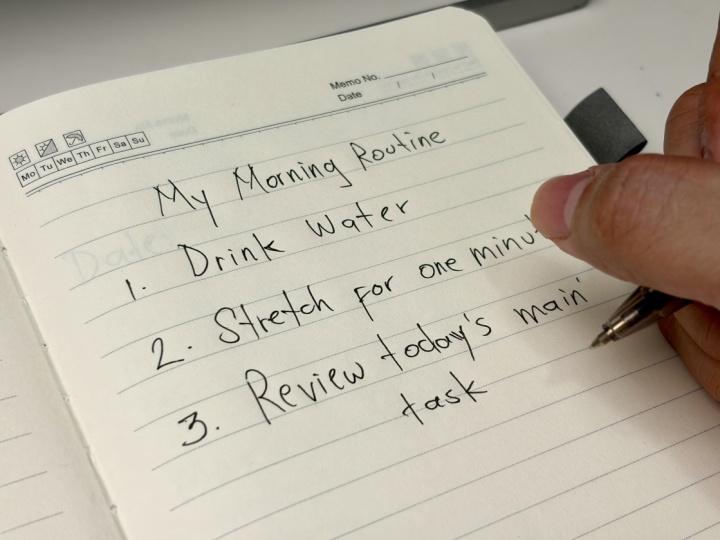
title at the top. My morning routine. Pause for a second after you write it. Let it sit there. Step two. Under it, write number one. Step three. Next to the number, write one calm action
you already do. Something easy,
something familiar. For example, drink water. Step four, stop there. And, yes, I really mean stop. Step five, look at what you wrote and notice
how simple it is. The first step matters because it creates a calm
starting point. You're not changing
your whole morning. You're just choosing
how it begins, and that alone can
feel grounding. Even one clear action is a win. Even this counts.
That's your base. You've already started, and starting gently is
the hardest part. Next, we'll gently add.
4. Add One Steady Follow-Up Step: Sometimes morning fall apart because there's no
follow through. You start one thing,
then jump to another, not because you're distracted, but because nothing
is connected yet. So let's connect one more piece. Let's add one steady step. Look at the same paper, do not change what
you already wrote. That part matters. We
build on what's working. Now, continue slowly. Step one, write the number two
below the first line. Step two, add one simple task that feels natural
after the first, not impressive, just natural. For example, stretch
for 1 minute. Step three, keep the
words short and clear. If it feels heavy, simplify it. Step four, read both steps
together from top to bottom. Step five, notice how
they feel connected. I added this, my morning
started to feel less chaotic. I wasn't guessing anymore. I was following a gentle path,
and that's the difference. You're not building a schedule. You're building a rhythm, and rhythms are easier
to follow than plans. Two steps are enough for now. More would be too much. You're doing great. Next, we'll complete the routine
in a calm, reassuring.
5. Connect Everything Into One Gentle Flow: Mornings become smoother when
everything feels connected, and this is where it
all comes together. You are already doing well. There's nothing to
fix, only to finish. Now, we'll complete this slowly. Step one, write the number
three under your second step. Step two, add one simple action that helps you transition
into your day, something that gently
points you forward. For example, review
today's main task. Step three, read all three
steps out loud softly. You don't have to perform
it, just hear it. Step four, imagine doing them tomorrow morning
at a relaxed pace. No perfectly, just calmly. Step five, adjust the
wording if it feels heavy. Lighter is better. This final step turns
separate actions into a flow before
mornings felt random. Now they feel guided. You did not add pressure, you added clarity, and clarity feels calmer
than motivation. This routine doesn't
need to be perfect. It just needs to exist. You have completed
the full process, and that's something
to feel good about. Take a moment
there. You earn it.
6. Build and Share Your Simple Morning Routine: Your project is one
completed morning routine written on a single page. This is the same page you've been working on the whole time. No changes, no upgrades. You'll use the same paper
you worked on in the demos. Here it looks step by step. So here's the final
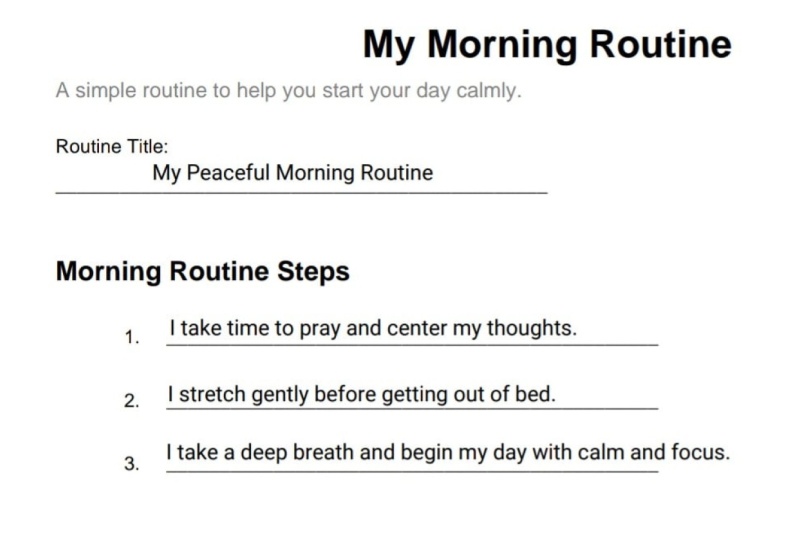
completed version. My morning routine, drink water, stretch for 1 minute,
review today's main task. That's the full project,
and that's enough. This is the exact structure you'll upload. No tras needed. Create it when you feel calm. Morning or evening, both work. To upload, take one
photo or screenshot at a simple title like
my calm morning routine. You can use these
descriptions if you want. This is my simple
morning routine to help me start the day calmly. Keep it simple. Imperfect
is perfect here. Once it's uploaded, you're done.
7. Common Questions Beginners Ask: Finish all the steps. That alone deserves a pause. That's something to be proud of. It's also normal to still have few questions. That's
part of learning. One common question is, what if I miss a day? Well, that's okay. If you miss a day, just
return to step one the next morning because consistency
grows from restarting gently. Another question is, can
I change the steps later? Yes, if something stops working, you can adjust the words because the structure
stays the same. And the third question is, what if my mornings are
unpredictable? Then keep the actions
very small because small routines survive
busy days better. One helpful tip is this. If mornings feel heavy, read the routine before bed because familiarity
makes morning easier. You're not behind. You're
learning what works for you.
8. Keep Your Mornings Simple and Steady: Congratulations. You build
a full morning routine from start to finish, not in theory, in real life. You've learned how to
turn rush mornings into calmer ones using just
three simple steps. If there's one thing I hope you take from this
class, it's this. Clarity feels better
than control. You showed yourself that
small actions are enough, and that's a powerful
thing to learn. My personal belief is this. Calm mornings change how
the whole day feels, not by force, but by support. You don't need discipline. You need kindness
toward yourself. Here's the simple shortcut
you've been using all along. Start small, add
gently, then connect. And now it probably makes sense why everything
felt so manageable. Well, thank you for
being here today. When you're ready,
upload your project, and the version is welcome. If you enjoy this class, leaving a review helps other beginners find
a calmer start, too. If you have questions that's completely normal,
feel free to ask. You started this
class feeling rush. You're living with something
steady in your hands. That matters. And if you'd like to keep
building from here, the next class will help you carry this column into
your rest of your day. Thank you for taking this class. I'll see you in the next lesson.