Transcripts
1. Reset Your Week When Everything Feels Messy and Overwhelming : If your week often starts
with good intentions and then slowly fall apart,
you're not alone. Many beginners feel like
time just slips away. And by the end of the week, there's a quiet
stress that says, I should have done better. That feeling can be heavy. It can make you want to
avoid planning altogether. If that's you, take a breath. You don't need to
fix your whole life. You just need one
small reset that makes the next
week feel lighter. And you can do that in
a few calm minutes. While you're here, we'll take
one simple step together. You'll see that you are already capable of more clarity
than you think. Small wins count,
and even showing up right now is one
of them. I'm Paul. I help beginners learn simple, practical skills
so they can feel calmer and more confident
in their daily routines. I used to end every
week feeling behind, frustrated, and unsure
where my time went. I tried complicated planners
and strict systems, and they only made
me feel worse. What finally helped me was
learning how to gentle clothes one week before
starting the next, not perfectly, just
honesty and simply. That's why I enjoy
teaching this routine. It's kind, realistic, and it works even when life is busy. Here, we'll focus on
one easy weekly reset. You can repeat again and again. This is for beginners who want less overwhelm and more clarity. If you already love
complex planning systems, this may feel very basic, but if you want something calm, doable and steady, you
are in the right place. You don't need special tools. You don't need to be
organized already. As we go, I'll walk you through each part slowly
with real examples. By the end of this, you'll have one clear page that helps you let go of the last week and step into the next
one with ease. Let's move gently
into the next part.
2. Create One Simple Weekly Reset Page : When time feels messy, it often because nothing feels finished,
that can be tiring. So instead of trying
to plan everything, we create one simple page
that helps you reset. The project you'll build
is one weekly reset page. It's just one page where you
write a few short things, nothing fancy, no pressure. You'll beat it slowly as we go, adding one small
piece at a time. All you need is one piece of paper or one blank
page in a Notetap. Use what you already
have a notebook, loose paper, or your
phone notes all work. As we move through this, you'll add a short reflection first, then a short list, and
finally one clear focus. By the end, you'll see
one count page that gently closes the week
and opens the next. You're welcome to pause,
rewind, or just watch first. There's no rush.
The final result is a simple page with
a few lines of writing that you
can finish today. It doesn't need to
be neat or perfect. You're already doing
the right thing by learning a gentler way. Let's talk about the idea
behind why this works.
3. Why a Weekly Reset Makes Time Feel Lighter : When beginners
struggle with time. It's usually not because they're
lazy or bad at planning. It's because unfinished
thoughts pile up. Your mind keeps carrying
last week into this week. A weekly reset is simply a way to unload
that mental weight. In simple words, it
helps you notice what happened choose what
matters next and move on. There are three small
ideas behind this. First, your mind relaxes when
things feel acknowledged. Writing one on a sentence about your week helps
you stop replaying it. Second, clarity comes
from choosing less. When you write a short list, you stop trying to
remember everything. Third, focus feels
safer when it's small. Choosing one main focus reduces pressure and
makes starting easier. For example, if last
week fed scattered, then writing a short
reflection helps you let it go because you've noticed
it instead of ignoring it. Here's how this
flows in real life. You look back briefly,
you clear what's noisy, then you gently point
yourself forward. We'll do this in
three simple action. First, you write one
short reflection, then you add a small list. Then finally, you choose one
focus for the next week. This works because it matches how beginners actually
think and feel. It's not about control, it's about calm direction. Let's start with the
first small action.
4. Write One Honest Line to Close the Week : If you usually avoid
looking back at your week because it feels messy,
that makes sense. Looking back can
feel uncomfortable, but we'll do it in the
easiest way possible. You're not fixing anything yet. You're just noticing,
and that alone is a win. Take your paper or open
your notes at the top, write this title
exactly as it is. Weekly Reset page. Now, leave a little
space below it. Under that title,
write this label. Last week felt like no
pause for a second. There is no right answer here. Write one short,
honest sentence. Keep it simple, for
example, you might write. Last week felt like busy
and a bit scattered, or you might write last week felt like heavy but productive. That's it. One line. When I first did this, I thought it was too
simple to matter, but it helped me feel
seen by my own page. It was like quietly saying
yes, that's what it was. If you feel relief right
now, that's normal. If you feel nothing,
that's also okay. You've still
completed something. This small line
helps close the week gently instead of
dragging it forward. Take a breath. You've
already started your reset. Let's add the next small piece.
5. Write a Short List to Clear Your Head : Sometimes the stress
is not emotional. It's a mental clutter. Thoughts floating around
with nowhere to land. If your head feels full, you don't need to
organize everything. You just need to
place it somewhere. Below your first line,
leave a little space, then write this label. Things still on my mind. Now, write three short
items, no more than three. Keep them short and real. For example, you might write
things still on my mind. Reply to one email, Laundry I didn't finish that
appointment I need to book. Write what's true for you. These are not tasks
you must do right now. They are thoughts you
are tired of holding. I used to write long
lists and feel overwhelm. Limiting it to three help me feel lighter instead
of pressured. Now, once you've written them, stop. Don't add more. Trust that this is
enough for today. Notice how your mind feels
after putting these down. Even a small release counts. Now, your page is
already doing its job. It's holding things,
so you don't have to. Let's gently complete the page.
6. Choose One Calm Focus for the Next Week : Choosing what matters
can feel scary. Beginners often worry
about choosing wrong. So we'll keep this kind small. Below your list, leave a little space, then
write this label. Main focus for next week. This is not a goal list. It's one gentle direction. Right, one short phrase, something that feels
supportive, not demanding. For example, you might write
main focus for next week, finish one small task each day. Or main focus for next
week, keep mornings slow. When I started doing this, I noticed I stopped
trying to do everything. I just checked in
with this one line. If you feel unsure, that's okay. Choose what feels
relieving, not impressive. This is the calmst
part of the process. There's no rush, Let the
words come naturally. Now, look at your whole page. You didn't plan
your entire life. You simply close one
week and open the next. Before the week may
have felt noisy. Now it feels named, lighter, and pointed
gently forward. You have completed
the full reset. Take a quiet moment
to let that sink in.
7. See the Finished Weekly Reset Page: Let's walk through
the full page from top to bottom so you
can see it clearly. The project is one
weekly Reset page created using one piece of
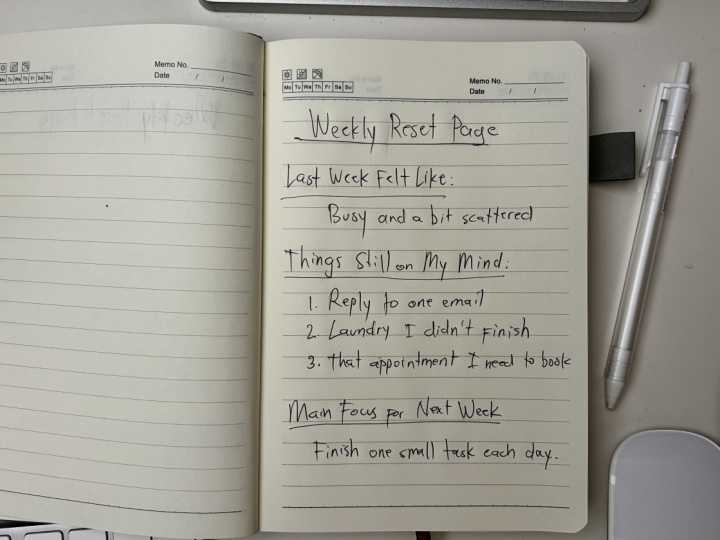
paper or one notes page. At the top, the title
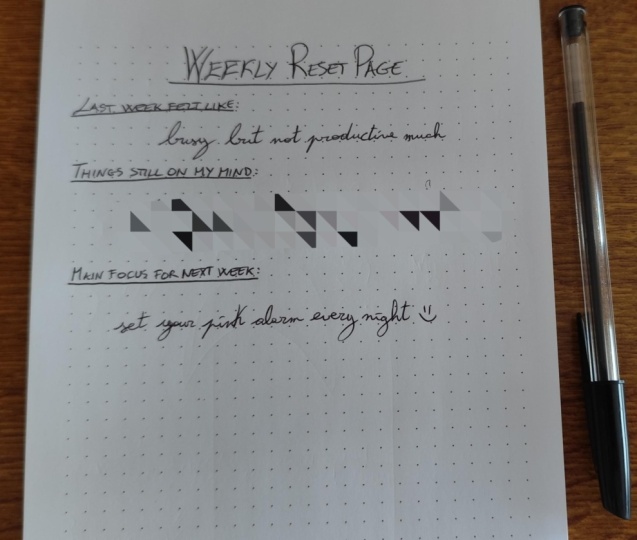
reads weekly Reset page. Below it, the first line says, Last week felt like busy
and a bit scattered. Next, come to the list section. Things still on my mind. Reply to one email, laundry, I didn't finish that
appointment I need to book. At the bottom, the
final line says, main focus for next week, finish one small task each day. That's the full project. Nothing more is needed. This works because it creates closure and direction
without pressure. You finish it quickly, which
builds trust with yourself. When you aplod, you can share a photo or screenshot
of your completed page. And the project title and a short description like my
simple weekly reset page. The best time to create
and upload this is at the end of the week or
the start of a new one. Even a two minute
version is enough. Most people upload
simple imperfect pages. That's expected and welcome. This space is for practice. Once it's done, you've
completed everything. Now, let's answer a
few common questions.
8. Gentle Answers to Common Beginner Questions : You've made it through
all the steps. It's normal to still
have few questions. Question number one. What if I miss a week and
forget to do this? That's completely okay.
If you miss a week, just start again
when you remember. You can write about
the last few days instead of a full week because the page works
anytime you need clarity. Question number two. Can I do this digitally
instead of on paper? Yes, if you prefer nodes on your phone or computer,
that works perfectly. The structure stays
the same because the benefit comes from the
words, not the format. Question number three, What
if my wik feels really bad and I don't want to write about it? That's understandable. In that case, keep the
first line very gentle. Write something like last
week felt like hard. Naming it briefly is often
enough to let it pass. Now, here's a small
tip that helps. If you feel stuck, read
your page out loud once. Hearing it can make it feel
more real and complete. And one more helpful mindset. This page is not about
fixing your week. It's about being kind
enough to close it. Now, let's bring
everything together.
9. Carry This Calm Into Your Next Week : You did it. You created a full weekly reset from start
to finish. That matters. You learn how to look
back with honesty, clear your mind gently, and choose one column focus. You know, have a
simple page that brings clarity without stress. If there's one thing I hope
you take with you, it's this. You don't need more discipline. You need kinder structure. And I believe small, steady routines build
real confidence. This one shows you that you
can reset without pressure. Here's a simple shortcut to
remember this flow N CF. Notice, clear, focus.
When you see it now, it probably feels familiar because that's exactly
what you were doing. You know, many people clean their desk before
starting fresh. But this page is like
doing that for your mind. Thank you for being here today. When you're ready,
upload your project. The best time is right after you finish while it's
still feel fresh. If you enjoy this, leaving
a short review helps other beginners find
something gentle and useful. And if questions come up
later, that's normal. You're always welcome to ask. Be proud of yourself
for choosing clarity. You've already built momentum. As you move into your next week, notice how this one small
page changes how you start. There's more ease ahead and you're already
moving toward it. Thank you for taking the class. I'll see you in the next lesson.
 Paul Nene, Helping beginners take action