Transcripts
1. Start the Evening Without Carrying the Day: Evening can feel heavy, and usually it's not because
something went wrong. It's because everything
finally gets quiet. You finally stop moving, but your mind keeps going. Thoughts about tomorrow show up right when you want to rest. Plants, worries,
little reminders, and sometimes it feels
like your body is tired. Your brain didn't get the memo. If that's you, you're not
doing anything wrong. I want to say that
clearly because a lot of beginners think this means
they're bad at routines. Most beginners feel this way, especially on busy days. Even people who look
organized feel this at night. So today, we're not fixing you. We're just making
evening softer. Today we'll take one
small gentle step, not a big reset, not
a strict system, nothing fancy, nothing heavy. Just a calm way to
reset your evening. So tomorrow feels lighter
before it even starts. And if you're already
feeling a bit tired, just listening to this,
that's okay, too. This class is designed for
that exact moment. I'm Paul. I help beginners build simple routines that feel
kind, not stressful. And I mean that
literally kind routines. The kind you don't
argue with at night. I used to end my days scrolling, worrying, and going to
bed tired, but wired. I tell myself I'd rest
after one more thing, and suddenly it was late. And tomorrow's
already felt heavy. I didn't need better discipline. I didn't need motivation. I needed a softer
ending to the day. That's why I love
this topic because evenings set the emotional
tone for tomorrow, even if we don't realize it yet. This class is for busy beginners who want less overwhelm
and more calm. It's not for advanced
planners or people who love complex systems
and color coded charts. If that's you, you might feel bored here. And that's okay. But if you want
something gentle, something you can
actually finish tonight, you're in
the right place. I'll create one simple evening
page you can finish today. One page, one pen,
one quiet moment. And you'll use the same page
through the whole class. No switching, no upgrading. We'll move slowly step
by step on purpose. And by the end, you'll
have a calm way to close your day without
carrying everything into bed. So before we continue,
take one breath. Nothing to do yet, just arrive. You're in
the right place.
2. Understand Why Evenings Feel So Heavy: Evenings feels hard when your
mind has nowhere to land. During the day, you're busy, responding, you're
moving, you're doing. Then suddenly you stop. And all the thoughts
that we're waiting politely starting lining up. You stop doing, but you
don't stop thinking, and that can make tomorrow
feel bigger than it really is. Heavier, louder. Sometimes it even feels like
tomorrow's already started, even though today is
not finished yet. The simple idea in
this class is this, give your mind a soft place
to rest before sleep. Not a to do list, not a plan for your whole life, a soft place. We'll do that using
one com page. This works because writing changes where your
thoughts live. Instead of bouncing
around in your head, they land somewhere safe. First, writing moves
thoughts out of your head. Second, choosing one small
focus reduces pressure. Third, closing the day gently
helps your body relax. And notice how none of this
is about productivity. It's about relief. For example, if you lie in
bed replaying tomorrow, then writing one
clear note helps because your brain doesn't
have to hold everything. It can finally rest. Here's the flow we'll follow, and I want you to see the
whole picture before we start. First, write a short reflection. Second, add one gentle plan. Third, close with
reassurance. That's it. No extra steps, hiding later. No surprising systems,
simple, slow and kind. And the reason this order
works is because it mirrors how your mind
naturally settles. We'll start by
acknowledging the day, then we'll gently look forward, and finally, we'll
let go. Let's begin.
3. Write One Calm Evening Reflection: So evenings feels messy, not dramatic, messy
in a quiet way. You might feel like the day ran you instead of the
other way around, and that's normal,
especially when you're learning something
new or juggling a lot. You don't need to
fix the whole day. We're not correcting anything. The next small step is just
to write one reflection. For this class, you
only need one material, a single piece of paper or
a notebook page. That's it. If you don't have a notebook
and scrap paper works. You can start with
whatever is near you. I started with the back of old notes, sometimes
even receipt. Simple is enough. And honestly, simple
works better. Here's what to do
slowly. No rush. First, write today's
date at the top. Second, write one sentence
about how they felt. Third, write one
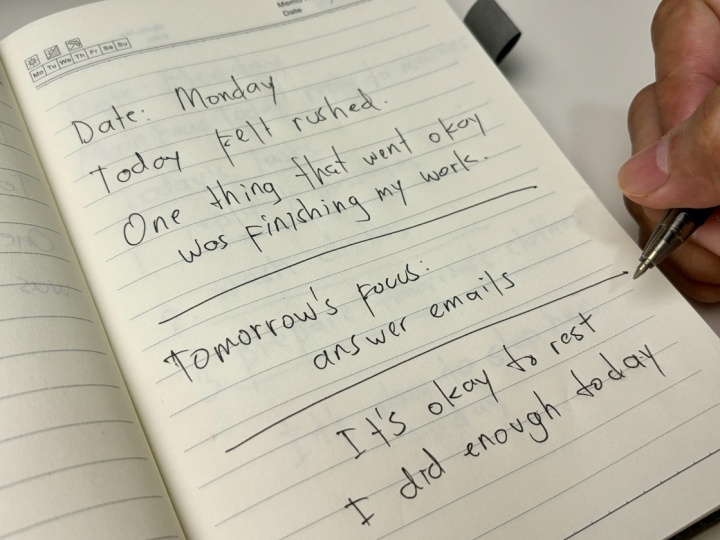
thing that went okay. Fourth, stop there. Yes, stop. That pause matters. For example, you might write. Today felt rushed. One thing that went okay
was finishing my work, no fixing the sentence, no making it sound positive. You're not trying
to be inspiring. You're just being honest. And that honesty is
what makes this work. Notice how your shoulders
feel after writing. If it it's subtle, that
small pause matters. Now, this is your base speech. You've started your
evening reset. You didn't solve
your whole life. You just acknowledged the day, and that's enough for now. Next, we'll add
one gentle layer.
4. Add One Simple Plan for Tomorrow: Sometimes evening
feels stressful because tomorrow feels unclear, not hard, just foggy. Too many tasks,
too many choices, and your mind tries to prepare
for all of them at once. You don't need a full plan. You don't need priorities, just one small anchor. The next step is to add one
simple plan to the same page. Same paper, same
pen, nothing new. Here's how. First, draw a small line under
what you wrote. Second, write tomorrow's focus. Third, write one small
thing you want to do. Fourth, stop. Again, stop on purpose. For example, tomorrow's
focus, answer emails. That's it. Not three things, not a list, just one. If your mind says
that's not enough, you can gently remind it
that this is a soft start, not a full schedule. I used to write long
lists at night. They made sleep worse. This helped me feel
steadier because it gave tomorrow a shape
without pressure. You're doing great, and it feels almost too simple. And
that's a good sign. Your page is already helping
tomorrow feel smaller. Now we'll add a final piece.
5. Close the Day With Reassurance: Even after planning, some
pressure can linger. That doesn't mean
you did it wrong. It just means you're human. This last step is about
letting yourself rest. No effort, no fixing. Stay with the same
page. Nothing changes. Here's the final layer. First, draw another small line. Second, right,
it's okay to rest. Third, one kind
sentence to yourself. Fourth, put the pen down. For example, I did enough
today. That's all. And I know that sentence
can feel strange at first. That's okay, too. This step
brings everything together. You reflected, you
choose one focus. You give yourself
permission to rest. Before, evenings might
have felt tense, like the day never really ended. Now they can feel closed. You don't need to feel perfect. You just need to feel done. Take a breath, you
completed the reset.
6. Complete Your One-Page Evening Reset: Your project is one simple
evening page, nothing more. It helps you close the day
and feel ready for tomorrow. You only need one
piece of paper. Here's how it builds.
First, data at the top, one sentence about
how the day felt, one thing that went okay. Below it tomorrow's focus
with one small task. At the bottom, it's okay to
rest with one tin sentence. Your project title my
Evening reesetPage. So here's an example
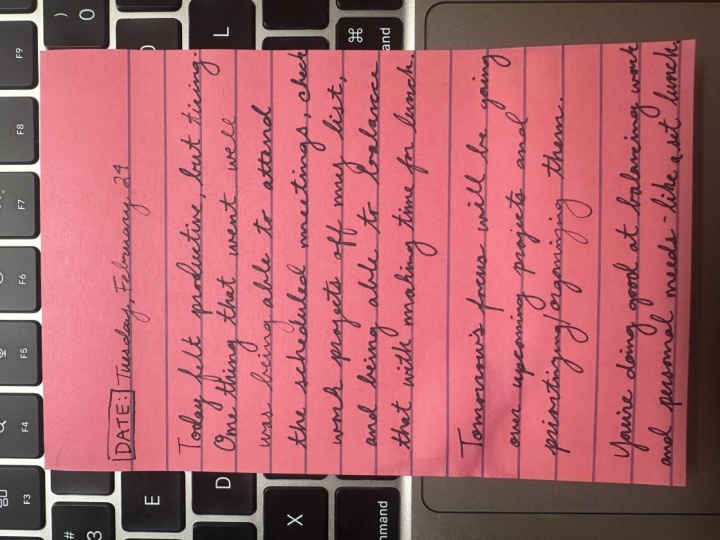
for the date, Monday, to date felt busy. One thing that went okay
was cooking dinner. Tomorrow's focus,
reply to messages. It's okay to rest.
I did enough today. To upload your project, take a photo or screenshot. Add the title. Add a
short description. For example, this is my evening reset page to help
me feel calm before sleep. Keep it simple. Imperfect
is welcome here. Once uploaded, you're done.
7. Feel Confident Using This Reset: You finished all the steps
from start to finish, and it's normal to
still have questions. That just means you care. Here are a few common ones. What if I miss a night?
Well, that's okay. If you miss a night, you
can start again the next evening because the page is meant to support you,
not control you. Another one is, what if my tomorrow focus changes?
Well, that's normal. If it changes, you can
update it the next evening because this reset is about
direction, not perfection. Question. What if writing feels hard? Well,
that's okay, too. If writing feels hard, you can write fewer
words because even one sentence helps
your mind settle, another helpful tip is this. If evenings feel rush, place your notebook
where you usually sit because seeing it
makes starting easier.
8. Finish the Day Feeling Lighter: You did it. You built a gentle evening reset
from start to finish. You learn how to reflect
without pressure, choose one small focus, close the day kindly. If there's one thing I hope
you take from this class, it's that calm comes from
small closure, not big plans. My belief is simple. Small steps done gently, add up. Your shortcut to
remember this is reflect, focus, and rest. Thank you for being here today. Appload your project
when it feels right. Even a quick version counts. If you enjoy this class, leaving a review helps
other beginners find it. Questions are always welcome. You started this
class feeling heavy. You're living with a
softer ending to your day. And that matters. I'll see
you in the next lesson.