Transcripts
1. My Story And Reflections: What the colors are a
translucent medium, often resulting in UB innocent and arterial paintings insensitively portray
the subject matter. That translucent
quality of watercolor lends itself well to paintings
that are atmospheric, nostalgic, and even
other words lead. The aqueous nature
of watercolors accurately captures a
sense of timelessness. For this reason, watercolors are an excellent medium for
depicting natural scenery, such as landscapes
and cityscapes. I love watercolors
for florals, animals, and portraits, as you can
see in my Instagram account. Compared to other most solid medium acrylic based
tools or oils, watercolors appear
to be simultaneously reflecting the light and
project a sense of fluidity. Hi everyone. I am thousand Kapoor
and I have spent the last 20 to 25 years writing and painting and
creating to my heart's content. I published bilingual
children's storybooks in Indonesia and also did some
of the illustrations for it. All through the years
when I was experimenting with oils and acrylics
and different mediums. I was always on watercolor because that
was my first love. When COVID struck, I
decided to go back to watercolors and really
make something out of it. I started painting. I got a good community
on Instagram. I have published tutorials, and I become an instructor for watercolor
art-based therapy. By this time in my life. With grown-up kids who
are settled in life, I knew I would be
happiest giving back to humanity and helping others
with what I knew best. Spate of studying followed this time when I
started accrediting myself and getting to really learn what I wanted to do
and how to help people best. I completed my diploma in
special needs for kids, linguistic counselor,
the British education center, the cartel. Then I went on to study
art based therapy. The foundation
course certificate, which would enable me to open my practice as an
art based therapist. When the first few students
came trickling in, my happiness knew no bounds. And then you, I had found what
I wanted to do in my life. I have put together all my knowledge of
watercolor medium, as well as started the first two modules
of art-based therapy. Also included four classes
of mindful art yoga. In this lesson. I hope you go
through this slowly and not try to finish
it all in one bowl. Because this is
where I want you to touch base with who you
really are as an artist. I want to encourage all
of you to pursue this, if not professionally,
personally in your lives. The art yoga is just
simple strokes. I aim for you not
to be challenged. And to just follow the strokes. Follow me, pause, watch me, and then go back
to doing it again. The other modules for art-based therapy will be
released in the class, which I hope to finish
editing by March 22. I hope to see you in the
next lesson where we get started on our art
yoga for the day, the xy and see you.
2. Art Yoga With C Strokes: Hi everybody. Welcome back. Welcome to this first
class on mindful yoga. We're going to start
with a few exercises. But before we do that, let's go through some of the
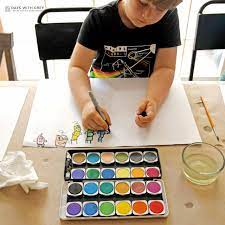
materials you might need. You would need some
brushes, inches, try to fix something you
have used before with a fine tip and a good big body which
holds the amount of water. I am just going to put
these in front a few. I have my Chinese liner brushes, I have a mop brush. I have my silicon tips for
applying the masking fluid, which you will
learn as we go on. These are some of my
paints, freshmen K, I love and love and
love these beans. I have 24 colors and I use
them for most of my projects. But for mindful art, for the practice, yoga sessions, probably you economists use student grade paints
and there are so many of them going around
and they're all quite good. In some of my past projects, which are also is on Skillshare. I start by testing out my Tyler's bed,
making my swatches. And this is probably
where I begin my mindfulness journey on deciding my palettes,
trying them out. Before we actually go
on to the art yoga, which is the strokes. Let's get to know our materials as
scholars we want to use, which makes us feel
happy at that moment. And on that day, good luck, have fun and be with me
through all the lessons. As we go on to this wonderful
art you'll graduate and welcome to my class
on brush control. This is perhaps an exercise
which even a season and professional artist comes back to Diamond again
in the carriers. And it gives an artist so much
more power over the brush. If practiced regularly. Take your watercolor
sheet, 300 GSM preferably. I have taken a
Princeton brush number four and I'm going to be drawing oblique lines across two lines which I have made the
chaconne truly see. I'm going to use the tip
of my brush to create these gentle arcs to
practice my stroke, which gives me mastery over strokes which I need
to make from bottom to up. Here I'm thickening the stroke. Every different stroke
which you make should be practice at least four
to five times any color. This exercises designed to hone your wash link skills in
the form of single strokes, color, laid down side-by-side, in whatever pattern your
first stroke dates. The object is to concentrate on the line you are forming
between each stroke. Try not to touch any
previous troops, keeping the white lines of
unpainted paper unbroken. These white lines in any painting in watercolor
as so precious. You can also make
several puddles of different colors in
your watercolor palette. I have chosen to
paint with in color. I going from trend strokes
to thicker ones to be able to get a control
on my brush and how I want my strokes to
be around number four, red savings is
actually a good brush. You can see I have my
black well wait there, which I use when I'm
really doing flowers. Fully load and charge or
watercolor brush with paint. Starting from the top or
bottom or bottom to top. Decide the thickness
of your stroke here. I'm going really thick. I'm laying in the whole
body of the brush down. As you can see in the
earliest strokes, I try to keep the tip and
then lay down slightly. And the last few strokes that is laying the brush down fully. Let's now try to do some
C strokes which will help you when you're
painting loose flowers. These here I'm just
writing sees in a thin. Now I go on to
doing my C strokes, which are actually what petals
and leaves are all about. Pulling another linear stroke
next to the one you paint. Try to be parallel, try to fit it between
the two lines. I've changed the colors here
just so that you feel more fresh looking at another color while painting
difference, eclipse. Now you'll see here
it's a dry stroke, which is also something
one attempts to get. And you can achieve these dry strokes after
a lot of practice. And also, once you know
exactly how much paint is on your brush or how much water your brushes capable of holding. Let's continue this
in our next lesson. See you there where we do most strokes and
more mindful yoga.
3. Mindfulness Techniques : Hi everybody. Welcome to the second part
of our mindful art yoga. I am so excited to
continue teaching you the various strokes
with which you can finally learn to dwell
up a brush control. And to also learn how
your brushes behave, how the water behaves on certain brushes on
a certain papers. I'm leafing through my journal. This is my very, very rough book which
I keep next to me. And sometimes when I don't have a particular project in mind
and I just want to play. This is where I go to a journal like this is
also very important. Some of this app, my
seem quite practiced, but really it is after months
and months of painting and observing certain images and bringing them
onto this paper. As we get slowly started
on to the second part, our brush stroke lesson, which I like to call art
yoga, mindful art yoga. Get into color board of your choice today you
feel like red or blue. It's up to you. I have chosen blue. And we start by a
few small sees, the tip of my brush. And now I'm going onto the
tip, body tip technique, which is basically what you
will really need when you start painting
florals and leaves. As you can see, my stroke, is it come out dry? But isn't that an
interesting effect? Have wet my brush again
and I'm going tip, body tip there again, it's dry. This is a Princeton number four. So it doesn't really
hold too much water. So I'm experimenting by
putting a bit of water down. Now I'm going to do a C
in wet on wet technique. Look at that bleed. Isn't that beautiful? You can experiment by doing wet-on-dry techniques
or wet on wet. Use different brushes I
suggest to get a feel of how much water your brush holds and what you can
do with each brush. Now this is truly wet on wet, I've got a hang of it
and I'm loving it. Keep experimenting because
that is what will make you reach a goal where you want to really know the
paper you're painting on. You want to understand
your brush, you want to understand
how your pigments flow. In the next class we will
practice some inverted seats, which will help you understand how your hand should move
the motion of your wrist. Do practice vertices as well as your Cs as well
as top inverted, bottom inverted sees. You go. I've used a lovely lime
green color to do. These are my brushes
basically which I'm using for this exercise. My paper is tetrapod from India, but you can use any
paper which is 300 GSM. I really have a passion for collecting different
textures of paper. I'm painting on day. You will be surprised
that the effects you get. Here. I am just very quickly
doing some fun exercise. I don't know what I'm painting. I've just taken a
different color. And I can feel this paper
is a very rough texture, so it looks like I
need brushes with a lot more water and
pigment on them. I'm going to try, I'm
going to have some fun. If I had given me
some roses on this. That's my silver brush. This is my Princeton
and I'm making some upward facing sees,
downward facing Cs. Let me just focus on the bleed which is
happening on the paper. Let me draw your
attention to that and I want you to observe
the bleeds on your paper. I'm doing Rose, I would probably
do a very tight Center, but I'm just flying now
with a bit of link. Lovely dry effect coming up. And I'm using more
water to fill it in. As I go outwards, my petals become larger, more water, less pigment. I found folks and join me in the next art yoga class where we're going to
have some more fun. Bye.
4. Tip-Body-Tip Technique In Art Yoga : Hi everybody. I am Pavan Kapoor, art based therapist
residing in Jakarta. This is my third lesson
on mindful art, yoga. And I hope you enjoy it as much as I did while
making it for you. Everyone is creative
in their own way. I believe creative
expression can be fun and simple and
profoundly healing. So many of us have a
strong inner critic switch stop us from creating and
expressing ourselves truly. Creating mindful art
is so important to increase self-awareness, self-compassion, and
self-expression. Mindful helps to embrace
our inner critic, tap into our creativity, trust the process, and be
in the present moment. Let's start here. I'm just making a
few swatches of colors to see what
suits me today, what I like, what does
my mood like today? What are the colors in which I want to practice my strokes? System 70-year. I'm just putting a swatch
of this on my journal. This journal is a book
I just keep to play in. No serious aren't good or bad. This is my mindful are
using some violet and using it to mixing a way
variegated shaded effect. Lots of waters. Play. Practicing South strokes. Before I start my
inverted c strokes. Get to know your brush, get to know your paper, how much water it absorbs. Get to know how much water
your brush can hold. What are your pigments like? This spot of painting
is very important. I wrestled with my inner critic and experienced the
healing power of all. I would like to share with you in this mindful
yoga technique. Using the tip, body
tip technique again, we create our inward disease. Why do we create these
different directions of Cs? Later on you will do be doing the upward and the downward. Once this is all
to make your wrist flexible in holding the
brush and different strokes. The tip, body tip is a very important
technique when you are painting florals and Foley age. Because this does
help you to have this graceful leave
sandbars petals. The size of the
brush is important. I'm using a Princeton
number four here. And I'm trying to do
more of the wet on dry, letting the brush
ran out of water and give you those
lovely dry strokes. Keep on practicing. Do loads and loads of
C corps off dip body. Here I'm doing an upward bend. As you can see, my
sees a different because the angle in which
I'm holding the brush, the angle in which your paper, you can always move your paper around to get the
perfect stroke you want. But I'm just holding it and
trying to do this exercise to the best of my
ability when holding the paper in the same angle. As you can see my tip body
tips and getting more graceful and practicing them
again under my green rows, which we painted in
the last lesson. I would focus on
bringing the tip down first before letting the body of your brush rest on the paper. Then lifting your
brush and having it go up into a tip
is very important. It's a NAD, gets a skills, so do practice it. I'm moving towards the
end of the page now that you can see how the tip, body tip, petals grow
larger as they roll out and how the dry brush
technique looks just beautiful. This is tough but paper which
has a very rough texture. It's a cold press, a 100% cellulose paper. I'm going to be trying
to display to you how different brushes
give different straw. This is an angular brush
which went moved around, gives the most amazing strokes. Here is an overview. Our different directions
of C strokes. Going to be starting
with the upward strokes. Now, again, we take the tip, you bring the body down flat and bring it
back up and lifted. I have only used the
Princeton number four, but I urge you to practice this with
different thicknesses of brushes and also to practice wet-on-wet as well
as wet on dry techniques. Here I'm laying down
some water to get the bleed and the
wet-on-wet technique. Isn't that just beautiful? Paint, those gorgeous blooms. Now with all these beautiful, better techniques we've learned. Let's move on to learning
more about watercolor. Paints, the pigments,
the process. Also about art-based therapy, based in the watercolor medium. See you.
5. Mindfull Exercises For Florals: Hi everybody. Welcome back to the fourth
lesson on art based yoga. We have a focus on mindful art. Yet we have beautiful
art created by, In some very simple
techniques as true. All the wires focusing
on how we are feeling, what are the colors we're using, how detailed is the project, how loses the project, and how much fun. Basically we're having. How many of our own
experiences are coming out on a paper without
judging ourselves. Here are some of my
paintings which had been painted through my
sessions with students, is in which I have done
loose watercolor painting, painting large
blues of roses and different flowers in different
colors, different strokes. As we carry on our fourth
session on strokes, Let's focus on having a look at the different
sorts of flowers and different techniques we can use to create different florals. In the next slide, you are going to be seeing
a technique where we just take the brush and go
from center outwards, the reaching up to
the skies as if asking furniture to give
us liberty and freedom. Let's continue with our blooms. Based on the C
strokes we have known to in the last few lessons. Again, have a tight
center of Cs, the central Caesar
very tight and we go lose wider federals. Wider C strokes, lighter
colors as we go outwards. You just need to basically
dip your brush in some clean water to come
up with lighter shades. On the outside. I'm turning my paper to get
comfortable with stems. And here I'm mixing in a second
shade, secondary shades. Just bring your Flores to life. I'm putting down some
water here to get the bleed because I like
vanishing edges of lives. I don't like them
to be fairly stiff. Once you leave the water down, the petal vanishes
into the background, creating a very watercolor. A magical effect. Isn't that beautiful? The book bu, is lending such a mystical look
to the whole bloom. Last router is going to be in a deeper shades and putting in a dark green in the
center again to inverted season than us start with my C strokes
on the outside. Making the C strokes
larger and larger, which means I'm bending the brush mall for
the inner petals. You just focus on making, using the tips and
on the outer petals, you bend the brush more
so that the body of the brush bonds the C stroke. Sorry, that's quite a bit
edge of the paper again. But I think you can see how mirroring the outside petals of the flower with my C strokes. This can be quite a
political movement. In fact, as you
paint these roses again and again in different combinations of
primary and secondary colors. You get a feel of relaxation and just a feeling of being
so in touch with yourself. I love to help my students
reach this phase. When they have a
smile on their face, I say, mission accomplished. Let's learn some more about watercolors and the pigments
in the next lesson. While we paint, I'm going
to be talking to you about pigments of watercolor and how watercolor really
works. See you there. Bye.
6. Watercolor Basics Theory : Hi everybody. Welcome to this class on art-based therapy and everything
to do with watercolors. And your journey about
becoming an art therapist. In watercolor. Water
is hard to control. Water is fluid, flows and moves in all
different directions. Paints would respond
differently. When there's too much water, just enough water,
and not enough water. There are so many
factors here that can change the outcome
of a painting. Let's start by painting these
beautiful pink flowers. What I am doing is I am painting wet-on-wet
technique whereby I put in some water, the base in the
shape of the petal, and then I go in and drop
in some darker pigment. This is what makes
watercolors so unique. You can get hard
edges like you've been expected to be able
to, but with watercolors, you can also create really soft blends and bleeds
from one color to the next. Pretty amazing, isn't it? Because the
transparent qualities, you can't really cover
up your mistakes. If you make a wrong stroke
and the paint dries, you can't hide it with more paint unless you paint
the area really dark. If you keep layering to
try covering up a mistake, there is a danger of
overworking your painting. Sketch lines I've drawn
too dark would show up behind light colors in
a watercolor painting, making it tricky if
you want to draw or sketch before laying down color. However, it's also
this transparency of watercolor paints that creates
luminosity in paintings. Some paintings look like they
almost glow and can capture the light shining through the thin petals and
glowing on surfaces. Hi everybody. I'm furthering couple artist and
exciting in Jakarta. I have had several
clotting insufficiently Lynn Davis mediums, watercolors. And I have also illustrated
my own children's storybooks, which are bilingual groups,
Indonesia and English. I am now practicing
parapatric art-based therapy. My studio. The simplicity of
materials makes it so easy and convenient
to paint plein air. All you need to do
is have good cotton, paper, brush, speck of paint
and of course lots of water. And they, you are ready to go. I have been successful
becoming an instructor of watercolor art in
various online shadows. I also have an
Instagram account. I have my Skillshare classes. I have a studio whereby I teach the painting phase
therapy sessions to those who might need
it. The next class. And we're going to be telling
you more about watercolor. The pigments that forms
useful choose colors. And if fixed, we're looking for to look forward
to seeing you and having you watch the rest
of this lovely painting. By at this point, I would like to introduce
you to the idea of us. In meditation corner in your
home where you can create your mindful art and do
meditation of three. As a form of self K. Often homes have
tricky corners that are left empty because
nothing ever see it. It's just fill this
space correctly. I see these as an opportunity to create your own gaming space
or meditate in Cornell, which I find amazing
for self-care. I shared some of my favorite
tips in another class. And the one thing
I think you might love is to fill the space without
cluttering up your whole. If you're unsure where to begin in your meditative art practice, or you'd like to
be more creative. You could just Google
a few pages on self-care ideas and
mindful of crops. And start with small things
which are related to you. Sitting in this space. Gives you that initiated, gives you that first
touch of peace, which enables you to create art which
comes from your soul. Now though very balking, Bye of creating mindful
art is having a journal. There are some people who
love doodling all the time. When it is additional
people or a toilet paper. They're always bringing
their experiences that inner self out on paper without caring about
whether it is good or bad. There are so many
challenges on Instagram. On 30 days of mindful
aren't enjoying the 30 days or mindful our
challenge, or ten days. You could join one of these and really stick
to the timeline. It gives you In freedom. It gives you a sense
of accomplishment. When you finish these. And somehow the
art created during this time is always so
precious and so special. And I have all kept them to now and look at them
for inspiration. Whenever I feel
clogged of blocked. Try it. It might just liking. The most therapeutic
part of what I'm doing right now is laying down the water and just dropping the pigments on
top and letting them flow. I am not making much
in an attempt to really get the big men to
flow in a certain order. I'm just dropping it
and letting it flow, letting nature take its
course and enjoying the results seem to have
dropped in too much. So I'm picking it
up with the tissue. The best part of wet on wet is laying down the water
and dropping the pigment. Here I've used in
one primary color, which is my opera, pink and pushing mixed. And the secondary colors, a bit of yellow for the center. All of this is a little
brighter than what I wanted. I'm going to reduce the
yellow and the rest, the flowers which are
going to be painting. So stay with me, paint with me. And let's go on this
beautiful journey together. And end up with art. Which when we looked at later
with just gonna feel good. You didn't remember the
good times we have. Not surely whether it is a beautiful piece of art
which is ready to be sore. But the feelings
that has evolved a new while you were painting it. Let's listen to some
beautiful music as repeat too long and get lost in
this world of beauty. Nsf expression.
7. Watercolor Pigments Theory : Hi everybody. Welcome back. As we go along
painting pink flowers, I'm going to explain to you about watercolor pigment study. Let's carry on with the project
painting and listening to the history of watercolor
pigments. As promised. In this class. I'm going to teach you
all that I know and have researched for the last 56 years on the natural pigments
of watercolors. Synthetic pigments today are made to serve the
paint industry, in which producing
paints for artists plays a minor role to achieve
maximum desirability in paint. Today, pigments are made homogeneous in shape,
size, and composition. For example, to increase
the covering power of pigment particles sizes are
made as small as possible. The smaller the particles, the modal color nuance of the pigment of reduced
to its basic human. As an inks that have no texture. Particles that are homogeneous
and shape and size also tend not to set up quickly and separate from the
binder during storage. This increases the shelf life and therefore the
marketability of paint, which reduces its beauty as
a color for artists to use. The result is not perfection, but sterility set
someone who is a who's who in the arts
industry, artists, materials, manufacturers
purchase most of the pigment from companies that mass produce
them for other uses. A few examples
include ultra marine. Cadmium, follow colors. Oddly enough, painters are one of the few artistic groups. It to succumb to
economic pressures and use ready-made materials. Even in the applied
as such as cookery. It is customary to produce
their own stocks and sources. Even though commercially produced alternatives
are available. We make our own pigments. On the other hand, just specifications
that maintain the best qualities and allow the artist to find them
for the old news said, one of the major manufacturers
of watercolor paints. You can use watercolors
as a campaign or die. Insulin receptor in Greece,
especially visual effects. As you become more aware
of these possibilities, you will want to experiment, paying attention to the
way that picking them smooth and behave when mixed
with their favorite binder. Whether it is acrylic, AEG, live, collaging, blue,
all gum, arabic. The possibilities are
endless and drilling. Research in watercolor. You can make whatever
dreams using pure powder mixed with
a binder and assaulted. Applying pure ground pigment
on a glass family gum. In this Fasciola, adding a
few drops of rubbing alcohol, which has some
thickness to disperse. The result resembles
watercolor from tubes. That results in what
kind of things apply to watercolor paper
using a paintbrush. Colors have blended on
the fairly new colors as well as tints and shades
created and mixing new themed with Feed already on the gallons for the back
crown for shooting this case, Y two, blues in black. The Jews on the yellow after I'm really yellow
and orange colors. Nato when painting reds
and browns are hosting, the kind of lens creates
rabies Hughes such as the yellows that are blended
to orange and brown. Colors can also be mixed
to create lens that range from light to dark
within a single hue, such as the range of
greens for the leaves. To paint the laws
and tablecloth, the pilot has been
cleaned, increases, pigments and new
colors are used. I am now going in with
my second layer and deepening the colors
of the flowers. This is such a lovely shade. It's a mixture of lilac, opera pink, and all the pinks are lilacs
I have in my palette. I hope you're enjoying
this painting session. As you listen to
all the information I have gathered to give
you on watercolor, what you need, the materials and the details of what watercolors
actually are all about. So to create
gradations of color, new colors are mixed
to the colors already on the palette to
slightly change the hues. This way all the colors are related to each other
because watercolors can be made wet again
at anytime in the pan, in the palette and
in the painting, the pigments are revocable. This is convenient if certain color families will
be needed in the future. It makes sense to leave
premixed colors on the palette for future use
rather than push them off, as you would with
dried acrylic paint. Because the pigments
in watercolors can easily wash out with water. It is often not
even necessary to wash the brush with
soap in-between colors. Switching the paint
brushes and water is often enough to rinse
the pigments out. Dabbing the brush
dry on a paper towel removes any excess pigment
from the brush heads. This floral still
life is created using a translucent
bit naive to. The results in some painting. Sensitively portray the mosquito all the colors I have
been transfused. Equality of things that are
static and even makes sense left the Apophis nature
of watercolors accurately captures a sense of ties talk about for this reason,
what did I say? Medium for 15
minutes actually see multi-colored shapes as
well as fluids and animals. Your true that by now compared to other
most solid medium, such as a clear liquid, watercolors, watercolor does
appear to simultaneously. This is similar to send the fluid tube
paints are easier to paint and mixed with water because they contain
more binder. In contrast, watercolors
in pans or had dry cakes of paint that needs to be moistened
in order to work. I use a split sell about five minutes
before I start painting. So it can do an N
watch this class. A lot of painting with water. Continually painting
with them as the artist, you in the next lesson to see whether the artists uses
watercolors from a fan. Watercolors from a
tube, watercolors, which they make
themselves a solvent. Usually water is used
to dilute the paint. It's evaporates once
the paint has dried. Below views of the
artist ballot with, while working on this
Florida still-life painting.
8. Listening Skills As An Art Based Therapist: Hi everybody, Welcome to a shot crash course
on art-based therapy. You go to the vision and mission of what we do and why we do it. You will be encountering
an overview of what we do. The vision, mission, the key
goals of art-based therapy, which are divided into
basically three parts. Your art is your bomb. You do not have to
paint for others. Do not judge you out as
we go along this course. Just paint for yourself
and what pleases you. The best tip which you can
take for yourself and for your clients is that
you got and make everybody happy or
not an avocado. Who needs this course? This course is intended
for people who may be thinking about becoming
an art therapist. It is an important
building block for further training for the
part of formal upgradation. It's important for
social workers. Also school teachers. This course is valuable for health and social care
workers who would like to develop an
understanding of art within the different
work content. How using that might
help the clients. For school teachers, this
therapy is an integral part of the curriculum for school to help children with special
needs and also for deviant kids who have a difficult time
concentrating in class. This course also asked students to pause this
session is to make art of their own and to reflect on key questions based on
the course content. You don't have to have had previous formal
training of art-making. But it is important to your
learning to take part and to create at which you
are happy with, without judging yourself. Indications that therapy may not be suitable include those with a history of physical
violence and adds risk of harm to
others if challenged. Referral to a specialist clinic, maybe needed in this case. A history of repeated
therapy engagements. Those who have dropped in and dropped out many times may not be suitable for this therapy. The process of therapy and
the important generic skills. Therapists, like all psycho
therapists and counselors, use some generic skills to
work with their clients. Let's have a look at
what these skills are. The basic skills for an
art-based therapists are activists name summing up, paraphrasing, open questioning. The third is building
a therapeutic alliance with the client and
thinking reflectively. Let's start with the
art of listening. The art of listening. This involves the ability to be fully attentive to
what the client says and also for nonverbal communications
such as body posture, amount of eye contact,
restlessness, etc. The key goes any discrepancy
between what was said and how it comes
across is also to be noted. Inactive listening. The therapist also
pays attention to their nonverbal responses such as body posture,
sitting position, etc. Notice there's any motions
such as detachment, anxiety, confusion which may arise
during the conversation. The art therapist has
to be very vigilant. An example of active listening. Joe was a middle-aged man
with anxiety and depression. He described his childhood
as being unhappy, being the only child of
his critical parents. Joe had been attending
art therapy for six weeks and had found art-making difficult
to engage in. Example of active listening. Jo felt frustrated about what he perceived to be a lack
of artistic scale. The art therapist attempts
at exploring this difficulty with him had not
had much impact. Jo felt defeated. Jews started his sixth
session by relating intricate and complicated
detail of an incident at wool. He had been told
off by a manager for a mistake that was not his. And he was feeling
angry and humiliated. Jews experience of art-making
had some similarity with being blamed and criticized that work for something
out of his control. This also echoed choose childhood experiences of being watched by a critical parent. Joe may have feared the same critical gaze
from the art therapist, hence, his lack of eye contact. In this example, active
listening happened when the art therapist
was able to notice several types of communication. Jews upset at the incident at woke the oval complicated way in which he related
the story and his obvious lack of eye contact. The therapist was also
able to listen to her own emotional reaction and to notice her fear of
getting things strong. Response to Joule. We'll illustrate
another important to generic skill, witches, summing up and fairer freezing the client's
communication. This is a project whereby the art based therapist
needs to practice. Firstly a present expression, and then think about
a good experience and share a difficult
issue with a person. Could you list what
made it helpful? Please press pause while
you consider the response. In the project, you need to test your understanding by answering
the following questions. Do you use some or all
of the things above? You do other things
when you listen. On reflection, is there anything you would like to change? Take a moment to ponder, and do feel free to
drop me a message. If you feel stuck.
9. Skills Of Reflective Thinking: Hello everybody. Welcome back to part
two of module one, in which we shall learn about
summing up better phrasing, open questioning, and
interpretation skills. The important skills include
the ability to sum up, to distill the, a sense of what someone wants
to communicate. To paraphrase that
are phrase is to rephrase what the
person might be saying. Leading woods for summing
up and rephrasing. You're saying you mean
let me understand this. Summing up and paraphrasing. These two related but
different skills are used to check that the
therapist's understanding of the client is correct, and also to confirm
to the client that the therapist has
been listening well, this needs to be simple
and sensitive process. Continue with Jews example, when he finished his long
and complicated retelling of the work incident, the art therapist said, I just want to make sure
that I have understood your experience as this
was a complex incidence. To sum up, your manager had informed your colleague
about a project deadline, but your colleague had
not shared this with you. When the deadline was missed, your colleague was absent and the manager blame do
for this failure. You felt badly treated
by a colleague and unfairly criticized
by a manager. The therapist continued. Since then you have felt angry towards both your colleagues
as well as the manager, but have been unable to
say anything to them. The incident has made you anxious and you're worried
that this may have made a permanent badmouth
against you in the company. Doesn't sound right. Jewelry applied. It's not just that. I don't feel I can
trust my colleague now. I can't help thinking
that he's set me up. I also feel worried about the missing important stuff
and getting things wrong. And my self confidence is low. The therapists said
this incidence has had a significant impact on your relationship and your
professional confidence. I wonder how this is making
you feel outside of. This is summing up
and fatter phrasing. Jewelry responded positively to this exploratory
interpretation and was able to start
addressing the link between his childhood
experience of feeling constantly
criticize and his emotional reaction
to the work incident and to art making in general. The folding project
is for you to find a friend or a family
member willing to help you to do this exercise, asked him to talk to you for five minutes on a
subject of fear choice. This does not have to
be opposed to matter. It could be a trip to the
shops or what food you like. During these five-minutes. Don't interrupt at all and
just listen at the end. Try to summarize
what they have said. Afterwards. Ask your friend for feedback on the experience. Do make a note of the feedback. And if there are things
you have missed, try not to think
about what you would say to address these the process of therapy. This spot of the module, we'll introduce the following
concepts of building a therapeutic alliance and
thinking reflectively. People start therapy
expecting a human encounter, not an encounter with
a set of theories. Being genuine as a therapist involves seeing the
person in the room as a whole human being and not as a collection of
problems or diagnosis. Using the skills described in the previous slides will help build a therapeutic alliance between the client
and therapist. The therapeutic
alliance is built on the quality of trust that the client has towards
the therapist. If the stress is strong, the therapy will be a
safe place to explore. The quality of trust is full time spent in
therapy may will be wasted that as it is unlikely to be an open
and honest exchange. If the quality of trust is full, time spent in therapy
may well be wasted. As it is unlikely to be an
open and honest exchange. It may take a few sessions for the therapeutic alliance
to get established. And if after six
to eight sessions, this is still lacking. The therapist might need to actively explore
issues of trust with the client as well as adopt their own approach to
meet the client's needs. Thinking reflectively. This is a very important quality which the art-based
therapist needs to have. Being aware of one's own role in the therapeutic
relationships and how the client is doing in
the process of therapy. For example, a
reflective practitioner would notice the strength of the particular reaction
to a client in a session. And Joe's example, the
art therapists became aware of her anxiety about
getting things wrong. All these processes have to develop a reflective approach to practice and to differentiate between personal
and clients issues. It also helps to avoid overidentification
with clients and making incorrect
assumptions about their experiences and feelings. In summary, some generic skills are
important in ensuring that the clients engage in therapy and have a positive
experience of it. They include active listening, summing up paraphrasing,
using open questions, interpreting, building a therapeutic alliance and thinking reflectively. Test your understanding. Here is some project
work for you. Imagine a specific
lines and a delta or a child who has experienced
some kind of issue or trauma, what you would need to
do and say to help to build a therapeutic
relationship with this person. What wouldn't you want to do? Please make a list of
what you would like to do and what you wouldn't want to do to create a therapeutic relationship
with this client? How would you use
reflective thinking?
10. Overview of The Attachment Theory: Let's study the
attachment theory in part one of module two. The attachment theory, initially formulated by John
Bowlby in 1969, is increasingly
influential within our therapy and many
other therapies. Bowlby and colleagues
suggested that the style of relationship
between an infant and caregiver has lasting impact on childhood development
and, and adult life. The Hailey and secure attachment
in infancy influences confidence in the security
of relationships in general. It also affects the ability
and willingness to be intimate and sustained
relationships in adulthood. Evidence from neuroscience
lends support to Bowlby's theory that
the brain scans of infants who have had
disrupted early lives, for instance, in
Adoption, fostering, etcetera show some
underdeveloped neural pathways when compared to those of infants who have had better experiences in
their infant days. Those particular pathways. He is talking about
the neural pathways. Here are the ones
relating to relationships such as empathy, feeling,
recognition, etc. Importantly, having a difficult
started life in terms of attachment will affect children differently
and is not necessarily a predictor of
future difficulties. There is also evidence to suggest that the
attachment styles developed in childhood are
not always fixed for life. That we can learn
to feel secure in adult relationships.
For example. Having loving secure
adult relationships can effectively rewire
attachment pathways. This can come from a significant
romantic relationship, close friendships, and also an excellent therapeutic
relationship. That is good news that
the brain can be rewired. A still face experiment with a young infant and
mother shows how quickly an infant gets distressed
if they are met with seemingly disengaged and
unresponsive mothers. We have covered attachment
theory in this video. Let's go on to study
art-making theories, which is very important for
all art-based therapists. Join me in the next video. We'll have evil address
at making theories. We have already covered a
lot of art-making practices. The last few lessons about
watercolor, the pigments, and what makes
watercolor therapy so beautiful and effective. In the next lesson, let's go over some more
techniques about art-making. See you there. Stay with me. Bye.
11. Art Making Skills : Hello everybody. Welcome to module two, part two about
art-making to juries. I believe it's so
important to be exposed to different genres
or subject matter when you are learning
watercolor paintings. So here you have something
from food to metal, glass, and so many
other subjects all in one class for you. Let's start with module two, which is the main concepts
in art making theories. Many psychotherapists aim to help clients develop
some awareness of early preconscious
issues so that they can understand how these affect
them in their whole life. The human brain has two halves. The left side tends to govern intellectual,
rational functions. The right side is
identified with our emotional and
creative capacity. Art-making primarily engages
the right side of our brain. It bypasses sophisticated
verbal censorship and tendencies to rationalize
or repressed emotions. The process is not reductive and unhelpful
approach in art therapy would be to try and find
a definite answer or key to a trauma
in the artworks. In reality, people's lives
and emotions are complex and all the many clients discover helpful things about
themselves through art-making. This is an iterative process. And iterative process is
a procedure that involves repetition of steps to
achieve the desired outcome. Clients may need to
repeat some themes and images in order to understand
the issues better. This process is rarely linear. Sometimes clients become
aware of the meaning of an artwork a few sessions
after it was made. This image can be deemed
diagrammatic as it does not leave much space
to explore meaning. Each of its elements
has a definite meaning made explicit by the written
words on the picture. There is no ambiguity as to what or who is representative. The water, the depressed client, the critical therapist, and
the mocking group of friends. Exploration of
meaning and emotions would be deemed to be limited. Embodied image. Image in the next slide is one way art-making has not been tightly controlled
by the client, which enables issues to surface. Embodied images tend to
be painterly and fluid. Cesarean felt that the
grip diagrammatic images for an indication of
poor engagement in our therapy with embodied images reflected a good
depth of process. This image may be
deemed embodied. The paint has been allowed to flow freely on the paper and has created some ambiguous
shapes and an undefined moods. Is this landscape. If so, is this
morning or evening, what mood would this to depict? The image is left open for exploration and
interpretation. However, many are
therapists work with clients who can only produce images deemed a diagrammatic. And this does not seem to be a reflection of poor engagement. Such clients often talk
about the importance and personal significance
of their artworks. Recent research indicates that whatever the quality of the artworks and
important factor in clients feeling helped is
how images are received and valued By the art therapist
and other clients. If in a group. This relationship
approach to art making is influenced by
Attachment Theory C, part one of module two. Art-making can help clients
of all ages who have had difficult or disrupted
attachment experiences. The security, reliability, and safety of the therapeutic
relationship can establish new experiences of emotional intimacy and set fresh expectations for
relationships going forward. Sometimes in this process, there is a sense of uplifting early childhood
play experiences. The play element
of art-making is not superficial or
in fertilizing. When he caught thought it was a prerequisite for
engaging in therapy. Their artworks, clients
can explore their emotions and try out different ways of approaching dilemmas
and conflicts. While the art therapist
keeps the space safe as an adult world
with playing child. Now let's test your
understanding of art-making theories based
on what you have heard. Initially, using simple art materials
like pencils and crayons, make a drawing
abstract, figurative. And you can also copy
an image with a hand. You do not usually write to it. If you're right-handed user
left-hand and vice versa. By doing this, you will engage
the side of your brain, which is not used when
drawing with your usual hand. Please do press pause while
you do your drawing exercise. While drawing, will you aware
of thoughts and feelings? How do you feel
about your artwork? How did you experience the change in your
drawing ability? This spot has introduced some of the main art-making theories. The next bond will address the art therapy triangular space and the processes
of joint attention. I hope you stay with me. See you there. Bye.
12. Theory of Joint Attention: Hi everybody. Welcome to module two, fat-free, which is above the other
therapy triangular space and the processes
of joint attention. In verbal therapy, the interaction is between
the therapist and client. The activity is mainly divided between talking
and being salad. It can be represented as a
2D ensure interaction from the client to the therapist and from a therapist
back to the client. In art therapy, art making introduces a three-dimensional
triangular elements. Triangular elements
to the therapy and many possibilities for interactions from the client to the art therapist and back from the therapist
and the client. From the client to the artwork. From the art therapist
to the artwork. Therefore, as an
activity are to making enables clients to have choices of how to use the session time and
also the therapy space. Clients may choose how much time they spend on art-making. Sometimes someone can become so absorbed that the whole session
is spent on the artwork. At other times,
clients may wish to be able to talk
to the therapist. Clients can decide when they
want to be in the room. When they make art. People often choose to sit in a place that reflects
the need for closeness, a distance from the therapist. Clients can use the art
materials to control the space. One client used to
carefully line up all the tall paint bottles. All the client in our therapists
can have eye contact and dog images provide a focal point and make it easier
to be together. This introduces processes
or joint attention, which is a part of child
development and involves adult and child pointing and looking together at the object. Joint attention is
socially embedded, emerging before
language and introduces the capacity to orient to
another person's mind. Initiating this
process is done by a doubt in child
delight and helps infant develop his
or her ability to share thoughts and
feelings with another person. For instance, seeing
a horse or on a walk, a parent May towards it and
say to the young child, look, look, look at the
horse, clip clop, clop. Child may respond
also by pointing in copying the papers sounds
of the horses rules. Even if not having
mastered the sound. For the recent research has indicated that
joint attention during art plays a
significant part in enabling the people
that information. Elements in the therapy process, particularly when
working in groups. As previously mentioned,
when he caught thought that the playfulness was
essentially and engaging well in therapy, which is true for children
and adults alike. Test your understanding. An eight-year-old boy has
emotional problems and has difficulties in relating to other children and adults. In class. He becomes quickly
frustrated and often has angry outbursts when he
shouts at everybody. Good. You describe how the art therapy triangular
space and processes of joint attention might be particularly helpful
for this child. Please press pause while
you consider your response. Children express the stress
in many different ways. One of these being
angry outburst. This young boy could
be experiencing a school environment and other
people as too demanding. His emotional problems
we're making feeling insecure and lacking
in self-esteem. Any event experienced
as pressure or potential failure might
trigger an angry outburst. The art therapy triangular space can give this boy a
sense of control. He can decide how much
he wishes to engage with our therapist or if he prefers
focusing on art-making. There is also no exception
that is output should meet any specific standards
as this is not an atlas, he will not feel
judged or criticized. These two factors will diffuse the protection For
angry outbursts. That triangular space
could help this boy, he'd comma and
accepted as he hits, but he feels safe enough. You may be able to address
his emotional problems. This could improve his
behavior in the classroom. Furthermore, he may
represent a lot of dispensers in his artworks, although he may at first be unable or unwilling
to acknowledge these, a good therapists would use for assessors of
joint attention, looking together the images and discussing these in the purpose. For instance, instead of
asking the boy if he is sad, the other therapists
may say something like, I wanted it the cat and
the opportunity it had. What she was saying
while looking at this, being able to boil, to start opening up above
his own feelings as he described these two, the cat. One, Dan, you've just
completed module two. Module. We will introduce the main approaches to
art therapy practice. Look forward to seeing
you in the next class. Bye.
 PAVAN KAPOOR, ArtBased Therapist.Watercolorist