Line Confidence: How to Own Every Line You Draw
Build drawing confidence with exercises, insights, and expert tips to help you trust your hand—and your creative instincts.



In art and design, lines and marks work together to communicate contours, form and texture. They can define patterns, create new spaces, evoke movement, and convey emotion.
Line confidence makes the difference between timid sketching and expert-level drawing, but it also represents something deeper. Drawing with confidence can enhance your ability to commit, express yourself decisively, and trust your creative instincts.
By diving into what line confidence means, how to develop it and a few line drawing ideas, you’ll discover the difference that confident lines can make in your work and how you can extend your confident drawing abilities beyond the page and into design, leadership and life.
Understanding Line Confidence
Learning how to draw descriptive, expressive, and confident lines can help you better engage your viewers, develop your own personal drawing style, and communicate your overall vision.
A line is any path the eye can follow. Lines can be dark or light, thin or thick, straight or curved and short or long. Straight lines tend to feel a bit rigid, while curved lines tend to feel more natural and graceful.
Artists, educators and designers define a confident line as fluid, executed with purpose and deliberation. A confident line is usually smooth and continuous, while a hesitant line may appear shaky, feathery, hair-like, or broken.
Hesitation while drawing might have deeper psychological roots, such as a fear of making a mistake, perfectionism, or having a harsh inner critic.
Something else that you might notice in less-confident drawings is the subject having multiple outlines. This can happen when artists don’t get it right the first time and go over it again. You can avoid this by outlining your drawing once and committing to it even if it’s not right the first time.
Master artist and author Brent Eviston believes that lines serve two key functions in art. First, a line can be used to show the physical contours of your subject and its three-dimensionality. Second, a line can express an idea or an emotion.
“I want my lines to appear confident and fluid,” shares Brent. “Confident and fluid lines are a joy to look at. You don't want your lines to appear timid or as if you're uncomfortable while drawing unless it serves some creative purpose.”
Brent likes to think that every line he draws is similar to a word that comes together to form sentences and paragraphs, and then essays or even novels. He believes that each line you draw carries meaning just like a word does. Making decisions and having confidence in the meaning of each of your lines can help you create a deeper final product.
As one of the essential elements of graphic design, art, interior design, and more, confident lines can enhance your creative ability in your chosen creative field.
How Artists Learn to Trust Their Drawing Skills
Even the most successful artists need to work to overcome self-doubt. You can even use your insecurity to your advantage by using it to pinpoint your exact goals as an artist and areas where you need to grow most.
When world-renowned artist Alex Katz first began art school at Cooper Union, he could only manage to draw two lines in a 20-minute drawing session. After a couple of drawing lessons, he still couldn’t muster enough confidence to risk drawing more than a few lines. To combat his fear of imperfection, he started drawing as much as possible.
In an interview with Vogue, he shared that he started drawing “around the clock. When I wasn’t eating, I was drawing. Drawing all hours.”
In one of his most recent exhibitions Alex Katz: Subway Drawings, you’ll find that most of his sketches portray some of the day’s most mundane moments. Some depict scenes from the Cooper Union cafeteria, while most feature his daily subway journey from his parents’ home in St. Albans, Queens, to the East Village, where you’ll find Cooper Union.
Drawing as a beginner might make you feel more insecure about your art skills, but developing line confidence is the only way out. The more you draw, the more confident you’ll get.
Five Line Confidence-Building Exercises
While any type of drawing can help you build line confidence, there are some fun drawing exercises that can help you gain confidence even more quickly. These activities will help you better understand line art and improve your overall drawing ability.
Blind Contour Drawing
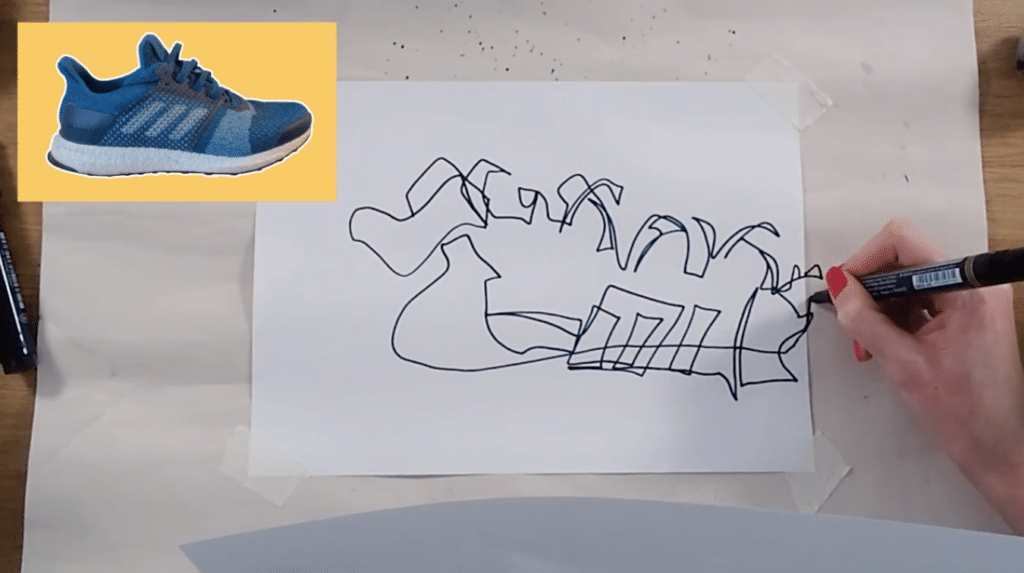
Working with blind contour drawings can help you focus more on your subject and less on creating the perfect lines. To blind contour draw, you’ll first need to pick a subject, such as a loved one’s face or some nearby home decor. Then, place your pen on the page and draw your subject without looking down or lifting your pen from the paper.
Your final drawing will likely end up looking pretty abstract, but you’ll also find your lines looking more fluid and smooth than what you might be used to. Blind contour drawing can help move your focus away from the final product and more toward the process. In just a few sessions, you’ll notice yourself caring less about controlling every inch of your lines and more about working on the connection between your eye, your hand and your subject.
Working in Pen
One of the most common drawing tips you might receive when trying to boost your line confidence is just to draw in pen. When you know you can’t come in after with an eraser, you’ll be able to more easily commit to your work. At first, you might feel more intimidated during your line art projects, but it’ll teach you to trust your decisions and move forward even if things don’t turn out how you expected.
Take a moment to fill a blank page with a few different pen drawings. You’ll notice that your lines will come more fluid with time as you allow mistakes to become part of your composition.
Assign Your Lines Emotions
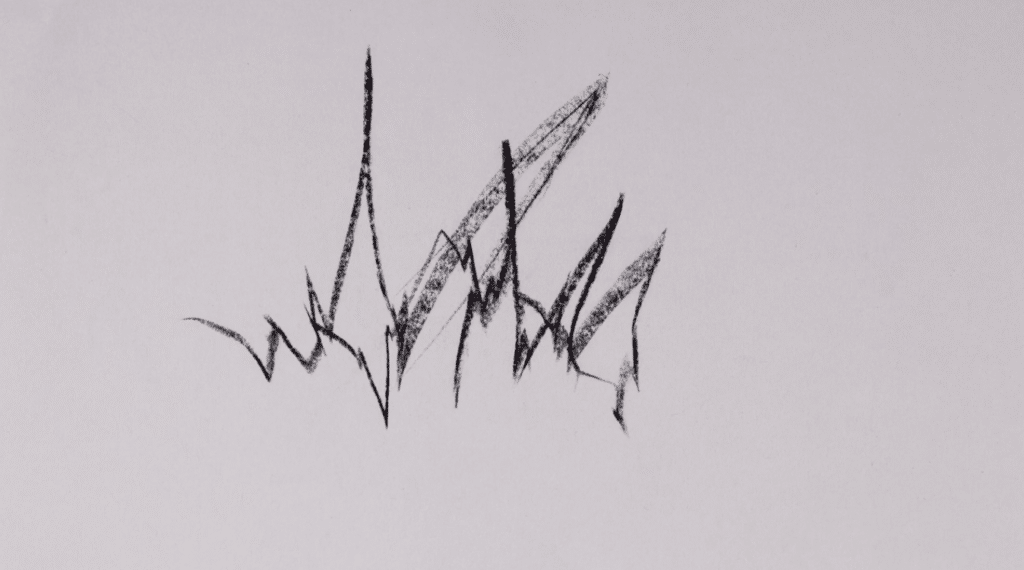
Part of building line confidence is learning to express yourself, regardless of how you’re feeling that day. So exploring emotions through line work can be a powerful tool in understanding yourself as a person and artist. The more you know yourself as an artist, the more you can tap into your strengths.
First, choose an emotion like nervousness. Ask yourself questions like:
- What does it feel like to be nervous in your body?
- What adjectives would you use to describe this emotion?
- What might your voice sound like if you were nervous?
- How can you translate your feelings of nervousness into lines?
You may feel jittery, confused, or uneasy. Now, try to draw a line when you’re embodying that feeling of nervousness. Your line might end up looking shaky or unpredictable. Try with a few other emotions and see how each one turns out.
Drawing From the Right Side of Your Brain
In the best-selling book "Drawing on the Right Side of Your Brain," author Betty Edwards shares how to move past drawing from the left side of your brain, also known as working in L-mode, and get into drawing from the right side of your brain, or in R-mode. Traditionally, the left side of the brain is considered the analytical, verbal side, and the right side of the brain is viewed as the intuitive, visual side.
Edwards reveals how by doing exercises like upside-down drawing, you can force your brain to draw from its more intuitive, visual side. The left hemisphere will tap out once it can no longer name the parts of an upside-down image as easily. Once this dominant verbal system bows out, the right-sided visual side can more easily take on the drawing task.
To do this exercise, simply turn your subject upside down and try to draw it that way. When looking at your subject upside down, you’ll be able to better focus on its shape, contour and proportions. You’ll focus on copying down your subject’s individual lines and forms rather than the subject as a whole. When you turn your drawing over, you might be surprised how well you did.
Daily Sketching
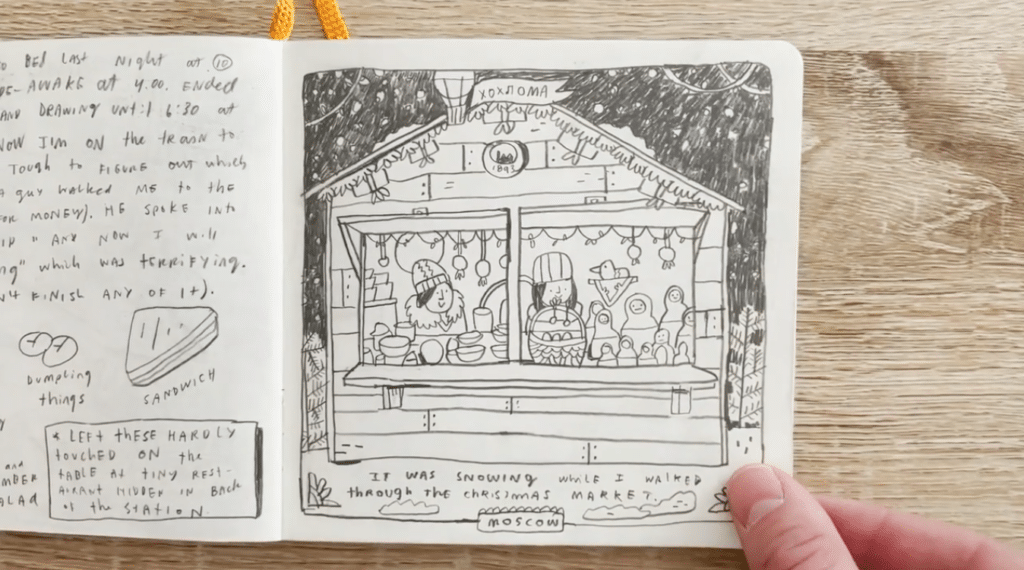
The more you do something, the more confident you’ll be at doing it. Try working five to ten minutes of daily sketching into your routine, and you’ll find that your hand and eye will start slowly working more fluidly together.
Daily sketching also lowers the stakes, so you don’t feel like you have to create something incredible every single time you sit down to draw. You’ll also find that daily sketching is one of the best exercises for creative block because it can get you past the initial fear and frustration.
Developing Line Confidence in Different Mediums
Line confidence isn’t just for artists looking to draw smoother portraits in their sketchbooks. You can utilize your newly found line confidence in UI/UX design and digital art.
UI/UX Design
Quality wireframes are important in any UI/UX design project. You’ll need clean, intentional lines to map out your site or app structure, customer interactions and hierarchy in menus. In the study The Role of Wireframes in Enhancing User Interface Design, the authors share how wireframes work as the blueprint to help designers, developers and stakeholders understand the placement and functionality of various elements as well as the structure and the layout of user interface.
By drawing with line confidence, your developers and stakeholders will be able to better trust your vision of the product.
Digital Art
Every artist has to work to overcome self-doubt at some point in their career. While determining how artists overcome self-doubt is dependent on each individual artist, some creators find that using digital tools like undo, smoothing, and vector adjustments can help improve their drawing confidence.
Knowing that you can undo any wobbly line you draw means you can create without fear.
Leaving with Line Confidence
Line confidence isn’t just a technique or about drawing better, but also a way to learn to express yourself with clarity and courage. As you continue to work on your line confidence, you’ll likely notice a change in your art and how you approach your creative decisions in general.
No matter if you’re sketching on a napkin, building a UX wireframe or making a graphic in Procreate, your newfound confident lines will reflect on the confidence you have as an artist. This next week, focus on working at least one line confidence-building exercise into your morning or afternoon and notice how a few quality drawing sessions will set you up for a better future as an artist.
Related Reading
Calli Zarpas
Producer & Writer by occupation. Ceramicist & Newsletter Editor by avocation.
Level-Up Your Drawings and Illustrations with Skillshare
Start Your Free Trial Today!- Drawing classes for all levels
- Digital and traditional drawing styles
- Unlimited access to all classes