Transcription
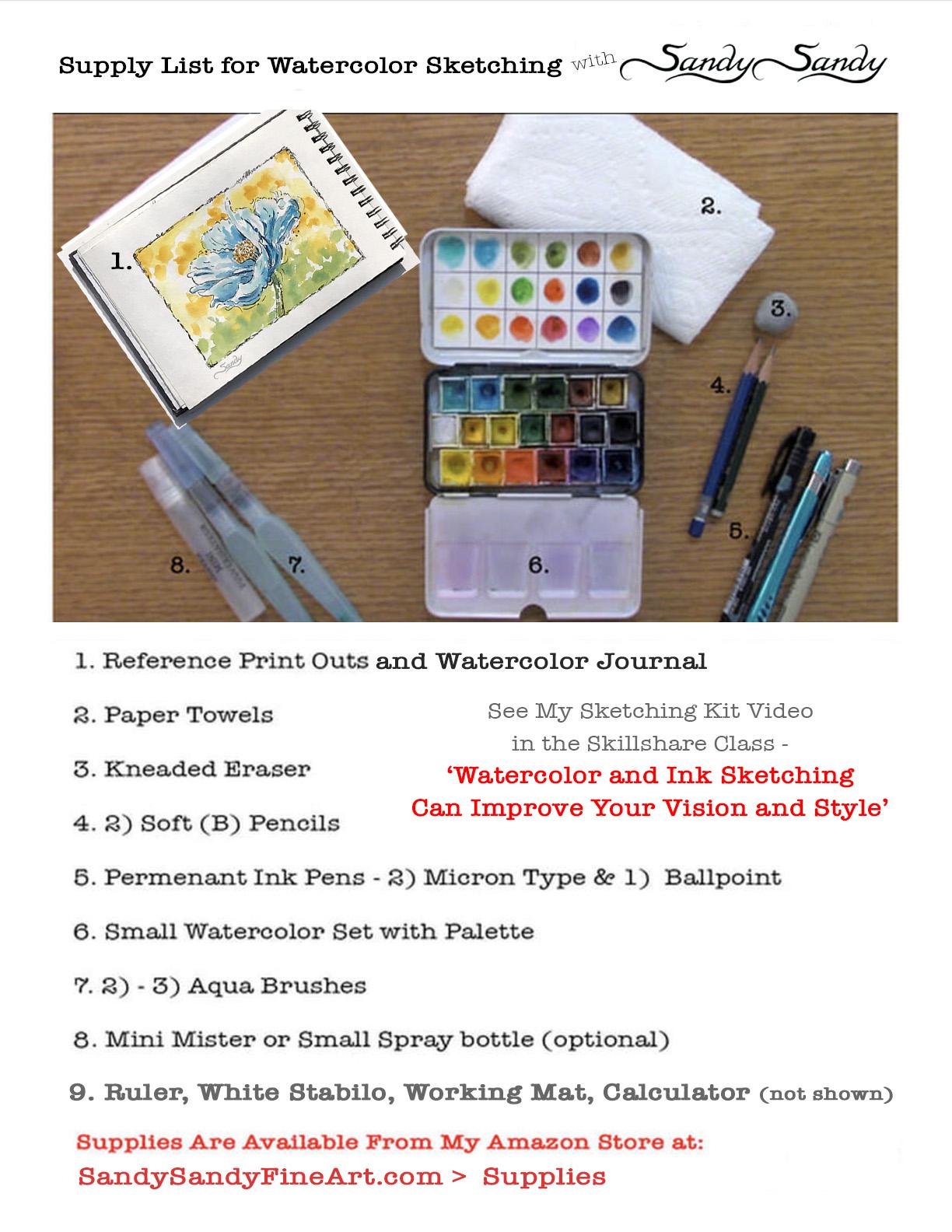
1. Introduction: Je suis Sandy. Sandy. Et oui, au cas où tu te demanderais, c'est mon vrai nom. Je suis un artiste à temps plein en ligne et instructeur en personne du sud du New Jersey, États-Unis. Je peins à l'aquarelle depuis plus de 40 ans. Maintenant. J'ai enseigné aux gens de tous âges les principes, les techniques et l'esprit de l'art. Cette classe inclut des exemples de projet de classe de référence photo, des feuilles de calcul de
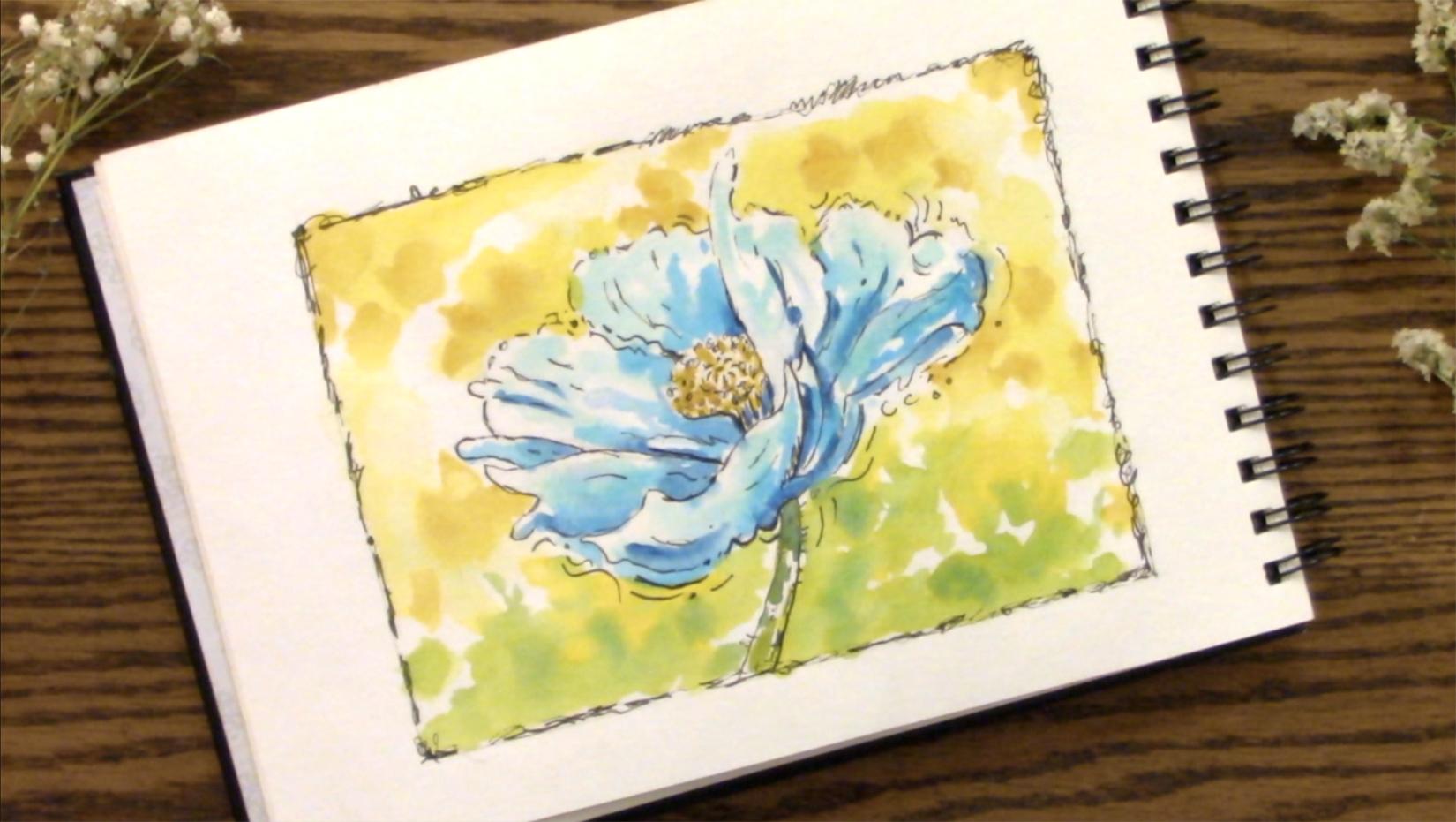
grille et des téléchargements de liste d'approvisionnement. J' inclut des dessins de grille dans beaucoup de mes classes. Je vais vous montrer comment mettre une grille sur votre matériel de référence. J' encourage les élèves à rester libres et à voir les grandes formes d'abord. Et la grille vous aidera à voir les détails et les relations avec plus de précision. Diverses options pour transférer votre dessin seront discutées et démontrées. Le travail d'encre se fera d'une manière amusante, ludique et spontanée. aquarelle vive est appliquée pour rendre la forme. L' importance de la valeur est discutée et démontrée. Avec des techniques de peinture. Les pensées sur la sélection des couleurs, les compléments chroma, les bords, les formes et la texture sont abordées. Venez me rejoindre et créer un coquelicot expressif avec un crayon, une aquarelle et de l'encre. C' est beaucoup plus amusant et plus facile que vous ne le pensez. D' accord.
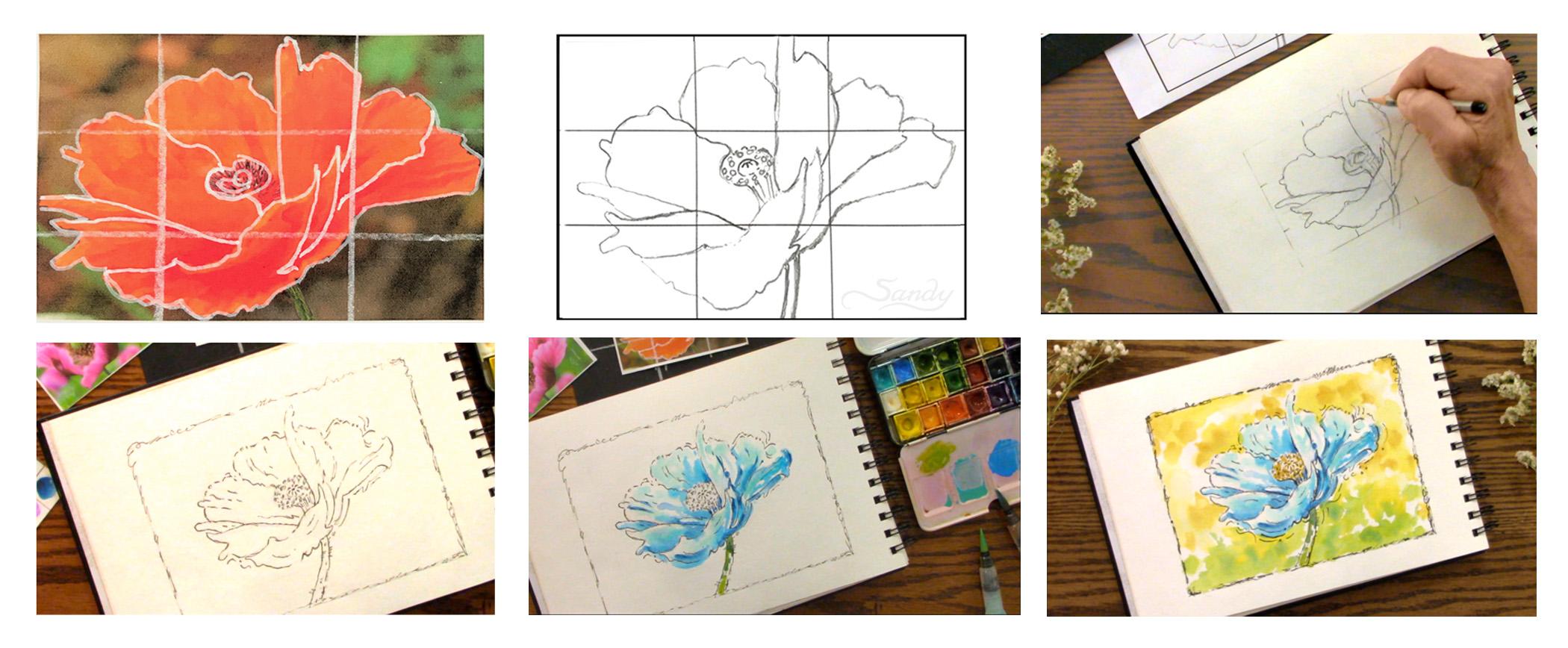
2. Les grilles: Maintenant, si vous voulez mettre une grille sur votre référence, vous allez avoir besoin d'une calculatrice si votre défi mathématique, comme, je suis, cette image est d'environ 33 quarts un peu moins. Je peux en fait arrondir ce chiffre à 3,5 par deux et trois quarts environ. Je vais arrondir ça à 2,5. Encore une fois, c'est comme un rapport de deux à trois. Je vais venir ici sur ma calculatrice sur mon téléphone. Et je vais mettre 3.5 divisé par trois est 1.16. Ce serait d'environ 11 huitième pouce par incréments de trois. Et ce que je fais généralement c'est de commencer à chaque extrémité, puis si le milieu est un peu déplacé, je ne m'inquiète pas trop. Je laisse généralement les parties égales au-delà de l'une ou l'autre extrémité. Et puis le milieu peut être un peu déplacé. Donc, je vais aller un et un huitième pouce de pouce. Et puis je vais voir ce que c'est pour l'autre côté. Cette fois, au lieu d'utiliser le stylo Posca, j'utilise un truc blanc ci-dessous. Et je vais venir ici et c'est un peu plus de 3,5. Donc je vais juste diviser cette distance, vais
juste entrer un peu de chaque côté. Donc je vais venir un et un huitième ici. Et venez en un et un huitième ici. Même chose sur le dessus. Un et un huitième. Un et un huitième. Vous êtes en train de diviser chaque côté en trois parties un peu égales. Donc notre côté court est de 2,5. Donc 2,5 divisé par trois est 0,83. Donc on sait que c'est un peu plus grand que les trois quarts. Donc je vais en faire sept huitièmes. Donc, je vais descendre des sept huitièmes supérieurs, ou du top 7, 8. Et en haut du bas 7, huitième. Celui-ci est un peu déplacé et doit venir là-bas. Ok, alors tout ce que je fais c'est que je viens ici et connecte mes lignes. Donc, vous pouvez utiliser un truc blanc ci-dessous comme ça. Ou vous pouvez utiliser un coût le stylo ou stylo gel blanc. Ou si vos images sont assez lumineuses, vous pouvez même utiliser un stylo noir,
un stylo à bille ou autre chose. Il suffit de trouver quelque chose qui va apparaître sur votre pièce. Eh bien, c'est éteint. Alors laissez-moi voir ce que j'ai fait ici. Ce que c'est 78. D' accord. Je suis allé trop loin. Vous pouvez savoir quand vous commencez à connecter vos lignes si vous avez fait une erreur. Donc je dois revenir ici et relier ces deux lignes. Maintenant, j'ai ma grille et je vais juste copier les formes dans cette grille.
3. Dessin au crayon: J' ai ma gomme et mon crayon ici. Alors la première chose que je vais faire est que je vais tenir mon crayon comme une baguette et je vais juste venir ici et essayer de tracer la grande forme globale de ça, juste en regardant les grandes formes et où ces formes croisent notre grille. Alors maintenant, on va tenir mon crayon comme je le ferais pour écrire mon nom. Et je vais d'abord regarder les formes négatives ici. Pour commencer ici, nous voyons ceci, cette forme juste ici. En regardant les formes et je vois que cette ligne sort de l'endroit où ça croise. Donc, et ça ne descend pas très loin. Et puis cela touche presque le ralentissement, mais il descend comme ce centre. Et puis cette ligne, ça sort un peu plus. Ralentir, est presque juste au-dessous juste au-dessus de cela. Ça arrive tout le chemin. Je vais apporter ça juste un peu. Et je
l'ai cassé casséun peu. Comme je l'ai déjà dit, exagérez. Surtout avec une forme organique comme celle-ci. Vous n'avez pas à coller exactement avec la photo. C' était un bâtiment ou le visage d'une personne. Ensuite, vous devriez vraiment vous en tenir à votre référence. Mais avec des fleurs, des arbres, ce genre de chose, vous avez plus de licence artistique pour changer et le rendre un peu plus intéressant, sont un peu plus attrayants comme ici. Je fais que ça monte et courbe un peu plus que sur la photo. Alors je traiterais ceci en utilisant ma tablette légère ou une fenêtre. Je pense que c'est un moyen plus facile de transférer sur papier puis d'utiliser du papier de transfert. Mais c'est tout à vous de décider. Si vous vouliez faire cette fleur sur du papier noir, vous devrez utiliser du papier de transfert blanc, du papier graphite blanc. Et si vous vouliez le faire sur un papier blanc ou de couleur claire, vous devez utiliser du papier graphite noir ou gris. Tout ce dont nous avons vraiment besoin ici, c'est une tige
comme, comme voir une tige venir ici. Rends-le assez large. Tu ne veux pas que cette quatrième chose se rende d'une tige très mince. Tu sais, tes tiges seront toujours par rapport à ton centre. Vous ne voulez pas faire votre tige ici, comme directement en bas, un peu de suivre la courbe de la fleur et de placer
votre tige en fonction de l'endroit où se trouve le centre de la fleur.
4. Le transfert: Je vais utiliser un de mes petits tapis de travail pour dessiner ça dans mon journal d'aquarelle. Vous pouvez le faire à partir de la grille ou vous pouvez l'essayer main libre. La grille vous aide à mieux voir les formes. Donc, si vous êtes nouveau à cela, allez-y et utilisez les grilles téléchargeables que j'ai pour le tapis huit par 10 et dessinez sur votre papier de cette façon. Hey, je vais utiliser une petite ouverture. C' est pour les cinq par sept MET et l'ouverture est 33 trimestre par 53 trimestre. Ceci est un 4.5 par 6.5. Mais je vais vous montrer comment vous pouvez visuellement vous dessiner en utilisant un homme qui travaille. Donc je vais juste dessiner le contour de ce tapis légèrement dans mon journal ici. Et je vais mettre des marques de tiques au crayon là où ces lignes de grille se produisent. J' ai donc un croquis léger au crayon et j'
ai des indications sur l'emplacement de mes lignes de grille. Je tiens mon crayon comme une baguette. Je vais grossièrement mettre dans mes lignes très légèrement en essayant de descendre les grandes formes d'abord. Il y a donc ma forme globale. Et puis ici si je viens ici, cette ligne ici, comme vous pouvez ajouter une petite ligne de lumière si vous voulez,
vous pouvez dessiner toute la grille, surtout la première fois que vous dessinez une certaine fleur ou un sujet, utilisez la grille si vous veulent être plus précis et que vous voulez commencer à mieux voir les formes, il suffit d'utiliser la grille. Vous pouvez, j'aurais pu dessiner ça et j'aurais pu mettre ça et utiliser une règle pour relier ces lignes très légèrement. Ok, je pense que j'ai assez d'arrière-plan, de contour, de forme. Et maintenant, je vais commencer à entrer avec mon crayon tenu, comme si j'écrirais mon nom et je vais commencer à affiner les formes un peu plus. Mais ne pensez pas à ce que je fais comme dessiner des pétales. Je veux le considérer comme des formes. Donc, et je
regarde à la fois mon dessin et ma référence pendant que je fais ça.
5. L'encrage: Hey, je viens avec le micron O2 et je vais essayer de garder mes lignes croquantes et je viens juste d'entrer et de remplir mon plan ici. Mais je n'utilise pas de ligne continue, c'est une ligne Lost and Found. Comme je l'ai dit, j'essaie de rester imprécis avec ça. C' est dans mon carnet de croquis. Et je veux rester lâche et ludique avec elle. Parfois, je fais une double ligne, parfois je peux sortir de la ligne et juste remplir les détails de cette fleur d'une manière ludique et esquissée. Une sorte d'improviser parce que de cette photo on ne
voit vraiment pas trop ce qui se passe dans ce centre. Mais ce que j'ai appris sur les coquelicots, c'est qu'il y a tellement de variétés de coquelicots là-bas et tant de centres différents que le ciel est la limite. Je veux dire, soyez créatif avec ça et ne vous inquiétez pas qu'il ne ressemble pas à la photo, parce que le dessin devrait être une invention. Il devrait être quelque chose de différent de votre référence. Vous devriez essayer d'utiliser votre imagination et votre créativité pour créer quelque chose qui est plus qu'une simple photographie. Il a plus de personnalité et il a plus de vie à elle qu'une photographie et elle devient une partie de votre voix artistique parce que la façon dont vous le faites va être différente de la façon dont je le fais. Et c'est comme ça que ça devrait être. Vous ne voulez pas essayer de copier style de
quelqu'un d'autre ou la façon dont ils font quelque chose que vous voulez essayer de trouver votre propre chemin. Tu ne prends que ce que les autres font,
mais tu as essayé de le faire à ta manière. C' est le moment pour toi de briller. C' est le moment pour vous de vous amuser avec elle. Et ça n'a pas ces petites choses poilues, mais je vais en dessiner quelques-uns ici. D' accord. Je pense que je vais aller de l'avant et tout effacer. Et donc je viens juste avec ma gomme pétrie et j'efface juste mes lignes de crayon. Je veux mettre une frontière autour de ça. Ils ne veulent pas le rendre si serré. Donc je vais entrer et juste faire légèrement
le tour de l'extérieur de cette petite rencontre juste pour me donner une frontière ici. Et ça va juste entrer avec mon stylo micron et finir de faire tomber ça. Et ici, je vais juste rendre ça vraiment ludique. Donc les freins et la ligne, un double Lloyd, un plus épais, un plus mince. Juste jouer le croquis et ça devrait être amusant. Oui, c'est un exercice pour améliorer vos compétences. Mais il n'y a rien qui dit que tu ne peux pas t'amuser à le faire. Juste en suivant légèrement le contour, brisant la ligne et les taches. Mais se mettre en ligne.
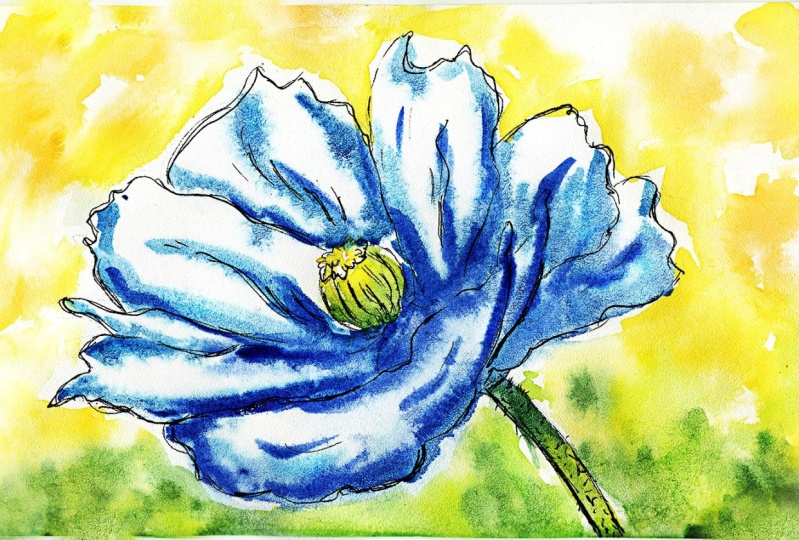
6. Peinture - Fleur: Je pense que je vais rendre celui-ci bleu juste pour des raisons de variété. Et je vais avoir la lumière venant du haut à gauche cette fois. Et je vais commencer à mouiller certaines de ces zones avec de l'eau propre pour toi. Prenez n'importe quel pigment et laissez des espaces visibles. Ce sera très méticuleux à ce sujet. Juste déchirer là-dedans. Ensuite, je vais entrer avec ma couleur turquoise et ajouter un peu de légèreté ici, où la lumière va le frapper, laissant un peu d'espace blanc sur le bord. Être très lâche avec elle. C' est juste un croquis, ça ne doit pas être quelque chose qui vous inquiète. Vous venez d'essayer d'exercer vos compétences. D' accord. Donc tout cela a été fait avec ma couleur turquoise. Cette couleur est une couleur Winsor et Newton et je l'ai obtenu plus et l'ai ajouté à ma petite palette de voyage. La palette de voyage est venue avec 12 couleurs et la partie centrale est vide, donc j'ai ajouté quelques demi-casseroles de quelques autres ensembles dedans. De plus, j'ai eu cette turquoise parce que c'est ma couleur préférée et j'avais juste besoin de l'avoir. Je vais prendre cet autre bleu, ce bleu plus foncé. C' est un bleu avec plus de rouge. Vous pouvez voir à côté de la turquoise, C'est plus violacé. Donc je vais venir ici et je vais commencer à mettre ce bleu là où je pense qu'il serait plus loin de la lumière, où la lumière ne la frappe pas aussi fortement que dans ces parties supérieures. Ici, il va faire plus sombre, là où il est loin de la lumière. En bas, en dessous et du côté droit, il va être plus sombre. Peut-être. Je dois sortir un peu de la ligne ici. Donc je viens juste d'entrer et de sortir de la ligne qui s'appelle sortir du registre. Il aidera votre pièce à apparaître spontanée et ludique. Ok. Maintenant, quelle autre couleur puis-je mettre ? Ce serait encore un peu plus sombre. Eh bien, j'ai un autre bleu selon mon nuancier, j'ai utilisé ces deux bleus et maintenant je vais entrer et utiliser ce bleu, qui est une valeur plus sombre. Donc, j'utilise tous les pinceaux OCO séparés ici, mais vous pouvez simplement utiliser la même brosse. Et tu n'aurais même pas à le nettoyer parce qu'on passe de la lumière à l'obscurité. Je veux dire, tu devrais le nettoyer,
mais tu n'as pas à être aussi méticuleux à ce sujet parce qu'ils sont tous bleus, donc ils vont se fondre ensemble. Bleu plus foncé. En bas, ici. Rappelez-vous, l'aquarelle va sécher environ 30 pour cent plus léger. Envoyez vous voulez vraiment remonter votre couleur pendant qu'il est mouillé. Essaie de penser. Comment ça va ressembler quand il sèche ? Ça veut dire peut-être faire avec quelques lignes plus sombres. Avec cette couleur foncée. Ici aussi. Il va avoir un peu d'obscurité là où ce centre est
profond dans les plis de ces pétales. Voyez à quel point c'était rapide. Très ludique et très rapide. Donc on va entrer avec du jaune et le mettre ici sur ma palette. Et puis je vais le toucher avec ce pinceau bleu. Et maintenant, j'ai du vert. Je vais ajouter un peu plus de bleu à ce dessous où il sera plus sombre.
7. Peinture - Arrière-plan: Je pense à mon fond, je veux faire orange,
orange et jaune parce que c'est le complément du bleu. Donc je veux un peu de duvet vert dans cette partie pour suggérer qu'il y a du feuillage dans cette partie. Donc je vais prendre une brosse propre. Je le nettoie sur mon
essuie-tout, en le pressant un peu jusqu'à ce qu'il soit propre. Et puis je suis venu ici et je sors juste un peu d' eau pendant que je chatouille cette page ici. Et je veux laisser quelques taches blanches pour la variété. Nous ne voulons pas que tout soit doux. Nous voulons des bords durs pour le contraste. D' accord ? Maintenant, je vais chercher des papiers jaunes qui rédigent très vite aujourd'hui. Non, j'ai pulvérisé ma palette avant de commencer. Je vais juste sauter ici avec ce jaune, mélangeant avec plus d'eau pour l'alléger. été choisis juste ramasser toute la force pour ajouter plus de contraste dans une plus grande valeur à elle. Salut, maintenant on va revenir avec un peu de ce bleu. Retourne dans mon jaune et fais du vert ici. Un peu plus bleu. Je vais juste entrer et ajouter le bleu dans ce pigment humide. Je suggère juste un peu de verdure ici. Laisser se fondre sur la chanson de la page. N' oubliez pas de regarder vos formes. Vous ne voulez pas tous la même taille et toutes la même forme dans la même couleur. Plus vous pouvez y mettre
de variété, plus ce sera intéressant, plus
les gens voudront la regarder longtemps, parce que cela va retenir leur attention. Ok, maintenant dans cette partie supérieure,
je nettoie ma brosse maintenant. Je veux aller avec quelque chose de couleurs orangesques. Donc je vais ramasser mon jaune à nouveau et ajouter un peu de cette couleur orange clair. Mon journal est assez sec. Il se dessèche assez vite sur moi. Je dois probablement revenir avec de l'eau claire. D' accord. Donc maintenant je nettoie ma brosse et je vais juste chatouiller certains de ces bords où il semble un peu trop dur bord, mais ramassé un peu vert là-bas. Donc, à effacer ça de ma brosse. Peut-être que je veux connecter quelques-uns de ces spots. Peut-être un peu jaune ici et il y a quelques couleurs de bords durs. Je pense que c'est tout ce que je vais faire pour ça. Et puis je vais entrer avec la même couleur jaune au sommet de tout ça. Bleu. Et j'essaie de laisser des espaces ici aussi. Et puis je vais entrer avec un peu de cette couleur orange plus bas à l'avant, ce centre. Et je pense que c'est tout ce que je vais faire à celui-ci. J'aime ça. C' est sympa, frais et spontané. Attendez que cela se dessèche un peu, puis je reviendrai et épaissir quelques-unes de ces lignes d'encre.
8. Détails finaux: Ok, l'aquarelle est sèche. Je vais entrer et finir ça avec un stylo de 05 microns. C' est un peu plus épais que celui avec lequel j'ai travaillé la ligne initiale. Je vais juste le jazz un peu dans quelques endroits. Commencez par ajouter des lignes plus sombres sur le côté. C' est dans l'ombre. Lumières venant du haut à gauche. Donc, le côté droit et le dessous vont être plus dans l'ombre. Juste accentuer le travail de ligne un peu plus. Maintenant, quand tu vas vite, tu auras une ligne plus mince. Donc, même si c'est un 05, je ne peux pas obtenir une ligne assez mince avec elle en allant rapidement, utilisant le stylo dans un coup très rapide. Griffonner un peu ici et là. Ajoutez un peu plus de profondeur au centre. Et je n'ai jamais vraiment fait de DTO, cette partie supérieure ici. Mais, euh, un peu comme ça,
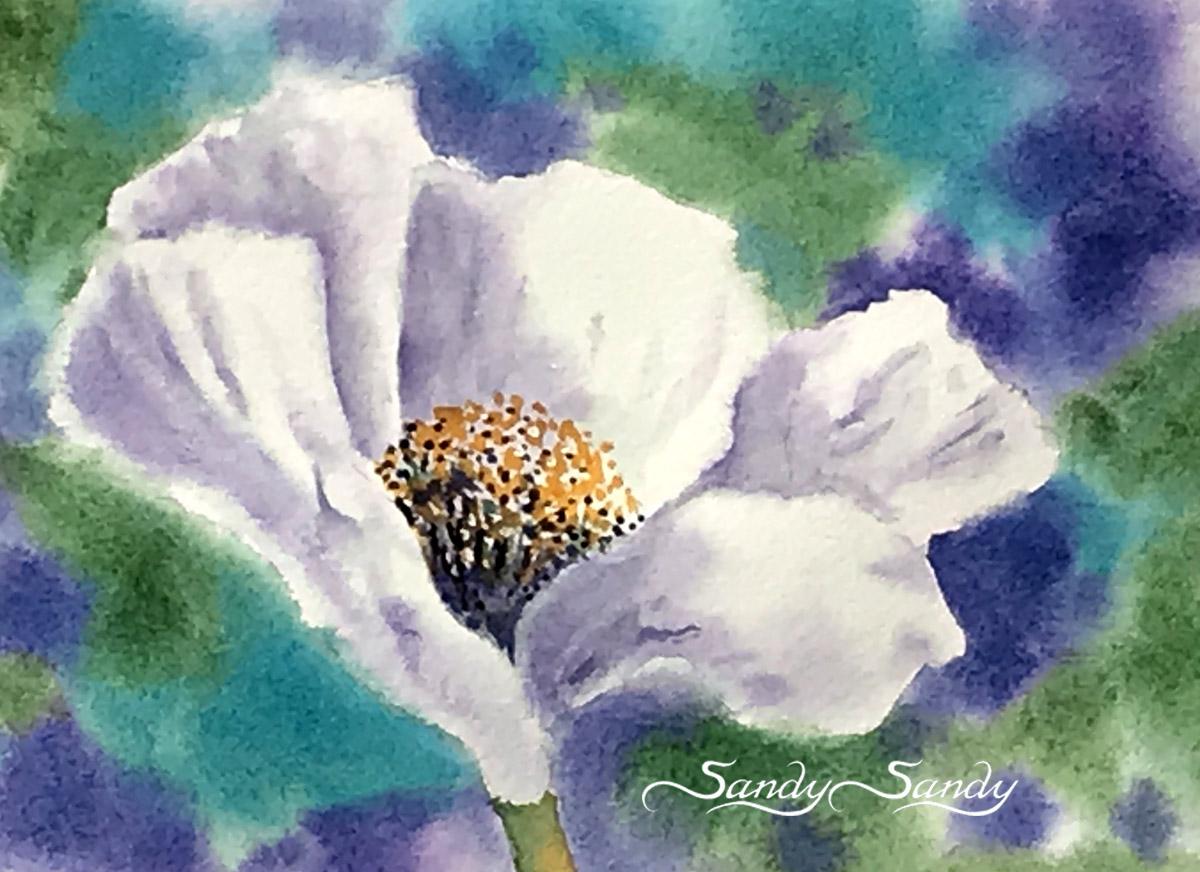
donc je ne vais pas m'embêter avec ça. Où seraient les ombres là-dedans ? J' ai essayé de rester ludique. Je ne veux pas me serrer dessus. Alors je vais venir ici et griffonner un peu plus sur cette frontière. Juste déchirer et ils partent contre les Perdus et Trouvés. Ajustez. L' eau n'a pas à traverser tout le chemin. Vous pouvez laisser des endroits où il ne se connecte pas, comme gris ici, ne se connecte pas là. Bonjour. Et j'aime comment le contour de cette fleur dans quelques endroits. Je ne l'ai pas connecté seul comme ça. Je ne veux pas en faire trop. Donc je vais dire que celle-là est fait. Juste un petit croquis amusant, ne pas dans mon carnet de croquis aquarelle avec du papier aquarelle et en utilisant mes pinceaux aqua et ma petite palette de voyage. Répétez le même dessin que plusieurs fois Kn, car il faut 12 à 20 répétitions pour devenir compétent à quelque chose. Voyez combien de croquis de coquelicot vous pouvez créer à partir de la référence photo que j'ai fournie. Faites le même croquis, mais inversez-le, changez les couleurs ou couché ou expérimentez avec des lignes courbes et angulaires. Variez la largeur, la longueur et la texture. Merci encore de m'avoir rejoint ici. Jusqu' à la prochaine fois. Joyeux création. Au revoir.
 Sandy Sandy, Learn.Love.Create with SandySandyArt