Vizvender
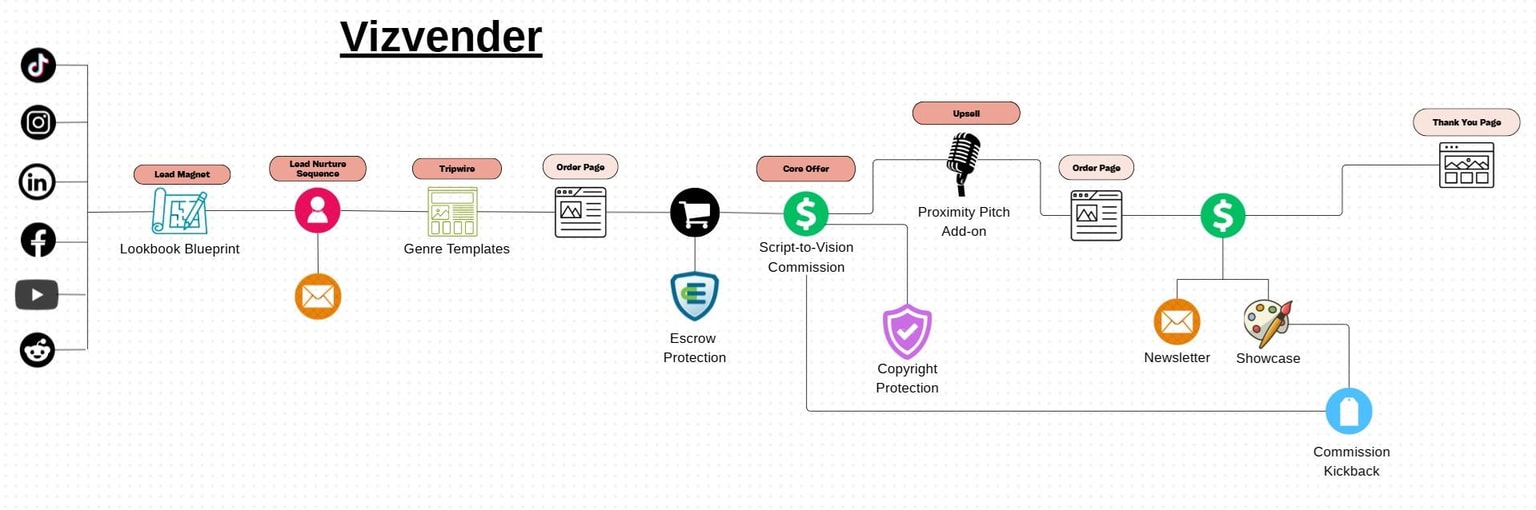
(With help from Google Gemini)
Project Summary: Vizvender
-
Industry: Creative Economy / Digital Marketplaces
-
Type of biz: Escrow-protected P2P marketplace (Writers + Artists)
-
Goals: 3:1 CTLV:CAC, 15% take-rate, <5% monthly churn
-
Location: Online / Global
-
Website: Yes (Marketplace exchange & escrow gateway)
-
Email Marketing: Yes (Lead magnet delivery, 3-part nurture, weekly newsletter + showcase)
-
Social media: Yes (TikTok, Instagram, LinkedIn, Facebook, YouTube)
-
Target Audience: Independent writers without visual assets (ages 24–45) living in "scripted art production" cities.
-
Current marketing effort: Content marketing, free guide lead magnet, community networking
-
Competitors: Fiverr, Upwork, ArtStation, AI image generators
-
CCTLV: High (Tiered from $9 templates up to $250+ commissions and annual memberships)
Project Context: Vizvender
The Premise: The entertainment and publishing industries don't buy ideas; they buy visions. Vizvender is a high-velocity digital marketplace designed for "The Unconnected Creative"—independent screenwriters, authors, and content creators who have great text drafts but lack the visual assets (storyboards, pitch decks, posters) needed to command a professional meeting.
The Challenge: Writers are protective of their IP and cynical about digital noise and story theft. This funnel is made to break down that friction step-by-step, moving them from a free "how-to" asset to a fully secured, low-risk collaborative ecosystem.
The Goal: Create a community that fosters communication, collaboration and connection. We aim to achieve this through nurturing, conversion and rentention:
-
We nurture to lower our Customer Acquisition Cost (CAC).
-
We convert to drive Gross Merchandise Value (GMV) and immediate Platform Revenue.
-
We retain to maximize Customer Lifetime Value (CTLV) and build a sustainable, self-running marketplace.
The Marketing Performance Dashboard for Vizvender
1. Top of Funnel (ToFU)
-
KPI: Acquisition Efficiency Ratio (CTLV:CAC)
-
Target Benchmark: 3:1 to 4:1
-
Business Meaning: For every dollar spent on ads or content creation to attract a writer, they must return $3 to $4 in value.
2. Middle of Funnel (MoFU)
-
KPI: Lead-to-Prospect Conversion Rate
-
Target Benchmark: 5% to 10%
-
Business Meaning: The percentage of users downloading the free guide who take the "first paid step" by purchasing the low-cost template.
3. Bottom of Funnel (BoFU)
-
KPI: Prospect-to-Buyer Upgrade Rate
-
Target Benchmark: 15%
-
Business Meaning: The percentage of template buyers who move up the ladder to buy a full, escrow-protected storyboard package.
4. Monetization
-
KPI: Platform Transaction Fee (Take-Rate)
-
Target Benchmark: 15% of Gross Sales
-
Business Meaning: The commission Vizvender keeps for brokering, protecting, and managing the project exchange.
5. Retention & Loyalty
-
KPI: Customer Churn Rate (Monthly)
-
Target Benchmark: Under 5%
-
Business Meaning: The maximum percentage of annual members who cancel their accounts or drop off the platform each month.
6. Customer Lifetime Value
-
KPI: Repeat Purchase Velocity
-
Target Benchmark: 25% to 30% within Year 1
-
Business Meaning: The percentage of writers who come back to commission a second or third script illustration package within 12 months.
The Buyer Persona: "The Unconnected Creative"
-
Demographics: Aspiring and independent screenwriters, indie authors, or digital content creators (typically aged 24–45) who have completed drafts but lack Hollywood representation or production budgets. English-speaking cities with direct interaction with the film industry are the main targets: LA, NYC, London, Atlanta, Vancouver.
-
The Problem: They feel invisible. They have the drive and high-quality scripts, but they are drowning in digital noise. They realize that without visuals, they’re trapped pitching text to a industry that revolves around it.
-
Psychology: They are highly protective of their intellectual property and deeply cynical/suspicious about getting ripped off.
Traffic Sources
-
Discovery Channels (ToFU):
-
TikTok: Fast-paced, high-relatability hooks targeted at the frustration of screenwriting (#POV, #ScreenwritingTips).
-
Instagram: Visually striking "before and after" split screens showing a raw script page transforming into a cinematic storyboard canvas.
-
Reddit: Subs like r/Screenwriting, r/IndieAuthors, or creative Discord servers where writers constantly ask, "How do I find an illustrator for my pitch deck?"
-
-
Consideration Channels (MoFU):
-
LinkedIn: Focuses on the business, B2B framework, escrow security, and contract protection for creative entrepreneurs.
-
Facebook & YouTube: Used for long-form community building, deep-dive cinematic case studies, and storytelling execution to build trust.
-
The Lead Magnet
-
The Asset: "The Lookbook Blueprint: A Writer’s Guide to Visual Pitch Decks."
-
What it is: A free, downloadable PDF guide or interactive checklist that teaches a text-heavy writer exactly what visual assets (poster, character sheets, 3-frame storyboard) an executive needs to see to greenlight a project.
-
The Transformation: It takes them from a writing “in the dark” to a producer thinking structurally about a pitch.
The Tripwire
-
Product #1: The "Aesthetic Match" Pitch Presentation Template Pack.
-
Price Point: $9-17.
-
What it is: A bundle of drag-and-drop presentation templates (Canva/Keynote format) pre-styled for specific cinematic genres (e.g., Cyberpunk, Poetic Realism, Neo-Western).
-
Why it works: It’s low-friction, requires zero manual design skill, and directly sets up their need for custom artwork. They buy the layout for cheap, and suddenly the placeholder frames make them realize: "Now I need actual art to fill these slots."
The Core Product
-
The Core Offering: The Escrow-Protected Script-to-Vision Commission.
-
Price Point: $250.
-
What it is: The writer verifies their membership in Vizvender by purchasing a brokered package to turn their script's first act into a visual asset package (1 poster concept and a 5-frame key-frame storyboard sequence).
-
The Security: This triggers the core business mechanics: the 1-month strict timeline guarantee, iron-clad deposit protection, and proximity-based refund architecture.
-
Complimentary Offering: The Copyright Registration Initiative.
-
Price Point: 5% off standard membership for every 3 projects registered with a federal body aligned with the Berne Convention. An up to 50% rate reduction.
-
What it is: As an expensive but necessary precaution, Vizvender will incrementally discount the annual membership rate for users that invest in protecting their ideas through government registration. By verifying the details of these registrations with the platform, they can reduce their yearly dues by up to 50%.
-
Why it works: It removes the fear of theft from the writers and concern about lawsuits common for those that collaborate with them.
The Upsell
-
The Upsell: The Proximity Pitch Distribution Add-On.
-
What it is: For an extra fee or a premium platform tier, the creator doesn't just get the art—they get their newly visualized project featured on the Vizvender Exchange Showroom.
-
The Benefit: This pushes their visual pitch deck directly to a curated list of indie producers, publishers, or directors looking for structured, pre-visualized IPs, moving them directly closer to getting that important meeting.
The Return Path
-
The Mechanism: The Weekly Exchange & Commission Kickback
-
How it works: Automated email sequences celebrating their 30-day delivery success, paired with a weekly newsletter showcasing well-received collaborations. Writers and/or artists featured in the showcase receive a 20% of coupon for any future commissions.
-
The Retention Loop: It highlights successful "profit-share partnerships" brokered on the platform. If a writer has an empty wallet but another great script, the return path invites them back to pitch a collaborative deal with a new artist, keeping the transactional volume moving while encouraging them to reinvest their money into further collaborations.