Transcripts
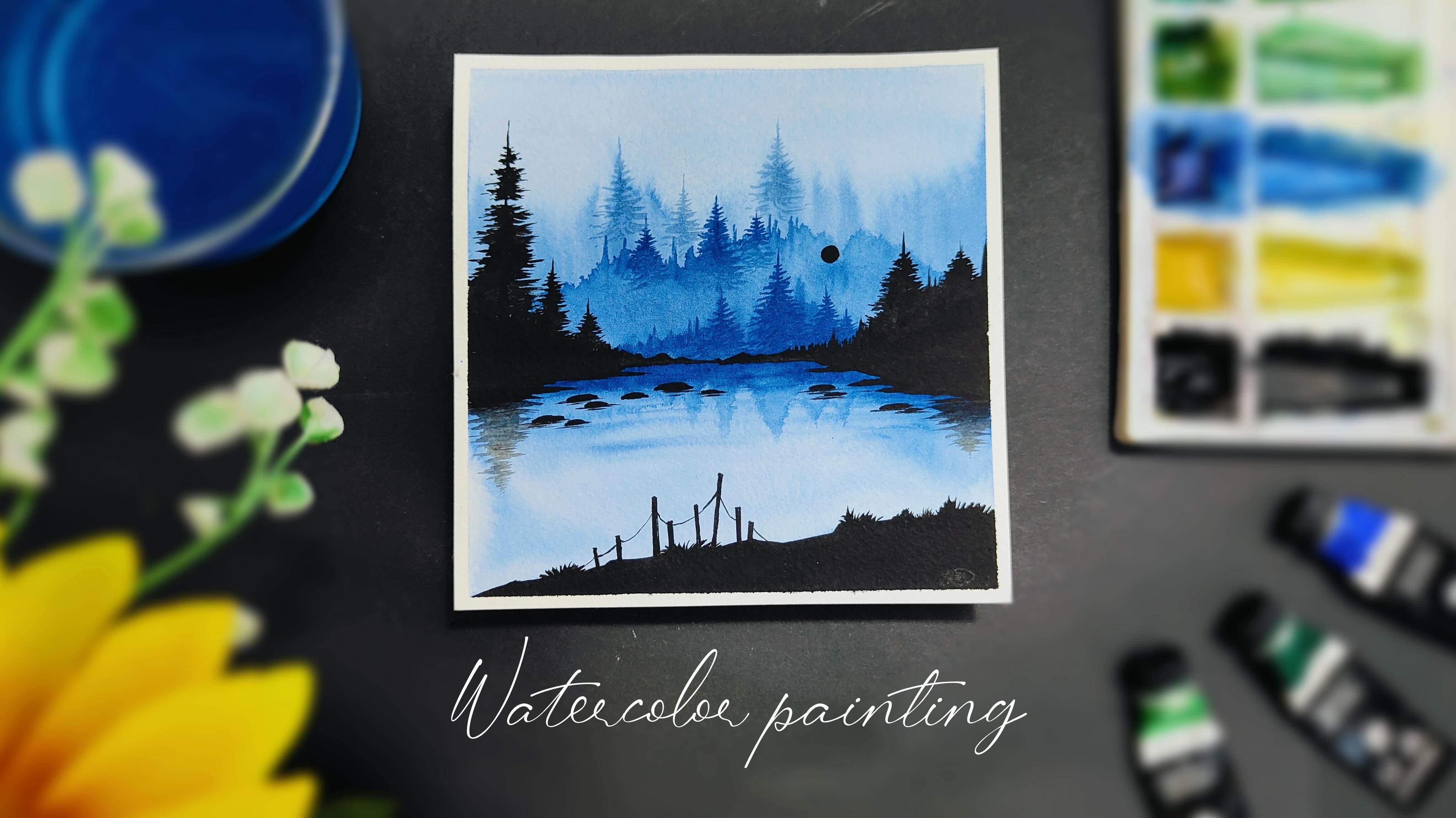
1. Welcome to the Class: When we talk about watercolors, it's an amazing art medium that you can explore
in a lot of ways. In this class, we
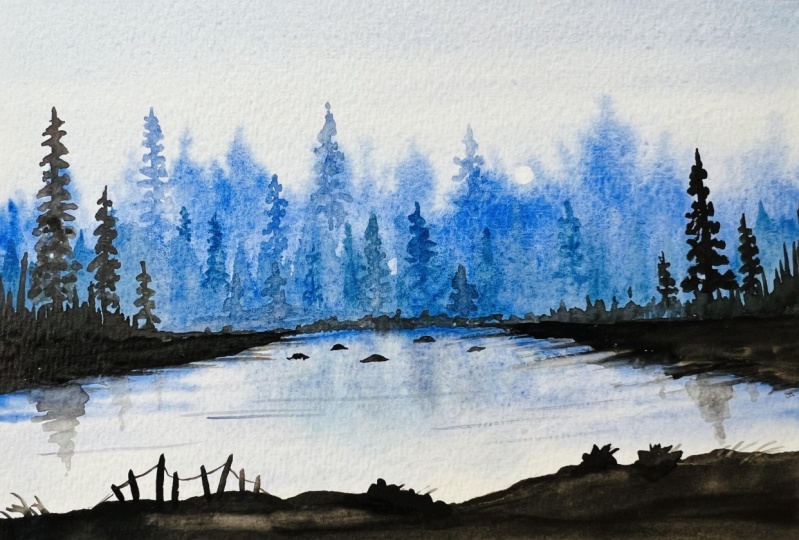
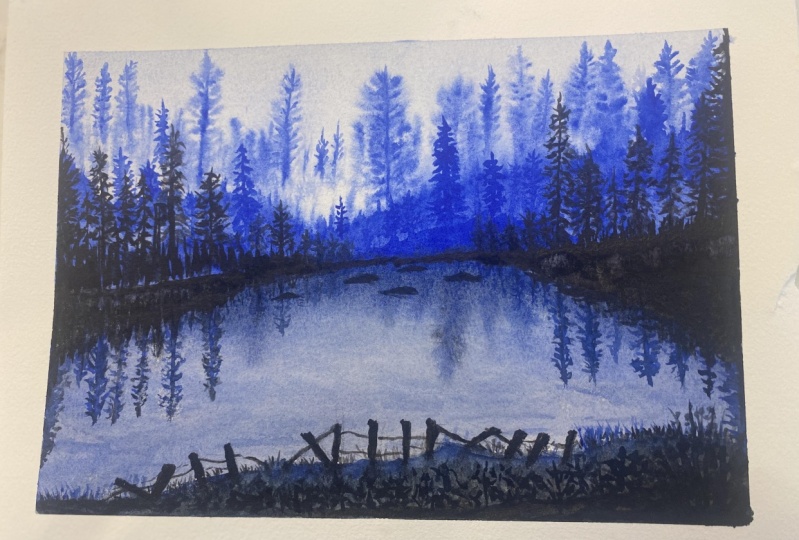
are going to create a beautiful winter
lake landscape using the medium of watercolors. It's going to be a short class, which includes easy
painting techniques and a minimal color palette.
Hey, everybody. Myself, Rothwk Patel. I'm a self taught
independent artist and an interior
designer by profession. I personally love to explore different art forms and styles and not stick to
one particular thing. If you're joining
me, you'll find a variety of classes
that I create. We're going to start
by understanding all the art supplies in detail. No need to worry at
all in case you're missing out on any
particular art supply, you'll find it very easily in
any nearby local art store. The best part about
the class is that you will need only
two basic colors, which is going to be
black and ultramarine. We are going to
learn how to place the watercolor paper
using a masking tape, and then we are going to start by creating a basic sketch. There are going to be various
techniques like wet on wet, wet on dry that we
are going to use to paint some beautiful pine
trees in the background. Using these techniques,
we can create a nice gradient effect
wherever required. Once we are done with
the background elements, we're going to focus on
the foreground elements using a solid black color, which includes some
amazing pine trees and a landscape with a fence element and
some grassy texture. It's a short class which will
not take a lot of time and you'll be able to gain a lot of knowledge about watercolors. Combining some basic
natural elements, we're going to complete
the entire painting. No need to worry
about the output, enjoy the process of creating. You're free to explore
and experiment with the entire class
project as well. The class is absolutely
suited for beginners and also intermediate and advanced
level artists can try. So without any delay, grab your art supplies, and join me on this
creative journey.
2. Art Supplies: Hey, everybody, now,
let us talk about all the art supplies that you will need for the entire class. So as you can observe,
I have placed all my art supplies in
a systematic manner. Let us start with the
first art supply. As you can observe, this
is a simple color palette, which is having a lot
of sections in it, where you can take
out multiple colors, and it is also having a
noice mixing space in it. So it is absolutely fine if you have a simple
color palette. It is completely okay. Just make sure that you have enough space for mixing and
taking out some colors in it. Then let us talk about the two basic watercolors
that you will need. The first one is black, and the second one
is ultramarine. These are the two basic colors that you will need for
the entire painting. Now let us talk
about the brushes that you will need
for the entire class. These are the two brushes. One is of size four, another one is of size two, and these are quill brushes. They are also known
as mob brushes. These brushes are really good when you work with watercolors. Now apart from
these two brushes, we have one more brush, which is a round
brush of size four. You can also call it
as a detailing brush, which we are going to use to add some minute details in
the entire painting. Then next up, we have a simple
pencil that we're going to use to draw basic sketch
before we start painting. Then next up, I have a simple
eraser that we can use in case we have any
mistakes while we are sketching on the
watercolor paper. Then I have a simple ruler. As you can observe, we have
dimensions in centimeters. It's a simple ruler
with 15 centimeters that we're going to use to
cut our watercolor paper. Then next up, I have a
simple masking tape. You can observe it's a
simple paper tape that we're going to use to
apply the tape on the sides of the watercolor
paper so that we get a nice white border when we remove the entire masking tape. Then I have a simple tissue
paper that we are going to use to remove excess amount of water and color
from the brush. It is always good to
keep a tissue paper nearby while you're
working with watercolors. Then next up, I have a
simple glass container in which you can observe
there is some water, which is completely blue. Of course, we're going to
take some clear water in it. Then we have a simple pair
of scissors that we are going to use to cut
the extra portion from the watercolor paper. To make the rectangular
sheet into a perfect square. Then let us talk about the
most important art supply, which is the watercolor papers
that we are going to use. So the watercolor papers that
I'm using are from Canson, and it is A five size. The most important part is the GSM that you
have to take care of. These are 300 GSM
watercolor sheets, which is basically
the thickness of the paper so that you can
apply heavy washes on it. So these are all the art
supplies that you will need for the entire class.
No need to worry at all. In case you're missing out on
any particular art supply, you'll find it very easily in
any nearby local art store, or you can go for any other
good alternative as well. Now, let us move
towards the next part.
3. Color Palette: Hey, everybody, now,
let us talk about the color palette
that we are going to use in the entire
class project. You can observe that I've placed the class project on
the topmost portion. Let me take you a
little bit closer. The best part about
the class project is that you will need
only two basic colors. The first one is ultramarine, and the second one
is solid black. You can observe some
beautiful pine trees in the background and a little bit of pine trees in the
foreground as well. So here, I have a
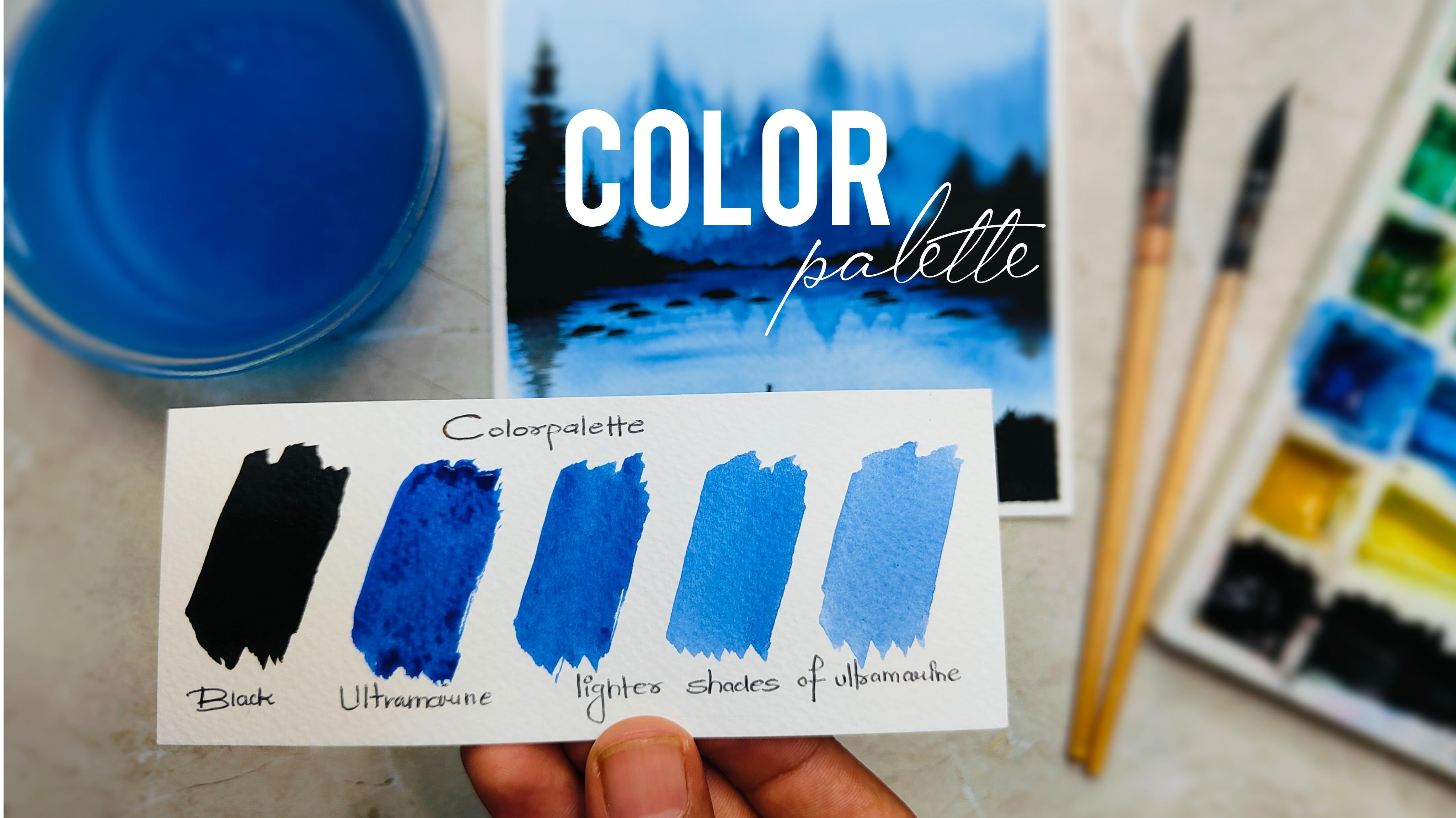
simple scrape of paper in which I have
labeled the color palette. Then we have black
and ultramarine. And apart from ultramarine, we have lighter shades
of ultramarine as well. The black color
is going to be as it is in the exact saturation. And in the ultramarine color, we are going to decrease the
saturation of the color. So here are the two watercolor
tubes that you will need. Now, let us start
with the first color, which is solid black. In the color palette, mix a little bit of water
with the color. Try to make a good composition of water and color together, and simply apply a little patch of the color onto the paper. So if you observe and compare
it with the painting, this is the exact shade of black that we are going to use. We're not going to decrease
it saturation as well. You can observe a little
bit of decrease in the saturation in the reflection
effect of the pine tree. Now, similarly, I'll take a little bit of ultramarine
in the color palette, mix it well with water, try to have a good composition of water and color together, and apply the exact shade
onto the watercolor paper. Now, if you observe
in the background, you can observe a
different shade of ultra marine being used. So there are a lot of lighter color patches and a lot of darker color
patches as well. So it's a very simple
and easy technique. You just have to
increase the amount of water and lower the
amount of color. You'll observe that
the saturation of the color will
slowly decrease. So if you want to have a very less saturated
ultramarine color, try to have more amount of water and very less color in it. So you can observe a
beautiful variation in the entire color palette. The black color is
going to be as it is. In the ultramarine section, you can observe various
shades of ultra marine. Let me take you a
little bit closer so that you can observe the
color palette carefully. I'll be placing
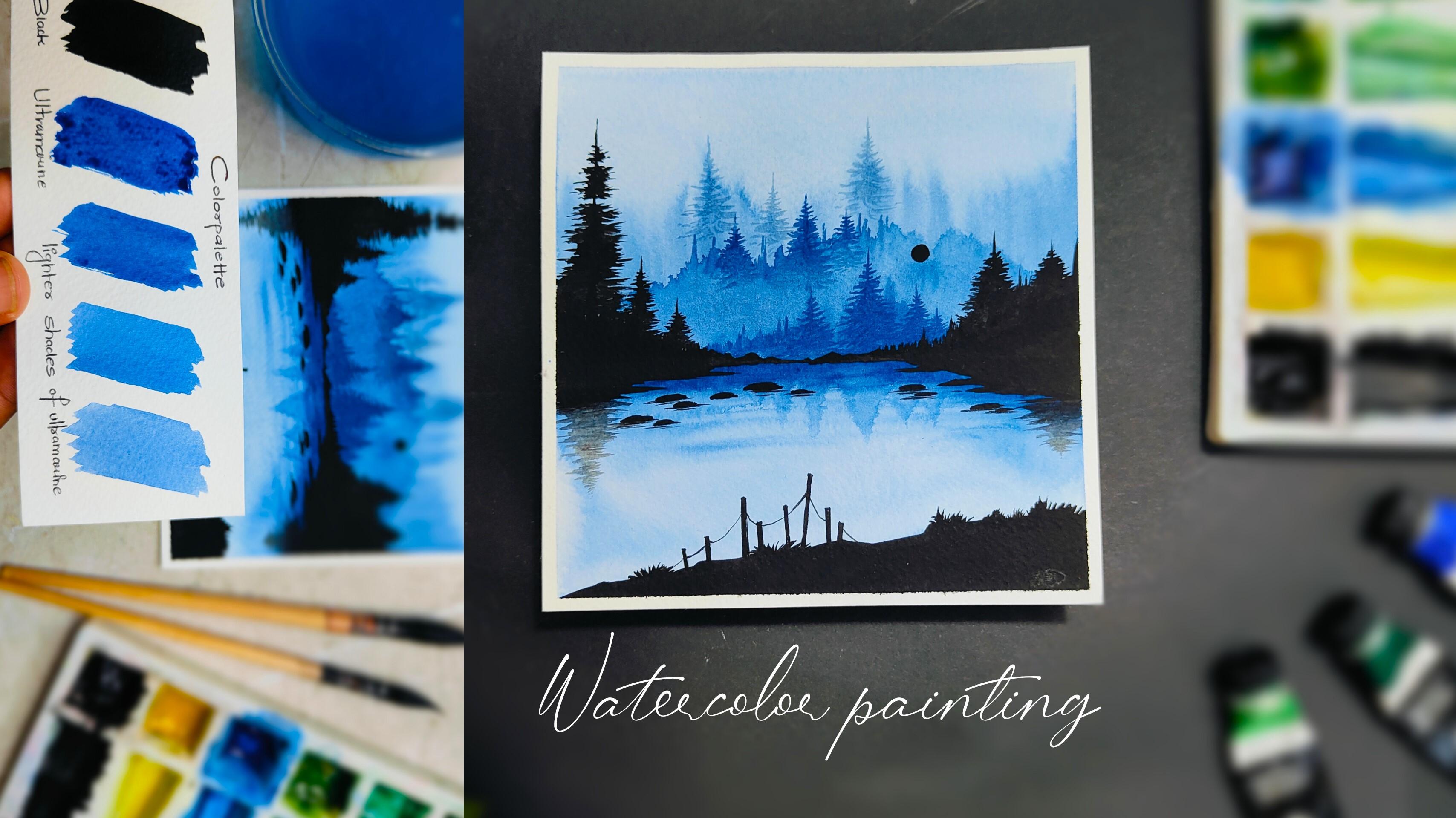
the color palette just beside the painting, and let us compare
all the colors wherever we are going to use
these particular shades. It is always good if you create a color palette prior
before starting with the class project
so that you can get an exact idea of where we are going to use
the entire color. You can observe that
we're going to use the darker shade
of ultramarine in the front portion and the lighter shade in the lake and the background pine trees. The solid black color creates a beautiful contrast with
the entire painting. That's why we're going to use solid black colors in all
the foreground elements. The most lighter shade of ultramarine is used
in the sky area, also, as you can observe
and in the lake element. The solid black color is going to be used in the pine trees in the foreground and
the landscape area that we have created
in the bottom portion. This is the entire color palette
that we're going to use. I hope that you've
got an exact idea of the color palette and the
colors that we're going to use. Now let us move
towards the next part.
4. Lets Place the Paper: Hey, everybody,
now, let us place the paper on the desk surface. So as you can
observe, I'm having a rectangular sheet of
the watercolor paper, and we're going to convert this rectangular shape
into a perfect square. So I'll be using a simple ruler, which is having
dimension centimeters. It's a 15 centimeter scale. Place it vertically onto
the watercolor paper. Keep zero on the edge
of the watercolor paper and just put a simple
dot at 15 centimeters. You can put one more dot so that you can get a nice
straight line. Now simply just flip
the paper and just draw a simple vertical line
using your pencil and ruler. Now we're going to
remove the extra part, so I'll be using a
simple pair of scissors. Just simply take the
watercolor paper in your hand and follow the pencil line that we have created
using a pencil. So I basically wanted to create the class project
in a square format. In case you want to create
the entire project in a rectangular sheet only,
it is completely fine. So you can observe
that we have got a perfect square on which
we are going to paint. Apart from that, you can use this additional piece of paper to create
your color palette. Now, once we have got this perfect square watercolor paper, we are going to place
it on the desk surface. I'll be using a
simple masking tape, which we are going to place
on all the four sides so that the paper will not
move from its position, and we will get a
beautiful white border once we're done with
the entire painting, and we remove the masking tape. So just take a simple
piece of masking tape. Apply it on one side of
the watercolor paper. You have to take
care that you keep the masking tape parallel with the paper edge so that you
do not get a slant line. Now simply use your
finger or thumb to apply some pressure
onto the masking tape. Also, take care that
some portion of the masking tape is onto
the watercolor paper, and some portion has to be on the desk surface so that the paper will not move
while you're painting. Similarly, I have applied another piece of masking
tape on the bottom portion, and you have to repeat
the same process on the sides as well. You will definitely
enjoy removing the masking tape once you're done with the entire
class project. It will give you a nice
solid white border, and it is also a very
satisfying step. As you can observe, I have placed the last
masking tape as well. Now the paper is completely ready and we can start
with the class project. The paper will not move while
you're painting as well. So I hope that you
got an exact idea of how you have to cut and
place your watercolor paper. Now let us move
towards the next part.
5. Background Trees and the Lake: Hay body. So let us start
with the first step, which is creating the
background trees and lake. So I'm ready with
my watercolor paper and the masking tape
on all these sides. Let us use a simple
pencil to create a horizon line to separate the sky area and the water body, which is the lake that
we are going to paint. Apart from that, you can add these additional landscape
portions on both these sides. It is not at all compulsory
for you to draw it in the exact same way in case you want to create
your own composition, it is completely fine. I'll be adding these
vertical lines having variation in the height, which is basically
the position of the pine trees that we
are going to paint. Apart from that, I'm
also going to create a little bit of landscape
in the bottom portion. It is a very simple
and easy step. You just have to create
this irregular line, start from the
left hand portion, slowly move towards
the right hand side. Now, in this particular
landscape area, we're going to create
a nice fence element, which is going to be
completely random, so you can add it according
to your convenience as well in case you want
to change the composition. It is completely fine. So these are all the basic elements
required for a basic sketch. Now let us start
with the first step. So I'll be using my
quill brush of size fur. And we're going to
start by creating a very light saturated
color of ultramarine. So you have to be
very much careful. Mx a nice composition
of color and water. You can observe it in
the color palette. I'll be having more amount of
color and very less water. You can apply it on
a rough scrape of paper to check the saturation
of the color as well. Now we are going to apply
it in the sky area. Take a good amount of
color and water in your brush and just start applying it from the
topmost portion. Slowly move towards
the bottom area, till the horizon line. No need to hurry at all, take your time, apply
the color well, and make sure that you
do not leave any space between the masking tape
and the watercolor paper. That will not look nice when they remove
the masking tape. So you can observe a very light, saturated ultramarn
color in the background. Now the color is
completely wet right now, so we'll take a little bit
of darker tone of ultramarn. I'll be using my quill brush
of size two this time. Try to have a little
bit of more color. Now, this time,
the saturation of the ultramarine color is a little bit more
than the first one. Now, simply start applying
these vertical strokes, and you can observe that the
paper surface is still wet, and you'll observe
that the color will automatically spread. One thing that I would
like to tell you all is that no need
to worry about getting it in the exact same way or painting it in
the exact same way. Your color spreading will be definitely different and
it is completely fine. In fact, your saturation of the color will
also be different, so no need to worry about that. So these are all the pine
trees that are going to be very much far from
the entire scenery. So that's why it is
in the background, and we have taken a very less saturated
ultramarine color. So to enhance the pine
trees a little bit, I'll be taking some more ultra marine color in
the color palette. And this time it is going to be a little bit more saturated. In order to check the saturation of the color again and again, you can apply the color patch on a rough scrape of
paper so that you get an exact idea of how you have created the
saturation of the color. It will also give you an idea of which element to increase, whether the color or water. So now, again, I'll be applying these vertical strokes
in the bottom portion, and you can observe it is a little bit darker
than the first one. You can also complete it
till the horizon line so that we get an exact idea
of the background trees. Now, let us add few details in the pine trees that
we have created in this background so that it looks a little bit more
aesthetic and attractive. I'll take you a little bit
closer to the entire painting. I'm going to use the
same quill brush, and you can observe the way I'm using the tip of
the quill brush. We are having the same saturated
color that we created, and we're just increasing
the vertical lines. Once we increase
the vertical lines, we are going to add some details to the entire pine trees. It's a very simple and easy
step that you can follow. But before that, to
create some more depth, I've taken a little bit of
more ultramarine this time and added very less water in it to get a very dark,
saturated color. Just apply these vertical lines above the horizon line so that we get a bit more depth and some more pine trees
in the entire background. Again, I'll be telling
you the same thing. No need to worry about painting
it in the exact same way. Your composition might differ, and it is completely fine. There is always a lot of
randomness in watercolors, and that is the
best part about it. So now we are going to
add some minute details to the pine trees in the
background that we have created, using these easy brush strokes. You just have to
observe carefully. I'll be using my round
brush of size fo, which is also basically
a detailing brush. You just have to create
these little strokes. Start from the topmost portion, and as you move towards
the bottom area, just simply increase the size of the strokes that
you're making. It's a very satisfying step, and you'll definitely enjoy
creating these pine trees. In the complete
background pine trees, I'm using a little bit less
saturated ultramarine color. You will also observe that these strokes defines the pine trees in a
very good manner. So you just have to simply
follow these steps, observe carefully the way I'm creating these
little strokes, forming a beautiful pine tree. There might be a little
bit of variation in the height and size
of the pine tree, and it is completely fine. You can also decide the
position wherever you want to define the shape
of the entire pine tree. So I hope that you
got an exact idea, how we have created these minute details
in all the pine trees. You can observe a nice variation in the saturation
of all the colors. The front pine trees
are a little bit darker and more saturated
than the background ones. And that is how we have created a nice dense forest in
the entire background. Now, let us paint the lake. It is a very interesting step. You'll definitely enjoy it. You just have to create a
highly saturated color in the color palette using your
quill brush of size too. Now mix it well with water. Try to have a good composition of water and color together. In case you want to create
a little bit of more depth, you can add a little bit
of black in it as well. Check the color on
a rough scrape of paper and just apply it
below the horizon line. No need to hurry at
all. Slowly apply it. You can leave a little bit of landscape area on
both the sides. I'm using the tip
of my quill brush, and you can observe it's
a highly saturated color. Now take a little bit of
water and just simply apply a nice stroke below
the saturated color. You'll observe that the color
will automatically spread, and you'll get a beautiful
gradient effect as well. I have left the landscape area because we are going to apply
solid black color there. Now using the same qui brash, you can add these little
horizontal strokes to create some depth in
the entire winter lake. No need to hurry at all. You can observe the
way I'm using my hand. You just have to keep your hand very much loose and
free when you're creating this beautiful
gradient effect. You can add these
horizontal lines, and you can just move your
brush in a very random way. So no need to worry
about painting it in the exact same way. Now, slowly, I'll be moving
towards the next step, which is creating
a little bit of reflection effect
of the pine trees which are just above
the horizon line. So it's a very simple
and easy step. Try to use the same quill brush and apply these
horizontal strokes. As you move towards
the bottom area, decrease the size of the
strokes that you're making. So it's basically
the reflection of the pine trees just
above the horizon line. No need to hy at all, do
it very much carefully. The color will
automatically spread. In case you find that there is excess amount of
water in your brush, just simply dab it
onto the tissue paper. So this is how we have created a nice reflection effect
of these pine trees. Now, let all the
elements dry for a while and let us move
towards the next part.
6. Foreground Trees and Details: Hey, everybody.
Now, let us paint the foreground
trees and details. So once all the
elements that we have created in the background
and the lake are dry. We're going to take
some solid black color, and you're going to enjoy
this particular part as well. The solid black color is going to create a beautiful contrast, and for that, you have to make a good mixture of solid
black color with water. Try to have more color
and less water in it so that the saturation of solid black color
will not decrease. To check the saturation, again, you can apply it on a
rough scrape of paper. So that's why I'm
taking a little bit of time to mix the colors well. Now we're going to have
some beautiful pine trees on the left hand side and
the right hand side as well. To create that, you just have to create these vertical strokes. Start from the
left hand portion, slowly move towards
the right hand side. Now you can decrease the size of the vertical strokes to
create some nice perspective. Similarly, you can add
the solid black color in the landscape
portion that we have created in the bottom
portion as well. You can use some horizontal
strokes to create a nice reflection effect
of the landscape as well. Try to apply very
less pressure on the brush and simply apply
the horizontal strokes. We're going to have
a little bit of landscape area in the
middle portion as well. So that's why I'll
be using the tip of my quill brush to paint in
a very smaller portion. Now, similarly, we
are going to have some pine trees in the
right hand side as well. These steps are absolutely same. You just have to create
these vertical strokes and complete the entire
landscape portion. No need to worry
about the pine trees. We're going to add some minute
details to this as well. Now, similarly, I'll be adding these horizontal
strokes just below the landscape area to create some depth and details.
No need to worry at all. And also, I would like
to remind you that no need to worry about painting
it in the exact same way. In case you want to create your own composition,
you can do that. It is absolutely fine. So right now you can observe
a beautiful position of the forest element
in the foreground. So these are basically the pine trees in
the front portion, which is very much dark. That's why we have used
solid black color. Now, similarly, I'll be adding this solid black color in the landscape portion that I have created in
the bottom part. No need to hurry at all, take your time and make
sure that you do not leave any space between the masking tape and
the watercolor paper. It will not look nice when
you remove the masking tape. Now, using the tip
of my quill brush, I'm just leaving these
little strokes on the topmost portion to create
a nice grassy texture. It is a very random
process and just observe the way I'm using
the tip of my quill brush. You can similarly add these little strokes
wherever you want to. It is completely fine. So now, let us add some details
to the pine trees. And again, it's going to be
a very satisfying process. So just increase
the vertical line on the left hand portion. You can increase it
wherever you want to. So you can decide the position and height of the pine trees. According to your convenience. It is completely fine. Now, these steps are very easy. You just have to start creating these little strokes from
the topmost portion. Now, it's a very random
and natural step. And as you move towards
the bottom area, you can simply increase the size of the strokes
that you're making. So this will help you to
create a beautiful pine tree. And again, no need
to worry about painting it in the
exact same way. You're free to explore and experiment and create
your own composition. I'm using the same
solid black color, and you can observe that as I move towards
the bottom area, I'll completely
blend the pine tree with the solid black color
that we applied initially. Now, once you're done
with the huge pine tree, you can similarly add
few more pine trees in the landscape area that we have created in the
left hand portion. Now this time I'm having a
little smaller pine tree, and the next one is
even more smaller. These steps are
absolutely same, again, you can have a nice variation in the height of the pine trees. Now, simply observe these steps carefully and follow them. You can observe the way I'm
moving my brush as well. And whenever you're painting
in a very smaller portion, always try to keep your hand
very much loose and free. No need to make it stiff. Whenever you find
that your color is getting finished
from the brush, feel free to take
some more color from the color palette so that the saturation of solid black color
will not decrease. Now, using the same
solid black color, I'll be adding these little
rock bodies in the lake area. It is a completely easy step. You just have to use the tip of your round brush
of size flow. Create these little
solid black patches in the lake area near
the horizon line. There is no specific
way of applying these rock bodies
into the lake area. You can just randomly apply the color
wherever you want to. In fact, in case
you want to create a beautiful composition of
three to four rocks together, that is also absolutely fine. We are almost done painting
these little rock bodies. You can add few
horizontal strokes to create a little reflection
effect in the lake area. Now, I'll be taking a bit
of more solid black color, add a little bit of water in it, and let us paint the fence
element in the landscape area, which is in the bottom part. If you observe carefully, the pencil line
is still visible, so you can follow
that pencil line, and you can create
these vertical strokes together to form a nice
thick solid fence. There is a nice variation in the height of all
the vertical lines, which is forming a
beautiful fence element. We are also going
to connect them using a nice thread structure. So I'll be using the tip of my round brush and apply
very less pressure on it, and you can just connect the vertical lines together
in a very random form only. We are also going to connect the line with the ground area, so you can observe
these steps carefully. So you can observe how beautiful
this entire combination of vertical lines together is
looking in the ground area. I'll be using some
more black color and add a little
bit of water in it. Let us define the
landscape area just above the horizon line a
little bit more in detail. You can use the tip of your round rush and just
define the lines carefully. So now the landscape area using this solid black color is completely visible in
a detailed manner. I'll be adding a little bit of water in solid black color, and we're going to create a less saturated
solid black color to create a nice reflection of the pine tree in
the left hand side. It's a very simple
and easy step. Take your round
brush of size four. Start applying these
horizontal strokes just below the huge pine
tree that we have created. And as you move towards
the bottom area, simply decrease the size of the strokes that
you're making. This is how we create
a nice dense shadow of the entire pine tree, and it is also creating a nice reflection effect
in the lake area. All right. So I hope that
you got an exact idea of how we have to create this beautiful
reflection effect. Similarly, you can
add this effect in the pine tree on the
right hand side as well. No need to hurry at
all, take your time and try to paint in a very
slow and steady manner. Now we have created
a beautiful depth in the entire painting using this beautiful
reflection effect in both the landscape areas
that we have painted. Now let us move
towards the next part, which is painting
a beautiful sun. You can consider it a sun or a moon,
whatever you want to. But we're painting it
using a solid black color. In case you want to paint
it using a white color, that is also absolutely fine. That would be also visible. I'm using solid black color. I'll be using the same round
brush of size fur and take some good amount of
solid black color in it and try to paint
a circular shape. We're not going to create
a very big circular shape, just a small circular shape. So we are done with
the entire painting. Now let us remove
the masking tape. This is a very satisfying step. You just have to remove the
masking tape carefully, try to remove the
tape in an angle so that you do not end up tearing
your beautiful painting. You can observe the
solid white border that you get once you
remove the masking tape. Now, let me take a
little bit closer so that you can observe all
the details carefully. Using some basic
watercolor techniques, we have created this beautiful
winter lake landscape. This is the entire
class project, and I hope that you enjoyed the process of creating
the entire painting. No need to worry
about the output. Just enjoy the
process of creating. You're free to explore
and experiment. Also, you can compose the entire painting according
to your convenience. Now let us move
towards the next part, which is the class conclusion.
7. Class Conclusion: Everybody, you are most welcome
to the class conclusion. While I was creating
this particular class, I made a number of mistakes, and that is something
that I always tell my students never to be
afraid of making mistakes. It's a part of learning. In case you are new
to watercolors, you should definitely try the painting so that
you can explore and experiment with the entire
composition and medium. Do not forget to add your projects into
the project gallery, and feel free to ask any questions or doubts you
have related to the class. It would be really great
if you leave a review for the class as it
encourages me a lot, and my class can reach many
more students like you. No need to worry
about the output, just enjoy the
process of creating. In fact, you're
free to explore and experiment with the
entire painting. Also, in case you want to experiment with
the color palette, you're free to do that as well. At the end, I would like to say keep learning, keep practicing. Thank you so much for joining the class and happy painting.
 Rutvik Patel, Artist and Instructor