Transcripts
1. Intro: Watching this, then
you obviously have a creative passion that you
love to make a living doing. Sometimes the hardest
part is just starting. It may be that you don't
know where to begin, it may be that you're afraid. It's a big jump for you, or you simply need a
roadmap to get started. In this class, I'm going
to provide that roadmap, and I'm going to show you how to get started and jump right in if you're starting from
zero the very beginning. For Trevino, and I've been
in professional colors for Bambox studio in New
York City for 15 years. I've run my own studio, and I've worked with
all types of clients. I've also helped other
people start businesses from freelancers to medium sized
studios to cinematographers. So I definitely know
the ins and outs of what a freelancer and what a
small business goes through. In this class, I've definitely
simplified a lot of what I've learned into a few lessons that will
help you get started. This class is designed for someone who's a total beginner, someone who's never been paid for doing anything creative, but they want to
follow their passion and get started today. I structured this class answering the very
common question of, if I currently have a job that
I want to leave and follow my passion and start a creative business,
where do I begin? What should I do first? If this sounds like you, then
you're in the right place. I also have a project that will keep you accountable
for the next steps. This is a fun one, and I
think you'll really like it. Lastly, I just want
to say this is a very short, simple class. It's designed not
to overwhelm you. So I'm not going
to go over every single minute detail of what you should do because that can be very overwhelming
to a lot of people. So just think of this
as a very general, basic roadmap to get you started and move you in
the right direction. So with that being said,
let's jump right in.
2. What Should I do First?: Okay, so this class is going
to be short and sweet. But the first thing that
you need to get started, let's say that you
are working a 95 job, you have a passion as a photographer or a painter
or whatever it might be, and you want to
get started today. So I would say the first
thing that you need to do is create a website
so that you have a portfolio to show people. You can't move forward
until you have work online that you can very
easily send people to. And with that being
said, I'm just going to give you a few tips on what to put on that website and what to put in the portfolio. So over the years, I've had
a lot of people email me, people wanting internships, people wanting to
work for my studio, people just sending
me their resume. And one thing that stands out is when I can tell that
someone has just gone quantity over quality. So the best tip that
I can give you for your website and
portfolio that shows your work is less is more and definitely always go for
quality over quantity. One of the big
fears that a lot of people have is that I
don't have enough work. I haven't worked on anything. I don't have enough to show. And I promise you
that if you put few items on your portfolio
and on your website. And if they're
very high quality, that will be much better than
having 50 things that were mediocre or even bad just because you want to fill
your website with work. It's best to always just put your absolute best work on your website because that
will take you much further. The other tip I'll
give you for this is to only put the work on your portfolio for the
clients you want to attract. So let's say you're
a photographer, if you want to focus on portraits, then only put
portraits in your portfolio. Don't put portraits about food, don't put family portraits, don't put product photography. Even if you have a
lot of that stuff, leave it out because
what you want to do is you want to
build your website and your portfolio and
your business from the ground up to only attract the kind of work you
want to do because that will lead to
long term happiness. You'll love who
you're working with. You'll love the clients
you're working with. And the worst thing you
can do is if you've only taken certain types of photos and done only
certain type of work, you fill your website with that, and that work will attract
more work like it. So only put the work on your website that
reflects the kind of work that you want
to do and the kind of creative business
that you want to grow. And I know this is very
hard to do because you usually want to put all your
stuff on your portfolio. But something that's helped me is always ask yourself
the question, would I present this
work to my dream client? And if the answer is no, then do not put it
in your portfolios. Okay, so the next most
commonly asked question is, how much do I charge? So in the next lesson,
let's talk about rates.
3. How Much Do I Charge?: Hey, one of the hardest things
to talk about is money, and how much should I charge? It's one of the
hardest things to do, especially when you're
getting started. So here's my advice to you. Every market is different, every city is different, every country is different. What they charge
in New York City is very different than what they charge in other smaller
towns, medium sized cities. The type of work they
do, it's all different. So what you want to do is do some research where you live
or where you want to work, reach out to other people
who do what you want to do. Sometimes you can ask them. You can tell them be honest say, Hey, I'm
getting started. What are the average
rates for this or that? You'd be surprised how
many people want to help other people
that work like you, whether you're a photographer or a painter or a writer,
they will help out. Another bit of advice
is honestly, you know, go to those websites, ask them how much they charge,
ask them for an estimate. Some people might
consider this to be a little bit sneaky,
but, you know, pretend you're a client and say, you know, how much do
you charge for this? How much do you charge for
that and see how they respond. And then once you
get an idea of, by the way, everyone does that, so it's not that sneaky. And so once you learn, you know, what they charge in Cincinnati or where it is that you live, I would also say reach out to the highest end
person in your town. Reach out to your average
person in your town and then reach out to the
lower end person in your town. That way, you get a good
range of, you know, where the prices in
the rates go from. For example, in New York City, I know that for what
I do, color grading, some people might do
it for, you know, 500 bucks for a certain project, and some people might
charge $50,000. And then there's
everything in between. New York City has one
of the widest ranges of probably anywhere
on the planet, but in most cities, that range
is a little bit smaller, and you'll probably learn
that something like, Oh, to do that kind of work, it's going to range
between, you know, $1,000 a day to $5,000 a day. So just specifically research your town and where you live, I would stay away from maybe Googling because Googling
will tend to give you the wrong answers
because they reflect certain areas that
you may not live in. And on top of that, another
tip I'll give you is that for most
creative professions, you want to have
a full day rate, a half day rate, an hourly rate, and also a rush fee. Let's say someone wants you to work over the weekend and get something done in
24 or 48 hours, obviously, you'll charge
more for that than if they give you a month to
do the same exact job. So research those different
types of rates and how long a day rate is in
terms of hours work. For example, to some people, a full day rate
might be 8 hours, some people it's 10 hours, and then to some
people, it's 12 hours. That's more of a personal thing. So decide based on
your profession and what you are how much
a full day should be. You know, I'd say
for most people, though, it is 8 hours, but you want to
know that I charge X amount of dollars, say, $1,000 for a full
eight hour day. It really varies based on the profession and the
type of work you're doing. So also try to research, you know, for a photographer, it might be 10 hours, and then a half day might
be 5 hours, of course. Also remember that for rates, usually the more
time a client books, they save money by doing that. So to give you a
super simple example, so let's say you work a
ten hour day for $1,000, for a half day rate, you would not charge 500. You would probably
charge something more like 600 for
a half day rate. You see how it goes. And
then for an hourly rate, you might charge 50. So rather than doing 1,500 and then $100 so that
the math works out, you actually want to
push clients to say, Oh, I can book this person for a half
day rate, and it's 600. But then if I need him again
later for another half day, that's actually going
to end up being 1,200. So you want them to say, I'm
just going to book him for a full day for $1,000, so
we have plenty of time. Okay, so now, once you do this, you'll know how much you
charge and for how much time. And as you get a little
bit of experience, you'll know, you know, if someone asks you how much
for this kind of job, you'll know, okay, that's
maybe two days worth of time, and then you'll charge
them for two full days. $2,000 or whatever your rate is. So for this class, remember we're building
something from scratch, and in the next lesson, I'm going to show
you how to find strategic clients
and what that means.
4. Find Strategic Clients: So now let's talk about finding strategic clients
and what that means. If there's one thing I
want you to get out of this class over everything is to attract the clients
you want and to build the portfolio that you want to attract those dream clients. That's what you're doing
at the very beginning. A big mistake that a
lot of people make is they just start taking
all the work they can. They put everything
on their portfolio, and then they end up
working with jobs they don't clients
they don't like, and their portfolio is a mishmash of all sorts
of different things, and you just end up
at this very kind of lower level plateau that
you can't get out of. And then what should have
been your dream job and your passion becomes something that you just don't
like doing anymore. But if you build your
website and your portfolio, to attract those dream
jobs that you want, you'll find that it
works very well, and you'll work with
amazing people, amazing clients, you'll love
what you're working on. You'll love what
you're doing, and you'll be very
passionate about it. So finding your strategic
clients is just that. And I'm going to keep using the example of a photographer. Let's say you're a
photographer and you want to work in sports photography, and your dream client is Nike. Well, you won't
want to reach out to restaurants and you won't
want to reach out to do, corporate head shots
or other things. What you want to do at
this point to build your portfolio and
build your brand and build who you work with is you want to reach
out to things like maybe I'll reach out to that gym that's really
popular in my town. Maybe I'll reach out
to a track club or a running club or a wrestling company
that's in neighborhood. You know, you want to attract
those kinds of people. So you start being known as a certain type of creative
that does certain things, and you want to have a niche and a specialty so that if someone
wants that kind of work, they know about you,
they come straight to you because there's a lot
of creatives out there. They do a little
bit of everything, and they can never
work on the types of projects they
want to work on. So that is a big tip. Reach out to the types of
projects that you want to work on and not just
anything and everything. Okay, and as things go, we always come back to
money when we're working as a freelancer or starting
a creative business. So if you reach out
to these people, how much should you
charge? Should you charge? That's definitely a hot topic. So in the next video, I'm going to talk about paid
work versus unpaid work.
5. Paid vs Unpaid Work: So in this lesson, I'm
going to talk about money and paid work
and free work. I'm typically all about
only doing paid work. However, I do know that in certain markets in certain
towns that is extremely hard, and at some point
you do have to do some work that is
free or discounted. So in this lesson,
I'm going to talk about those three
different types of projects when it comes
to the previous lesson of reaching out and finding those strategic clients to build your brand and build
the type of work you do. So the three types of
jobs are fully paid, your full rate, no discounts. Second one is a discounted rate, and the third one is free. So in what situations
would you use those? So it really comes down to knowing that when you
are getting started, it's about growing your
business, growing your brand, getting your name out there, and getting great work that's
going to boost your portfolio. So first, let's talk about
fully paid work, okay? So if you're someone who's
been doing something and you have a lot of
beautiful work to show for it, I mean, I've known
artists who have done, say, example, like pottery, and they've been
doing it for 15, 20 years, and all of their
work is absolutely beautiful. Someone like that might
be able to jump in and immediately start
charging full rates. If you're someone who's
maybe straight out of school and you do have
a smaller portfolio, then it might be harder for
you to jump in right away and start charging full rates for
certain types of clients. Not that you can't
charge that for every but normally
those higher end, very high paying clients, you probably will need a
little bit more work on your portfolio to be able
to charge a full amount. And so that will lead
me into free work. So always have free work work for you and for your brand
and for your portfolio. So if you have a company
or a person that you would love to work with and that you would love to have in
your resume and say, I worked with this person. I worked with that client, then you might want to
approach them and say, Hey, you know, honesty
is always great. You might say, Hey, I'm
currently a photographer. I've been doing
family photography, and I'm wanting to get into
corporate photography. You know, I'd like to offer
you a photo shoot at no cost. Are you interested, and then
send them to your website? To see what you've done before. And of course, people love free, and what you get out of that is the name recognition
of working with that specific company,
that specific person. You also get the
experience of, you know, working with a client in
a real world situation. And when you're getting started, sometimes the addition
of something to your portfolio and working with certain people is much
more valuable than money. So that's a situation where
you might work for free. However, be aware that
if you work at no cost, have no plans of working with that company or person
ever again because it is very hard to go back to someone that you work that you've done free work
for and then say, Hey, you like my work. Want to pay me $510,000
for the same work now. Most of the time
they will say no. So that's part of
the strategic part where you want to reach out to people who will help you and they're paying
you with their name. That's the exchange. You
get their name recognition, and that helps your portfolio. And so it's kind of win
win from both sides. Okay, so now let's
talk about discounts. So discounts are
awkward because you never want to give
people a discount because once you give
them a discount, they won't ever want
to pay full price. So this is the one that I would recommend doing the least. I would say either work full
price at your full rate or do it for free in a strategic way that
helps you a lot. So the only thing I'll say about discounts is if you end
up in a situation in a real world situation where you feel like you could give a discount and it
would be beneficial, the only thing I'll
say is to have a maximum discount you give
and have that hard line, say you don't give
more than 10% discount or 15% discount. And if they want
more, just walk away. This is another great
tip that I can give you very real world advice
kind of thing because you'd be surprised how
a lot of creatives, they're very bad at business. A lot of them say
yes to everything, and before you know it, you're giving someone
a 20% discount, a 30, a 50, and then you're just doing everything at a
very cheap, low rate. And that can be a
snowballing effect that you don't want to get involved in to where you start
doing a ton of work, and you end up in a
position where you're just overworked and underpaid. So as far as discounts, have your solid line and
then go either fully paid or free when it comes to starting out and
growing your business. And again, just know that
when you're getting started, it's all about building, building, building,
your portfolio, so that you can show that to anybody and they're impressed, they're wowed, and then you can do all fully paid projects.
6. What's Next?: Okay, so here we are this
short and sweet class. So at this point, you should have a website and
portfolio to show people, so you have somewhere
to send them. You have your rate card, so you know exactly how
much to charge for things. And you're hopefully in a place where you've
started networking, you're reaching out to people, you're working with some
clients to build your business, build your portfolio, so you get to a point
where someone goes to your website and they're
impressed and they are ready to pay full prices for any
type of work you do. Okay, so what's next from here? Well, this is just the beginning because you're just
getting started. So I would say the hardest
thing from here after viewing a class like this is moving forward and
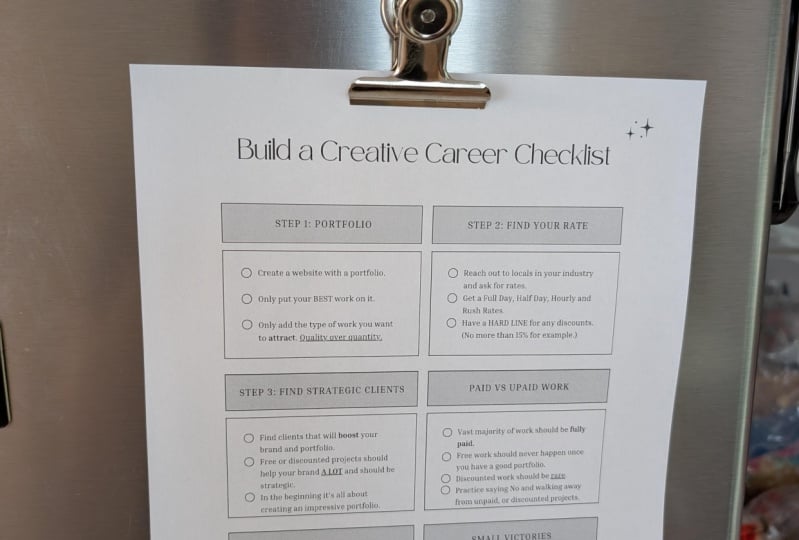
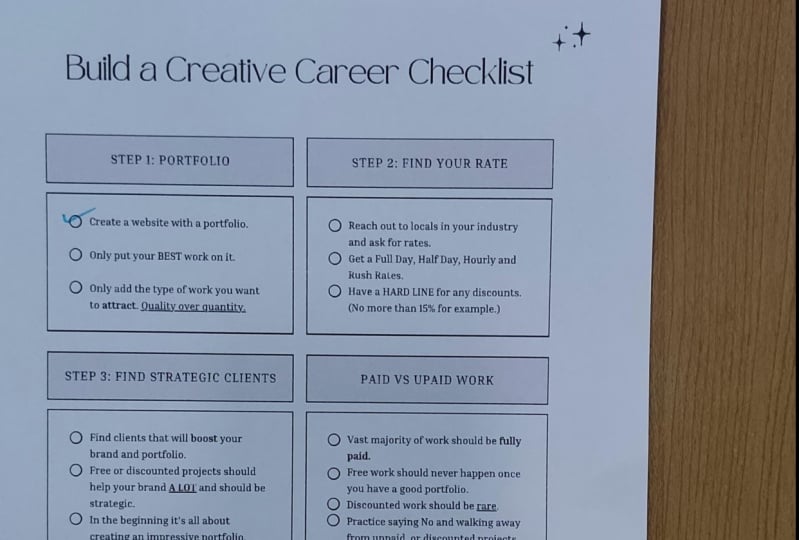
following these steps. So as part of the project, I want you to print out
the list that I made, and I want you to tape it to all the different locations that I mentioned in the
projects page. And the project is very easy. Send me a photo of where
you taped all of this. And as part of the
project, also, you're going to have someone
that holds you accountable. So a close friend maybe a parent because nothing
moves you forward more than anything than telling
people that you're doing something because there's no excuses. There's no stopping. And if you have these constant
reminders in front of you, you're more likely to
get them done and not create excuses for why
you can't do something. Also, get involved in
a discussions page. Let me know your
struggles, your victories, what's working,
little successes, little victories
that you've had. So that's Thank you again
for watching this class. Also, check out my other
class in starting a business, and thanks again, and
I'll see you later.
 Fred Trevino, DP/Colorist & Top Teacher