Transcripts
1. Introduction: Hi, I'm Nadine. I'm
a watercolor artist from Melbourne, Australia, and I still remember
when I first started Bloc probably
15 years ago, and I remember my
very first lesson, the teacher talking
about doing a flat wash, and I had no idea what that was. I'd come from a background
of ink and colored pencils, and I didn't know
what a flatwh was, and I really struggled
trying to get a nice clean, even surface on my page. So I thought today I'd take
it right back to basics. So this is really aimed at beginners and just
go through very simply getting a
really clean wash down on a smalleish
piece of paper. That's easier to do it on
a small piece of paper. Then go through doing some grading washes where we're going from light to dark or dark to light or also when we're combining a couple of
different colors in the wash. It's a really, really
simple lesson. I want you to just use up all the scraps of paper that
you've got lying around. Although having said that, I'd still advise you to use
good quality paper, particularly with
something like getting a nice even wash. If you're using really cheap paper and rubbishy materials, you probably get a
fairly average result. Be nice to yourself and
use a good quality paper. We'll go through the materials and then straight into painting because there's really not
much to it. Let's get started.
2. Materials : Materials for today's class. I'm painting on 300 gram
arches, cold press paper. A lot of the ones
that I'm using are actually backs of
other paintings. It doesn't matter if you
don't have fresh paper. I'm painting on a board
and I am going to be taking them down just with
some cheap masking tape. Now, in terms of brushes, I'm just using well,
this main one, really. I picked a brush
that's big enough to go quickly and easily
over the paper, don't use anything
small for this. I am then using a little synthetic just to
flick some water. I've done that on this one just for flicking it doesn't really matter what size this is and you could probably
use this one anyway. In terms of paints, happy for you to use whatever
your favorite colors are. Again, it doesn't really matter. Most of the first
exercises I do, this is Daniel Smith,
quinacridone violet. On this one, I've got some
Windsor Newton French tra, and some Windsor
Newton burnt sienna. Now, other than that,
you'll need your palette, a jar of water or some tissue, and also something to
prop your board up. Initially, I've just been
using my computer or an eraser to prop the board up and then as I've
got the paint on, I'm lifting it to
move it around. Make sure your board is movable. I don't think we
need anything else, so we'll get started.
3. Flat Wash onto Wet Paper: All right. There are a few ways you can do your flat wash. All of them going to involve
taking the paper down. I don't want the paper moving
while I'm painting this. You can paint straight
out to dry paper. You can wet part of the paper first or you can
wet the whole page. We'll start off, we might
wet the whole page. Now, you can do that
with clean water and your brush and just
wetting down the whole page. I'm not going to do that
because my waters really dirty, so I'm just going to
take a spray bottle. I'm going to do it over here
because my computer's there. I'm just going to wet spray that down or I'll try
not to get my computer. That's like tempting
to fade, isn't it? I've wet the whole page
down with the spray bottle. Just tilting it
around. All right. My page is wet and obviously my masking tape is dirty.
Nothing I can do about that. All the page is nice and wet. I'm going to get a milky mix
I've got some quin violet. I'm going to come onto
the top of the page. Top my page up a bit and
paint across the top. Now, when I hold it up, this paints going to start to run down and I want
to chase that edge. I keep loading up my brush
and I'm going to come down, just keep painting over
that leading edge. Picking up more paint. Ben
careful not to pick up. I've got my paint
squeezed out of the tube. If I touch into that
really solid bit of paint, I'll get a real nugget on
here that I don't want. I want to make sure
I'm only touching in that really milky
bit of the wash. All right. So down to the bottom, I've got a bit of grit
on my page there. I can't do anything about
that. I've got dust. This is a back of
an old painting. But I can't touch that. If I try and touch that now, bad things will happen,
so that's all I can do. Now, really important,
I have to get rid of all this excess water
on the tape here. I've got to run my tissue
along, holding the board up. Because if I don't get rid of
that water, as this dries, it's going to push back
up and cause a bloom, a cauliflower, you
hear people say. It's where it distorts the
pigment and you won't get a nice flat wash.
That can be used to your advantage and I'll show you that in one of the
clips coming up. But if I want a really clean
wash, I don't want that. This is the easiest
way to get a nice clean Wash. Do not walk away
from it while it's drying. Now, if you've got a little gap in the pigment or it's
not quite working, while it's still
wet, you can turn the page around and move
the pigment around. You don't have to keep it
in that same direction. I'm going to sit here and
watch this wicking off that pigment until it dries. Okay, it's been about 10 minutes and I actually didn't
stay here and watch and so I've got this
little here you can see, I have water under the tape and it pushed back
just to touch, and so I got a fraction
of a bloom there. So if I was doing this, I would probably crop
it a little bit. I've also got some imperfections because the page was dusty. I've got some little
bits where the pigments caught on the dust and
created these little spots. In the ground scheme
of a painting, it probably wouldn't matter, but I would advise to
make sure your page is clean before you actually start trying
to do the washers. Now what we're going to
do, we're going to do two more, one where we paint, get it started by painting
with water first and pigment on then come
down the dry page. Then we're going to do one
where we just go straight onto the dry page so you
can see that you can do it whichever
way you prefer.
4. Flat Wash Onto Partly or Fully Dry Paper: Now, I don't particularly
like wetting the whole page. I don't know why. It
doesn't sit right with me. So often I will paint initially with water
for my wash and then come down the whole page on the dry page
with the pigment. It just helps you ease into it, I guess, and helps you get the
consistency of your paint. If I just wet down
that top little bit, get myself started, then
I'm going to pick up my nice milky wash again and
come straight into that. Wet. Then I can get myself
sorted, tilt my page. Then I'm going to keep getting that wash up and keep
moving down that wet edge. It's easier to see
the leading edge here because the
page is already wet. Keep loading my brush, keep coming, I guess it's half the stroke or half
the previous stroke. Keep moving down the page. Keep loading up my brush. I've got a nice big
well of paint so I don't have to make up any
new paint halfway through. Come down and paint, make sure I paint over that tape. Right. Then the same deal that
I've got to get my tissue. See if I'm patient enough this time to wait
the whole time. And whip off that excess
paint, excess water, rather. I've got this little
white spot here, so I'm just going
to run my pigment. Maybe I'll turn my board around. So you can see,
but I'm holding it this way. This
little light here. The pigments kind of running into that while I'm still wet. It another one on that
side. That's right. You can just move. So
tilting the page around, I can cover up some of those little imperfections and make sure I don't get pulling
of the pigment in any one. Box. Then I'm not fully dry
but we will move on. Then what we're going to do
is we're going to go straight onto dry paper. The next one. This one, we're going to go straight onto dry paper. Now
why would I want to do that? Now, the reason I might
want to do that is if I really want a strong dark wash, it's easier to get the strength
if I go onto dry paper. Because if I wet at
first, obviously, I'm going to be
diluting the pigment when I then go
onto the wet page. If I want really strong pigment, a really dark wash, I
would go straight on. So here, really important again, to have a nice big
wash ready to go. And this is the hardest. Simplest to just have
the whole page wet, harder to get a clean
wash doing this. Alright, so I've got
really well loaded brush. I'm going to tilt my page, and I'm going to paint
that top stroke, and I need to get enough
on there that I've got. I can get that leading edge, that beading edge rather. Then keep loading up
coming straight down, I'm moving really quickly. I've got my page on an angle. I probably still
got dust because I don't listen to my own
advice, but that's okay. You can see I'm burning
through this wash in my well. It uses a lot of paint. You've got to have it all
mixed up, ready to go. I'm getting nearly out of paint. Am I going to make it? I'm
just going to make it. Now you can see how much and I've got a
blob of paint there. I won't worry about that. Okay. I've just taken
the tape off this one. It's been a good 10 minutes, and I'm a little bit darker on the side in
the bottom down here, but nothing much I can
do about that now. But what I want you to see is the difference between these. These two that was the first one, that
was the second one. This one wet the
whole page first, came on with a pigment
and pull it through. This one wet the top of the
page, added the pigment, and then paint it through
onto the dry page, and this one obviously
onto the dry. These two where I've used
water first on the paper. I've got a much lighter wash. Here I've got a much
more intense wash. Now before we move on
to a gradient wash, I want to show you just
really quickly how you can use a bloom or culiflower
to your advantage.
5. Making Blooms for Fun: Okay, so I've done
another flat wash here. This has been on for kind
of probably 5 minutes. It's not quite dry. I've still got a little
bit of water in the page. So before it's fully dry, just going to take a small
brush loaded up with water, and I'm just going to flick
some water onto that. Just so you can see how you can get interest in the background
without much effort. Here, I was holding
the board tilting up, so I'm dry up here and
I'm nearly dry down here. Nothing much is going to
happen up here because you can see a little bit of blooming happening, but
I'm pretty dry here. Here where I've
got more moisture, I'll get more blooming. If you don't like flicking, you can do it a little
bit more controlled. And just add water
with your brush. If it's too wet when you do
this, nothing will happen. The wash will just mix into each other and it will
get a little bit messy. If you're too dry,
nothing's going to happen. I'll just look like
it does up here. Now, is a similar effect
to when you use salt. I don't tend to use salt
although it looks really cool, you put granules salt on the
paper while it's dampness. I don't do it because I sell
my paintings for a living. I want them to be long lived. I use light fast paints, so I'm pretty careful about
which colors I choose. I don't want to introduce
something like salt that can react with the moisture in the air and down the track, years down the track,
have someone come and say, your paintings discolored. I don't use salt myself,
but it is very cool. Instead, this is what I use
to get that similar effect. Now what we're going
to do is move on to a graduated wash where we're dark or light at
one end or the other. So we'll get another
little piece of paper out.
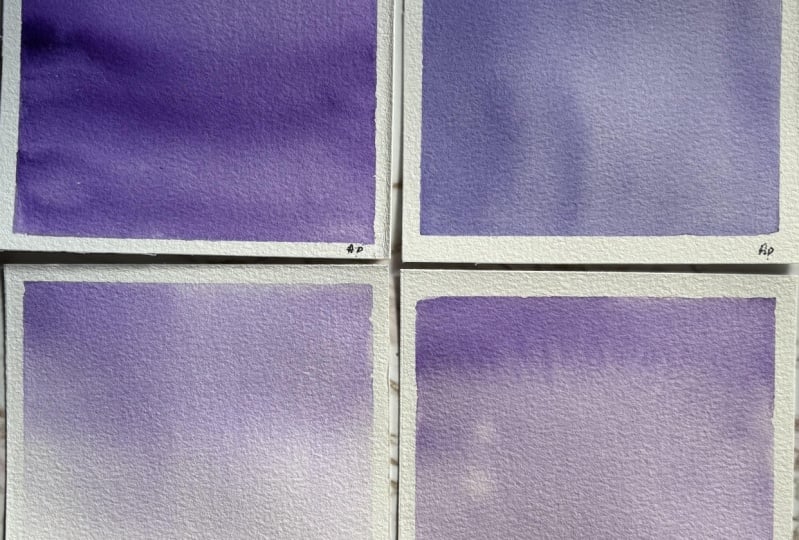
6. Gradient Washes : Okay. So now what we're
going to do is do a washwaar where we vary the
intensity of the pigment. So we're going to
start strong and then fade out to white paper. Now, what I haven't said is that depending
on the pigment, depending on the paint, some washers are
easier than others. So for example, red is horrible to work with
to do a flat wash. I would very rarely try it, whereas something
like French ultra, which we're about to use
now works really well. So sometimes you can blame
the materials and not you. So just bear in mind that some paints are easier to
work with than others. All right. So I've got
another rectangle. I'm tilted. A little on my
board, and I'm going to start. I'm going to do the
where I wet just the top first to get
my sauce started. My water is a bit dirty, so you'll be able to see just whacking on a little
bit of water initially. Then I've got my milky
wash of French ultra, I'm just going to
come into that. Top of that, and I've got
my bead starting here. I have a bit more paint, and then I'm going to
start to drag down. But now, as I come down, I'm going to wash my brush and rather than going
back into my well, I wash my brush and just
paint with clean water, wash my brush coming down. Till I get to the
end of the page. And then I need to do
the same thing where I'm tilting the page and
letting the pigment run. I'm not quite dry yet,
but I want to move on. So one of the reasons I like French ultra is this makes
a lovely sky because it's got the granulating
quality about it. You get these lovely little
variations in the pigment. And it makes a really nice sky. I tend to use that or
Cobalt in my skies. So then I'm going to
show you the other way, we're going to take another piece of
paper and we're going to be light up the top and
darker down the bottom. I'm going to do that one with another paint that I use quite often and that's burnt sienna. Now, what we're
going to do here, I want to have white paper, white paper coming into my burnt sienna down
the bottom here. I don't want to have
any streakiness. I don't want to see the join between the white and the brown, so I'm going to wet this
page, keep coming down. When I get to about
halfway down, I'm going to grab some
milky burnt sienna and come into that join. Then I'm going to
get stronger paint. As I'm coming down
towards the bottom, I'm going to make a creamier, picking up more pigment, still trying to move with that be and nice and strong
down the bottom. Then the same old
tilting the page, finding some tissue,
and wicking off. All that water so it doesn't
run back on me. Alright. So while that's dry, the obvious next
thing is, you know, well, what if I want the
blue and the brown together? So I've got sky and
I've got ground. Well, we're going to do one where we do
it all in one hit, but also I've just done these, so I can actually add
the brown to this. So I'm just going to take
this one back down again. And your painting needs
to be dry, maybe not. I probably should be a bit dryer, but let's
see what happens. I'm going to paint
with water down here, make sure nothing's moving. Then I'm going to
grab my bunt sienna and come just underneath
where I wet to. Then I'm coming on dry
down as I com down here. Nice and dark.
Then I can lift it up and do the same thing. I can. If I want a bit more
variation in that wash, I can come on with a thicker pigment while it's still wet. Throw a few lines through. It doesn't have to
be all that tidy. Then I need to come
out and let that dry. Now I can do the same
thing with this one, where now we can paint the sky. Maybe I didn't put
a sky in and then decided actually I
want a good dye. I'm going to paint.
Where am I going to I think I'm going to put
my horizon in here somewhere. This time, I think I'm going to go darker at the top
just because we can. I've wet here. I'm
dry at the top. I'm putting on pretty
thick pigment, getting that bead up so that
I can cool the wash down. And then once I think
I've got enough paint, and I come down, wash my
brush, wash my brush. Come in and mate. Where I've just wet down, clean water and coming down
along that horizon line. I'm going to keep painting with water all the way
through that brown just because I don't want to have a hard line where that
blue hits the brown. Sometimes I might, but
in this particular one, I just wanted to merge. Okay. Now what I'm going to do is depetively do
this kind of thing, but doing it all in one hit. Starting with the sky, my water is bit dirty. That's okay. Say that a lot, don't
I? Picking up my blues. I've got a nice bit
of water on there. That's a bit too light,
maybe a bit more. I'm not going to go into
clouds and that kind of thing today, I think
that's a different lesson. We're just going to keep
it really simple today. Alright, so I've got
my nice blue on there. I'm going to bring that down and let it
run out of tissue. Let it dilute out.
Washing my brush painting with water, bringing it down. And then as I get down
to the bottom here, where I painted with water, now I'm going to pick
up some burnt sienna. And just above that wet
edge, there's my wet edge. I'm now going to put
in some burnt sienna. And I'm going to drag that down. That would be my
sky and my ground. And.
7. Adding Some Sparkle: So what I want you
to consider now is that when we've
done all of these, everything has ended up wet. We haven't left any dry paper at all when
we've done this. But having a few dry
strokes in there can be really useful if
you think, for example, you're doing a seascape
and you're looking out and you can see the sky
and then you can see that kind of sparkle
on the water. That you can easily do using a wash. What we're going to do, I'm going to take French
ultra to start with. I'm just going to keep it, I think, initially, French ultra. What we're going to do,
we're going to wet down, grab some French ultra, my milky wash, chuck it in. I've got a tissue
on here that I'm painting just to get
rid of excess water. I'm going to bring that down. Now, as I get to where I think the
horizon is going to be, I'm going to let
that brush dry out. I pick up some slightly thicker paint and I'm going to just drag my dry brush
across the page. Then I'm going to switch back, seeing how much
don't want too much. Then I'm going to
switch back into wet. I can see I've actually got
a lot of water up here. I'm just going to
come back in here and just tidy that up a bit. I just had a big
pull there back in. Now I'm getting thicker
and I also might pick up, I'm going to go some queen
violet just for fun because I can get darker as I come
towards the bottom there. Maybe a bit more blue. Okay. Tilting my page. And if you go back
into this store, I'm going to go and tidy
up that horizon line. I absolutely need my brush to be 100% dry before I
can muck in here. So I'm just dragging my
brush, my dry brush. I'm just tidying up that join between the sea and the
sky there little bit. That was pretty quick.
I'm not fully dry. I'm being impatient, as always, but I want you to get the idea that you can get this
effect really quickly. You saw how quickly that went. Without overthinking it, just varying from wet to dry to wet, you can create the background for a painting where now you can put in a boat or you can put whatever
you like in there, you've already got quite
a bit of interest in the painting from just
doing that quick wash.
8. A Final Word: So that's where I'm going to leave it today because really, I've run out of little bits of tested paper that I've
been playing with. There are three points that I want you to really
take away from this. One, use a big enough brush. Two, make sure your
paint is ready. You've got a nice big wash
sitting in your well. Don't try and make it
up halfway through, and three, move quickly. Now, it doesn't really
matter with these whether you use one color or whether
you use three or four. You can use whatever you like. So for example, this
one is just indigo, but I quite like
that because I like the sparkle that I've got
through the middle there. Whereas on the back of this, I think I've got four
different colors from violets to thalo
turquoise in here, and I quite like the
transition that I haven't left any white paper. Then I have something
like this where I've sprinkled on some washer and also some little
flecks of burnt sienna to make some interest before
the paper actually dries. So have a play and
see what you like. Oh, I even did a red one, even though I hate red it
didn't turn out too badly. So have a play. If there are any
combinations that you really have enjoyed, pop a photo of them up on
project section for me. It's always interesting
for me to see what colors you pick because I always get
stuck in the same colors. So it's good for me to see
what you do and what you like. So thanks for joining me.
 Nadine Dudek, Professional Watercolour Artist