Transcripts
1. Introduction: Watercolors can be in the most unique and unpredictable medium. And I believe this is what makes watercolors perfect for creating an abstract landscape paintings. This middle will help you loosen up your abstract painting. So you don't have to worry about your level of experience. In this class, you will discover a new simple approach for grit and abstract watercolor landscapes by using a limited color palette of just a few colors, you'll see that even such an unpredictable nato as watercolors can be manipulated in directions you need.
2. Class Overview: Hello and welcome to this watercolor class. Today we are going to discover a simple and creative approach to manipulate watercolors for creating an abstract landscape painting. This class is perfect opportunity for you to learn a new exciting made to work with watercolors, or just simply have been creating a landscape painting. This is what makes this class perfect, both for beginners and experienced artists. Either way, I'm sure you will enjoy discovering a new way to manipulate watercolors of the surplus to create an abstract landscape painting. Let's have a look at what we are going to do in this class. First, we'll gather all the needed materials in advance. You will learn more about it in the tools and materials that Islam. That's an add. We will choose a few main colors to use for each landscape painting. Then we will prepare our surfaces to work on, as we will mostly work on wet paper. And finally, we will create a gorgeous abstract landscapes using lighter colors. In the end of this class, you will be able to manipulate watercolors around the surface and create abstract landscapes using just a few colors.
3. Class Project: Project for this class is abstract watercolor or glands can, using the various combinations of only a few colors and unique technique of manipulating watercolors. You will be able to create stunning abstract paintings worth a place on your wall. And don't forget to share your paintings. I'll be happy to see your progress and answer any questions you might have.
4. Tools & Materials: In this lesson, Let's go over some tools and materials you will need for this class. No matter if you're an experienced watercolor artists, or maybe you're just starting out. In a way. There are several art supplies that you might need for this class. The great news is that actually doesn't need that many suppliers. So starting with watercolors, so don't worry, delays the shirt and I'm trying to give simple for the sake of our abstract landscape. First of all, you are going to need watercolors. The good news is that you won't need too many watercolors as we are going to use a limited palette for our abstract landscapes. The surface lets you choose to work on is just as important as brush or a Bain was a color paper is absorbance 114 multiply applications of washes without much boggling. Then it will need just a few brushes and you're good to go.
5. Preparing The Surface: So now that you know what tools and materials to use, you can now prepare the paper for your bending. There are several ways to prepare the surface for the watercolors. And in this class, I will share with you the easiest technique that would be perfect for the abstract landscape. So first began to soak the paper. I'm going to use a large brush worried. But you can also use a sponge spray bottle or even immersed in a paper in a tub of water. And so you place your water on clean board. In my case, I'm using glass surface. Then you soak the paper on one side. Attorney to turn the paper over. And so kids again. And finally you turn it over last time and place it evenly on the surface. As we have gone to work fast. The water colors will be applied on wet paper. So we are working wet-on-wet technique. And so there is no need for us to fix seeds but the tape or anything like that. So you simply place it so there are no bugs. You can start applying the paint right away. Lease abroad will help us create glute and unpredictable effect on the landscape.
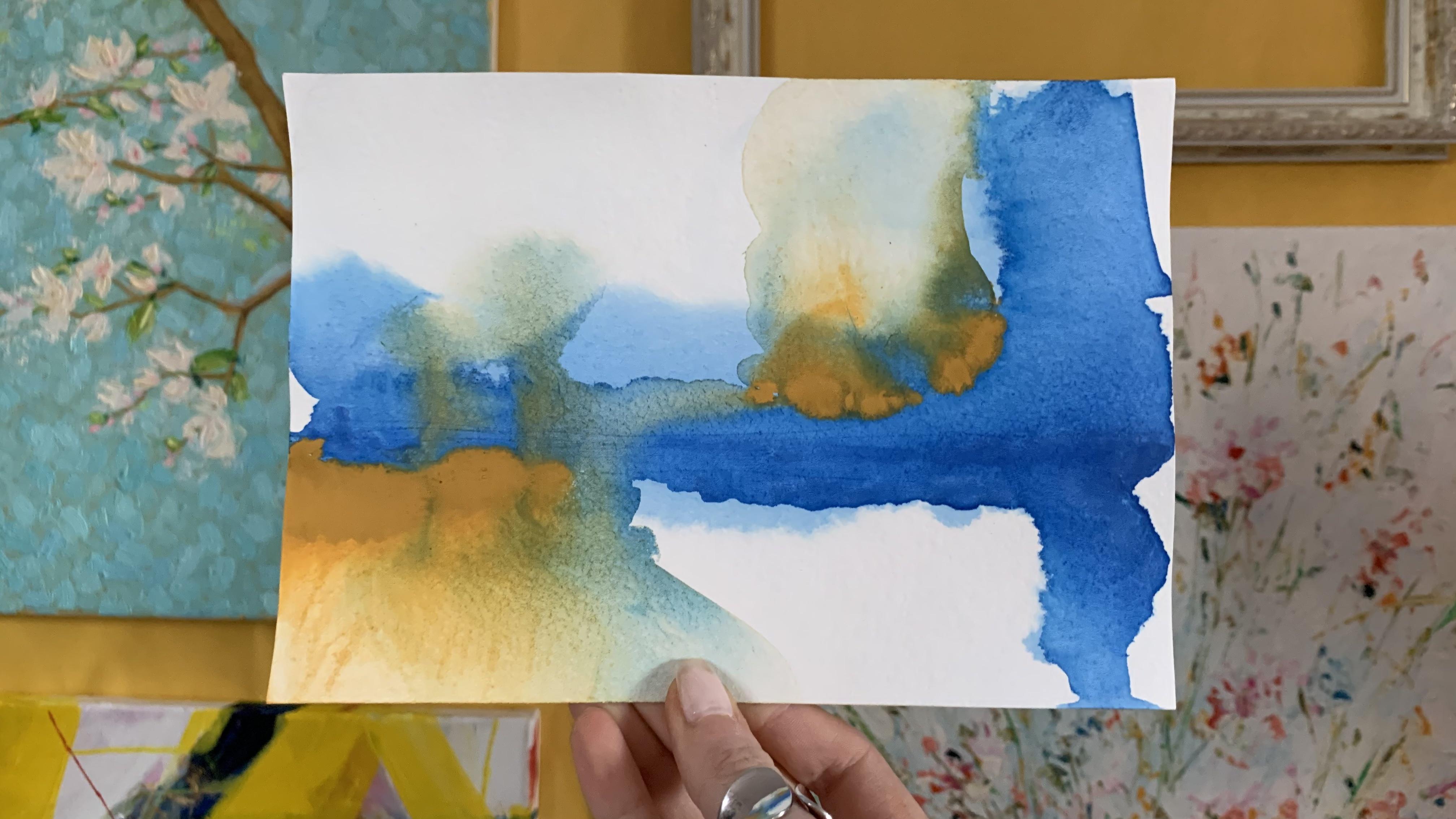
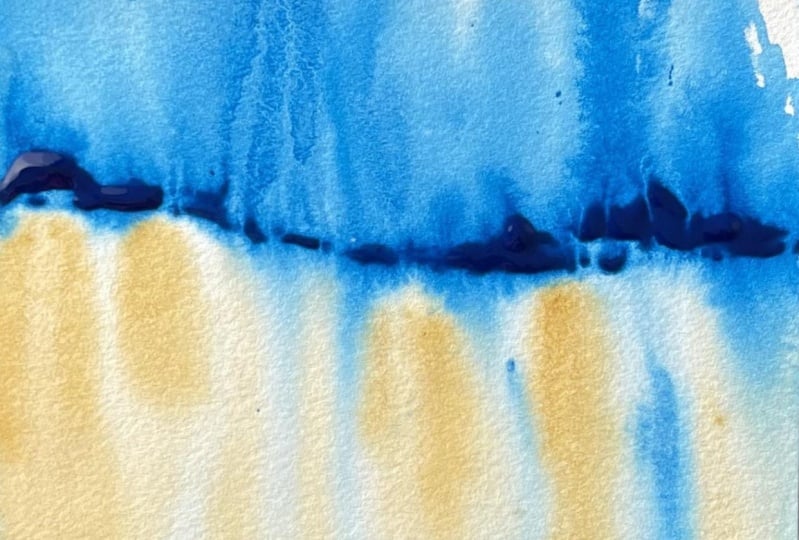
6. Painting 1: Blue & Yellow: He's painting, we will be using two colors, blue and yellow. So after I have prepared the surface and dilute the blue watercolor right in the pen. And soon enough you will see light. So now it's time for the first stroke of color. So I'm taking the pan watercolor on it. And I've heard it out into the surface, creating the horizon line for the landscape. That's the water and colors guide to you. And so just like that, it will be much more easier and more fun for you to create abstract landscape. Still encourage you to keep a certain level of control over the vein. Maneuver your watercolors in the directions unit. You can apply more layers of color so that you get more complex and deep horizon line. We can also manipulate the colors with a few simple strokes of water. Here I have manipulated the watercolors down the horizon line just to help hold the brush with a bit of clear water. And just like that, you can add few more layers of paint wanted to make the color more vibrant and deep. You can also use a smaller brush in case if you want to have more control over the watercolors. And once you're satisfied with it, That's it. Five for a while. It doesn't have to be fully dried. We still want our surface to be a little bit to it. So read just a few minutes and then you can proceed to the next stage and add the second color to landscape, yellow ocher. In this session with the painting, I want to demonstrate to you another exciting way of applying the watercolors. Something was conventional method of plain watercolors. But it's really refreshing. And grade four, create an abstract painting. So I'm gonna grab my tube of yellow ocher. I will squeeze it right onto the surveys. Apply in yellow on top of horizon line, which will help me create nice abstract for now we will grab a big brush with a bit of clear water. And once again, you manipulated up above the horizon switching the colors in the negative direction, painting some yellow line as well. So once again, yellow right from the tube. And then I'm applying a bit of water to let them react. And just like that, our first abstract landscape is finished. Now you can let it get completely dry and we can move on to the next painting.
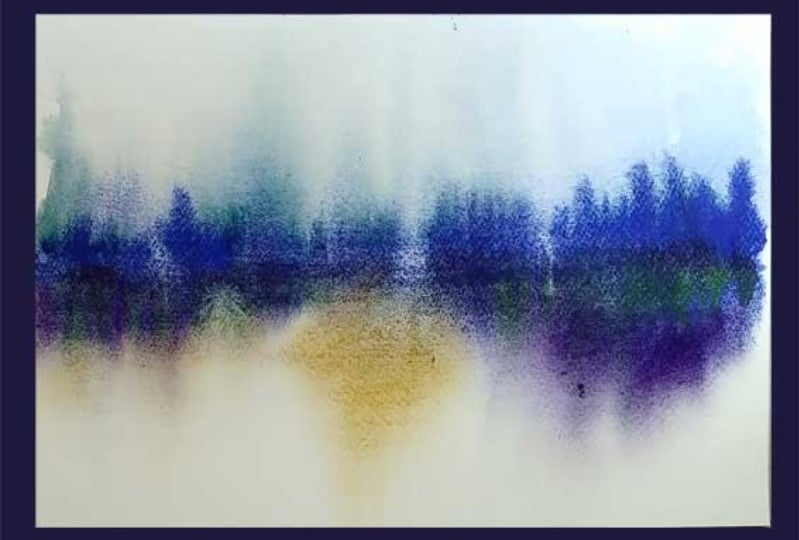
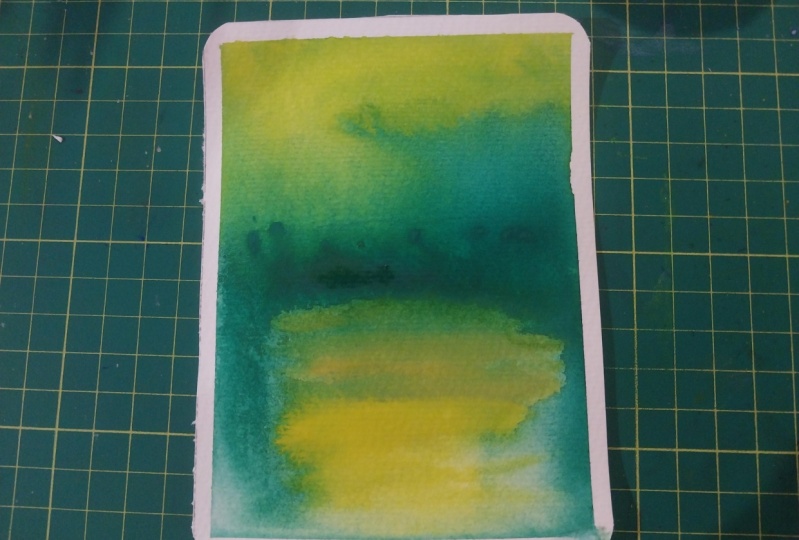
7. Painting 2: Green & Yellow: In this landscape painting, you will see how easy it is to create an abstract landscape with help of only one stroke of paint. So let's see how you 2. First we apply a thick layer of watercolor from the tube directly into the wet surface. This is the starting point of the abstract landscape and it's going to serve. And now it's time for some watercolor magic. So what you want to do here in order to let the paint and water react with a big brush into the water and stretch it into the direction you want to bend, to move, to apply exactly the thick layer of paint as you are going to stretch it all the canvas. So as you can see, I want the most of the band to call up above the horizon line of the landscape. This is going to create lovely abstract green Fock. You can also tilt the world with the surface to maneuver with watercolors in the directions you need. Now I also want to be off Greeley under the horizon line. To help me create a more cohesive image over the landscape. I simply maneuvering the pain down the surface of the same liquid brush. Looks so much better. Guess if you want to landscape to be thick and feel more strokes of paint to the horizon line. Composition will be more interesting. It will also make the colors more vibrant as before. And once you feel like your landscape has enough green and you can now add more color to landscape. So for example, if this time I want to use yellow here, as Emily, will work really well with the green and it will add a certain warm and sunny vibe to the landscape. So just like we did it before, I'm applying the yellow okra from the tube directly into the surface and add in a little bit of clean water to it. And I let them do their job. Here, you can watch the paint react and mixed together, which creates the gorgeous landscape is we're aiming for. So you can work on another upset landscape. For that. I will see you in the next lesson.
8. Painting 3: Green & Red: In this painting of the class, we will create another abstract landscape by using only two colors. And this time, let's start with some green. With these landscape. We'll start by applying the water colors with the horizon line right from the tube. And then we can once again add some magic to the landscape as V dip the brush into water and we maneuver with the veins in the directions we need. Here it's important to use the right amount of water. You don't want to have too much water on your surface as well as not enough water won't create least fluid and abstract effect. We are striving for. The best way to find the right amount of water is to experiment with it and find it by yourself in the process. And just like that, you can add few more layers of paint in order to make the green more vibrant. And once you are ready to move on to the next color, give us a few minutes to drive it and we can proceed to the next color. This time, I want to add red color to the landscape because it's a complimentary color to the green. And they will look just great together. So since I have my watercolor in the end, I diluted with water and I put it onto the surface. As you add more colors you landscaped, make sure they work well together. So for example, I don't want the green and red to fully mix here as it will create kind of Monsanto to look. Instead, I want to give both banks and now off their space to show in the vibrant colors. Let's buy AMA plan bread pane under the green horizon line, and not on top of it. Can manipulate the red band as well. So if you want to cover more surface, but you can use a big brush with some water, just like we did it. And once you are satisfied with this abstract landscape, you can move on to the next painting. So I will see you in the next lesson.
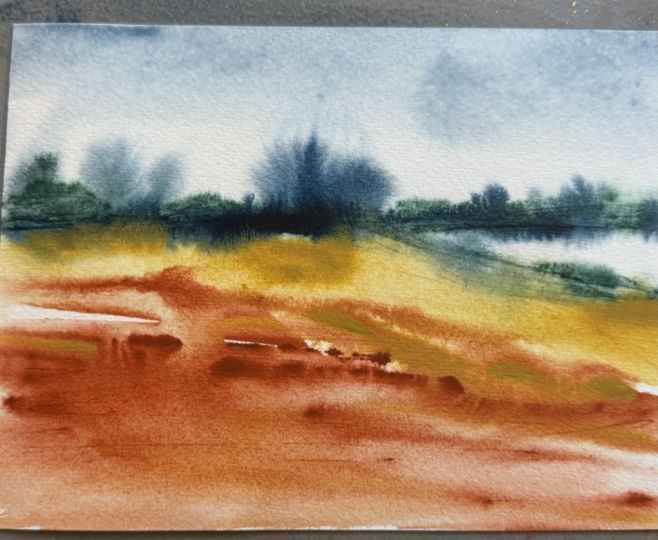
9. Painting 4: More Colors: Now let's make our last abstract landscape in this class more colorful and vibrant. For that, we will be using more than just two colors as we did it, soundscapes. And so let's start by applying yellow watercolor first, creating the horizon for the landscape. My big brush helps me to retain a certain level of control over the watercolors. As I decide in which direction it will go. At the same time, I'm allowing the paint red and cadmium. This combination of control and freedom creates the perfect harmony for the watercolors. So how about we add an interesting, excellent, So painting by applying some red on top of the hill. Both colors will work really well together. Here you can see me maneuvering the band all over the surface by changing the angle on the surface. We can add more darker colors to the painting. It will make our landscape more context and colorful. So why not? So as usually, I dilute some pool right in the band and then they pour it right into the surface on top of the horizon line. Will make great asset for us. So I want it to go only above the horizon. So here I'm changing the angles of the surface and a maneuvering the vein up with helpful to the smaller brush. And this is what our upset for us looks like. I think it's great. We can now add few last details to the landscape and maybe add one more color. So I would add here just a little bit of green as well. It would work beautifully with the rest of the colors we have in our landscape. And so just like that, I'm adding some green here. I'm letting them eat, mix together with the rest of the colors. And it looks finished for me. So I'm just going to let it dry. And I will see you in the final lesson of this class.
10. Main Takeaways: As you can see what the color is a great medium to create those abstract landscapes. And that gives you so much freedom to be creative. I hope you enjoyed these creative process as well as a result. So let's go through some top tips of this class. First, use lots of water. It will help you to make your landscape abstract more loose and interesting. Just a few simple colors for your painting. I find that color combination that you really like. Maneuver your bands or all of the canvas to create more abstract field on the painting. Let the paint react, learn to, let go to a certain degree and let the watercolor do what it wants to do. And finally, as always, I want to encourage you to share your paintings here and on your social media. Thank you so much for joining me in this lab and I will see you next time.
 Alina Harvi, Ukrainian Artist