Transcripts
1. Introduction to the Watercolor Painting Class: Hello, friends. Thanks
for joining the class. My name is Shiba. I'm an artist
instructor and a G tube. In today's painting class, we will be painting
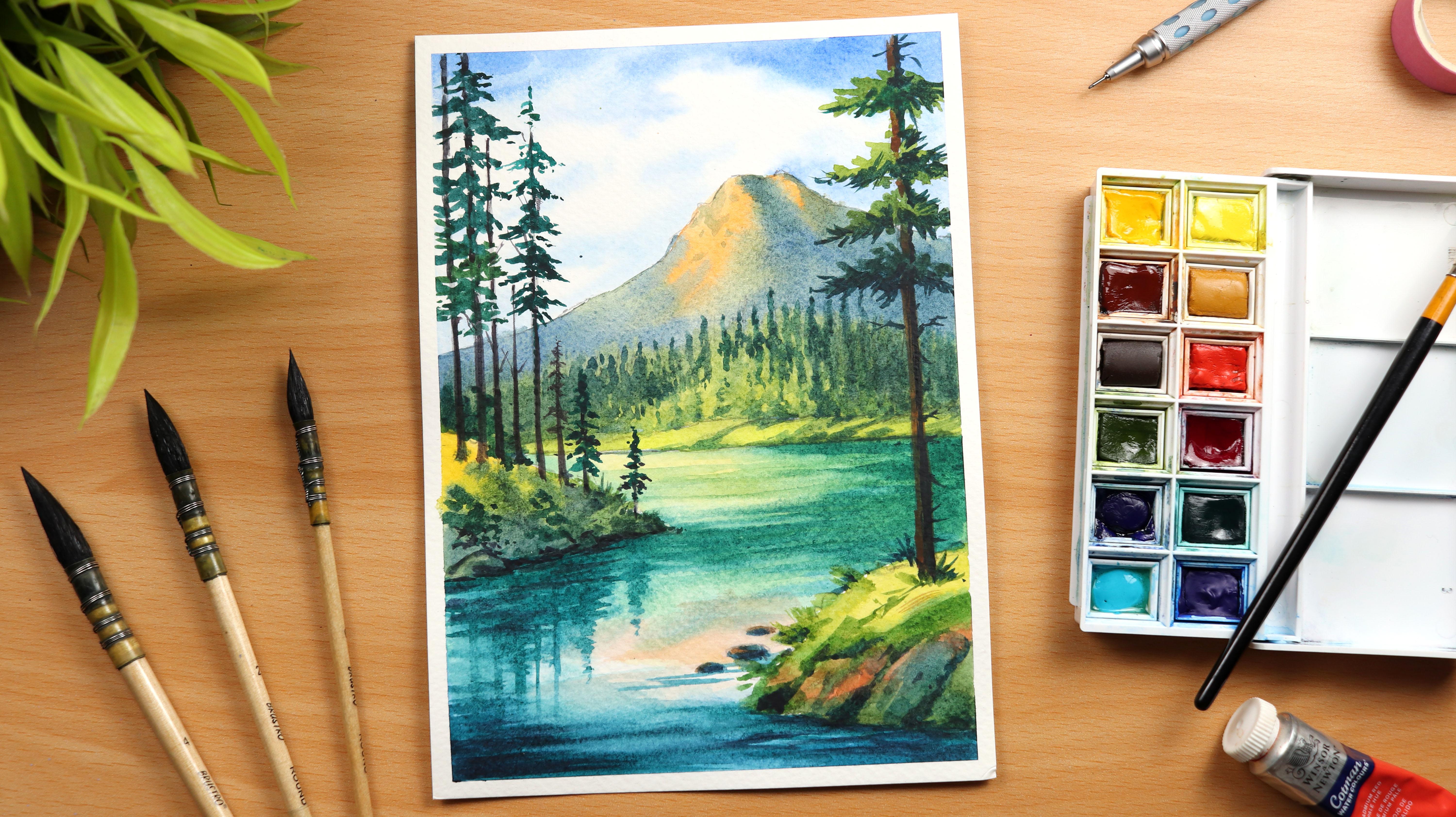
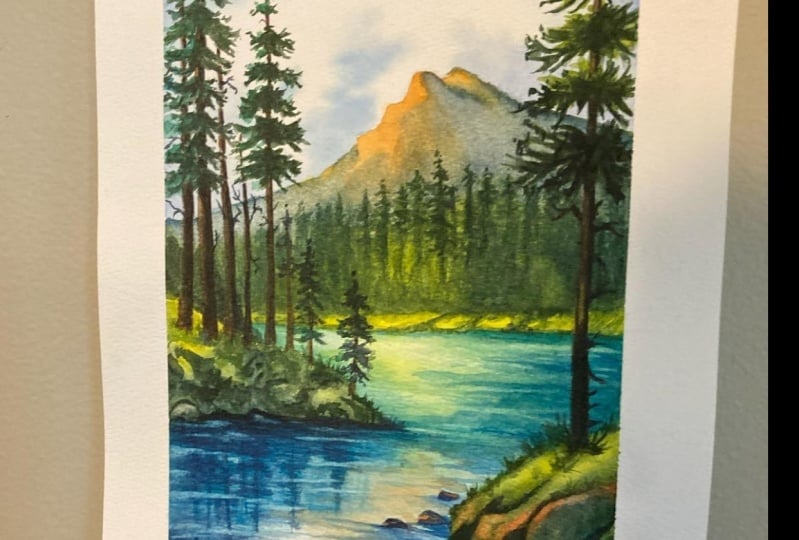
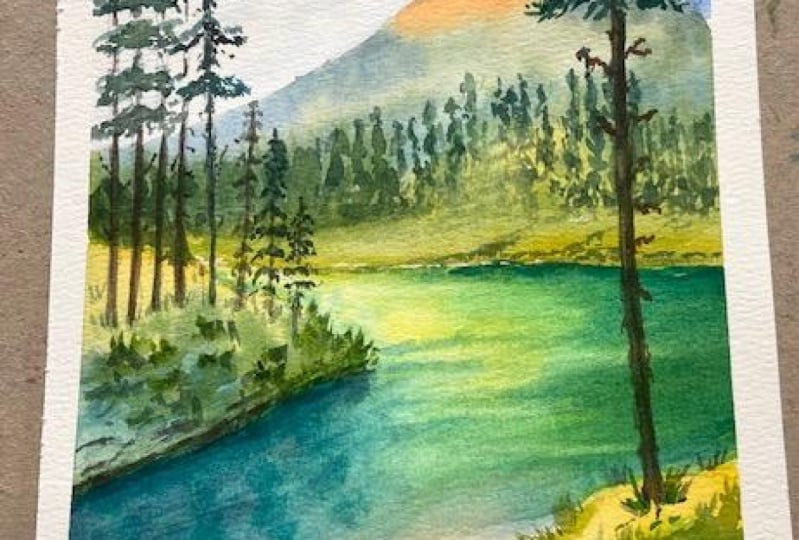
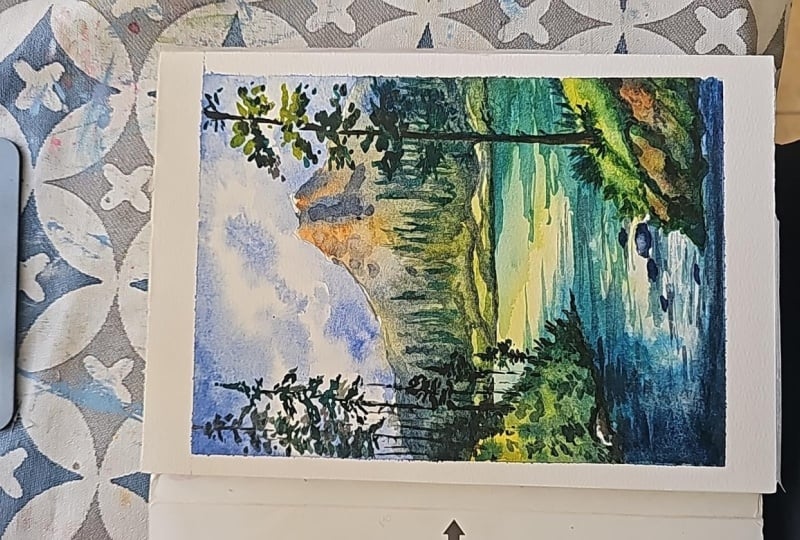
a beautiful mountain and trees using watercolors. I'm very excited to share all those steps that
help me in making this beautiful painting
and walking you through my materials so that you can even try
and follow along. I love to do
watercolor paintings, mostly the old rural areas, seascapes, landscapes, birds
and animals and much more. I try to keep my paintings vibrant and full of rich colors, which you will find today in my watercolor painting class. I'm using very simple art
materials for this painting, which you can easily get
on your local art stores. So let's quickly jump onto
our next part and see, what are the materials
required for this painting, and
I see you there.
2. Materials Required for the Painting: Hello, everyone. Welcome back. In this part, I will discuss the materials I use for
my watercolor paintings. Starting with the paper,
the paper which I'm using is Fabriano Artistico
watercolor paper, 300 GSM cold pressed. I'm using a cold press
paper because it creates beautiful bouquet
effects in your painting, and it does not dry out soon and gives us more time to
work on the paintings. These comes in cut out
sheets of various sizes, but here I'm using
an A five size. The colors which I'm using
is from Winsor and Newton, Court Man, student
grade watercolors. This color is very
good for anyone who wants to start their
beautiful art journey. And the names of the colors on my palette is displayed on
the screen as you can see. I have replaced the white color with Cobalt turquoise from white Knights as I don't
use white in my painting. For the brushes, I'm using three mob brushes
of size zero, two, and four and two
synthetic round brushes, number four and eight. These three mob brushes are sufficient to make a
painting of an A five size. If you don't have
a similar brush, you can use any brush you have. It's just that you must be comfortable while
doing the painting. These two synthetic brushes
are good to add details. You can use any round
brush you have, just see that the
tapes should be sharp so that you
can add details. For drawing the
sketch, I'm using a mechanical pencil
with 0.7 lead. If you don't have a
mechanical pencil, you can use normal
HP pencil as well. This is a needed
eraser that I will use to erase my
sketch when required. I'm also using a half
inch masking tape to tape down my
paper at the time of painting so that my paper doesn't get buckled
when applying water. This is a jar of water. If you want, you can
use two jars of water, one to clean the brush, and the other one
as a mixing medium. A hair dryer to dry my
painting when required. I'm also using a c to wipe any extra color pigments from the brush while
doing the painting. Friends, these are all
the materials that I will be using for
my painting class. Quickly grab and join me
and I see in the next part.
3. Let's draw the Sketch: Hello, everyone. Welcome back. In this part, we will
start with the sketch. Before we sketch, let's apply the masking tape on all the
four corners of the paper. Applying masking tape is
important because when we paint, our paper start getting
twisted and bent, due to which working on the
painting becomes difficult. Therefore, a masking tape is needed to keep our
paper straight. In this painting, I've used
a half inch masking tape. If you want, you can use a
wider masking tape as well. You can see the masking
tape which I'm using is of a yellow color because the off white color masking
tape that I had is over, so you can use any masking
tape or a washy tape you have. The color doesn't matter. So we have completed applying the masking tape on
all the four corners, now let's start with the sketch. The pencil that I'm
using for sketching is a mechanical pencil
with lead 0.7. This is from the brand pencil. Oh. Here I'm drawing the straight horizontal line to define the horizon
of the painting. Now let's draw the mountain. I'm starting by drawing the hump of the mountain first,
as you can see. Now the mountains are
of triangular shape. First, we will make
the highest peak, which is a bit pointed, and then gradually we will make the mountain
wider at the base. Just like in the real world, the shape of the mountains or the hills are
not that straight. They are slightly irregular. In the same way we will make
these mountains as well. While doing the pencil sketch, you should always try to
start with a lighter strokes. When you're confident
with your sketch, then you can make it dark. Now let's add another
line to the horizon. These two lines
together will give us the land that we see
below the mountains. As you can see, I'm raising
the pencil marks here because I want this land
to be higher and raised. Once we are done
with this, we will add some tree lines
at the distance. The mountain and
the land are ready, and now we have to
make some trees. For the trees, I'm adding
some pencil marks here, as you can see, this will help me to decide how
tall the trees will be. We have completed
drawing the tree lines. Now let's add some land
surface at the foreground. I'm starting by drawing some
small rocks and pebbles and then adding a sloping
surface to draw the land. Now let's remove some unwanted
lines from the foreground. For this, I'm using needed as. Now let's draw the
land on the right. For this, I'm drawing
a sloping land and then we'll add a
small rocks at the base. L et's add a few more lines at the base to add some details. Once you're happy
with the sketch, you can make it dark by adding
some dark pencil strokes. Now let's draw the tree. Here I'm starting by adding
the tree trunk first. To draw the tree
tung, we will add two straight vertical
lines, as you can see. We will make the
tree a little thin at the top and
wider at the base. If your lines are
not that straight, so don't worry because
in the real world, the trees are not that straight. Having wobbly lines will also
add beauty to the painting. Now let's add a second tree. Let's add some more trees using same straight
vertical lines. We will try to keep all the
trees wider at the base in comparison to their body so that they look more natural
and realistic. Let's add a few more trees. While sketching the trees, I have changed their shape to make my trees look
more interesting. At some of the places,
have made them small and few of them are taller than the others, as you can see. Now let's add a few
more smaller ones. I'm making my pencil marks dark before I proceed
with the painting. Let's remove some unwanted
lines using needed eraser. Friends, we are done
with the sketch. Now let's move on
to our next part, where we will be starting
with the painting.
4. Painting the Sky and Mountain: Hello, everyone. Welcome back. In this part, we will paint
the sky and the mountain. I'm starting by
painting the sky first. Here I'm using a mob
brush number two. For painting the sky, I'm
using wet on wet technique. For this, I'm applying the
water first to wet the area, and then we will
apply the paints. Before we apply paints, it's important to wet the area thoroughly so that
the paint flows well. Our paper is wet now. Let's start with the paints. I'm using ultramarine blue
mixed with cobal turquoise. The consistency of
the color is medium. Also, I'm applying some colors
only at the dark areas. The lighter areas will
automatically form the cloud. While applying the paints, try to keep your hands loose
to create puffy clouds. Now let's add a
few more touches. For applying the paints, I'm
using the tip of the brush. You can slightly tail the brush if you want to cover wider area. Now let's add a few more
details with the same mixture of ultramarine blue mixed
with cobal turquoise. You can see I've left some
of the areas unpainted, leaving them white so that
it gives an effect of cloud. Now let's add some dark tones when the paper is still wet. The color I'm using
is ultramarine blue, and I'm using it
directly on the paper. By applying this layer of paint, our sky got more
dimension and depth. Now let's add few more details. Now let's clean the
brush to remove any color pigments so that we can start with another
set of colors. But before that, let's dry the painting
using a hair dryer. We have completed
painting the sky, now let's start
painting the mountain. L et's press a masking tape
to make sure it is still in position to avoid unfunt
spread of colors. Let's apply water
to wet the area. I'm applying this water only to the mountain area,
as you can see. For this, I'm using S
mob brush number two. You can see I'm applying a number of layers
of water before I start to make sure
that the area is thoroughly wet and remains
wet for longer time. You can see I've also applied water to the land surface below the mountain as we will be covering it to while
painting the mountain. Now let's mix the color. Here I'm mixing Cadmium
red with cadmium yellow. This will give us
some warm color. I will apply this color at
the peak of the mountain to show direct sunlight that
we see in the evening. Using the tip of the brush, we will give our paint the direction that we
want them to flow. Now let's mix some greens. Here I'm taking some sap green and mixing it with
ultramarine blue. O You can see this mixture looks greenish blue just like the way we see on
the real mountains. I'm adding some drops of
paint and then giving it a direction to make them
flow at required areas. You can see that the paints
are getting mixed so well. This is because the
paper is still wet. Let's add some more ultramarine
blue to the mixture. I'm applying this
paint to the areas where I want the mountain
to look at dark. Let's add few more
touches of it. Let's apply some more
ultramarine blue. You can see I'm using the tip of the brush to drop the pains. Let's add some more ultramarine blue mixed with sap green. Now I'm applying the mixture at the peak to add some
shadows to the areas, not getting the sunlight. In the same way, let's add few more details using
the tip of the mob brush. Now it's time to add
few more brush strokes of ultramarine blue. L et's add some
trees at the base of the mountain where I have
left the area unpainted. For this, we will use
the mixture of greens. Let's quickly clean
the palette and mix the mixture of Sap green
and cadmium yellow. As this is the first
layer of color, I'm keeping this
paint towards yellow, adding less of the Sab green. Let's quickly apply
some more paint. As the papers sell wet, you can see that these
two separate colors, that is the blue of the mountain and the green of the trees. They're not creating
any hard edges. At the base close to the land, I've increased the amount of
Sab green in the mixture. Let's mix some more
ultramarine blue with Sab green to add
shadows to the trees. You can see I'm
using the tape of the brush to mix the paint well. Also, while pulling
the brush Trokes, I'm creating some
straight lines, giving an effect of
straight long trees. To draw the land
below the mountain. I'm using some lighter
shades of yellow. Let's make some lemon yellow and apply it directly
below the mountain. Now, let's add some sap green to the lemon yellow to
make the color look dark and green and then apply it at the base
of the mountain. Let's mix some sap green with ultramarine blue to add
shadows to the trees. This mixture is saturated with less of water in
it, as you can see. We will add some
vertical strokes to add shadows to the trees. For this, I'm using
the same brush, which is a mob brush number two. Let's add few more
vertical brush strokes of ultramarine blue mixed with Sab green using the
tip of the brush. To cover wider areas, you can see I'm using
the tip of the brush and making it wider so that I
can cover the larger area. Let's add few more details
to the land surface using the same mixture of Sab green mixed with
ultramarine blue. Let's clean the brush
and dry our painting. Now let's use a hair dryer
to dry the painting. Spence, we have come to the
end of this painting session. Now let's move on to the next
part where we will paint the water of the lake and
add shadows to the trees.
5. Painting Water of the Lake: Hello, everyone. Welcome back. In this part, we will paint the lake and the
shadows of the trees. I'm starting my painting with
the application of water. This will damp the paper and will help the paint
to flow well. For this, I'm using a
mob brush number two. You can see I'm
applying this water only to the lake area. Now let's make some paints. Here I'm mixing cadmium
yellow with lemon yellow, and also adding a little
bit of sap green to it. You can see this mixture
is looking yellow as the amount of sap
green is less in it. Let's add some viridian
green with Cadmium yellow. But before that, let's clean the palette
using a damp brush. Now let's make some dian
green with Cadmium yellow. Adding a little bit
of more radian green to make the mixture dark. Here I'm using the
tip of the brush to add the mixture of
green to the lake. With soft hands, try to blend the colors using the same brush. I'm making a horizontal
brush strokes to add waves to the water. This dark green mixture of color also adds shadows
to the water layer. Now let's pull the color down the lake using the same
brush having paint on it. Now I will add a touch
of blue to the lake, but before that, let's
clean the palette. Now I'm mixing cobal turquoise
with ultramarine blue. I'm adding a little bit of
more ultramarine blue and applying at the base to show
the reflection of the sky. Now I'm leaving
some white areas to show the reflection of
the cloud in the water. We will make the
leak water darker at the corners to create more
interest in the painting. For this, let's mix some
ultramarine blue with intense blue and also
add some radian green. This mixture will be quite saturated with less
of water in it. I'm applying this paint
when the paper is still wet as this will help
the paint to blend well. Now I am adding a touch of viridian green to add
shadows and reflection. Here I'm adding the shadows of the trees that I will be
painting in the latter part. I'm using the tip
of the brush to add these zig zag lines to mimic
the reflection of the trees. Now let's make some
more thalo blue with Varian green to make
the mixture more dark. Now the thalo blue
is also known as intense blue that we
get in the color set. If you don't have the color, you can use Persian
blue as well. Now I'm using the same technique
to draw the reflection. Let's add some more water
ripples and water waves. For this, also, I'm using the same mixture that
is intense blue, also known as thalo blue, mixed with viridian green. I'm blending this color
at the same time when applying the paint to get
some soft gradient effect. Let's add a few more touches of this dark mixture to
the required areas. I'm adding the small
water ripples and waves to add realisticnss
to the painting. It's important to add all these
details when the paper is still wet if you're looking for these soft blends of color. You can see I'm adding
these brush rokes with soft hands to avoid extra
flow of color on the paper. I feel I have completed with the first layer of
colors at the lake. Now let's make it dry
using a hair dryer. Now we will be working
on the details like adding shadows
to the trees. For this, I'm using
mob brush number zero. Let's wet this brush
and mix the mixture of ultramarine blue
mixed with sap green. You can see that
the consistency of the paint to water
is one to one. I will add these shadows
to the right side of each tree as the sunlight
is coming from the left. I'm making these shadows sharp at the top and
wider at the base, just like the way we
see on the real trees. As we know these
trees are quite far, so we will not add
much details to them, place the colors correctly
to give an effect of trees. At some of the places,
I'm quite random, just a drawing straight
vertical lines and then joining them,
as you can see. Let's paint some more
lines at the top. Here I'm using a mob
brush number zero. If you want, you can use a thin brush as well
to add details. For these, the colors
which I'm using is a mixture of Sab green mixed
with ultramarine blue. Let's make some more of this
color before we proceed. Oh. The same way let's
paint some more trees. Here I'm adding the shadows starting from the
tape of the tree. I'm making these shadows
wider at the base and then connecting them with
others to form bunch of trees. At some of the
places, I'm adding small dots using the tape of the brush and then
interconnecting them to form trees shadows. Let's add some more shadows. I'm making these shadows wider at the base,
as you can see. Now let's add a patch
of paint to add shadows instead of
adding them separately. This will create
more interest and focus at the center
of the painting. You can see while
adding these shadows, I'm keeping the land unpainted to which we will add
details later on. Now I'm taking the help of water to blend the paint,
creating soft edges. Let's add few more details. Now I'm adding some
dark color shadows to the trees in the middle. Using the same technique,
I'm painting them, making them whiter at the
base and thinner at the top. For adding these details, you can take the help of the thin brush if you feel it's hard to add
with a mob brush. You can see that the technique is to paint these
trees at the distance. Let's quickly cover
the remaining trees. Now I'm making
these shadows more dark by adding a second
layer of colors to it. Now, let's add
shadows to the land. I'm adding these diagonal lines to show the surface of the land. Let's add a few more details. Here I'm using the
tip of the brush and pushing them
against the paper, creating small dots, and then interconnecting
them to form trees. Now let's mix some ultramarine
blue with sap green. Using this paint, we will add
a second layer of shadows, making them more
dark, as you can see. I'm also making the tip of the tree sharper
using the paint. You don't have to
be much precise. Just apply these paint
dots the way I'm doing. At some of the places, I'm also spreading the paint
to create wide shadow areas. The color mixture that
I'm using is a mixture of ultramarine blue
mixed with green. You can see with
each brush stroke, our painting is looking
more beautiful. Now I'm adding
some light wash of paints that are already
on the palette. Now all these paint
strokes together give us an effect of
trees at the distance, just like the way we
see in the real world. Here I'm making some
small adjustments to make sure that I'm
happy with the result. I'm adding some
minute details to the shadows to make them look
more appealing to the eyes. For this, also, I'm
using the same mixture of Sab green mixed
with ultramarine blue. Friends, we have completed
painting the trees. Now let's move on to
the next part where we will be painting the shadows
and reflections in the lake.
6. Painting Shadows and Reflection on Water: Hello, everyone. Welcome back. In this part, we will paint the shadows and
reflections on the water. This will be the second layer of colors on the lake water, so we will make it saturated
than the previous layer. For this, I'm taking
some viridian green and we'll add
ultramarine blue to it. This layer will be a little bit saturated with less
of water in it. Here I'm using a mob
brush number zero. L et's start our painting by adding this color at
the base of the land. Here I'm applying some
horizontal strokes and will make them
wider as I pull them. I'm also trying to
float my brush, keeping it loose on the paper. Only the tip of the brush is touching the paper
as you can see. You can see I'm connecting
the paint layers and the brush stroke as I move
down to show these shadows. But this paint is darker
than the below layer, creating beautiful
separation between them. I'm also using water to
dilute this layer to make some lighter color
waves as you can see. Here I'm using the mixture of dent green mixed with
ultramarine blue. Now, let's interconnect
these water waves by creating some small
thin brush strokes. Let's make some more
mixture of dark color. For this, I'm using
ultramarine blue mixed with Varian green. At the base of the
land, I'm adding some saturated mixture
to make it dark. Now, let's paint the
shadows and reflections of the tree creating some
zigzag pattern like this. These reflection
will start wider, and as we move down,
we will make it. Let's quickly draw
some more reflections. I'm also adding
some vertical lines to add some shadows
to the tree trunk. If you want, you can
make them a little irregular the way we see
in the flowing water. Now I'm making the
mixture dark by mixing some thalo blue
with crimson red. Let's use this mixture to add some dark colors to
the water waves. To draw these waves and shadows, I'm using the tip of the brush, moving it fast across the paper to create
these sharp ends. Now let's add some shadows on the right side
below the land. For this, also, I'm using
the same technique. Now I'm connecting the ends of these reflections to form
a harmonizing pattern, giving a sense of realism. We have almost completed
adding the shadows. Now let's give some
minute touches before we finish
painting the lake. Now I'm adding
some reflection to the small rocks which
are close to the land. Also adding few
horizontal strokes to draw the reflections
and water waves. Let's add some final touches to the trees reflection
in the water. Now I'm making the base
of the land even more darker by adding the third
layer of same paint. Let's add a few more
thin strokes of paint to draw these water waves. Friends, we have completed
painting the lake. Now let's move on
to the next part where we will paint
the foreground.
7. Let's Paint the Foreground: Hello, everyone. Welcome back. In this part, we will
paint the four grounds. Let's mix the colors,
but before that, let's clean the palette
using a damp brush. Once the palette is clean, we are ready to mix the colors. Here I'm using the
mix of earthy tones, basically the green
reds and browns. Let's add a wash of cadmium yellow using mob
brush number zero. As you can see I'm starting
with a light yellow color. As we move down, we will
add some dark colors to make the land look more
dark close to the water. Now let's add a touch of
Sab green in the mixture. This color is a mixture of Sab green mixed with
cadmium yellow. Now let's add a touch of fridan green to make the
mixture even more green. Now it's time to
add some warm tone. For this, I'm using a
wash of cadmium red. I'm adding this color at the base tone to make the
land look warm and red. Let's add a touch of sap green. I'm applying this color when the previous color
is still wet so that it well and forms a
uniform blend of colors. Now let's add some
more dark tones for this I'm using the
touch of Sap green. I'm using this color to add some small details like grasses. Now I'm adding some
more dark tones. For this, I'm using
a little bit of Vian green mixed with sap green. Now let's add a little bit of ultramarine blue to
get some dark color. Oh. Let's clean the brush to start with another
set of colors. I'm adding a little warm tone of cadmium red mixed with
green on the palette. I'm just giving a light
touch of it, as you can see. Now I'm making some
small adjustments, pulling off some of the
red using the damp brush. Let's add a wash of green to balance the red
tone on the land. Now it's time to paint the
second land on the left. I'm starting by
applying the water, this will wet the paper and helps the colors
to flow well. Let's start with light
wash off cadmium yellow. Now, let's mix some sap green to make the ground
look more greener. Here I'm taking a light wash of sap green and adding at the base of the yellow to form
uniform blend of colors. To make the mixture
even more dark, I'm adding ultramarine
blue to the sap green, and then we will apply. While adding the colors, I'm also drawing
some small grasses using simple brush
movements and technique. Let's add some more green. Now I'm mixing some
ultramarine blue to sap green, and then we will apply
at the base of the land. You can see I'm getting
these smooth blend of colors because our
paper is still wet. Let's add a few touches
of green mixture to add some small
grasses and shadows. Here I'm using the
mixture of Sab green mixed with
ultramarine blue. L et's add a few
more details using the mixture before we end
up with this session.
8. Painting the Foreground Tree: Hi, everyone. Welcome back. In this part, we will paint
the trees at the foreground. Let's clean the palette before we proceed
with the painting. I will be painting the
tree leaves first, so let's mix the colors. Here I'm using the mixture of cadmium yellow mixed
with sap green. I'm also adding a touch
of radian green to paint the leaves and to
make them a little darker. To draw the leaves just
use the tip of the brush and pull some random strokes
and interconnect them. Here I'm using a
mob brush number zero to draw the leaves. If you want to make
the leaves darker, then you can use a little bit of ultramarine blue as well. Now, let's add some
ultramarine blue to make the mixture darker and to
draw some dark color leaves. You can see I'm applying
some smaller dots of paint and then interconnecting
them to form tree leaves. Now let's add some more ultramarine blue to draw
some dark color leaves. Here I'm using the
same technique to draw the tree leaves. As the paint is still
wet on the leaves, we can add some dark tones of ultramarine blue to draw
shadows of the tree leaves. Now let's make some
cadmium red with this dark miture of
green to get some brown. I'm using this brown to
draw the tree trunk. If you want, you can also
use the brown color directly instead of mixing cadmium red
with the mixture of green. Now I'm using small round
brush for the details. Let's mix some intense blue, which is also known
as Thalo blue. Now I'm adding a little bit of radian green to draw
shadows of the tree leaves. I'm applying this dark color at the base of the tree
leaves to draw shadows. Now I'm adding a little bit of crimson red to make the
color even more dark. I'm using this dark color to add shadows to the tree trunk. Let's add some more shadows
and small branches. It's time to add some
dark color leaves. You can see this
color is quite dark and I'm using it to
draw the tree leaves. I'm adding this color to all the portions which are
away from the sunlight. Let's add some more details
using this small round brush. I'm adding these small branches using the mixture of yll blue, also known as intense blue
mixed with crimson red. Now let's add some
more mixture of yll blue mixed with crimson red. I'm making the tree leaves
a little sharper at the edges just like the
natural pine trees. Now I'm adding some
dark color leaves at the base to draw the
leaves in the shadow. It's time to add
some more details using this dark mixture. I'm adding the shadows
at the right side of the tree trunk as the sunlight
is coming from the left. For adding shadows like this, it's important to use a thin round brush to get
sharp strokes of color. Let's pull the color down till the base of the tree trunk. Now it's time to add
some minute branches. For this, I'm using
the same color. I'm quite random while
adding the branches, painting them moving upward. I'm making these
branches a little irregular to make it
look more natural. Let's clean the brush
and take some sap green. I'm using the Sab green to add some grasses and
greenery to the ground. Now I'm adding a touch of radian green to make the
grasses look more green. Let's add some radian green to the Sab green to make
it a little more dark. You can see I'm adding a
light wash of paint to make the ground look even
more dark and green. Let's add some texture by
adding brush strokes of green. At some of the places, I'm
also leaving the paint as is so that the red color from the ground remains undisturbed. Friends we have completed
painting this tree. Now let's move to the next part to paint the remaining trees.
9. Painting Trees and Adding Details: Hello, everyone. Welcome back. In this part, we will cover the remaining trees
to be painted. But before that, let's
add some details to the foreground using
the mixture of intense blue mixed
with crimson red. You can see I'm just adding a very light wash of this color. And the brush which I'm using
is a small round brush. Let's make some more mixture of intense blue mixed
with crimson red. I'm adding this color to the darkest areas where there is no light,
as you can see. Now let's add these
small details to make the painting look more
appealing to the eyes. Now it's time to add
some smaller details. I'm adding a small rock using the same paint
as you can see. Now it's time to add
some smaller details and making some
minute adjustments. It's time to add some
smaller grasses, as you can see, using
the same paint. So since we have completed
painting the land. Now let's start
painting the trees. Before we start
painting the trees, let's clean the palette
using water and dambrush. Here I'm using brush number
four to pick the paint from the palette so that we get a clean surface
to mix the paints. Now, let's mix some dark color
to paint the tree leaves. Now it's time to add
some viridian green, and I'm also adding a
little bit of intense blue, also known as Thalo blue. After adding this, I'm
adding a little bit of cadmum yellow to make the
miture a little warm. Let's paint the top
of the tree first. The brush which I'm using
is a mob brush number zero. I'm starting by painting
some smaller leaves, and then as we move down, we will make the trees wider. You can see I'm just following the Below pencil marks
to draw the trees. As I'm moving down,
I'm making the tree leaves wider and
sharp at the edges. For painting the tree leaves, I've just added some small drops of paint using the tip of the brush and then interconnecting them to
form the bunch of leaves. I'm also adding a little bit of crimson red to make
my mixture look even more darker and then using it to draw the
trunk of the tree leaves. If you find it difficult
to use a mob brush, you can definitely use
a smaller round brush, which will help you to get
some sharp lines and control. I'm just adding the tree leaves following the pencil
marks on the paper, which are quite visible. So it's important to have your
perfect drawing before you start painting so that it will guide you
throughout the painting. You can see these
tree leaves are quite dark because I've mixed radian green with intense blue and also add a little bit
of crimson red to it. Now let's paint these
smaller tree leaves. While painting the trees, I'm also using the
same technique that I've used for
the aller trees. Now let's add some more trees
using the same mixture of radian green mixed with
intense blue and crimson red. Oh. L et's add some
more tree leaves. It's time to paint the tree
trunk using the same paint. Now I'm adding a little bit of crimson red to make the mixture. To paint these tree leaves, I'm using the mixture
of radian green mixed with intense
blue and crimson red. Here I'm using the
same technique to draw the tree leaves using
the tip of the brush. Just add some paint
strokes and then interconnect them to form
the bunch of tree leaves. I'm quite random while adding the tree leaves,
as you can see. At this point, you don't
have to be very because we can see there are two
to three tree trunks which are quite
close to each other. Basically, their leaves will
collide with each other, hence it's better to
add random leaves, and then we will separate them
by adding the tree trunks. Let's quickly add
some more leaves. Now I'm adding some random
leaves overlapping each other. Now let's add some smaller
trees and grasses at the back. It's time to add some patches of paint with no prominent details. Now let's add some details
using the same paint. It's time to add shadows using the same mixture of dian green
mixed with intense blue. And Let's add some
minute details. For the tree trunks, I will
be using a liner brush, so let's change our brush. This is a liner brush
number two, as you can see. Now let's mix some crimson
red with intense blue. I'm using this dark mixture
to add the tree trunks. Using this liner brush
also helps us in getting some sharp lines
and thin branches. Once we are completed
drawing the tree trunks, we will start adding the branches using
this thin liner brush. This mixture is looking
just like a dark brown as the amount of crimson
red is more in the mixture. Let's add some more tree trunks. Here I'm using the mixture of intense blue mixed
with crimson red. Let's make the trunk
a little wider. Now I'm adding some
small adjustment to make the painting
look more prominent. For this tree trunk, I'm
using the same mixture. You can see these trees are smaller than the one
in the foreground. This creates a sense of
depth in the painting. Also, the reflections that
we have drawn earlier in the water is now going
great with the trees above. Let's now make the
tree trunk dark. While pulling my
brush down the paper, I'm also pressing it to
create white tree trunks. It's time to paint the trunks
at the gap to complete it. Now let's add some
branches using the same mixture of intense
blue mixed with crimson red. While drawing the branches, try to make them sharper at the edges as it moves
away from the tree trunk. Now let's mix some crimson
red with intense blue. I'm applying this color to add the darkest shadows
in the ground. This dark color line also serves the point where the land
is touching the water. Now let's add some more details
using the same mixture. It's time to add tree
trunk to the small tree. As these are quite
minute details, using a liner brush
will help us a lot. Let's add some
small tree leaves. Oh. Now I'm adding some dark lines to
draw the reflection. It's time to add some small
details at the ground, like adding some small
cracks and shadows. Now let's add some
more details for this. I am changing my liner
brush to a round brush. Let's make some crimson
red with intense blue. Oh. To create more
depth in the painting. I'm adding these dark
color waves to the water. Now I'm adding this
color at the corner so that the entire focus
goes to the center. Now let's add some dark waves at the base of the land
at the foreground. I'm painting these waves as a thin lines of paint and
then interconnecting them. Now let's add some details to the reflection of the
trees in the water. It's time to add
some final touches to the mountains behind. For that, let's clean the brush. I'm taking a very light
wash of green and then adding it to paint the
contours of the mountain. This will help us in adding realisticness to the painting, just like the way we
see in the real world. Let's add some shadows
to the mountain. For this, I'm using the wash of blue and adding it
on the right side, the area which is away
from the sunlight. Let's cover the small
unpainted area with green. Friends, we have completed
painting the trees. Now let's move on
to the next part, but before that, let's dry the painting
using a hair dryer.
10. Final Thoughts and Details: Hello, everyone. Welcome to the last part of
this painting class. Let's add some final
touches before we reveal our painting by
removing the masking tape. You can see I'm adding
the touch of cadmium red to show the reflections of
the mountain in the water. I'm also blending this
cadmium red using water. Here I'm using brush number
two, which is a mob brush. Let's add a few more
touches of cadmium red. Friends we have
completed this painting. Now let's remove
the masking tape and reveal our painting. While pulling the masking tape, try to pull it outward so that you don't end up
tearing your paper. Friends, I hope you have
enjoyed this painting session. If you have any
queries or questions, you can ask me in
the discussion tab. Also, don't forget to share your paintings in
the project section. I would be happy to watch
all of your artworks, till then take care and stabst, and I see you again
at the new class.
 Shiba Basan, Art influencer and Content Creator