Transcripts
1. Watercolor Floral Series: 20 Short Classes: A big hello to all the
new students who are taking my Skillshare class
for the very first time. And a warm welcome to all the
old and returning students. Hi, my name is Pooja. I'm a watercolor artist and surface designer
based out of Canada. I've been painting
watercolor florals since more than six years now. And if you visit
my Instagram page, my florals will be
the very first thing that you will notice. You can also visit my website W, W taught by the lakeside rstudio.com to know more about me and my art
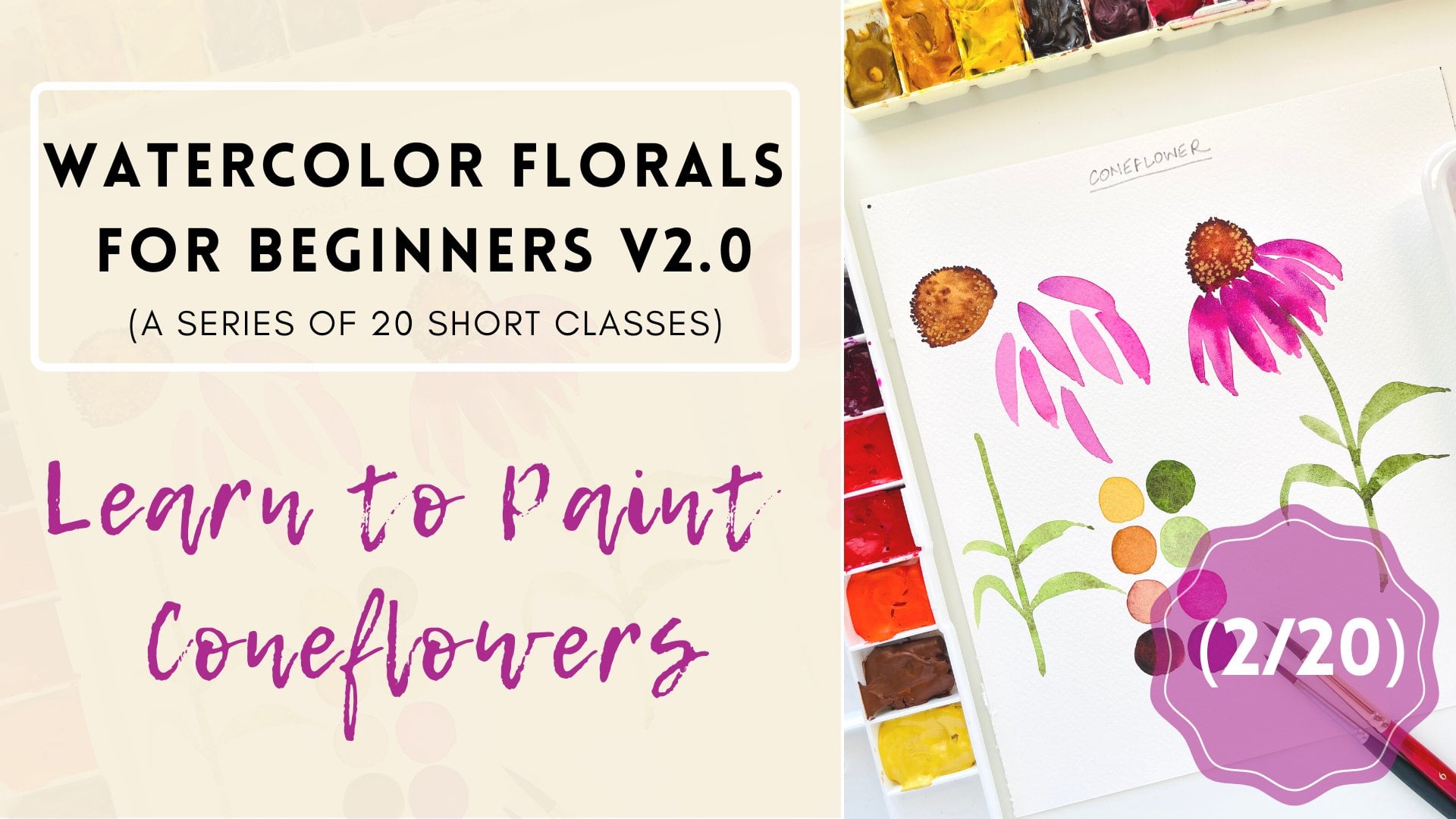
licensing journey. With this class, I'm starting a watercolor florals series
comprising 20 short classes. A few years ago, I posted
a screenshot of glass, which was about painting ten different types of
watercolor florals. But over the past few years, I realized that my style has mature and develop
with practice. And hence I thought of
revisiting this topic of watercolor florals in the
form of short classes. Each class will be dedicated
to painting one flower. My main intention here is
to break down and otherwise Lindy class into short
bite-size classes, which will be easy
to follow and they won't overwhelm you to
create many projects. With this class, we
will begin the series by painting a simple
Cosmos flower. I often get comments under my Instagram Reels that or make it look so easy to paint a flower. But in reality it's
actually quite difficult. And hence have decided to
break down the process of painting a flower into
small and easy steps. And if you follow along with me, I'm confident that by
the end of the class you will be able to paint
a Cosmos flower today. Let's take it one
flower at a time. I'm excited for this floral CDs because I actually
am. Let's begin.
2. Supplies: Let's look at the art
supplies that we are going to need for today's class. Now the art supplies overall that I'm using are
pretty much going to be the same for all the classes
in this flawed and CDs. And if there's anything
different that I will be using in
a particular class, I will cover a quick section in which I will describe
all those art supplies, which I haven't
mentioned in this class. So let's begin with
the paper first. I'm going to use Canson
Heritage Cold Pressed paper. Now this is a really huge blog. It's about 18 " by 24 ", so it covers pretty much more
than half of my desk size. So what I'm going to do is
I'm going to cut the sheets into smaller chunks and
then use this paper. So these are the sheets which I have got into different sizes just to make sure that I don't
waste any leftover people. These are the sheets
now this paper has beautiful texture. It's I think close to Arches, cold pressed paper if I have to compare two papers together. But this has recently
become one of my favorites. And I really like to paint
florals on this paper. For all the projects in this series are all the
classes in the series. I will be using this
particular brand of people. Now let's look at the brushes. I'm going to use my good old Princeton brushes in size six. This is the Heritage Series. And then I'm going to use a size six from the
Neptune series, size four from the
Neptune series. And I've got this size three
for all the detail work. And this is from the Aqua
Elite Series by Princeton. I will also be using bigger
brushes such as round 12, size 12, and size eight. But for today's class in
particular, these two sizes, particularly size six and
size three, are sufficient. For paints. I'm primarily using my dealer Romney
act refined set of 48 half pans and also a few assaulted tubes
from my Maddie Blue. So I'll be mostly using all my color choices or shades
from these two pallets. But I also have
my usual palette, which I've prepared from
assorted brands for the sheets that are
particularly not in either of these two pallets. I'll either mix it myself
using my custom palette, and I will let you know
the shades I use on the fly as we mix our colors. So these are the three pallets. You don't have to
restrict yourself to using a particular
brand that I'm using. Feel free to have any watercolors or you would
like to use for this class. But the main idea is to have
all the primary colors. Few shades of greens
are few shades of blue and reds and
pinks and a few Brown. So this is all you need
for painting pretty much all the flowers
that we are going to explore in this series. You're also going to need two cups of clean water to clean your brushes and a ballot. And you can also use one of these or
palette mixing trays. Or even a clean blend
ceramic dish is sufficient.
3. Cosmos Flower: Color Swatches: Before we begin painting
the Cosmos flower, Let's look at some
sample images to understand the color
and petal shape. The patterns of cosmos
flowers are not very big. They're slander and stretching
in outward direction. The center of the
cosmos flower is yellow with some brown details. They also have a peculiar goal on the outer side of the petal. If you count the petals that are roughly about seven
to eight petals for each of the cosmos flowers. And this is how it
looks from the side. Now, let's look at some side
view angles of the flower. If you see it has this green stem from where
the petals are coming out. Let's look at the buds now. The birds are round and
have very thin stems. The leaves of cosmos flowers are pretty thin and delicate, as you can see in this picture. And the stem is sap green. Over here also, I can
count about eight petals. So having made these
basic observations, we will try to paint
a Cosmos flower without directly using
any of the pictures. We want to create a loose
impression of the flower. If you still want to use
a photo by your side, then you can use these
images which I have clicked. I have attached them in the projects and resources
section of the class. Or you can even use royalty-free images from
websites such as Unsplash. Okay, now let's go ahead
and mix some colors that we are going to need for
painting this flower. I'm going to start with
a range of yellows. This is gamboge hue
from the dealer Romney, 48 half pan set. You don't have to use the exact same colors
that I'm using. You can find the closest match. And then I'm adding
Indian yellow. Now, if you don't have either of these colors
in your palette, you could always use
cadmium yellow deep. Or you could also
make some primary yellow or lemon yellow and
add some awkward to it. The next sheet I'm using
is permanent rose. And I'm diluting the scholar with water and keeping it ready. The next color that
I want to use, this opera pink by Daniel
Smith, extra fine watercolors. I'm going to dilute
opera pink because by itself it's very bright
and concentrated. The next one I want to use is alizarin crimson from the
dial around new palette. I'm just going to mix
that and keep it ready. And the last one I'm using
is quinacridone, magenta. Now let's go ahead and quickly swatch all of these colors. So that's the shade of yellow, which we will use
for the center. And then we will swatch all the pinks and
magentas that we mixed. Now it's not really
necessary for you to use all of these shades
of pink that I'm using. But I really like to mix
my colors on the fly. So I choose the colors that resemble the
closest to the flower, to the color of the flower, which is slightly
pinkish magenta. And then I'm also using
a shade of brown. And then I'm mixing some sap
green onto my other palette. It's sap green from
my Maddie Blue. So these are all the
colors that we are going to use for
painting this flower.
4. Cosmos Flower: Warm-up & Main Flower 1: Now let's warm up and try to paint different
parts of the flower. I'm going to start
with the petals. I'm using my size
six round brush from Princeton Heritage Series. I'm going to keep the
petal slightly longer. I'm just going to try and draw the petals in
different directions and make sure to have that call on the
edge of the petals. I'm using this light shade of pink that I'm mixed earlier. So try painting the
petals with me. Then I'm dropping a
darker shade of pink or magenta near the
center of the petals. Keep practicing a couple of petals till you feel warmed up. Try to get the shape right. We don't want it to be perfect, but a loose impression
of the Cosmos flower. So here are a few examples of how you could
practice the petals. I've loaded my brush with
green color and now I'm using my round size three brush from Princeton, Aqua Elite Series. And then I'm drawing some
stems and really thin leaves. The leaves look almost
like strands of thread. So I'm making sure that they
look delicate and simple. And then I'm going
to paint a bird, one of the round bytes that
we saw in the pictures. So I'm just making a magenta
mark or circular brush mark. And then I'm adding
a green stem to it, keeping it very simple
and effortless. So try to practice
various parts of the flower on a piece of paper. And now we will draw one of the two cosmos flowers that we are going to
paint together today. I'm going to start
off with the center. I'm placing some yellow dots
enclosed in a loose circle. I'm using my size
six round brush. And then I'm going to start
adding the petals one-by-one. Keep the direction of the
petals from inside to outside. It's okay if you end
up pulling some of the yellow color
into the petals, that in fact is going to give
you a very beautiful bleed. So don't worry about the colors
bleeding into each other. I'm going to try and fit about seven to eight petals
around this yellow center. You can move your paper around to get the correct angle
to draw the petals. For the base layer, I'm using a very light diluted
shade of pink. I'm intentionally
keeping the edges of all the petals a bit
rough and curly. Okay, Now this is the basic shape that I
have placed on people. This is my loose impression
of the Cosmos flower. And then I'm going to drop in
some darker shade of pink. It's one of the things
that we mixed earlier. So if you have your
shades mixed beforehand, it'll be easy for you to have that bleeding effect
while the colors are, while the base
layer is still wet? I'm really liking the way my pinks are bleeding
into each other. It's really giving this
beautiful soft effect. And now I'm going
to slowly go in and drop in a darker
shade of yellow. In the center. Switching to my round three brush and adding
some yellow ocher. We didn't make the
shade earlier, but as I was painting, I realized that I need one more shade to really
bring out the center. And then I'm adding a bit of
brown that we mixed earlier, just around the center. And then letting
all the yellows and browns mix into each other. Let's take a closer look. And then I'm using the size three round
brush to draw a stem. I'm keeping it thin and light. I'm using sap green. I may go over it later
on to darken it. I'm not quite sure, but it's always a good idea to keep it lighter
in the beginning. Now, let's add some
stems and leaves. To draw these ten leaves, I'm going to hold my brush
perpendicular to the people. And then just draw these
imaginary leaves that resembled to the
picture we saw earlier. But I'm not going
to stress too much about getting the leaves
in the exact same shape. But I'm just going to use my imagination to
create what I saw Leo. I'm trying to add
sideways flower here. Let's see how that comes along. Now this time we're going to add petals just from the side. So this flower is not
going to have the center. I'm using the exact same shade I used for the first flower, the lightest shade of pink, and then dropping in
some darker color. When you're painting
loose florals, make sure that you don't
hold your brush too tight. And the grip on your
brush is light to medium. That will really bring about the looseness and your painting. And now I'm going to paint
a slightly darker shade of sap green to lay on top of the existing
stems and leaves we drew. I feel it's a bit too
light after drying. So I'm just going to go
over the stems again. I just want the stems
to look a bit fresh, like how they look in summer. So I'm just going to go
over the lines again. I want to add a few more leaves on the other side as well. Without being too conscious
of being perfect. I'm just letting it loose and I'm going to see
how it comes along. We'll also try to paint a darker version of
the same flower. So I'm going to paint
that as well with you. So we have another run
to do and which we will paint a slightly different
version of the same flower. Maybe we'll add in a
bed in that version. So if you, if you're
not really happy with the very first version of the Cosmos flower that
we painted right now. Don't worry, we will go over this one more time and
paint it together. Now, I'm going back
to the center. It's almost dried. So I want to add a bit of contrast by using a
darker shade of brown. And that's about it. That's our very first version
of the Cosmos flower. And I really liked the
way it has turned out.
5. Cosmos Flower: Main Flower 2: It's only after painting
a particular flower a couple of times that you're
going to get a hang of it. Especially the shape, color, and the overall style
of that flower. And hence have decided to paint Cosmos flower one
more time with you, this time in a slightly
brighter shade of pink and magenta. So let's start with the
exact same steps again, and we will quickly paint one more example of
a Cosmos flower. Maybe this time we will also
paint a bird along with it. So I started off
by using the shade of yellow that we mixed
earlier to paint the center. And then I'm using a slightly
brighter shade of pink. The opera pink by Daniel Smith. I mixed a tiny amount
of magenta to it, and I prepared this
brighter shade. So I'm using the
exact same strokes and I'm laying down the petals. About seven to eight
petals roughly. I'm using my size
six round brush. Again. The whole idea is to try and paint a
flower a couple of times, like I said earlier, just to feel confident of the brush strokes and being
able to mix your own colors. So that's the first layer
of the eight petals. And then I'm going to go back. And using a darker
mix of the color, I'm simply going to bring out a bright and saturated shade on top of the existing base Leo. And because the base
layer is already wet, the color will instantly
start bleeding. I can already see
that this flower is so much more
brighter and saturated compared to the earlier
version in which we used really soft shades of pink. Even a slight change
of color can bring about a lot of variation in the way you
paint your flowers. So feel free to experiment, make some new colors this time. Maybe try and add more magenta, less of pink or more of
pink and less of purples. I hope you are able to notice a difference between
the two flowers. Maybe the shape and
the style is the same, but the colors are completely different compared
to the earlier version. Now I'm quickly going to mix
the same shades of green. I'm mixed earlier. And this time I'm going to use
a brighter shade of green, more of sap green. And then I'm simply
going to draw some stems and maybe a bird. It always happens that when you paint a particular
subject one or two times, it's always the
latter times when you realize that this version
looks so much more better, or these colors are, these color choices
are so much more better than what I
painted earlier. So try to experiment
in this way. I perhaps like my second version better than the first version. But the thought
process I had for my first version was
to have your nice soft, light paisley colors. And the idea to paint it again was to use brighter
colors this time. So see what process
or what thought process evokes you to
paint a flower every time. Maybe there are times when
you want a soft, flowy look. And there are times
when you want to paint your flowers with
really some vibrancy or saturation and play with the colors and see what kind of flowers
you get every time. So I just added a little bit, like we practiced in the
warm-up session earlier. I'm just keeping
everything very loose and not trying to
complicate the shapes. Adding a few leaves
on the other side. I'm using my size
three round brush. And I'm making sure to hold my brush in a vertical style
perpendicular to the paper. And I'm drawing these strokes with a very loose light hand. Okay, so that's a
simple illustration of a Cosmos flower as
our second version. Adding some brown dots to add some contrast
in the center. Okay, so that's
the Cosmos flower. Let's take a closer look.
6. Next Steps: As a class project, I would like you to
paint cosmos flowers using different shades
of pink and magenta. Once you're done, take a picture of your
artwork and submit your project under
the Project and Resources section of the class. And I would be glad
to provide feedback. Be sure to check out
other classes in this series and
paint along with me. If you like the series. Do please leave a review under the review section of the class. Also dropping your
suggestions if you would like to learn any
flower in particular. Thank you so much for joining
me in this class today. I will see you in the next one.
 Pooja Kenjale-Umrani, Author of MODERN WATERCOLOR WORKSHOP