Transcripts
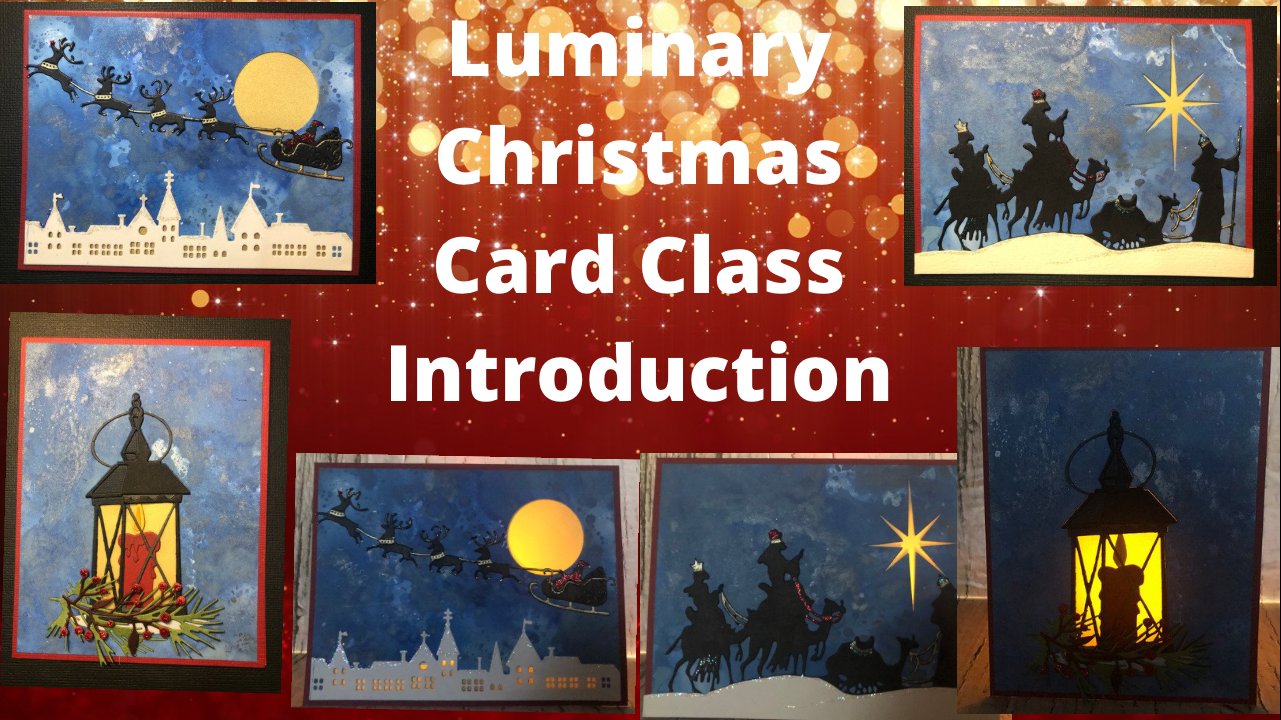
1. Tri-fold Christmas Card Class Introduction: Hi there. I'm Cheryl. Welcome to the tri-fold Christmas card class. So each one of the cards that we are going to make them, we're going to be doing three in this class, has a trifle to it, but they're all different. They all have completely different card bases. So we're not repeating the same thing three times. So the first one we're going to make is this wise men one and it has a little bit of a z fold to it. But if you've taken any of my previous classes, I've mentioned before, especially with a 3D cards, how I love cards that fold completely flat for mailing, but that have some dimension to them. So they have a little bit more interests to them when you are displaying. Now the second card that we are going to make is this one here, which is a little winter village. So it has a trifold that folds open like this, creating a trifold seen third and final card is this dear card here. And it is kind of attempt fold. It has allege at the bottom for it to rest against creating the tri-fold in this way. This class also includes a supply list. It'll be divided between the cards. And I will have sample pictures of each one of the cards with the supplies listed there also linked to where you can find them if you don't happen to have a local card store, a local scrap bookstore, it'll just help you source your supplies a little bit better. If at any point during the class you have any questions or anything, please don't hesitate to reach out and ask. I'm happy to help. I will see you in class.
2. Wisemen Card: Creating the Sky Background: All right, So this is the first card that we're gonna do for this class. And the very first step is to dicot our pieces. I'm using this dataset here from physics. And I'm going to first dicot my Wiseman piece. Now, the part that I'm highlighting is more than we're going to actually use for the card. There's two different parts on there. I've chosen the part that I wanted to have on the card and you can choose to have the same as me, or you can choose a different part 1 second to get there. So I chose these ones here. You could chose to this guy here. So your choice and what part of the die you want to use. Now we're going to cut our star and I am die cutting him out of some gold card stock. This goal that I have isn't really, really shiny and mirrored. You could choose it to be super shiny if you want. I liked it a little bit of a matt gold. So I'll move the guy over there. You get machine at other way. All right, now I have my die cut piece here that I'm going to put to the side. This piece here, don't get rid of it because we are going to need it. And where did so I've got a piece of card stock here that is going to be my back. And what we're gonna do with this piece here is I'm going to place where I want my started BY. And I'm going to just lightly and I'm only I'm not outlining the entire thing, but I'm just putting some pencil marks where I want my star to be and you'll see why in just a second. So I know exactly where I want my star to be. So the first thing that I am going to do, we can put that aside. We need a second. First thing I'm gonna do is I'm going to use some yellow ink. And I'm going to ink right behind where the star is so that it looks like it's emitting light. Start off light handed. You can always increase your pressure. But if you start off too heavy handed, you can't go back and take ink off. So better. Better to err on the side of caution and have less ink and need to apply more. So now I'm gonna go with a light blue. And I'm going around that yellow there. So the blue that I'm using is weathered wood, so it's kind of a blue gray color. And right now it looks a little bit dirty, but It's just to transition to the darker blue colors. Are using a darker blue, dark blue blending brush. And I'm using loops. If you get lines like that, you can easily blend them right away. If you let them dry, it's a little bit harder. And that's another good reason to start light handy because if you start light handed, there's going to be less ink there for you to cover up if you happen to have those streaks in there. Now this part here, I don't necessarily need to color color, but I do need to color the sides because our trifled part is slightly narrower than our card stock here. The card stock here that we're working on is four and a quarter by 5.5, which is the size of a card. But for the tri-fold card or trifled part, I used a 12 by 12 piece of card stock and scored it in thirds. So that's four inches once it's scored. So it's just slightly shorter. You could make this card to match that if you wanted to. But I kinda like tapping that blue thing framing the sides there. And you just want to make sure that you get it lower than where you're hills are going to go. And I like it a little bit model because if you look at the night sky, it's not completely solid color. So I like to have a little bit of I don't like it to be all one color. The next one I'm using, is it just a dark blue and it's just going to go around the edges just to give it a little darkness and to frame it in. Once you have that as dark as you want. Put your inks to the side. We need to heat set this because there are resins and the ink and we are going to emboss these stars onto the background. If I were to go do that right now, the ink, even though it seems like it's going to be dry really, really quick. The ink, the resins and the anchor actually still wet. So it's going to hold onto the embossing powder and I'm not going to get the stars, I'm going to get embossing powder over the whole thing. So we're going to heat set that. I'm just using my heat tool. And it doesn't take too long. And that what this also does is also heating your heat gun up for when you emboss. This particular heat gun is a little bit more delicate with embossing. It takes a little bit longer, but once you have your heat gun heated, that tends to take a little bit of time away from it too. So rather than just doing my stars and embossing radon here, what I'm going to do is I have a embossing buddy. Or there's different companies that make these. They're called different things, but the different companies, I'm just spreading that on there just to make sure that I don't have any wet ink on there. And then I am taking star stencil. You could also use a star stamp if you want. But what I'm trying to do is avoid embossing star is right where my big one is going to go. So I'm just inking with an embossing ink through that stencil. And typically I would have a piece of paper under here, so I'm not getting embossing ink on my surface, but I forgot that step. And that's okay. So now we're gonna put our embossing powder on their tap the excess away. If there are stars where you don't want them, just take a soft brush and just brush them away. I like how these have turned out. So I'm going to put my embossing powder in my ensure here and Emboss them. So if you have a heat gun that is one of the two pq guns, it does emboss a lot quicker than this heat tool here. So there is, there is a reason to have both of them. When you're starting out. You tend not to have all of the tools and tend to just pick the ones that you need or use the most. But if you get to a point where you're doing lots of ink drawing and you're doing embossing, it's nice to have both of them. All right, I'm going to let that cool for a second and then we're going to ink and emboss the side where you're ready to ink in a Boston size. And I've actually done two of them just so they had time to cool down before doing the top one, I'm only doing the two sides and the top simply because the bottom is going to be covered by the tri-fold. Anyways. So I don't need to do that. This is the other heat gun I was talking about. See how it emboss just so much quicker. The other thing I wanted to mention is I'm using reverse IMRT pad is my embossing ink. I have a dirty pad and a clean cut. I'm using the dirty one for this because if any of that blue link ink lifts, I don't want it on my clean pad as well as when I was pushing through this down. So I don't want to get some blue ink on my clean pad. So that's why I'm using my dirty one and I just write right on top of it that is stained. So my next, my last step for this background is just to glue on my star. And then we're ready for the next step. We'll see you in the next video.
3. Wisemen Card: Die Cutting the Wisemen & Creating the Hills: All right, so I've got my card or my star stuck down. So next part we're going to work on our trifold. But first thing we're gonna do is I added a little bit of perfect pearl dust to the wise men because I wanted it to look like the light from the star was reflecting on them. So the first thing we're gonna do is that so that that has some time to dry what we're working on our hills. So I'm going to put little bit of the verse, the mark on my dicot here. The lid back on. And then nice fluffy brush, tap it in the perfect pearls, and then tap the excess off on the side of the jar so that you don't get too much. I'm trying to just dust the side of the dicot or the images that are facing the star. If you find you're not getting very much on there, you can get some more. I can do this guy too, but we're not actually going to use them. There we go. So the reason I did that ahead of time is because perfect pearls, while it's beautiful, it needs to be activated by water for it to stick. There's a binding agent in it that is activated once activated by water. So you wanna missed it lightly? I probably missed it in a bit too much just because my MR is a little bit low in was being a little bit difficult. So next I have my piece of paper for the hills. First thing I'm gonna do is score it at four inches and at eight inches. And then I'm gonna do a little z fold in it. Little trifold there. All right, Here we go. So now we've got our Hills. And I could just cut a straight line to create those hills, but I like it when they're a little bit wavy, little bit flowing. So I'm going to start here at the top. And I'm just kinda doing a wavy line. And then ending about an inch up from the bottom. So there we have our wave, they're stuffing it filled to the right there. And then to add a little bit of color to the edge of the hills, I'm just going to use my light blue. And I'm going to just lightly ink the card stock on both sides. And the reason both sides is because we're doing a trifold, we're going to see the other side of at least one of the panels. And it would look a little bit strange if it was an eight. So I'm doing this on my glass map because my brush can move quite easily on it. While you're doing it though, you want to be conscious of where your inking and not sliding this into the ink. Otherwise you're going to transfer it over on the underside of your card stock. There you go. Now I'm just going to wipe that off because I don't want that on the back of my card. Now I'm going to glue this to the front of the card. This back panel is getting glued completely flat to the front of the card there. I'm just using some distress collage. Meet him. You can use whatever glue you like. You could even use a double-sided tape if you want to. I like using liquid glues, especially for things like this, because if it's not exactly positioned, I can move it. You want to make sure that it is completely in line with the bottom of the cart. Alright, now we're gonna get our dicot piece. And I went, and I kinda went under the front Wiseman there and cut them off. If you were to use this guy, I think it would look really, really nice, but you would have to create yourself a front heel or whatever. Otherwise they edge of that dicot would look a little bit odd. And now I'm just going to cut that there. And cut that. So it's the right size. And put glue on the bottom, the hill. And just a little bit on the bottom of the die cut there. And then line that up to the bottom as well. And you could have cut that piece before doing the perfect pearls. I just wanted to do that. Do the perfect world ahead of time so that water had a little bit of time to dry what we were doing the rest of the card. So there you go. You've got a card that lays flat, completely dry, but you can stand it up like there, and it will have a little bit of dimension. You will see in the next video.
4. Winter Village Card: Trifold & Die Cuts: All right, So this is the next card that we're making. And it has the trees, the tree line and the houses that fold out. So very first step is I've got a piece of card stock gets 12 inches wide, 5.5 inches. I am going to score it at the four-inch line. And also at the end it's going to be four by 5.5. So just a little bit narrower than a standard size card. But I am totally cool with that. So I'm pulling it together and they have to this card is we need to die cut our different panels here. So the first one I'm going to do is the house die. And I'm just using two different datasets from Hero Arts. They have different layers. You can do layered cards with each one of these sets. But I quite like using them together. So I'm going to put my house die down the blade and just shy at the end of the metal. So I'm going to place it so that the end of the metal just goes a little bit over. And then I'm taking some removable tape and you can make this as high or as low as you want it. I would recommend having this piece at least about an inch ash because you don't want to really narrow part here because otherwise it's going to not stay together together too well. I'm going to put my tape there, open the card up so my die, the blade of my die is facing up. And then I am lining up the edge of my cutting plate with that fold. Now, it's actually just in from the edge of the cutting plate because this is tapered at the end. So I am lining up the wider part. With that fold. Now extrude cut at the ER. It should stop cutting at the fold anyways, because that's where I pretty much layered or ended my die. But I just don't need the pressure on the rest of the cards. So there we go. That part cut off. The GI. I'm just going to move the machine for a moment. Take out my term I want I want to do is I want to remove the top of this panel. And the way I'm going to do that is I am going to line up that fold with my cutting line on my tremor. And I'm going to cut down just to where that guy is right down there or where they end of the cutting from the dye is right there. So we've got that one piece cut. I'm going to say that part. I'm going to need it in a moment. And then I'm folding in. And I'm going to position my trees now, it's easier to have your habit folded like this so you can position you choose because you don't want them too low and behind and you don't want them too high. I want us to be able to see a decent amount of this guy. But I also want to be able to see my trees. So I'm going to put it about there and tape it temporarily because this tape removes easily from the first step, but I want to make sure that the dike was to the end. So I'm going to shift it over just slightly and then my teeth there again, grab my machine. And I'm going to do exactly the same thing. I'm going to have my cutting blade facing up for my dy and then line up the wider part in from the tapered edge to the corner of the quarter, the fold on my card. And once again, it shouldn't matter if I go a little bit farther than that because I've pretty much lined up my die with that full anyways. And now get rid of this machine. For good. Grab my trimer again, take this die off and check it aside. And then I'm doing exactly the same as I did before. So I want just the back part of this card as the full as the back of the card. All right, There we go. This can come right off of here. Oops. It's sticking to each other. And there we go. Now I could use this as is, but I like to have a little bit of gold or yellow in the windows. So what I'm going to do is I'm going to place them velum in here. We can align it up with the bottom just so the background is pretty much all vellum, just so it looks a little bit neater on the inside of the card. And I'm going to trim. Or trace, sorry, where my houses are here. I'm going to be cutting just shy of the lines. So it doesn't necessarily need to be like a complete outline, just the outer edges. And basically I really only needed in those windows. But I want to cut out between those houses. And I want the inside to look fairly neat and tidy. I don't want I don't want it to look messy. And I have a little thing here from the little branch that I don't really like. So I'm going to just trim it off here because it looks a little bit odd. One second. I want the sky to their trimmed. There we go. So now I'm just taking a scissors and cutting. I'm just going to cut the roof line first and then I will cut out between those houses. And I'm being careful, but I'm not being super super careful. Again, I don't need an exact cut out. I just want it to look tidy from the inside. So any of those places where I drew the pencil from this between each of the houses, I'm going to cut that part out. And small detail scissors work best for this. If you have a scissors that has a really, really long blade to it, sometimes it's hard to get into those finer areas. Perfect. And then before we glue it into place, I'm just going to lay it behind there and makes sure that there's no gold exposed where I don't want to see it. There we go. There's a little bit down here, but I'm going to glue this in place and then I just trim that with the scissors. I think I think actually if I lifted up a little bit more by lifted up a little bit more, it goes in there. So I'm just going to trim that offline done. So I'm using a double-sided tape here. Velum does not like wet adhesive. So if you choose a wet adhesive, you're going to tend to get some buckling in your velum there because that on the bottom but I want I'm gonna do is put the adhesive on the top of the building so that I know that I'm not getting it in the Windows. Yes. So velum does not like what he said. So if I were to put some wet glue behind here, it would start to buckle and wrinkle and it just wouldn't look nice. So by putting the double-sided tape here, I know it's going to stick well, I'm not going to see it through the velum. And you'll notice that I didn't cut to I didn't cut the end of the tape. I just ripped it. So this tape is only about it. I just want to say about an eighth of an inch wide. But it's narrow enough that you can just rip it. You don't need to cut it, which is handy to not have to pick up the scissors each and every single time. And then tweezers or an easy way to grab the adhesive or to grab the backing and take that off. You know, if your nails too, but especially small pieces sometimes when you rip it, the ends are flipped up a little bit and it's just a little bit easier to use tweezers and tuck them underneath there. So lay that down, make sure it's all lined up beautifully. And then I'm just going to take the scissors and trim that side there and that side there. All right. So we have that done there.
5. Winter Village Card: Inking the Sky Background: All right, so now we're going to incur background and what I want to make sure is that I don't get any of this ain't on the backs of my dicot pieces that I just did. And we'll talk a little bit odd if I get some ink on there. So you've got that down. I need to make a little mask for my moon. And the way I'm going to do that is usable scrap piece of paper, a little round punch. And I'm going to ink through that. I'm going to put it right there and ink it as much or as little as you want. I like to make sure that there's some parts that are dark and some parts that are like light. I think that just looks prettier and a little bit more realistic. The piece that you punched out, put some a removable adhesive. If you don't have some, like a taper under there has removable removable adhesive Tombow multi if you stick it to the back of your whatever you want to use as a mask and let it completely dry. It dries as a post-it note. So you can use that as a mask and it's super handy. The only thing is, is you have to wait for it to dry. If you don't wait for it to dry, you're going to be gluing it permanently. So first thing I'm gonna do, and this is very similar to the star and the first card kept on, so I can kinda make sure that's stuck down. Nice. I'm going to my mask wants to move today. All right. It's wanting to move. So you might want or need or might need a new math each time. So I'm just going to go around. And yes, that first swipe around did not look pretty so very streaky. But we will be fixing that as we're adding more. And just like the first card, I'm not too worried if there are some parts of their jerk and some parts that are alike. I think that looks a little bit more natural that way. But you can see how I got when the mask shifted, I got some blue raid on the moon there. If you have a clean mask That's just freshly done, you're not gonna get that. But I think what I'm gonna do is I'm going to shift my Santa on this one so that it goes over them. Just goes over the moon just to hide that a little bit. So I'm not going to ink this down at this bottom part. It's covered by the dicots and that gives people a place to put a sentiment or to write a little note or whatnot. You could also do it on the back if you wanted to ink this entire piece and then do that on the back of it. You are back of the card. You absolutely could. All right. I like that. So I'm going to get my darkest color and just go around the edges and deepen that. And when choosing a car software your base, you want to make sure that you're to use a thicker card stock, a heavier card stock, not something that was really light because it's this one piece here is just a single sheet of card stock and you want it to be able to hold up on its own. So and if you choose a card stock that's too light for that, it is going to be a little bit too floppy. So now I have a Santa and slay and reindeer stamp here. I'm going to stamp that is some permanent ink. And this is where I gonna do it right over the moon just to hide the imperfections a little bit. It's called creative problem-solving. So the very last step is I'm going to add some styles to the front here. Now, if I go and fold to this card up and then add stickers, I can't any that are behind the buildings and stuff like that is going to make them stick because tickles is glitter glue and it's just going to glue in place. So here's the solution for that. Once I get this tape off. And you wanna make sure that when you're doing this taping, you're doing it with removable tape because you don't want to be wrecking your ripping your card stock as you're lifting it up. All right. I'm just going to clean my surface so I don't have any ink down there. So if I flip it over now I have a clean area to work on. So I'm just doing a little bit of sticklers. Like I said, stickers as glitter glue, but it has a really nice fine tip to it. So it's a great way to add sparkle to something and be able to be precise with it. So I'm only doing it to the rooftops. I'm not doing it to the entire thing because it's one of those things that in my opinion, less is more. First of all, if I were to put stickers on the entire front, it would take a long time to dry. The other thing is it would probably because of all the liquid from the glue, it would probably start to warp the card stock. And then I have a warp eudicot front. So on the houses, just the rooftops and then I created a little subtle hills. And then on the trees I'm just kinda doing scribbles. Kind of ish looking like branches going down. I'm not being too precise because all of this is doing is just adding a little bit of shimmer. And I'm going to make a little bit of a hill here. Alright, so now you're going to need to wait for that to completely dry. But once it's dry, there you go. Super cute. And by having a full piece of vellum here and just die cutting it or just tracing and cutting it. You have a neater inside there, but it just makes this the moon pop and they just kind of bounce off of each other. So there you go. We'll see you in the next video.
6. Winter Deer Card Base: All right, so now we are on our last card and this is the one we're making for this here for a little tent trifled card. So the first step in this is creating the card face. So I have a piece of paper here or piece of card stock here that is six inches by 12 inches by 5.5. And the very first step is to cut an inch off the end and we get rid of the trimer. And that inch piece is what we're going to use to create the sentiment piece on the bottom here. And that also creates a little ledge on the inside of our card so that, Sorry, so that it can hold the card up in a little pop-up. Next we are going to score on remaining piece here. So I am going to score it at the four and a quarter mark. And then I'm also going to score it at the 8.5 inch mark. And that way once it's all folded, it is going to be the finished card size. All folded up is going to be four and a quarter by 5.5. Folded nicely in. There we go. So there we go. So if we did with the ledge there, I mean, it could stand up, but the alleged just gives it a really nice place to stand flat against. So I'm going to stamp my sentiment on that piece there before putting it on the card simply because if by chance or embossing doesn't work quite properly, something gets messed up. It's easier to recreate this little bit harder career recreate the entire card base. So pour the powder on, tap the excess off, brush any excess powder that's not sticking to your stamped, sent to minutes. And then a boss. And the great thing about embossing, you can see exactly where it's in Boston, where it's not, it's almost like magic. It goes from like a matt gold to a nice glossy gold. And it's important to note that the heat guns that I'm using throughout this class, they emit heat, they don't blow air. So you can't use a blow dryer for doing embossing. That's what question that I get often from people is can I just use a blow dryer and you can't? And the reason being, if you were to use a blow dryer, it's going to blow air, blow the powder off your piece. And then Dr. ENCO, you're not going to actually get enough heat in one area to melt it. So now I'm just lining lining that up with the edge of the cart there. And now we have our card base graded. So I'll see you in the next video and we are going to start working on our image piece.
7. Winter Deer Card Image: All right, So I have a card stock and our ink out for image piece. And now we're going to do the inking to create the hills. Now there's two ways you can do that. I am using a scrap piece of card stock car stops going to hold up a little bit better than copy paper, copy paper. You're going to have to work hard to keep it in place. Whereas card stock, it's firm enough, it's not going to roll up quite as easily. So there's two ways to do it. You can either rip an edge, which is what I did there. I'm not creates a DJ get edge. But for demoing, I'm going to just so that you can see the difference between the two. So I'm going to place my paper where I want it to go. And I'm going to work from the bottom here. And I'm just going to lightly do a little bit of light inking and you can barely see it on the card stock. But what that's gonna do is it's going to create the rolling hills at the bottom. You could do your sky first and then do this. But what you risk is contaminating your ink because you'll have an edge of here on your guide that will have some of the darker blue inks and you may pull it into your snow EPS. So now I'm going to start working on this guy. So I try as much as possible to start inking on the card stock and then work my way off. That way. If there happens to be a blob of ink on my brushes, it tends to go on my little guide piece here and not on the card base. Although for this top piece, because we're doing the entire sky, it wouldn't be as bad if it went on to that piece because we could easily blend it out a little bit harder when it's the snow area because you want that to be a little bit later. So I've got my light down. Now I'm working on my medium darker blue. If your piece here shifts, just put it back in place. You could use a temporary adhesive to hold it in place. But because we're doing something so simple, it's easy enough to just hold it in place and ink your sky as dark as you want it. I like there to be a really nice contrast between the light of the snow and the dark blue of the sky. But I also like having some variation. So I like having some darker areas and some lighter areas. And now my darkest blue. Again, I'm only doing it around the edges and it's just to kind of frame it. A little bit of dimension there. A little bit more in that corner and a little bit more right there. Alright, so our background There is done. The next step is we're going to emboss our moon. But before we do that, I want to use my you can heat set it, but you can also use your embossing buddy embossing powder, which I can't remember. Perfect. I can't remember what this one with particular one is called. There's many companies that make them. And what it is is just a little bit of cornstarch, I think in felt. And that just takes all the moisture away from your ink. And that way the embossing powder will only stick to your embossing ink. So I'm going to use a circle punch. You can use it as big, as small or as small as you want. You could also use a circle die for this. And I am going to, I lined it up with the corner of the card so I'm not getting embossing ink there. But I also, when I was punching it, I was keeping in mind kinda where I wanted it to be on my card. We're just going to simply press are embossing ink on there. Get rid of our mask or powder. They're flick any excess off that sticks anywhere else, but it shouldn't really stick anywhere else once you've used your little Pope's over the whole thing. Now we're going to emboss it. All right. You could stop there if you want with the embossing. But what I wanted to do is just add a slight edge of gold around the edges there. And it's a really nice way to frame something without necessarily having a card stock mat. So I'm actually going to do two sides at a time. So I'm just rubbing the card stock on the ink, putting the powder on it and then tapping the excess off. If you get a little bit too much. Like here, it's a little bit too heavy for my liking. Just take a soft brush and just lightly brush it, and then tap it and that will get the excess off for you. See how it just adds a nice subtle gold edge to it, just gives it a little bit of sparkle, as well as the fact that because the card base as white and our snow on the bottom of this cart is weight. It gives a little bit of definition between the card base and the image. So for the second layer, I can just dip it in the powder that's already on my paper here and then tap the excess off. And you'll notice I'm working on opposite sides. That way. I'm not missing edges up. Personally. I just find it easier that way. But you could even just do one side at a time. You just want to wait a few seconds between the sides so that the powder has a chance to cool and you don't have hot embossing powder that you're rubbing against the the embossing powder because sometimes it can smear that way. All right, so this piece is nearly done. I'm going to glue it to the front of my card here. And then I chose to add a deer dicot to it. You could do a tree or something like that. But I just thought into your would be quite nice. And I die cut it in black as in a silhouette. So I'm going to glue that guy on there as well. There we go. And then something that I'm going to add to this card. I didn't do it to my sample, but I just thought it might be a nice addition is to add dots of stickers. If it was snow. But you look and see how the difference between the edges from the cut edge and from the torn edge. Neither one is right or wrong. It simply personal preference. So for the little snow, I'm just going to dot testicles all along the back of the sky. Making I do it making sure that some are a little bit bigger, some are a little bit smaller. And I try to vary how far apart they are. I don't want it all completely uniform because then it looks really it's not as pleasing to the eye is basically what I'm trying to say. Merry go. There'll be slightly different once it's dry. But that's perfect. And I hadn't planned on doing this, but I'm just looking at it, thinking it would be nice to have a little bit of stick holes along the edge here. So you can go is as much or as little as you want here. I find less is more, so I don't do a whole lot. But there we go. So just a touch, a sparkle on there. And then one without. So there you go. That's our third card. So this one here. You may have noticed when I first folded it, it didn't stick or didn't hold right there. And that was because I didn't have the weight of the card. Front on the front here. Maybe my brush over the way. But there you go. A little bit hard to see from this angle. But a nice way to display a card and have a sentiment showing.
8. Tri-fold Christmas Card Class Thank You: Thank you so much for joining me for the tri-fold card class. I hope you enjoyed learning how to make all of the different trifold card bases. And from there you can change up your stamps and dies and inks and you can, the possibilities are endless. Will see you in the next class.
 Artsy. Island Girl, Teacher