Transcripts
1. Introduction: Hi, this is Michelle
West with Aprosae. For your class Take the mystery out
of learning Spanish The why behind the language. If you're beginning to brush
up on your Spanish skills, or maybe you're a beginner
at learning Spanish This class will teach
you things about Spanish that will help you make sense out of
what you're studying. And the great thing
is you don't need any previous experience
to take this class. Some Spanish instructional
programs are great, asking you to repeat
vocabulary words in sentences but don't explain why the
language works the way it does. Once you understand some of
these patterns in Spanish, you can see a phrase
or sentence and have a better understanding
of what's being said. This speeds up your
learning time and gives you an increased ability to
create sentences on your own. While the Spanish speakers in my family speak Latin
American Spanish. I took Castilian, Spain, Spanish from seventh
to 12th grades, and have 16 college
credits in it. From there, I started a business developing
curriculum for and taught Spanish programs to
two-year-olds to adults. From this experience
and training, I've seen that the more someone understands why words change
from one context to another, the more engaged
the students are and the quicker they're
able to learn because they can understand the patterns
that make up the language. That's why I wanted to share
what I've learned with you. I've picked some of
the basic concepts in Spanish that help the most in acquisition and retention of a foreign language when
you're first learning. In this class, we're going to
cover the following topics.: Punctuation and how it cues you when reading, cognates and how they can make
learning Spanish easier. Diminutives and
why they're used. Pronunciation and how to sound more like a
native speaker. Adjectives and how their
placement makes sense. Number, which is
singular and plural, and why it's important. And gender, which is
masculine and feminine and what the
subtleties tell you. In Lesson five,
covering pronunciation There's a pronunciation
guide and an associated worksheet in the projects tab of this class. So you can put what's covered in that lesson into practice. The worksheet will
lead you through how to pronounce any
word in Spanish, more like a native speaker, solidifying what you've learned and can serve as a reference
for when you start reading, writing, and speaking Spanish. I'm looking forward to seeing your worksheet posted
to this class and/ or getting any
questions or feedback you have about what
you've learned. By the end of this class, you should have a
greater understanding of some critical and
basic aspects of the Spanish language that
will make it easier to learn. So let's get started
with the first topic, how punctuation
differs in Spanish and how those differences
can help you.
2. Punctuation: If you've ever read Spanish and wondered why in the world is that exclamation mark or
question mark upside down, You're going to see the value
in it after this lesson. If you remember from
English classes an exclamatory sentences is one that has an exclamation
mark at the end, and it's exclaiming something. An interrogative sentence is one that has a question
mark at the end, and it's asking a question. And a declarative sentence. It's one that has a
period at the end. Spanish uses all these
punctuations as well. Let's take an example. Where is my baby? ¿dónde está mi bebé? is
the Spanish translation. In English we have
where is my baby Question mark. In Spanish, we have upside
down question mark, ¿dónde está mi bebé, Right-side up question mark. Why the difference? It's because in the
Spanish language, punctuation like a question
mark and an exclamation mark, are going to be upside down at the beginning of a
sentence and then they're going to be right-side
up like they are in English at the
end of the sentence. Now, if you're like me, I like to understand the
logic behind something. I think Spanish is
better in this instance, than how it's done in English. Because when I'm reading a
paragraph in Spanish and I see an upside down question mark or an upside down
exclamation mark I know what I'm about to read. Am I the only one who in English class was reading
out loud and read something like Mary ran out of the
way in a monotone voice only to see that darn
exclamation mark at the end of the sentence? Realizing, I should have said, Mary ran out of the way! And the same thing has happened
with question marks. And you don't have that
problem in Spanish. When you're reading a
paragraph out loud in Spanish, you know, upside-down
exclamation mark, ¡Aquí está mi bebé! I need to exclaim this with
an alarming tone in my voice. Or upside down question mark, ¿dónde está mi bebé? I need to ask this with a
questioning tone in my voice. I think it's pretty cool. It gives you a heads up. Now, if you're wondering
about periods, periods are not at the
beginning of a sentence and at the end. They're
only at the end. So you can just take it for
granted that if there's no upside down question
mark or upside down exclamation mark at the
beginning of a sentence It's going to be a statement
or a declarative sentence. That's the quick and
dirty about punctuation. Now, let's move on
to what cognates are and how they can make your learning of Spanish easier.
3. Cognates: So what is a cognate? A cognate is a word
that exists in two different languages that
has the same root or origin. They're going to send alike. Here are some examples of animal cognates and
let's see if you can guess what the
English translation is of each Spanish word. León. Yep. That would be Lion. Tigre. That would be Tiger. Canguro. Kangaroo. Cognates are great for
first-time learners, especially because learning a foreign language
can be intimidating. But cognates allow
you to acquire and retain all kinds of vocabulary in a very
short amount of time. As a result, cognates
break down the barrier you might feel when you're learning a new language, like Spanish. Let's say your goal is
to order exclusively in Spanish from the
Mexican restaurant you frequent every week. It could help to focus
on cognates first, because we humans tend
to stick with learning longer when we
experience success. And learning words that are easy
at first brings you success quicker than learning
words that are challenging to remember
and pronounce. For this instance,
I would suggest doing an online
search for English Spanish cognates for food. See which foods you'd likely
use when ordering at the Mexican restaurant and
practice those words first. A huge word of caution when
studying cognates though., There's this very real thing
called false cognates. It's basically when
a Spanish word looks like an English word but it is not a cognate. So please look up the word before assuming it's
a true cognate. Here are some examples
of false cognates. Let's see if you can guess what the English translation is of the Spanish word
Embarazada. Maybe you thought embarrassed? Nope. It means pregnant. I'm sure that one's gotten
some people in trouble. Another one is éxito. Most would guess exit. It means success. And here's the last
one. Constipado. This one usually means a sinus and nasal
congestion from an upper respiratory
infection or a cold, though it could
mean constipated. So it's helpful to know that the person might not
have a case of TMI, too much information, they
might just have a cold. You can see how some of
these false cognates can cause miscommunication
and some giggles. That's why translating the
word to make sure it's a true cognate and not a
false cognate is helpful. And that's the short and
sweet about cognates. Now, let's take a
look at diminutives, what they are and
why you'd use them.
4. Diminutives: Diminutives are words that
have an added suffix that changes the meaning of
the word in a small way. For example, the Spanish word
for grandfather is abuelo. A diminutive for
grandfather would be abuelito. The suffix of ITO replaces the letter O at the
end of the word, and this indicates
smallness or affection. So if you were to see your grandpa went up
to hug him and said, oh abuelito, instead of abuelo, that would
be a more tender embrace. Another example is, let's say
you live in a tiny house. You would say casita
instead of casa. Or if you wanted to say, Wait a minute, or Wait a moment. You would say espera un momento. But if you're almost
done with something and you want to say
wait a little moment. You'd say espera un momentito. It's similar to English in that one might say, Oh, look at the doggie, instead of look at the dog. Basically speaking, anytime you see a noun that has
the last letter, usually o or a, replaced by ITO or ITA, It's likely a diminutive. Here are the
examples we covered. Abuelo for grandfather, or
abuelito for grandpa. And by the way, the same would be for
abuela, for grandmother. Or abuelita for grandma. Casa for house, or casita for
a little house or cottage. Momento for moment, or momentito
for little moment, which, you know
now is a cognate. These are just a few
examples of diminutives. You can use them when
you're reading, writing, or speaking Spanish to add a nuance that communicates
either smallness or affection. And that's it for diminutives. Next up is how to pronounce Spanish more like
a native speaker.
5. Pronunciation: If you want to sound more
like a native speaker, I have a pronunciation
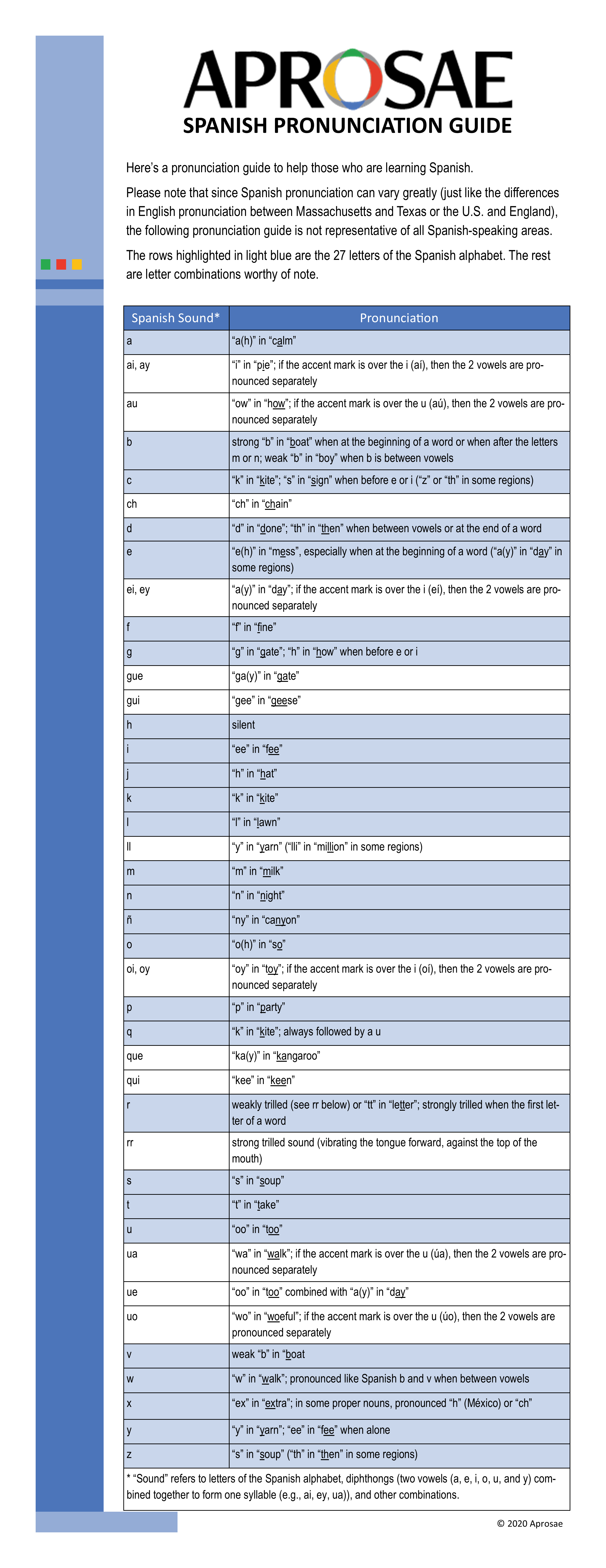
guide you can download in the class project
tab of this class. The pronunciation guide
will tell you how each letter or combination of letters is pronounced
in Spanish. But first, a huge disclaimer to remember
when using this guide. Just like British
and American English can have different
pronunciations of the same word You might hear
Spanish word being pronounced differently
in Spain than in Mexico. So this pronunciation
guide is a guide, not an exhaustive
treatment of how each country pronounces
each and every sound. You can use the
pronunciation guide to study as a
first-time learner, or to brush up on the sounds of Spanish if you're returning to Spanish after a long break. Now, that pronunciation
guide is pretty long, but you don't have to worry
about all those sounds. It's just a comprehensive guide. What we're going to do in
this lesson is go over all the sounds that
I think are really important for
anyone to memorize. And once you have those
hand-picked sounds, you will eliminate
the vast majority of noticeable
pronunciation mistakes. And the number of
sounds we're going to go over is only ten. So this is really doable. There are three main categories
that these sounds are in. The first one is vowels. Luckily, the same vowels we have in English are in Spanish, a, e, i, o, and u. A is pronounced a(h) in calm. E, well, here we have a difference depending on
where people are from. In some parts of the
Spanish-speaking world, it's pronounced a(y) as in day. Other places, I would say
mostly Latin America, so the majority of
most places that folks in the United States
or Canada might be around, are going to say e(h) as in mess. So either way is fine. If you live in North America, I'd suggest choosing
e(h) as in mess. I is pronounced ee as in fee. O is pronounced o(h) as in so. And U is pronounced oo in too. The second category are unique letters in the
Spanish alphabet. And depending on who you
ask, they aren't letters. Some people who learned Spanish awhile back, may have had these letters
in their Spanish alphabet. But currently in the
Spanish alphabet, Most people would say
there are only 27 letters. The three letters I want to
go over are the double L, elle, That's what the
letter is called. erre, That's the trilled r, erre, that is a double R. And then the third one is one that is still in the
Spanish alphabet, and that's the eñe. It's the N with the
tilde on top of it. The elle is a double L and
it's pronounced like a y. Let's take the word
chicken, pollo. It's not polo, it's pollo. Always remember double L is a y. The other sound, the double r, erre, that's
called a trill. It's a trilled sound. It's rolling the r. There are some do it with their tongue on the
roof of their mouth. Spanish speakers,
from my experience, will be absolutely forgiving
if you do not trill your double r's and they'll understand what you're
trying to pronounce. So if you can't get
this, it'll be okay. I add this into the ten sounds because it is something
to work towards. Or when you hear that
trill, you'll realize, oh, it's the double R. And the third unique letter
is the letter eñe. The N with the tilde
on top of it. That is pronounced ny like Canyon. A word you might have heard
with the eñe is año, That means year. año
would not be ano. It's an important distinction to make when you see the
N with a tilde on it, to not pronounce it like an N. Because some people may
not get what you're saying unless they have context where they can guess that
you've pronounced the eñe like the letter N. The third
and last category I want to go over are
letters that you'll find in the English alphabet that you might pronounce like
you do an English, but they are very different. Let's start first with H. The H in Spanish is silent. It's not hhh like in English. There is no pronunciation
of the letter H in Spanish. For example, a brother
is hermano. A sister is hermana. H is silent. You'll know not to say
hermano, say hermano. The H is silent. The J in Spanish, it's pronounced like
the H as in hat. So for June, junio,
for July, julio. Also, you may have heard some men have the
first name Julio. So if you can think about that, that might help you remember to pronounce the letter
J in Spanish, like the letter H in English. And those are the ten sounds, the vowels a, e, i, o, and u; the letters that are
unique to Spanish: elle, erre, and eñe. As well as the
similar letters of h, which by the way
is hache and the J which is called jota. I find if you can master
these ten sounds, then you will
eliminate the majority of most noticeable
errors in Spanish. If you want to go further, there's also a
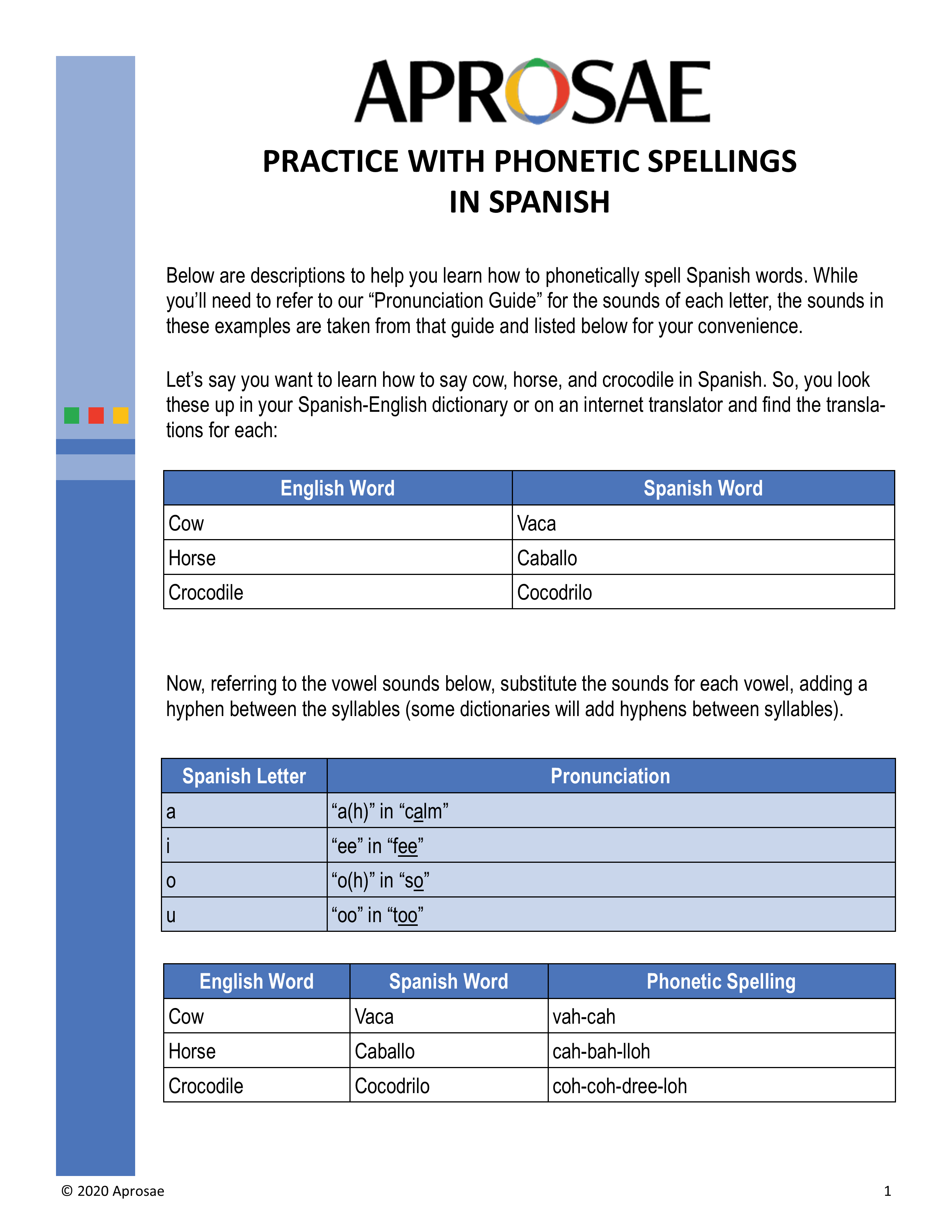
downloadable worksheet in the class project
section called practice with phonetic
spellings in Spanish. You can download that, follow the instructions,
and learn how to better pronounce
any Spanish word. As a side note with
pronunciation, there's also the question
of which syllable should be stressed when
you're saying a word. Let's look at Los Angeles, a city in California, which means the angels. There's one syllable in los
and three in angeles. So one syllable words are easy. It's just los. But would you say Los ANgeles or Los AnGEles or Los AngeLES? In Spanish, there's a
straightforward rule on which syllable to
stress in a word. When the word ends in a vowel
or ends with an S or an N after a vowel, the syllable you stress is on the second
to last syllable. Any other time you stress
the last syllable. So in the case of Los Angeles, the winner would be Los AnGEles. For exceptions to this rule, you'll notice an accent
over the letter, as in the o in
adiós for goodbye. And león for lion. León has an accent because
it doesn't follow this rule. But the plural of leones does not have an accent
because it follows the rule. Depending on the instructional
program you choose, that program might focus on
how to pronounce Spanish. Others may just tell you to repeat the word after
they've modeled it. If you find you need more instruction on how
to pronounce Spanish, than this lesson or
your program provides, my favorite way is to perform
a Google search for how to say and then add the Spanish
word you want to say. Like here we've searched for how to say hola, which is hello. The search results will
come up with an audio file of the pronunciation for you
to listen and practice with. Yet, if that doesn't
fit your style, there's a plethora of
videos on sites like YouTube about all things related to Spanish
pronunciation. Or you could also search
for articles online or from the library. By using the
pronunciation guide, the three-page worksheet titled practice with phonetic
spellings in Spanish, or using any of the
other tips mentioned, you can pretty quickly
go from saying things like Los Angeles to Los Angeles. Now, let's move on to
adjectives and learn how their placement
differs from English.
6. Adjectives: Adjectives in Spanish have the same function
they do in English. They modify a noun, which is a person, place, or thing, to describe a quality or
trait of that noun. For example, when we
say red kangaroo, red is the adjective modifying
the noun of kangaroo. Where adjectives in Spanish
differ from English, is in their position
in a sentence. In Spanish, the adjectives are
after the noun. So you'd say canguro
rojo or literally translated
kangaroo red. Similar to lesson two, where we talked
about the benefit of having an upside down exclamation or question mark at the beginning of a sentence, there's a benefit to having
the adjective after the noun. It's helpful when you're
reading something and you read el canguro rojo, literally meaning
the kangaroo red instead of the red kangaroo. Because when you
read that phrase, you instantly know in your
mind it's a kangaroo first. And then you can visualize
that the kangaroo is red. But in the English language, when you read the word red, you can only visualize
the color red. And then the next word lets you see what's red, a kangaroo. So then you can wed the
red with the kangaroo. While our minds do this
instinctively and quickly, the logic behind
having the noun first, then the adjective, does
make more sense to me. In any case, knowing that the positioning of
adjectives is different between English and Spanish is the one thing to remember
from this lesson. It's that simple. Let's take a look
at number which is singular and plural and
why it's important.
7. Number: In English and Spanish, we have number, which
is singular and plural. In Spanish, like English, nouns can be singular or plural. Unlike English,
Spanish modifiers like adjectives and articles
can also be singular, or they can be plural. Let's start with nouns and
use our kangaroo again. Kangaroo is canguro in
Spanish, that's singular. If you have a group
of kangaroos, it'd be canguros
for plural. It'd be similar for seal, which is foca for singular, or focas for seals, plural. Let's look at some examples
of words that don't end in the common -o, or -a. Tiger is tigre. And that's singular. Tigers is
tigres when it's plural. But what if our noun
doesn't end in a vowel, A, E, I, O or U, but ends in a consonant? Let's take lion, which is
león, singular. What do we do? We add an ES at the
end of the word to come up with leones,
or lions, plural. Though there are many rules
on how to make nouns plural in Spanish,
including some exceptions, we're going to keep it short
and sweet for this class, because the vast
majority of nouns will follow these two rules. If a singular Spanish noun
ends in a vowel AEIOU, you add an S. Or, if the singular Spanish
noun ends in a consonant, you add an ES, or S in some instances. When in doubt, using an
online translator will show you if you've fallen upon an exception to these two rules. Just search for English
Spanish online translator, enter the plural
English word you want to translate
into Spanish, and you can see if these two basic rules worked for what you're
looking to make plural. If you remember one thing
regarding number and nouns, remember that for
most situations, if a Spanish noun ends
in an S, it's plural. Now on to number and modifiers. We're going to look at the
two modifiers of nouns, which are adjectives
and articles. Since we covered adjectives
in the last lesson, let's talk
articles which are a/an or the in English. In Spanish, the articles
of a or an are un and unos for masculine or una
and unas for feminine. The articles of the
can be masculine, el for singular, and los for
plural. Or feminine la for singular and
las for plural. We'll go into gender, or
masculine and feminine, in our next lesson where this will make more sense. The important thing to remember with adjectives and articles in Spanish is that they match
the number of the noun. In other words, if we
have the red kangaroo, it'd be el canguro rojo. But the red kangaroos
would be los canguros rojos. Notice how in English only
the noun becomes plural. But in Spanish, the article, the noun, and the adjective
all match to be plural. Another way to say
this is that the noun, whether it's singular or plural, dictates whether the adjective and article are
singular or plural. Just like was mentioned
in Lesson two with punctuation and lesson
six with adjectives, The differences between
where these things are in a sentence have a
benefit over English. I think the same applies
to making the adjectives and articles match
the number of a noun. Because if I'm reading los canguros rojos
out loud in class I know as soon as I read
the word los that I'm dealing with a group of
something. In English. As soon as I read the word the, I have no clue if it's
singular or plural. Neither language is
better than the other. But I find having to learn the benefits of the
differences can help with motivation to learn and
retention of the concept. Since number and gender
go hand in hand, let's round out
the whole picture by learning about gender next.
8. Gender: Gender in Spanish is another difference from
the English language. The same word or noun
in Spanish can have a male or masculine version and a female or
feminine version. Remember our grandfather
abuelo from lesson four covering diminutives and
grandmother, abuela? Those are the same word, but by having an O at
the end of the word, it's masculine and by
adding an A, it's feminine. It's that easy for
most other nouns. So generally speaking, if a singular noun ends
in O, it's masculine. If it ends in A, it's feminine. But if a plural noun ends in OS like canguros for kangaroos, It could be a group of
all male kangaroos, or it could be a group of
male and female kangaroos, regardless of the ratio
of male to female. Because as long as
there's one male in the group, it's canguros. If the entire group of
kangaroos are female, then the plural
noun would end in AS for feminine and would
be canguras. While, like with canguro, you can change a noun that ends in masculine O
to feminine A, If you know the gender of
the noun isn't masculine. The same does not apply
to a noun that just naturally ends in
A like foca for seal. So what do we do? We don't ever say foco. That's when you become
dependent upon the article of el and la for the, or un or una for a and an when the noun is singular, to know whether it's a
male or female seal. So it's el foca for a male
seal or los focas for a group of seals that has at least one male. Or la foca
for a female seal, or las focas for a
group of female seals. But what about a noun
that doesn't end in O or A, like tigre for tiger? Is that masculine or feminine? We don't know without the
article or other contexts. But if we have a tiger
who just gave birth, then we'd say la tigre and
know it's a female tiger since la and las are feminine articles
for the word the. And as you've probably guessed, a male tiger would be el tigre. A group of all male tigers, or a group of tigers with at least one male would
be los tigres. And a group of all tigers who
are female would be las tigres. As you can see,
the article of the, which can be el masculine or la feminine for singular, and los masculine or las
feminine for plural, And the article of a/an which
can be un masculine or una feminine for singular,
and unos masculine or unas feminine for plural, give us insight into
what gender noun is, especially when the noun doesn't
end in the usual O and OS for masculine or A and AS for feminine. And just like we saw in our previous lesson
eight on number, the noun dictates
not only whether the adjectives and articles
are singular or plural, the noun also dictates whether the adjectives and articles
are masculine or feminine. So let's apply all
this to an example. If we have a group of
red female kangaroos, but we have one male kangaroo in the group, what do we call that
group in Spanish? It's los canguros rojos, with one male in the group, it all becomes a
masculine group. But if we take that one male kangaroo out of the group and have
all female kangaroos, what do we say now? It's las canguras rojas. Now, here's a side note, though we're not going this
much in depth in this class I did want to mention
that there are possessive adjectives in
Spanish, like an English. Let's take a look at the
possessive adjective for my. If you're saying
my red kangaroo, you would say mi canguro rojo or mi cangura roja. And my red kangaroos
would be mis canguros rojos or mis canguras rojas. There's no gender in the possessive adjectives
of my, or even your, like there is in the articles
of the, a, and an. To wrap up this lesson, all you really need to
understand is when a noun or the adjectives and/or articles accompanying the noun ends in O, it's usually masculine and ending in A is
usually feminine. As you learn more and
more Spanish vocabulary, you'll pick up on the
exceptions that there are to this, like foca for seal. And remember, if
you're ever unsure, you're just a search away
from figuring it out through an online English
Spanish translator. The important thing is now
you'll be able to detect if something is male or female and understand why
it's different. So congratulations are in order because you have only
one more lesson left. Let's finish this class by
looking at the last lesson to discover what you can do now
with what you've learned.
9. What's Next?: In this class you've learned about punctuation
and how it cues you when reading, cognates and how they can make
learning Spanish easier, diminutives and
why they're used. Pronunciation and how to sound more like a
native speaker. Adjectives and how their
placement makes sense. Number, which is
singular and plural and why it's important. And gender, which is
masculine and feminine, and what the
subtleties tell you. Now that you understand some of the major differences
between English and Spanish, what's next? Well, you
have a couple of options. First, if you're beginning
to study Spanish or are refreshing your
skills after a long break, but aren't quite
sure where to start, Please watch our class titled
Spanish for beginners: Six ways to learn. That class will show
you six ways to learn Spanish that you may not have known
about and equips you to pick the way
that best fits you. Second, if you
completed the worksheet titled practice with phonetic
spellings in Spanish, using Aprosae's Spanish
pronunciation guide, please post it in the project section along
with any questions you have, and I'll get back to you. And lastly, please follow us so you get word of when
we have new classes. Whatever you do with
learning Spanish, please remember, you can't do it all in a day, nor should you. It all starts with
taking a first step. So congratulations on
taking this class as one of those first steps to understanding
the Spanish language. Remember, we're here to help you get to where
you want to be. Please post your worksheet
or any questions you have so you'll be one step closer
to where you want to be. ¡Adiós!
 Aprosae - Michelle West, Training / Consulting / Speaking