Transcripts
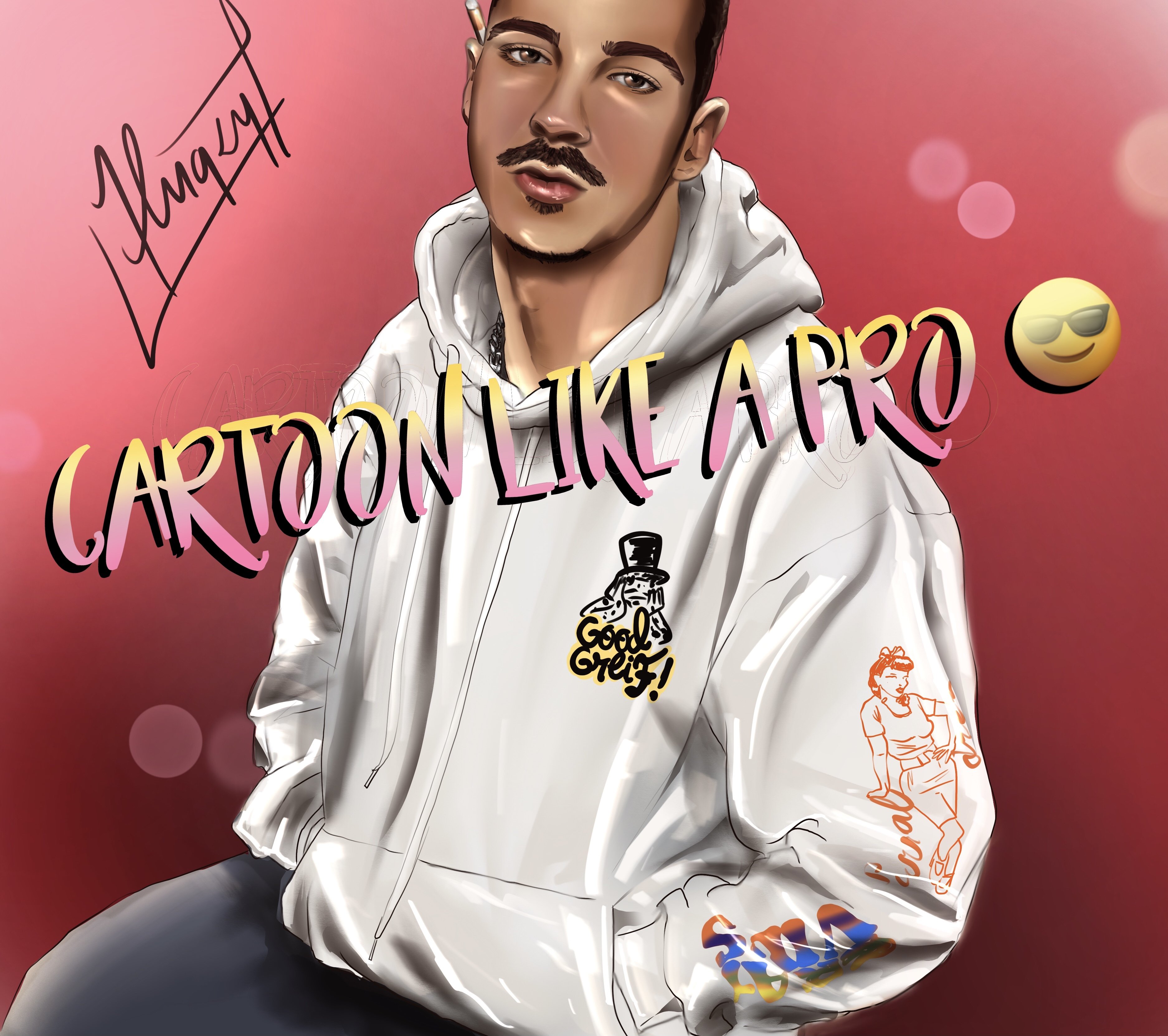
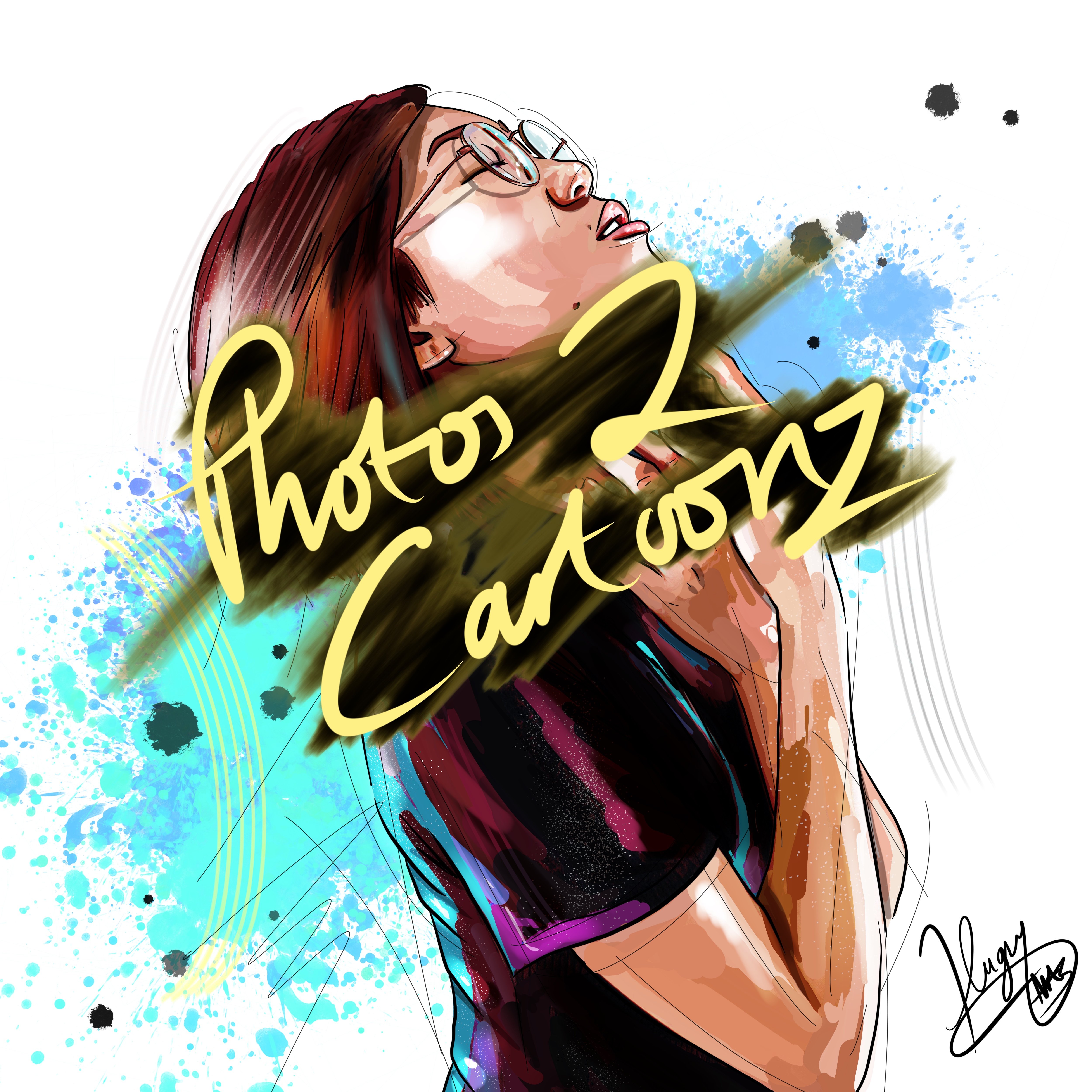
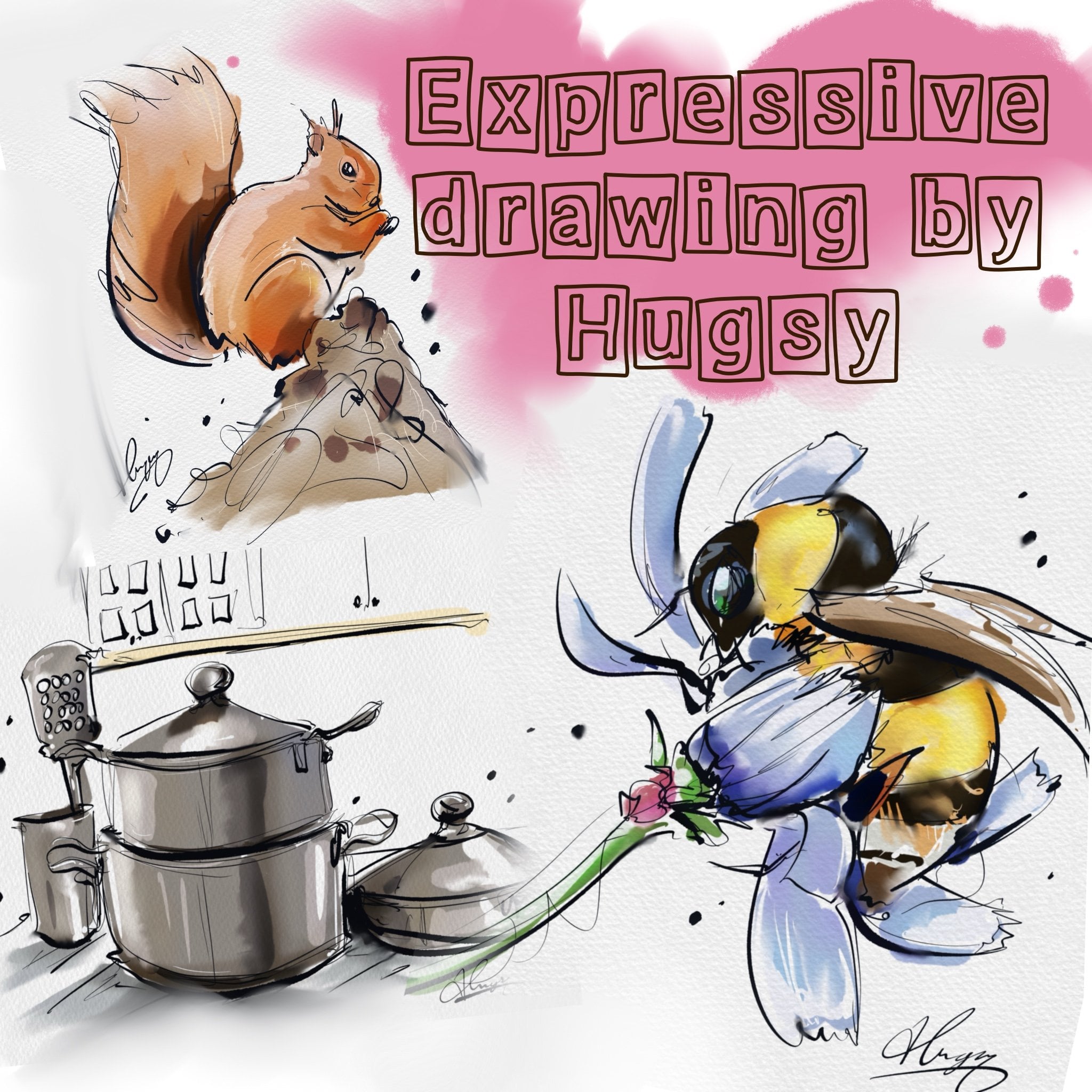
1. INTRODUCTION : Hey guys, hugs yachts here. This is a tutorial on my sweetheart story book style. And it's using similar methods to what I've done in previous styles that are used with the foot was to cartoons, or the photos to Pet Portraits, tutorials. We're going along the same line, these blending up photos to make them look like really cool illustrations. I just want to clear it. One thing I don't always use this style, obviously, you see from my pictures here sometimes I do like to doodle and draw too. I just think it's just fine with this. Method. B at the photos to cartoons, that they all were along the same principle. As long as you've got the right line work and the right the right brushes to use. It's just so efficient. I mean, I was given a commission the other day to create a bit of art for somebody for the Olympic GBT run a Keeley Hodgkin's sun. So caught with this and I used the photos to Khartoum method to create it because it took me like one hour. And they were really pleased. I think key Kelly's actually got hold of this now. She really liked it. So yeah, yeah, it's so efficient way of creating high-quality work. So That's the photos to cartoon style, which I've already done a tutorial on. This one I'm going to be doing today is the story books style, which is more of a looser childlike illustration style. So it's going to be using slightly different brushes which I have created. I'm passing them on for you. So I mean, the one thing you will love is my pencil brush, which I didn't include in this package, which you can see here is the it's just the line work for the photograph that I traced. So okay. So you can see this was the finished piece in the end. And see if I got the photograph. No hunger the photograph. Style, what I'm going to be teaching you guys. You see sort of a loose colored pencil style of texture going on. Some messy paints and some very stylish lines is another example of what I've just literally just finished this morning. Actually, there's a bit of background missing off day, which is not so that's actually the finished one there. Again, it's work on, We're going on exactly the same principle as the last one you've just seen. If I just eliminate all law, you can see there's the line work. So I'll show you one more example before we get into it. That's quite happy with this one. I did this one so of more with a colored pencil emphasis. So I'll go over that when I start. But if you look at the strokes, you can kinda see we've got some sort of pencil strokes going on. On the walls. They, they blend really well. These brushes are made so they're absolutely effortless to use when you're blend it up for us. So I think I've actually got a photograph on this one. No. Maybe not. Okay. But again, same thing. It's a blended up photograph. There you see. Supplanted a photograph with with my line work. Super easy to do. What we're going to be doing. We're going to be gone straight into it. So I'm working off a canvas for 250 by 45, 11. I just find this is a good size canvas. I've tweaked and struggled and try to find the right canvas size for my Instagram posts. At the moment I'm using this one, I find it great. It's kinda DPI of like 700, which is a bit pointless, but I always liked Florida pretty high. Right? So I'm just going to open up my Canvas. There we go. Blank canvas. Nothing in it. So join me in part 1. We'll find the photograph and we'll get started.
2. PREP AND LINEWORK: Hello. Hello. Hi guys. Welcome to part one of my sweetheart storybook tutorial. Using the same methods are pretty much used quite a lot of editing photos, mixing them up in such a way that they are genuine fun illustrations. So the first thing we're going to need is a photograph. So I've already selected a photograph which I kind of liked. Got it from this hub app here, packed cells. They're all free to use of professional photographers. So feel free to check out any at all. Good for photography that you're looking for? This is the photograph that I decided on right here. So all I've done is I've duplicated it and edited it so that it's bright and vibrant and rare integral. How you did I edited it? Simply from here. Edit will always start at the top. I'll go to the brilliance and the brilliance Can it just brings up the brightness quite a lot. I'll highlight slightly the contrast ever so slightly, not too much because we don't wanna go over too much realism and dynamic contrasts. But we will be using a black liner pen. So we will want some docs, some sudden contrast. So black point up a touch and I've got to seven. I mean this varies. Focus fo follow is just go down. And ultra our luck. So saturation will always go up, vibrancy will always go way up. And I'll always put the warmth towards the cooler spectrum. Okay, so that's basically what I did on the first one. As you can see that and I pretty much identical. So there's our photograph. Back into Procreate insert photo. We'll get our photograph. So we need to imagine this. I mean, there's different ways you can do this if you're going to be included in the backgrounds. Put that into consideration because your whole picture will change. For this example, I'm not going to be included in the background at all. It's easy to, I mean, you just call it work it off a different layer. What you would do is just pretend this in the right place is I would just duplicate the layer. And this one would be my background. This wouldn't be my foreground. I would actually cut out silhouette of the lady that they'll kill, sorry. Cut it out. And I would eliminate the bus and the background from this top one, and vice versa on the bottom one. I would then remove her from the bottom one. So we'd have we'd have two separate layers of what we're doing. So as I would do it if I was including the background for this example, I'm not going to be. So all we need to do now is just position her where I want. So let's just try to centralize it. Smack bang in the middle. Okay. There you go. So now, before I cut her out or remove the background, I like to go straight into my line work. So we need to turn this bottom one off because it's more of it's more of just a backup at the moment. We're not needing it for anything. We're not going to be including the background is just a backup. Is there in case we need to use it. I'll show you later on. Before we start editing. You know, it's an unedited backup version. So to have a top layer, we're going to be taken this down to 58%. We still see what we're doing, what we're drawing around. Open a new layer and we're going to go to black. Now there's red, reddish brown, unique. Streets are black. Okay, so you've now got these brushes. Hope you're going to be very happy with them because they are awesome. In particular, the sketching brush, which is what we're going to be used at. Start off with. So size-wise, full opacity. Let's go down to about 13 percent on the size. And we're just going to loosely sketch around. We're not trying to be too precise here is we're not trying to create some perfect cartoon, which is just after fun. So a livable, long pen strokes. So that's a bit harsh. The trickiest part is the face. Maybe go down a touch inside is called the ten for the face, 13 for the rest. So this brush is pressure sensitive. So if you look here you can see the lighter I press not a lot. Press harder, comes a thicker and larger, which is good for creating some movement when we want to do some long areas like say the side of someone's coats or something. So a really create nice, nice movement which will bring it to life. Okay, so bear that in mind. This, it is pressure sensitive. Anyway. Let's get stuck in just for the record, I have not actually created. This is the first time I seen the picture. I haven't even had a rough go away or nothing. I'm just going straight in the same as you guys who take part in my, in my class. That will then a touch just for the features and going down to eight. Have to be really careful with the facial features. Now if you look at the photograph, you can see sublicense a lot darker and a lot bolder than others. So do use that to advantage. We know she got some nice dark eyelashes at the top. So it's a darker line will go darker. Stack and a colon and then it gets faint. So we'll use a will ease off the pressure. I'd go as far as saying this is probably the most tricky part of the whole process is sketch out the face. If your subject is, by far, actually, by far the trickiest part because the rest is pretty fun and you've got loads of room for error. This is the tricky bit because it can, you get it right, then you can't go wrong with the rest. So I know you've probably the look in and he's being very precise. It's only for the facial features. I'm just trying to get it right. And so lighter pressure. Okay. So very light pressure. Okay. Sorry if the camera is slightly wobbling a little bit heavy armed. Such a thing I'm just going to just insinuate, suggests some eyelashes because they barely visible. Now even though in photographs you see that. So she's awesome. And not what's the correct word for this? Apart from what I would call it, which is all the bugs. They, not only bugs, they just sort of puffiness under the eyes, I suppose. So as you see, she coughs and puffiness, all of that. But with children we're doing a little illustration. Stay away from every detail you see like this. Leave it out. We'll cover that when we come to our add it in part. So let's move the pen backup. It's a 13 and a start on the Close. Now you can see I'm sort of, I'm purposely giving it some life. You'll find when you use this pad nulla, really great control with it. You can do as you please if you want to do it really neat. Thus a possibility for you. If you wanted to get extra mad and really fuller life, you might wanna do it this way. I like to take my time with the line. I mean, number one, I enjoy it. Number 2 is the most important part for me, is the line. I mean, you can create a really good bit of art just from tracing is before you even knew could just remove the photograph. And it's still a really cool if you've got a right. So you see it as smooth. And let me go back to the fluffy area. Just suggesting that fluffiness with the pressure of pen. If you work on other frozen, you look at it and it looks a bit dark. Try and lower the opacity more. So what you can see clearly, maybe even up the brightness. At the moment I can see well enough. I like to line my creases. Never used to. Similar just started doing is probably due to the fact that I just love love tracing stuff. So I'm always looking for an excuse to trace even more. So I do actually traced creases and close stitches. So do the do the works. You can see I'm not too precise. I'm just trying to create a nice image for us. Rather than relying solely on the photograph. Got off some good line work. Alone will take the viewer's eye off most things. So you're probably watching this thing and go, this is going to take awhile. Now, this is the most want to get right? Probably the most important bit. So actually I do feel as though I'm rushing slightly too long, clip or part. So I'm just going to leave it there, guys. And we're going to continue in part 2.
3. LINEWORK PART 2: Hi guys, Welcome to part 2 of my sweetheart storybook tutorial. If you remember, we were getting stuck into the most important bit, which is the law in art. And I think we got to about here. And then we, uh, you cold off the end of the part. So part c always going to be more of the same. Just going to be continuing and finishing up this line art. From where we left off. Another thing with this pencil is tilt sensitive to, I mean, you could change that if you wanted to in the ends, but I like to keep it to actually occasionally use it when I'm blending some times. So long sweeping was just trying to suggest the fluffiness. The coachee's wherein you will love this pen is the best sketch pen you will ever use. I mean, I'm quite obsessed with my line work and sketch in, so I've never really found one which has been perfect. But I mean, this is perfect for me, so hopefully you do like it. And can be a little tricky. One thing I'll say not just for hands buffer everything, your tracing is no. Know what you're doing and where you're going. Don't just blindly follow lines as in, Oh, just follow this, but I don't know where it's going to end up on. Just follow now, just follow an unjust, it's not like that. Work out your stroke before you make your stroke. So I'm just going to go from there to there and I'm just going to work it out, see it before you do it. You'll find some parts which maybe you don't even understand like certain creases you like this there will just work it out. Well, you can see it's a big crease going down. Yeah. So just don't blindly follow follow the photograph because it will show up. Definitely will show up when it comes to the reveal. When we remove the football under this bit. So right little crease there. So I've already decided I'm going to be doing this curve here. And then you see that it just curves around. If you've got flow to your line work, it just makes it more easy on the eye. Okay, let's do a bit of this book. Like so. Big creases there. First time actually doing a big fluffy fleece coat like this. So we're not 100 percent sure. I was going to look once we remove the 40 shorter, it'll look fine. Book and book. Okay. Big big area here. Okay. Just a little check that we haven't missed anything. I'm going to align them. I'm going to grab a little bit pedantic. Okay, I went pretty easy. Teeth of the zip. Just wobbly line, you know, just not rocket science, I'm not doing anything too technical. You guys just take a bit of practice and you'll be doing exactly the same as me. The more you practice, the more you will quickly see a route as well. So you will see in next stroke in their next move before you need to just stop and you look, you're already seeing it, moving on. Okay? Okay. Okay. Big area here. Nice, nice, nice. Anything on this bug missed? Minor details. Not really essential. So hey, I mean, oh, here's going to be different, right? Because I mean, some people call show. You need to just go with the flow. There's not really going to be a right or wrong way. This is your chance for your own personal artistic thing to come out and shine out. So I mean, I'm going to be using the same pen and I'm going to use the same size, everything for this one. So I'm just going to log into the site of a head in there first. And to be honest, sometimes I do the line work just to suggest the hair. And when it comes to at the end, sometimes just deleted robot out because it kinda looks good and softer without the line work. So we'll see, I'll do it anyway just in case Sierra looks more just to scan this basic shape, the hair. And then we'll, we'll Okay, our next move when we got sweet feed in this will look when they're willing not to be honest because of the softness on the ends here. We'll see It's almost close to being dreadlocks inequality. So I think, I think I've got covered as remove that. There we go. So there's our sketch. If I would go, you see me gone softer on the facial details and bolder and more illustration like on the rest. And you can see the effect that this pen pencil gives. So it's looking really nice. And I'm quite happy with that at the moment. Maybe just a few more things on the sleeve. Oneness there. Again, this is up to you. You can be as precise as you like. To put a little bit extra work into the lie on this a bit we messed us a good job. I like to put a little bit more work into the into the law in art. Pretty happy with that guys. So for the next part, we're going to be removing the bus from the graph, so it's ready for us to add it up. But I would Latina is complete. So I'll see you in Part 3.
4. SELECTION TOOL AND SMUDGING: Welcome to part three guys. So for this part we're going to be actually start in on getting our photograph. Look in like an illustration. This is where we got to. I still got the opacity down on 58 on the photograph layer. And now we're good to go. It's just one more thing which I do, which is my personal twist, which I do. Most of my illustrations. I just loosely put in some very suggestive line movements like so with the fine tip pen. So I'm on 4% size, full capacity. What is that? Whatever. And so, yeah, I mean, I'm just going to be sort of just create intellectual life here with these thin, fine strokes. It can be a bit desire. And at first you're like, ooh, do I really wanted to lie. It looks so great. Yeah. You know, the movement you will give you were just little suggestions like so is great. So I personally recommend it. Now finally, let's just do some wild stuff like so. Now I think the hair is alive enough. Mess him out too. I just do that as my own personal thing. So you might be thinking, God, You made it look worse. It is one of those. That's my personal touch. So blend in our photograph. First. Need to remove a young girl from the photograph, so to speak. Take it away from the background. Selection tool. Click on it first, make sure it's on Selection tool. Make sure Freehand. And we're just going to follow our lines are black lines, not the photograph. And we're just going to follow accommodate be a 2 taken too long and just follow around. Cut out. I mean, it's it's a sort of style you can go really crazy and messy with. So this part's really not that important. Or you can take your time, do it's on a neat dependent on what you prefer to do. It just go in all the way around and go into background. Let's get into the unknown. If I was keep in the background, I'll show you what I will do. Well, I would be doing anyway. I'm following my black lines. So kind of ignore in the photograph. Okay, right. So when I close this, got her selected. So what I'm gonna do straight off the bat is click Save. And plus. So select it. I've got a whole selection of her saved. Now I'm going to click Invert, and I'm going to save that as well. So I've got the background selected. So if I was going to keep the background, I would actually first off, I open up this. We're not clear to the background's gone. And obviously we'd still have this one underneath, which is where I would then click my selection tool. Load. And then I would remove the young lady. So you kinda see where we go in. So that's like the young lady and that's where the bus so that's I would do it if I was keeping the background. And obviously, you could just work on the background then, which I'm not going to be doing for this. So blended. There's a couple of different, slightly different styles that I like to use for brand blending. Brushes are included. So the first one is going to be blending with the sketching brush. Because it's awesome for sketching. Full capacity. Okay, so now let's talk about sleep. Forget that in a minute. I'll put that right before. Settings might be off. So they look a little severe. Maybe it's too much pull. Possibly. Who knows? Let's go to the main way anyway. So go to the loaded dab brush. And here we go. So we're just going to start dabbing and blend in soup powerful. Any element of photograph will be removed. The second u w screen, we're just trying to keep colors, keep value without being too precise. Like so. Now you could go precise if you want. You can get your selection tool out. And you could be like, right, I'm going to neatly only work on a hundreds, selected them. And then you can only work on a hands. I do this sometimes for things like book, I might do it. But I do know something about this style. I think messier that sometimes I think works. Okay. So just grabbing some of that. Nothing selected now by the way, just freestyle in it. And show you real quick. This method can be green for the book. They're kinda like a when I just bleed colors over the US all good with me. Adds to the child like charm, if you will. On the other hand, you could go ultra precise. If that's more your style. You should get a lot of work on the blue lake. So dot-dot-dot. If I want it to do that edge super, super neat. I mean, this is how I usually do it. Selection tool. And I would just go up to my edge, like so. And then I can't go past it. Then that's if you work in needs, which you probably figured out. I'm not because there is a fluffy coat. Okay. Backpack called really dark areas, maybe turn the opacity down, you see what you're doing. I'm just going to wing it for this example. Sometimes the real and the more effort you put into these actually don't look as effective as when you just slap paint everywhere. Starts to keep the photographic realism, which is not really what we want. We want illustration style like. So. Again, this brush is pressure sensitive. The harder you press, the bigger it'll go. And the strong girl perform. God, He's rough or C2 and you'll see, you'll see still a great keeps purple shadow. Literally dabbing, dabbing the pen. Strokes, not like this. More like so w. Okay, so for the book, maybe, you know, if you want to separate it, because otherwise it could just look a bit of a mess if you've got small book. So just going to do the blue area. Let's do the green area. We can just freestyle arrest. Okay, the bottom half. It's going to be moving onto a hair and face next. So join me in the next part where we attack the face and hair. The face can be daunting. It's not, it's not bad at all. You'll see I'll see you in the next part.
5. SMUDGING PART 2 & ADDING DETAILS: Hi guys, Welcome back. So quick recap of what we've done. So we've added, we've added us. Forget about that now because it's going to needless. We've added our photograph and our linework and edited up to a neck and smudged it in. Obviously, before we got to procreate, we add it for graphs well, and you get a bit more vibrant. Now we're on the face and never truly look like an illustration. And so you get this face part. That's where we are now. So get stuck in on Saturdays for I'm looking more for value on the face rather than color. So you want to keep some shadow. Just drop in. And the beauty marks, freckles, things like either spots, oops, grab them all later, glow them and adds to the effect. You'll find that there's a few things I do after I after I finished smudging this up. There's a few little things I do which gives it that extra illustration. Look. I'll add my own white sparkles and no biggie. You don't want to go to details and we don't wanna keep too much detail and really don't really suit the style. Which is why I said it's not isn't the thing with threaten over with this style, especially once the low notes. Don't just guess Stuckey. That your pen Gaumont. Kinda like the US shines or keep our purple. I spent a reflective light. Okay. Cool. Lips and teeth look a bit. Telling me setting up a bit, sorry. I mean, I'll be color and white anyway. So just kind of just blend blend them in until I see I'm in a bit. Don't be hey, I don't have a backup in size two, so six. And I'm just going to get stuck in just getting stuck in. Some of you may be thinking, What is he doing? Well, this is sweet out storybooks style. Bit messy, a bit fun. This easy on the eye. It still looks nice. Golden. And what kind of grew up hearing in a minute. When I say I'm gonna come back and grab something, I mean, I'm probably going to just draw it in towards the end. So pretty much going to call that done. And you've added to their photograph with a girl going to add a photograph of the original girl in which I haven't got that actually, that's a pain. We could do is revert back to the original. And I could know put that in, see if I can snap it. Maybe not open to snap it to a similar size just to give us an idea of where we were we're faced with. Come on. I mean, that's near enough, isn't it? Just it'll do. So. Yeah. It's literally just to see what we were faced with. So there's our original photograph and this is where we are. So now what I'm gonna do is grab our blended up illustration, duplicate, merge down, probably duplicated again, merge them. Still lose that wishy washy see-through effect and to give it some more clump. Okay. All right. So I'll go in with my pencil, my sketching pencil on. So it's 13. I'm going to add some pencil texture to give that sort of a colored pencil sort of finish if you will undergo the bigger that go into 23. I'm just going to write in some of the darker areas, even die of thing. Another important step really just adds that little bit of, yeah, that, that's a genuine illustration when it's not. I'm sorry. Laxness. For alarmed or luck. You can take a bit longer. You know. You're going to do any cells from a speed it up for the bid. So long. White teeth, white showing around them that they're going to vote in the eyes. No fun, a bit darker. And again, for the, for the nationalists. Okay. Okay, that looks a little friendlier than what we had. Just know that you don't get. Okay, slipping a little bit more illustrated, I think is if that's even a word, no. And what she was just gonna do a bit of light, blend in opacity down and search just to rank the face, just to soften up some areas. It's not more. Dab brush is really powerful. And again, I'm on, actually on the wrong one. Okay, so what kind of pencil? Okay. Dokey us where we are, folks? So here we are at the moment. What we had since we are we are earrings, rings, earrings. I think she had a badge on up. Yeah, Just a little old city things and I would just suggest, Yeah, I've seen it. I'm going to draw it. And the thing on the book, we'll ads whatever that is. Some blah, blah by the smaller blah, blah is by their details. I'm still using the original sketch brush we used in the beginning. Just that incident craziness to the craziness to do. Okay. On our sketch layer, I'm just going to add a little, just a little something by their backpack or something like that will do. Okay. Right. Join me in the final part, guys. Sorry if I move the iPod that the final part, we are going to be just add in some paint splotches, little bit of color vibrance, and it's going to be finished. Just going to give it that weight. Wet soaking wet paint look, which I like to do. Yeah. I mean, this is where we are. This was the photograph. And then we did our sketch, blended up colors to get that sort of effect. And it's looking pretty cool. So in the next part, it will be the finishing steps, guys. Cheers if you've played along so far.
6. FINISHING TOUCHES ADDING PAINT EFFECTS : Hi guys, welcome back to the final part. So this is the bit where we just set it off. Make it pop out a little bit more, make it look a bit more unique. So some paint splatter as an overlay layer, which is what I'm going to add right now, which will just pop colors are a little more. And we'll go from there. So I'm gonna go on my original layer, ultimate splatter. And I'm going to splatter some color off from where I'm selecting like so. Just gives a nice slow carefree effect. You could even add. Because we know we should go for a bubbly fleece on. And either been a lot of its other fleeced. Suggest that This is awesome for. So grab some local hair color, maybe a bit of this blonde for it and get it. Like so. So we, I'm going to command you go mad if you want. You can go really mad. I'm quite happy with just one more big one. Yeah. That'll do. So. Overlay layer. Select a color. Dark and all lighten, going to darken. And let's go to could use a sketch. Usually. Use the damp brush. And just kinda remember where your darkened areas where and just add a bit of a bitter something. You could always just go to black. It will still, just because it's on overlay, it'll turn into a deep blue anyway, or whatever color you're on. And I would want to like you actually some of the light that is areas. I want to make it fun really. An easy on the eye background. So we're obviously not going to be used in the background. But we'll be just put it in some sort of wash, which have got a few brushes here. So let's grab our main color, which is blue. Harmony. Complimentary is like an orangey red. So we'll go like us, have a look at that. Not really feeling that. Not really feeling it. You could always just select your main color, come off your main character. For the super soaked. The fact she wanted like so. I think I like blue might be the way forward. Back to where it was. Really like blue might be the way forward like so. Maybe a light orange this side too. Maybe not really loving the background to be honest, I think it looks best and play mode, trypsin. So carefully positioned dots. So, so it draws you into the main focus. I think that's done, guys. I think that's done. What you could do at the end is again, just go back and you could add some splatters in. To suggest the fleece. Maybe go a bit darker. Just suggests the bubbly texture of a fleece APP for our linework, slightly. Merge, merge down, duplicate, merge, duplicate, merge them, stickier, some pop. So that's what we've come up with. A story book style. Bear with me. Bear with me. The pantry was going to lose the side. Yeah, so that's where we are guys pretty much done. Flashes of white. The sketching pencil if you want it to now, mainly around the edges I'd suggest because it gives you that cartoony pop. Apart from, I think we're done, right. So that's where we were. The original photograph that we got. And we kind of transform that and do a little bit of charm. And so all that's left to do now is to sign it and move on onto the next one. Thanks for watching and taking part guys. This style comes in handy for you. You can really take it to the extremes. If you play with it. They are the principles of what I do. Just remember what I said about if you've got some fiddly bits that you need to blend up. Selection Tools your friend. So, you know, you want it to just only if you only want it to blend this area. Use the selection tool. It takes that long. And you can't quite see the lines. Bye guys. Thanks for watching. For my next video. I think it's going to be how to do the realistic blended poet traits, which if I got one, I mean, does kind of one kind of work has been about funct up. That's a cost taken about load. There was the photograph, thus the art. I think I've got another one that was actually a drawing. Enjoyed that one. With it. Maybe not. Yeah, that sort of thing. The realistic blend stuff that was the photograph. That was the photograph. We edited in such a way that actually looks better than the photograph. Super smooth. We zoom in on his face, see the detail. So that's going to be a video that's coming up soon, guys. Cheers. See you all soon. Thanks. Bye.
 HugsyArts, Aspire to inspire