Transcripts
1. Intro: Hi, friends. In this
collection of short classes, we're going to continue with
the sketching sessions we started in my Loose
Digital Drawing class. We're going to loosen up
with a quick color sketch, which we'll aim to complete
in 10 minutes or less. The goal is not perfection here, quite the opposite, actually. The goal is to get
used to making quick, confident marks, to embrace our mistakes and to
push past perfection. In this sketch session, we're going to be
drawing a wildflower. Let's get started.
2. Quick Sketch: First, let's choose a brush. Open the new Procreate library, go to the charcoals set. And we're going to
use Florentine, which is first on the list. We'll be using this
reference photo, which I found on Pintst, and I'm really
hoping it's not AI. It's getting harder and
harder to tell these days. But if you'd like to
use the same image, you can download it in
the resources section. Go ahead and set your timer to 10 minutes, and
let's get started. I'm going to start
by quickly mapping out a rough skeleton for where the petals will be and
for their general shape. Since we won't be relying
on a pencil sketch, I find it helpful to have at least a general idea
of where to place things. Of course, you can always
skip this step if you feel comfortable with diving right into painting the
petals freehand. Okay, let's start
inking those petals. I'm bumping the brush size
all the way up for this. We can take advantage of the
semi transparent nature of this brush to naturally create those lines that
you see in the petals. It also helps to give them
that delicate appearance. We're not going to
do a full brush exploration in this session, like we did in the Loose
Digital Drawing class. But if you'd like to
get more familiar with this brush and
how it behaves, you can watch this
Brush Review video that I shared on YouTube. Ideally, we'll be doing little to no erasing with this sketch. Remember, we're trying
to embrace our mistakes, but as you can see, it's a hard habit to break,
at least for me. So hopefully with more practice, we can do these sketches
with no erasing at all. This shape is a little tricky. I've gone a little darker than I intended here, but I'm
going to make it work. Okay, we can just use
a few quick strokes to make the shapes
of those buds. Remember, we don't
need a lot of details. We can use a few loose lines
to suggest the shapes. And since the petals
aren't one flat color, we can add a couple
additional colors here, like a really light
pink here and there and a deeper orange. Actually, I'll add a
little yellow first, and I'll work my way down from light colors to darker colors. Oh, gosh, there I go with
the undo gesture again. It's surprisingly hard
to break that habit. Alright, now I can add a
darker orange in the center. Ordinarily, I would try to blend or smooth out those
color transitions. But remember, this
is supposed to be loose and expressive. So I'm gonna leave those
marks just as they are, because we want to see
those brush strokes and all the visible
shifts in color. So even if your instincts
are telling you to clean up those transitions and make everything smoother
and more polished, just try to push past that. Uh huh. I actually caught myself before tapping
on Dew that time. I'm just gonna force myself
to live with that smudge. Alright, let's add
an even deeper shade of orange right in
the very center. Feel free to experiment with how you apply
the color as well. You can switch to a looser grip and maybe use the side
of the pencil tip. Just play around to see what
different results you get. Okay, I think I'm on the
verge of overworking this, so I'm going to stop here, and I'll just add a
couple quick layers of color to the buds. A little of this darker orange
and maybe a darker pink. On second thought, I'll use the same light pink
I used on the petals. Making color choices
can really set you behind when working
on a timed sketch. So I'll share my palette
in the resources section, so you'll have one
less thing to think about when you're
doing this exercise. If you plan to use
different colors, my suggestion would be to pin
down your palette ahead of time so you don't
have to take time away from sketching to
make those decisions. Okay, I'm just going to
use loose strokes here to represent the detail in
the center of the flower. Now I can move on to
the stems and leaves. Again, you don't have to
get super detailed here. A few strokes is
enough to give you the suggestion of
what these are. For the stems, try not to be too controlled with
your mark making, loosen up and move
fairly quickly. That'll help inject a sense of energy and movement
to those lines. Same for the leaves as well. You can also try
adjusting how hard you press down when
making these marks. This brush is slightly
pressure sensitive, so those shifts and pressure will also help the leaves and stems feel more alive,
if that makes sense. There is a bloom
in the background that's kind of out of focus, so you don't need to
add any detail at all. You can just use shape and color to suggest that there's
something back there. And here I'm just
going to use a darker green to give a little body to those stems and leaves without really having
to add much detail. All I'm doing here is
loosely adding a little of that darker color along the edge of some leaves and
parts of the stems. Alright, before I go overboard with trying to add more details, I'm gonna call it done. I managed to finish in a
little under 7 minutes.
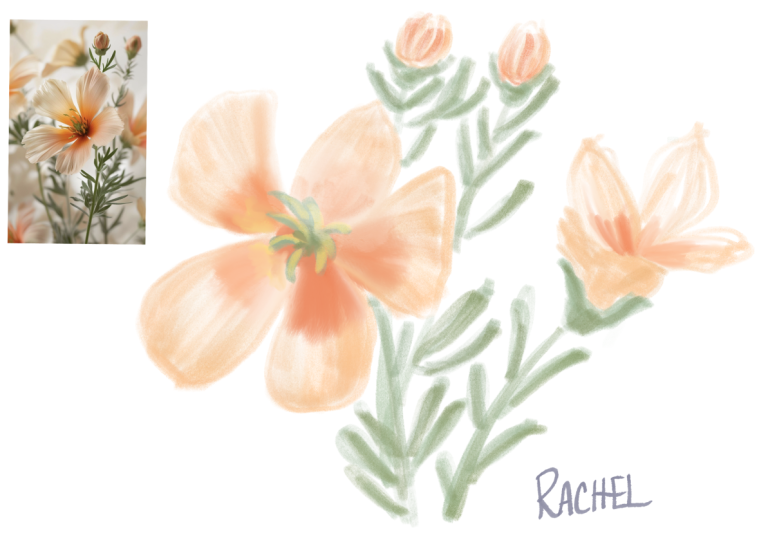
3. Detailed Drawing: Here's how my final
sketch turned out. Now, are there things
that I would change? Absolutely. I'm still on this journey of embracing
my imperfect art, so I still tend to focus on all the things
I want to change, but I do think I managed to capture the essence of
what I was drawing. Like a wildflower,
this art feels untamed, unstructured, and free. I encourage you to try this exercise a couple
of times for practice using the same or similar
subject matter and palette. The more you practice, the more comfortable you'll
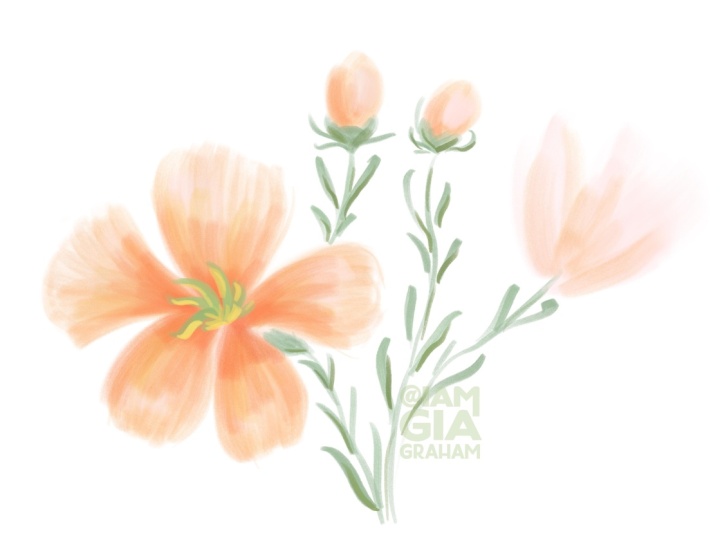
become with the process. These are a couple more ten
minute sketches that I tried, and I definitely felt
more comfortable and more pleased with the results
as I continued practicing. I hope you'll feel the same
as you continue to practice. Remember, this exercise isn't about creating
something perfect. It's about creating
something expressive. I really look forward to seeing your expressive drawings
in the project gallery. Now, if you'd like
to try drawing wildflowers at a slower,
more structured pace, you can watch this full length tutorial where I share step by step instructions for how to draw this wildflower
arrangement. I'll leave a link for you
in the resources section. Thanks for joining me, and I'll see you in the next
sketch session.