Transcripts
1. Introduction: Hi, my name is Vicki Khan Lee. Welcome to my studio and
gallery opinion on pottery. I live in re-dose a
dads New Mexico or I've been a potter for 42 years. Today's class is going
to cover raccoon firing. If you're not familiar
with what that is, It's a little firing technique where the pieces
have been glazed, usually with the
copper glaze and fired in a very fast
reduction atmosphere, which basically turns a turquoise green color
glaze to metallic copper. These are both exactly
the same glaze. This one was allowed to cool a couple of minutes and it will turn black and the
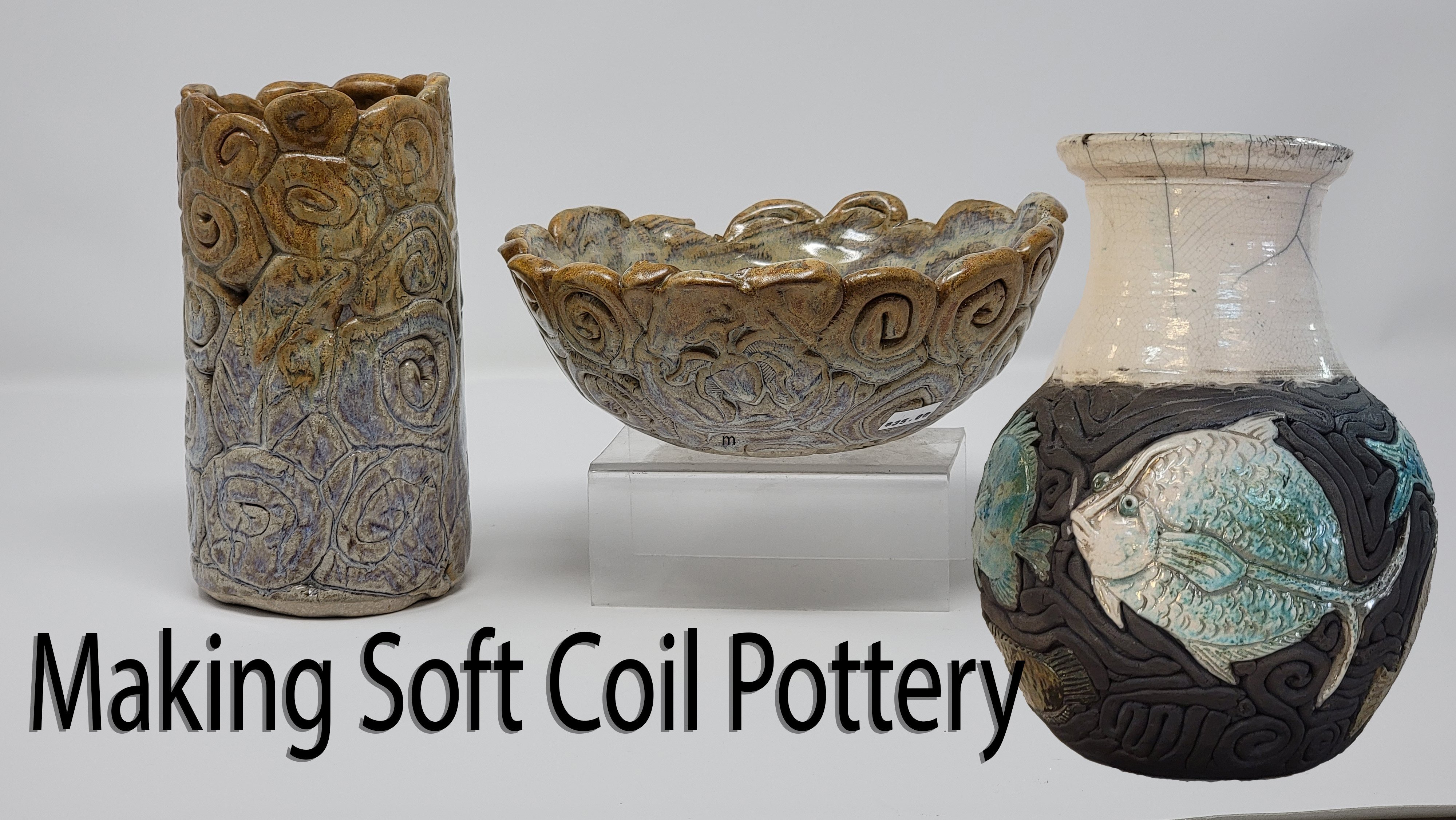
cracks when it's put into the reduction chamber. This fish was put into the
reduction chamber very fast and the turquoise glaze
changes to metallic copper. That's called reduction. It's really fun to do. And it's also a nice, easy technique for
people that are beginning that may want to build a simple kiln and don't have access to a really
big hi-fi or kiln. In this class, I'm
going to show you how I built my raccoon kiln. I'll also give you some
links in a handout that shows some other people online and say how they built theirs. It's very easy to build
a homemade raccoon. We'll talk a lot about safety
and how to get set up. You're not gonna
demonstrate how to make some simple wall pieces like this fish and I have
some codes and turtles. I'll also demonstrate how I make these leaf Ikebana basis. He's a fresh Iris
from my garden. You can see this
leaf shape here. This was made from
squash leaves from my garden and glued onto a
little stone where bold. It has a little pin frog down in the bottom,
That's glutenin. And you see how lovely
the flowers are when you poke them down on the frog in the stand straight
up in the air. I have a class on
how to do that. Then of course we'll
do a little glazing and then get to the
fun part, the firing. The big reveal is always
a surprise with raccoon. When you open up the cans, you're never sure what
you're gonna get. Joining me in this class to
really have a lot of fun.
2. Supplies: We'll talk a little bit
about the supplies that you need to make
your recoup pottery. First off is the clay
that you choose. I usually use some kind of high fired clay that has
Sandra groggy in it. Sometimes a white clay, oftentimes a dark red clay. And as long as it has quite
a bit of sander groggy, it will usually raccoon, okay, but sometimes you need
to test it to make sure. You can also buy actual raccoon clay that had definitely has enough
standard rock in it. The clay needs to be
able to expand and contract when you
rapidly cooling it, meaning taking it out of
the kiln hot and not crack. And so that's why it needs that extra standard
Rog in the clay. So basically just experiment with the clay that
you have on hand. If you have a problem by raccoon
clay from your supplier, then you'll need to cut out some shapes out of the TAG
board or poster board. I've got horses,
I've got turtles. Got another turtle here. I do a lot of fish. Here's a horned frog. We're gonna demonstrate
him in the video. So basically I just cut out my shapes with the TAG board so I can use them
over and over again. Here's the one fish I showed a minute ago
in the introduction. You need a little
needle tool and a rolling pin or slab
ruler if you have it, I rolled the clay a little bit thicker than I do for my stone where pieces are
my baking dishes probably a little over a
quarter of an inch thick, and cut out the pieces
out of the client. There's a whole next lesson on making these these animals.
3. Safety: Okay, so now I'm gonna
talk about a little bit of safety equipment and safety
with raccoon firing. First of all, you're going
to need some kind of gloves. Now, I prefer the just
the welding gloves, but they are not nearly as
thick as the Kevlar gloves. This is one of the
Kevlar gloves. But this one you can see what the big fat fingers that you don't probably have quite as
much dexterity with this. So with the welding gloves, I usually have on some
kind of thin rubber gloves that I wear underneath that gives me a little
bit more insulation. You're mostly just
holding onto the tongs. But if you are going
to handle any of the hotpots that you'll
see me do in the firing. You do want to have
some kind of glove on that you feel like it's gonna give you some protection. You also want to wear long
pants and close toed shoes, and long sweeps, which I will have on long sleeves
in the firing. Right now. I don't have non for
this Safety demo, if you don't have a
long sleeve shirts, you want to where I
found these a long time ago and I don't know if they're
still available or not, but they are some kind of
fire resistant sleeve that you can put on when you're
wearing a short sleeve shirt. And so a lot of times
I'll wear these, especially in the
summer when it's too hot to wear a
long sleeve shirt. But you do want to
cover your arms. You want to make sure you
cover your legs and have on some kind of tissue
or close toed shoes. You're also going
to want to mask. You can either wear a respirator
like this, like I have, or you can wear an N95
high-quality dusk mask and it'll help with the smoke. Sometimes there's
a lot of smoke, sometimes it's not so bad. It depends on how
good the fan is. Also, I wear these
green dark glasses when I look into counts. Over the years, all the
raccoon that I took, people were always looking
over the hole with the red-hot counts
and I feel like that was really dangerous
for your eyes. So I have these dark glasses
if I am going to look in or anti big
kiln or this kiln. And when I pull the pots out, I usually wear these
glasses to protect my eyes. Now, as far as a safe
place to fire your wreck, who if you live in a really humid climate with
not a lot of fire danger, most people do this
raccoon outside. You just find a really
empty dirt area or driveway somewhere like
that and do it outside. Here in New Mexico where I live. We live in the forest,
in the mountains. We have a very dry
weather and we are an extreme fire danger
almost year round. When I decided to start raccoon, my husband built me
this little metal shed on the back of the studio. And since we don't have
a big sandpit outside, we built this sandbox over here so that I could do my raccoon
firing in this sandbox. And then you see over here
in the window that I have a fan to help suck
the smoke out. So this is my area have
as concrete floor and a metal building and a
fan in the window and a sandbox that is actually it's on wheels,
we never move it around. But anyway, that's my setup.
4. Kiln building: In this video, I'm
gonna show you how I built my second raccoon kiln. But in the resource page
of the Skillshare class, you will find some links to other people online
that has some nice how-to videos on how to build a little rack who killed
out of a trash can. And I did build my first
one out of a barrel, so it's really easy. This one's just a
little bit sturdier. And I did that because someone gave me this old electric kiln. It had no elements in it, nothing worked on it, but
it was a nice brick kiln. A couple of things
had to happen. The first thing was we cut
a hole down in the very bottom and we just set the killed right down
on the concrete. And then we'll talk about the kiln first and then
I'll show you the burner. Then we had to cut
a hole in the top. Then the count the lid
was already hinged. But when it's hot,
there was no way to pick it up from the
handle and lift it open. We hook this chain
up to the handle and put a counterweight bucket
is full of them kiln bricks, and it will easily
go up and down. I usually have my husband, who's my piano assistant, helped me go up and down with
the lid during the firing. And that way, the pots
will stay nice and hot. If you have a lid
that has to come off and you have to set it down, then you'll lose a lot
of heating or counts. So this neat able to go up
and down is really handy. So there was hardly anything
to do to this other than put the chain on with the white
and cut two holes in it. That's all there was to
it to use this old count. There's always people
given a whale counts, then you need a like
a broken piece of kiln shelf to use as a damper. The other thing
you're going to need is of insurance, gas burner. And we happen to
be on natural gas. But you can also do
this on propane. You can also do it on a
propane barbeque bottle. This is hooked up to
the gas line in here. But for years I just
used a propane bottle. The only thing you
have to make sure of is getting your pottery
supply place to make sure you have
the right kind of orifice size to match either
natural gas or propane. And of insuree burner has a little wheel back
here that lets area. And so for the
firings that I do, I usually just have
it all the way open so the gas will burn very cleanly and it's hooked up to
my actual natural gas line. That's all there is to it
to build your own kiln, either with an old
film like this or you can follow one of those videos online and build it out of a big trash can
with ceramic fiber.
5. Making Pots From Leaves: Okay, So we're gonna
make a little dish using a squash leaf. This is from one of my
yellow squash plants. And I just have picked it. I'm going to lay it out
on this slab of clay. And this slab of clay is quite a bit thicker
than what I use in my, in my soft slab class before. So this is probably a little over a quarter of an inch thick. I'm going to carefully roll the vein side of the
leaf down into the clay. We have that on there.
I'm gonna see if I can fit a couple more leaves, at least one more. Do something different
with this smaller lease. Now, I need my needle tool. Now I'm going to take this
and cut around the leaf. Just following the shape. The lobes of the leaves
doesn't have to be perfect. I don't go all the way down into that deep crevice because that'll make it a
little too fragile. I do make it a little
bit thicker at the stem to help it
not break or crack. If you carefully
pull the leaf off, you can usually use
the leaf again, but you see what a
beautiful pattern that the, the underneath side
of the leaf makes. I've used geranium leaves and wherever you live if you can find big leaves for this
technique that we're doing with making
this little dish. Usually take the stem, kind of roll it up, tuck it in because
when you start to handle these for raccoon firing, long skinny things like
that can be pretty fragile. I like to roll that little stem up and now I'm just going over the edge and to knock down the little rough spots
from her. I cut it. This week. We're gonna make
this leaf into a dish. So the first thing
we're gonna do is turn it over onto this hump mode. This mode I made from pouring plaster Paris into
a big round bowl. And it was a
completely round bowl. He doesn't even
have a flat bottom. So it makes a lovely
mold to draped things over that you want
to have a little curve. Now we're going to add
a few feet to this, since this one's
gonna be a dish, we're gonna, we're gonna
make three feet because three feet will always
sit in a level plane. Put one up here towards
the front of the leaf. And then to about
equidistance from the middle. And I'm just doing
a little scoring. I'll put a little bit
of slip on there. Then I'm going to take some of this scrap clay and try to get about three equal pieces
that I'm going to roll into. Some little sausages. Want them all to be
just about the same. I've got three little sausages here and now I'm gonna take my little sausages and
roll them up like a snail. This is how I like to make 50k. I didn't I, where I've put
it together at the end, I'm going to just
tap it on the table. Kind of made it into a
little triangular shape with the flat bottom. I'm going to roll
up the next one. Tap it on the table, pinch it just a little bit to make that little
triangle shape. Comes the third one. Now I have three feet. Now I'm gonna score
them just like I put the score
marks on the dish. I'm going to push it on and then push it down a
little bit on the inside, scored on the bottom. Push it on the
dish, on the sides, and then push it down
once on the inside, quote on the bottom. Now that is all ready to go. Could sign my name, just let it stiffen
up right here on this nice hump mold
until later on. Now this other leaf, let me go ahead
and cut around it. Now this one was from
the same squash plant, but it's got lots roundy are shaped lobes
than the first leaf. This one, this one's gonna
become an Ikebana base. Sure, if we're gonna
have enough space here, we're gonna push that leap over. We've cut around the leaf now I'm going to pick
it off of there. We can see what a
pretty pattern that is. Again, I'm going to try
to smooth out the edge. This leaf will, after
it's been raccoon fired, will be glued on top of
a little bowl that I've either thrown or hand-built in the bottom of the little bowl
will be a little pin frog, which will make it a
beautiful flower base. On this one, we want a
whole kind of have to eyeball where we think
the middle will be. Because this is where you will stick your flower
down in this whole. Again, I like the curvature of the form here that I've
made with the plaster. Think I have a small, what happened in my small least, one more small leaf. I'm hoping to be able
to fit it on here. The patch it right there. Like use my scraps. If I need to patch
a little bit of a whole lot, patch
a little hole, but it's still looks
like I'll be able to get this leaf on here. Squash has just frozen, so this may be all
the leaf plots I can do until next year. In, roll this out. Again, this is
going to be one of those little flower
vases cut around that one twice already. So it doesn't matter if
there's some leaf that sticks, it'll just burn
out in the firing. I'm going to try to coil
up that little stem, smooth out the edge. Again, this is gonna be for
one of those flower vases. So I'm just going to cut a
little hole in the middle. Smooth out wherever I cut that. And again, let it
stiffen up right here on the outside of the mold, giving you a little
bit of a curved shape.
6. Making Ikebana Vase Bottom Bowl: Now, if we're going to make the little Ikebana flower
vases with those leaves, with the holes in
them that we cut out. And you don't throw on
the potter's wheel, you're going to need to make little base to put
your pin frog in. We're going to make these
by the slab method. You need to figure out about how big around you
want your little vase. I'd say about that
long. Let's see. That's probably about, I
guess between 67 inches. And we're going to
connect this lab. It's not gonna show very much underneath your raccoon leaf. So you can just leave it
fairly smooth and flat. You don't have to put
any texture on it like we did with
all of our cups. Just add a little slip, push the seam together, that out a little bit. Then this is a good thing to do here with some of
our little leftover pieces from doing the other projects. Have another little slab
here and I will cut out a base for it. We're going to score the base. Score the bottom of the ring. Just a little bit
of slip. Tap it. I like to tap it up and down
after I stick it on there. Kind of makes the
join really good. Now I'll just take this
and try to smooth it out. Anytime you see a
little bit of a crack, it's better to just
move the clay out. Don't add any water. We had a little bit of liquid
there in the clay slip. That's plenty. Just make sure you smooth
out that entire seam. I'm just using my thumb
supporting the little piece from the inside. There we go. Now. Probably stretch out
the top just a little. We want a fairly large RAM because we're going to glue this onto the leaf section after we rack who the leaf
we'll glue the two on. As I want that to
be fairly flat. Because we're going to glue
this to the underneath side of that leaf when the leaf
has been raccoon fired. I'm just going to put a
little bit of score marks on here just to roughen
it up a little bit, that'll just make that glue grab on a little better
when it's finished. Now the thing about
the pin frogs, sometimes when you glue them in, they slide off to one side. I like to take something
that is kind of a round flat tool
and kind of push it in the bottom of the
pot, right in the middle. Just so there's a little
well there for where you're gonna put your little pin frog. Set that aside to dry. I can make another one. Let's not make this
one quite as tall. Maybe I'll make it a
little bit bigger around. Again, I'll do a
little bit of scoring, little bit of slip, a little bit of scoring
on the other piece. Pinch it together. Then we've got to find a piece of clay big
enough to make the base. I just put two little
scraps together, smear and over with my maybe roll it a little bit with the rolling
pan as it moves it out. Now I have a nice
little slab again. I'll put that one on there. Again. I will score around the edge. Score around the edge of this. A little slip and it's
just set it right on top there. Drop it. I'm going to pick it up. I'm going to smooth the
bottom into the top, making sure I get
that seem completely disappeared because these
have to be watertight. So we want to make
sure that that's seen as completely smoothed out, disappeared along that bottom. If you wanted to make extra sure that your SIM
was going to hold. You could also take a
thin coil weak spot, they're very thin coil. Push it to the inside, right along that
seam on the inside. Now I'm holding my
fingers on the outside. I am pushing with the
fingers on the inside to smooth that little coil right into the crack
on the inside. By doing all that,
I've messed up my rim. And I want it to be
nice and flat so that when I glue it to the leaf there can
be a good joint. So I'm going to just
tap it a few times. So it gets nice and flat. Going to put this little
indentation in the middle. Now this tool is a little
smaller than those pin frogs, so I'm kind of
wiggling it around to make it a little bit bigger. Space. It'll just help it not to
slide around when I glue it. But none of that
is going to show the final piece because that leaf is going
to be on the top. Again, since we're going to
glue the leaf on the top, we're going to put a
little bit of scoring on it just to roughen it up
so the glue will really hold. There. We have the little base that's going to go
underneath our leaf. I always try to sign things when they're when they're soft. Possible.
7. Raku Slab Animals: Okay, In this lesson
we're going to make some fairly flat pieces that we're going to rack who
fire with copper glazes. And there's some animals
that I like to make, the horned frog or horned toad, as we call it a new
Mexico and some tropical fish shapes and some Turtle
Shapes. I have that. Again, that thicker slab that's a little
over a quarter inch thick of clay that
can be raccoon fired. And I have some templates
here that I've cut out of poster board that allows me to kind of do the same
shapes over and over again. The first one we're gonna
do is the horned frog. He's probably the
most complicated. We'll cut out the basic shape. They are a little fragile because of all of
these little arms. Sometimes I lose them. When are we going? I
do the raccoon firing. Just put some free
form toes on him. Let's see if I can
get moved out here. Got him out. Now. I'm going to smooth out
the edges just like I've been doing with just a
little bit of smoothing. Then I'm going to put some
texture on him that's more like lizard skin. For those of you who don't
live in the Southwest, the ***** toad is a lizard. He's real fat. He has a hood with little
spikes on it, a little horns. It's why it's called ***** toad. They used to be real plentiful
when I was growing up. And now you don't
hardly see them at all. If you do see one, you
feel really lucky. On my little horned frog, I like to put a
little pattern on him that is kind of like scales. I use, use the round end
for scales on my fish. I use the pointy end for
scales on my towed my lizards. I'm just putting in this little pattern on his back just to give
him some texture. In a minute, I'm going to use some crunched up newspaper for the armature to give
him a little bit of curve while he stiffens up. Not going to add
anything up there on his head right this minute because I'm going to
add a little hood, a little three-dimensional
part to that. Some of this texture will show through when we put
the glaze on him. Back here is just a little weak. Okay, So now I want to cut
out of my extra stuff here. Going to cut *****
toad has these little, little horns are spikes up
on his back of his head. I'm going to curve this
with my hand a little bit. I might do a little bit of
scoring along the edge. I'm going to mush them together. This clay is nice and soft, so my soft slab techniques could be used here
pretty easily. So I'm going to put just
a little slip around the edge where I put
the score marks. Curve this, and then kind
of push it together. Pick up his head just
a little bit and very soft slab so I can just
smooth out this theme. I've added on this extra piece. Flare out his little horns. Going to put a little texture on his head the same way
that I did the body. Just using this little
triangular tool that I had in my box. Just give him a little texture, trying to smooth out
the rough spots. Now for his eyes. Kinda like them to
be dimensional two, I'll hold my hand underneath
the hood and make a little indentation here
with my needle tool. And then put a little
bit of scoring in there. It'll take a little
bit of the soft clay and roll it into a ball. Put some score marks on that. A little bit of slip, stick it in there. Slip. It in there and poke the middle
with the end of my tool. That gives him some eyes. Now to really give him a little bit more
three-dimensional look, I'm gonna get some paper. Now. I'm going to have some newspaper here that I'm going
to try to make into a nice little hump that will hold him
up in the middle. That's too much. Once I stick that up
in the middle and I can curb his body around
that a little bit. Put his legs out a
little bit flatter. It needs a little piece
up under his head to paper makes a
really good armature. Just sticking right like that. You can see how much more
animated he looks now that he's got some shape to him
and he's not totally flat. Put a little bit of
a curve in his tail. Usually makes sure the
arms are fairly flat and that will be the part
that would hang on the wall. Sometimes on the toes. I'll take this little
rounded paintbrush and maybe make a few more
indentations here on his toes. There we've got our horned frog. We could even put a little
bit of a mouth under here with using the paintbrush. Curve up these little horns. There. You've got a horned frog. In the rest of my clay here. I'm going to do a fish and a turtle to get the
best use of my clay, kinda like cutting out cookies. Your mother always
said Don't cut it right out of
the center of the, of the dough and waste it. You want to tuck your, all of your little designs in
as close as possible to one another so you can make the
best use out of your slab. Alright, so we'll
start with the turtle. I love sea turtles. So minus kind of a
sea turtle shape. The turtle. Let's move
that out of the way. The turtle, because he
doesn't have any added parts, like the horned frog, he's a little bit easier. First thing is to kind of knock down those
little rough edges. You can also sand
it after it's dry, but it's so fragile
when it's dry, it's a lot easier to at least knock some of the
roughness off with your fingers right after
you cut it on the turtle. I like to put a little bit
of a turtle shell design. And I'm just using this little blunt end
of the paintbrush. Outline is shell. Sometimes I do a
real abstract shell and sometimes I do kind of the classic boxy looking
turtle design like this. Now all of these little bumpy
things that are coming up, I'll knock them off once it's
dry, I'll stand them off. If you try to get them off of there right now you're
just smear the design, the texture, any kind of
texture you can add to your raccoon will look
really good under the glaze. You could make these
in, fire them with regular stone where glazes to, but I will always do the raccoon firing
on my animal shapes. Something on the side. Just make some little
marks in the shell. Sometimes when I
rack who I leave parts of it black and it'll just put glaze in the
little depressions. I'll show you how to do
that in a later lesson. On the flippers, I just put
some random scribbling marks, like just some texture just so that they're
not totally flat. Same thing on the head. Then I do the, I is the same way I did
on the horned frog. I'll put little
depression in there. Put a little bit of scoring. Some little beady eyes, a little bitty balls. Just a little dab
of slip on there. In, stick the pointy in down in that whole kind of makes
them tick in there. Good. Then I take
the little round into the needle tool
and push them on. Again. He looks pretty
flat and boring, so I have a nice
little hump mold that I've made out of newspaper. I can kind of tuck him around their head flops so they need a little bit of
something to hold the head up. You have a little
curve to the head. Maybe put a little
curve in the flippers just to make them look a
little bit more animated, a little bit more lifelike
than just the flat sculpture. I still make these
as wall pieces. They still hang on the wall, but I think having the curve really helps them
look a lot better. Okay, so now we've
got this fish shape. Let's see if I like
it better this way. Gonna be able to fit one
more thing over there. This is more like a
tropical fish shape. You can make your fish
go either direction. You can just turn them over if he's going the wrong direction. I need this fish to face. Right? Here's my fish. I'm going to put
him like this and making fish face to the right. Turn him over. First thing again is to try to smooth out those little
rough spots from cutting on this fish. Some of this big thing is a
really big fin on the top. So I'm going to draw in this shape of what's the
body and what's the fin. Before I put the
guilt the scales on, I usually like to put
where the little Gil is by just some little
random marks like that. The way I do my fish. I will see. I'll take this paintbrush
and push it in to make the spines on the fans
make them fairly deep. Because a lot of times I'll
leave the fins black and just squirt glaze into
these little lines. I have a really fine
bulb syringe that I can just stick the little
nozzle down into there and feel just those little lines with glaze and leave the rest of the thin black turtle. Same thing down here
on the back fin. Just make them a little longer. You could cut out templates for any kind of animal
shape that you wanted. But the fish and turtles in the ***** toad are
the main ones I do. Now like I said before, I have the round
end of this tool. And I'm going to put the little fish scale shapes on here. Mix a nice texture. Then I'm going to add one
little three-dimensional piece here to him and
that's a little fin. I'm gonna cut a little
hole just right there under the gill. Put some score marks in there. Then free form cut a
little thin shape. Until these are not
exact real fishes, I just sort of make them up. Take a little, a little
scoring on one end and stick him down in there
and just kind of push that together and
I'll usually turn him over and actually
really on the back, try to smooth the
mountain as long as I have him turned over
off, put my name on him. Turning back over. He's really smooth together
really well on the back. Here, I'll just finish
that little gill line. Then I'm gonna put some more of those little lines in
the little thin and then I'll usually put a
little bit of curve to it to make it a little
bit more realistic looking. He needs an eye. The eye the same way
as the other animals. Give him a little mouth
using the paintbrush, push it in there again. Giving them a little mouth. Now again, let me get another
piece of piece of Aye. Trustee moles that I
make out a newspaper. Put him under here. Just give a little bit of
wave maybe to his fins. Sometimes I poke out
his cheek a little bit. Maybe a little wave
to the fin back here and probably needs a little bit of something to hold his tail up
just a little bit. There we've got our fish. Now we have just a little
bit of clay slab left. See if maybe there's enough
left for maybe a cross. Not quite long enough. I'll
just piece it in there. If you don't have quite enough. This is pretty soft clay. You can just kind of overlap it. Smooth it out. Just roll it with this big one. Just kind of roll that out. Now I'm going to cut
out this cross shape, but I do want some
texture on the slab. I'll use my little
piece of lace. Let me move my fish out
of the way a little bit. This is my big rolling pin. I have about three
sizes of rolling pins. The last little piece
of clay we have, I have put a nice texture
on it and I've got this little template
of a cross that I am going to trace around. These all dry and get fired. I will do a nice
raccoon demonstration. I built my first raccoon
out of a 55 gallon recycled drum barrel that
we cut about a third of it off and put ceramic fiber
on the inside of it. And my husband made a top
four with the lid to the can. And I just bought
a little burner. It costs me hardly anything
for my very first raccoon. Raccoon accounts are pretty
easy to make yourself. There's our cross. Now when I have a
cross or something, I really want to dry flat. Find a place on the wall board and put another piece of
wall board on top of it. That way it will
dry really flat. Now all the other animals
that we made, of course, we've put the curve
into them on purpose. Join me in the next class.
8. Glazing for RAKU: In this lesson, I'm
going to show you how I glaze Maya pieces. These have already
been Bisk fired to about 1800 degrees and
the electric kiln. And now I'm going to
glaze them with my AT 20 or copper penny glade. And the recipe for this glaze is found in the resource area, but basically it's
80% grossly bore a 23% copper carbonate. And it's just more commonly
known as copper penny. Pretty blue-green glaze if
you let it cool, awesome. When you put it in the
reduction chamber really fast, it'll change to metallic
copper. Most of the time. I just poured on, these are the little
leaves we made and I'll just pour it
on different spots. With raccoon, it's really
nice to leave some areas that isn't glazed and take advantage of that dark
black that you will, the clay will turn dark black
where there's no glaze. So I usually don't
glaze the entire thing. The glaze is a fairly
thick consistency but thicker than cream. I just poured on randomly
leaving a little black. Here's the big dish that we made with the feet on the back. Goes pretty quickly
until I get to the fish. Little hoarse than I did. I put the texture of the horse. Now on the fish. I can brush this
on or I can feel a bulb syringe because I
do want the glaze to be on there pretty thick
so I can squirt it on here with this syringe and spread it around a
little bit till I get to the edge where I want
to be more careful. Because I'm going to try to
follow the pattern here. I'm going to cover all of the
main body with the glaze. Mostly going to cover the
front part of the face. But I'm going to leave
that middle part of the face to be black. It will make a really
nice look to it. I'll put some glaze in the eye. In order to do a little bit
closer here to the edge, I'll take this paintbrush. I'm gonna go right up to the
edge of where the fins are. And then I have another
bulb syringe with a really tiny snout
that I'm going to squirt glaze just down in
those little lines that I mentioned when we were
building this, these pieces. Cpu is not an exact process
and sometimes the glaze is pretty runny. The firing. To get the glaze in these little channels that
I've pushed in there. I've got another bulb syringe, but I have like a basketball needle like you would fill a
basketball width, it fits in the end. You can get a very fine
line of glaze coming out. Then I can just put the glaze right in these
little channels that I made. That paintbrush. When this fire is, the
rest of the fan will be black and you'll have
that real shiny copper. These little bone areas. Right there. I'll probably take
the paint brush and put a little more glaze
on it in a minute. He's the most time-consuming. He's all glazed and finished. That's how simple
the glazing is. If I had big round shapes again, I would just take the little
picture and pour it on, leaving some areas to be black.
9. Loading the Kiln: I'm going to load these
pieces that I've just glazed into the kiln over here. And it's easiest to pick these flat things up if
they're standing up, leaning against a brick. Or sometimes if they're small, put them right on
top of the brick. Here's the leaf. They're much easier to
grab with the tongs. I think I forgot to show you
the tongs, other videos. The other thing you need
to buy besides your gloves and things are these
big raccoon dogs, and they're very long so that you can grab the pieces out of the kiln and not have to
lean over that hot count. This is how you take them out. So you're going to want a
pair of breath and tones. And the reason I
worked in the sandbox, in the little wells under the trash candle is
that you'll see when I prepare my area is
because they're small. And if I try to put
the small things in a big trash can and add the paper and try to
consume the oxygen. There's just too much space and too much oxygen in a big
CAN and a little piece like this and will cool
off before it can go into reduction and you won't get it to
change the copper. So that's why I work in the sandbox to have
a smaller area. So let me show you how I
do the sandbox over here. I've got this sand and
I'll dig a little well, the sand and a lot of times
if it's real dry like this, I'll add water to the sandbox so that the sand will
stay where I'm old it. And I'll put my little
newspapers in here and I show those
in another video how I make the newspaper. But essentially put the newspaper
down on a little, well, then you're going to cover
it with a lid so you can see now that that's
a much smaller space. And putting one of those
leaves in this big trust can, these bigger trash cans are for larger pieces, larger
thrown pieces. You want the size of
your container to kind of match the size of the piece of Raccoon
that you're firing.
10. Preparing the Reduction Chambers: Okay, So this is
what the inside of the kiln looks like with
all the pots ready to fire. Now I'm going to have to prepare my sandbox
in my trash cans. I have this little sandbox
and I haven't used it to make a firing in awhile, so it's very dry. So dumped a bunch of water on the sand and kind of
started in because otherwise the dry sand
won't be wet enough to hold its shape along the
little wells that I'm digging there
in the sandbox. So if it's damp, you
can do the little well, I'm going to be
placing the pots. And I think I have room here for about three wells with
three trashcan lids. Now I take a couple of sheets of newspaper and I start to roll them is kind
of hard to explain, but you can understand
it better by watching. I rolled the edges and I
turn it around and around, trying to make a little circle and tucking in those edges. So it's kind of like making
a dish out of newspapers. And that makes a little
ring of paper around the outside and a little
well in the inside. Now, when I put the raccoon
piece upside down on that, wherever it touches the
edge of that newspaper, it's gonna be hot and turn
to the coppery color. But over that little depression, it will be a little cooler. And that might result in a
flash of a different color. If you want, the whole
thing could turn copper II, then you wouldn't need a
little thing with a well, you would just want it
to all be solid paper. I prepare a lot of these
little dishes and I put one in each of the little wells that
I've dug out of the sand. And then I make an
extra set to put on top because I usually put two of these little flat pieces in underneath each trash can with the most I
can usually get in one kilo ohm load
is about six of the flat or things that no
one Sandbox like this. I think it was a bigger
piece all roll up the long skinny
piece of paper and added around the outside
rim like if I have a long cross or a really
big fish or toad, sometimes it takes a little bit more than one little ring. But I always liked that little empty depression in the middle to encourage the
possible flash of color. Cpu is always a surprise. There's lots of trial and error. Sometimes if I don't get any good color all fire
the pieces over again. I usually get all
of this ready when my temperature is
around 014 to 1500 because it does
take a little while to get everything prepared because once you start opening the account
and take the pots out, there's not time for
a lot of thinking. You really have to have
planned out in my case anyway, where I'm going to
put each piece and really be ready with all the newspaper and
the lids and the cans. I'll just make a few more of these extra little paper
dishes, kinda stack them up. Now in the trash cans, I will put the larger pieces, like the raccoon
cats are big bases. And I take big sheets of
paper and push it down in the can and have it up
along the sides of the can. And then I'm going to
prepare the trash can. Because when you just put the
lid on the cam like that, a lot of times it'll
still we care. You want it to be airtight. When you put the pieces inside. In order to make an airtight. Take another couple of sheets of newspaper and dip them in this water just a little bit and then lay
them on the lid. Get it damp and push it in. And you'll see when we actually pull the pieces out
to do the firing, but this will make the lid seal up really good on
the trash can in order to really get
that glaze to change from a greener turquoise
to the metallic copper. You want it to catch on fire
and immediately put the lid on and take away all the oxygen that puts it into reduction. And that's what makes the
change to the metallic copper. Having the lid fit really, really tightly is
very important. I usually let the paper
buildup in the cans somewhat and then when it
starts to get too full life, though some of it away. I think I have just a couple of larger things that are
going to go into cans, so I need to get both
of those prepared. Another thing I always
prepare ahead of time or all of these little
wads of newspaper, just single sheets what
it up into little balls because before I put
the trash can lid on, I'll always throw
another little piece of paper right on top. Again, we're trying to
catch it on fire and suck up all the oxygen
in the chamber. If you want your chambers
to be as close to the size of the pieces that you're going to
raccoon as possible. So that's why the little
flat pieces I do in the sandbox where they're making those little
chambers down into sand. But the bigger pieces, of
course have to go in a can. But if you put even a
medium-sized piece of a coup in a really big 55
gallon trash can, it would be very hard to suck up all the air by putting in
enough paper for Bernie, he wouldn't get very good color. So that's why my trash
cans are fairly small. They match the size of the pieces that I'm
going to wreck who were at about 1500 now we still have a little bit of time left. I usually go to around 1750 to 1800 to start pulling
the pieces out. But I want to make
sure like I said, that everything is
prepared and ready to go. Come back in a minute and we'll be ready to pull them out.
11. Raku firing: Now my husband is going to open and close the
kiln for me so that I can pull the pieces out without letting
too much heat out. I always put the glaze side
down on those little pieces. I've tried to put two
pieces under each lid. I put the one of the paper
whales between them, cover it with a lot of paper. Then put that lid on and you can push that
sand around the lid to seal it up so you don't want any leaking or anymore flames. You just wanted to flame up and put it out really quickly. Again, the gray side is upside down right over
that little well, the second piece on top, sometimes things are harder
to get out of the kiln. You have to just
stop for a minute. Maybe change your mind
on what's gonna go in. What would I couldn't
get that second one out. And you didn't want to
lose the first one. So I went ahead
and covered it up. I think now we'll go on to some of the bigger
ones since I couldn't quite grab that other small one. I'm going to put a lot
of wads of paper in there so that it's
really flaming up. Lots of burning, fat
burning that will suck up the oxygen when you
put the lid on. And you can see
how tight that lid fits with what
newspaper in there. And all that air
is being consumed by burning paper that
was inside the can. Heat back up a little bit. Sometimes too much opening and closing changes the temperature and I'll just let
it warm up again. So my husband is taking
a little damper off. We've got it warms back up. I'm going to get the big
raccoon leaf out of there now. Again, I'm making
sure that I put it. So the glaze side is
down on that newspaper. Putting a bunch of slamming up really good and
then put that lid on. And you can see
the smoke is just separate outside the window. Keeps the room from
getting too smoky. Another small leaf. You can see it really means
up a little bit and then I just make sure it
pushes the sand up around around the edges and that will seal
up those lids. Really good. Leap earlier
that I couldn't grab. I'm gonna try to make a
new paper thing for it. I'll take this fish out. And you can see he's already
turned bright and coppery. He's still pretty hot, but the reductions happened and I'll go ahead and put some fresh paper
in this little well, so that I can try to grab that last little leaf and I couldn't get at the beginning. It's nice to have extra things ready at the very beginning to keep taking my heavy
gloves off and on. Got to have that second person that can open and
close that count. Now I grabbed it, just a really small one. Those are the leaves that
are going to get glue to those little Ikebana
bottoms that we hand-built. Those bottom parts
will be high fired. These last two. I'm going to just
take out instead on the concrete floor and let
them cool a couple of minutes. These are going to
have crackle glazes. That dark round one will end up being a pretty
turquoise green color. The cat will be a white color. With that, we'll crack in
turn black in the cracks. And so I let these cool
on the concrete floor. Just a couple of
minutes and I'll be able to actually hear
when they start to crack. And when that happens, I'm going to roll them up a
newspaper and let the paper just burn off right there
on top of the concrete. If I put them in a can with newspaper and let
it burn and smoke, that will leave a real scum on the outside of the glaze that is hard to get off by just wrapping them
up and burning them, like you'll see
here in a minute. Won't need that scum. Just takes just a little
while so you can hear crack. I always have lots of
paper opened up and flat. It's key to prepare all of your paper and your
cans ahead of time. Just lay the paper
down on the concrete. Then I'm going to
roll that pop up in the newspaper and it will
start to smoke a little bit. Hopefully gets sucked out
the window a little bit. I really wanted
to catch on fire, but just smokes like that. It'll leave that scum. But if it actually catches on fire and the paper burns off, it will turn black. And then it won't
leave this gum, it'll turn black and the cracks. It's on a safe
concrete floor and the papers can bind to just
what's around the plot, so it just kind of
burns itself out. You can see there the
greenish turquoise color, paddock monitoring trash
can really fast like all of those leads and the things
that we did earlier, it would've turned
to the copper, but because we let it cool, it'll stay that green,
turquoise color. It has the same glaze
that is on all of those little leaves that
we did in the first part. Now rolled up the
cat and it's much thicker and holds the
heat a little longer. When that paper catches on fire, burn up and disappear. I learned this technique
of letting it burnout like this by raccoon firing on
the sandy beach in Hawaii, which you wouldn't want
to do this kind of open burning outside
where you had a chance to catch any kind of
graphs or anything on fire. This environment that I have
in a metal building with a concrete floor is a very safe environment
for doing this. You can see it falling
away from the cat there. And zoom in there, you'll see the little cracks, big cracks with black,
and you've turned black. And this is a white
crackle glaze. But I like to reduce this with fair chloride to make a
prettier warm brown color. That'll be the last step. Now I'm going to put it out
a little turntable here. After I stamp out all the little inverse, put
a little water on them. I always have a bucket of
water to keep things safe. All I'm doing this CPU firing. This little bottle here
is got ferric chloride, which is an iron salt. I spray that on. You'd see that it gives a
really pretty warm ground glow to the, to the piece. Little cat can sit over a little candle and it makes
it a lovely little lantern.
12. The Finished Pots: It's nice cracks and
then darken the cracks. Move our cat can see
what's underneath. Or number one. All right, here we have a leaf. Got, got a lot of
different colors on there. We've got some purple and some light metallic
silver into dark copper. And where it was really cool on the tip we've got some green. One thing it had
that little leaf. He went comfortable,
he went copper, but he kept a really nice
flash, really pretty flash. Can you see that? Purple and boy flash? Wherever you get a
flash and had cooled just a little bit and was
not touching the newspapers. Still want using the gloves. How good that one came out. We had the whole thing
turn copper with just a little bit of a purple
and blue flash over here. This is a dish with
some feet wet newspaper that I put on the
lid that allows me to make that top fill up. The top of his head
was sticking up in the air so it's green and the bottom of him
was way down in the can in the newspaper,
so it's copper. So you get a variety
of color on the cat. It's always a surprise. One more thing back here, what do we really had to cross? Had a really nice splash. And again, you get that
flash where that is sitting over that hollow space
in the newspaper. Something else? Oh, the leaf turned
out really great too. We've got a nice flash in
the middle of the leaf. Will let all these cool. And then I just watched them in water and get all the
suit off of them. And then they're ready
to, ready to go.
13. Project: I hope you've enjoyed this class and you can see how fun raccoon is and how surprising
pieces will come out. For your project. Your
assignment is to cut some TAG board shapes of whatever kind of
designs you want to make. Find some tools or some lace
to make some nice texture on them and build some of these
fish or animals or crosses. And then set up your raccoon studio and
do a raccoon firing. I'd really love to
see some pictures posted in the project
gallery of what you've made.
 Vicki Conley, Art and Design