Sculpting Nature: 3D Air Dry Clay Flowers on Canvas | Mona Arty | Skillshare

Playback Speed


1.0x


  • 0.5x
  • 0.75x
  • 1x (Normal)
  • 1.25x
  • 1.5x
  • 1.75x
  • 2x

Sculpting Nature: 3D Air Dry Clay Flowers on Canvas

teacher avatar Mona Arty, Clay Artist & Educator

Watch this class and thousands more

Get unlimited access to every class
Taught by industry leaders & working professionals
Topics include illustration, design, photography, and more

Watch this class and thousands more

Get unlimited access to every class
Taught by industry leaders & working professionals
Topics include illustration, design, photography, and more

Lessons in This Class

    • 1.

      Welcome !

      1:53

    • 2.

      Materials

      1:24

    • 3.

      Coloring the Canvas

      1:36

    • 4.

      Sculpting Leaves

      1:54

    • 5.

      Making Veins on leaves

      3:18

    • 6.

      Shading the Leaves

      1:29

    • 7.

      Arranging leaves on Canvas

      4:20

    • 8.

      Let's Make Sunflower

      3:25

    • 9.

      Shading the Sunflower

      2:27

    • 10.

      Making Berries

      3:12

    • 11.

      Crafting White Flowers

      3:45

    • 12.

      Sealing the work

      2:54

    • 13.

      Celebrate Together: Display Your Projects & Connect

      0:49

  • --
  • Beginner level
  • Intermediate level
  • Advanced level
  • All levels

Community Generated

The level is determined by a majority opinion of students who have reviewed this class. The teacher's recommendation is shown until at least 5 student responses are collected.

47

Students

--

Projects

About This Class

Sculpting Nature: 3D Air Dry Clay Flowers on Canvas

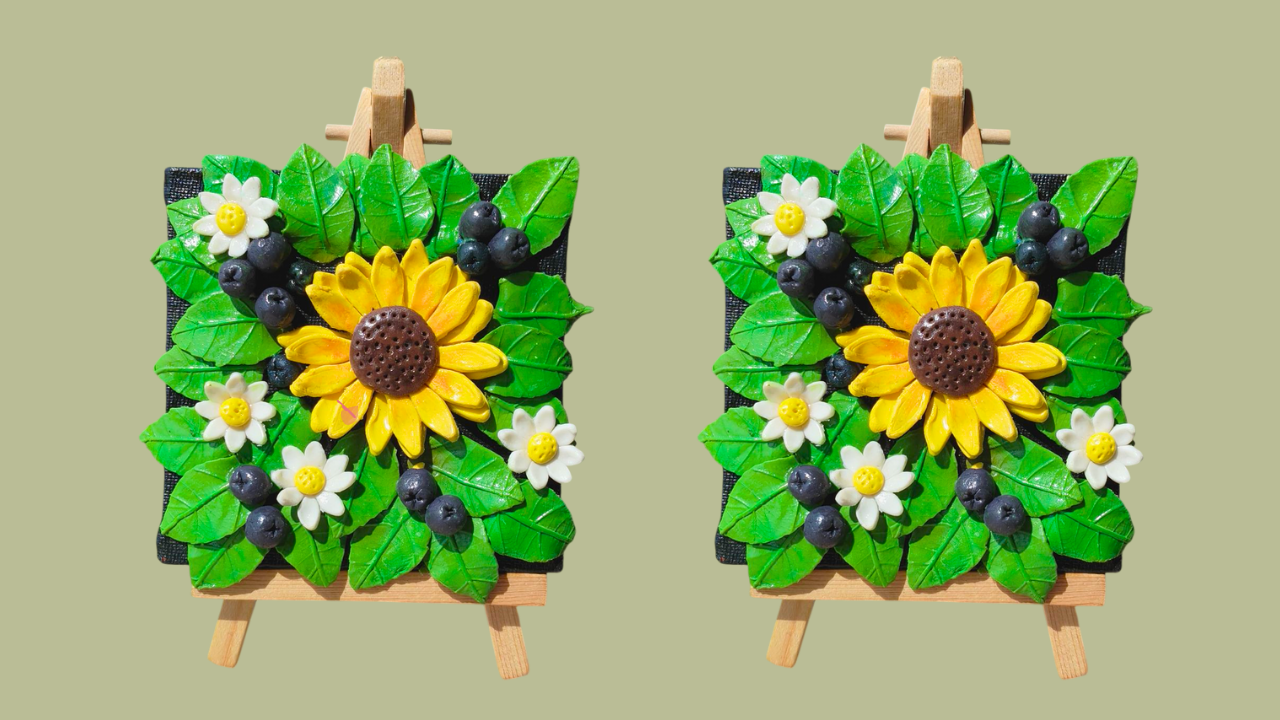
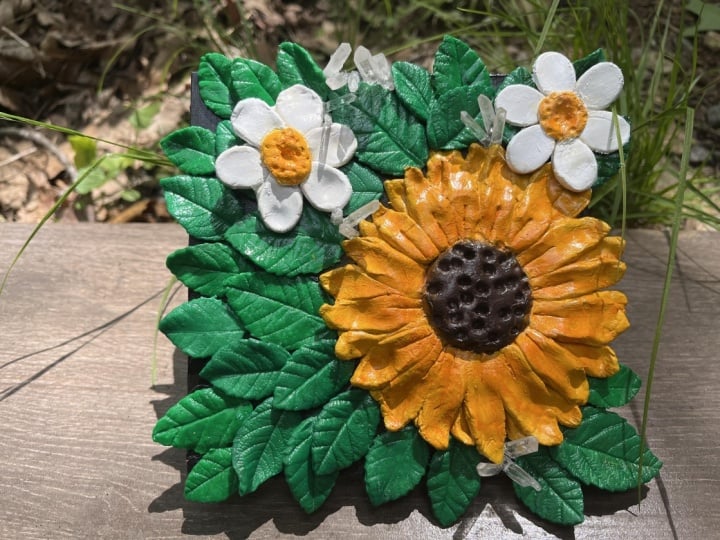
Unleash your creativity and transform a simple canvas into a beautiful, three-dimensional garden! In this beginner-friendly Skillshare class, you'll learn how to sculpt stunning flowers and natural elements using versatile air-dry clay, then bring them to life with vibrant colors on canvas. Get ready to add unique texture and personalized charm to your home decor with your own handmade art.

Why Take This Class?

  • Beginner-Friendly: No prior sculpting or painting experience is needed! This course is designed specifically for those new to air-dry clay and canvas art, guiding you step-by-step from start to finish.

  • Create Unique Wall Art: Move beyond flat paintings and learn to add incredible 3D texture to your artwork. You'll create a piece that truly stands out and becomes a focal point in any room.

  • Explore Air Dry Clay: Discover the magic of air-dry clay – it's easy to work with, requires no special equipment like a kiln, and dries to a hard finish, making it perfect for home crafting.

  • Relax and Get Creative: Enjoy a calming and rewarding artistic process. This class is a wonderful way to de-stress, focus your mind, and create something beautiful with your hands.

  • Learn Versatile Techniques: The skills you learn for sculpting sunflowers, daisies, leaves, and blueberries can be applied to create countless other floral and botanical designs in the future.

What Will You Learn?

In this engaging and accessible course, you will learn essential techniques to sculpt and arrange your clay botanicals on canvas. Specifically, we'll cover:

  • Air Dry Clay Basics: How to condition, roll, and prepare your clay for sculpting.

  • Sculpting Sunflowers: Step-by-step guidance on forming the distinct petals and textured centers of a beautiful sunflower.

  • Crafting Daisies: Learn to create delicate daisy petals and charming centers.

  • Making Realistic Leaves: Techniques for shaping various leaf forms and adding natural veining.

  • Adding Blueberries: Simple methods for sculpting tiny, spherical blueberries to complement your floral arrangement.

  • Assembling on Canvas: How to securely attach your dried clay pieces to a canvas, creating a cohesive composition.

  • Pain

  • Shading & Finishing: Tips and tricks for shading your clay elements with vibrant colors and applying protective finishes to ensure your artwork lasts.

By the end of this class, you'll have a gorgeous, multi-dimensional piece of floral art, along with the confidence and skills to continue exploring the exciting world of air-dry clay on canvas!

Meet Your Teacher

Teacher Profile Image

Mona Arty

Clay Artist & Educator

Teacher

Hi there! I'm Mona, a dedicated clay artist from India, with a lifelong passion for art. My journey into the world of clay began in my childhood, and over the years, I have grown to specialize in creating a wide array of beautiful pieces, including 3D murals, sculptures, realistic clay food miniatures, and delicate figurines. From lifelike flowers and plants to serene fountains, I pour my heart into every creation, making sure each piece tells a unique story.

In addition to my work with clay, I also create and teach the art of making realistic food-shaped candles.

I also enjoy speed painting, where I express my creativity through rapid brushstrokes, creating stunning artwork in a short amount of time.

Since 2016, I have had the privilege of teaching... See full profile

Level: All Levels

Class Ratings

Expectations Met?
    Exceeded!
  • 0%
  • Yes
  • 0%
  • Somewhat
  • 0%
  • Not really
  • 0%

Why Join Skillshare?

Take award-winning Skillshare Original Classes

Each class has short lessons, hands-on projects

Your membership supports Skillshare teachers

Learn From Anywhere

Take classes on the go with the Skillshare app. Stream or download to watch on the plane, the subway, or wherever you learn best.

Transcripts

1. Welcome ! : Hello, everyone. A very warm welcome to my new Skillshare course. My name is Mona and I am a clay artist from Idia with over 30 years of experience in this field. It's so wonderful to have you here with me today. For my returning students, welcome back and for those of you who are new and would like to know more about my art journey, you can find me on Facebook, Instagram and YouTube as Mona Art. In this course, we are going to create a beautiful three D floral artwork on Canvas using ADR clay. I will guide you through every single step right from the beginning. You will learn how to condition and handle the clay, create delicate leaves and a beautiful detailed sunflower. Make delicate white flowers and small berries, arrange everything together to create a stunning final piece, and finally, you will learn how to protect your project with varnish, so it will last for many years to come. This class is perfect for beginners. You don't need any previous experience. All you need is little creativity and desire to make something beautiful. I'm so excited to start this journey with you, so grab your materials and let's begin. 2. Materials : Let's start by looking at the materials we need for this project. First, you will need a canvas bowl. I'm using a four into four inch size. If you don't have a canvas bool, you can also use an MDF pool or piece of plywood. Next, you will need clay. I've got a dry clay in various colors yellow, white, dark blue, green, and brown. You will also need fabric glue or an all purpose glue. Either will work fine. We'll use some cutters and biners. This is a large flower shaped cutter and we'll also need a smaller flower cutter, leaf cutter, and a ner. You need black acrylic color to color the base or the canvas. Next up for sheating, we'll need soft pistons. And finally, we'll use varnish at the very end to protect our finished piece. For tools, we need a brush, a silicon tool, a ball tool, and an acrylic rule. Just so you know the silicon tool and the ball tool are optional, you can definitely complete the project without them. Alright, let's get started. 3. Coloring the Canvas : First, we are going to paint our canvas with a base coat of black for this. I have taken plaque acrylic paint. I'm covering the entire area with a paintbrush. One coat is enough, as the whole area will be covered with clay flowers and leaves. Now, let's let it dry and I will see you in the next lesson. 4. Sculpting Leaves : Let's get started by making some leaves. I have taken some green clay and I am kneading it to condition it well. The more we knead, the softer and smoother the clay will become after kneading. I have rolled the clay into a ball, flattened it, and now I'm using an acrylic roller to roll it out into an even sheet. The thickness of this clay sheet is about two. Now I will use the leaf cutter to cut out the leaves. Just press it. While the cutter does have a leaf impression, it's not very prominent, so we'll use a winner later to create a more defined effect. Cut out as many leaves as you can from this sheet, as we'll need quite a few I'm removing the excess clay now. I will re roll this excess clay into a ball, flatten it, and then cut out more leaves from. So now we have around 22, 23 lease. Next, we'll create the impression on them using the winner. So meet you in the next lesson. 5. Making Veins on leaves: Our leaves are already now, we use the winner to create impression on them. I have placed a leaf onto the winner. Make sure the center of the leaf align with the center of the winner will gently press it down, then gently remove it. See how beautiful the impression is. We'll do this for each leaf one by one. Place the leaf in the center of the winners gently and then carefully remove it. You will get a lovely impression every time. Take your time to do this for all the leaves. So that's it. We have created the winning effect on the 23 day. Our next step is to sat them, so meet you in the next lesson. 6. Shading the Leaves : Now we are going to shade the leaves. To do this, I have taken soft pistols. I have selected yellow and green color. We'll scrap a little bit of both colors using a knife or a blade. After scrapping both colors, we'll gently apply this loose powder onto the leaves with a faint brush. We are applying this in the direction of the veins. Now that the shedding is complete, in the next lesson, we'll stick them onto the canvas. 7. Arranging leaves on Canvas : Here is our canvas. We are going to stick these leaves onto it. So I have taken this flower cutter, and we are using it to get an idea of where our flower will be placed. You can mark this area if you like, or just remember it by eye. Keep in mind that we need to stick leaves all around this area and also fill the rest of the canvas portion with leaves. So I am applying glue around the perimeter of this cutter. This gives us an idea that we shouldn't stick leaves in this particular area as our flower will go here. To make the leaves lift slightly, we are gently curling their backside a little. Now apply the glue and stick the leaf. First, we will apply them around the sirkin like this. When you reach the ages, be careful not to let the leaves extend out too much, otherwise, there is a risk of them breaking later. You don't need to stick all the leaves perfectly straight. You can tilt them a bit as well. Oh Now from here, I'm filling the rest of the canvas with leaves. You need to place them randomly. You can tilt them a bit, direct them towards each other, and even overlap them. In this way, we need to fill the entire canvas with leaves. Later we'll add blueberries and daisies on top of these. So all of our leaves have been used up. The 23 leaves we made were sufficient to fill the canvas and we don't need to make anymore. In the next step, we will make the flower. 8. Let's Make Sunflower : We have already made the leaves and stuck them onto the canvas. Now we'll make the sun flour. For this, I have taken yellow colored clay and brown colored clay. Along with that, I have a big size flour cutter and a ball tool. After conditioning the yellow clay, make a ball and flatten it with the help of an acrylic ruler. Keep the thickness around two M. Next, we'll cut out flour using the flour cutter. We need to cut out two pieces of the flour. After this, we'll take the ball tool and use it to press the petals from the outside inverts. This will create a cup shape in the petals and get them form. Also press the center part with a ball tool. This will make a flour more defined and also thin it. We'll now stick this onto the canvas with the glue. And similarly, for the petals of the second pla, we'll create a cup shape by pressing with the ball tool. Now, stick this layer on the previous one. Press the center part with a ball tool. For the center of the flour, we'll take brown clay, we'll make a ball, flatten it, check its size, and then stick it in the center portion. After that, we'll create a pattern on it using a toothpick. See our sunflower is ready. Met you in the next lesson. 9. Shading the Sunflower: Now we will start sheading the sunflower for the shading. I have taken an orange shade from my soft pistels. I am lightly scrapping some of the pistels. With the help of a brush, I am gently applying it to the sunflower petals. Apply it from the inside towards the outside. The rest of the sunflower petals are being supported by green leaves from below, but there is nothing here. So to give this part some support, I'm taking a little bit of clay and sticking it underneath the petals. This will ensure the petals remain lifted. Otherwise, without any support, that part might troop downwards. Now, to shade the center portion of the flower, I have taken a dark brown color. I have scraped the dark brown soft pistol. And carefully apply it to the center portion with a brush. Be careful not to get it on the surrounding petals. So the shading is all done now. In the next lesson, we'll make white flowers. 10. Making Berries : Before we make a white flowers, we are going to add some berries. In any empty space you see, we will make and place blue berries using dark blue clay. First, condition the clay and roll it into nine to ten small balls. After making the balls, use a ball tool to make an impression in the center, then create four small lines on the sides to form what looks like the top part of a blueberry. After this, we will apply glue and stick them onto the canvas. First time placing three perries on one side of the flour. You can add two berries to another side. And on the remaining side, you can also place two or three berries. You can stick them randomly anywhere you like. All right. I will see you in the next lesson. 11. Crafting White Flowers : Make the white flowers. We have taken white clay, yellow clay, and small flower cutter. As usual, we will first condition the clay. After conditioning the clay, we will roll it out with the help of an acrylic roller. I have rolled out two small flat sheets now cutting four flowers from them using the small flower cutter. Now using a ball tool, we will shape the petals of the flour. We will press the petals from outside towards the inside. Then you also need to press the center portion with the ball tool. Next, apply glue and stick this flower onto the canvas on top of the leaves. Do the same with other flowers. Pressing the petals this way makes them thinner and also gives the flower an embosed look. After this, we'll make the center portion of the flour. For this, I have taken a little bit of yellow clay and made a small ball out of it. Stick it in the center of the flour. If you want, you can also create a pattern on this with a toothpick, just like we made for the center part of the sunblo. So stick the center portion on all the four flowers in the same way. Now clay work is complete and we need to let it dry to dry, place it in an area where there is no direct sunlight or strong wind. Let it dry completely, which can take two to three days depending on the weather. After this, we will move on to the final step. 12. Sealing the work : It's completely dry in four days. Now we are going to varnish it. I am using decor varnish, but you can also use a spray varnish, if you prefer. I am pouring out a little bit of varnish. We are applying a thin even layer with a brush over the entire pies. Make sure to apply it nicely. Varnish creates a protective layer over your work, preventing it from being damaged by moisture or humidity. It also adds a nice finish and your croset will stay looking as it is. Let the warns dry. That's only take about five to 10 minutes. So after 10 minutes, you can see it's completely dry and our workpiece has a glossy finish. Our piece is ready. You can hang it on the wall by sticking a hook on the back, or you can place it on a small all like this and display it on your table or stick a magnet on the back and use it as a fridge magnet. So what do you think? How did our beautiful Flola turnout 13. Celebrate Together: Display Your Projects & Connect: Congratulations on creating your beautiful floral artwork. I hope you enjoyed the process and are proud of your stunning final piece. I would love to see your work. It's inspiring for me and for other students too. So please don't forget to share. And if you enjoyed the class, please consider leaving a review. Your feedback helps me a lot. To see more of my work and get updates on my new courses, you can follow me on YouTube, Facebook, and Instagram. My handle on all platform is more arty. Thank you so much for joining me. Keep creating. I hope to see you in my next course. Happy crafting.