Transcripts
1. Prompt to Paint Introduction: Hi there. I'm Terri Renyon, isual artist and
creative encourager. And today, I'm going
to share with you how I come up with ideas for
my art and illustration. I do have a group on Facebook called the
Daily Creating Group, which I post prompts every week for every
day of the week. So that's a really
great resource for having just a spot to start. For today, that prompt
is playing the sand. So we're going to use
this prompt as a way to generate ideas about
what we might want to do. And one of the things I do for that is I start to
think about how many different ways do we
know that sand happens? We know what happens
on the beach. We know there's kiddy sandboxes. There's some sand and
gardening and landscaping. So here's a few things
that I might pursue, but I know what I
like, and I like cats. So we know the cats
have sandboxes. So that is what I'm going to
be working towards on this. And I usually start
my idea generation by just thinking about
what you can do with sand. I know that people when they play in the sand like
to make sand castles. So I have that in mind for how I might approach
this illustration. So the next step
I take is to take a look through Pintrist
and maybe I look up playing in the sand
illustration or I might look sand castles or
that kind of thing. So you may want to
try doing that. Just see what catches
your eye on Pinterest, or maybe you like to
look at Google Images. You can look at other
Illustrator's art or you can look at photographs or anything having to do with sand
or playing in the sand. So this is how I generate ideas. I like to follow a prompt, but I don't always
follow a prompt. When I don't have a prompt, I usually just ideate by
looking at a ton of stuff. Like, I just wait for that inspiration to come
when something I think, Ah, that looks like fun or a portion of something looks like fun, yeah, it's like a
quickening feeling. I get like, Oh, I could do that. And then I make sure that I
don't copy what inspired me. I try to look at a lot of
variation around the theme. I might take the color
palette that inspired me or I might take a subject
matter that inspired me. But I make sure I vary greatly
from the original work. And I do that by mixing up all the elements so that
nothing is exactly the same. And I also look at a lot of different artwork to help
with that inspiration. So I'm going to go
ahead and get started. I'm going to leave you to do your research and think about what you want to do with
playing in the sand and then come back here
and let's jump in.
2. The Project - Part 1: So I've decided since I am
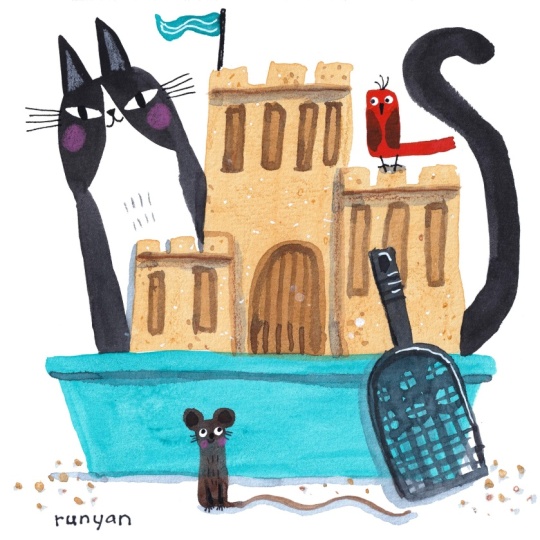
a cat fanatic that I am going to paint a kitty
cat playing in the sand, and this is going to be sand
that we all know and love, and that is the
kitty litter box, which has sand in it or some
sort of sand derivative. So I am going to look through
a little bit of Pintris. I got sandbox Illustration
up here as my search. And I can go here and see
all the kids sandboxes, or I could say
sand illustration. And that might give
me a wide range of different ways that people
have played with sand. And here we have some sand
castles, which is awesome. So I think that's the
direction I'm going to go with my artwork. But these are just some
ways to search on Pintris. Now, as I said, if I've got
really nothing in mind, no prompts or
anything like that, I might just start
going through here and notice, there's an
old one of mine. So yeah, usually a lot of my own illustrations
will come up here, another one that's
mine over here. Yeah, there's just
a massive amount of things in here that are
having to do with cats. So maybe I'll need to
search. Here's a dog one. I love this artist,
Marie Rose Boyle Boy o. And she does all kinds of
dogs and cats and animals. Really good for different types of ideas. Here's a photograph. So yeah, these are
just different ways that you can generate ideas for your illustration when you don't have a particular
place to start. So I might say, yesterday, I did a lion drawing, so I looked up ion Illustration. And that just gave me a lot of ideas about how I
might want to proceed. But I know I want to go with
a sand castle in a cat box. So I don't need to do any of this research right now
because I've already generated the idea in my head. Now I'm going to go and research some sandcastle illustration, so I have an idea of how that castle might
look in a cat box. So I'm looking up
sandcastle Illustration, and there's plenty
on here to give you an idea of shapes
of sand castles. And also helps to generate what else might be
with a sand castle. You could also look
just at sand castles, and then you'll get some
photos, too, mixed in. Oh, yeah, here's a
photo, another photo. But all these are
really awesome ways to generate ideas for your sandbox. I'm not going to research cats, and if you know
me, you know why. I think I know what a cat
looks like at this point. I did get a new palette
I'm kind of proud of. I got a smaller palette, so I don't have to lug
around that huge thing. And also, this way I can
mix colors in front of you, which you might find helpful. I do have a list
of all the colors I use in the about section. So now that you
know this lineup, I'm going to do my best to mix some paints up here so
you can see it somewhat. I'm using two different brushes. This is the round mimic
Kolinski and a size 12, and this is the size ten
mimic creative mark. So these two brushes
are synthetic hairs. So I also always work off to
the side to test my colors, use black to test my
posca and mola tow pens, which are acrylic markers, and I have a couple
of water jugs and some paper to blot my paint off. So back to this cat box castle, I'm not doing a drawing, right? I'm just going to start in. And you can do a drawing. I just prefer to see
what happens, basically. I think I'm going to start with what color do I want
to have this box? 'Cause I'm going to
start with the box. I'm not gonna make
it yellow because the sand is kind of yellowy.
I think I will make it. Let's just go ahead with the
turquois since we love it, so and so what I do is I come over here
and I grab a piece of paper to test my color to see if it's the right
color for me to use. And I think I'm going to
saturate it pretty well by adding more of the color. It's a good idea when
you start with a palette I squeezed all these
colors out for myself, and they dried, and then I spray them with water to kind of reconstitute them so
they're easier to use. So I think this
colors going to work. Removing cat hair,
and cat boxes in general are shaped a
little bit like a pie. They have a lip. At
least the cat boxes that I've come in contact with. And then the bottom of the box is a little tapered most often. I'm sure there's
exceptions to this rule, but this is just
what I'm gonna do 'cause it's what's
coming to me now. Keep going back to my palette
and grabbing this color. I forgot to start with
the bigger brush. If you start with
the bigger brush, you can hold more
watercolor in your brush. So that's good for now. I'll come back in with a
little bit of shading later, maybe. Now I'm noodling. Noodling is allowed. Just know when you work back
into watercolor, it kind of shows with some colors,
particularly, it shows. And now I'm starting
to think about this castle and how that's
going to work in there. To do the castle, I'm going to use basically yellow ochre, a very light yellow ochre. Let me try that color out here. Probably in order to get the castle so that I can
add some layers to it, I'm going to start
with a relatively light color of the yellow ochre. This is still a little wet, but I'm not that
concerned about it. I kind of like it when
things run into each other. And I'm just going
to do a basic shape. So this has got a straight side. Maybe there's a few of these. And then it comes back
up, filling my brush. My intention here is to
fill these in somewhat. I actually probably
fill it in completely because and to mix this up, I'm going to make a
third one of these. But this is a general
castle shape. I'm going to go ahead and
fill this in completely. Moving rather fast,
we don't end up with a big old edge where our
water colors have dried. Good idea to mix up enough
paint to begin with, so you're not having
to remix it as you go. Which I did not do. I need to mix up a
little paint as I go. Not worrying about any of the windows or the door
or anything like that, those are going to be darker
than this initial color. My perfectionism
conditioning likes to pop in and start giving
me feedback as I work. And I've gotten to the point
where I just I hear it, I see it, I notice it, and I ignore it. I don't try to fight with it or get rid of it because that's
just giving it energy. I just keep working. Here I get my basic
sand castle shape. I can start mixing
up a little paint to start doing some
details on that. This feels pretty dry down
here with my cat box, so I'm going to go ahead and use the same turquoise
with a little bit of pains gray in it so that I can get some
shadows on this cat box. Mix this up on the side. I might be a little dark. We'll see water it
down a little bit and just start defining
this cat box a little. Doesn't have to be
complicated. It's simple. They got that done. And now
I got cat he in my paint. I always recommend that you
leave your hair in the paint till the paint dries
because then it's easier to just sweep it off
after the paint dries. And I have tried
everything to get that hair out of there
before the paint dries, and it's always better
to wait till it dries. I also know I need
to do characters in here because that's
just the way I am. And we know a cat would
be in a cat box scene. So I'm thinking about I got more room on this
side the cat can be. I also want to make sure people know that this is a cat box. There's always some
sort of scoop, right? And that really kind
of can make this more a cat box that a cat would
use for his business. I'm just going to do a
classic one of these because that's the kind
we use at this house. So I'm going to have
to make it a little darker than what I've
got going on here. And I think again, I'm going to go for
a little bit of black mixed in with
my paints gray. Check my color. Nice and dark. I'm just going to put this little kitty shovel
to the side here. It's coming right
over everything. It's a big old shovel. Who knows what they look like? I'm looking at them here in Pintrist that really just helps me know to kind
of get in the ballpark. It doesn't have to be exact. They got a lot of little holes. One of the ways you
may want to do this, and I'll just do
it right here is to do this type of thing. We know that they're
closed at the bottom. I'm gonna make this
like a double type. Lots of little tiny places
to catch the kitty goodies. I'm not loving my
little shovel here, but it is what it is, and
I'm just gonna leave it. So there's the shovel. This is dry enough now for
me to come back in with some details on the sand castle. So I'm gonna use the
same yellow ochre. I know I'm gonna want it darker, and maybe I'll add a little
this grayish mixture to it, but I also want to
make sure it's warm, so I'm adding a
little red oxide. That seems like a
good place to start. So here would be the
door on my castle. Constantly turning my
paper when I work. Always good to not run your finger through
your wet paint, which I just did a little bit. Defining things a bit with
these little side towers. Who knows what these
things look like? I have built a sandcastle
in my life at the beach, but it was eons ago. So, you know, I'm not fresh with my sandcastle
building experience. This cat here is still in here. Got it out, and then
there's a lot of little windows and sandcastles. I'm not intending to add cats
to these windows because this doesn't seem like the thing to do, but you
could always do that. I want to work around
the shovel on this one. It's still a little wet, so I got to be careful
when I paint around it. I don't want to go right into it because then
we could end up with a lot of black is dark
color in our window color. I sort of want to
make them mostly the same the same height. I know there's a lot
of little spots and things in sand 'cause it's sand. So I'm just doing a few
little dots with this color. I think I'm actually going to come back in with color
pencil and do most of this. You don't have to overdo it. Like, just a
suggestion is enough. I think I'll stop there
for now and figure out who is going to be here building on this
castle? Let's see. What color kitty
do we want to do? I don't want it to be like this color because
it will blend in. Black is always good. That'll be a really
nice contrast. I'm keeping the blue out
of it, for the most part. I'm just going to do solid
black for this kitty. Or it may end up being, I'm going to do a tuxedo. That's the plan that
I just figured out. So this kitty is in the back and it's looking over
what it's done. Expert digging techniques. Here we go. We've got the
makings of a tuxedo cat. And since we're working
on a white background, I'm going to go ahead
and paint this body in And for the sake
of simplicity, I'm not gonna have him actually working on the sandcastle
with its hands, which some people call paws. I'm just gonna have him behind here looking around the edge. And, of course, you
will be able to see a tail coming out this side. Very quiet when I
concentrate on painting. I didn't load up my
brush quite enough, so I have to keep going
back and refilling it. If I had a bigger brush, that wouldn't be
as big a concern.
3. The Project - Part 2: Alright. Here we
go. Got the cap. You know, I'm gonna bring
this down a little bit, just 'cause it's not
delineating this very well. Well, that is better. Okay, we got the kitty element. We've got the castle element. We've got the whatever
this thing element. I think I'm going to add a
little bit of detail to this. Usually these things have a lip to hold the little
sand bits and such. And they oftentimes have
a little thing to hold. Let's do a few other
details just for fun. I always love to bring
somebody else into the picture because
this kitty does not want to be working alone
on its sand castle. For a little contrast, I think I'm gonna do a little
red bird with this kitty. And this red bird will be
here. Here, here, here. Here. Sometimes they get completely out of control with my sizes on the critters that I make red bird, so that's a nice
addition of a color. And I think I am going to create a mouse character down
here around this area. It's going to also
have to be pretty dark so that it will show up.
I'm thinking this through. Do I want it? Do I
want it? Do I want it? I think right here is good. Went dark so we can
cover that blue. The blue will still show up. But with the darker color, it helps to blend it. You know, I can still see
that blue change there. But I don't care, okay? I just don't care. The tail Do we have enough characters to make this kitty feel like it
is not alone in its work? I'm going to go ahead and use
that color I just made with a little yellow
ochre added in for a little more highlights
on keeping my hand out of the paint for a little
bit more detail on the sand castle. So, yes, little edges
on windows and such, just to help it give
it some dimension. I kind of like adding a
little dimension to my work. Everybody's got their own
idea about what they like. So we're getting there. I might want to fix a little of this. I think there's a little
bit of a shadow going on underneath the top
parts of this castle. And then we'll come in with more details as we go along here. Everybody's drying, but in
order to speed that process, I'm going to go ahead and
break out the hair dryer. A few more sand bits. We're going to need
to be in here, because when kitties
play in their sandbox, there's usually some residue. So I'm just going to
put a few things here just to show this kitty is not any neater than
anybody else's kitty. While I've got some
paint on my brush, I'm gonna put in just a few details which
you probably would not have because this cat may not have quite that much experience
with making sand castles, but we'll pretend like it does. I actually want to
make these little sand bits a little bit lighter, so I'm just going to come in
here with a piece of tissue. And pull up a little
of the color. Okay, maybe while things
are drying, again, I could come in.
Well, that's dry. I think I'll use
a very dark color for my mouse, miss legs. And while I've got
this, I'm going to give it the
insides of its ears. The bird needs a wing, so I'm going to mix in a little of the rose color with my red, maybe a little lack to get
a darker color so that I can add that to the bird friend. Details make a big difference. Well, why these are drying, I'm going to come in
with some colored pencil and just add more sand. Here's a few that might work. You know, with these
littler marks, it can be easier just to use a color pencil
than a paintbrush. I'm not a purist when
it comes to watercolor. I like to use whatever it takes. Maybe a little darker bit
to mix it up a bit more, and I can add a few
of these down here. I'm also going to use this
colored pencil to sort of delineate some
of these parts. And I'm not loving this so far, although the granular texture of the colored pencil works really well for
this type of thing. So I think I'm going
to stick with it. And I'm thinking right now
I'm just making a mess. All is well. Messes are good. I'm putting the colored
pencil on its side. I'm actually going to
come on top of this. This is a kind of
a yellow oak grey. What is this? I don't know. Gold rod, prisma color. And I'm just gonna give the
whole thing a little texture because it really makes it
look a little more sandy. Here we go. Maybe a
little more here. Sometimes I'll use
an eraser with colored pencil just to
lighten it a little bit. I'm not happy with
my sandcastle, but I'm just going to
keep adding details, and it'll all work out fine. Castles oftentimes will
have lags on the top, so that'll help to
pull this together. I'm not sure what colour flag. Maybe I'll go ahead and
use a blue flag like this. It's a big flag. Yes, we need these details. I think this kitty's dry enough, then I'm gonna start
adding some features, 'cause it needs to
be able to see in order to work on its sandcastle. I got my molotaw one for all. I got my piece of paper to try it on so that I don't
mess up my painting. Shake, shake, shake,
get it running, and then move to the art. Well, I'm down
here, I'm going to give this little guy some eyes. Guy or girl. We don't
know which or they them. Oh. Give this one some
eyes and of course, the star of the show mixing up the eye shape a
little bit here. And this pen is not opaque, so I'm going to have to
come in with a second coat, which is what happens 99.9%
of the time with Posca pen. You can see how it's
just not opaque enough. You got to shake and tap. Get it moving. I'm going to do a little bit
of detail on this. Whatever this thing
is that's supposed to be to pick up cat. I actually made a mistake here. So I'm going to get
up as much as I can. But I do want to use
some white dots in here to signify more sand. You can see how I
work is pretty messy. And I prefer that. So you
work however you work. I have to wait for these to dry and everything else to dry. There is a technique for getting some of that moisture out. You can dry out a brush, kind
of splay it a little bit, and come back in and grab up some of the
wetness of the paint. While I'm waiting, you can see we kind of lost those legs
there, but that's okay. I'm going to come in
with This is Posca pen. I'm going to give some
details to our friends. Okay. Take this flag. This wasn't on the way
dry, but that's okay. Needs its flag pole. Very happy cat, 'cause
it's done a fine job. Ckoning up these
legs a little bit. Little herd feet. You must have whiskers. Oh I'm going to use a smaller pen to do these toes and
whiskers on the mouse. I know I'm going to maybe want to ground all this
with a little shadow. Usually, I use Pains
gray for my shadows. It's just a really nice gray, dark gray or light gray, depending on how
much water you add. It'll be a little tricky getting the shadow around on
these pieces of sand. And this is where I ran my
hand through the paint. I'm not gonna worry about
it too much painting over the sand bits because
they are in the shadow. A little shadow for the mouse shadow behind the shovel might come in with a little more shadow to kick things off
a little bit more. Maybe there's a little
hint of more shadow here. See how nicely that
grounds things. It feels like it's gonna
be a little too dark. Um, little bird needs a shadow. And there probably would be
a little bit of a shadow here on the side of
this against the cat. That did not work. And since we have a shadow happening with everything else, we need to put a shadow in
with the sand castle, as well. My light source is sort of
coming from this direction. It's not completely technically correct that I'm doing that, but that is the aim. You can see the shadow
on the side of this. And actually, there should be some shadows back here, too. So while I've got this blue, I'm going to come in and I
know there's a shadow on the side of this structure. I got a little underneath
the tower tops. And at this point, this is
looking really dirty to me. But I'm just gonna keep going
and not worry about it. Might put a little bit of a
shadow under these sands. And we see this little
bit of stuff here, paint. I'm going to get some nice
clean water and add that and see what will come up with this. That took off some of it. And the way to go further
with that is to possibly get a more bristly brush that can take off a
little bit of the paper. You have to be
really careful with the scrubbing technique so you don't end up with a
blemish on your paper. See, I sort of takes
off that top layer. So that lightened it too. Like I said, that paper is
different now than it was. No longer has the fresh surface. Time for some more mola too. Another way you can
do this. If you have just little spots, you
could come in with this. Hit those spots with the white
mola too pen or Posca pen. Se eyes you definitely
needed another coat. Looking around here, I feel like I could do more
with this castle, but I don't know what
it is right now, so I'm not gonna put you
through my process on that. When I do black cats, I like to use a light
colored pencil. This is a GriseFrancois,
blah. I don't know. Use French names throw me. And I'm gonna give this
a little ear treatment. Little mouse needs a mouth. Sappy mouse likes the
job we've done here. A few details on this flag. While I'm waiting
for things to dry, I'm gonna sign my work. And actually, I'm gonna look a little bit. Where do
I want to sign this? I could do it over here or I could do it in here.
It's up to you. I'm just going to
go ahead and do the typical at the bottom,
left or right. Bottom left in this case. I think the white is dry,
so we can come back in. This bird is checking out what's going on over
there with that kitty. This is this mouse is
admiring the job it did. And Kitty is just proud looking
straight at the viewer. Yeah, there we go. Last vestiges of fun here with
these pink cheeks. I think it just gives
it a little something. With the bird, I got to go darker 'cause the
pink won't show. And it's probably hard
to see that, as well. So it's good as we can do. Okay. Sometimes when
we're doing our art, we don't love everything
that's going on, and for me, I just it's
just the way it is, right? I notice these things.
I let them go. If someone else notices
them, that's fine, too. And I know I can make
another one of these, so it's not precious to me. So yeah. Uh,
4. Final Thought: So with Idea Generation, if you want to start
with the prompt, you can join the
Daily creating group. If you'd rather just wing it, I recommend what I do is I kind of go
through visual images. Either you can do
that in Pintris or you can do that
in Google Images. You can look at photos. You
can look around your house. Maybe something there
will inspire you, but take in as much as you can. And this last little piece
of advice from someone who used to totally
overdo it with researching. Like I
wouldn't do any art. I'd be researching all the time. When you get a sense
of inspiration, when you feel that spark, stop researching and go to
your paper and jump in. Researching is
fantastic and it's fun, but it can fool you
into thinking you're achieving something with your
art as far as production. And a little prep is good, but a lot of prep can kind
of kill your productivity. So get that spark and
get out and start in. I can't wait to see
what you create with your sandcastle sand
playing in the sand thing. And please share your project
to the project section. And I look forward to seeing
you next time around.
 Terry Runyan, Visual Artist & Creative Encourager