Transcripts
1. What's in This Class?: Welcome to my watercolor
trees painting class. My name is Tamas and I have a great relaxing
activity for you. We'll be painting trees a lot. We are going to start
with very simple ones, and step by step, I'll show you how to paint more and more complex and
also more realistic trees. If you are a beginner,
that's great. I explain every single move
I make during the lessons. If you are not a beginner, but you like to paint
nature related subjects, you will also like this class. And I'm sure you will
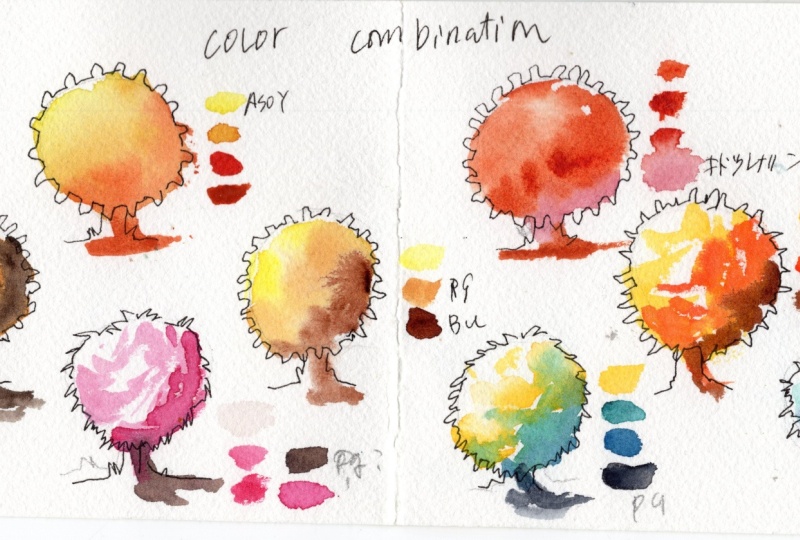
learn something new. First, we will go through some typical tree shapes and see how sunlight
interacts with them. This is essential
knowledge in order to create the illusion of
three D for the viewer. As a warm up exercise, we'll be painting some
very simple trees with only two shades of green. As a next step, you will
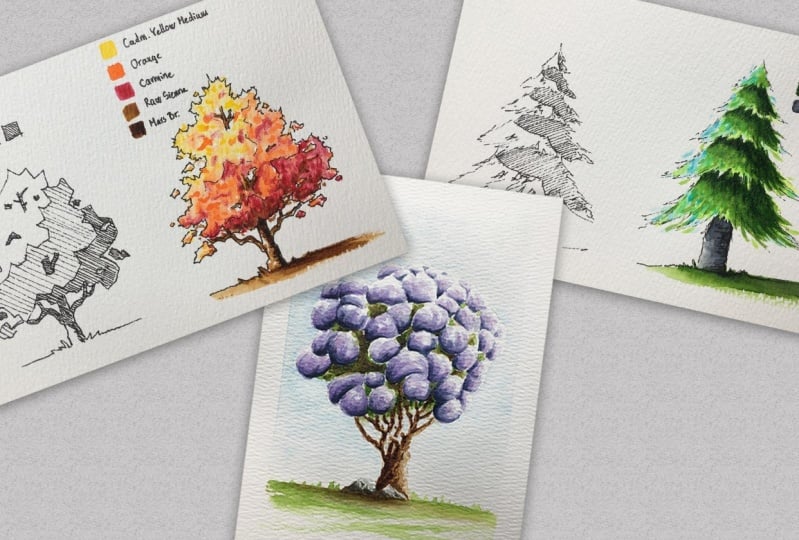
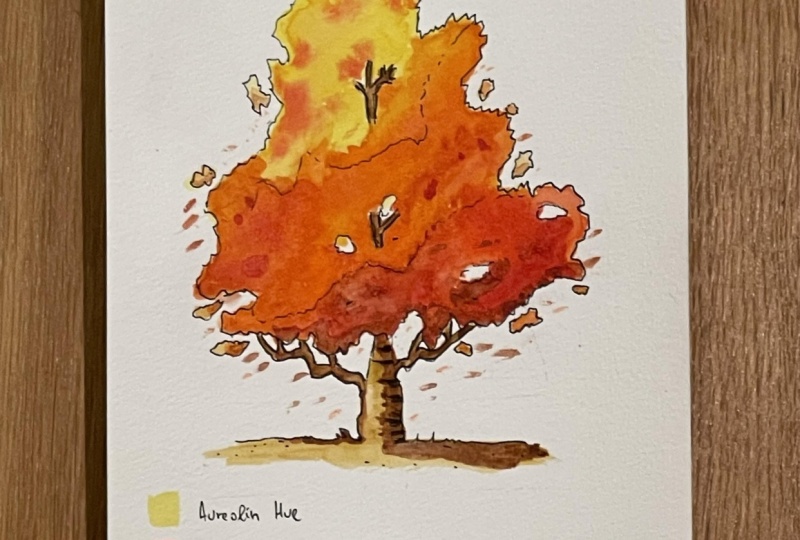
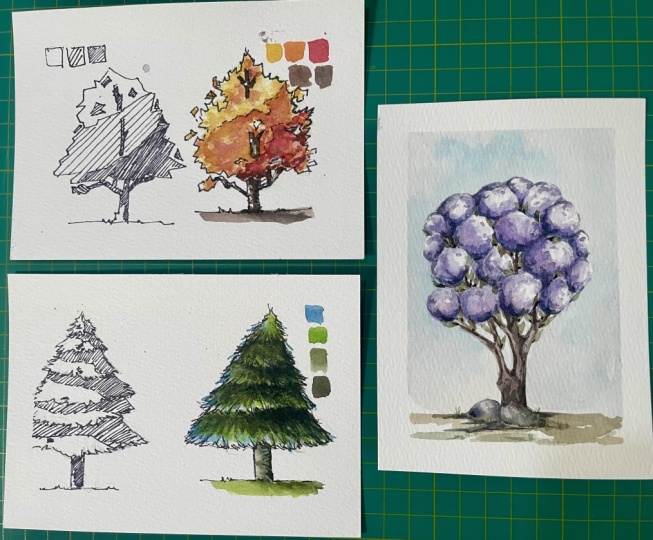
learn about values. In other words, light
and dark tones. You will also learn five
different watercolor painting techniques that you can choose from when you are
illustrating trees. Then we will play with
colors and test what color combinations can work effectively for
tree illustration. Finally, we put
everything together, and we'll be painting some
more sophisticated trees, including an especially
challenging one. My hope is that you will not
only enjoy painting them, but you will also learn a lot. This part will be
quite exciting, not only for beginners, here you can see the tools
you need for this project. We'll be using the very basic
watercolor painting tools. Nothing really special. Now I hope you are excited to dive into my tree
painting session. You see that the
skills you learn and practice here won't just
help you with trees. I'll see you in the first video.
2. Light & Shadow on Trees: Before we dive into
watercolor painting, let's understand real quick
how light interacts with a tree shaped object and what shadows the
sunlight will create. We will simplify things
as much as possible. That's the best way to
understand the concept. By the way, this is a simple,
inexpensive office paper. At this point, it suits
perfectly well for our purpose. I encourage you to draw with me. It will help you
memorize things. Let me start off by
drawing a circle that will represent the
foliage of regular tree. You can use a graphie
pencil just like me now in case you are afraid of
drawing a circle correctly. Two vertical lines representing the trunk and one horizontal
line for the ground plane. I switch to ink just for you to better see
what I'm drawing. Good. We have a tree. Now let's see how
light interacts with this tree and what shadow the viewer will see
on this object. In order to form a
convincing shadow, we need to know where
the light comes from. The shape of the shadow will depend on the
light direction. Let's take a basic lighting
scenario where sun rays hit the tree in a 45 degree
angle from the left. It's also important
to define or observe the relative position of the sun compared to the
object and the viewer. I mean, if it's behind the tree or if it's between the
tree and the viewer. In this case, let's say, if we project it down the sun position vertically
to the ground plane, it would be in the same distance from the viewer like the tree, not behind, not front of the
tree, but right next to it. In this case, we can cut the
sphere into half like this, and the side where sun rays directly hit the surface
will be the light side. The other side of the sphere
won't get direct light, so it'll be the dark side. We can also call it
the shadow side. Let's mark that shadow with a cross hatching
technique like this. We can also find the light
side on the trunk like this. I'm using the light direction and projecting this
point down to the trunk. The half on the
right is in shadow, plus the foliage casts shadow
on the left of the trunk. Eventually, we'll see a shadow shape on
the trunk like this. Very good. Now let's see what changes if the sun is somewhere between the
tree and the viewer. The angle of incidence
remains 45 degree, but sun rays hit
the tree slightly from the front and from
the left, of course. Let's mark the points where the light direction is
tangential to the foliage. And because the sun is
front of the tree now, the line that separates the light and dark side on a spherical shape
will change like this. We get a slight curve. The light side gets larger. By the way, in drawing, this curve is called
the terminator. Remember that because I will use this term frequently when
talking about shadows. Let me mark the terminator on the other side of the
tree with a dashed line. Similarly, on the trunk, the shadow side gets smaller. Plus the foliage
casts a shadow here. Now, let's see what
the viewer sees if the sunlight hits the tree
right from the front. Note that the angle of
incidence is still 45 degree. Imagine that the sun is right above us or somewhere behind us. The shadow shape will
look something like this. Foliage will cast a
shadow like this. Below that, the trunk gets direct light, so
it remains light. Now you can see
that even if we use the simplest shape possible
for our tree illustrations, if we form the shadows right, the viewer will identify
these shapes as trees. So if you understand how light and shadow work on simple forms, it will be easier to illustrate
more complex objects. Just to make the
picture complete, let's see what happens
if the sun moves behind the tree from the initial position
that we drew first. Interesting enough, we get
the curve terminator line, but this time it bends
to the other direction. The shadow side will
take a form like this. Accordingly, the shadow will take a bigger place
on the trunk, too. Finally, let's see
what the viewer will see if the sun shines
right behind the tree. So the sun is located exactly front of us
but behind a tree. The dark side occupies
almost the entire shape, at least from the viewing
angle where we stand. What happens with the trunk? You can see only its dark side. The light side is on the
other side of the tree. This is very basic
drawing knowledge, but it can help you a
lot with your paintings, not only with trees, but with any more complex forms.
3. Shadows on Typical Tree Shapes: All right. Now let's
move on and see what happens with shadows on some slightly different
three D forms. So we can get closer to some more realistic tree
shapes step by step. In illustrations, this one is a very typical
lighting scenario because it creates shadows on the three D forms that
read well to the viewer. You can, of course, flip the light direction so
it comes from the right. Somehow it makes me more comfortable if the light
comes from the left. Feel free to mirror these shapes vertically if you are
a left handed person. Anyway, let's see some typical
tree shapes other than the sphere and see how the shape of the shadow
changes on each of them. Note that we still be using simple shapes to
illustrate these trees. Simplification is key
to understand concepts. Let's see this one
kind of an egg shape. Okay. Remember, from now on, we'll be using this very
same light direction. The sun is front of the tree. It shines somewhere
from the top left. I mark these two points
on the contour line. This is where light direction is tangential to this three D form. From the sphere above, we already know how
the terminator bends. We just need to align it to this elongated shape like this. It's pretty similar
to the sphere. On the trunk, we won't
see much difference. Very good. Now, let's squeeze
the sphere like this. Another very typical tree shape. I hope you already know
what shadow we will see. The terminator will
be placed over here. I'm projecting the
foliage down to the trunk by using
the light direction, of course, and the dark side will look like this over here. Now, let's see a noticeably
different shape. Imagine a pine tree. We can illustrate it with a cone which looks
like a triangle in two D. Assuming the same
light direction. The dark side will
take a form like this. Well, we might see a very little light on
the trunk in this case, depending on how wide the
bottom of the foliage is. Good. Now, how can we
transform this cone shape? The contour line
may bend like this. How does this affect
the shadow shape? Well, the terminator
a bend similar to the contour line like this. The logic on the
trunk doesn't change. It's still a cylinder
form in the Srety space. Good. Now, let's mix these two types
together in some way. I'm drawing a kind
of mushroom shape. The form of the
shadow gets tricky in this case. It will
look like this. The trunk seems to be
in shadow entirely. This form is mainly spherical. It's just cut in half. What else? Let's draw
a mixture again. This part at the top
reminds us a cone, so I mark the
terminator accordingly. This lower part is
much like an X shape, so I copy the shadow curve from that shape and connect the two. You'll see this is how more complex forms build
up from simple shapes. If you know how the
simple ones behave, you'll be in no trouble with the more difficult ones because we can always break down more complex subjects
to simple ones. The shadow on the
trunk is as usual. Now, let's take this form and build up a pine
tree based on that. Something like this. This
top section is easy. We already know what's
happening here. The second level
has the same form. It's just a bit bigger. So I draw a similar
shadow shape. What makes things
a bit more complex here is that the top
part casts a shadow. I take the light direction and I'm drawing a
cashadow like this. Eventually, the final shadow on the middle section will be the union of the two like this. Same thing with the
bottom section. I hope it makes sense. It's all logical. The trunk doesn't seem to
get direct light, so I'm making it dark entirely. Awesome. We are
making progress here. Finally, let's take
our initial form and build up a tree from
different sizes of circles. Like this. Notice that these circles
overlap each other. This section is the
closest to the viewer. No other objects
blocks the light, so we already know what shadow
shape the viewer will see. What about this one? It has the very same terminator line, but as it is in the background, covered by another section, the shadow shape
will look like this. We see just a fraction of it. Similarly on this one
at the top, and so on. I'm drawing the shadows based on the same logic on each section. This last one doesn't
get direct light, so it's all in shadow. Now, if you don't want to
make things more complicated, you can leave the
tree like this. The viewer has enough
information to translate it. But if we want to
be more realistic, we can analyze what cast shadows the different sections possibly make on the other sections. For example, this one creates a cast shadow on the
other section like this. So the light side on this
one will be pretty limited. Furthermore, this upper one may also cast a
shadow over here. So we will have a
pretty tiny light area on this side of the tree. Also, this top section may cast a little
shadow over this one. The trunk is easy. And we are done. A more
complex tree form that consists of several
different sections will look something like this. Very good. I know you are already eager to
paint these shadows now, and that's exactly
what we are going to do in the next video.
I'll see you there.
4. Shadow Shapes: The Base Layer: Right, it's time to do some
warm up painting exercise. This time, I'll be using an inexpensive 190 GSM
thin watercolor paper. For the drawing part, I'll be using this pigma
micron archival ink, size all five, but the thickness
is not important here. What's important is that the ink has to be
water resistant. You can also use
a pencil to draw these trees if you don't have
an ink like that at hand. If you are not a beginner, you can even skip
the drawing part. But having those
guidelines can give you some confidence when we
actually paint these trees. For the painting part, I'll
be using the sap green color, which is a dark shade of green, but you can use any other
dark hue whatever you like. In this lesson, we'll
be focusing on shapes. Colors will come
in another lesson. We'll be drawing and
painting nine trees, three in each row. So I try to distribute
things accordingly. Let's draw the first
one over here. This is a regular circle shape. The second one will
be an oval like this. It's pair, the squeezed
one will look like this. We were having a
cone shaped tree. Let's see its convex version, when the contour lines on
the sides bend inwards. The mushroom like shape. Notice that I'm drawing
with very loose strokes. No need to feel any pressure to draw perfect
shapes now, okay? These are just sketches
we are practicing. The mixed shape with a cone at the top and an ovoid
at the bottom. A pine tree And finally, the compound shape. Looking something
like this. Very good. Now let me arrange
the twos on my desk. My water container,
a mixing pallet, size eight round brush, whatever size you have, we'll
do and the paper towel. Let's make our brush wet and
squeeze the air bubbles out. And I'm taking a little
from my dark green paint. Let me put some more
into this tray. Let's dilute the
paint on the left. I'd like to get a very
light shade of green that will be used to represent the
light side on our shapes. Something like this. Now, let's fill in our shapes
with this light grain. I try to use as few
brush strokes as I can to create a nice even amount of paint on this first layer. I also try to stay
inside my shapes. This is a very good
warm up exercise for your hand muscles. M. Just two brush strokes for
this shape. Very good. We are filling in these shapes with a wonderful
light green colour. Like so. O. Perfect. I'm rinsing my brush because now I have to
wait for a few minutes. This first layer of paint
has to be completely dry before we paint the shadow
shapes with a dark shade. I'm using a hair dryer to
speed up the process. Y.
5. The Dark Side: Now let's take the shadow
map that we prepared in the previous lesson and see what shadow shape we have to
paint for our first tree. All right, my paper is
dry enough to paint the second layer using
this dark shade of green. Very good. I think I'm adding some more paint
here to make it darker. I'd like to see a
significant difference between light and dark sides. Something like this. Let's
paint a shadow on the trunk. And we can paint a ground plane too with just a simple
brush stroke like this. In the meantime, I'm using my paper towel to lift off
some excess water from my brush and making
another move with a dry brush like this. Awesome. A very expressive ground plane. Now let's check our shadow map again to see what we need
for this egg shaped tree. Be careful not to touch your freshly painted tree
with the shadow map. Nice. Let's move on. I follow through the line of the case shadow
of the foliage. And here we go. We have a
sir tree with its shadow. What about the cone shape? The trunk will be
in shadow entirely. Et's move on to the next one. Let's see this mushroom shape. Good. How about this one? Mm. Very good. Okay, now let's see the
more challenging pine tree. My previous trees are dry enough to place my
shadow map over here, but be careful not to
ruin your paintings. This one needs a
bit more precision, more control over
your brush strokes, but you can deal with it, right? And the last one. I'm starting with
the biggest shape. Moving on to this one. I'm paying attention
to which shape cover a switch. Mm hmm. A cache shadow over here. The dark side over here. And another cache shadow
close to the big sphere. This bottom section is
almost in shadow entirely. Let's project the
foliage to the trunk. And we are done. We have painted nine different simplified tree
shapes with their shadows. In the next lesson,
we are going to take one step further
to realistic painting. You will learn about values and how to use them
with your trees. I'll see you in
the next video. A
6. Values: What are values in art? In short, the value refers to the lightness or
darkness of a surface. It's a fundamental element
that creates the illusion of three dimensional form on a two dimensional surface like your paper that you
draw or paint on. But let's see what this
means in practice and how we can use values to make our tree illustration
more realistic. Let's draw a simple tree shape with an archival pen
or with a pencil. Et's define the lie direction. I'm marking the terminator
with dash lines. Remember, this curve separates the dark side from the
light side on the form. Let me draw it on
the trunk, too. Um, This part right below the foliage
is the cast shadow. Note that in the
previous lesson, we oversimplified the light
and shadow illustration and used only two
values on those trees, a light green for the light side and a dark green
for the dark side. In reality, on the
curved surfaces, there is a gradual transition between dark and light values. I'm marking the curvature of the surface here with arrows. The lower section is dark and it gradually gets lighter
towards the light side. Note that this is still a simplification as on a
regular spherical surface, the shadow pattern is a bit
more complex than that. But for our purpose, this simplified approach
will work just fine. Now on the light side,
there is a special place, a shiny spot somewhere here. This is the spot where the object reflects the most
light towards the viewer. It's called the high light. Basically, it's the reflection of the light source itself. Now let's see how we can use values to improve our
tree illustration. To understand values, it's best to start
in black and white. So I'm taking some black paint. Adding a bit of water,
cleaning my brush. And filling it up
with a little paint, just a tip of the brush. Now, I try to create a
transition from very dark through different shades of
gray to almost paper white. Now, this gradation is
called the value scale, containing infinite amount
of different shades or values between pitch
black and clear white. We can group these values
in three categories. The dark, the middle tone, and the light. Let's pick a value from each group and fill
in these rectangles. Okay. You can lighten the black by
diluting it with some water. The more water we add, the more lighter value we get. You can lift off some pigments here with a
relatively dry brush. What did we do? We simplified the value scale that contained
countless number of different values into a very limited three
value value scale. I try to distribute these
three values evenly, meaning that they have
a similar distance from each other on
the full value scale. Now, let's implement
these values on our tree. I'm starting with
the light tone, leaving the highlight
spot paper white. I'm trying to paint with
the mid tone over here. And We can go all the way down. By using some extra
water on the brush, I'm mixing the mid tone with
the light one over here. Now let's take the darkest
dark paint that we have and make some brush strokes
at the bottom over here. As we are working
with plenty of water, the different shades mix
together nicely and we get a relatively
smooth transition between the three values. Let's use the darkest dark
on the trunk's dark side. I'm marking the
ground like this, laying down a cast shadow
cast by the tree itself. We can take it even
darker over here. I'm cleaning my brush
on the paper towel, rinsing out and with
very few pigments on it. I'm painting the light
side on the trunk too. Maybe that's too
much water there. We have a bit more sophisticated tree illustration where we were using values to
create the illusion of depth on the two
dimensional paper. This can be taken much further, of course, but this
is a good start. In the next lesson,
we'll be practicing these value transitions by using different watercolor
brush techniques. See you in the next video.
7. Bursh Techniques: Wet on Wet & Dry: Now let's see five different painting techniques that you can choose from when you illustrate value changes
on the tree shape. We will have a light source, the sun right here
in the middle. Let's draw a simple tree shape, one for each brush technique. I also marked a light
direction with an arrow. Let's draw another
tree over here. This will get the light in
a slightly different angle. And I'm drawing all the
other tree shapes in advance so we won't have to interrupt our
painting session. Very good. Let's mark the terminator on each foliage based on the given
light direction, of course, something like this. This time, I'll be using my sap green to
paint these trees. I'm wetting my size
eight Run brush, taking some dark green paint
directly from the pen, and adding some water to it. Try to get a paint
consistency like this. I have a pretty dark
green paint on my brush, and I'm making a simple
brush stroke like this. Now, I'm cleaning my
brush on the paper towel, wetting my brush a little, and making some further
brush strokes like this. Lifting off some excess water on the paper towel and
continue like this. I'm squeezing the
brush a little, then making a few more
very light brush strokes. And we have a nice value
transition for the foliage. Now I'm taking a little dark green and painting the
shadow on the trunk. I may need more dark here. A brush stroke for
the ground plane, and we are done with
our first tree where we were using the wet on dry
watercolor brush technique. The wet refers to our brush, as it contained
significant amount of water along with the paint, and the dry refers to our paper, which was absolutely dry when we first applied
the paint on it. Let me mark the three
main values that we were and we'll be
using for these trees. We can see the dark
tone over here, the mid tone over here, and this is the lightest area. I might add some extra dark to the trunk and the ground plane. And with the damp brush, I'm filling in the light
side on the trunk. Very good. So this is how you can paint a simple tree with the wet on
dry technique very quickly. Now, let's see the
wet on wet technique. You may find out that
this time the paper will also be wet
just like our brush. So let's prepare
the paper surface with a wet brush like this. My rinse water has a light shade of green by now,
but that's okay. We are working with
green paint only. I'm showing you the amount of water that I have on my paper. It's glimmering like this if you look at it in
a certain angle. The amount of water you use depends on the thickness
and quality of your paper. This is a relatively thin paper, so I use relatively less water. Otherwise, it will get bumpy. Less water also means that
the surface dries faster. If you have a thicker
watercolor paper, you can use more water on it. The paper will stay damp longer, so you will have more
time to apply the paint. Anyway, I have to be quick, so I'm taking a little green, adding a little
water to the brush, and touching the wet
paper surface like this. Maybe it's too much
water on my brush, so I lift the paint
off on my paper towel. I'm taking more paint and adding it to the wet paper surface
over the terminator. Or dark paint on the brush and painting the
dark side like this. As the paper surface is wet, pigments can spread nicely. A smooth gradation will appear. If you feel like you
need less moisture, use the paper towel. If you need more moisture, you take some water
from the container. If you want a darker shade, you take some extra paint. If you need the darkest dark, you take some paint
directly from your pen. With some gentle
touches like this, you can also drive the
paint on the tree. But by using the wet
on wet technique, it's best to let the water
and physics do their job. Alternatively, you
can tilt the paper and use gravity to move the pigments in the
direction you want. This way, there will be
no sign of brush strokes and you can get a very smooth and natural value transition. Some extra paint on the trunk. And here comes the ground plane. With the wet on wet technique, you can create a very lifelike
foliage pattern where light and dark
areas surround each other in a natural
manner. Awesome.
8. Dry Brush, Dabbing & Expressive: Now let's see the so called
dry brush technique. When you use this technique, the paper is obviously dry and as far as
the brush concerns, we need very little
moisture on it. I'm testing these brush
strokes on a spare paper. Uh huh. Now, let's add a bit
of water to the brush. That's not what I want. Now, there is too much
moisture on the bristles. Let me use another brush. This one is an old one and its bristles are not
in the best condition. In fact, this is working
to my advantage now. The challenge here is that the light paint contains
plenty of water, but we need less
fluid consistency. Anyway, I'm trying to create the value transition that
we have already learned. My brush is basically dry. Only the tip of the bristles
contains some paint. Uh. I need more dark
green in my mixture, so I'm using my other brush
to add some more to it. Let's get back to my dry brush and paint the dark
side of the foliage. The trunk, and the ground. No. Something like this. I'll be honest, I'd
rather like to use the wet techniques because that's where watercolor
really shines. But occasionally, we need
the dry brush technique, so it's good to know about it. Now, let's see another
technique called dabbing. This time, I'll be using a relatively thin
brush the size too. My paper is dry, and it's up to you how much
water you add to your brush. The point is that you
use its tip to lay down the paint on the paper
in a diversified manner. I'm tapping. I'm touching
the paper with the tip of my brush in random direction
and with various strength. This way, you can create the illusion of the leaves
relatively quickly. By using darker
and darker paint, we can create the
desired value transition that the foliage should follow. More dark at the bottom. By adding some water, we can take it lighter again. If it's still dark, you can lift off some
moisture on the paper towel. I move on to the
trunk and the ground. H. And that's it. With the dabbing technique, you can create a tree like this. Now I'm mixing some dark green for the next technique that you can call expressive
style. I'm showing you. With some very dark
paint on my brush, I'm making a few brush
strokes like this. Not that I'm staying on
the dark side of the tree. Don't think too much. Just pull the brush back and
forth quickly. Now I'm cleaning my brush on the paper towel
as much as I can. Now, let's add some
water to the brush, and with similar movement, dilute the dark paint with water and let it
blend organically. Add further water to
your brush as needed. We can add some extra dark with a relatively dry
brush at the end. Very good. I like this technique a lot. You can create very nice effects relatively fast. All right. In the next lesson, we
are going to explore some very exciting
color combinations that you can use to paint
your own stunning trees. See you in the next video.
9. Color Combinations: Preparation: Let's go one step
further and see what color combinations can work beautifully for
tree illustrations. We'll be painting nine
different trees in three rows, three trees in each row. The painting part will
be very quick and loose. We are going to use only a few brush strokes for each tree. The focus will be on the
color combinations and see how well certain colors can work together
next to each other. In the meantime, you
will have plenty of opportunities to
practice the wet on wet watercolor technique in order to gain more
confidence in using. Let's draw the simple
tree shapes quickly. I'm using my archival ink, which is water
resistant, of course. To make things more interesting, I thought I'll be showing
you some outline styles that you can choose
from when you draw your own trees
in the future. To make the drawing
process easier, let's draw the circles
with pencil first, so we will have a guideline
for the ink drawing. Distribute them
something like this. Oh. Good. The first line style
will look like this. I'm drawing
semicircles with gaps. They are kind of bumps, but I try to draw them
with identical size. This is also a great
drawing exercise that can develop your muscle
control in your fingers. So I encourage you not
to skip this part. Good. Now for the next one, let's alternate the size
of the pumps. Like so. Now, let's draw a
kind of gear wheel. The teeth are supposed to
be with the same size. This one is pretty challenging
for me, but that's okay. I like to push my boundaries. Now, let's alternate the sizes. Okay. Okay. Now, let's throw
triangle shapes like this. It Looks good. Now, let's try an
outline like this. It's a kind of fur. It will
be some tropical fluffy tree. That's show similar one, but with rounded
tips on the outline. Finally, let's scribble
when we draw this outline. This is a very
intuitive outline type. Don't think about it. Just
let your fingers move. Awesome. We have nine tree shapes
with different outlines. Now it's time to paint them with wonderful
color combinations. But before that, let's
erase the pencil marks. Now, let me arrange my desk. I'll be using a relatively
big round brush. This is size 12. I'm using a water pump like
this to activate the pigments in the bans. Yes.
10. Green & Warm Color Combos: We'll be using the
wet on wet technique, so I paint the foliage with
clean water on my brush. As far as the paint
is concerned, we'll be matching
three different colors with the three values that
we have learned about. One for the light tone, one for the mid tone, and
one for the dark tone. I'm taking the first color, which is going to
be cadmium lemon. We need very little paint
just on the tip of the brush. Cadmium lemon is a
bright, vibrant, cool yellow as it has some
minor green undertones. Feel free to use
any similar hues to the ones that I
use in this lesson. Note that there is
no global standard for naming conventions. Different brands may have different names for
the very same color. The painting process
will look like this. We apply the paint. We clean the brush
on the paper towel. We rinse the brush in water
and we take the next color, which is may green in this case. This is a beautiful
yellowish green paint. In case you don't
have this color, you can mix it by adding some
yellow to your dark green. This will be our mid tone, and I'm taking a
little sap green for the dark side,
something like this. Sap green is a mid range green
with a yellow undertone. I let the paints
blend on their own. It's a good practice
to mark the colors that we used right
next to our painting. You know, just for
later reference. Sometimes it's not so obvious
what paint we use just by looking at it as we diluted
the paint or mix them. O. For the trunk, I'm
using a Siena, which is a bright
brown Earth color with a yellow undertone. U By using some clean
water on your brush, you can create some
transition effect between light and dark shades. In this case, on the trunk. Very good. So this would be
our first color combination. Let's not forget to
make those notes about the paints we use. Now let's move on
to the next one. As a first step, I'm wetting the paper because
as we discussed, we are going to use the
wet on wet technique. This technique will ensure a nice blending and transition
between different colors. For our second tree, I'll be using cadmium yellow
medium for the light side, leaving some paper white
between my brush strokes. If there is too
much water there, we can lift some off. This one is called golden, which is kind of
an orange color. Okay. For the dark, I'm using carmine, which is a deep red colour that has
a slight purple in it. For the trunk, I'm
using burnt sienna, which is a rich brown pigment. Yeah. Very good. We have another eye
catching color combination. Let's take another one. Exploring colors is a very
relaxing activity itself, but I guess it gets even more interesting if we
fell in some shapes. In our case, these trees. This time, I'm taking some titan red paint and diluting it with water. Titan red is a dark
and orange color. It's kind of a transition
between orange and brown. With a relatively dry brush, I'm lifting off
some excess water and paint from the paper. So this would be the
light tone for this tree. Now I'm taking titan red
directly from the pen, which will be the
mid tone value. I'm playing with the dabbing
and lifting technique to get the desired result, which is a wonderful
blending, as you can see. Yeah Now for the dark tone, I'm taking a bit
of carmine again, just like for the
previous tree. Like so. Titan red and carmine are
pretty close to each other on the color wheel so
they can create a so called analogous
color harmony. For the trunk, I'll
be using burnt amber, which is a rich
dark brown pigment made from natural brown clay. It's a perfect paint
for landscape painting. Now I'm using a clean damp brush to create the gradient
from the dark paint. One or two brush strokes, and you get fascinating outcome. It's as simple as that. Let's not forget our notes.
11. Dominating Browns: Now for the next tree, we'll be using different
shades of brown. My water is far from clean
by now, but that's okay. It will work just fine
for these shades. The light tone will be a diluted rosiena that we have already used
on our first tree. The midtone will be its
less diluted version. And the dark tone will be sepia, which is a reddish brown colour, a warm neutral hue. Here I'm using a very
dark version of it. You can experiment with
a lighter version if you want to by adding
a bit of water to. Yeah. We for the next one. I'm starting with cadmium lemon that we already know
from the first tree. The mid tone value will
be erosion at this time. Right. And the dark tone will be the so
called mars brown. It's a deep, reddish brown, pretty close to burnt
amber on the color wheel. Watch how beautifully pigments can travel on this wet surface. All right. Now let's try
another combination. It will be cadmium lemon
for the light side. Note that this time, I
didn't wet the paper with clean water
beforehand by using a diluted initial color is an alternative to provide a wet surface for
the next colors. I try out this orange
for the mid tone. And I'll be using Mars Brown
again for the dark value. Good.
12. The Pink Color Combo: Now for the next tree, I'll be mixing some pink colour. And because of that, I
guess it's time to change my container to another one
that holds clean water. You can mix pink by using
white and some red paint. My white is called titan white. Use whatever white
paint you have. Why? For the red part, I'll be using the
so called Ruby, which is a strong red color with a little purple undertone. On the color wheel,
it's pretty close to quinacridone red and
quinacridone scarlet in case you have those ones. Now with a touch of ruby
in the white paint, we can get a nice pink shade, something like this. Okay. Now, I'm adding some
more ruby to the white and move forward towards
the dark side of the tree. For the dark is dark, I'll be using the so called
Meadow Lake red light taken directly from the pan. This paint is a
cool, bluish red, vibrant, deep colour that
is pretty close to Ruby. Now for the trunk
and the ground, I dilute some paints gray. Okay. Mm. Fantastic. This is how you don't want to dilute your paint right
above your work. I managed to mess up my cadmium lemon sample
right in the middle. Let's see what I
can do about it. The prompt action
should be to take a clean paper towel and try to mop up the
paint from the paper. Now it seems I'm late. So I'm wetting the surface with clean water to
reactivate pigments. And now I tried to mop
up. Let's try again. It seems it's not working well. What you need to know about
an accident like this is that each paint has its own so
called staining property. Some paints sink deeply into the papers fibers and are
difficult to lift or remove. Some paints are
somewhat in the middle, and certain paints can
be removed easily. Your chances also depend on
the paper type you use and the time that has spent between the application and
the removal trial. Anyway, I'm not going to
spend more time on this. Let's move on to the next tree. It's best not to take
a mistake like this.
13. Dominating Cool Colors: For this one, I'm going to start with cadmium
yellow medium. And I'm also adding some more saturated paint
right from the pan. The mid tone value will be
discovered Turquoisblue, which is an intense blend
of blue and guy pins. Note that if you don't
have any turquoise color, you can try to mix
one from blue, green, yellow and white paints, but it's easier to keep a
vibrant one in your palette. Well, we have an issue here. The previous wet on wet
technique won't work this time, and the reason is that by mixing yellow with
turquoise blue, we result to greenish color, which wasn't my
original plan here. So I'm lifting the
turquoise with a try brush. And adding back some
cadmium yellow. Now, we should wait for a completely dry yellow
surface before we move on. But on the other hand,
if you wait for it, then blending won't happen
between the two colors. I go with an
intermediate solution. The yellow is somewhat
dry but not entirely. I'm applying the
turquoise carefully, hoping that we get a
less greenish mixture, but we still have some bleeding effect between
the two colors. Now you know what to expect when these two colors
are next to each other. Anyway, for the dc tone, I'll be using cobalt blue, which is a vibrant,
clean blue paint. Ultimately, that green tinted turquoise
is not an issue at all, as I'm looking at
the foliage now. For the trunk, let's
use paints gray again. By the way, this paint is
a dark blue gray color, great alternative for black. Now, the last one,
let's start with that cobalt turquoise blue
with a diluted version of it. For the mid tone,
I'll be using violet, which color is between blue
and red on the color wheel. My paper surface is still wet, so I can play with the paints. For the dark, I'll
be using Indigo, which is not far from violet, but it has more blue
component in it, and it's also less saturated. M. These three colors seems to be an
effective combination. Actually, there are trees
with colors like this. The trunk will be painted
with paints gray again. And we are done. Yeah. I hope you enjoy this experiment with
different color combinations. I encourage you to
explore some more. I can't wait to see them. In the following lessons, we will put everything together and paint some more
complex trees. See you in the next video.
14. The Autumn Tree: Shadow Map: In this lesson,
we'll be painting this colorful tree
from start to finish. First, we are going to draw
a value map on the left, then we are going to paint
a tree on the right. I'll be using a paper size
that is close to A five, which is have the size of
a normal office paper, A four or letter size. This time, I'll be using
a better quality paper. It's a 300 GSM or 140 BS, 100% cotton based cod
pressed watercolor paper. Let me start off by drawing the rough shape of
our tree with an ink. I suggest you to watch what
kind of outline I'm drawing, then pause the video and
draw something similar. The overall shape will be a
kind of regular tree shape. Within that shape, I'm trying to be random
with the details. This time, we are going
to make the tree more interesting by adding
some visible branches right below the foliage. And some detached smaller
sections here and there. Also some parts of the trunk
will be visible inside. All right. Now you can pause the video and catch
up with your drawing. Good. Now let's lay down a
value map inside the foliage. As usual, we'll be using
three different values. This time, we'll be using
the paper white for the light value and crosshatching with two
different densities, one for the mid tone, and
one for the dark value. In real life, the curve
of the terminator, remember the line that separates the light side from
the dark won't be a nice continuous curve as a tree has more like
an irregular shape. So I'm drawing a
zigzag like this. As we'll be using three
different values, I'm creating three
irregular sections. Now let's mark the values. The trunk will have
the dark tone. Maybe at the bottom, close to the ground, it gets some light. This meadow section
will have the mid tone. And this bottom part
will get the less light. It will be the darkest. I left some small
light areas for branches that stick
out from the foliage. Similarly, we can create
some darker areas on the light side to make the
tree look more realistic. I guess we are done
with the value map.
15. The Autumn Tree: The Outline: Now let's start working on our
painted tree on the right. I'm using a line style
like this for the outline. I'm also trying to add some diversity to
the overall shape. To be honest, I'm using a
reference photo that I took a few days ago about a tree
that I found interesting. But just for the overall
character, with the details, I'm trying to be creative and draw what my intuition dictates. Okay. Now let's move
on to the trunk. In the meantime, I'm adding
some details to the foliage. M. Some undergrowth
around the tree. I'm starting adding
details inside. I'm drawing the value separators
with a very thin line. Further details here and there. Mm. I guess we have a nice ink drawing as a base for the upcoming
painting session. Now let me arrange my desk so you can see what's important. I'll be using a
size two run brush. Warm colours will
dominate on our tree. The light tone will be
decadmium yellow medium. I'm diluting it and laying
down the first layer of paint. As we move downwards
and to the right, we can gradually take
it darker. Mm hmm. As we are painting with
the lightest color now, we can move into the
other two sections. This yellow paint will blend nicely with the darker colors, and also it will
provide a damp surface, so we will be able to paint with the wet on wet
technique later. Not that inside the foliage, I'm leaving those small
sections paper white.
16. The Autumn Tree: Layers: Very good. We have our
first layer of paint, and we have a nice damp
surface on the paper. Now we are going to build up the mid tone with
this orange paint. I'm adding a bit of water to it and start touching the middle section with
the brush like this. There is no need for
actual brush strokes as the surface is wet. We can add some orange to
the lower section too. And we can also touch the light side gently
here and there. But it's important to let
the yellow dominate here. Now I'm creating some darker
spots with this orange. A I'm cleaning my brush, and we can take the
surtne or value, which will be the carmine. You can use any other deep
red paint, whatever you have. This red colour will be
dominant in the lower section. I'm moving upwards, but making sure that I'm using less
and less red paint. Let's add some more dark
to the lower section. Note that the final
outcome will depend on how much water you use
during the painting process. There is no right or
wrong amount of water. If there is more
moisture on the paper, the colour transitions
will be softer. If you let it dry a bit, you can create more
definition with your paints. I guess I can add more dark closer to the
center of the tree. With a clean and
slightly damp brush, you can lift off some paint
if you think it's too much. The foliage looks good to
me in the first round. So let's move on to the
trunk and the branches. I'll be using raw sienna
as a base layer there. Okay. If the paper is relatively dry
inside the foliage, you can also paint
these inner branches.
17. The Autumn Tree: More Darks: Now let's use some dark brown to paint the shadows
on the trunk. Mine is called mass brown. As the light comes
from the left, the right side of the
trunk will be darker. Inside the foliage, the branches will
definitely be darker. We can also add some brown to the bottom section
of the foliage. Now, if you want to, you
can stop at this point. But as the paint has dried on the light side of the tree
and it seems a bit pale, I think I would add some
more saturated yellow there. So with the dabbing technique, I'm adding some less
diluted cadmium yellow to the top section. Similarly, I make the carmen a bit stronger here and there. Let's not forget
the mid tone. Oh. Something like that. For the trunk and the ground, I used Rosina And Marse brown. I'm adding some finer
touches with the dark brown. Watercolor paint usually
gets lighter when it dries, so I usually add some
more dark at the end. All right. I guess we are
done with this autumn tree. But let's not forget our notes
about the colors we used. If you enjoyed
painting this tree, I have two more for you. But before you move
on, don't forget to upload your wonderful piece
in the project section. It would be great to see that. See you in the next video.
18. The Pine Tree: Shadow Map, Outline: In this lesson,
we'll be painting this pine tree by using
cool colors this time. The process will be the same. We'll be drawing a value map on the left and painting the
actual tree on the right. Let's draw a pine
tree real quick. The branches will
have five levels. Now, let's recall
the shadow pattern that we have on a
shape like this. Each shadow section
consists of two parts. One on the left is the case shadow cast by the
section directly above. The other part is the dark side that originates from
the shape of the tree. These two parts add up and create the shadow
shape on each level. Of course, the top
level is an exception. There is no case shadow there. The trunk itself probably
won't get any direct light. And, of course, in reality, we have darker spots
on the light side too. Very good. Now, let's draw our pine tree
sketch for the painting. I'm trying to draw with
light ink strokes. Five levels of branches. Oh. Now, let's project the top of the tree down, so we place the trunk right
in the middle horizontally. Maybe I could have
taken the trunk a bit narrower, but
that's how it is now. Okay. Okay, I've
arranged my tos. This time, I'll be using
a size eight run brush. I'll be painting the light tone with cobot turquoise blue. This may green will
be the mid tone. And with sap green, we'll be painting
the shadows. Okay.
19. The Pine Tree: Three Layers: Let's dilute some
cobalt turquoise and start applying
the first layer. I'm leaving some paper
white gaps here and there. Now I'm taking some darker shade and touching the surface
to create some variety. Now I'm cleaning my brush
for the next color. Maybe there is too much water at some places, so
I'm lifting it off. M Now, I'm taking some may green paint. This is a wonderful
yellowish green colour. You can easily mix one from dark green by adding a touch of yellow to it in case you don't have this color
out of the plate. Now, let's apply
our middle tone. Very nice. I'm cleaning my brush and making the samp ties
right next to my tree. Let me show you the
moisture level of my paper. This is the glimmering
that you want to see when you use the
wet on wet technique. Perfect. We can move
on to the shadow side. I'm checking my value
map on the left and creating those shadow shapes with my dark green paint. I'm trying to be consistent
with the direction of these cast shadow curves
on each level. Uh huh. I can add more dark,
I guess. Okay.
20. The Pine Tree: Darker Shadows: Let me tear the paper
a bit so gravity can pull pigments downwards while
the surface is still wet. Now, let's make these
curves more realistic. I'm lifting off
some dark paint as sunlight can probably shine
through the upper level, which would make the case shadow less dark here and there. Now, let's add some darker
spots to the light side. This is a slightly
diluted sap green. Let's make the ground clean. Now I'm taking some really
dark green directly from the pen and marking the places
that get the last light. Now is the time to switch to my smaller size to Run brush. I need more precision here. H. So I'm basically increasing the contrast
on my painting. In other words, I'm increasing the distance between my
darkest and lightest values. This will be a very dramatic
shadow on the tree. You can always decide how
far you go with your dark Now, let's move on to the trunk. I'll be using paint scray to paint a neutral layer over here. I'm painting with a very creamy or dense
consistency here. I'm wetting my brush and
paint the light side. Something like this. Okay. With a clean and damp brush, I'm making some corrections
on the shadows. And let's paint the cast shadow for the tree itself
with paints gray. Let's mark our dark colors
too for later reference.
21. The Pine Tree: More Realism: Now I'm adding more
doc to the trunk. And the second layer
to the cash shadow. Now, let's complete our notes. I guess I'm adding some more saturated cupboard turquoise
to the light side. And I think I should create a smoother
transition over here. So with a clean and damp brush, I'm pulling some dark
shade downwards. One or two touches
with the make green. And I think I stop
at this point. After my painting has tried, I'd look at it with fresh eyes, and I felt that the shadow is just too much in
its current state. So let's see what I can do about it with a clean and damp brush. I'm reactivating
the pigments here. I'm going over the
surface gently. Now I mop up my brush and lift off some
paints. Like so. With some slight rubbing, you can soften the
transition too. I clean my brush frequently
on the paper towel.
22. The Pine Tree: Final Touches: Same technique one level up. So basically, I'm removing
some dark green from the paper so the shadow gets smaller and
become less dominant. I reactivate the paint with
some water and lift off. Now, I'm adding a little
bit of dark back where it's needed with my size
two round brush. I guess the pine tree
looks better now. Finally, let me add some saturated cobot
turquoise to the light side. Y Also some may green touches here and there. Really. Maybe this lower branch should cast a shadow over
here. So let's fix it. Y. Very good. Now I consider my
pine tree completed. I hope you have also
painted something great. Don't forget to upload it
in the project section. I'll be happy to give
you some feedback on it. In the next lesson, we are going to paint a
very special tree. It will take more effort, but it will worth
the time, I think. See you in the next video.
23. Jacaranda Tree: The Pencil Sketch: In this lesson, we'll be
painting this fascinating tree. It's called Jacaranda, which is a subtropical tree
native to South America. This time, the drawing and
painting process will take more time as this tree has
a quite complex shape, but hopefully you will
enjoy working on it. As we are going to paint
some background too, I tape down my watercolor paper on a paperboard like this. This will help me tilt
the surface if I need to. To prepare our sketch, we'll be using a
graphite pencil. This has a four H grade, which means it's more
like hard than soft. This will help me make
light strokes on the paper. You will also need an eraser. We will place the
tree foliage over here and the trunk over
here on some ground plane. The foliage will
consist of plenty of spherical sections that
organize in groups. This is one of the things that makes this tree so interesting. What is also important is the overall shape
of the foliage. Let's form it with the pencil. There will be groups
with different shapes. I'm drawing with
very light strokes, but I hope the shape still
can be seen on the camera. Try to create an
irregular outline. It will make the tree
look more interesting. If you'd like to see a
clearer look of my sketch, just watch the video for a
few minutes until I finish, then draw your own tree. This time, the shape
of the trunk will also has importance on
the final painting. All sorts of branches
will be winding around. Bigger and smaller
overlapping spherical shapes will build up the foliage, and there will be some
gaps between them. These spherical shapes don't
have to be perfect at all. On the contrary, push them, squeeze them, whatever you like. In the meantime, I'm
erasing the lines that are covered by other shapes that
are closer to the viewer. This part takes some time, but it will be more fun and less stressful to paint once
we have these guidelines. The cross hatch areas
will be dark shapes, kind of inner parts
of the foliage. Okay. I'm consequently removing
the lines that I don't need. Okay. Now, I'm thinking ahead a bit and darkening only those section lines that bound dark areas on
the final painting.
24. Sketch with the Trunk: I'm drawing over the outlines of those dark intersections in
the foliage I talked about. And the tree is taking its
final form step by step. It looks good to me. Now, let's move on to the trunk and
it's twisted branches. I'm using a reference photo, but I don't follow the
forms convulsively. In reality, the tree is
more complex than this. I'm trying to make
simplifications. M. Very good. Let's place
two ropes over here. Mm. I guess I have my sketch ready. Now you can pose the video if you haven't
drawn your sketch. Before the painting session, I remove as much
graphite as I can, especially on those places where the sunlight
hits the surface. But of course, some
light guidelines remain. All right. Phase
one is complete. Now we can start
painting the background.
25. Paint the Sky Background: The reason we start
with the background is that I plan it to be a
pretty light blue shade. And in watercolor painting, it's a good practice to
start with the lighter color or tone if it borders
a darker area, which will be our
tree in this case. I plan to use three different
sizes of run brushes, a size 12 for the background, a size eight for the most part, and a size two for
the tiny details. For the background,
we'll be wetting the paper first with
the large brush. I'm using plenty of water
to make the surface damp. This technique requires
a good quality, relatively thick paper, and
it needs to be stretched. Make sure you don't go inside
the outline of the tree. I'm using the tiff
of my large brush where I need precision. Depending the humidity
level of your room, you may need to go
over the same area two or three times. Yeah. I'm trying to show you how wet my paper is. It's pretty wet. Tilt the paper to
check which part needs more water. Okay. Very good. Now I switch to
my smallest brush and take some
cerulean blue paint. This color is considered
the ideal sky blue hue. It's a bright blue paint
with green undertones. My brush contains a pretty
diluted paint already, and the wet surface
makes it even lighter. Watch how the paint spreads. You need that moisture
level on your paper. But Very nice. If you need to, you can always add more water
to the surface. The plan is that the sky on the left side will be a bit darker than on
the right side. So on the right, I'm using even less pigments on my brush. It contains very little
paint and plenty of water. Also, as I'm moving
towards the ground, I'm using less and less pigments
so the sky gets lighter. Let's add some clean water
here with the size 12 brush. Now, let's use the
size ad brush. It can hold more
water than paint. By taking blue
paint from the pen, I'm going a bit
darker on the left. Let's not forget the gaps
between the branches. As long as the surface
is coherently wet, you won't get ugly
cauliflowers on the paper. For this tree, we will have a light setup where the sun
shines from the top right. The sun will be in a very
high position that will create spectacular shadow
patterns on the flower groups. I guess we are done with
the blue sky background. Now we have to wait for
it to dry completely. I'm using a hair dryer
to speed up the process. The paper should
smooth out again. That's the point when we can
move on with the painting. On a 300 GSM paper, it takes some time even
with the hair dryer. I guess it's okay now.
26. The Base Layer for the Foliage: With the size round brush, we are going to paint a
base layer for the foliage. I'm activating my
paints on my palette. Our main color will be violet. It's a mixture of blue and red, but it's closer to blue
on the color wheel. I'm adding plenty of water to it because we are going to start
with a very light shade. This tone seems okay to me. Now, we are going to paint
each section patiently. I keep the light
direction in mind and leave paper white spots
on each flower groups. I try to keep these white
shapes very diversified. Each spherical section will
have a unique shadow pattern. Watch the movement of my brush. I'm making curves by following the three dimensional
surface of these sections. Make sure you keep the
top right areas wide. Mm. I switch to my small brush for painting
the smaller areas. It's a good practice to use the right size of brush
for a certain purpose. So you don't have to solve everything with
one single brush. As I'm moving to the left and
to the bottom of the tree, I'm leaving less and less
white space in each section. These ones will be
on the dark side. So they will have a tiny
white spot on them. Or no white spot at all. I think it's time to add some
warm shade to the foliage. It will add some energy
to the final painting. So I'm taking some carming
paint, diluting it. And let's mix it with violet. Let's test it. Now, making the surface wet again before I add
this warmer shade. More water to the surface and some gentle
touches where needed. On the wet surface,
this second color will spread and blend nicely. Es If there is too much pigment
somewhere, I lift it off. I'm not sure why I missed these two sections, but
let's fill them in.
27. Violet Middle Tone: I'm using my eraser
to tilt the surface. This way, the darker
pigments that I'm about to use will travel downwards
rather than upwards. All right. We have
a solid base with all kinds of shadow shapes
that we can build upon. I'm taking pure violet and painting over
the shapes again. But this time, I'm narrowing the area
that I'm working on, making sure that some
of the tones from the previous layer
will remain visible. Watch again the direction
of my brush strokes, all kinds of curves on the surfaces of these
varical objects. So this is the second
layer of paint. We are building up the values on the foliage step by step. Lots of different shapes, but you can paint
them relatively quickly if you have an idea
what technique to follow. Now watch that I'm adding the
very same shade of paint to the tree and still the shapes
get darker. Why is that? Because in watercolor, the
transparent layers can add up. Actually, we are adding more and more pigments
to the surface, so it's logical that it
ultimately gets darker. This is a good way
to move on with the values from light
to dark gradually. Very good. Now is the time to add more
paint directly from the pen so we can actually paint with a significantly
darker shade of violet. I'm painting smaller
and smaller areas as I'm taking the shade darker. More paint from the pen. Oops, there is too much water on the brush. Let's mop it up. I'm touching only the lowest
part of each section. Y. If there is too much paint on the paper, we can easily lift
the excess paint off. At the top of the tree, I'm using very little dark as
the light dominates there. It looks pretty good. And we can make the shadow side even darker on each section. Me dense paint from the pen. Well, that's too
much on the top. So with a relatively dry
brush, I'm making corrections.
28. Indigo Dark Tone: All right. I guess we can take our third value
for the darkest part. This will be indigo, diluted with some water. Indigo is a deep blue pigment, which is very close to black. It will harmonize nicely
with violet and carmine. Watch that I continue
wearing the shadow shapes. A more diluted shade
on the top of course. Not that a darker curve like this belongs not only to
a particular section, but it also defines the shape of the section
right next to it, where there is paper white area. So make sure the dark curve fits into the shape
right next to it. Okay. I'm taking some dense paint from the pen so I can make
some darker brush strokes. Something like
this. I don't know. How many layers do
we have already? Four or five. That's okay. This will be a relatively
complex painting. If you need to fix something, do it with a clean
and dry brush. With indigo, you
have to be extremely careful because it's one of the toughest
color to lift off. All right. I think we have
reached another checkpoint. We will get back to
the foliage later, but now let's move on to
the trunk and the branches. Let's use asiana
for the purpose. As we have discussed, it's a
beautiful brown earth color, close to yellow on
the color wheel. Oops. It seems I need to fix
some pencil marks over here. Now, I'm filling in the branches with this light brown paint, leaving some paper
write randomly. Well, not exactly randomly. A surface that faces the ground should be
darker in general. A surface that is inside
the tree should be again darker than a surface
that faces outside. A surface where branches
meet should also be darker. This is not something
that you are thinking about when making each
of your brush strokes, but it's good to keep in mind when you paint
some key locations. Let's add a base layer
for the ground, too. And there are some branches inside the tree that we can see. I guess I should erase the
pencil marks that I can. So let me check if
the foliage has dried completely.
I think it has. So let's do that.
Note that graphite that is under some
paint can be removed. Okay. All right. Let's move on to
the inner branches. Remember, we have some gaps
between the spherical shapes. It's time to deal
with them, too. Good.
29. Green & Brown to the Tree: Now, I'm taking some sap
green to paint these gaps. Let's start with
a lighter shade. However, these sections
will be darker soon. Remember that the
violet shapes are a group of flowers on
this Jacaranda tree. Now we are painting
the leaves inside. I'm going darker with the green. Very good. I missed this
little spot over here, so I fix it with violet. Now I'm taking a
bit of mars brrown, diluting it a bit and adding a second darker
layer to the branches. The left side of the
trunk is in shadow. That's why there is
more dark brown there. Cast shadow on the ground plane. And with a clean damp brush, I soften the transition
between light and dark. I'm also adding some brown
to the intersections. Now, mixing a bit of indigo with the brown and paint the
rocks at the bottom. Plains that faces to the
left will be the darkest. Plains that turn upwards and to the right
will be lighter. Now, let's darken the
trunk on the left side. Me contrast, we'll make
the overall look better. Let's align the shade of the shadow on the
ground with the trunk. And we can also take
the rocks darker. Good. Let's darken
the green areas. Okay. We can even mix some indigo to
these sections. Now, I'm adding a darker
shade of brown, too. These inner sections are
supposed to be pretty dark. H. Et's add more dark to the trunk. With a slightly damp brush, you can always soften
transitions if you need to.
30. The Ground & More Details: Now let's add some
grass to the ground. I'm painting with a
kind of dry brush. The ground looks good to me. Now, let's get back
to the foliage. I'm adding more dark brown
to the intersections. The flower groups makes
the foliage pretty dense, so very few lights gets
inside the foliage. Now, let's return
to the flowers. I'm adding further dark indigo to the bottom of
these varico shapes. Okay. Let's add some met
tone to the shapes, including a touch of deep bread. With a slightly dmp brush, I'm blending the
colors a bit inside these shapes so
transitions get smoother. A where the surface is already dry, I'm reactivating the
pigments with my damp brush. I'm going through the
flour groups one by one. I'm using the paper
towel to clean the brush before I move
on to another shape. Let's not forget
the big picture. Dark tones are supposed
to dominate only on the left and the bottom
side of the foliage. I guess the tree looks
pretty good by now.
31. Some Final Touches: I'm just doing some
final touches. I'm adding a tiny bit of indigo
to the trunks dark side. Okay. What else? Some more grass on this side. Maybe we can take
the intersections even darker with some brown. In the meantime, I'm
checking the overall look. Yep, I can soften this
transition over here. And some other places too. No. Some deep indigo curves
the last time. Oh. I think I consider this
painting completed. I hope you have also satisfied
with your piece of art. I can't wait to see that. So don't forget to upload it in the project section
right below the video. I'm glad you have
painted with me.
32. Final Thoughts: If you got to the
end of this class, I'm super proud of you. I hope you enjoyed
the lessons and your drawing and painting
skills developed a lot. I always like to ask my students, how are
you feeling now? Do you feel you succeeded, learned something new,
enjoyed what you were doing? Your feedback in the
form of a review or rating would be
really valuable for me. And if you like my
teaching style, I definitely have some
more classes for you. Make sure you check them
on my profile page. I hope you had a
good time with me. See you in another drawing
or painting session.
 Tamas Benko, Drawing & Painting Classes