Transcripts
1. Welcome To The Class!: Hello, everyone. My
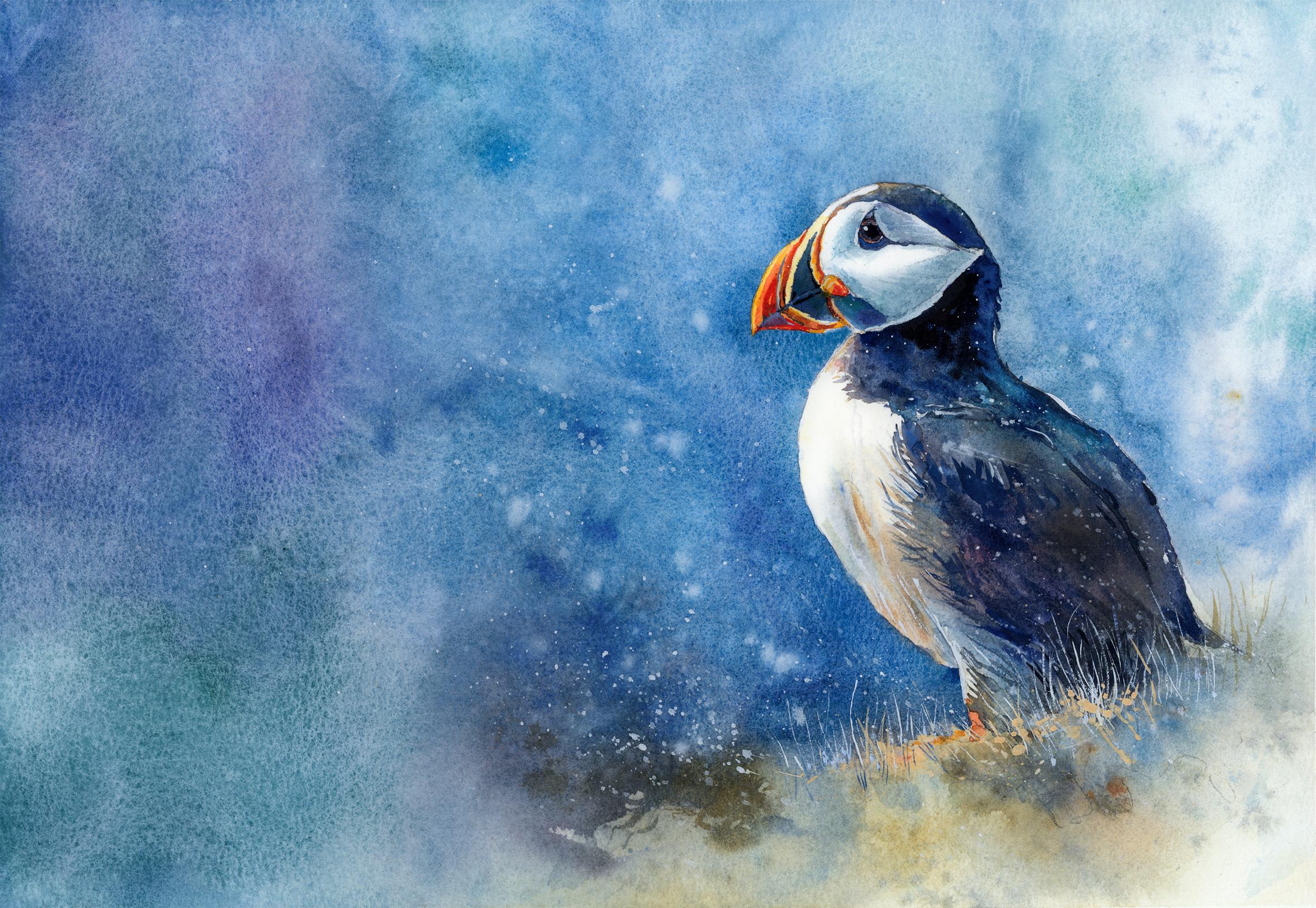
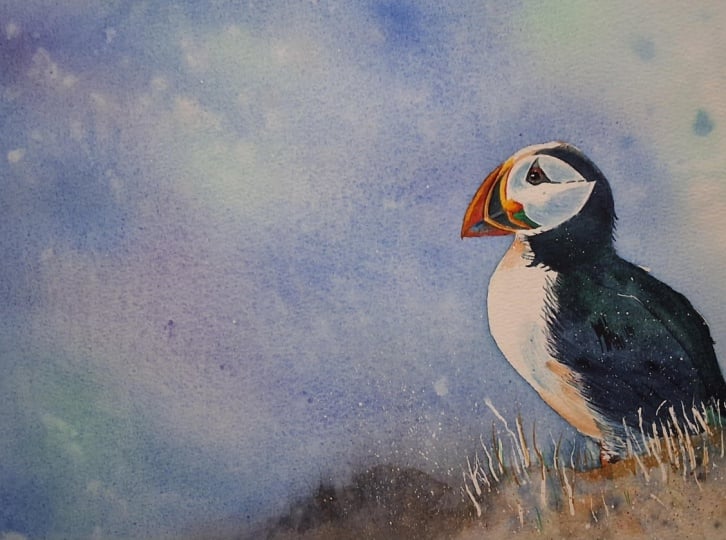
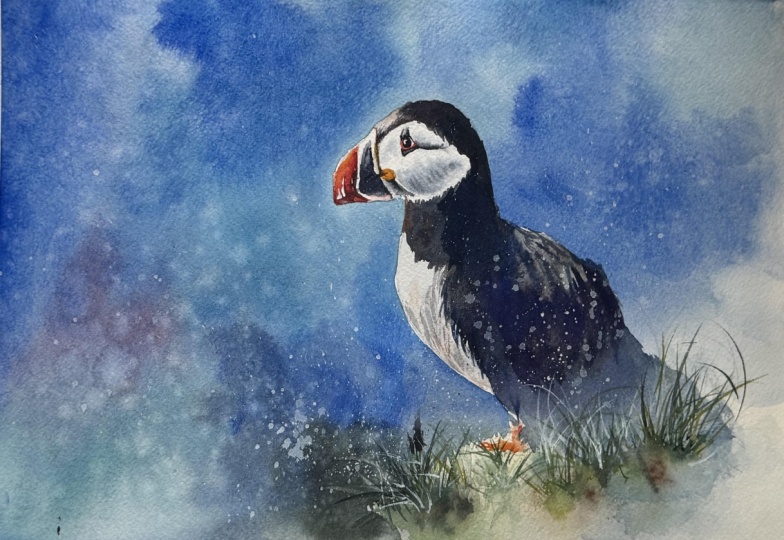
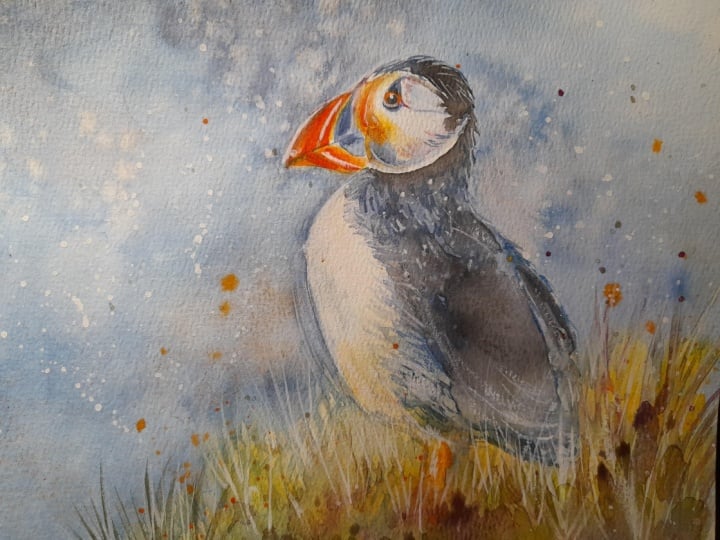
name is Will Elliston. And today, we're
painting a puffin with an expressive and
atmospheric touch. This subjects a real joy to paint with bold tonal
shapes for the bird, lively textures in the plumage, and a soft ethereal
backdrop that lets negative space do
some of the storytelling. Will balance decisive
accents like the eye or the beak edges with drifting
color and misty merges, keeping the
composition spacious, so the puffin feels
luminous against the air. Think character over detail, presence over perfection, and plenty of breathing
room around the form. I've been a professional
artist for many years, exploring lots of different
subjects from wildlife and portraits to cityscapes
and countryside scenes. I've always been entranced by the possibilities
of watercolour. But when I started,
I had no idea where to begin or
how to improve. I didn't know what
supplies I needed, how to create the
effects I wanted, or which colors to mix. Now I've taken part in many
worldwide exhibitions, been featured in magazines, and been lucky enough
to win awards from well respected
organizations such as the International
Watercolor Society, the Masters of
Watercolor Alliance, Windsor and Newton, and the SAA. Watercolor can be overwhelming
for those starting out, which is why my goal
is to help you feel relaxed and enjoy this medium
in a step by step manner. Today, I'll be guiding you
through a complete painting, demonstrating a
variety of techniques, and explaining how I use all
my supplies and materials. Whether you're just starting out or already have some experience, you'll be able to
follow along at your own pace and improve
your watercolor skills. If this class is too challenging
or too easy for you, I have a variety of classes available at different
skill levels. I like to start off with a free expressive
approach with no fear of making mistakes as we create exciting textures
for the underlayer. As the painting progresses, we'll add more details to bring it to life and
make it stand out. I strive to simplify
complex subjects into easier shapes that
encourage playfulness. Throughout this class, I'll be sharing plenty
of tips and tricks. I'll show you how to turn
mistakes into opportunities, taking the stress out of
painting in order to have fun. I'll also provide you with
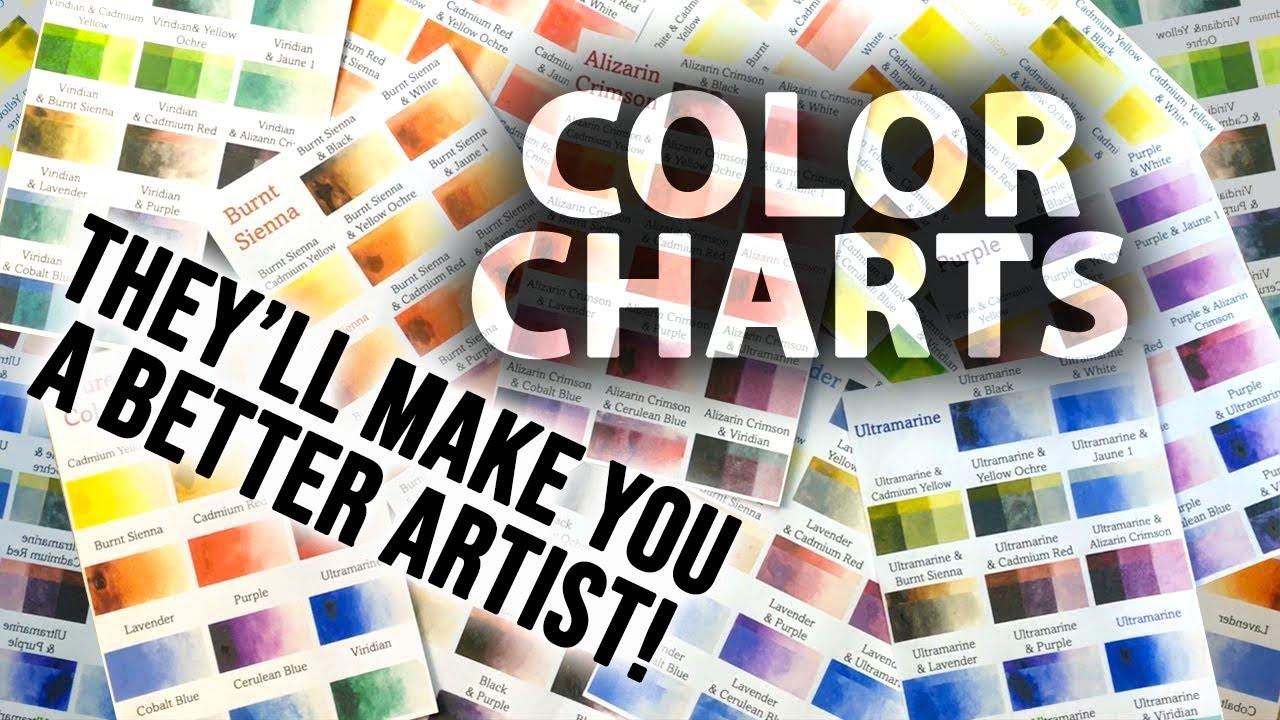
my watercolor mixing charts, which are an invaluable tool when it comes to choosing
and mixing colors. If you have any questions, you can post them in the
discussion thread down below. I'll be sure to read and
respond to everything you post. Don't forget to follow me on Skillshare by clicking the
Follow button at the top. This means you'll be the
first to know when I launch a new class
or post giveaways. You can also follow me on Instagram at Will Elliston
to see my latest works. So let's get started with
this painting and bring this coastal bird to life with
color, tone, and texture.
2. Your Project: Thank you so much for
joining me today. Our aim with this painting
is a puffin that is solid and calm within a background that
is airy and poetic. Focus on a clear value design. Then let subtle warm cool shifts suggest depth without fuss. Keep the background
loose and atmospheric, allowing soft blooms, splatter, and gentle lifting to create
sea mist and distance. Use negative space to carve
the silhouettes and let grasses or shoreline textures appear where marks
naturally gather. This is a relaxed
expressive painting that celebrates tone, texture, and the elegance
of leaving things unsaid. In the resource section, I've added a high
resolution image of my finished painting
to help guide you. You're welcome to
follow my painting exactly or experiment with
your own composition. As we're going to be focusing on the painting aspect
of watercolor, I've provided templates
you can use to help transfer or trace the
sketch before you paint. It's fine to trace when using it as a guide for
learning how to paint. It's important to
have the underdrawing correct so that you can relax and have fun learning the
watercolor medium itself. Whichever direction
you take this class, it would be great
to see your results and the paintings you
create through it. I love giving my
students feedback, so please take a photo
afterwards and share it in the student project gallery under the Project
and resource tab. I'm always intrigued to
see how many students have different approaches and how they progress with each class. I'd love to hear
about your process and what you learned
along the way, or if you had any difficulties. I strongly recommend
that you take a look at each other's work in the
student project gallery. It's so inspiring to see
each other's work and extremely comforting to get the support of your
fellow students. So don't forget to like and
comment on each other's work.
3. Materials & Supplies: Before we get started
with the painting, let's go over all the materials and supplies you'll
need to follow along. Having the right materials can greatly impact the
outcome of your artwork. So I'll go over all the supplies I use for
this class and beyond. They're very useful to have at your disposal and will make it easier for you
to follow along. Let's start with the
paints themselves. And like most of the materials
we'll be using today, it's a lot to do
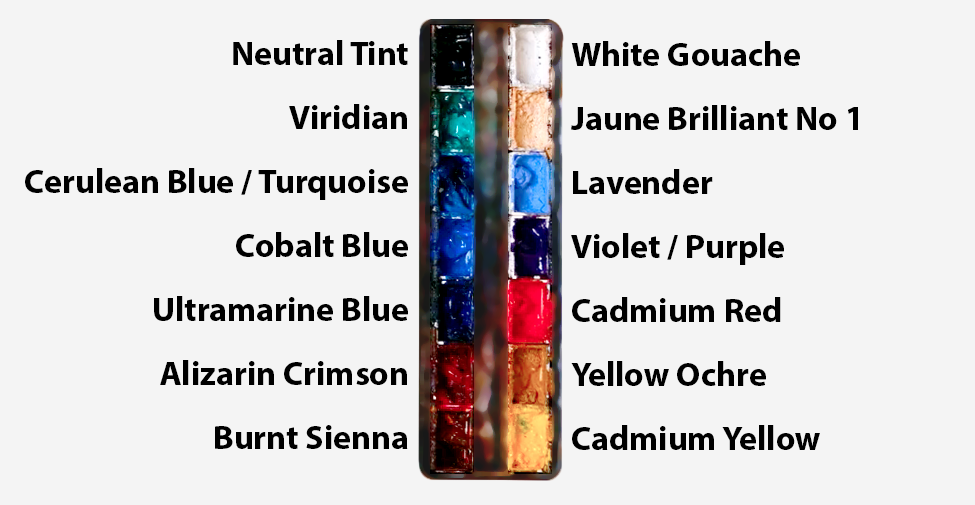
with preference. I have 12 stable colours in my palette that I
fill up from tubes. They are cadmium
yellow, yellow ochre, burnt sienna, cadmium
red, alizarin crimson, Otramarne blue, cobalt blue,
serlean blue, lavender, purple, viridian, black, and
at the end of the painting, I often use white gouache
for tiny highlights. I don't use any
particular brand, these colors you can
get from any brand, although I personally
use Daniel Smith, Windsor and Newton
or Holbein paints. So let's move on to brushes. The brush I use the most is
a synthetic round brush like this Escoda Purl brush
or this Van Gogh brush. They're very versatile because
not only can you use them for detailed work
with their fine tip, but as they can hold
a lot of water, they are good for
washers as well. They're also quite affordable, so I have quite a few
in different sizes. Next are the mop brushes. Mop brushes are good for
broad brush strokes, filling in large areas and creating smooth
transitions or washes. They also have a nice tip that can be used for smaller details. But for really small details, highlights or anything
that needs more precision, I use a synthetic
size zero brush. All brands have them,
and they're super cheap. Another useful brush to have is a Chinese calligraphy brush. They tend to have long bristles
and a very pointy tip. They're perfect
for adding texture or creating dynamic
lines in your paintings. You can even fan them
out like this to achieve fur or feather
textures as well. And that's it for
brushes. Onto paper. The better quality
of your paper, the easier it will be to paint. Cheap paper criinkles easily
and is very unforgiving, not allowing you to
rework mistakes. It's harder to create
appealing effects and apply useful techniques
like rubbing away pigment. Good quality paper, however, such as cotton based paper, not only allows you to rework
mistakes multiple times, but because the pigment
reacts much better on it, the chances of
mistakes are a lot lower and you'll be more likely to create
better paintings. I use archers paper because that's what's available
in my local art shop. A water spray is
absolutely essential. By using this, it
gives you more time to paint the areas you
want before it dries. It also allows you to
reactivate the paint if you want to add a smooth
line or remove some paint. I also have an old rag or t shirt which I use
to clean my brush. Cleaning off the paint
before dipping it in the water will make the
water last a lot longer. It's always useful to
have a tissue at hand whilst painting to
lift off excess paint. Also, you never know when an unwanted splash or drip might occur that needs
wiping away quickly. I also have a water dropper
to keep the paints wet. When you paint, it's
important to have them a similar consistency to what
they're like in the tubes. This way, it's easier to
pick up sufficient pigment. A hair dryer is useful
to have for speeding up the drying time and controlling the
dampness of the paper. And lastly, masking tape. And this, of course, is just to hold the paper down still onto the surface to stop it sliding
around whilst painting. Also, if you plan on
painting to the edge, it'll allow you to create a
very crisp, clean border. And that's everything
you need to follow along in this painting. Of course, experiment with whatever tools and
supplies you want to, but let's start the drawing now.
4. Preparing The Composition: So you're welcome
to experiment with your composition
whichever way you'd like. I always like to paint
my subjects off center, never directly in the middle. Sometimes I like to
play around with that symmetrical element,
but at the moment, I'm keeping it to the
side and I'm blocking it out with very loose
gesturial lines, not defining, I think, just getting a
spatial awareness, a bit like sculpting clay. It's all a bit
abstract at the moment and I'm refining it bit by bit. Then I might have to rub bits away now with a putty rubber. Just like in sculpture, take bits of clay away
and maybe add bits on. So I'm thinking in terms
of space and volume, even though it's a flat surface, I'm thinking about
the relationships between some areas to the other, some lines of rhythm. And now I've swapped over
to a finer lead pencil to help achieve a bit more
of that definition. But even now, this is not the final pencil that I'll
be working with because I'm going to use a pencil to rub
away again and make it much lighter because I don't want all these pencil lines
coming through the painting. This I'm just using
it to map it all out. And then once it's
all mapped out, I can take the rubber again, soften it out, maybe highlight. So we go over a few phases going back and forth until
it feels completely right. We don't ever do it in one go. Only the true masters through years and years of
experience can do that, and even then they
can have off days. So expect to go back and forth.
5. Starting The Underlayer: Now, once you're happy with
your drawing and have used the tracing templates to position the puffin
where you'd like it, I'm going to start off
by painting the kind of ground area because the grasses
are actually quite light. So we're going to have
a dark background, but that land area where
the puffin is standing, I want it to be light
at the background, so we're going to have to
kind of negative paint around that area. And I want it to be nice and
soft with its transitions. So we're going to do wet on wet. And by wetting the
paper ti begin, it allows us to have fun
with the expression, and we can pace ourselves a bit better because if we went
direct in with the paint, it would be too
much high pressure. It's unnecessary. The good
thing about watercolor is, we can wet the whole
area that we're working on and just drop
in the pigment bit by bit. So I've mixed some serleian
blue in the top my palette, and then Yellow
Ochre halfway down. And then I'm kind of meeting
in the middle there to make this lovely natural
looking green. I prefer mixing my greens
than using the Viridian. I still have Viridian
green in my palette, but I only use that for
certain situations, not necessarily creating this ground realistic
green color. So it's starting
off nice and light. And you can see how I'm agitating the pigment into
the area that it's wet. But the area that I
wet on the paper, it actually goes much further than the area
I plan to paint. And that's because
I want to make it completely fade to white,
the white of the paper. So I have to compensate
for that and make sure I wet the whole of the area well beyond the
area we intend to paint. So at the moment,
it's that green, that kind of muted green. It's not a vibrant green, and I'm dropping in
that Yellow Ochre. Now I'm dropping in more of it with a
thicker consistency. I've chosen Yellow Ochre
instead of Cadmium Yellow to start off with because it has this golden
kind of glow to it. Yellow Ochre is a pure yellow, but Yellow Ochre has this kind of I think it's got more warmth to it because
it's slightly closer to red, just a tad closer to red, so it has a bit
more warmth to it. Now I'm dropping that serlan
blue straight into it, and all these colors
are mingling together. So we made that green using
serle blue and Yellow Ochre, but we're also mixing them
by themselves on the paper. Now I've got some burnt sienna, and I'm being very
careful with this. I'm not agitating it, using the tip of my
brush to drop it in. You can see I'm using
quite a large brush. I haven't felt the need
to change my brush yet. It's still the same brush
from the beginning.
6. Building The Tones: For the time being, I'm continuing to use
that larger brush. But it really doesn't matter. You can use a small
brush to do this. I just happened to use that
brush to wet the paper, and it didn't cross
my mind to change it. We're not doing
anything detailed, so it's fine to use
a larger brush. If that's what you want to
use, it saves a bit of time. But if you feel like a small brush gives
you more control, you're more comfortable with it. That's absolutely
no problem as well. Although it can be
a good exercise to use a larger brush that
you're comfortable with because it trains you to be a bit more confident
with your strokes. It may not end up with a
painting that you're happy with, but it really does train your arm to think about
what you're doing in a more conscious way that will inevitably make you paint in a more intuitive
way, ironically. By forcing yourself to think
about things more carefully, your brain is actually
becoming more intuitive. So now I'm starting to
mix some darker colors. This is ultramarine, but I'm still using that Yellow
Ochre to make it green. But we're going the next
tone down now, much darker, as you can see, and
we're going to drop that into the paper
that's still wet. And let me point out that that top bit of
this area that I'm painting now has that
glow, that Yellow Ochre. And I've kept that area
Yellow Ochre because that's where I want the kind of grass or the straw or the
little twigs poking up. I don't want that to be
blue or green because we're going to be using blue
or green for the background. So I need to make it
a different color. Maybe it's a nest or something, just to create that contrast. So it's not all going
to be blue and green. We need some subtle
differences of color. And I'm dropping
this straight in. You can see now I have
changed my brush, and this is a nice soft brush, but again, there's no particular reason
I've chosen this brush. Happened to use it, pick it up to mix this color. And I start off by dropping it into a few
different sections, and then I agitate
it a bit by bit so that it blends nicely
into that wet on wet paper. Flicking it a bit.
You can flick it with a bit of pure water or a
bit of diluted pigment. Just something to create some nice expressive
mark making. This is where we can have fun, not being direct
painting details, but really trying to create that ethereal magic that
watercolor has to offer, influencing the watercolor
in an interesting way, manipulating it rather than
painting so specifically.
7. The White Feathers: So now the paper is
starting to dry bit by bit, and I've created some textures that I'm quite happy
with at the bottom. And whilst we're waiting
for it to dry a bit more, we can move on to
the next stage, which is pre wetting the
little breast area of the puffin and adding a few wet on wet
strokes there, too. So this will be the area of the bird where it's
white feathers. So there's going to
be a high contrast a hard edge as well, between the edge of this
bird and the background, which will be nice and striking. But I'm adding a
few subtle tones into the white feathers right now to convey a sense of form or subtle shading in shadows because I don't want it to
be just a flat white color. Even where the bird
has white feathers, there's still going
to be some shades in the slight different undulations of the body with the feathers. And I'm using a nice blue, which it's so light, it
doesn't matter what blue. It can be serlean blue, cobot blue, ultramarine blue,
whatever blue you have. You can see it's not
very dark at all. And then I'm mixing
that yellow ochre, maybe a bit of burnt sienna with the yellow ochre as well. And I start off with a few strokes using the
tiff of my brush, so they're not very thick
strokes. They're quite thin. But then I surge some
water in there to kind of spread them out because I think they're
a bit too strong. Agitating them a bit. I don't want them
to be too clean. I don't want to create areas where the viewer can look
at the painting and be Oh, that's where he was fiddling
around and messing around. I want it to look quite natural. So if you find you're adding
too much pigment here, you can use a tissue
to blot it out again. And that doesn't go
just for this area. If you ever find
yourself in a painting, you've put too
much pigment down, you can use a tissue to
just dab it back out again, or you can even create
a thirsty brush by completely
cleaning your brush and then just squeezing
the water out, using the tip of your
fingers or I have a sponge, as you can see in the
top above my palette, where I can make my brush like a straw
that sucks out pigment. So it's almost like an eraser. So we use the brush
to add pigment, but also take away. That's how we control the
back and forth of pigment. Notice that just then I added
a touch of cadmium yellow, just right on the edge
at the top there. That's to give it
a little bit of a glow, very subtle glow. I'm even using a tissue
to dab it back out again. It's barely visible,
but it does have this influence that it goes
beyond conscious recognition, but that subtle warmth
does do something. Now I'm mixing
another dark color. This is a kind of
gray color now. So blue and burnt sienna, which I've just mixed there,
they neutralize each other. And in the middle of
those two colors is gray. So if you want a warm gray, you can nudge it
towards burnt sienna. And if you want a cool gray, you can nudge it more
towards blue ultramarine. So now that it started to dry, the lines that I'm painting now will hold their
shape a bit more. So I'm adding a few lines to indicate the little
feather textures.
8. Starting The Background: Now we've completed the first
phase of this painting, and that's the underlayer. So all the light bits
have been painted now. We might paint the underlayer
for the head later on, but that's okay because that's
within the bird itself. Everything else is connected
to the background. So once you're happy
with the underlayer, it's time to paint
the background, which is what we're doing now. I'm starting off with pure
water again just to help me. Because I can see where the
light reflects on that water, and I can take it right
to the edge of this bird. So again, once we add pigment, the pigment can
run to that edge, and we're not rushed. Because if I was working
with pigment now, the edges would already be
starting to dry in some cases, and it won't look like one
solid background mass. It would be a bit disconnected. So I use the pure water
just to help fill in the areas with no
pressure because if for any reason I wanted
to stop painting right now and do something
else or take a break, I could do that fine, and it won't affect the painting because it's just pure water. But if I start with the pigment, then I'm committed to
finish it all in one go. So when it comes to the bottom where it connects with the land, I go just to the point where the paint starts coming
in because that'll take a bit of messing around with later to get a nice soft blend. So I'm not reactivating
the paint that we've already painted on the ground. So I'm starting off with
a nice serlean blue, maybe a tad of
turquoise in there. Then above that, I've
got cobalt blue, which has got lovely
granulation in there. The pigment is quite
thick in there. And then, of course, ultramarine blue, which is a very dark blue when
it's concentrated. And then this is where I
can bring in the Viridian. It's a lovely color,
a lovely hue, and it creates some turquoise that I like for the background. So it's not a specific object. It's just an excuse to add
a lovely color in there. So this is a good
example of how you don't need to be strict with
any particular pigment. I'm experimenting with all
my different color blues, and there's no limit. You might have a different
pigment blue to me, and that really doesn't matter. So now I'm starting to fill out this whole area with a very
mid tone blue starting off with I'm taking water straight from my container
to help me fill it out. And then I can take
paint straight from my palette onto the paper. Not even using my
pans that I premixed, going straight from the
pigment to the paper. Because I don't want it to
be a solid blue background. I want there to be a nice range of color and texture and tone. So we started off
with that blue. But now we're incorporating
some Viridian in this bottom corner here or maybe in the top
corner over there. And gradually we're
building up the tone. Getting closer to the puffin. And because like I said,
we pre wetted the paper. We don't have to be worried
about any hard edges. You can already see how some of the paint on the left hand
side that I haven't touched, the granulation and the
pigments are starting to sink into the texture of the paper because this is
a very textured paper. It's not rough. It's
kind of mid textured. So that's how we
see the texture of the pigments intermingle
with each other. Now, I'm being careful to
paint up to the border here.
9. Adding More Pigment: Now I just took a bit of black. Just as a shortcut, I could
have mixed my own gray, but that's why I have
black on my palette as a kind of shortcut
when I'm in areas like this where I don't have enough time to mix
neutral colors and complimentary colors to
make a nice organic gray. I can just use a shortcut
and use my black there. I've also switched
to a smaller brush because we've filled
in a lot of the areas, and now I need to be
a bit more refined on this edge. I don't
want to paint over. And I'm connecting
it to the wet wash. But we started painting before. I haven't put my large
brush away, though. I've just put it off to the side for the
time being because I'm still going
to add a lot more pigment to the background. I'm just doing it bit by bit. We don't need to overwhm ourself with lots of heavy
pigment straightaway, starting to integrate a bit of purple or violet
in there, too. Mixing it with the blue. But even now, because it's
so wet, using a small brush, it'll still create smooth edges because the wetness
of the paper is such that the pigment and the granules inside
the pigment are just going to blend out
and even themselves out. It also helps that I'm using a cotton based paper because if it wasn't
cotton based paper, there'd be a lot more wrinkles and unevenness and there'll be pools of water that cause
unevenness when it dries. And because there's
valleys and hills, so to speak, in the paper,
it'll dry unevenly. You can already see that there
are buckles in my paper, but for some reason, cotton based paper
is so generous, so forgiving that
even with buckles, it does tend to dry out much more evenly than if it
wasn't cotton based paper. I'd really struggle to achieve the same result on a cheaper paper that
isn't cotton based. Now you can see at
the puffins feet, even though we haven't
defined the feet yet in that lower section
where it meets the ground, there's a much bigger
contrast there. We wanted to be a
lot darker there. I'm using the TIF my brush to kind of generally
imply where the feet are. We can do a bit more detailing
later, but even still, we don't want it to be super
realistic, super detailed. Flicking some of that blue in. So now that we're
building up that tone, we can start thinking
about texture a bit more because I don't actually want it to
be a flat background. I want it to have a
nice range of texture, but I want to choose what
kind of texture there is. I want to manipulate
it in the way that I want it done rather than uncontrolled chaos where
it's stil creating texture, but not in the way
I want it to be. I want the texture to
be where I place it, so I'm still having fun, but I can't go completely
off the rails. I know that this bottom
section needs more tone, and then as it fades out to
the edges, it can go lighter. And I want this corner
to be a bit greener. And then the top
left hand corner slightly more purple,
as you can see that. Flick a few splats
where it's wet there.
10. Creating Texture: Now I'm going to allow the
main part of this wash to dry a bit so that we can have a bit more control
with the texture later on. So in the meantime, I'm
going to go down to where this wash meets
the ground and try to incorporate it in
a more natural way because some of it has got a soft transition on
the left hand side, and at the moment, a lot of it's just that hard edge where the
blue meets the underlayer. So I'm going to have to figure out how to integrate
it a bit more. In a way that's convincing
but not overly detailed. So I'm taking some Yellow
Ochre and mixing that with the ultramarine and I'm just dropping that in to
the wash that we just did. Now I'm using the tip
of my brush to add some swirly little fine
lines that connect it connect the wash to
a more textured ground. So it's almost like
roots. They're not roots. That's just kind
of a metaphor to connect the wash into this different section so
that it's not isolated. Then I used pure
water to soften up a few areas so that we've got some hard edges,
some soft transitions. Using a bit of muted purple or muted blue to blend that
green into the background. So it is that green transitions into the
blue of the background. And now I can start messing with some texture up
here, a few drops. It's still quite wet. And you can see
there's a few pools where the buckles in the water. So I'm just agitating the
water that's sunk into those pools and starting to
spread them out a bit more. I don't mind if
there's texture in the background just in front of the puffin because it kind of adds this atmosphere
to the background. It adds a feeling
of depth, weather, like a wintry weather in the
habitat of puffins where there's possible water
spray from the waves. Adding a bit more green on
this side, this top corner. But at least now
you can see that we've got a strong
silhouette for the puffin. It's a very iconic shape, and that's the kind of
motif for the painting. So we can kind of almost be as messy as we want
for the background, but as long as that silhouette, that negative painted
silhouette of the puffin is a clear read
and is understandable, we can get away with a lot because that's the
main focal point. I'm using a hungry
brush, a thirsty brush, rather to take away some
pigment on the middle there. It's hard to see on the camera, but there's a lot of there's
a pool of water there, which will create uneven drying. So I'm trying to make
all the areas quite even now so that it
dries quite uneven. But it also creates this
interesting texture.
11. Adding Splats: Now the paper is halfway dry. Of course, it's still very wet, but it's not sodden and
shimmering like it was before. And it's at the
perfect stage now to apply some splats because
this pure water that I'm splatting on now will push away the pigment that's already on the paper and
has already settled, I'll reawaken where the
splats are and create this feeling of sea mist or splashes of water or
atmosphere in the air. It conveys a feeling of depth. It makes it look
a bit more fred. And to put it even further, I'm taking a very
diluted white gouache and adding that on there, too. It is very diluted, but because it's whitewash, it looks much stronger
than it actually is. You'll see that
once this is dried, it won't look so white. I'll look quite faint
and almost transparent. Of course, right now it
looks very opaic and bold, but as it blends out and dries out, it'll
be much lighter. It'll look more like
atmosphere than white flats. Be careful with
the slats that you don't dirty the edge
of the puffin outline. So now it's pretty much dry now, and I'm adding a
few smaller slats now to increase that
feeling of depth. So the smaller splats add this kind of
illusion of detail, of clarity and the more
blended out splats look more like
they're out of focus. So if you imagine a
camera that focuses on one section and then blurs out as it goes
into the distance, it kind of is on the same
level as the puffin. So it brings the eye and
focus to the puffin area.
12. The Head Underlayer: So we've had a bit
of fun creating that texture in the background, and now we can start working
on the puffin itself. And I'm starting to define the shadows around the face where the white
feathers will be, pre wetting the paper
first and then using the bluish green color that we've got on the
palette already. Wet on wet technique. So painting around the edge at the bottom and
this little curve next to the eye to create that illusion
of form and volume. Because we got to remember
that we'll be coming back with almost pure black. Of course, a puffin does
have black feathers, but I'm not going to
actually use pure black. I'm going to use
a very dark blue, dark purple to make
it more interesting. But because we're going to use such a dark color
and tone later on, we've got to
compensate for that. So this blue green color
that we're adding in now might look quite
dark right now. But when we bear in mind that we're adding
that dark tone later, it'll make a bit more sense. It won't look so blue. I'll look closer to white. So I'm just dropping
that pigment in. And if the pigment
blends out too much, I can use the tissue
just to blot it off or I can clean my brush and suck out some
where it's over spilt. It's basically just two tones. We've got the white
of the paper and then this light tone on top, and it's just a soft transition
between those two tones. You can see on the
left, we have white, and then underneath the eye, we've got this kind
of sideways triangle. I'm just using a tissue to define it a bit more
and soften it out. And we want to do
this before it dries because a lot of blue
pigments stain the paper. Then adding a bit
more pigment down at the bottom to accentuate
that feeling of curvature. If you see or imagine the
light coming from above, the light will be reflecting on that angle below the
eye where it's white. Then as it curves
away from the light, it won't reflect that light
anymore, so it's darker. Okay. This can be quite a
fiddly area of the painting, but it's the only
area really that has these soft transitions
that we need to be careful about because the rest of it
are basically solid shapes, painting in shapes
rather than tone. So apart from this, a lot of it is just like
painting in numbers, filling in the gaps. Following that horizontal
line is a hard line, actually, the corner of the eye that goes to
the back of the head. There's a hard line
there's not a softer one. So, of course, to
achieve that hard line, the paper needs to be dry
in that section alone. So I use a tissue to dry that area whilst the
rest of it still wet. A little bit of shading
underneath the eye there. And now, when you're
happy with it, you can dry it off completely
with a hair dryer.
13. Starting The Beak: So the exciting
thing about painting puffins is the
contrast in color. So we have blues in there. But now we're going to start integrating the
complimentary color of blue, which is orange, which is a nice vibrant orange
we're going to use. So I start off using the tip of my brush just to paint a
little ring around the eye. And that's all we need for
the time being in that area. We'll come back to
the eye later on. Now using a pure cabium yellow. Agitate that in the palette so it's nice and mixed
into my brush. I don't need to use the
rest of my palette. Straight from the
pan to the paper. And this is pure cabo
yellow, painting that edge, not agitating the
blue next to it, so that we've still
got that hard edge on the line on the
silhouette of the beak. And now we can soften that
yellow into the beak. Maybe bring it up a bit more. This is the basis
for our orange. I'm using this yellow to
help boost the vibrancy of the orange because
notice I don't actually have orange in my palette. I'm going to mix it myself using the yellow and red,
the cambien red. The red is very potent, so I need to be careful starting
off with this thin line, then dropping it in bit by bit. I have a tissue in my hand ready to dab it out if
it's too strong. Then starting off with a line in this section and then filling out from that line
going over the yellow, just a bit by bit each time. I'm going to clean this
pan and my palette because it's blue,
and of course, I don't want my orange
section to be grayed out. I'm cleaning that area, so it's ready to mix
a nice bright orange. Starting off of that
cadmium yellow, then taking a tiny little dab and even that tiny dab,
look how strong it is. It turns that yellow
straight into red. So now I need to add
more cadmium yellow. And now it's a nice
bright orange. I'm allowing a little
thin bit of yellow in between this orange and the
outline where the blue is. It's hard to see, but I'm not taking this orange
to the very edge. Then I use that sponge. If there's too much liquid on my brush or too much orange, I just brush my brush on the sponge so that I can spread the orange out
rather than add more red. It's a bit darker at the bottom, and then it goes a bit
lighter at the top. Now underneath the bottom beak, taking that orange again. You can see we've
already had that light yellow underlayer
on the beak. Now we can just go on top of the orange and
the little bits that we leave have that yellow
background remaining. We're not adding, of course,
the yellow afterwards. We're already
putting it there in the beginning and painting
around that yellow.
14. Finishing The Beak: So we break everything down in this painting into
different shapes. So, of course, we're
looking at the beak now, and we're separating the beak into different shapes
in and of itself. And we simplify these
shapes from the reality. So you can collect many different
references of puffins like I did to see
the general shape, and then I'm kind
of summarizing it. So it's kind of like
a orange arrow tip, and then you've got a
yellow tip next to it. And now inside that yellow, there's a bit of
a kind of bluish arrow shape inside that. I'm using the tip
of my brush again to paint the outline of this arrow and then
filling it in, leaving a kind of yellow border in between this blue shape. So when it comes to translating a photo or anything that you see, it doesn't
have to be a photo. It could be a real life subject. When you see little details
like this yellow strip, when it comes to watercolor, specifically, you got to see that as an underlayer
because it's lighter. Anything that's lighter
has to be an underlayer. With oil painting or acrylic, we could paint
that yellow on top of a dark paint because
it's very opaque. But with watercolor,
if it's lighter, we've got to figure out a way
to do the underlayer first. Now that that orange
is pretty much dried, I'm going to go back
with a much stronger red just to accentuate
the darker areas. Let's see, it's still red,
but it's a lot darker. Using the tip, my brush. It's barely
perceivable, actually. I just create a little
bit of shading. Once you've broken
down the shape, you can start thinking
about the form. Now we can go back to the blue because on the other side of the beak where it's
attached to the head. There's this kind
of blue section where the dark feathers connect. But instead of using
black, I'm using blue. There's no harm in using black. It'll be interesting to see if the results would look
different that way, or how they'll look different. Now I'm taking this lavender
that I have my palette. It's slightly opaq I'm just using that on top of this
orange because it's opaic, it's not going to kind
of double on top of each other and make
it extra dark. It's going to keep
its lightness a bit. I'm going to use a bit of
white here just to follow that where the two beaks
meet in the middle, adding a little white line there just to bring back some of
the highlights that I lost. As it blends into
the blue a bit.
15. Painting The Eye: Now we can go back
and finish the eye, and I'm using a small brush, but not the smallest
brush you can get. It still has a very fine tip, and I'm using that
dark ultramarine. So when concentrated, it almost looks like black.
You can see how dark it is. And I'm just painting inside of that orange circle that
we painted before. You can barely see the orange
circle now. That's okay. Then underneath.
Extending it a bit. Carefully using the tip my brush because it's not a
perfect circle, actually. It's more like angle,
a curvy triangle. I'm trying to see
the shapes again, and it's not necessarily something I think of
in words in my mind. I'm not thinking it's
a curvy triangle, but I'm just seeing the
relationship of the shape, how the lines bend, then I can add a bit more
pigment into the center here. Make a clear division between the top beak and
the bottom beak. And you can see how punchy this orange is when
contrast to the blue now. It's actually almost
red and yellow, but because they're
so close together, they kind of work as orange. Now I can start
drawing this blue out. Agitating it a little bit. I'm going to drop in a
little bit of black right in the center here
whilst it's wet so that this black kind
of softly fills out. Then again, using
the tip of my brush, adding a very fine line
following it to the corner. Then I think we can add
a few feather textures, cleaning the brush now because the shading around
the eye is dried, we can just agitate that line
a bit so it's not so clean, little bit more natural and irregular stroking some
possible feather textures, blending it from the top down.
16. The Main Body Wash: Now starting from the top down, we're going to start painting the main body of the puffin. And I like to keep, of course, my washes as interesting
as they can be, so I'm not going
to make it a flat, dark blue or black. I'm going to create a nice
transition at the top here. So I'm following that
orange line from the beak and bringing that kind of muted orange.
It's like a brown. You can see I've mixed in
my palette burnt sienna with the green that
was there before. It's not green on
the painting itself, but it helped mute
down the orange a bit. And now we can start dropping
in that dark pigment, it can be blue, can
be green as well. Doesn't really matter
because it's more the tone that's important
than the exact color. If you see in your mind's eye, if you change this
color to any color, whether it's red, green, blue, purple, as long as the tone
is the same, it makes sense. So that brown has transitioned
to a dark blue now. And we're filling out that
area close to the pencil line. When I load my brush, I'm not just thinking about how much paint I need for
that single brush stroke. I'm thinking about the whole
area that I intend to paint. So I usually add
more paint than I need when applying the strokes because I'm going to spread out the whole of
the pigment away, so it can initially
look too dark, but I know that I can go back and use the paint
that's already on my paper rather than having
to go back and forth to my palette every
single brushstroke. So you can see now
that I'm first of all, painting the edge where
the pencil line is, and then I go back in with more water to spread
the middle areas, the actual mass of the shape
that I'm trying to paint. I know that the neck
area is going to be so dark that I can almost
use this as a check mark. So I'm actually
going back to finish the eye with the highlights
using a tiny little dot, as you can see in that darkness just creates
the illusion of an eye, the kind of reflective
surface of an eye. That's all it takes
from a black mass, that single dot, just adds
that extra bit of life to it. And now we can go
back to the neck because we know we can create
that seamless transition. I allow this white little strip where the head meets
the top of the neck. Rather than take black
from my palette, I can see there's a brown there, so I'm mixing blue on top of
that brown to make a kind of muted blue because I
don't want it to be a vibrant blue because puffins
aren't completely vibrant. In fact, this area is black. So I'm just using blue to
make it a bit more exciting. Using my artistic license. But don't be afraid
of getting bold with your paints and getting very dark and thick
with the pigment. It relies on that high contrast, that light feathered area to the dark feathered area. A
17. Adding a Range of Colors: When painting this area, this section, we can take
breaks because like I said, it's dark pigment, so it's easy to have checkpoints and come
back to it or take our time. It doesn't need to
be a soft transition because it's so
easy to activate, the more pigment there is, the easier it is to reactivate. If we're painting mid
tones or light tones like that gradual area around
the eye and the face, that's a bit harder
to reactivate because we're using the
white of the paper. But these areas where
we're using thick pigment, we have a bit more
freedom, actually. Incorporating a bold
purple in there, not because I see that
in my references, but because I'm using my artistic license and
having a bit of fun. We have a bit of purple
in the background, a subtle bit in the background. So this kind of mirrors that. It makes it so that it's not a flat wash. And
now I'm even mixing a bit of brown here and just dabbing that at the
top where the blue is. It's understandable for people
starting out in watercolor to be hesitant to use such bold colors
because like myself, when I started watercolor, I got a palette with paints
already in the pans dried up. So I wasn't aware of how
thick watercolor can be used. And the idea of pasting it on the paper was quite
intimidating. But ironically, it's an
easier way to paint, and using the full
spectrum of tones from a solid dark to the white of the paper really makes a
painting much more captivating. I just added a bit
of greenish brown, slightly more diluted than
the rest of the dark washes, just to create that
range of texture, Agrotating it with a more
diluted wash intermingles and moves the pigment
round in interesting ways. And then I'm using the
tip of my brush to connect it to the white
section of the bird. So you can connect areas using soft wet on
wet transitions. But you can also connect it by using sharper
textures like this. And what this brown does, not only does it also complement the blue and the purples, but it actually gives the blues more life because
if it was all blue, then it would actually look
a bit boring and stagnant. But creating that kind of dux position is what makes it a bit more
entertaining for the eyes. Then agitating that section there so we don't
have a hard edge. So it's got on a nice
soft transition. Notice on the leg where
it meets the ground, I have left it white
because we'll come back at a later moment to painting
the foot orange there. So I'm preserving the
white paper there. So you can mess around with so many different
colors as long as the tones are similar. As long as the tones match the reference that
you're painting, you can be more free
with colors than tones.
18. Feather Textures: So now that it had
more time to dry, we can go back in with darker
pigment to further refine the kind of modeling
the form of the bird where areas are a bit darker because
they're in the shade. And because it's
less wet on wet now, it's more damp on to damp. These shapes will
hold their form, but with a soft edge. So this looks, of course, very dark because it's black, but it's still a diluted black. It just black looks very dark when it's wetter
than it is when it's dry. I'm adding these strokes
where the feathers can be. And wet on wet is a good way to avoid having to paint
over described details. It's more elusive,
more ethereal. The eye understands what it is, but it's out of focus, much like a camera
can be out of focus. Timing is one of the most important things
to do with watercolor because most of the time you're not painting directly
the end result. You're painting into the future. So I'm adding these strokes
knowing that they'll look different in 5 minutes once the water has
interacted with them. And that comes down to
experience because you can follow this tutorial
exactly how I'm doing it, but maybe your paper
or the humidity in your room and environment or the temperature in your
environment is different, and it affects the drying time, and you just have to pick up this intuitive sense that's
automatic after time. It takes a bit of practice, and it doesn't take that much
to get an understanding. That's why it can feel overwhelming for beginners
because they're not expected to know how the water and the pigment reacts
with the drying times. But it will click for you
and inside that knowledge, you will be able to create whatever effect you
want to create. You'll be able to structure
your paintings a bit more. You'll know the process so that you'll be able to paint
your own subjects. You'll be able to create your own original
paintings because you can see in your references, wherever it's a photo
on real life where the soft shapes are or
where the hard edges are and the timing that you'll apply the paint to the paper
to achieve those marks. Watercolor in some ways, can be more forgiving
because it's expected to create
this ethereal feeling, this kind of spirit
in the painting that can only be achieved by watercolor because oils or
acrylics is very direct. Whatever the result is is due to your hand
and brush alone. Whereas with watercolor,
you're allowing the water and the
pigment to create things that feels magical because you're not directly
doing it yourself. You're just manipulating
the watercolor to do it. And that's the key, that's
the special ingredient that you can work out how to do through practice and experimentation and
happy accidents. 90% of the interesting
elements of my painting come from things that I didn't plan or intend to.
19. Painting The Foot: Now I'm going to
take that orange. I have my palette and clean
my brush to paint the leg, and it doesn't need to
be anatomically correct. The mind will understand
what we're trying to convey. Just filling in that white gap between the body
and the ground with a simple stroke of orange
conveys all we need to convey. Dabbing a bit of orange
at the bottom and using pure water to get it to
the tone that feels right. Maybe adding a bit down at the bottom for
where the foot could be. But it's purely suggestive. It's not meant to be
highly described. Now comes an important
part of the painting that can feel risky,
and that's splats. I like to add splats
because it again, adds to the feeling
of depth because the splats land on the
paper in different sizes, and it creates a
feeling of space, especially with a
subject like this where there could be
particles in the air, and it creates a
bit of definition. But the key really is to use a brush that has
very flexible hairs. If your brush is very stiff, the splats go everywhere and
it's impossible to control. But I found this brush. I think it's natural hair, or it's synthetic that
feels like natural. It's not a kind of
white bristled brush. It's very flexible and soft hair so that when you
flick the brush, the splats go where
you want them to go. And I'm just cleaning up
some of the splats now, some of the larger splats
that I don't want. So I create the kind
of organic feeling of splats and then edit out the ones that I don't
want there to be. And this is another
tool to get away with not having to
paint endless detail. And it adds that feeling of definition because
they're tiny little dots. I'm not doing big splats. I'm doing small splats. And just over the
feathers, not the head.
20. Connecting the Ground: Now I'm going to work on the transition from the ground to the background again and the ground to the
puffin as well. I'm using just a tip
of my brush just to add little strokes, possibly the strokes of grass, but they're not
defined at this stage. I'm just kind of it's almost
like blending them in, but rather using a large
brush to scrub and blend, I'm using lots of
tiny little strokes to grate a transition. So if you were to
squint your eyes, it would seem like
a nice transition, but actually it's very
thin individual lines. And you can use a whole
range of different colors. I'm basically using a mishmash of all
the colors that I've previously used just so that they don't
look out of place. And now I'm using
a large brush just to soften some
edges, agitate them. Notice how I've kept this ground area fading
to white in that corner. So that bottom right hand
corner is a pure white. And then adding a
few long grasses at the back of the tail here. Not too many. Some
of the fading into the background to imply
that the ground continues, but it fades off. So it's not just a halt. It's not just a sudden stop. Doing the same here, a few
larger pieces of grass. I'm painting the grass by
negatively painting, actually. I'm using the same
tone as the feathers. Because sometimes
it's easier to paint thin grass by painting either
side of it and leaving a tiny little gap
rather than going over with whitewash and
painting a thin line. But now I am going to
whitewash and I'm emphasizing some highlights or some
little punchy bits of light. Again, I'm not trying
to over define. I'm just trying to lead the eye having these sharp
little accents, just a few of them increase
that feeling of definition, again, without having to work to paint all
the definition. We're implying the
detail without going to lots of
effort to add it.
21. Light Grasses: And now the final stage
is to go over some of the darker areas
like this background and using the very
tip of my brush, trying to achieve the
thinnest stroke possible. The thinner, the
better, really. To add the feeling of grass,
flowing grass. And this again, helps connect the ground to the background. So before we were using dark strokes from the
background to the ground, and now we're using
light strokes from the ground up
to the background. So we're using the
other way around using light onto dark now rather
than dark onto light. And maybe you can practice your strokes on a separate piece of
paper to see how wet or dry you can get
this white gouache to achieve the thinnest
line because I promise you, if the strokes are too thick, it will ruin the
illusion of clarity. So it'll be worth 5 minutes just to practice achieving the
thinnest line you can get. And some of them
can criss cross. Some of them can be straight. Some of them can curve a bit. You can experiment with
a different range, and this is all helping you
practice your brush control and the agility of your arm
and wrist working together. I'm not holding the
brush at the very front. You can see I'm holding
it in the middle, because if you hold
it at the front, it can be a bit too
tight and less flowing. But if you hold it
closer to the back, you can kind of guide it
in a swooping motion, which is a bit more
even and natural. You can also experiment
with other colors. It doesn't have
to be pure white. You can use a bit of lavender. I have lavender, which
is basically white, with a bit of cobot
blue mixed in. So you don't have
to buy lavender. I just buy it as a shortcut, but it's basically white. We have blue added in. Or maybe you can use or mix in a bit of yellow
ochre into this white. It doesn't matter if it's on the dry side because that
can create a bit of texture. And likewise, it doesn't matter if some of the strokes
are on the wet side because then it
will be a bit more translucent and create
that feeling of depth. So you can keep on adding as much as you want
until it feels right. But this is the last
stage of the painting. So you don't want to go on top of this to correct the
puffin afterwards, at least in this section. This is opaic paint, so this will have to be the last area of the
painting that you try. And that's when you know that
the painting's finished. When you know adding anything more doesn't give
the painting more. When you know that anything more that you add actually takes away from the painting
rather than adds to it, that is the moment
to stop and reflect. And sometimes you can disconnect for a few hours or days and
come back with fresh eyes, and that usually
helps quite a lot.
22. Final Thoughts: Welcome back, and
congratulations for completing this watercolor
class on painting a puffin. We explored how a strong value
pattern carries likeness, how selective accents in the
eye and beak create focus, and how atmosphere blooms, soft merges, and splatter
sets a lyrical mood. Negative space helped shape
the bird while texture suggested feathers and coastal ground without
heavy description. Remember, watercolor painting is not just about technical skills, but also about expressing your creativity and
personal style. I encourage you to
continue exploring, experimenting and pushing
your boundaries to create your own unique
watercolor masterpieces. As we come to the
end of this class, I hope you feel
more confident and comfortable with your
watercolor painting abilities. Practice is key when it comes
to improving your skills, so keep on painting
and experimenting. I want to express my gratitude for each and every one of you. Your passion for
watercolor painting is so inspiring and I'm honored
to be your teacher. If you would like feedback on your painting, I'd
love to give it. So please share your painting in the student projects
gallery down below, and I'll be sure to respond. If you prefer, you can
share it on Instagram, tagging me at Will Elliston, as I would love to see it. Skillshare also loves
seeing my students work, so tag them as well
at Skillshare. After putting so
much effort into it, why not share your creation? If you have any questions
or comments about today's class or want any specific advice
related to watercolor, please reach out to me in
the discussion section. You can also let me know about any subject wildlife or scene you'd like me
to do a class on. If you found this class useful, I'd really appreciate
getting your feedback on it. Reading your reviews
fills my heart with joy and helps me create the best
experience for my students. Lastly, please click
the follow button Utop so you can follow
me on Skillshare. This means that you'll be
the first to know when I launch a new class
or post giveaways. I hope this encourages
you to trust tone and atmosphere as
your main storytellers. I look forward to seeing you in future classes until
then, bye for now.
 Will Elliston, Award-Winning Watercolour Artist