Transcripts
1. Intro: Hi, I'm Anna and welcome to this relaxing class about
painting dandelions. In this class, we will take
a simple botanical subject, light fluffy
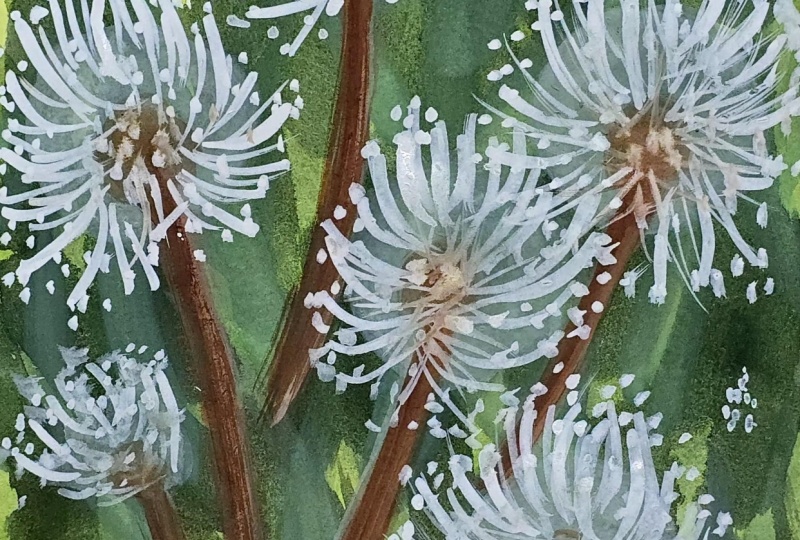
dandelion seed heads, and turn it into a beautiful
sketchbook painting. I really love this theme because it looks delicate and detailed, but the process itself can be
very calming and forgiving. We will focus, especially in watercolor version on building a deep leafy background first, and then we will add the bright
dandelion shapes on top. In gouache, we will do it
other way. You have choice. I will show you how to
simplify the flowers, how to create that
soft airy feeling, and how to use small
white details to make the painting feel
magical and full of movement. You don't need to paint
everything perfectly. This class is more
about observing, layering, experimenting
with contrast and enjoying the process. You can follow my composition
step by step or use it as inspiration for
your own sketchbook page. For your class project, you will create your
own dandelion painting, either in a more loose
watercolor style, or in a more bold
graphic version with gouache and pencils. Prepare your paints,
a small brush, something quite for
the final details, and let's start painting.
2. Project 1. Gouache Ver. Background: Okay, so let's start
with our sketchbook. I can even make it here. I have planned to paint
something else in here, but I will paint it another day. I'm clipping my pages
with the clips. Perhaps I will take
away this novel clip. I have already draw a border
in which I would like to stay because I like white
border around the work. That's why I usually draw a frame in which I
need to stay in. Okay, and we will start with
the dark green background. So I will paint the
whole background only with two colors
or three, perhaps, dark greens, which I have on my palette when it
comes to gouache, I usually don't mix them. Don't mix them on the palette. I know that I have this palette. I know that there is
this palette in the set, but I usually don't use it. I usually mix colors
straight on a paper. So first colors, perhaps I will show them to
you on this page. I prepared another
piece of paper, but perhaps I can
do it also in here. So the first color
which I'm going to use is just like I said, we will use only dark greens because we need the
background to be very dark because we can paint
white dandelions later, and it will be okay. So first color is darkish. I think I have it here and it's already dirty, blackish green. So it's blackish green, very beautiful shade of green. I have used it with
I think jade green. Jade Green, it's not so dark. This is jade green, like you see, it's not so dark, but still we can add a
touch of black to this. Perhaps. I'm not sure. Perhaps most of my background oil paint
with blackish green. And in some areas with
jade green, we will see. I think I will use
mostly these two colors. Let's start with
the blackish green and I need to paint
the whole background. That's why I don't
paint on a four size because it's quite large
and it takes a lot of time to paint the whole area. Remember also that if your backgrounds won't be
as dark as it should be, we can also darken it
later with crayons. It doesn't really matter. It's not something wrong
when your background, after all, won't be
as dark as it should. I think we can switch black
color to Prussian blue. It's also a dark one. It's also dark color, and I think it will create a beautiful effect
with this darkish green. Perhaps I will add here
this Prussian blue. I'm rewetting my brush a few times when I see that it's
too dry, just like it here. I see that it creates
a texture on a paper. I know that moment that
the brush is too dry. Okay, let's add again a
touch of Prussian blue. Let's go on with
the darkish cream. Once again, Prussian blue. Here I have background. I see that background
is a bit too light. That's why I will add
this Prussian blue. Okay. That's all. I see on my phone
that it's darken. In reality, it's a bit lighter
than I see on the phone. Don't worry if your
background is very dark. It's supposed to be and we need to leave it to dry or we can speed up the process
with the hair dryer. I'm going to dry my background with
the hair dryer and I will be right back.
3. Project 1. Sketch: My background is
dry now and we need to sketch our dandelions
on the background. To do that, I will use
Luminance 713 colors. This is light green and it doesn't matter
what color it is. I don't have to be exactly
this luminance color. I think the best
way to sketch on the background is some
kind of white pencil. So it could be any brand. With this pencil, we just
sketch our dandelions. For example, one
will be in here. The second one will
be somewhere in here. The first one could be hiding or it could be
smaller even in here. So here and here and here, we can even make one
go beyond the page. I also sketch the stem of my dandellions so it will
go something like that. When it comes to the
sketch, it's done. In the next step,
we will start to paint the dandlion
flowers. See you then.
4. Project 1. Dandelion part 1: Okay, so for dandelions, I will use square brush, so it's this number
six from Himi. I will use one of the white
colors from this set. I suppose I will
use titanium white. White is more cream color. White is more like
snow white color, but I will use titanium white
until it's not finished. This is my first color. The second one will
be maples yellow, so it's Okay, so we supposed to change our water because it's too green and it
dilutes our color. So I will use just like I said, the Snapples yellow color, except the white, it will be
a touch of naples yellow. It's like a color of
the straw straw color. And also, I will use
a touch of Ochre. At the end and perhaps
to the ocher color, I will use this brush with a very fine tip and Och
color looks like that. We will use these three colors. I will place my second
brush somewhere near me. I will clean my brush
because I have this brown. Sometimes it's hard
to just clean it. I will paint flower
after flower. One at a time. I'm almost run out of
this titanium white, and this titanium white, I need to mix it a little with water
because it is very dense. I have this white
and with this brush, you can paint around and also be aware that
if you press too hard, the green which is
underneath will blend with the white
you have on a brush. That's why I'm pressing
very lightly on my brush, but still it's not
something wrong that the screen looks
through this white. We can still take
our white and add it once again here, just slightly. I will clean my brush and take an apples yellow. A touch of apples yellow
and add it slightly to the bottom of my dandelion. I will take this is
number four from Himi and take or color and add this or
just to the center. My dandelion. Okay. Perhaps I will switch. Perhaps I will switch
to this brush because I think it has the softer end
and with the softer end, it won't blend as much
with the background. Once again, I'm almost at
the end of my white in here. That's why it's so
stiff and that's why I need to mix it
a bit with water. Okay. Let's try with this
one with white. Still, I like this effect. That's why I'm not
covering it again. Perhaps for not mixing
colors on my brushes, and it will be quicker. I will use this brush
for naples yellow, this one for white, and
this one for ocher. It will be quicker
because I don't have to clean my brush every
time every color. This time I'm adding
my naples yellow. Okay. I'm trying to blend it slightly
with my white and add a touch of this
brown to the center. I don't have to be
regular, circular shape. It's just the illusion of
the center of this dandelim. Let's go on to this one. I like the structure and
texture it creates in here and once again,
apples yellow. Let's add it a bit. I will take once again ocher
and add it in the center. I will mix my white
once again with water and paint this dandelion. Let's add apple low to the center and ocher. Easy. Let's in this one. I'm trying to cover
the pencil lines. I don't want them to be visible. That's why I'm
covering the whole. The last one Sienna. And I'm brown. That's it. When it
comes to our bandaions, we need to clean our brushes
and it won't be easy task. That's why I will do it
outside of the stage. We need to leave it to dry
and we will add details with the nlod pencils and
again with whiteqh.
5. Project 1. Dandelions part 2: Okay, so my layer is
dry and right now, we will paint the stem of
our flowers with the wash. I will use a lighter
shade of green for that. For example, from the set, I could use pale green or pink green
or grass green color. I think I will take pale green. This color looks like this. Quite intense shade of green. I just want the stem to stand
out from the background. That's why I will
use a lighter shade. I'm using flat
brush from the set. I will painting with the
side of this brush this way. I'm trying to cover my
sketch initial sketch. Well, I see that my brush is dry because I have the texture. That's why I'm re wetting it and painting my
stems once again. Let's add some details with
the crayons to our work. I will use I will use olive
yellow from mianceO 15. This is light yellowish
green with a gold vibe, I will add details on my flowers. And I will also add details with
the Russet color, but I'm waiting for
the stems to dry. Well, I think they
have already dried. Russet is reddish brown. With that color, I will add a bit in the center
of my flowers. Okay I just need the
variety of colors in there and I will simulate
shadows on the stems. I think adding different
hue to the flowers and stems makes them also interesting makes work
more interesting. And Let's go back
to white gouache, and I will take and I will take a smaller
brush for that number three. And this one is for
watercolors and I will use Windsor and Newton
gouache because I have more control over it than
over this Himi gouache. I'm adding a touch of a drop
of water to my gouache, mix it to achieve this quite dense mixture
and I can test in here if I can paint
spots with this brush. If my Color is
thick enough and I can do the spots
just like I wanted. I will add spots
around the flowers. We can also add lines
like that to create more depth and add
more interest into our work and create
layers of color. Y. Well, it's interesting how each time I paint
the same subject over and over again and this
work looks quite different. Okay.
6. Project 1. Background details: I would also like to make the background a bit darker
because in my previous work, it was darker and I
loved how it turned out. Of course, you can leave it
that way. It's also fine. But if you have, for example, these new colors
carandos because I just love to use them
in the backgrounds. You can do it. Still, if you have other crayons or other pencils, you
can still use it. I will only use this
Prussian blue color. So it's similar to this
one, just like you seen. I will use dark green, dark shades from the set. This color is similar
to this first one. I think I will add some
highlights and for that, I will use Chinese
green from this set. It's a bit in similar hue
that this olive green. So I will add shade in my work. But since we have
this white round, so I'm avoiding to
paint in these areas. I suppose we should do the background first and
then add white details, but it doesn't matter
really how we start. For example, we need to be aware that we need to
avoid these areas. I will start from my blue, Prussian blue and I will this area is darker and I just
love the texture, crayon, the pencil texture. So we don't have to
cover the whole thing exactly to leave solid background. I just love the texture and I love how the backgrounds
sees through. I don't know, these are pencils or crayons because in Poland, for the colored pencils, we are taught to say
that they are crayons. Just when I start
teaching on Skillshare, somebody told me that this is not crayon, it's colored pencil, but I don't know, this is crayon or pencil. Interesting. I will out here some green scribbles. I will add some
blow marks on it. It's just like
intuitive painting. I know it's not the same, but there is no rules in here, you can paint these marks
wherever you want them. Let's add this with this slide. If you don't like something because they are water soluble, you can, for example, make my finger wet and
just dilute the marks which I don't like much. Just play with color. And still with the side I can paint light on my stems. Okay. That's all. I
hope you like it. I will be more than
happy to see your work, so you can download that in a project section and
see you in a wrap up video. It
7. Project 2. Sketch + masking fluid: Okay, so right now we will paint watercolor
version of dandelions. With this step, we
will start to paint, but today we will not paint watercolor version
of our dandelions. There is no sketch
for this class, so we basically do simple
sketches ourselves. For this step, you will need a pencil and perhaps um eraser. Also we will mask some of our parts of our
sketch and to do that, I will use watercolor liquid
masking fluid from talons, and I'm rolling it before use to make these layers of this liquid to
mix with each other. I'm not shaking this liquid because then I will
have some bubbles. In it, I'm trying
to roll my liquid. I did it before before
recording this class and I will use small brush and this brush I only
use with liquid. I also have dishwashing liquid to prevent my brush
from distraction, but it's already I use it
already only for masking fluid. So I don't paint with it
and it's cheaper brush, so I dedicated it
for masking fluid. Let's start with
simple sketching. First, we will sketch the ovals, which will indicate
our our dandelions. For example, one of my
dandelions will be in here, so it will go out of the piece. One will be something
here and you can draw small or bigger Oval. They can also overlap
on each other. For example, one will be
here and the second will be here and we have
the last one in here. Then we need to paint stemps for our
dandelions. This is it and this one don't
have, for example, we can have also a bud in here. Right now, I will take an eraser and make these
lines a bit softer. You can also use knitted
eraser if you have right now we will
mask the stems, not the whole dandelions. The whole dandelions, we will
paint with the white uh. Right now, we only need
to preserve the stems. I'm Right now, I soak my brush in the washing
up liquid and after that, I pick some masking fluid
on my brush and I will mask the stems and also the bad. The bad we mask the
whole whole bad, not only the stem. Okay. I'm cleaning my brush, and it's easier since we soak
it in washing up liquid, and we need to leave this washing this
masking fluid to dry.
8. Project 2. First bg layer: Okay, so let's start by mixing colors for
our first layer. I will spray my colors. I will prepare them
on my mixing palette. I will also spray because I
need a lot of these colors. We will mix three or
four shades of cream. I'll just added water to each of these piece because it
makes mixing a lot quicker. First color, which I will use is my favorite Autumn Green from Roman Szmal from
Aquarius Roman Szmal. I just love that color. This color is granulating once. I will granulate like this
on yellow and green shades. I will mix a lot. I know that this
format is not big. It's a five format, but still I need a
lot of this color. This is my first one. I know that perhaps you
don't have this color, but we need medium green. This is my medium
shade of green. I will also use green gold. This is my light green. And I also need dark shades. I also need dark shades and first of these darker
shades is oxydte green also from Roman
Szmal I will mix it in here and oxidte green
is also granulating color. Well, it granulates on
different shades of green, just like you see in here and you also see here that
it starts to granulate. Okay. The last one is dark green. For a dark green color, I will use Indigo Greenish
from Roman Szmal. It looks almost like black when it's added straight
from the pan. But when you add water to it, it is like darkish green
bottle green color. I also love it. This is my
new color on a palette, but I just loved it. From the start, and if you don't have this
dark green color, you skin still mix
whatever green you have medium green on the palette with a
bit of paints gray. This is my third color. Still, I will have my
palette somewhere next to me because sometimes these
color are not enough. I meant that I usually make them too little and just
they run out while I paint. That's why I usually have
my palette somewhere next to me and when
these colors are gone, I will take colors
straight from the palette. Also, we will need white
gouache somewhere next to us. I have my second palette
with gouache on and we will start I will spray. First, I will spray the
whole work with water. I'm covering the whole
area with water. I'm wetting the surface. Okay. I will remove excess water let's start with these two lighter shades. Let's start with these two
lighter shades, green gold, and I will add it
somewhere on my work. Then I will take
my Autumn Green m. We just at the beginning create
I see that Autumn Green, I mixed not enough
of this paint, so I will take it
straight from the pan. Still, we can help
these two colors to mix with each other
by rotating our work, helping it to mix
with the gravity. Still I see the places
where the paper is drying and I'm just adding
more paint in these areas. Right now, I will start
with my first color, so it's not the darkest one. With oxidate green and
I will create with this color illusion of some
foliage in the background. I'm drawing stems and painting
leaves with this color. I know that they will blend, but that's okay at that stage. Okay. Let's take
the darkest shade and do the same process. So I will paint stems
and some foliage. I don't already see where
I sketched my dandelions, but I'm just memorizing where
they're supposed to be. So for example,
remember that I have somewhere in the
something in the corner. Okay. And right now, I will add the first
layer of white. On my background, we
only need to wait a second or two or a
minute or two because I don't want to add my white
where the puddles are on the background because I
know that this white will spread much when there
is a big puddle. We start with the areas where
we don't have big puddles. For example, in here, I start to add my white in here, this is the first
layer of white. Don't be afraid that perhaps it will mix with
the background much. I see that I don't have
a big puddle over here. This white will
spread and will blend with the colors you have under. The next one will
be here because I have a puddle in here and
I have puddle in here. The areas with puddles
we will paint as last. I'm cleaning my brush every
dandelion, every dandelion, because the white is not
white on my brush anymore after painting because I lift some greenery from
my background. Perhaps let's paint
this one Okay. You see that my white is not
white anymore on the brush. It's a little bit have
greenish tones on it. The last one. Okay. We need to leave it to
dry or we can speed up the process with the hair
dryer, so it's up to you. For the next step, it's
better to change your water, we should start with
the clean water. See you in the next step.
9. Project 2. Second bg layer: Okay. I have dried my work with the hair dryer
and just like you see, the white dandelions
are not white anymore. We'll correct that
in this stage. But first, we will add more
foliage in the background. Because white usually dilutes the water and to speed
up the process because I don't want to change the water for every
five or 10 minutes. We will do it in this way that first we
will paint the foliage, then we will paint the white. Once again, and then we will add the second
layer of foliage, but we will mix some greens
with the white gouache to achieve more solid
light green color. First, we need the same colors, perhaps without this green gold. So we need once
again autumn green, so medium green and two dark green shades.
I will use the same. Autumn green oxidte green
and indigo greenish, and I will mix them in 50
50 is not very translucent. I'll usually call it
in this medium volume. I will use mop
brush for that and this one is my favorite
favorite of all time. It's from Da Vinci and
it's Rabi Alie vast. It's perfect because
you can paint very thin lines with the tip of this brush and when
you press it harder, you can create this
beautiful shapes of leaves. Right now, we will
simply do that. I will start with the
medium value autumn green, and I will paint a
stem and some leaves. These leaves won't blend
with the background, so Still, if your brush don't have
this very thin tip, you can paint the stems with a smaller brush with thin
brush or also with the liner. It's up to you. Right now, I will take oxidteGreen
and paint some leaves. You can go on the
white Dandelions. We will correct that later. We create the illusion
that there is something more in the background
and right now, I will take the darkest shade and create some foliage. These leaves could be
smaller or bigger. It's up to you how you
would like to paint them. I will take my wash
once again and paint the second layer
on my tantalons. But before we move on, I want to show you the same
painting on different paper. This paper is 100% of
cotton, just like you see, when I added first layer of
wash on a wet background, it spread it a lot. This paper is 25% of cotton. This paper is 100% of cotton. The effect depends on the paper. I like both effects. But still, you need
to be aware that the effect you will
achieve depends also, except the technique
from the paper you use. I took a white uh once again, and I will Correct, my shapes. But I will also take a smaller brush because I don't want these
edges to be very sharp. That's why with
the dumper brush, I will slightly
dilute the edges. Another. There's
another dandelion. Once again, with my
second damp brush, I will dilute the edges. I don't want them
to be this sharp. I repeat the process
on Ardendlum And remember, even if this
didn't work out on your work, it doesn't matter
because we will add details which will cover the
mistakes on the next step. Don't worry if something
don't look perfect for you. At this stage, it
doesn't really matter. Oh Once again, when it dries, it won't be clear white. Also, you need to
be aware of that. This one dandelions are
sticking with each other. That's why I will
paint them in one go. This is my second. Right now I see where I should blend the edges. No. Okay. So we'll
leave it to dry for a bit and we will mix a lighter shade
of green with white. I have white on my brush and I will mix it with
the autumn green. You can use whatever
medium green you have on our palette. I would like to achieve
this one is light, so I need to add more
paint to my mixture. I want to achieve
a lighter shade of green and this will
be a pastel green. When we add a white
to one of our colors, we will achieve a pastel
shade of this color. So this one. This one is perfect. Perhaps I don't have it enough, but we will with the same brush, I will add again, a stem and leaves. I think I need to add more water more white
and more paint. Okay. I love it. We need to make it dry. So once again, I will speed up my process with
the hair dryer. You can leave it and, for example, come
back to your work. If you don't have
time, you can come back to your work
next day or you can just let me speed
up the process with the hair dryer. See
you in the next.
10. Project 2. White details: Okay, so everything is
dry now and right now, I will remove the masking
fluid from my work. This one, I have different
brands of masking fluid and I have to say that this one is really easy
to remove from your work. I just started using it once
again because for a moment, I used other brand and
though it was much easier to apply because
it was with some applier, it was very hard to
remove from your work and this one from talens is
just perfect to remove. You can remove it simply
with your finger. You don't have to
have any fancy tools. We also need to
change our water. We will add details
for our work and we will start with
the stems for that, I will use a smaller brush, smaller soft brush, it's
number two from Princeton. I will use Se on
a light, I think. It will be the perfect. Perfect color for this. Or you can mix it
with a bit of red ocher to create this
light brown color. I mixing it with a 50, 50 ratio or even more
waterless paint. So it's very translucent,
something like that. With this color, I will paint
the stems of my dandelions. I will switch to stiffer brush. This is also small brush,
so it's number three. It's even bigger than this one. But this one I feel
that this one is very soft and this one is more stiff. I need a stiffer brush. For my purpose, and I will
paint with a white gouache. I will add details on my work. For example, let's
start from this one and I will create the illusion of fluffiness
of the standalons and we will make the process
the same on every dandelion. First, we paint the strokes and some dots around it. You can try different lines. I try to paint here with
rounded shapes, rounded lines. On my first work, well, it's not even my first work. It was I painted it a few times, but every time I
changed something. Here you see that
the lines are very straight and they come from
the center to the outside. Right now, I changed my
moves and I started to paint from the outside to the
inside to see what happens. I also started to paint rounded shapes for my
dandelions because I like to experiment and I want
to see what happens if that shape suits me better
if I like it better. Every time, even if I
paint something few times, I usually change something. The color, the shape. Well, I think I like it better. I like this shape and the
roundness it created. The tip for you is that
it is very good to experiment and it's very good for you and your
creativity to paint some subjects more
times than once. So let's try to do it again in here. Also, I like this dry
brush texture. I like it. That's why I don't mind when
it naturally is a scene. It is not something I
avoid because I like it. First, I just paint the more bigger shapes and
then I add these softer ones, smaller ones which create the density of the dandelion. We can also add the dots
inside of this dandelion and see if we like the effect. If so, I will repeat the process on other
dandelions also. We have two more to go. You can even paint
it in one go so We have dandelions done. Well, I must say that I
just love the effect. But still, I will add little white flowers
somewhere in these spaces. For example, in here,
for example, in here, these flowers are simply just
white dots, for example, in here, and I don't know, maybe some in here
around the border. We will finish this spot. In my brush still with the
small and stiff brush, I will take my dark green. For example, Chromium
oxidte green. I want it to be
thick this color. That's why I will
take it straight from the pan and I will draw the stems for these flowers for
these little flowers. We can even draw a
leaves for this valet. If you feel so, of course. That's okay the stage. I think it's even already done. If you want, you can
finish at this step. But I usually add more details. But in this case, it will be only the shadows with
the colored pencils. See you in the next step.
11. Project 2. Colored pencils: Okay, so the last step, and I will use only
one color for this. This one is 65 from
luminance, sanguin Russet. This is a reddish
shade of brown. And we will add just
the shade on our stems. Of course, you can do it
also with the watercolor. It's not something
you cannot do. You can. But I just love
the texture of the pencils. That's why I usually for the final step, use
colored pencils. So Perhaps you noticed
in my classes, but I usually use the same
colors over and over again. The same in here. But with the side of my pencil, I'm trying to add some
shade on the top of this area and on the left side. Of the bad and I
will add the shade. And by pressing harder, I will add more shadow
on the left side. Okay. And one last thing, I also would like to add
some brownish tone in here, and I will do it with
the side of my pencil. I just add the center of the dandlion and we
can also do it with this round shape to indicate
that every white petal? I can call it petal
because I don't know how it's called even in polish, but this white is connected to this round center
of the dandelion. Slightly. I'm very happy with the result and it's
time to remove the masking tape and
see the whole result. I must say that I'm very happy. I like it. I think I like it
even better than this one. And I think I like it because of the shape,
the roundness. This one feels more rounded
dandelions than this one. Still, I love this work. I could create a
postcard from it. Perhaps I like the background
better in this work, but the dandelions lay
more on this work. Perhaps I should try
and give it another try and combine the background from this work and the
shape from this work. That's why I work sometimes. That's why I paint some subjects three or
more times because I see that something I like in here and something more in here
and I try to combine. I like this background
better because it has more contrast. This one is a bit darker for me. And this one has more contrast, but still love them both. See you in the wrap up video.
12. Outro: Thank you so much for
painting with me. I hope this class helps you
see how a simple subject like Dandelions can become a really beautiful and
expressive sketchbook page. We worked with contrast, dark greens, soft white details, and those tiny little marks that make the flowers feel
light and full of air. Remember, your painting doesn't have to look exactly like mine. Maybe your background is softer, maybe your dandelions
are bigger, maybe your composition
feels more wild and spontaneous and that's
completely okay. These small differences are what make your sketchbook yours. For your class project, please share your
finished Dantion painting in the project gallery. I'd love to see your version, whether you follow
the lesson closely or created your own
interpretation. If you enjoy this class, you can also check out my other watercolor and
gouache classes where we paint more nature inspired subjects in a calm,
beginner friendly way. Thank you again for joining me and I hope to see you
in the next class. Happy painting.
 Anna Krupa, web developer & graphic designer, mix media artist