Transcripts
1. Embrace Imperfections Trailer: What about perfectionism
in our lives? I would love to create
a perfect class, but I faced many imperfections. My microphone isn't the best. My studio is half
of a dining room. The city council decided to place bus stop just
by my windows. So while recording, I
need to avoid the noise from the past plus my
English isn't perfect. But if I kept waiting
for perfect conditions, which will never come. Then no class would be released. What really matters is
my intention to share my knowledge and the joy from
creative process with you. We all fear making mistakes and showing our vulnerability. But, in fact, that's
what makes us human and helps us
connect with others. Hello, I'm Nina. I'm watercolor artist
and art therapist. Passionate about loose
watercolor style, and spreading joy from
creative process. Welcome to my new class, where we will explore how to let go of perfectionism through art, especially using the
Watercolors platter technique. The fear of failure and being seen by others makes
us feel so small, insignificant, blind
to our true value. Forgive yourself for your
imperfections. Embrace them. In fact, they make you unique. There will always be something you can improve or do better. L earn to accept
your imperfections through the creative process. It's less painful to make decisions like which
colors to choose, switch to another
brush or paper, and improve your skills. Painting loose forces
you to accept reality, stay in the moment, and search for
creative solutions. It offers immense space for self expression
and exploration. What the colors are known
for their lack of control, which helps you to let
go of your control. Join me in this fun
and playful journey. In the next lesson, we will dive deeper into shifting
our mindset towards accepting of imperfections and gaining more self confidence.
Se in the next lesson.
2. Materials: Let's prepare the materials. For this class, you will need mainly paper, different sizes. Take different ones,
cellular one, cotton one, the one which you feel
like watercolor brushes, take the ones which you have. They shouldn't be perfect. Watercolors, the same just because those ones
which you have. And don't worry. Also, you
can take some golden ones if you have and white
gase if you feel like. We will need, as well, some watercolor palette and you're willing to explore
your perfectionism. And to face it, to look into its eyes, and then to let yourself
lose that control, find the joy of the
creative process, and embrace your imperfections. Just prepare your materials and I invite you to
start this journey.
3. Choosing Colors: Have a look at the beautiful
color combinations. One of the things like to keep
in mind that what you can face when your watercolors
go out of your control, that they will get mixed, and Some of them, they could produce some kind of muddy, dirty, brownish colors. Maybe they won't make you happy, or maybe it doesn't matter. But just in case,
if you are looking for some kind of pleasant
color combinations, I would suggest you to have
a look at some color wheel. You may have one or just
a search on Internet. For your color combinations, try to pick up those colors, which are one
nearby another one. In this way, Yes, if here there are yellow, orange, violets, then
blues, then greens. And try to place your colors
in the same position. If you for example, pick up this half of the wheel, place your colors in this order. You can pick up the same colors, but to place, for example, violet near by yellow, and you will see when
they will blend, they will give you not
very beautiful color. Just pay attention to this part so that to
place your colors exactly in this order and the
same it could be. This way. But pay attention not to place close to each other
the opposite colors. Be while blending, they're
like pure clean colors, they will get beautiful
shades of grace, but that's not what exactly
we are looking at this time. Be careful with yellow, hitlet, blue, orange, green, red. But the rest, you will get
very beautiful paintings. Let's move to paint. Let's move to our
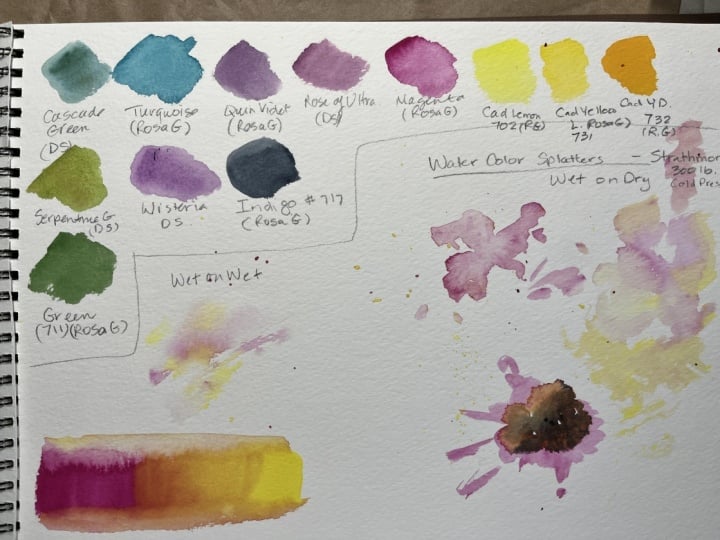
first Practice, that is color selection. Here is my selection of
colors for the flowers. I'm going to use green, blue, violet, pink, yellow,
and maybe orange. I intentionally do not tell
you the name of my colors so that you would
pick up one of green, blue, but the ones
which you have and the one which is
really appealing to you at this moment. Me. Another one is for the
base, for the grass. No, it's going to be this green, this violet, and indigo. I really encourage you. To make your
selection of colors. Another thing that I would
like it to pay attention, what you are feeling while you are selecting your
colors and generally observe these different
tiny shades of the feelings and how is your process of selecting
of making small decisions, which color I will pick up. Just observe register know in your diary, let's
say like this. Let's move to our first
expressive painting.
4. Watercolor Splatters Technique: A, welcome to our
warming up less. First of all, I really would
like to ask you to write down all your fears where
you afraid to fail. Just write it down on
paper and put it aside. And then we will be back after all our
watercolor practice, we will be back to that part. If you already painted
with watercolors, probably, it won't be
something new for you. But anyway, I encourage you
to pass through this warming up part so that just to
enter into the playful mood. Here I have my colors and quite a big
selection of brushes. What we are going to do now is to have a look how it works. One of the main
things that we are going to use that is water, to pick up any color
which you like, and in order to produce really good high
quality splitters. You need to have
plenty of water. I have here different brushes, so we'll see which ones give different splatters
and two plate. Here I have wet and wet
and here wet and dry. Wet and dried means that
here I have quite wet paint, and here the paper
is completely dry. Let's see, that is what I get. This splitters. Here, I will add
some more splatters. And then I will use another
brush just with water. Make sure that the whole
body of your brush is wet. Then I try to take the shape out of the
splitters so that it would be similar to
the shape of petals. What I can do. Again, I can introduce most platters
into this area. Yeah, what I also can do. I can take another brush. Let's see what kind of splitters I get
with another brush. Also, I can pick
up another color. And add some more splitters. As well here, you
can see this brush gives smaller splitters. Let's check this one.
This is synthetic one. Synthetic one. Let's see. You see that first
it's quite small, this brush and it gives
really tiny splitters. For example, this
could be nice if I will take darker color, and you see that now I have taken color directly
from the pan. It doesn't have so water. Let's see. You can
see that it gives smaller not so watery
because you can notice here, I have splatters
with quite a lot of water and it's still
here the water. It stays longer and
takes longer to get dry. This one, this was
another brush, this one. You can see that they are
still staying with water, and the ones which I've got directly with quite dry brush, they are really tiny in size
and they got already dry. That depends for
what you need them. If you need to create quite big splitters
or smaller ones, you can use one
brush or another. That's why I encourage
you to test your brushes. For the techniques which
we are going to use, I encourage you
also to experiment so that you would be
able to get the ones. So that they would
stay longer, bigger, and so that out
of the splitters, we would be able to create something to create
some kind of shapes. Because out of this ones, it would be quite complicated to create some shapes because
they will get dry. And there would be no way
to move the splitters. We can try. But you can see that they have got already
they got dry. So it's really difficult. However, out of this ones, yeah, I still can You can see that
they get blended with water, which I have added and
this one is the same. They are still wet, so I
can still play with them. We're looking for this one. But in some cases, also, it's fine to know
when you need to be able to create the smaller
ones and dry ones. Let's see one more thing. That is if it's wet and wet, wet and wet, it means
that first I have water. And that water, I add splitters. Then you get quite beautiful. Blending of colors,
and a bit of yellow, for example, also could be interesting if you use
some granulating colors. This is really
beautiful olive green. Yeah, that it creates this
game and really beautiful, shapes which you can
create out of this. One more thing which I would like to share and what
we are going to use. That is when we are going
to add some colors, and then we will add water. Example yellow and a
bit more of this kind That's what we are going to use. Then with quite wet brush, I start to move. And you can see that this
paper is cellulose paper, and it has got dry really fast so that you
could see this line. That is also one of the things which
could be frustrating. That you can see
someone is doing really beautiful this
blending effect, and you are trying and
you do not get it. Why? Because of paper. Don't think that's
something wrong with you because in fact, that the paper which
you are using matters. Here I have placed first water, and let's see where
something will change. If I will place first my colors, and then we'll try
to blend them. Blank this and a bit
of lighter yellow. Let's see what kind
of effect we get. Try to blend these colors. So you can see that it's not
so like in the previous one, but still it's not
exactly what you can get if it's this
paper cotton one. Yeah. If you don't get that
kind of really beautiful, you will see further effect. So this could be paper. And one of the
things how you can find solution that first place water in order to
get this kind of beautiful, smooth
color blending. What we will need
one more thing. That is not so much splitters, but yeah, we will
need splitters. So let's try again. Create here quite watery ones. I will add more water. Here, I have enough, and then with another
brush, with clean water, let's practice also
with this movement, how to take out the petals. So here we have, and we are creating one
flower with five petals. You can see that what
is the movement. Also, you know that sometimes it could be the
issue in your brush. I encourage you to try different brushes to see which
one you like the most for creating these kind of
splitters because you will see that different brushes
and different splitters, and I will add a bit of brown. This is Bern Ciena for
here and a bit of wilt. Just a bit. And do you see? Here we have got our flower. So that's what we are
going to play with. Practice, please, and make a
selection of those brushes, which you really like
for creating splitters.
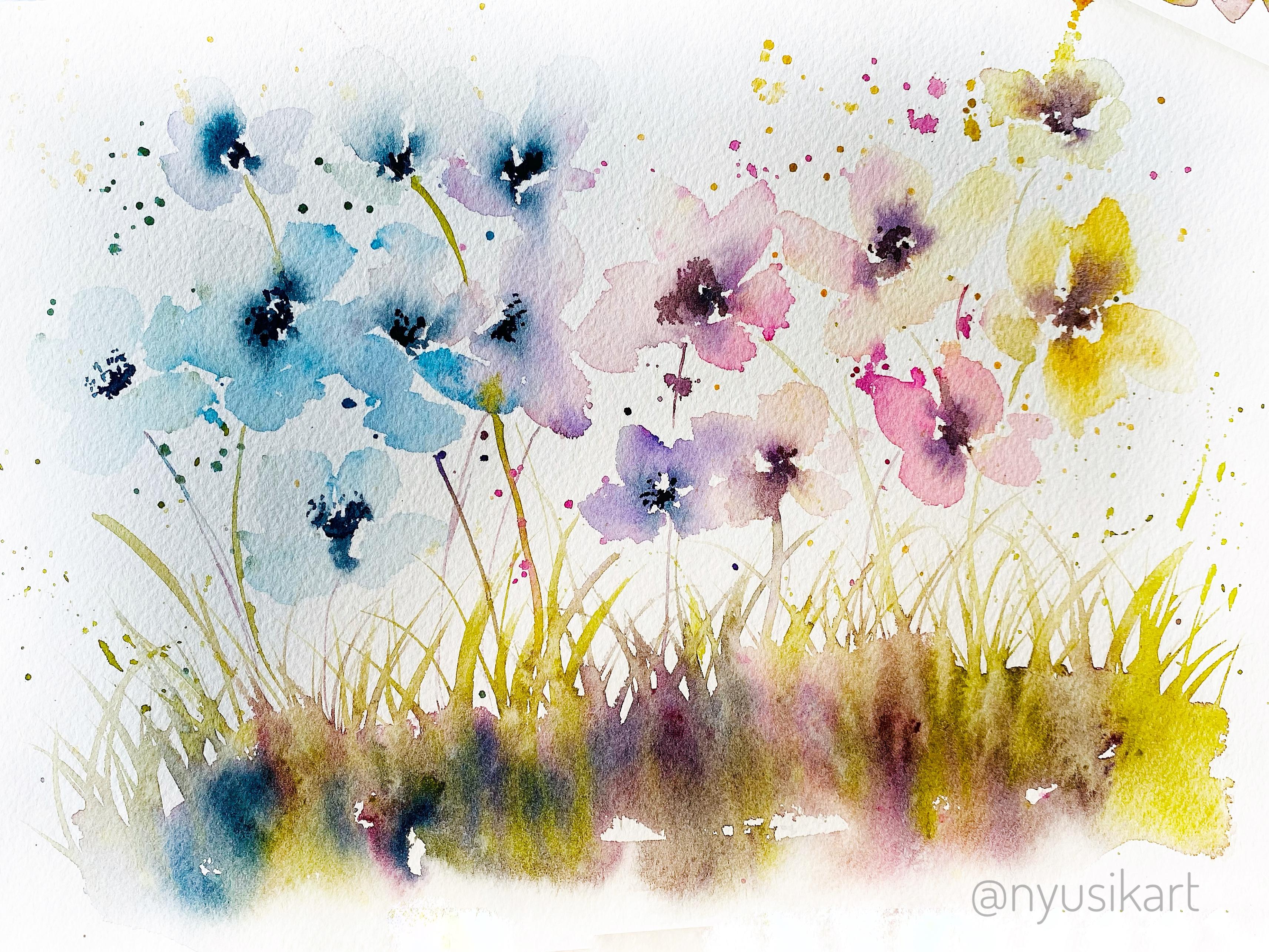
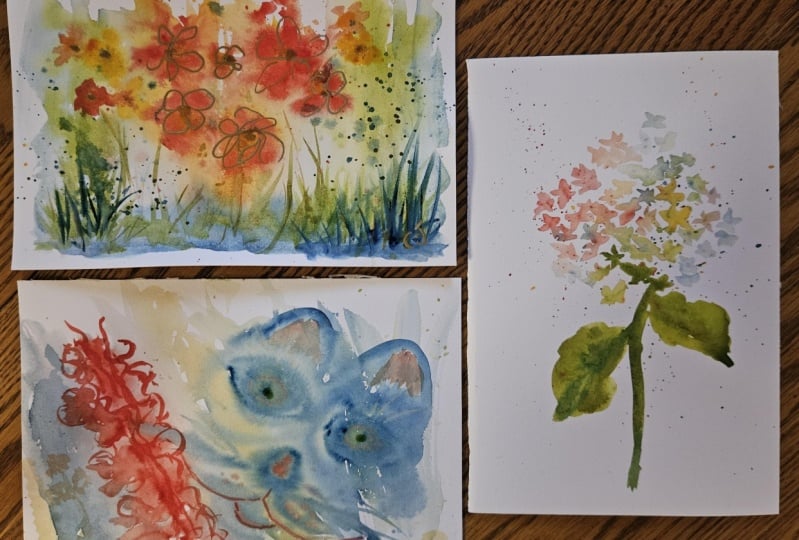
5. Watercolor Rainbow Flowers: Let's have fun. First of all, there is some kind of
security measures now that the splitters they
usually fly everywhere. I do not suggest to
you that you would wear some white clothes, but something you can wear some protection
or some clothes, which doesn't matter
to make it dirty. And also to cover things
which you have nearby your table because it
could be also some screen, laptop, or whatever,
suppose that also to keep it a distance
because otherwise, you will have to clean it
all these tiny splitters from those devices. Mm hmm. And then let's start. Remember that one
of the things is to have enough water so that your splitters should
be quite watery and another thing that we will
have to act quite quickly. So there is no time no time
to think and to hesitate. And some people find
this quite stressful. But it doesn't matter. I believe that you will manage. You have already chosen. So you have taken your time
to make your color selection, and now we can move
quickly because we need so that they
won't get dry. Yeah. So here I make yellow ones. And then I go for the pink ones. And I can add several
here orange ones. And then next one is
going to be violet ones. Here. And next one
is going to be blue. Beautiful, blue. And
I'm missing some green. My green that is cascade
green, and let's see. Now, time for magic. Now we'll need to move
quite quickly to convert these splitters into flowers. The ones we just have practiced. They shouldn't be fancy flowers, but it just pay attention
to make the several petals. They would be
three, five petals. Next one. And they could
be at different levels. Now, these blue ones. F here also someone. Just play, they
shouldn't be perfect. They just need to remind
for our mind flowers. No flower shape. I
can add some more. Because I feel like now
it's your creative process. You can follow me or I really
suggest you try to listen what you feel like where
you would like to add some more of these petals. Of these color splitters,
not petals splitters. H? That is your process, and to just connect
with yourself. Where do you feel that it's
necessary to add some more? And then I will add
different size, some more flowers, some
more petals. Mm hmm. I'm using now 100% cotton paper, so it may take longer
till it will get dry. You can play, you can add
some more intense color, so like here that I
want to know that my petals would be more visible. And here I have this part, I think that they
are too straight. So I will make some bigger, some smaller. Like this. And now let's add
some more contrast. That could be brown
color in some cases. Some beautiful brown. You can add, for example, with this kind of light
colors like yellow, pink, and then a bit of
let for the contrast. Oh, that is really,
really satisfying to see this kind of
watercolor bleeds. I hope that you enjoy the
process as much as I do. Here is indigo. That is
another beautiful color, which you can use to
add flower centers. Then it will re beautiful. It will create
beautiful contrast. It's beautiful here. Can. The next one, we
are going to add the lower part, and
for the lower part, I will use that wet
and wet technique so that here it's
going to be land. I will start with adding
that color selection, which I have chosen. That is some kind
of another violet. Mm hmm. I have also
this another color. It is also really dark. And then I will add some indigo. So it will provide me
really dark shade. And then a bit of olive green. What we are going to do now is that part to create beautiful. So you can see that
with cotton paper, you can get that
beautiful bleeding. If you don't get it
with cellulose paper, you may know that it's
not your problem. The problem is in the paper
which you are using at the stems with an brush. H hmm, that they could
be also olive green. This really cheerful color. That we start to add the grass, just simple brush strokes, and start to play here. First, it's really,
really satisfying to see all these color blending
for me at least. Here, I have used that
selection of colors, which I really like, how they what effect they
produce when they blend. And I really like when I
add the O olive green, that it expands the pigment. And they also create this
kind of really cheerful. These kind of things
I'm talking about. And here, let's add more grass. Also, play and see which brush gives you more
beautiful these brush strokes. Here, you can see
that it has got already dry, but
it doesn't matter. Still we can and
here Td More stands. Mm that I hope that now it's really relaxing
moment for you as well. And just enjoy. And then I think
that you can add some more splitters.
Here we have. Oh. That is really beautiful. I really like how it
turns out. Mm hmm. What we can add
is some splasers. Splitters. Here, I can add. You see that this one
creates really tiny ones. This brush. But also, it could be like
several like in line. And I think that I would like to add more yellow splitters. So that to create
more cheerful. H. And one more thing
what we can do to make our flower
centers of darker shade. So I can mix brown with my violet to get beautiful
chocolate color. And then for here, I
can add some more of this kind of Yeah. You can see that because
it's 100% cotton paper, that it still holds
the water and humidity and still I can get some kind of
beautiful blending. It won't be possible with
normal cellulos paper. If your one has got, that points would be
staying the same. A bit to a that I also don't want to touch because still everything is wet. Here to a just a bit more
of contrast our flowers. And then we have done
with our rainbow flowers. I'm really curious to know how you have felt
during this process. If for you, it seemed to be a bit overwhelming,
what you could do. You can watch the video. And then to disconnect from
the class from the video and connect with your feelings and start to observe
and to do in that pace which you feel
that is comfortable for you. And then please share that your thoughts and your
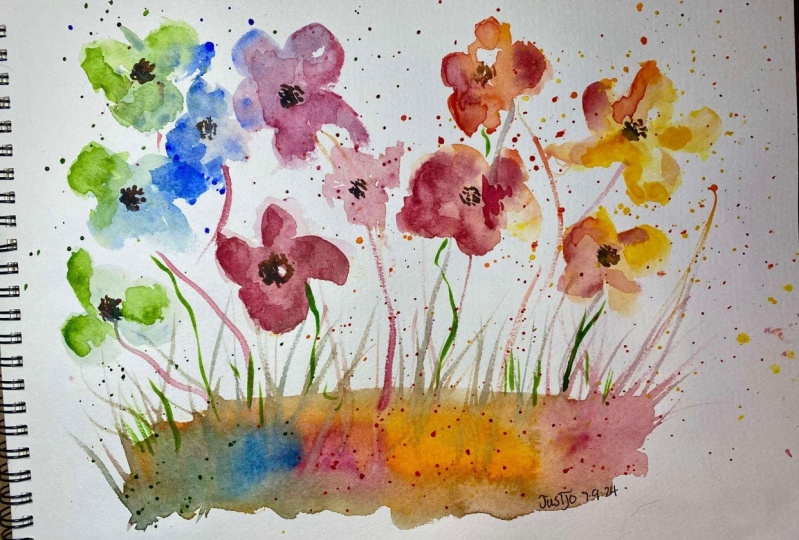
observations in the class project. So here is our painting. Maybe it's not the best, but I really feel satisfied because I have used
the colors which I like. Probably the composition,
it's not the perfect. You can see why it's not perfect because I have placed all my
flowers on the same line, same line, and same line. But, you know, it
doesn't matter, why? Because I have played.
I have enjoyed. And in the next painting, I still can improve something. Don't judge yourself. Don't be havy with yourself. Just let yourself play and to create some
imperfect results. Yeah, I'm looking forward to
seeing your class projects and reading your sorts and observations which you have experienced during
this creative process. Seeing the next lesson.
6. Perfectionist Mindset: Hello. Welcome to a new lesson. In this lesson, I would like
to talk about something which is very close to my
heart that is perfectionist. I know how it feels like to be caught in that restless cycle where nothing ever seems quite good enough. It's exhausting. That constant pressure
to achieve more, to be better, to
never make a mistake. It's like living with the
weight on your chest. Perfectionism can
feel like a prison, trapping us with
unrealistic expectations. We tell ourselves that if
we could just be perfect, everything would be okay. But the truth is, perfectionism often leaves us feeling worse, more critical, and less
satisfied with our lives. It drops us the joy that comes from simply
being creative, from experiment, from making something with our own hands. That's where water color
painting comes in. When we paint with watercolors, we have to embrace
the unpredictable. The way the colors
blend and flow, the way the paint takes
on a life on its own. It's all about enjoying the
process, experimenting, playing and accepting
those imperfections, which not only make some
unpredictability in our works, but actually, they
make our works unique. What a color practice,
especially loose style, and the one which I would
like to offer you to try in this course splitters is really could be a powerful tool when tackling perfectionism. Generally, the perfectionism is characterized by
different fears. And really unrealistic
expectations. That is something which is very characteristic
that perfectionists usually set extremely high
standards to themselves, to their things which they do, services, work, they provide
and as well to other people. And you know, that
is really heavy and disappointing when you do not meet those
high standards, and this also leads to that
fear of making mistake. That fear of making mistake
and fear to failure. Because in such case, any failure is seen and perceived like
something really great, catastrophic, and this really leads to frustration
and to anxiety. One more characteristic of perfectionism is when the person considers that
it's self worth is defined by his or
her achievements. So that is a very
distorted belief. And something which is not
achieved or in such case, any mistake or any failure is considered like the
total failure of the person and which makes
the person feel worthless. And another thing which
is also related to these really high expectations is the lack of flexibility. Once you have in your
head really perfect plan after the
last final detail, and then something
unexpected happens. It doesn't work out the
way you were expecting. So you cannot really accept that lower
result or whatever, so that you see everything is perfect and it's like white, or you see it like that total failure and
everything is black. So this is really
extreme mindset, which is characterized
by perfectionism. And this is very
difficult to change this rigid mindset and
to become more flexible. And to develop a self
compassion to yourself. Why water colors is a really great way to
tackle perfectionism. From my experience, that once I have moved to
Loose style and started to work without
pencil sketch and even more very intuitive way
when just to be present, playing with colors and
to see what will appear, what will be presented
in my artwork. It really has helped me to
develop this flexibility. And this kind of feeling and joy from unexpected
and happy accidents. It's really a path
to acceptance. I really hope that
the techniques, which I will show
you in this class and practices which we will do, that they will help you to
embrace that unpredictable, that those results,
especially with splitters, that it will help you to let
the control go, that indeed, splitters will help you to let your control
go and to enjoy the process and to play to be present here and now
and to see what the artwork, how it develops, and
what it tells you. Another thing that
the colors allow different layers of
transparent paint. And this is like step by
step, layer by layer. You can go deeper into your subconscious and
in this way to surpass that defense levels and confront your fears and as well as those distorted beliefs
on a deeper level. Really encourage you to try this watercolor
splatters technique, to allow yourself to
play, to make mistakes, to enjoy that fluidity
of this medium, it's expressiveness because
it's very expressive style, and as well as the colors, choose those ones which
make you feel better. And I do encourage you embrace
those happy accidents, mistakes, and those surprises, which watercolors will show you. Our class will be structured
in such ways at first, I would like that you
will get quite familiar with the technique and feel comfortable playing
with the splitters. We will cover three
quite easy projects that first is going to
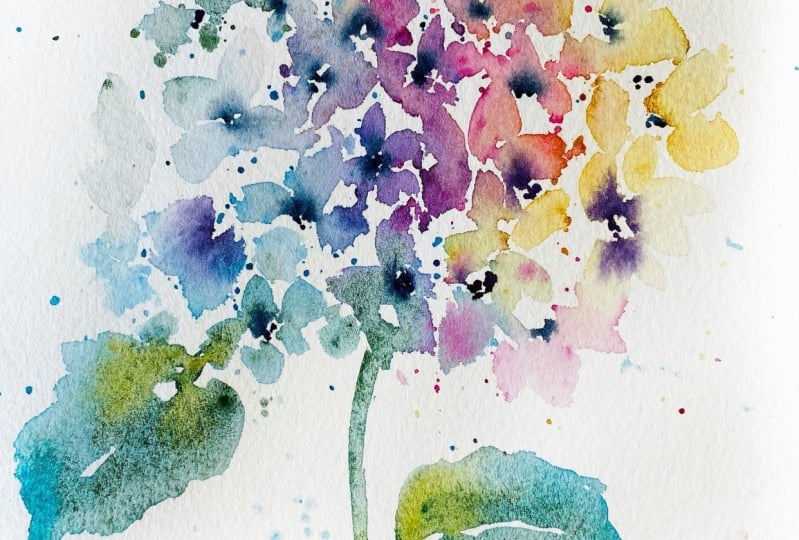
be rainbow flowers, Hydrangia flower when we will already make
some shape and we'll see how to allocate the splitters in order to be
able later to make a shape. Then we will explore also how to use splitters in order to create some beautiful,
unpredictable, dreamy background. Once you get really comfortable
with this technique, we will pass to something which is already a deeper lever. And I notify you that
these practices, they are quite powerful. Just let yourself to dive
into that another dimension. That first, we will
face our perfectionism. We actually will personify
with a free painting, with a special focus on yes. And that is very
interesting what kind of revelations you will get
a after this practice. But it will allow
you actually to externalize and to
face what you feel, that your part of defense, which provides you that
feeling of control, and you would be able to externalize it personify
and to see it. And probably become
kinder to that your part. And then is my favorite
part that once we will see that a bit traumatic part
of us, which also exists. No, that is like somewhere that is where the origin of our
perfectionism comes from. And then we will have joyful practice of embracing
the imperfections. And that is also very curious that how you will
provide this kind of hugs and joy to that
your small creature, which is like suffering, and how you will provide
that kind of love, and joy, kindness
to this creature. I understand that
in several hours, it's very difficult to tackle perfection is
something which you using as a defense could be unconscious defense
during years, so that also be aware of this. But I do believe that this is your first step where you can first identify
those strains which you can see in
perfectionist profile, as well making this
first step where you can get relaxed and
let the control go. That is a really great, small celebration of success and explore your
fears and anxieties. Just before starting
with practices, write down for yourself, what kind of fear of mistake, fear of value you
are experimenting, and then just register
it and go forward. Go forward with
practice and see how is changing your state of
feeling, your anxiety. How do you when you consider that you have made a mistake. And anyway, keep on doing. Keep on doing because that is the only way how
you can overcome to learn from your mistakes and
to create something unique. And I ask you to be
very kind to yourself. Imagine a person, emagine creature who loves
you unconditionally. And when you are making
any mistake or you are not complying with that
expectation which you had W this creature will judge
you, will criticize you. No. That creature will hug you, will support you, will
encourage you to try again, and will tell you
how great you are, that you have done it, that you did that step, you have made that effort. And this really was that ug. I would ask you adjust
your expectations, don't expect because what can
you expect from splitters, just to have fun and to play. That should be your expectation. Another thing that please don't think about
the final results. In this class, it
doesn't matter so much. That what matters is your
intention and the way that you have found
this time to face your fears and that
your intention to become a bit better
to become better to work something which
is quite hard for you. And be kind to yourself. Let your art be a
safe space where you can explore when you can express what's inside of your heart without worrying whether it's going
to be perfect. Or not. Remember that this journey isn't about
creating a masterpiece. It is about discovering the joy of about learning
to be kinder to yourself and about realizing that you are enough
just the way you are. Let's make this
journey together. Let's paint, explore,
and learn to let go. You deserve to
experience the joy of creativity without the weight of perfectionism
holding you back. And remember, I'm here with
you every step on the way. Let's start this
exciting journey.
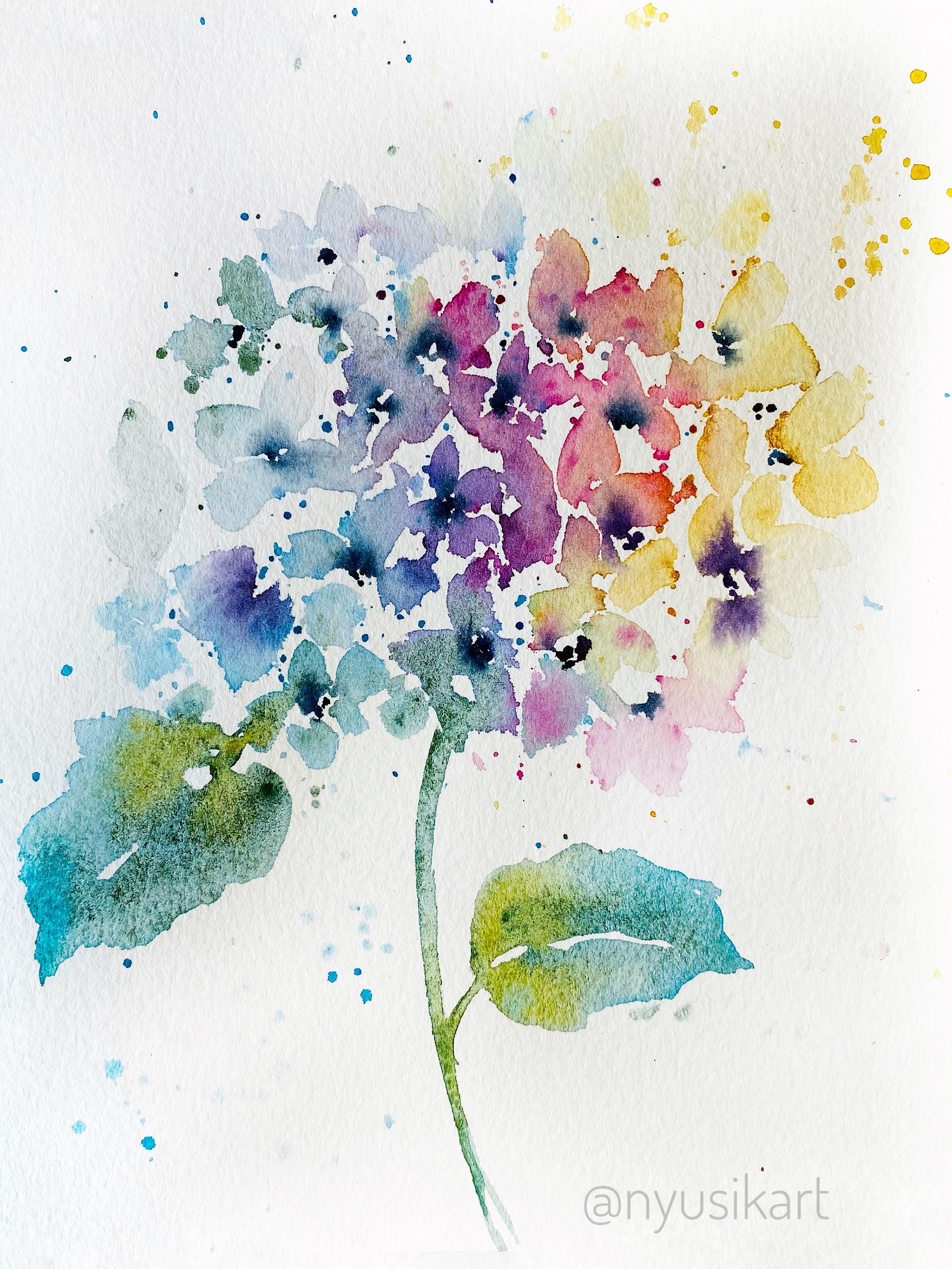
7. Watercolor Colorful Hydrangea: Welcome to our new
colorful project. And this time, I will use the following colors the
same as the previous time. Maybe I will introduce also
this green and this blue. And what we are going to
paint is colorful hydranga, to prepare your colors, and let's start to play. Now we are going to make a
bit more complex project that we will have the same to locate and to
play with splitters. But this time we are
going to play them in the shape of circle. And the same with colors. We'll have to pay attention that the ones which are lighter, they are going to be on the top, because there is more light, and the darker ones
are going to be the same we are going to keep that here is going to be yellow, pink, hitlet, blue, green. If you're ready, let's start
to play with our splatters. White watery, and I
start from this side. Here I have. Next one, going to be pink one. I think I like this
pink. A violet ones. Would be different violet ones, and then come blue. Another blue. Also, I will add more blue at
the bottom and green. Lots of splatters. Then with a smaller brush
or maybe the same one. Then with smaller brush, I'm going to make petals. Here which are on the top. They are going to look a bit like this because I
need to make the shape, which will remind that
shape of hydrangia. Dran flowers they
have for petals. I have told you for petals and have you noticed
that I have made five. You see, that's how our mind sometimes play fun
things with us. So for here some more. And here we can add
a bit smaller ones. F here, the same, check those platters
which you have missed and add more flowers. F here, I'm missing a
bit like blue ones, so I will add some bue and probably a bit of green
here in the lower part, and I convert them into
the petals. Just play. It shouldn't be perfect. You see that my one is
really far from perfect. There may be a bit
more of pink for here. And I think that we
have already the shape, and what we can add,
that is leaves. For example, here, one leaf. F here, it comes. Here we can add stem, and one more af. We can add a bit
of cheerful color that is going to be olive green. Also I like a bit
of bluish color, then I will add a bit
of more blue over here. You can see that st then it will blend in and I will
get be color blend. Mm hm. Perfect. Also, I can
add a bit more of green. What we are missing, we can add some more splatters for sure. For example, from this
side to make it a bit more like warmer, that it would be yellowish,
and from this side, I would add a bit more of the
ones which are with blue. Yeah. If there are some splitters which
you aren't happy with, you just can remove
them with paper towel. And here is our hydranga. What we can do, we can
add some contrast. This could be done with indigo. So that to add some
contrast to our flowers. The flower center. Or it
could be also violet. Could be some more violet,
then it will be a. It's really cheerful
and playful. It's not perfect
because for sure, I know that I have
painted better ones, no. But at this moment,
it's like this, that it also shows you what maybe at the moment I'm feeling more
like these colors. But if you will decide
to paint every day one hydrange in order to
express the way you feel today. You will note that every
day you pick up maybe different colors, that
different brushes. It could be that your brush
stroke could be different. Because you because you have different energy
which you are expressing. I really encourage you
to take this not as the most important
masterpiece of your work. But that is something
which you are playing that it allows you to express
how do you feel today. Whether you feel today more like greenish,
bluish, yellowish, B here, for example, I can see at my works, which I have painted today. For this class, and
it was this one. And I really for me, the most appealing
at this moment, I feel like this part, which is like bluish
and greenish. And here is the same. I noticed that it's
really strange for me, but I noticed quite a lot of
green over here and there. Why? Because several days ago, I have painted other hydrones I have painted different ones. And it was different. I may show you. So that
you will see that it's not perfect here is my
hydranga from another day. This is cellulose paper, just my sketchbook,
playing for fun. You can notice that it's really different.
Different colors. It's more like pinkish, just check this part
is completely pinkish. That is really
interesting and this one, I see it's heavier and
more like greenish, older. What I can think about
what it tells me. In fact, you know
that yesterday at some point in the
evening, I had fiber. And probably my body isn't the best and my mood isn't the best. But it doesn't stop me
to keep on playing. No. But in my works, it could be reflected
that probably my interstate today
isn't the best, or it's different from the one which I was
feeling yesterday. I really invite you to play
not to judge yourself. And reflect, reflect from
the terms of you like, what does these colors tell
you about how you feel today? You may not be happy. I would prefer that I would have more like sunny
with more light. But today, it's like this, and that's fine because
every day we feel different. But the main thing is to register this and
know that yeah, maybe I have done something, but I haven't got
the best results. But it doesn't
mean that you have failed It means that today you feel this way
and you get this result. But tomorrow, it
may be different. And another day, it would be, for sure, different one. Yeah. I hope that
you have enjoyed this color, playful practice, and looking forward to see your creations in the
class project gallery, and please also share your
thoughts and observations.
8. Let Control Go: First of all, thanks
a lot for finding that moment and for taking
part in the survey, which I have launched
before about perfectionism. So actually, I was quite
surprised and but more, like, surprised in negative
way that, actually, there are so many
people who suffer from this wrong mindset, which is actually
poisoning our joy and our feeling of joy from
which we get from life. The main things which you have mentioned in the survey
that quite often for you, the problem is consisting
in high expectations. You have high expectations
as towards other people, towards the results
of your work. And as well, fear of failure. Quite often, this fear of file finishes is in
procrastination that actually we do not start to do what
we would like to or we have to substitute this with some other not
so important things. Postpone it all the time
and finish without doing. This causes that is
actually anxiety. And that feeling that we do not meet our high
expectations and those requirements which we have imposed towards
ourselves, no. And another thing is
a self criticism. That is interesting
that in this way, no one mentioned as part of
perfectionism is overworking. Mainly, we stay in that
stage where we feel paralyzed to start working on something new or
something what we want, but we don't have complete
control over the results. And in such way we finish, we don't do it because we procrastinate because
we fear of failure. We feel start to feel anxious, and we'll finish
with self criticism. So behind of really high
expectations requirements which we demand from ourself, then treat ourself even
with more criticism. And that is at least in my case, the way how I criticize myself. It's like no one else would be able to beat me in that part. And I assume that it's
true to other people. So that is the worst critic. The hardest, the most
cruel critic is ourselves. Other thing, for sure, that is like a fear of losing control when we don't actually feel that we are capable to
overcome our fear of failure. And we finish with more anxiety
and more self criticism. In your replies to their survey, you have mentioned that mainly, there are two areas
where you feel that perfectionism blocks you the most or affects you the
most those areas of life, and you have mentioned work. And art. That's fine
because it's also that it shouldn't apply to
all your areas of life. Likely, that there
are some areas where you actually allow yourself
to be perfect. No. For me, it's at the beginning. Let's say when I
started to paint, there were these both areas. Work and art. And since I have switched
to loose watercolor style. First I have chosen watercolors, which is like famous for
their lack of control. No, and these happy
accidents. Mistakes. When I started to paint
just on blank white paper, I have allowed myself not to follow the photo reference
which I got inspired with. And then I finished, you know, become art therapist that I
Then I have found that path, how art could be
kind of therapy. Still is the area which I keep on improving
and working on. And the main my block is the fear of failure and which
leads to procrastination. So that I can find many more other projects to
work on, instead of the one, which seems that the hardest for me and where there are many
things which I don't know, and then I have that
strong fear of failure. And why this happens. This actually happens because we think that our
achievements actually tell about our self esteem and mainly about our self worse. So that is we are
value ourselves, and we think that other
people also value us based on our achievements. So if I'm scared to fail in something what I'm doing
working on any of the projects, and then I won't get
that achievement. And the first
thought immediately, if you don't filter
your source and then to take pose to think
whether it's true or no, the first thing
would be that, like, I always fail in everything. No, because that is another
extreme about perfectionism, that you see that everything
is good and I'm perfect. I'm doing everything perfect. Or it's everything is bad, and I'm totally
everything I'm doing bad. So that it's like nothing
which I have succeeded. So it's like this kind of blind. You see everything really white, or you go to another extreme
to see everything in black. And the truth that
it's not true, that our achievements, it's not our self esteem is based on. And our self worth doesn't
equal to our achievements. This we will look
further about what is actually then our self
esteem and self wars. So if it's not our achievements, then we can feel
like released that, okay, it's not that my achievement tell about
what kind of person I am. No, a bit later, we will see when we
will be talking about self acceptance and to
search for our strong part. And those ones
which we appreciate in us and our people and
us as personalities, but not like for
our achievements. My achievements do not
equal to my self worse. And for those who are
scared of losing control, I offer another one more
watercolor splitters exercise, which we will do before we will pass to the main activity.
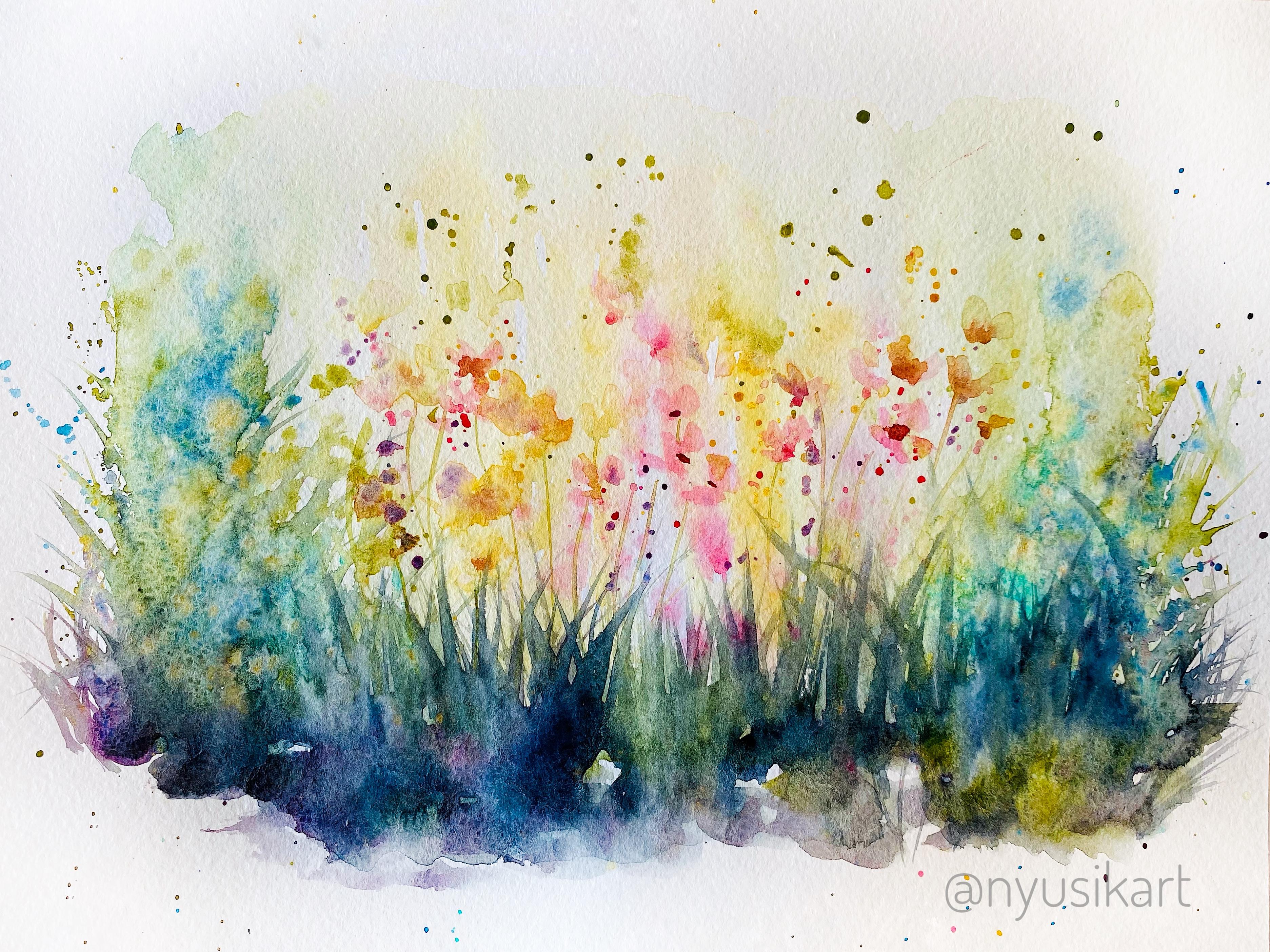
9. Watercolor Splatters Flower Field: Welcome to a new lesson, and this time, we will
go a bit further. In this exercise, we will
face our fear of losing control because that's
actually what will happen with our
watercolor splitters. Also, I have thought
about the thing about paper and materials that you know here I have
used 100% cotton paper, and that is like perfect paper. And I had like, Okay, but if you want to get
better perfect result, so take better perfect paper. Sometimes you get frustrated
because you have taken the best really expensive paper and you are 't happy
with your result. And then you start to say, like, I have spoiled that
piece of paper. No, I have wasted it. Another thing that it
could be the opposite, that you may think that until I won't reach
really perfect skills. I won't pass to the
good quality materials. So it's like you are demanding yourself to improve your skills
and improve your skills. But sometimes you need to pass to another
paper in order to see that the materials the quality of materials
are also mattered. In fact, in order
to play with this, you don't need
expensive materials and you don't need
the best materials. No. So let's move now that I have taken
a cellulose paper. I think that anyway
the results would be fine because in this class, we are actually working not
so much on the results, or let's say accept any results because
what is valuable is our intention that
we have sat and expressed what we feel,
through this technique. But sometimes yeah, if you
get also a beautiful result, then it's more like rewarding. But we do not work actually
so much on the results, but we will focus on
the unpredictability. And this time, I invite you same to pick up colors which you
feel like to play with. Also, I will add a golden color, and here I have a white gase. So this ones, also, if you have, have them nearby, and
let's start to play. Because this time we are going also to play with
the background. I have an idea what I
would like to paint. Because first, before we
will more important part. I would like that you
will feel comfortable with this technique that
you will gain those skills. Here we will try to
use platters for creating the background and
to paint field of flowers. Yeah. All of you, I think that love flowers like me.
L lighter colors. I will place in the center. Because I want here to
be more like light. Maybe also another yellow
I will add, like this. Then I will go to the next color that is
going to be rose color, and I will go to
the darker sheets. This is already green. Olive green, cheerful one. The next will be probably
darker green I will take. Dark green or blue blue. Actually, I have chosen
blue and haven't it yet. Here a bit more of blue. Cheerful colors. Yeah. Now let's take bruh. And with that big bruh, make it wet and let's start to create our
background that I will move first from the ones which I have
added the first. And do you remember that
what we have been looking at that color wheel, h Oh H Oh. I would invite you
to stay in that and go like dive in
your creative process. So feel free to add more
watercolor splatters, the colors which you feel here. In my mind, the water that is going to be darker,
that is the ground. So I have added my
darker shades over here, have addit more splatters, and here is going
to be my flowers. So the idea that try to play and while you still
have these areas wet, you still can keep on
adding splatters and splatters and here you can see this one is getting already dry. So maybe I can add
other splitters, and out of those ones, I will make already flowers. Like, for example, the ones, that I can convert
in simple ones into flowers and can
add most platters, for example, smaller
ones, more pink color. Here to make this tiny flowers, convert them in flowers. And maybe a bit more
of yellow ones. And maybe to take
different shades of purple of purple of rose
color and purple, maybe. And I will add mos
of olive green. Also to add white splatters. And golden ones.
Just play because these kind of touches,
especially golden one. I really like because they
give this shiny, shiny effect. Now, let's convert the ones
also into the flowers. They shouldn't be really big, and we can add some darker
shade in the flower center. I will use brown. This one is Bern Siena. M. And probably with olive green, I will add the stems. Here is my field of flowers. This part is getting a
bit, really fade away. So maybe here, also, I will start to add more again, darker colors to enhance
this part. A bit darker. And here like to let it go. And then to take out some more. They are going to be This
is like foreground and then this type of vegetation
is going to be Now, I think that I would
leave it to get dry. And later, I will be back if I will feel like to
add something more. If not, like this
is already fine. That we have tested
what we wanted, how to use splatters
to create the ground and then to work in the
next layer over it. Now, I invite you to move to another lesson
where we will face our perfectionism and
look at his or her eyes.
10. Personify Your Perfectionism Art Practice: Task for this part
is going to be just set up a timer
for 10 minutes and let have that courage because that is the only
thing how you can overcome all those fears and
procrastination and your perfectionism is by doing
and to have this courage. To do things and to treat
yourself in more kind way. Let's find that courage, and let's paint
our perfectionist. Just close your eyes and
think for several moments, how do you feel
your perfectionism? How does it look like? Which colors it has? And if it would be a
real creature with eyes, how it will look like. Just imagine, but don't try to exactly transmit
it on your paper. I ask you to take
your time like ten, 15 minutes and to
work with layers. Because actually, here it is another metaphoric
association with our conscious and
subconscious defense so that we do not have
this protection layers, and in fact, perfectionism
is our defense defense to some vulnerability back in our childhood when we couldn't
control some situations. And that is something
which gave us that balance that we can
manage with everything. Be kind to yourself. So that is your perfectionism is actually your way
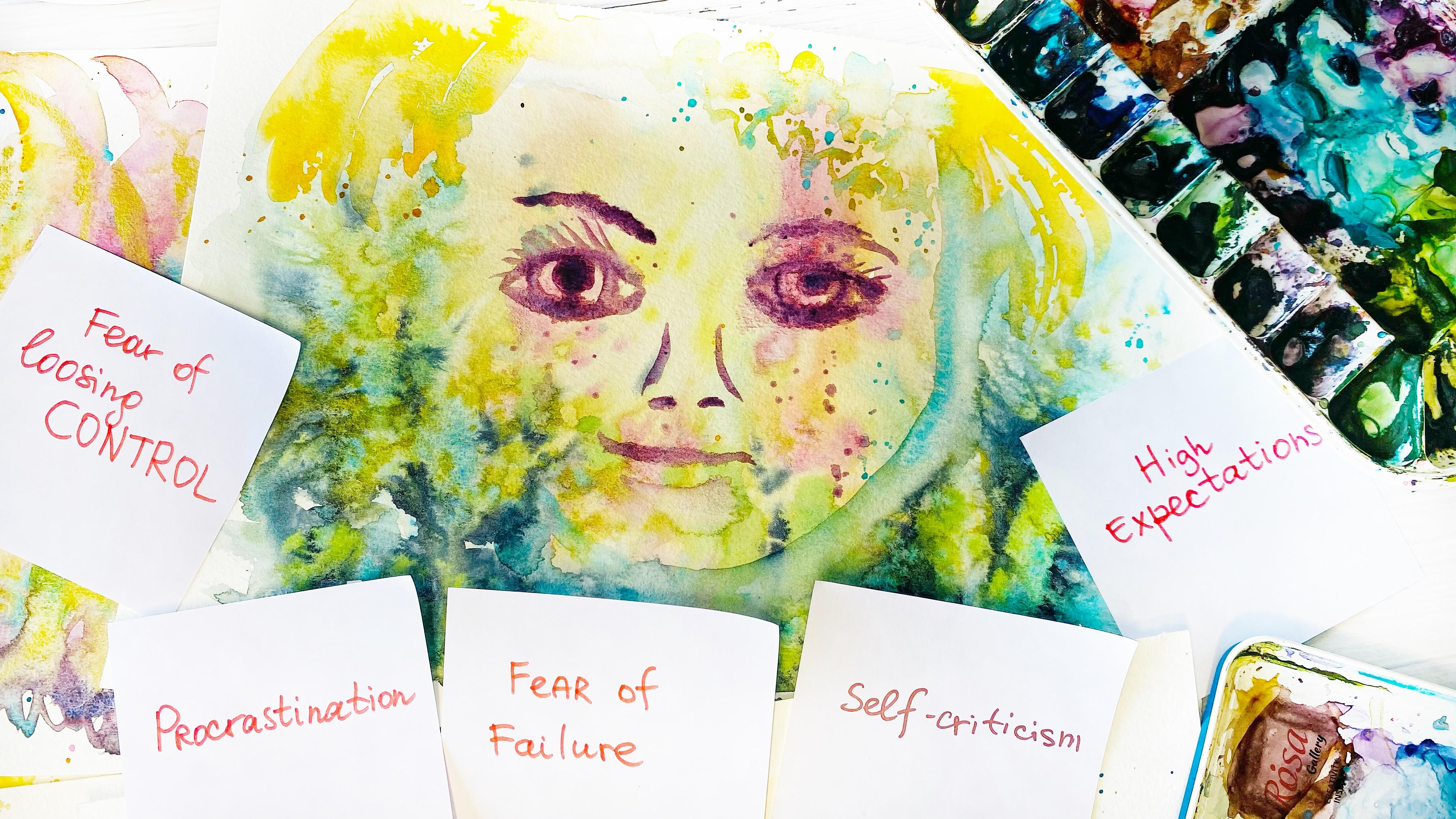
of self protection. But try to give it a face, no and look into the eyes
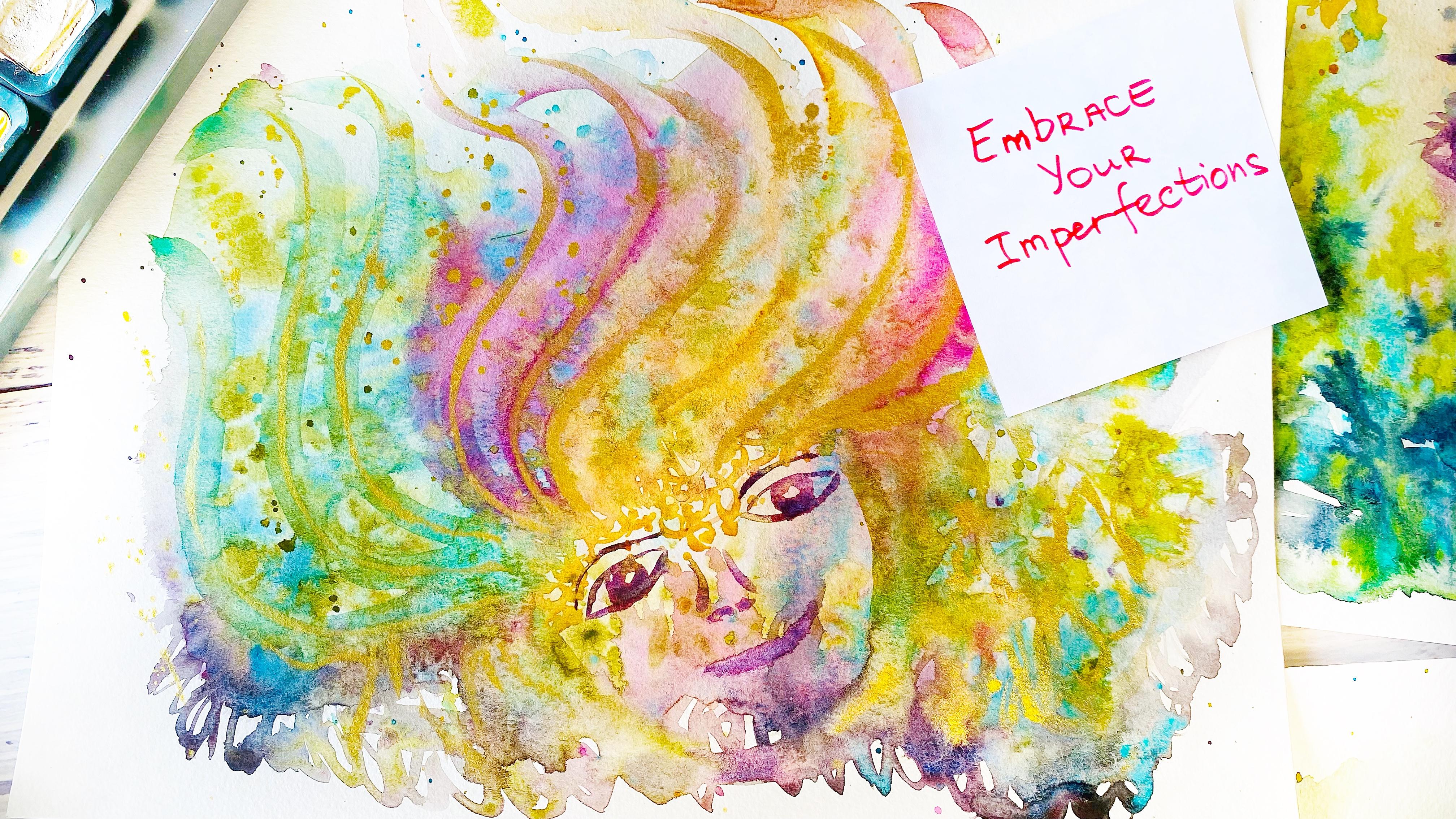
of your perfectionist. I will show you my process. The video won't
be with comments. I would ask you
also to do the same that just a find place for ten, 15 minutes in silence. Don't put even music. In silence so that you could overcome and to go
deeper to your feelings. That it would be one layer, another layer, and we'll
see what we will get. At the end of this process, we'll see what kind of eyes
our perfectionist has. Oh do Oh. So it has taken
for me 13 minutes. And that is how my
perfectionists look like. I would like to ask
you what have you been feeling during the process? And also when you are
looking into the eyes of your perfectionist,
what do you feel? In fact, like in from
my creative process, I can share that I actually
feel lots of sorrow, lots of sorrow and compassion to this creature because It's like this wish and this urge to become perfect comes
from really deep pain. No. And that's actually how
I I was quite surprised that when first time I started to paint my perfectionist
perfectionism. I was expecting that
it's going to be someone arrogant and really,
like, like, dictator. Lord, something similar. And I was so much
surprised to see the same. It was very similar to
see someone who in fact, is vulnerable and who is like using this perfectionism in
order to get that protection. No. And I really would like to hear your impressions and
feelings from this exercise. This is one of the most
important parts of this class to understand and to face your perfectionism and
to look into its eyes. And you will see that it's not so I really would
like to hear you. But my experience is
that it's not someone very strong and
arrogant and in fact, it's someone really, really
fragile and vulnerable. Please share your
observations if you feel like to
share your artworks. You're welcome, but I know that is very, very confidential, and this could also lead to really deep experiences
and that you could really connect deeply
with what you have created.
11. Embrace Your Imperfections Art Practice: Once you have reflected
and have known better, your perfectionism, let's
move to another part. The most important one is, how can we help and how we can be more compassion
and kind to ourself. Because, in fact, what we have expressed is one of our
tiny parts of ourself, the one which has
suffered at some point? No? And let's give
to that our part, love, tenderness, hugs,
the way you feel. Yeah. You don't need to put
the words, but just feel. How can you help this tiny
creature to feel a bit happier to feel that feeling
that it is loved and cared about and
really important. And it is worse the way it is doesn't have to prove
anything to anyone. And let's take a
new piece of paper. I have the artwork
in front of me. And now I will take another 15, ten, 15 minutes and we'll
see what I will get the way, how I would like
to give that love and compassion to
my perfectionist, how to embrace its
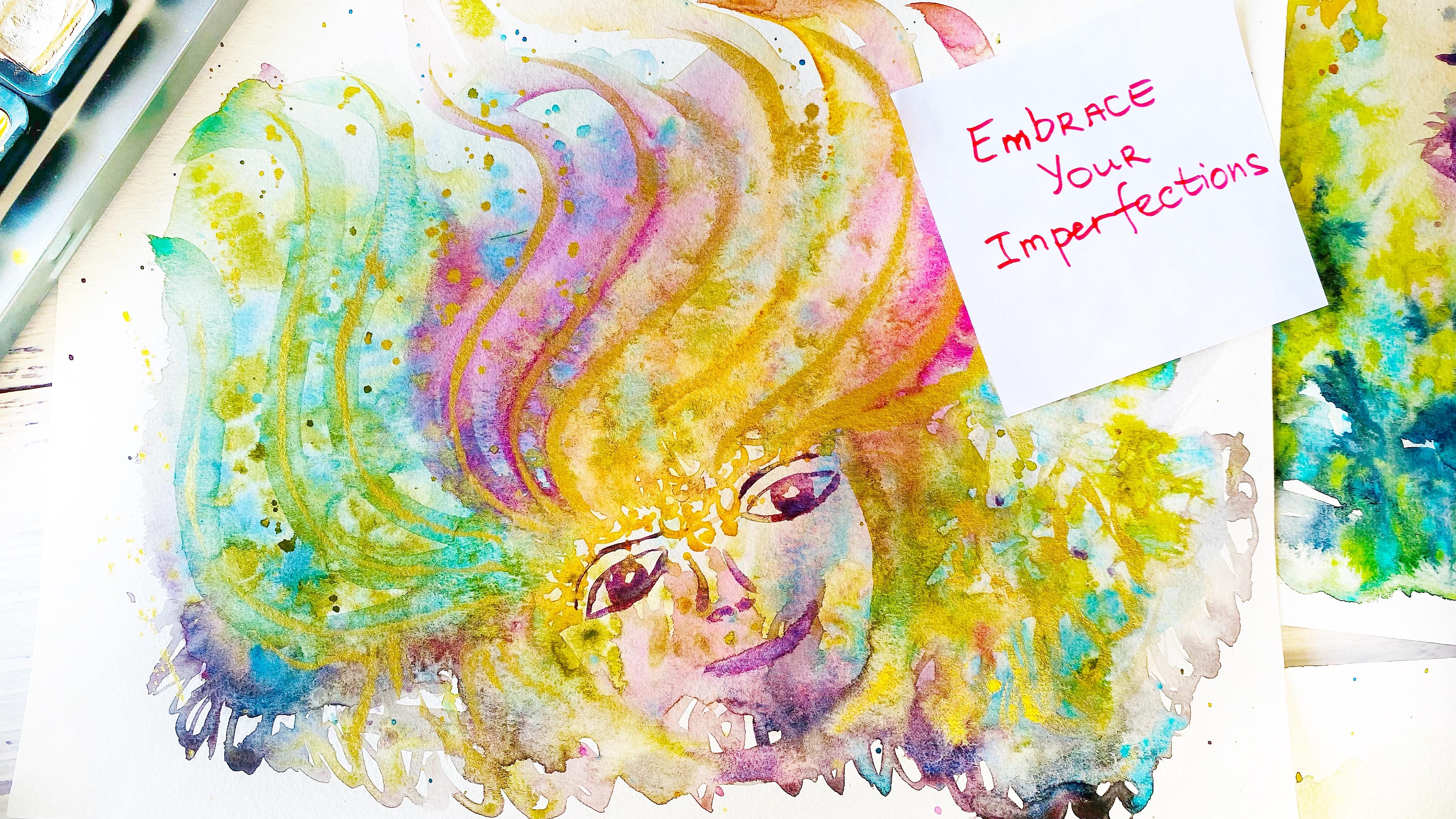
imperfections. So now the next our artwork is going to be I embrace
my imperfections, and I'm giving love, kindness, and lots of hugs to that my part, which represents
perfectionist. As well, just sharing my
process for your inspiration, and I encourage you just to give you yourself those
ten, 15 minutes. And you will see that how fruitful it would be
really valuable this time. So let's start to create. Take several deep breath. One more. You are here and now and just
enjoy this process. It's time for yourself to
take care of yourself. Oh H. Oh Oh. Here I have embrace
my imp artwork. I can tell you that I feel
incredible once I finish it, and during the process, I just gives me so much
power, so much force, so much confidence
and motivation to embrace my imperfections and
just to do things to action, to express myself and all that beauty which
I have inside of me. I really do hope that
your creative process also has brought you some similar feelings
and understandings. I would highly appreciate if you could share it in
the class project.
12. Explore Further: Congratulations. You did it. What were you feeling during
your creative process? Please share your
observations and explorations in the
class project gallery. Have you started to
value yourself more after facing your
vulnerabilities in the creative process? How do you feel
about your results, even if they didn't
turn out as expected? Remember, the only
thing worse than an imperfect result
is no result at all. The energy is in the actions in our
actions, in my actions, in your actions, If
you have something, you have learned and you have gained
experience to improve on. But if you have nothing,
it doesn't exist. It's nothing. I would like to share with you one
inspiring story, experiment made by
a ceramics teacher who divided students
in two groups. One group had assignment during a limited time to
produce a perfect pot. And another group was
given the task during the same time to produce as
many pots as they could. And at the end they have
presented the results. And what do you think?
What do you guess? Yes, the group which was
working on quantity has showed much better results than the other group which
was working on quality. This shows actually in experimental way that
the more you practice, you have some results
which you can improve and to make them closer
to the perfection, while you are working on
one but perfect one that you spend too much time
thinking and less doing, and the results aren't so good. So please take actions
and practice more. If this class
resonates with you, and you would like
to explore how the creative process can help you with your
inner struggles, join my one to one sessions available through
my profile page. A one on one s session can provide you with
a tailored support. You need to continue solving those deep seated beliefs about self worth and achievements. In our sessions, we'll work
together to dig even deeper, using art as a
tool to understand and transform your
inner landscape. You'll gain more insight,
feel more supported, and develop a greater sense of freedom in your
creative expression. Check for a special
discount code in the workbook of the course. Recognize and value yourself for every effort which you make. And embrace your imperfections. They provide you space
for personal grows. With love and gratitude, thank you for joining my class, and I hope that it has
been valuable for you. I would highly appreciate if you could leave a class review so that more students could
know about this class. Enjoy your creative journey
and Manx class. Why
 Nina Nyusikart Watercolor, Artist| Art Therapist | Loose Watercolor