Transcripts
1. Welcome to Class: Hi, everybody. My name
is Journey Marisha, and I've been an art teacher
for about ten years now. I really enjoy weird
and quirky art, and I use that to help students to overcome
fear of failure, starters anxiety,
perfectionism, stuff like that. I like to teach in a
structured but intuitive way with clear steps, but without a fixed outcome. And that is exactly what we're
going to do in this class. We will gently push through
the resistance that we all feel when we are staring
at that blank page. And we're just going to take it step by step, do
little interventions, and let our art build from that. And every now and then when
we feel a little stuck, we will take a look at
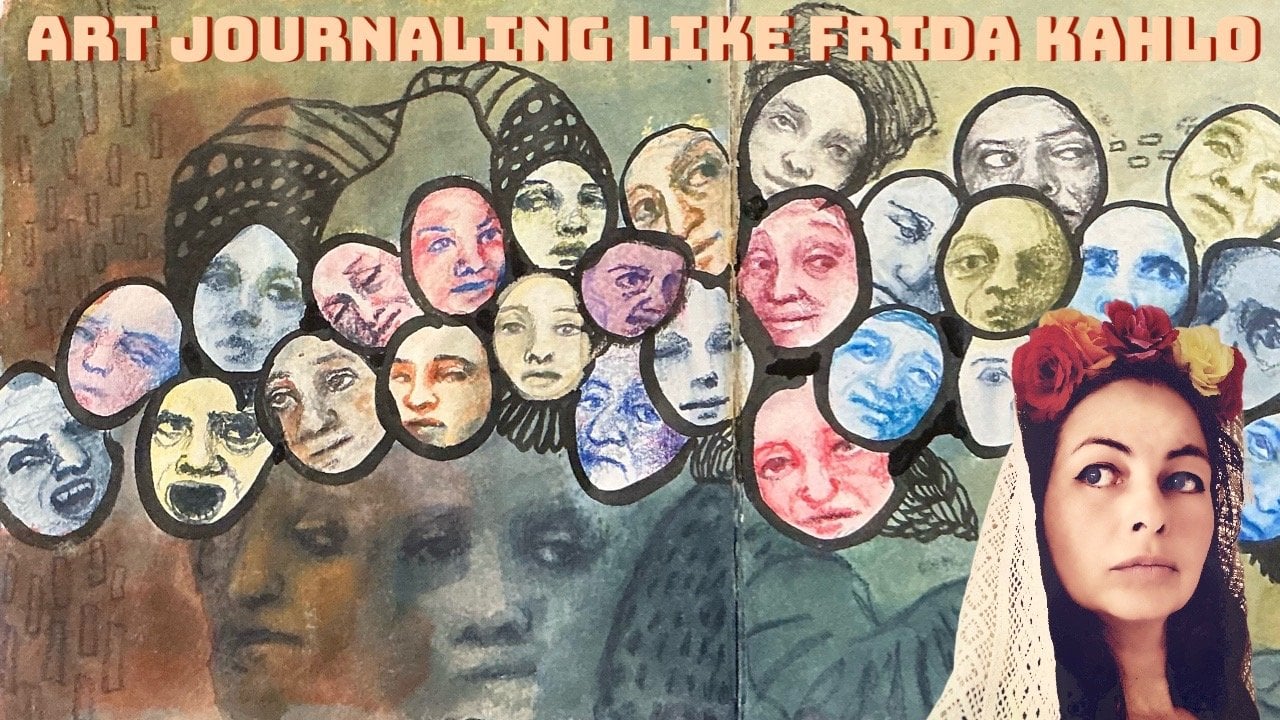
the diary of Frida Cat, and we will observe
what we like, and we're not going to copy it, but we're going to use that as an inspiration to get unstuck and continue on
our journal page. This class is perfect for you
if you have the tendency to overthink things and
freeze up because of that, throw your sketchbook in a corner and go watch
Netflix, you know. And we're not going
to do that today. We're going to have
some fun, get weird, and if that sounds good to you, then let's get to class. Let's free that
inner weird though. I know you have one.
I know it. Let's go.
2. Art Supplies: Before we begin, I
just want to show you which art supplies I
used for this project. But don't feel limited by this. Use what you have,
what you love. But, you know, if
you're interested, I just want to walk
you through it. First of all, I'm using this
Hanam watercolor sketchbook. It's my favorite watercolor
sketchbook because of the dimensions and the
paper is nice and sturdy. But, you know, use any kind you want or just
loose sheets of paper, make sure that they
can take some water. You know. If you have mixed media paper,
that's fine, as well. Then I'm going to use this acrylic ink by
liquitex in muted gray. I like this because they're
wonderfully transparent. But you can use any ink that
you want to get started. You can use India ink or the acrylic inks by
DeRwi even watercolor. Whatever rsu world. Then I really like to use
these ink ten pencils. The ones I used for this project are leaf
green, deep indigo. This is my ultimate
favorite one. Poppy red and chili red. But again, use
whatever you have. You can use color
pencils, whatever. And then, by the way, these are water soluble, and once they have dried,
they become permanent. If you don't want
that to be the case, then you can use the
neo coolor cranes, which I always love to use. And let's see. Where's
my favorite one? It's not here. How? Anyway, it's called desert Rose. It used to be flesh, and I use it all the
time on my little faces. See, it's this color here. It's really nice to have. You can buy these separately, so you won't have to break the
bank and get the big tins. They're overpriced. Just every time when you're
at the art supply store, get a few of these until you have all the colors
of the rainbow. And as I was saying, these are also water soluble, but they can be reactivated
again later on. They are really
nice to use on top of acrylic acrylic paint, and that way you
can draw with them. And if you don't like
it, you can take some water and wipe it
away and start over. That's why I really love these. Then we have the watercolors. I really love this tin. Can buy your own naps
and fill them up. And the colors that I used for this project are
from Daniel Smith. These are my favorite
ones, my favorite brand. And the colors are
iridescent topaz, I think, lunar blue and
iridescent Aztec gold. These are amazing colors. And after a while, I will bring in one of my palette knives to
scratch into the paint. And yeah, I really enjoyed that. You can't take
anything that sharp. And that's it. Now,
let's jump right in.
3. Conquering The White Page: I think the most
intimidating thing about our journaling is
the white page. So let's get rid of that Fried latele and
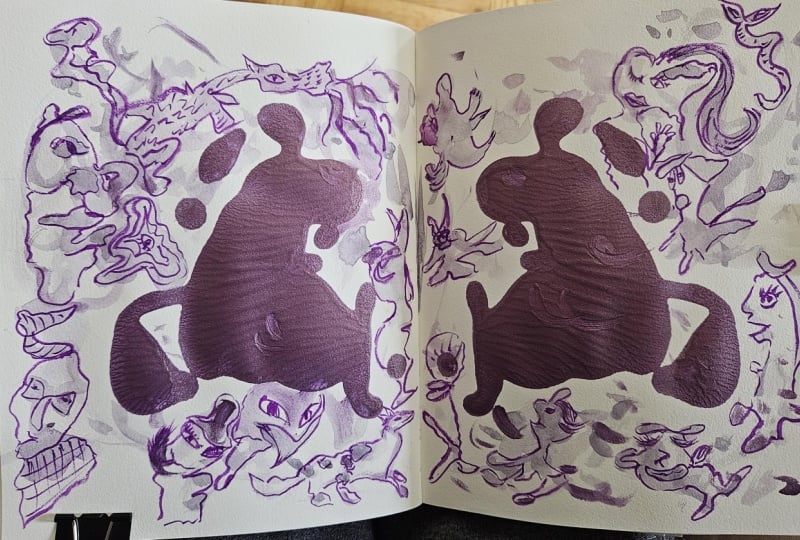
put an inkblot on there. I'm just making a few
marks, not too much ink. Otherwise, we're going
to fill the whole page, and that would
defeat the purpose. Now let's put those
pages together, put some pressure on there, and I'm going to rub it a
little bit to make the ink move in certain directions because I like
that transparency. And also with liquitex inks, you'll get nicer textures. Now, compare this to this. Now, let's get out our watercolors because they are nice, transparent
art supply. But first, I want to make sure that those ink blots are dry. Otherwise, it's going to mix in with each other and
I don't like that. Choose your favorite
color and go to town. I just want a light
layer of something. Just want to get
rid of it white. Let's get a small brush and
do some random mark making. O. Whenever you see
something in those marks, feel free to bring it out
in a very rudimentary way, and this will help
you in the next step. Here, I started to paint in some negative space
with a second color, but I changed my mind and wanted to bring out
some figures first. So let's go to the next
lesson and do just that. H.
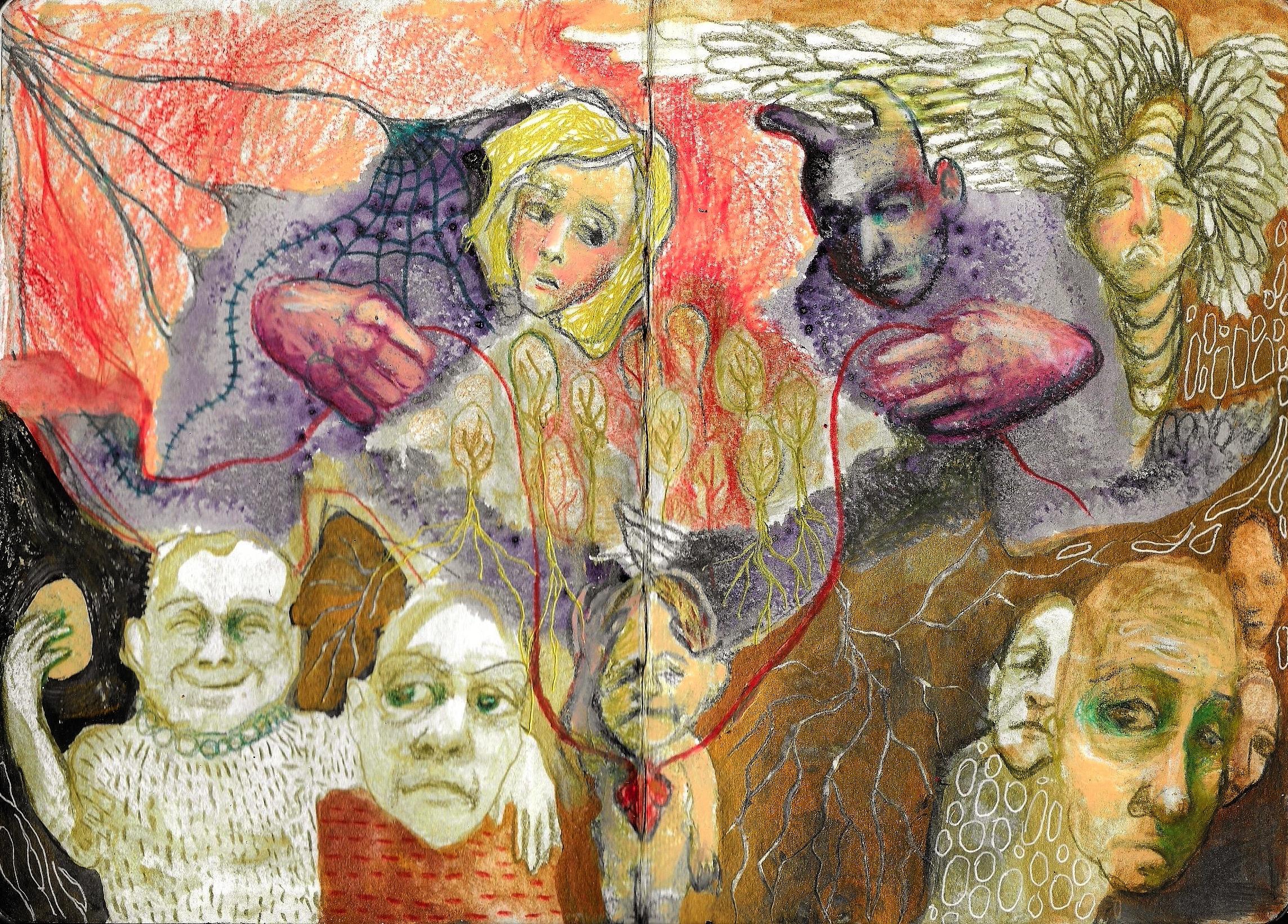
4. Drawing Intuitively: And Let's start with the little green
figures right now. Something greenish. Let's
try this leaf green, see what that does. Okay. Okay. Let's bring this little
bit to the foreground. You can work with the
shapes that you have. And what I'm doing is
mostly a mixture of just creating what I'm seeing
and also adding to that. You know, It's a combination of working with what
you got and using your own artistic freedom to do what the hell
you want to do. Okay. I'll start with the faces, and then I will
doodle some more. I can see smiling one here. I'll just get rid of this because it was
casting a shadow. I hardly create any
happy smiling figures. I always see the gloomy ones, and I like them. Okay, so here. There. I must be in a good mood. I want to do some pattern
play for the hair here, but I don't know yet
where the hair will be. She has a very weird
forehead thing. I'm going to see how
this will work out. This is something that
I saw in my mind, but I have no idea how
I can make this work. But I have two choices. I can drive myself crazy trying to figure
it out and then start, or I can just do what
feels good to me. Logic. I just want to do
this for a while. Let's just pattern play
a body. Because why not? I just want to give
you a couple of options of giving your head some bodies in different ways without getting stuck in
the thing where you want to create real body and
then you get stressed out about that and it's going
to ruin the whole vibe. Can you just
something like this. Maybe right now I
don't know where the arms are going to
go and then I can, well, this is a shoulder. I can see some kind of
hand thing right here. Here, be weird. There. We know this is a hand and maybe we can
fine tune it later. All we need. Maybe I want a different
pattern right here. Something like that.
Poor guy. Okay. Maybe it will go around maybe I'm making a mess
around this figure. It's fun to let them
interact with each other. Okay. Pinky, ring finger,
long middle finger, index finger and thumb. We need to remind ourselves which fingers there are just so that we know how
long they should be. Okay. When you're happy with all
your drawings on the page, then let's go on to
the next lesson.
5. Transforming Mistakes: I'm not going too deep into creating faces with these
neo coolor crayons, but if you are interested, you can go to my Ink blood magic series here on Skillshare, and there I will explain a
bit more what I'm doing. O I really do not like that mark
on top of his head. It makes him look like
some kind of smurf, and I'm not going for that. So I'm just taking my
new colour crayons, and I'm going to layer
on top of that to push that line to the background without having to
raise or something. Now, just keep layering. The new coolor crayons
are so good for that. And because of the mixture of that feathery hair and a mark
that I didn't like before, I can suddenly see
some kind of porn, so I decide to just
bring that out. Isn't it funny how mistakes
can lead to new inspiration? So, try not to get too
frustrated by them. Don't panic. Don't rip out your pages. Just try to problem solve them. If that doesn't work as well, you can collage on top of
it or paint on top of it. Well, I wanted some little dots. Well, maybe the Aztec gold will be more to my satisfaction. And maybe I don't want. Maybe maybe I'll just Oh, no, I don't want that as well. No. Sometimes things look great in your mind and
doesn't work right here. So now I'm activating it. And again, I'm just
going to dab it. And that way you can get rid of your mistake in about a second. Now, let's go on
to the next video.
6. Finding Inspiration: I'm just going to show you how I would go about getting unstuck. Sometimes that happens when you are creating a page
and you're in the zone and then the inspiration
is drying up a bit. How you can use this
diary Frida clot then is to just flip
through it until you see something that
you are excited about and then going to
see why we like it. And the reason is not
to copy her style because my style is way
less colorful than hers. But we're just going to observe a couple of
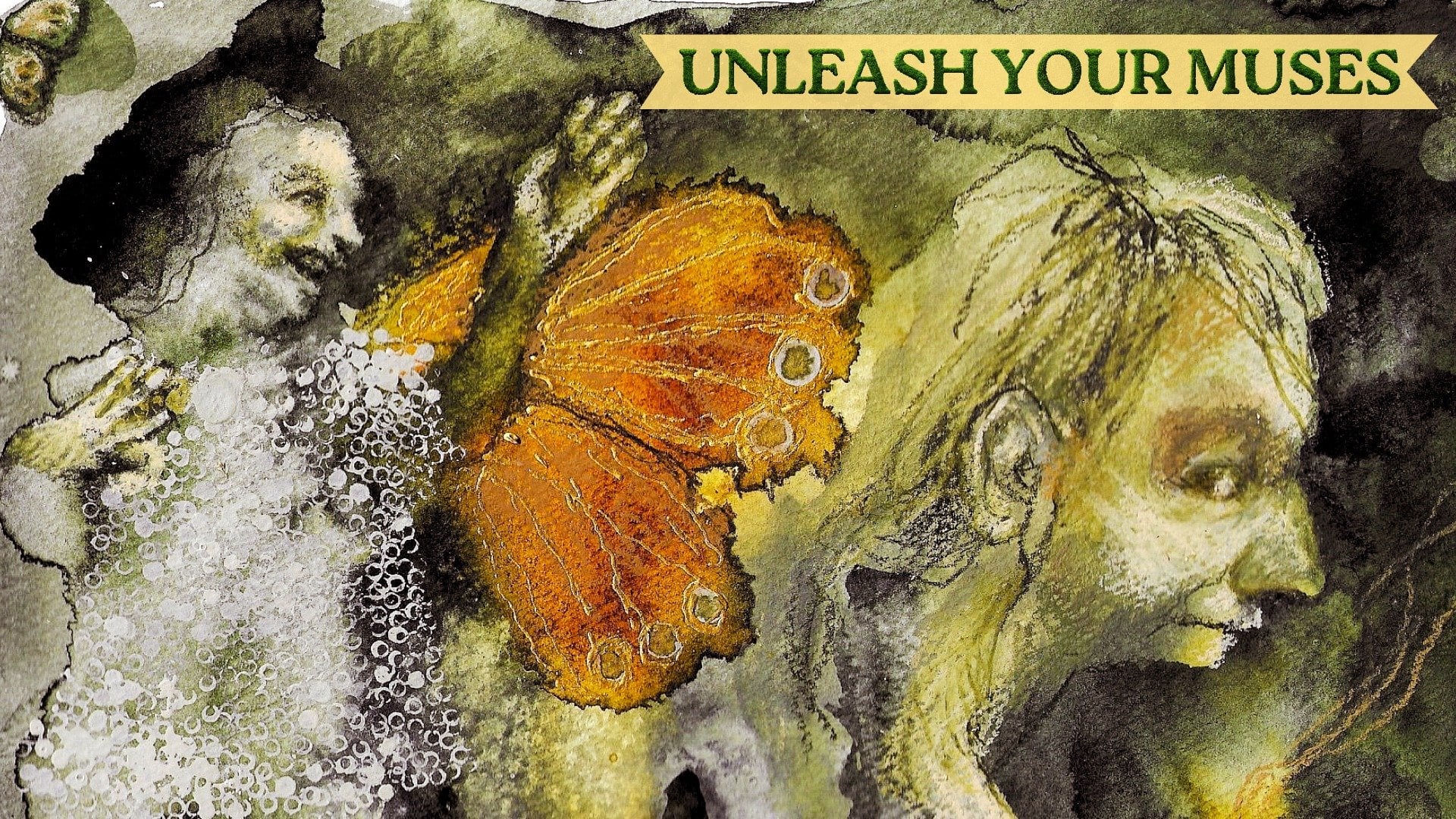
pages and what we like. I really like this figure. And I'm going to tell you why. I like that she mixed a couple of colors and
she kept it really messy. But by layering a couple of color pencils and doing
some linework in there, pattern play, schematic
little drawings. It reads as very nice. So maybe maybe I'll just use similar colors
like this poppy red. Well, maybe just my deep
indigo because I like it. And if I want to go darker, I can always take
a different one. We'll see. Maybe something like this could go in this one because this
is pretty empty. And Well, let's do something
about this guy. I think I will not
make this into a head, but maybe I don't know. Do I like this? Not really. So I'm just going to continue. Oh. I think I will create some hands here. I'm going to hold something. Nice and big hands. I'm going to throw
in the knuckles. They are very big hands
because we're going to exaggerate what they are doing. Because that's expressive. Yes. Something like that. I'm going to do the
same hand right here. This is the books. We're going to build up those
hands with several colors. It doesn't need to be
ink tense pencils, but I really like these, especially because I'm
working in line now. I can get finer lines with
these than my new color crays. Creating some form. I'm just going to go
for the mid tone now. There. I've lost some of my
lines, but don't worry. We can get it back. I like to work in
that structure. This is the flashtone Okay. We can go over those lines and making little circles here again to work in some shadow. This is how you
build your hands. If I want something
more dramatic, I can also bring in that
deep indigo right here. Okay. A little bit of white. I kind of like this. Maybe I need some more color
in space now as well. Just continue
drawing and playing until you're not sure
what to do anymore, and then we'll go to
the next lesson. Oh
7. Exploring Your Story: For our next step, we're just going to
doodle for a little bit, try to find a story, have some fun with it.
Don't overthink it. Maybe I would like to add a
bit more in the background. Let's see if I can find
something fun in her journal. It doesn't need to be
something too complex. Just seeing how she handles
her media is enough to spark some inspiration again so we can continue
with our story. Kind of like the way she colored in this background.
Maybe I'll try that. I'm going to start start
off pretty light handed. And I'm going in different directions because
that's what I really like about Frida's way. I'm going to vari pressure because I noticed that's
what she was doing, and that makes it a
bit more exciting than just coloring in the whole
thing in the same way. Let's see if I can
push it back a little bit or at least change the hue, because I don't want it to
be poppy red everywhere. But I like the warm. I was a good decision. Just follow your intuition. Et's put those hands to work. That always adds so much
more interest to the story. Don't be afraid to draw hands, even if you think you
are no good at it. Wonky hands are better than
no hands, and over time, you will understand
them a bit more, and bit by bit, you will, yeah, become
better at them. So don't hold back. Notice how I started off with a very light touch
with my pencil. That is because I was
feeling out the face, and now that I know
that I like it, I'm going to emphasize
some areas to up contrast and make it a
little bit more dramatic. Just keep doling and playing and don't worry too much
about the end result. Try to see your art
journal as a place for playful exploration
and not some kind of product where every
page needs to be very pretty or impressive. That's going to hold you back, and I just want you to let go experiments and
have some fun. When you're happy
with your doodles, let's go on to the next lesson where we will
evaluate what's there and see what's necessary to finish this page up and
find some balance. H
8. Finishing Touches: This is very dominant. So I need a bit more
going on right here, a bit more contrast
to balance it out. I think I will take this one. I hope this is pains
gray or otherwise, it's some kind of purple. Both are fine. I just need
I have darkness right here. Okay. I'm just going
to go very slowly. Oops didn't want
that. It's fine. What's this area here? I don't know yet. Let's see. I don't like it. It's
important to try. Now, let's see. We'll
probably lift some of that. Paint. Oh, that's better. It's more sled now, right? And I like the texture. We can use it as a base
for doodling, maybe. You can make it a tiny
little forest or something. I just a combination of color, shape, texture, and line, making it more interesting
than it was before, right? Let's see, maybe I
want I do what I want. Maybe I want gelpin
or something. 'Cause I want no
I want my roots. Oh, yes. Yes, I was
creating a roof. Here I'm kind of scratching in the wet watercolor, and I'm hoping I'm not
ruining my my jping. That still works. I
kind of like that. You can also do that with
something like this. I like it because you'll get different values
and colors, maybe. Depends what's
underneath there, right? And it's a nice way
to break up all that. You know, solid color. Oh, some golden
hair will fit her. Just some scratchiness. We. Let's go to the next video.
9. Your Turn!: I hope you had fun
watching lessons, and now it's your turn. If you weren't
particularly inspired by the pieces that I chose, then you can just look
at the journal yourself. I will make a video
with flip through, and you can just pause the video wherever you see
something interesting. And if you still can't find
anything that interests you, which I think Chances are low, but you never know, you know, we all have different tastes. Then you can just find
your own favorite artists and really look at their art and borrow little
pieces of them, you know. Do whatever you want. You
know, who am I to judge? I do it all the time, so Okay,
happy creating, everybody. And I hope to see your art in the classroom because you know I'm
rooting for you. I really love to see what
you guys will do with it. Now, let's have some fun and take that inner
critic on a ride. It will not soon forget.
 Jerney Marisha, Making Art Fun Again