Transcripts
1. Welcome: Well, hi everyone and welcome
to my studio. Come on in. Today I have for you a cute
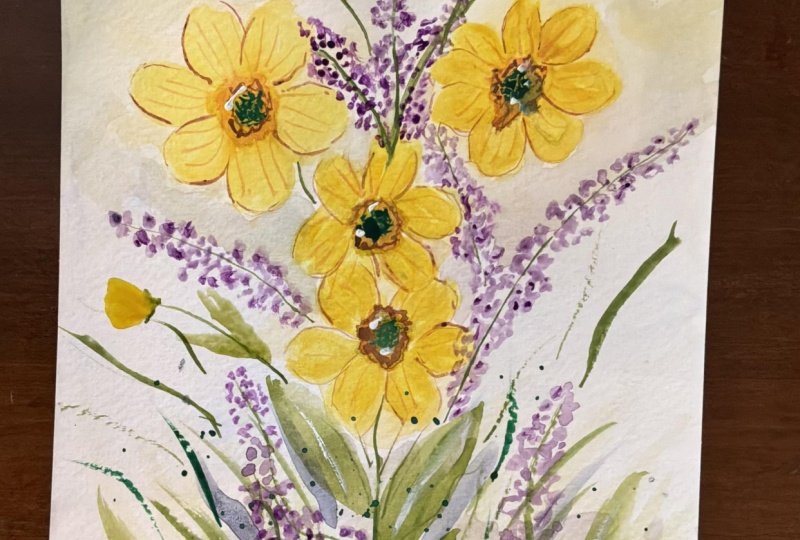
little floral vignette. I have just returned
from a trip to Northern Utah and went to
the top of the mountains. I was so surprised
to see acres and acres of wild flowers
growing everywhere. It was stunning. It
was breathtaking. I had to literally sit
down in the field of flowers and pull up my paintbrush
kit and start painting. Well today, I want to share
one of these with you, and it is for people
of all abilities. If you've never painted
before, it's okay. I'm going to walk
you through when these videos step-by-step. And if you're
inexperienced painter, this is going to be an
awesome piece that you're just going to breeze
through and enjoy getting in the zone and not
thinking about life for a minute and just
enjoy the Flowers. Hi everybody. My name is Kerrie Sanders
and I'm an artist and a teacher in a creative here in beautiful St. George, Utah. And I'm just outside
of Zion National Park. If you're ever in our neck of the woods and want to join us, look me up at Kerrie Sanders art.com and that will
tell you what's going on. We have studio painting
when it's too hot outside. We have urban sketching and we also have
plein air painting. It's just so beautiful here. You can't help but
want to be out there. I was lucky enough
to be picked up by a big box store
and they published my book and send it across the nation as well
as pattern packets. And I really have a love for
sharing Art with people. I have had many, many students over the years. And how often do we here? I can't paint, I can't draw. Well, it's just not true. You can, and I'm going
to help you do that. If this sounds like a
great piece for you today, then grab your supplies and
let's get started together.
2. Supplies: Let's do a quick review of
supplies that will work for you for all of the Flowers that we're going
to be doing today. So in general, here's
what we're going to need. I'll be using this
Watercolor Block today. It's 100% cotton and 140 pound. And I use these for
special occasions. It's a little bit more
expensive to use a block, but if you've never
used it before, it's such a treat
because what they do is they bind the
edges for you all the way around into a block and
they leave one section open. So when you're finished
in your pieces Dry, you can use a palette knife and gently peel off your artwork, but it keeps your
paper from doing any buckling and you don't have to tape it down
like we usually do. And so it's such a treat and
because it's 100% cotton, it interacts really well with
the water and your paints and your brushes and all things
that it's supposed to do. So I highly recommend
giving that a try if you haven't splurged just a little
bit and tried that yet. We will be highlighting all of the Flowers
today with some white. So I would recommend
some white gouache or some Bleed Proof White
from Dr. Martin. I really loved this. I'll be using this a lot. And for paint brushes, I would recommend that you grab your favorite guy is mostly, I'll be using these brushes, which is a variety of rounds. So I have a larger round, a medium-size round, and
a smaller size round. And then I have some liner brushes that have nice long tips of
the water flows, the paint flows
and with you some real-time lining in detail work. Then after our paint has dried, will be doing some inking today. And these are my three
favorite inking tools. The most important thing
is to make sure that what you use is waterproof. Now, we will not be Inking until after the paint has
dried for the most part. But if you were to forget
and go back in and say, Oh, I just want to fix this one little spot with some paint. And then you go over something
that you have inked and it bleeds all would ruin your piece and I would
be so sad for you. So please make
sure that what you use is waterproof
for these today. These are my three favorites. And if you've done ink and watercolor with me
before, you know, this is called a Muji, mu JI pen gets a fine tip pen. It is Watercolor,
are waterproof. This is a unit ball black. And it's also says
that it's a fine tip. But not all fine tips
are created equal. So makes sure that you
test these out and get the size tip that you want for the project
that you're doing. And then of course, a
wonderful industry standard is Micron. I'll be using an O3 or an O5, most likely an L3 on this. And it's also a very nice, fine tip and is one approved. So these are the general things that I would recommend
that you have. Of course, my favorite
tool always is handy-dandy tissue will be
using that quite a bit. And some clean water
and some shop towels. And always a spare piece
of scrap watercolor paper. I use my old papers
and I cut them up. And because you're
going to want to be testing different
color values and making sure it's just how you want it before you put it
on your Archie's. So go ahead and gather
your Art Supply's guys, and I'll see you
in the next video and we'll get started
on our flower together.
3. Wet on Wet Technique - Wash in Background : I highly recommend you try to
freehand this piece so that stays nice and loose and not looking
controlled and tight. I have placed three x's Forex is where I want my
main sunflowers to be. A little indicator of where
I want the bug to be. And we're gonna go
ahead and start by just putting some water
down on the paper. In those areas. Kind of a circular
motion is fine. Alright, now I'm going to
pick up some lemon yellow. And we'll leave that area and come down to our grassy area. Lay down some water, some of iStep green. So great wet on wet
technique that we're using. While that is absorbing, it's a little bit of our Purple. Doesn't take much
Purple spread strong. We're gonna go ahead and
add a little bit up here. Going around the
yellow a little bit. A couple of sprigs. Over in this area. Also going to add some green mixing a little
bit of hookers in. Alright, this is pretty dry and I'm gonna come in and just pick up a little
bit of this slide, sap green and a lot of water. Do a little bit of
drawing with it. Just to start some
placement so that as we go along and makes it a little bit easier to see where we're going. This is gonna be
our little flower that it comes up this direction. Just want a hint. And those
Flowers will be pretty good. Hello, want to stem here? So we're going to come
into a main stem, right? I'll just kinda indicating
that the flower there and stem that comes down here be putting some kind of a leaf here, there. And then let's pick
up a little bit of our purple that we've
got sitting here. Very watered down
so that it's really light. The same kind of thing. We're going to want
to have an indication of where the stem
is going to be. I'm going to hold on this one because I
wanted to see where my petals are here
first and that one. But that helps while we're
down here with the green, let's just go ahead
and pick up some of this sap green watered down. And we can go ahead and lay
in a little bit of the Grass. And I'm going to put into this
blend into the background
4. Petal Stroke - Lay in Yellow Flowers : From here, I think it
will help us if we set in our center. So I'm just going to pick up
a little bit of this orange, mix it with a and land hint at the bottom of that bud. And then this will
be the center. While that's still wet. Add just a tiny bit. The first clean,
wet, wet on wet. It's going to spread. So go easy. The tiniest amount of
trouble down here. Alright, let's let that dry. I'll switch to a medium-size
round, this number six. And we're gonna do
what's called a pedal stroke for these
wild flower petals. And all you do is take
around and touch and press. And as you lift,
come to a point. And as we do these flowers, make sure that you
are making them curved so that they look
like they're contoured. And here we go. Again, coming back
to lemon yellow. I'm going to start at the
top and work my way down. This one is just the bud. So it's going to have just a few min go right
over that orange. Great. Well, those
are still wet. Just going to pick up a
tiny amount of this orange. That CSR. So tucked under there, I, I ignored it. Elongate builds a
little bit. Awesome. Now a teeny bit of the orange ball
5. Lay in Purple Flowers: We're going to let those
flower petals dry. And while they are
out of the way. Let's come back to our purple. Make it a little darker. I
picked up a smaller brush. Keep my tissue handy. And we're just going to go ahead and lay in
some of these flowers. I start with a V and then I just kinda just
the top a little bit. Don't worry, we'll come back
and strengthen that bind, but we want it to be green up for them to face
different directions. They all come back to the stems. It's okay to leave
some white showing. Maybe. I do want to be behind
the yellow flowers. Well, that's pretty isn't up. Spilling go. Alright, we are going to
put a couple of stems here. Our last fine. These
beautiful purple flowers. These were amazing in the
field and the mountain. I'll show you the picture again
so that you can see them, but they were just mix like sprinkled in amongst
the yellow sunflowers. So gorgeous. Go ahead and just watching a tiny bit more of this purple. Now, we've got some
light in here. Make it look
planning and grassy. Alright, we'll let
that dry and then we'll come in and do
our wild flowers. I'm going to pick up some
of this gamboge now using my number four round excuse, kind of orangey, yellowy. We're going to add in some
accents on the bottom. I just picked up some
water on my brush. And these two little petals on the bottom are going
to be shadowed. And we're going to
make sure that we do her lines and pull from the center out
so that because he tends to lift your brush as you go out, which is what we want. A little bit lighter. While
you have the gamboge, let's go ahead and just read the fine arts
center a little bit. Great. Let that dry
6. Create Shadows, Dimension and Add Leaves: That to our Purple Flowers. Darker mixture. And I'm just going to add a
little shadow here and there. Coming back to our Wildflower is we want to pick up a little bit more green, that green. And we're just going
to start defining the center a little bit
more, make it stronger. Up some of this burnt picking mostly to the
outer edge with the umbra. We're going to pull some
up in just a moment. Sticking with our umber. I'm just going to pull some
up a little bit between. I liked that little bit of under shadow beneath the Petals. Want to soften it so that Dry. It's time for us to
place in some leaves. Start with the leaf green. I'm using a larger round. This is done if you
haven't done this before. This is done by
two Petal strokes. Touch and press and lift. Then come back up at the top, touch and press and
lift the other way. And there's your leaf. I'm going to go fairly light
to start laying these in, will come in and shape
them and darken them. But I just wanted to get
a feel for placement. I don't want to come to the
I loved this right here. I don't want to come across it, but this would
probably a good place. But looks like it's
coming from behind. And if we've got our stem
that was coming down here, let's put a couple on the stem. Should we chin here? And we'll work on that
stem and just a minute. But alright, let's let
that dry a little bit. Alright, that's going to our
darker green, this green. And just point out that's
still a little bit wet, so I touched it and there
it went. And that's great. Perfect. Let's leave that alone. Alright. I am going to add a touch
of shading on this one. I'm going to lay in some Wash. It got some water on my brush. This one's kind of
in the background. I want that Purple to
be in front of it, but I'm still going up
lay in some shading. While this is wet, I'm
just coming in with some darker Hooker's green
and touching it. And it's going to
blend all by itself. I'm just going to add a few little pedal strokes
with the lighter green. Let's let that dry
7. Glazing Petals and Splatter Grass: It's time for us to put
some of our binds in. Start with a lighter green. Ok. Now we're going to pick up a little more of our lemon yellow. And I just want to
strengthen some of the Yellow more so at the bottom of the Petals. But pulling it up as the gamboge that we want to
leave some of the tips light. You're going to keep glazing. Glazing is when you just add a light layer on top
of another layer. Beautiful. While that's drying, I'm picking up some of our hookers green, watering it down quite a bit. And I'm just going to put
in a hint more Grass. I'm just going to lightly touch
one side. Little strokes. Let's let that dry. Alright, I'm gonna lay a
shop towel down and do the tiniest amount of
Splatter just at the bottom here, using hookers green. Alright, so I'm using a
small brush, lots of water. And I'm going to try and
control it quite a bit. I don't want it
over here either, so it's going to tap, staying close to the birth. Flip that Dry
8. Contour and Definition with Black Ink: I think it's time for
us to go ahead and lay in the inking on our flowers. So I'm going to start with, this is my uni-ball, fine. And it's a little bit thicker than a true
fine in my opinion, but I like to use it when I need something to really stand out. And I'm just going to
start in a obscure place, so to speak, till I
get a feel for it. Yeah. And then I'm
going to save areas. Or a finer tip. I have provided the
pattern for you. What's your welcome to refer to? I'm going to let that
green stay on top. I kinda like that. Hey, this leaf I'm going to keep
under the purple. Great. I'm changing to the Muji. It's a fine tip, but you
can see that it's more fine than the last
one that I used. And I'm only going to add a
small amount of contouring at the bottom of these flowers because the black can take over and you don't
want it to take over. And make sure that you are
contouring your lines. That you're Petals look round, sticking with emojis but
thinner when I'm just going to add a little bit
more now than there. Now, I'm not going to outline each of these
Purple Flowers, but I will put in a
little bit in there. Hey, wonderful. Let's
pull out some green
9. Fine Details and White Highlights: I'm going to use the
liner brush and I'm going to use some
of the sap green. We're gonna go right
on top of the Purple, which is going to gray
it down quite a bit. No worries there. But we just want to add a
hint of these stems now. Just lightly, things that are more in the shadows. I'm actually pulling
it up onto the Purple. I'll leave this leaf on top of the flower and on
top of that stems. I'll just make sure you're
going slow and taking a look at it. Nice. Let's finish up. You've
got a couple more to do. It's time for us to highlights. I've pulled out
some white gouache. I'm still using my
thin liner brush. And I'm just going to
add a few Highlights. And on my light side, I'm just going to
add a little bit. And we're also going to
add some white dots. I'm sticking to the center, mostly on the lighter
side that I left. Looking up some of
us burnt umber. I'm going to add a few dots. Nice. Okay, I'm picking up
some of my liquid white now and still using
the same brush. And I'm just going to add some grass that's
hit the highlight, yellow highlight of some. And so it's going to
be a little bit white. Okay, This is a great
time to just step back and take a
look from 6 ft and see if there's anything
else we want to add. Picking up a medium brush, I realized when I
step back 6 ft, that it's too light
behind these flowers, I'm going to come in
here and there with Purple and here and there
was some Hooker's green. I'm using 90% water, going to make the yellow pop, softening the edge with
just water on my brush. But I can like that
better already. I'm going to leave
some of that light, bring this darker right here. Oh, I like that a lot. Notice that I just keep
wiggling my brush. I'm not doing any
strong strokes here. Keeping the marks light and
an uneven edge. Those better. Alright, the last thing I'm gonna do is that a little bit of a white highlight on
some of the Petal tips. I'm coming back to my gouache. I'll be using my finger
a lot to smudge. If you want to brighten
up your Yellow in a spot, put some white gouache down first and then do
yellow on top of it. Just like that. Okay, I think last step is now that the
purple background that we just put in is dry. I'm just going to
pick up a little bit of leaf green watered down and put in the
tiniest amount. So it's not just Purple. We want it to be a mixture
of greens and purples. So I'll put a little bit down
like that and then pick up clean water, soften the edge. You can see how just a
little bit goes a long way. Step back, 6 ft. I've taken a good look
at this and I don't feel like I want to make
any more additions. So you look at yours
and see how you feel. If you'd like to make changes. This is the time. But
I think we are at the end here and we can go
ahead and sign our name. Thank you so much for
taking this class with me. I hope you learned something and enjoyed improving your skills. And I know this one
was a little bit challenging here
and there because there was a lot of free handing, but it was awesome and
FUN to do with you. So I do appreciate your time.
10. Class Project: Alright guys, your class project is to complete one beautiful
little Wildflower vignette. And all you need to do is follow the videos that I've
provided for you. I'll take you through
everything step-by-step. If you're a beginner, you're going to have
a great outcome. And if you're an
experienced painter, you're going to
have a blast doing this and have a great
outcome as well. When you are finished,
if you could please snap a picture and upload that into our gallery
below on this page. By following this green button, create projects that will allow us to communicate
well together there. And it's so fun to see what each other has done because
this is a loose skis. Everyone's going to
have just a little bit different flower
and it's gonna be really awesome to see
what you come up with. Thanks again for taking
this class with me.
11. Congratulations: Hey, congratulations, you've finished your
floral vignette. I'm so excited for you and I hope that you learned
some things along the way that are going
to help you with your Art journey
for years to come. If you enjoyed
this class and you know someone else
that might enjoy it, Would you mind sharing it
by clicking on this button? And both you and your
friend will benefit financially from Skillshare,
which is pretty cool. Also, if you can take
a moment to snap a picture and upload that into our Class Gallery
below by looking for this green create button
that would be self-funded, be able to see what
each other is doing and it's a great place for us to
communicate well together. You can also find me at Kerrie
Sanders art.com are also on Insta at Kerrie
Sanders Art and we can communicate freely
in those places as well. If this was done
for you and you'd like to see some of
my other classes. I've just released a class on these three Flowers as well. I'm telling you the wildflowers. I couldn't resist, so I tried to paint as many as I could,
as fast as I could. I would love to have you join me in some of my other classes. All you need to do in Skillshare is type in my name
in the search bar. And the classes that I have
provided will populate. I'd love to see you again. Thank you for joining me
and until the next class. Take care. Bye
 Kerrie Sanders, Artist, Teacher, Creator.