Transcripts
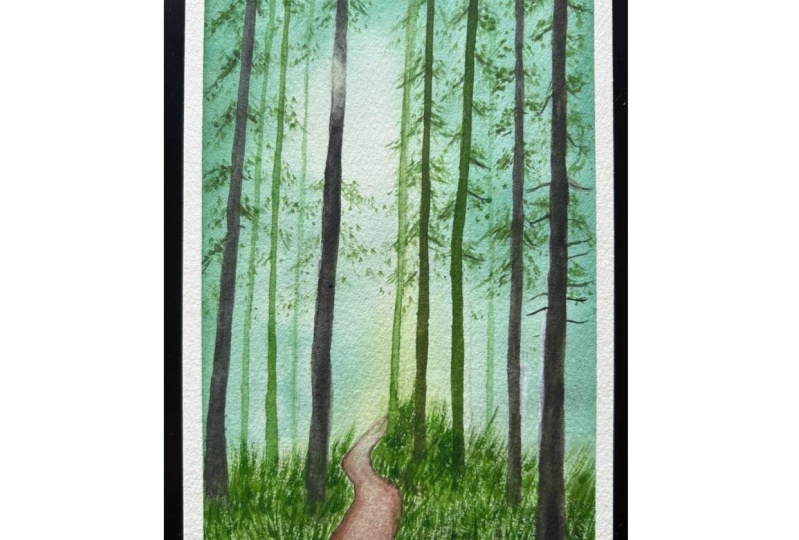
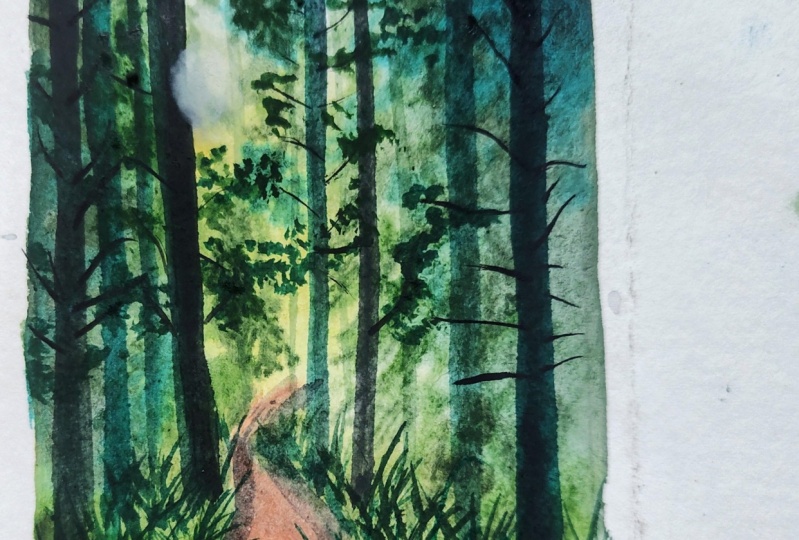
1. Welcome to the Misty Woods: Have you ever wanted to capture the serene beauty
of a misty forest, those soft layers of trees
fading into the distance, the quiet mood of morning fog wrapped in
the shades of green. Hello, everyone. I'm Isiah, a watercolor artist with a love for nature and
atmospheric landscapes. And in this class,
we are going to paint something truly magical, the misty green woods. This class is perfect for beginners and
intermediate watercolist. We'll start with the basics
choosing the right greens, mixing the moody tones, and creating the mist. Then we'll explore key
techniques like wet on wet layering for the
soft, dreamy background, negative space paintings to make the trees emerge from the fog, depth and perspective
using value and color. Whether you're painting for relaxation or
growing your skills, this class will
help you slow down, observe the nature more closely, and let watercolor do its magic. So grab your brushes,
set the mood, get all your favorite greens, and let's walk into
the misty green woods. See you in the class.
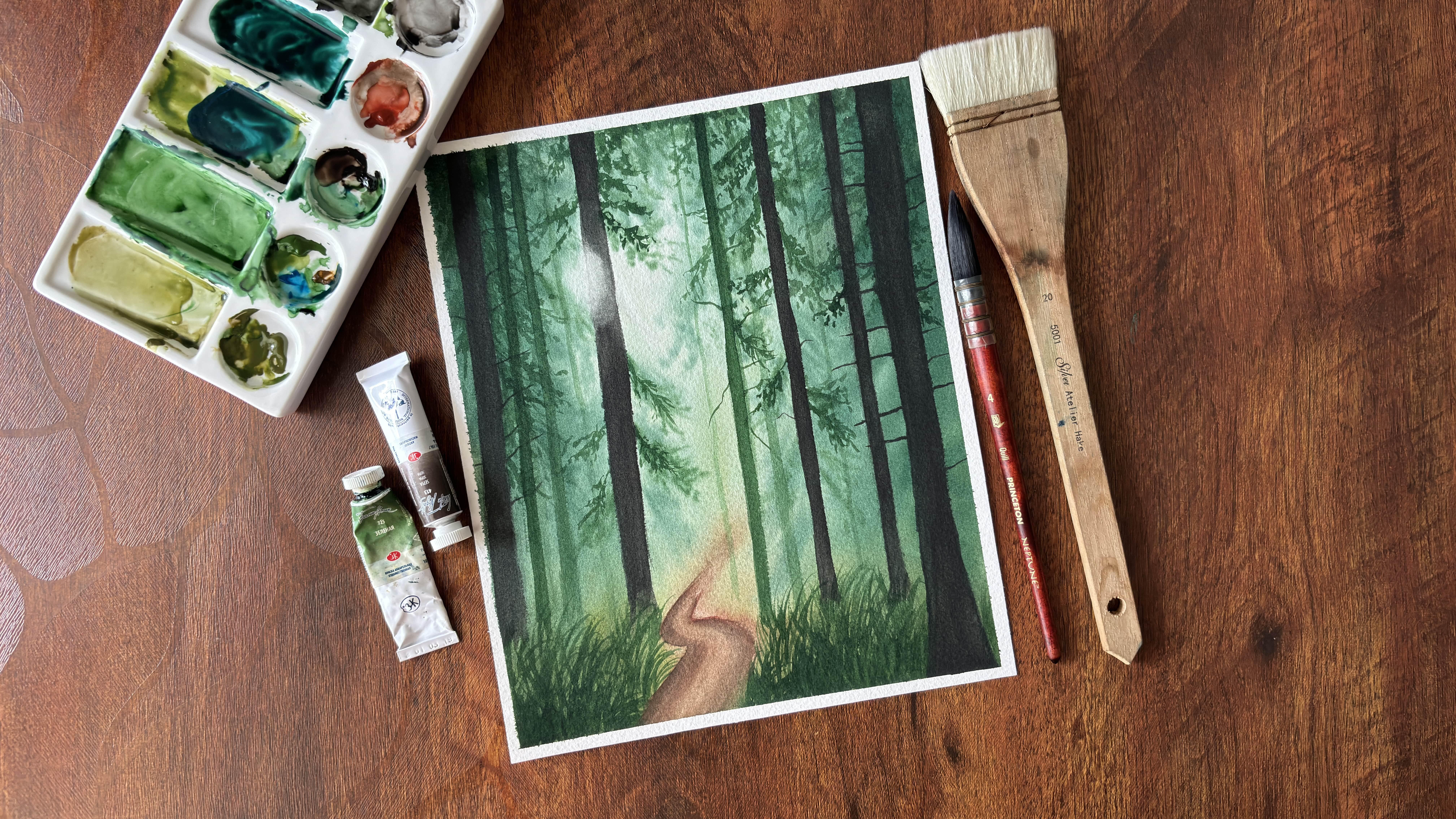
2. Art Supplies: All right, so let
us take a look at the art supplies that you will need for this
particular class. So first is the
watercolor paper, and I'm using 100%
cotton watercolor paper, which is of 300 GSM and
minimum thickness of 140 LB. So this paper is from the
brand Saunders Water food, but you can go with any
paper of your choice. But make sure it is
100% cotton, okay? Now, let us take a look at the brushes that you will need
for this particular class. So first is a larger
sized Haque brush, basically to apply
the larger washes. This is from the brand
silver black velvet, but you can go with any larger sized flat brush
that you have got. Next is this mob
brush from Princeton, and these are the basic brushes
from Silver black velvet, which is of size
12, eight, and six. So I would suggest you
can grab your brushes of different sizes and
keep it ready so that it'll be easy for you
while you're painting. And for the colors, I will be going with Shin
in and White Knights. So you can go with any brand
of colors that you have got. And for a detailed list of all the colors that
you will be needing for this particular
painting is being elaborately explained
in the colors section of this particular class. So you can go there and have
a look at that section. The next up is the palette. So I'm going with a
ceramic palette like this, but you can go with any of your normal palette or you can grab your
dinner plate as well. Then you'll need
two jars of water, one, which has to
stay always clean, and the ther is to wash off all the dirty
paint from your brush. Next up, you will
need a masking tape to tape down your paper onto the board so that
it can be firmly fixed. And next up you will
need is the cloth to wipe off the excess
amount of paint or water that is being collected onto
the edges of your paper, and you will need a board like this to fix the paper
onto the board, or you can go with a
hard book cover as well. So anything that's
available with you. And you'll also need a
pencil and an eraser to make the pencil
sketch, and that's it. These are the art supplies. Go grab them, and I'll see
you soon in the next section.
3. Let's take a look at the Colours: All right, so let
us take a look at the colors that you will need for this
particular painting. So we need very minimal colors, and let's take a look at them. So these colors are
basically a mix of white knights and shin hen. But you can go with any of your watercolor tubes or
pants or cakes and any brand. Doesn't matter, right? Okay. So the first color is I think this is the
green from white knights. And if you don't have this, you can go with any of your
darker shade of green. And if you don't have that,
take your light green, add a little bit of
paints gray to it, and you can create the shade. But I believe dark
green or sap green or just green is available
in all the sets. Alright? Yeah. So
the next color is, this is the Cerlean blue from
the brand white knights. Sorry, this is from
the brand Shinn. So we want to use this blue. So you can go with
your seran blue or you can go with any
of your light blue. So we are not going to
use this color more, but we are just going to add
a tint of this onto our mix of green and create a nice
variation of cooler green. The next color is sepia. You can go with sepia. If you don't have that,
mix a little bit of brown with your pinks gray and
create this dark brown shape. Okay, and next, you will
also need some olive green, so to add different tonal
values onto the bottom. As I said, bring out all the
greens from your palette, and you can go
with any of those. Just try to mix them and
then create your own magic. Alright, so to
create the pathway, I am using red ochre, and this is from the
brand shin hin again. So it's a nice, you know, nice, rusty brown kind of shade. And if you don't
have this, you can go with your normal
brown as well. It's absolutely fine. Okay? Unless and until it looks like a pathway,
that's absolutely fine. Next, you will also need
a little bit of black. I actually recommend
you to use Pains Grey. I was running out of Pains gray, and hence I had to go with black because there
was no other option. Okay, so if you don't
have Pains gray, absolutely fine, you can join me and use black. All right. So these are pretty much the
colors that you will need. So go, get them ready, and let's dive right
into the next section.
4. Pencil Sketch: Hello, and welcome
back. All right. So let us start with
the pencil sketch. I'm really excited to start this painting journey
along with you guys, and I hope you are
equally excited, as well. So the pencil sketch is
going to be really easy. We're just going to sketch
out the trees so that it'll be easier for us to paint it once we have the
background in place. All right. So now
positioning of the trees is absolutely dependent
upon how you want to do it. But if you want to
follow along with me, then you can just wait for me to completely finish
the pencil sketch, and then you can add
it for yourself. So now I'm starting
towards the left. I'm adding a large tree trunk. And, you know, I'll be
adding multiple trees. So in this process, if I feel like a
tree is not proper, I may go ahead and
erase a little bit. So excuse me for that. And that's the reason
I'm saying just wait for me to completely finish
adding the pencil sketch, and then you can add
it for yourself. All right, so see. This is a large tree trunk towards
the right hand side, and I'll be having a
couple of trees in different places and of
different shapes and sizes. Why different shapes and sizes? Because we want to get the
perspective of far and near. Okay? So the trees
which are nearer to us will be taller,
thicker and nicer. And the trees that
are far away from us will be very thin and, you know, to depict it as far away, it's
going to be thin. But actually, when you
go closer to that tree, it's going to look thicker. So that's the rule of perspective that we are
going to bring in over here. And yes, so you need not
add more number of trees. The reason why I'm saying this is because when you
add a lot of trees, then your background
gets covered. Your background will not be, you know, I'll just
go out of focus. We don't want that to happen. This painting is all
about misty forest. So we want to get that
misty forest glow along with the trees
in the foreground. Okay, so there should
be a proper balance between your background
and your foreground. Alright, so I will go ahead and continue with
my pencil sketch. It's really simple. There's nothing rocket science. You have to just organically
move your hands, create nice shapes
for your trees, and then you can
pause the video, or you can follow along with me. It's up to you. The way
you are comfortable, you can just go ahead with that. Alright, so yeah. Right. So this is the
final pencil sketch, and, you know, if you want
to do any adjustments, you can do it at
this point of time, and I will see you soon
in the next section. But
5. Wetting the paper: All right, so let us
start our painting. So the first step is to
wet the paper nicely. Since we are going to
work on the wet on wet, we want the paper to, you know, remain wet for a longer
duration of time. This way, we will have
enough amount of time to paint our background
nicely and calmly. Alright. So make
sure you're going with any kind of 300 GSM, minimum 100% cotton
watercolor paper. And this way, you
will have, you know, nice amount of time to work
on your wet on wet technique. Okay, so the details of the paper and the
paper that I'm using, everything has been explained
in the material section, so you can go ahead
and watch that. Alright, so you can see I am using my larger
sized hake brush. This is from silver
black velvet, but it's not necessary. You should also go
with the same brush. You can just go with any
flat brush that you have got any larger sized
round brush as well. You know, those
quill mop brushes, right, you can go
ahead and use that. So the reason why we use
larger sized brush is we can cover a maximum surface area of the paper in a
less amount of time. So if you go with
a smaller brush, every time you need
to pick the water, and, you know, again,
when you come back, one side of the paper
is already dry. So we don't want to have all these issues when
we are painting. We just want to get
relaxed and paint calmly. And that's why using the right tools is really important when you
start painting. So usually, you know, sometimes we get frustrated
when we are painting. It's not because we are not correct or our skills
are not right. Sometimes it's the tool. It's the paper,
it's the paint or it's the brush that's
causing the problem. So you need to, you know, find out the root cause, what is the problem actually, and then you can
begin your painting. I'm just going to go ahead, take my own sweet time
and wet the paper. Meanwhile, you can also go
ahead and prep your paper. All right. So now that
our paper is nicely wet, we are ready to
start our painting. So let us start by creating a nice mix of color
that we will be using. So first, on my palette, I am mixing a green
from white knights. You can go with any
green that you have got. Make sure it has to be a little darker and
not light green. Now to this green, I am
going to add little amounts of sepia and little
amounts of Cerlean blue. Now, you may ask why blue
forest does not be blue, right? But we're going to create an enchanting misty forest here. So we want to have that
little nice amount of bluish, cooler tones to our forest. Okay? We are not creating
a warmer forest, we are creating a cooler forest. So blue is a cooler color, and hence we are using that. All right, so it is not
going to be too much blue. The blue is a little
hint of blue. It's very tiny amount. Okay? So before you start
your main painting, I thoroughly insist you to swatch your colors onto
a scrap piece of paper, and then you can go ahead and
start your main painting. So prepping colors
is really important. So prep a nice amount of
color so that you can, straightaway, go ahead and use it onto your wet
on wet background. So if you run out of
colors in between, then there are chances
your paper might dry. So I don't want that
to happen to you. So you can prep
your colors well in advance and then you can
start your painting. All right. So now you can see a little paper has
started drying already. So with my brush, I'm just going ahead and
adding a little bit of water. Basically, I am trying
to rewet my paper. So you need to carefully
look at your paper, whether your paper has
already started drying, whether it needs to be rewetted, all these things
you need to keep in mind before you
start your painting.
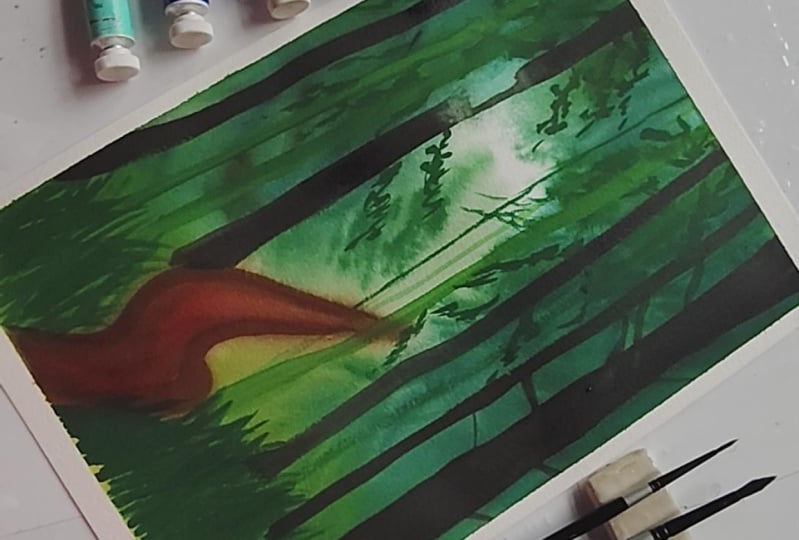
6. Background - Part 1: All right, so now let
us start painting. So first, I am going
with olive green. This is the base color, and this is the first color that we will be adding
onto our forest. So make sure go with a
very light tonal value. We need to start with
lighter color values, and then as we progress, we are going to
build the layers. Alright? So do not
go with higher or, you know, darker tonal
values. All right. So now you can see, I am just randomly going ahead and dropping
this olive green. There is no particular space, but usually I am focusing on the center and
towards the edges. So we want to have the sunlight
depicting in the center. So it means that the center
portion has to be retained. It has to be white
and light, right, and the edges have to
be darker so that, you know, it creates
a nice depth. So this is a very easy step. You have to just let go
of all the pressure, all the fear and just allow your colors to blend
freely on the paper. So let your colors
create a magic. Let it flow with the water
that is present on the paper. Do not try to control
anything and make sure you do not have lots
of water onto your brush. The paper is nicely already wet, so you should have a little
amount of water and paint. So while picking
up paint as well, just take it onto your
tip of your brush, and then you can slowly go ahead and release the
paint on the paper. So do not have a lot of
amount of paint or water. Alright, I am just repeating
these steps again and again so that you should not make any mistake once you
start your painting. So you can just wait for me to finish painting
the background, and then you can paint
it for yourself. I'm just trying to create
a rough background where we have some large pine
trees in the background, and I'm just trying to create a leafy structure so that once the background
is nicely dry, and when you add the
foreground trees, so once the final
painting is finished, it will appear as
though there are some trees far away
in the background, and on top of that, you
have some foreground trees. Alright, so now
you can see I have just created a base
layer, you can see. Now it's time to add a little bit of color
onto the bottom. Basically onto the
bottom, that is the land. We are going to
have a pathway in between and onto the sides where the tree
trunks are present, we need to have a ground, the ground is covered
with the grass. So we are just going
to create so again, for that purpose,
I'm using my green. It is green from, you know, I think
this is olive green. And I'm trying to mix different
greens from my palate. So I like to do this because I don't want
to use a single color. It should be a combination of different greens from
your palate, right? Alright, so now in the center, we will be adding the pathway. So the pathway is basically I'm going with a nice red ochre. This is a nice muddy tonal
value that I usually like to use for painting that pathway or basically
for the ground. But if you don't have this, you can go with any
brown from your palette, and, you know, you can
add a little bit of red or you can add a
little bit of orange. I think red makes it much
more good and brighter. So you can add a little
bit of red to your brown and create this nice
bright red ochre. So if you have red
ochre in your palette, then you can directly
go ahead with that. So again, for this red ochre, that is the base, but I want to create a nice brownish
shade for this. So again, I'm adding a
little bit of sepia to this red ochre and creating
a nice dark brown shade. So it's all about how you create you mix your
colors onto the paper. That will create that magic. So if you just go ahead with
one color, like I said, if you just go ahead with
green for that grass, it's really going to look flat. And if you just go
ahead with brown for your ground or the pathway, again, it's going to look flat, but if you want to
bring that depth, if you want to get
that perspective, then you have to mix
different tonal values, try out different
colors on your paper, and then you can go ahead
with your painting. All right. So now you can
just watch and then I'll explain the further
process. All right. So now, since we have created a nice base layer
for our forest, let us start building the
layers by adding more colors. So now, again, it's a
repetitive process. We are going to go ahead with the exact same colors
that we used earlier. Now I'm going with
my green mixture with that sepia and blue, and I'm trying to add
this onto the edges. So now it's going to be a slightly darker
shade compared to the first shade of
color that we added. So right now, your
background may be looking a little scary
or you may feel like, Oh, my God, what is happening? But trust me and
trust the process. As you progress further, it's going to get a lot better, and you will fall in
love with your painting. So now you can see I grabbed
a little bit of more color, and, you know, I'm
running out of my paint, so I'm just keeping the paint
prepped already so that, you know, later on, I can just
calmly go ahead and paint. So nicely mix your
colors onto the palette, and then you can add
it onto your paper. So make sure you are mixing
it nicely onto your palette. Otherwise, you're
going to create large spots onto your paper, which we do want to happen. Now you can see I am dropping the paint onto the
paper randomly. That is the first point,
but I'm also trying to create some leafy structures. You might have seen
those larger pine trees which have those nice
bushes or branches, whatever you want to call, those large Christmas tree trees. So I'm just trying to create those leafy structure in the background so that
once my paper dries, those leafy structures or those leafy patterns will depict as though there are
trees in the background. All right? This is a
very simple process. You can just watch me and
then paint it for yourself. All right. So now, let us start by adding deeper
tonal values onto the base. So you can go ahead
with darker tonal value of that same olive green
that you used earlier, or you can mix a little bit of olive green with your
dark green and add it. Now it's all about creating
those deeper values. So first, we went with
very light values, then we went with
medium tone values. Now we are creating that
deeper layer of color. So make sure are not just making a flat wash.
You have to just drop your paints organically and randomly and try to create
those leafy patterns. Do not forget this.
This is very important. Try to add those leafy patterns onto those tree trunks where
you have positioned them, or you can just go ahead
and randomly do it. But make sure you retain
that paper white in the middle because we want to depict the
sunlight over there. So now it's barely going to be the repetitive same process. I'm just going to keep ahead and go on building the layers, and you can follow
along with me. All right. So now
you can see how the painting is slowly
taking its shape. You can see that we have
added so many layers, and there's a lot more to go. So really, you need to have a
lot of patience to do this. And, you know, calmly, you're just going to
finish the painting. So now you can see
that, you know, the colors may feel like
it's going to be lighter, so we need to keep on adding
more and more layers. So you can see the pathway
that we added earlier. It's kind of losing its shape. So I'm going ahead and, you know, defining
the pathway again. So with a clean brush, I'm just creating, you know, cleaning that mid
of the pathway. We want to depict a nice
trail onto the forest. Okay? So these are all these small
little things that will make your painting look
really natural and realistic. Okay? All right. So again, it's going to be
barely the same process. We are going to keep on
adding more and more layers. Now, whatever you can
see on the painting, you will feel like it
is dark at this moment. But once it's going to dry, it's going to look really
flat and, you know, light. So we don't want that to happen. While our paper is still wet, we are going to make use of this time and paint the
beautiful background. So now, with even more
darker tonal value of that same green mixture
that we created earlier, I'm defining leaves onto those
spaces that are present. So basically, wherever you
have positioned your trees, you can go ahead and add on either side of those tree
trunks these kind of leaves. So instead of
randomly adding them, just try to look at your paper, try to search for the pencil sketch that
you have added and try to create those leaves kind of structure on either side
of those tree trunks. Again, it is very easy and
it is a random process. It's not like you are, you know, going to define the leaves
in a detailed manner. This is just to
depict that there are some leaves in the
background. All right. So you can just watch and
then create it for yourself. All right, so this is the first layer of background
that we have created. Now that the paper is still wet, we're going to add
few more layers and then we'll go ahead
with the background. I'll see you soon in
the next section.
7. Background - Part 2: All right. So now that
we have some time left, the paper is still a little wet. So I'm going to quickly go ahead and add a second layer
of the background. So if at all, your
paper has completely dried and if you wish to add another layer
of the background, then you need to wait for
the paper to completely dry, and then you need to rewet the paper and then
begin this process. Alright. Since my paper
is still slightly wet, I have still some more time, so I'm going to go ahead
and paint the second layer. So for the second layer, I'm just going to create those leaves as we did it
in the previous section. And this time, I'm going to
go ahead with a darker tone. Okay? So you can see, I'm just trying to
define those leaves on top of the previously
added leaves, right. It's going to be
repetitive process. So on either side
of the branches, we are just going to go
ahead and add these leaves. And if you feel like there are some empty areas
in your painting, then you can go
ahead and cover up those areas by
adding these leaves. And try not to add a lot of these leaves
because otherwise, you know, you will
have no space left. So we want every layout of the painting to be
visible nicely, right? So just try to be minimalistic. Okay, so I'll just quickly
go ahead and add this. So first, you can watch me and then you can paint
it for yourself. All right. So now you can see, I am just trying to add those leafy patterns
onto the top as well. It is very simple. I'm just pressing the tip
of my brush onto the paper and just
trying to create this random dot like patterns, just to depict there
are some leaves. But this time for
the second layer, we are going with a higher
intensity of the color. Okay? So just make sure you follow these tips
and tricks and, you know, make your painting
stand out. All right. So you can just go on
with this process, and if you're already satisfied with the way
it has turned out, then you can pause
or you can stop and you can go ahead
with the next section. So I'm just trying to create some effects of these leaves
onto the edges as well. So since I have the paper wet, I am still going ahead
with this process, but if your paper
is already dried, then you can stop and go with the next section. All right. So then I'll see you soon
in the next section.
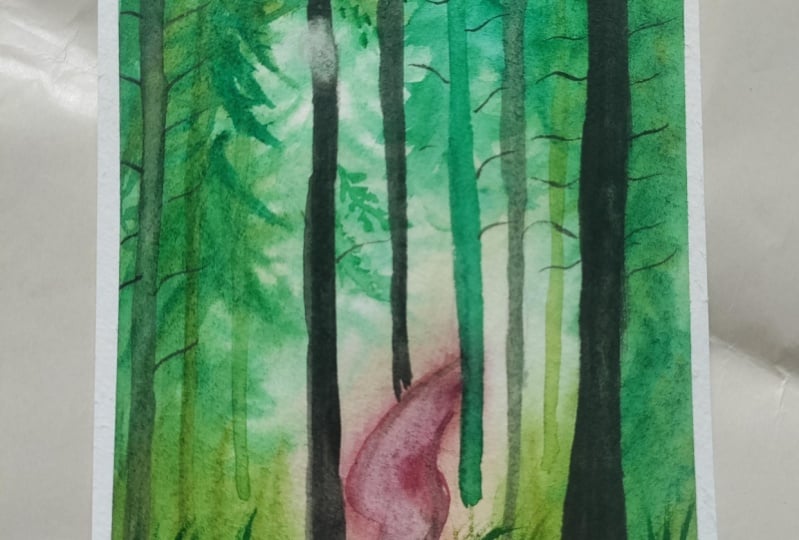
8. Painting the Trees: Do All right, so the background
has beautifully dried. So now we can start
painting the foreground. So you can paint the trees based upon the pencil sketch that
you have added earlier, and if the pencil
sketch is not visible, then no worries, you can follow along with me
and position the trees. Alright, so for
painting the trees, I will be using the lamp black, and this lamp black
is from the brand in, but you will also find it in the white knights
or any other set. So you can go with
any black that you have and if you would like, you would also go with
a little bit of sepia and paints gray and
create a nice shade. And you can go ahead
with that as well. So it's all about experimenting
with the colors, right? So I thought black would make the painting
stand out, and, you know, it would make
the trees look more, you know, brighter and nicer. So I'm just going
with this color. So you can see this is
the first tree that we had sketched and it is
closer to the viewer. And hence, it's
going to be bright, bold and thick and tall, right. So this is just going to be the simple process in the entire painting because you need not apply a
lot of brains or, you know, you just
need not focus much because you're
just going to fill out the color onto the shape of the tree that you
have already added. And at this point of time, if you want to adjust
the shape of the tree, like if you want to
make it a little thicker or if you want to
make it a little thinner or, you know, a little bit crooked, then this is the time you can do it with the help of your paint. So there's nothing
much to explain here. It's just, you know, you
enjoying the process and having a lot of patients
to paint the trees and, you know, just
enjoy the process. That's what I would like to see. And one more thing we are
going to take care here is all the trees are not going to be painted
with the same color. It's going to be a
little different. You remember the
rule of perspective. So the trees that are far
away from the viewer, they are going to appear
lighter and thinner. That means you're going
to paint them using a different color and
a lighter tonal value. So now you can see
the second tree that I have added just now, I did not go with black color. I just went ahead with the color that we used
for the background, and I added a lot of
water to that paint, made it a little
lighter tonal value, and then I added this on
top of the background. So this kind of gives
the rule of perspective. Now, if you look
at the painting, the tree that we added earlier, that is the black one, it is appearing closer
to the viewer. And the tree that I
have painted just now, that is behind the tree trunk
that we painted earlier. So I hope you're getting
this rule of perspective. So this is what we are trying to achieve in this painting. So if you go ahead and paint all the trees with
the same size, same shape, same color, then it's not going to
make any difference. It is just going
to look very flat, but we want to bring in
this rule of perspective we want to bring that natural
essence of the forest. And that's the
reason we have to go ahead and play with
different tonal values, different shapes,
different size, different positioning
of the trees. Everything makes the painting
beautiful and realistic. So you need to keep
all these factors in the mind before you
begin the painting. And that's the reason I said, pencil sketch is
really important here because later once you
start the painting, there should not be
a moment, you know, like where I need to
position my trees. Oh, my. This pressure
should not be there. So in order to, you know,
remove that pressure, I just told you to position the trees so that later on
when you start the painting, you can just straightaway go ahead and just fill
in the shapes. All right. So I think
I've explained a lot. Now, you can just wait
for me to finish, and then you can
follow along with me. Alright. So yeah. Alright, so I have
added few trees. Now, you remember
I told you that the center portion is
reserved for the sunlight, so I am creating
that right away. So, you know, with the
help of clean brush, you're just going
to lift off some of that black paint from the tree
and try to create the sun. So the sun is right
behind that tree. So half of the sun is behind that tree and half
is in the space. So we are just trying to create that bright sunlight
that is hitting the tree and the rays are
passing through the tree trunk. Okay? So from there, you are just going to
lift off the paint. So make sure while
lifting off the paint, each time you lift
off the paint, you need to clean your brush before you go with
the next lifting off. Okay? If you do not
clean your brush, you are going to
ruin the painting. I'm just reminding you this. Please make sure
you're going with a nice clean brush each time
you lift off the paint. So now you can see
we have created nice sun behind that tree, and, you know, everything
is looking beautiful. So so now, this is the reason I told you why the center
portion has to be white. And if you want,
you could go ahead and create some strokes. But please make sure
you lift off the paint, you dip it in the
water, clean the brush, and then go ahead with
the next one. All right. So yeah, you can just watch me and then do it for yourself. Alright, so now we have
finished adding the trees. So the next step is to add some twigs or some
branches onto these trees. So these are very delicate, and I suggest you to go ahead with your
smaller sized brush. And if you have a rigor brush, that is absolutely good because the rigor brush has
a nice thin pointed tip, and it allows you to add these thin delicate
lines or branches. But if you don't have,
that's completely fine, you can go with any of your other round brush like size number zero or
size number one. So you can see, I am
adding these little teeny, tiny branches onto either
side of the tree trunk. So now there is no
particular position where you need to place them. It's completely organic,
so you can just go ahead and place them
anywhere that you would like. And again, you need to
keep one thing in mind. They are not all of the
same size and same shape. So the size is going
to be the same. It is going to remain thin, but it's not going to be in the same place or it's not going to be
of the same length. That is what I am
trying to tell here. So it's going to be a
repetitive process, and we are not going to
add this onto every tree, but if you would like to, then if you have so much
of patience to do that. Then you can go ahead
and, you know, add it. Basically, it is
really therapeutic. I really enjoy
painting trees and, you know, I just get lost
when I'm painting them. So it's absolutely up to you. You can turn on some nice music, or if you are a podcast person, then you can turn
on a nice podcast and then dive into
this painting and, you know, paint those branches. All right, so we have finished adding those thin
delicate branches, and I'm absolutely
loving the painting. And yeah, there's
a lot more to go, so I'll see you soon
in the next section.
9. Painting the grass: Do All right. So now that the foreground
is also completely dried, now we can finally go
ahead and add the details. So for the details, I thought that the ground is
looking really flat. So I thought of adding few textures or some grassy
patterns onto the ground. So to add these grassy
patterns, it's really simple. Go with any of your
smaller sized brush to get those nice
thin, fine lines. And, you know, you can go
with green on your palette, which is already pre mixed for your different backgrounds
that you have used earlier. So you can go ahead with that. And, you know, if
you want to add a little darker tone
of this green shade, then you can mix a
little bit of sepia or wendy c brown or even
paints gray and, you know, make it
look a little darker. So it's very easy. I'm just moving my hand in
a particular direction, and, you know, it's not
like you need to add the grasses of the same
shape or size or anything. It's just random. Based
on your intuition, you can just go ahead and
place these grassy patterns. Okay? And the more the
grasses are closer to you, it should be very thick and, you know, it should be in depth. So those grasses should
appear a little dark. The compare to the grasses that are towards
the tree trunks, I mean, further away. Okay. So again, to maintain
the rule of perspective, you need to bring in this
depth in your painting. So I'm just going
to go ahead and paint these grasses
on either side. So the procedure is going
to remain the same. So you can just
wait and watch for me to complete this, and
then you can add it. Or if you're comfortable,
you can just go ahead and, you know paint along with me. All right. So now you can see the grasses have been
added on either side, but, you know, I feel like
watercolor dries lighter. You know, it starts
appearing to get a little lighter when it
starts getting dried. So I'm just going with the
second layer of green. And I'm focusing more on to the edges and
towards the bottom, because I want that
depth to be achieved. So you're not going to go ahead and paint in a
single tonal value. It is again going to make your
painting look really flat. So if you want to bring that
realism in your painting, then you need to vary
the tonal values. Keep in mind the
perspectives, and, you know, all these things
altogether put they make the painting look more beautiful than you even think. So even the simple subjects like painting a forest or, you know, simple green landscape, if you add a lot of details
and realmism, right, the painting will come to its life so it's not the
complexity of the subjects, but even the simpler
things may start looking beautiful when you take care of these small
little things. All right. So having said that, I'm really satisfied
with the way the painting has already
taken its shape, and I absolutely loved the background, the
misty background. And now by adding
these lush, green, grassy patterns, it's making the painting look even
more, you know, lively. So I think we are left with
some few final details, and I'll see you soon
in the next section.
10. Painting the pathway: Alright, so we are onto the last and the final
stage of the painting. So we are going to, you know, add that pathway, which we have already
added earlier, but after drying up, it has become a little lighter. So we are going to repaint it. Alright. So I'm just going
ahead with the same colors. So it is red ochre, and I'm using that color. But if you don't have
this, you can go ahead with your burnt sienna. And if you don't even
have burnt sienna, then you can take a
little bit of red. You can mix a little
bit of Wendi ke brown and create your own
sheet. Alright? So, yes. So you can see I started with a
darker tonal value onto the edges of the pathway, and I'm just trying to pull and push the paint
towards the center, and, you know, I'm
trying to create a smooth and soft blend. So again, if you just go ahead and paint the
pathway in a thick, bold color, it's not
going to look realistic. It's really going to look very flat, but we don't want that. We want to achieve that depth. We want to bring that realistic
look for our painting, and because of that, we are going to add a
little different strokes. So now you can see on the left and on the right
side of the pathway, the color is going
to be really dark. And on the middle, it's
as though, you know, someone has walked
over that pathway, and that gets a little lighter. So I hope you have seen
those pathways, right? So it's like a small
trail that is passing through the jungle or through
the enchanting woods. Alright. So one more thing I would like to
share with you guys is when I'm painting
such kind of landscapes, right, basically these
kind of greenery, misty landscapes, I
totally get lost. And whenever I'm preparing
the voiceover and when I'm trying to explain
the painting process, right? I really get lost, and I really feel like
I'm a mist the landscape, and I'm sitting there, you know, and trying to bring back
those memories of painting. So yeah, I really thoroughly
enjoy the process, and I hope you guys are enjoying the process and your
painting as well. All right, so I'm just
going to go ahead and add finish all
these details. But if you are already
happy with your painting, then you can completely stop. You can sit back and relax and watch me painting.
Alright? Okay. All right. So this is how
the pathway is looking. So just with a nice
clean, damp brush, I'm just trying to lift
off the paint from the middle to make it look
more natural and realistic. All right. So if you have
already painted your pathway, and if you're already happy with the way your painting
has taken its shape, we'll see you soon in
the next section where I will be revealing you
the final painting.
11. Thank You: All right. So the painting
is completely dried, and we can go ahead and
peel off the masking tape. Alright, so I completely
loved the painting process, and I'm in love with the
painting that we have created. And I hope you are in love
with your painting, as well. I highly encourage you to post your beautiful creations in the class project section
of this particular class, and I also encourage you to leave a constructive review or a feedback so that it will help me to improve my future classes. And you can also provide
me some suggestions. And if you want to post
this on Instagram, do tag me using my Instagram
handle my pain story, and I would be sharing your beautiful creations with everyone else out
there on the platform. Alright, so that's it for
this particular class. I just entirely love this class, and I have nothing else to say apart from staring this
beautiful painting. Alright, so see you soon
in the upcoming classes. Until then, bye bye. Take care and happy painting.
 Aishwarya Shetty, my__paint___story | Watercolour Artist