Master Bread Shaping: 3 Techniques to Shape a Perfect Batard (Even with High-Hydration Dough) | Vincent Baker | Skillshare

Playback Speed


1.0x


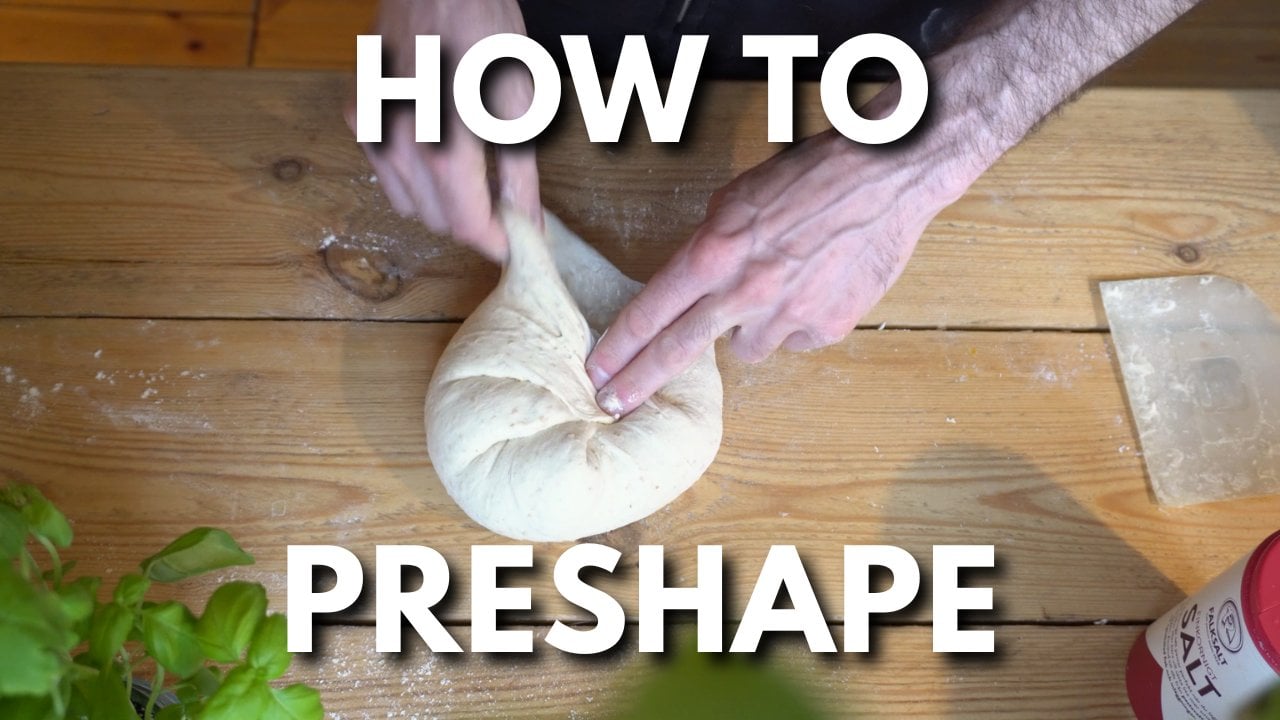
  • 0.5x
  • 0.75x
  • 1x (Normal)
  • 1.25x
  • 1.5x
  • 1.75x
  • 2x

Master Bread Shaping: 3 Techniques to Shape a Perfect Batard (Even with High-Hydration Dough)

teacher avatar Vincent Baker, Artisan Baker & Home Bakery Mentor

Watch this class and thousands more

Get unlimited access to every class
Taught by industry leaders & working professionals
Topics include illustration, design, photography, and more

Watch this class and thousands more

Get unlimited access to every class
Taught by industry leaders & working professionals
Topics include illustration, design, photography, and more

Lessons in This Class

    • 1.

      1 Shaping Intro

      0:41

    • 2.

      2 First step preparation

      0:36

    • 3.

      3 academic shaping

      2:59

    • 4.

      4 Normal speed shaping

      0:35

    • 5.

      5 Insta shaping

      2:26

    • 6.

      6 Pro shaping

      1:13

    • 7.

      7 Final explanations

      1:09

  • --
  • Beginner level
  • Intermediate level
  • Advanced level
  • All levels

Community Generated

The level is determined by a majority opinion of students who have reviewed this class. The teacher's recommendation is shown until at least 5 student responses are collected.

1

Student

--

Projects

About This Class

Learn how to shape a clean, structured batard—even when working with high-hydration dough.

In this class, you’ll discover three distinct shaping techniques, each designed for a different goal:

  • Academic Shaping
    A structured, step-by-step method inspired by traditional baking schools. Perfect for building strong fundamentals and understanding proper hand movements.
  • Professional Shaping
    A faster, more efficient technique used in bakeries. Ideal for handling soft, sticky dough while maintaining control and creating strong surface tension.
  • “Instagram” Shaping
    A more visual and aesthetic approach. Smooth, tight, and camera-ready—perfect for bakers who want visually striking loaves.

What you’ll learn:

  • How to handle high-hydration dough without sticking or tearing
  • How to build proper surface tension
  • How to fold, roll, and seal a batard correctly
  • The key differences between academic, professional, and visual styles
  • When to use each technique depending on your dough and your goals

This class is ideal for home bakers who want to improve their shaping skills and gain confidence working with softer doughs.

Meet Your Teacher

Teacher Profile Image

Vincent Baker

Artisan Baker & Home Bakery Mentor

Teacher

Professional baker since 2009, I have worked across the full spectrum of baking: small artisan bakeries, large-scale industrial production, and my own successful home bakery. My journey has taken me to multiple countries, allowing me to experience different baking cultures, techniques, and business models.

Over the years, I have trained and advised bakers around the world, helping them improve their skills, understand bread fundamentals, and gain confidence in their craft. Today, my goal is to share this real-world experience with home bakers who want to master high-quality products at home--or take their first steps toward building their own baking business.

This course is built on practical knowledge, clear explanations, and techniques that actually work in a home kitche... See full profile

Level: All Levels

Class Ratings

Expectations Met?
    Exceeded!
  • 0%
  • Yes
  • 0%
  • Somewhat
  • 0%
  • Not really
  • 0%

Why Join Skillshare?

Take award-winning Skillshare Original Classes

Each class has short lessons, hands-on projects

Your membership supports Skillshare teachers

Learn From Anywhere

Take classes on the go with the Skillshare app. Stream or download to watch on the plane, the subway, or wherever you learn best.

Transcripts

1. 1 Shaping Intro: Hi, everyone, and welcome for this new video. And in today's video, we're going to learn how to shape loves, okay? Not baguette, not round, but loves, what we call in French also bata. So we're going to see the whole process. I'm going to show you the main type of shaping, and I'm going to tell you everything about it. And then we should be able to master your shaping. By the way, I'm the French baker, professional baker for more than 15 years. Now, I worked in many different countries in the world. Now I'm doing consulting and also helping professionals and also amateur and new passionate who want to learn more about bakeries. So welcome and happy to see you on this video. And now let's dive into the lesson. 2. 2 First step preparation: Okay, so now we're going to shape it. My dough was facing the other way, so I flip it over, okay? Just before shaping, I flip it over. We're going to use a little bit of flour, and we're going to do what's called dusting, which means sprinkling some flour on top, and there you go, just to prevent the dough from sticking too much. We avoid using too much flour, obviously. And we're going to start with the traditional shaping. The shaping we learn at baking school in France. So you have your dough flipped over, 3. 3 academic shaping: To start by stretching it out a little bit, making it into a slightly oval shape, okay? Because if we start shaping and folding it, when it's to round, it's going to widen unless you want to make baguettes, then it's fine. But there we want to make bata. What we call Bar is relatively large love. For the shaping, the goal is to tighten the dough on itself to the gas a little. The gas already mostly gone since I handle it just before. Now the shaping will consist of folding the dough over itself. Of course, you can have your own technique. You can fold the top, then the bottom, then the top again, and finally finish by folding. Both sides together, okay? We're going to do it the way we learn in school. And as I think it's the most efficient and practical. We'll start by taking the top in our hands, folding it over. Normally, everything sticks. There's no problem. Then we take the top part and fold it again. And at the same time, if you like, the movement will be to do this and push so that it simply sticks. So we take it and we fold it back. We also bring the sides a little bit towards the middle to prevent it from getting too long. And we do the same thing again. We take it here and push. Now you have two options. Either you want to make something a little longer, in which case, you shape it in half and extend it. Or you do what you want, or as in my case, I want to put in metal mold. So I want it a little more compact. And in that case, I'm going to bring the side to the left side, a little more towards the center, the right side, a little more toward the center as well to make something smaller because I'm going to shape it in this direction. So you'll see now we're here. I bring top back to the middle again. We've done the bulk of the work. I add a little bit more flour. Now we want to finish shaping by taking the top part with our hand. So we take the bottom and our thumb will act a lever. So we'll take doodle like this, put our thumb here, and that will allow us to fold it with our other hand, the palm of our hand, and press here. There you go. We simply press. And there you have your butter with the key on the bottom. Okay, we can make it a little bit better, make it nicer shape, and there you go. Now, I do want to point out that the longer we take to shape it, the more the door relaxes and loosens, okay? And the longer we hold the dog, the stickier it will be. So if you go quickly, you shouldn't have any problem. Here, we're taking our time. So the door relaxes and it's a little softer, let's say, okay? 4. 4 Normal speed shaping: Going to show you with the second piece of dough and you'll see the difference in the structure of the dough when I shape it at normal speed using the traditional method. And it already holds its shape a little bit better. So we're on to something a little better. The strength is still there, and we've added a little bit more. Now I'm adding a little bit more flour. 5. 5 Insta shaping: Going to do what I call the Instagram shaping. I call it Instagram shaping because on Instagram, you'll see all the micro baakers, all the home bakers doing this shaping. It's not shaping techniques you use in a professional setting, simply because it takes far too long. And I will show you how quickly it takes with the last loaf double to shape at normal speed in a professional environment. When you have a lot of product to shape, okay? Because, yes, when you have a lot to do, you really have to be efficient. You'll see that if you do the Instagram shaping, it will take you forever and you won't finish your day. So the Instagram shaping is great for Instagram. When you don't have a lot of product to shape. Because, of course, it will also depend on the place where you work at. If you have 50 loves to make every morning, this is totally right. But if you have 500 or 1,000 to make, this is completely different story. So the technique, we take the top, we're going to bring it down to about three quarters, a little bit more than three quarters. For Intagram, it's very visual. So you can see it very well. Then we're going to bring the left to the middle, the right to the middle, and there you go. When you take the left again, the right to the middle, you see it's very nice, very visual, very pretty. And we take the left to the middle, the right to the middle. You take the bottom, you can pull. You bring it back to this part, the top part, and you can do it the other way around. It's up to you. And there you've done the hardest part. And you see it's holding up. We're going to put it again here. And you know, there are several techniques, actually, but we already brought it back. So we can see the door is holding up very well. So some people will turn it over like this and close the seam like this. Other people will do it like this, tight the seam here, and we're going to do a mix, just to say that we're going to take it from this part because if I take from that part, we're going to stretch a little. And I don't really want that for my mold. So I'm going to take it from this part, and I'm just going to fold it in the middle. There it is. Then we're going to finish with this part here, and I just gently roll it on itself. Which we're simply going to push. You push, you push the key ends, so it close, and it's ready for proving and you have the Instagram shaping, which is very visual, very nice, but it's relatively time consuming. And here you put in your mold just like that. We'll add a little bit more flour here. 6. 6 Pro shaping: Now I'm going to show you a professional shaping at real speed. I mean, I've worked in many places where sometimes we had 500 loaves to shape, okay? So if you do the Henzagram shaping, you're not finished yet. So the last one, I hope this will work relatively well because it's a bit of a mess. It moves. I'll take the dough, turn it over, roll it directly with my hand starting from the bottom as if we were making a roll and tighten it from the top. Some people roll and tighten it from the top, other roll it from the bottom. It depends. It's up to you, but it's a quick technique you can do in a professional setting. Just watch closely. It's very easy, and it doesn't have too much of an impact on the final result. Are you ready? Here we go. So first, I take the dough, of course, I just flip it over. As usual, I do the shaping at real speed. And there you go. So it's moved a little, okay? It's not very comfortable because that board, it's moving, but you've got the shaping of a battle loaf at a professional speed. It might look hard to do, but with experience, you will do it very easily. It takes 3 seconds. 7. 7 Final explanations: See, I've made my follows, which are ready for baking tomorrow. So now they're relaxing a little. You can see the first, the second, third, and fourth. The last one has a bit more tighten. Of course, it's the last one I made. But by touching it, you can feel that it's already expanding. You can feel that the more you touch it, the more strength you feel. But you see, these two have quite a bit of strength compared to the first two because those ones took some time to explain it to you. So the final result might be visually noticeable. In any case, it will be fine. I'll see tomorrow. I won't put it in video, but there you have it, the shaping of large loves, which we simply call Bata. So if you want to make Baggett bull Mish, we'll do that next time. That will be in another video. This video is relatively short. We're not going to drag it out. It's relatively simple. So subscribe and we'll make the other type of shaping next time. Baggett, bolls mainly that. We're not going to do anything too complicated for this video, so thank you for watching. Hope you like it and see you next time. How. And don't forget to check the other technical video.