Transcripts
1. Focaccia Introduction: Everyone, and welcome
for this new recipe. I'm the French baker. I'm a professional baker for
pretty much 18 years now, and today we're going to review the recipe
of the focaccia. We're going to make it together
from the beginning till the end and explaining
every step properly. So to start this recipe, you need to check the
equipment that you need. This is going to
be a fucaca not on serodo but this is going
to be a fucaca on yeast. Yeast is a natural thing, also. There's nothing wrong
with the yeast.
2. Ingredients: Recipe, you will need
some white bread flour, one kilo. Be careful. Don't check the numbers on the video because it might be a different number
because for work, I made a much bigger patch, you're going to
have water 725 gram for the water and
its temperature. Check the video how to calculate the temperature
that you need. Otherwise, to make it a
bit more simple for you, if you in winter, you can take water at about 25, 30 degrees. If you in summer,
you can take water at ten degrees.
Would be quite okay. Then you need some salt. For salt, you're going
to take 20 gram. Yeast, you're going to take
seven gram of fresh yeast. One day before,
you're going to make the biga and you're
going to need 250 gram. The biga it's another
process that is done very often in some pizza do,
focaccia, Italian bread. So it's just a mixing of
flour and water and yeast, and it's just very roughly
mixing that you do, and you leave it to rest for the whole night or 24 hours
before making your recipe. And this process in this type of dough is going to give you
a little bit more flavor, more ferment, and
it should give you a dough with much
more holes inside. And you will often see
like the pizza dough, they pretty much most of the
time do it with the bigger. And then at the end of mixing, you will add some olive oil. Of course, you will need
85 gram of olive oil. Try to get some good olive oil. It just going to change
everything for your recipe. And then for the topping
of your focaccia, you're free to put
whatever you want. I like to put inside
some herbs like tha rosemary, olives,
dry tomatoes. You can put some cheese,
you can put some greens, you can put everything
as possible. So it depends on your taste. So at the beginning
of the recipe, I recommend you to weigh
all ingredients separately. Like this, you're going to
make sure you don't make any mistake and you
don't forget anything.
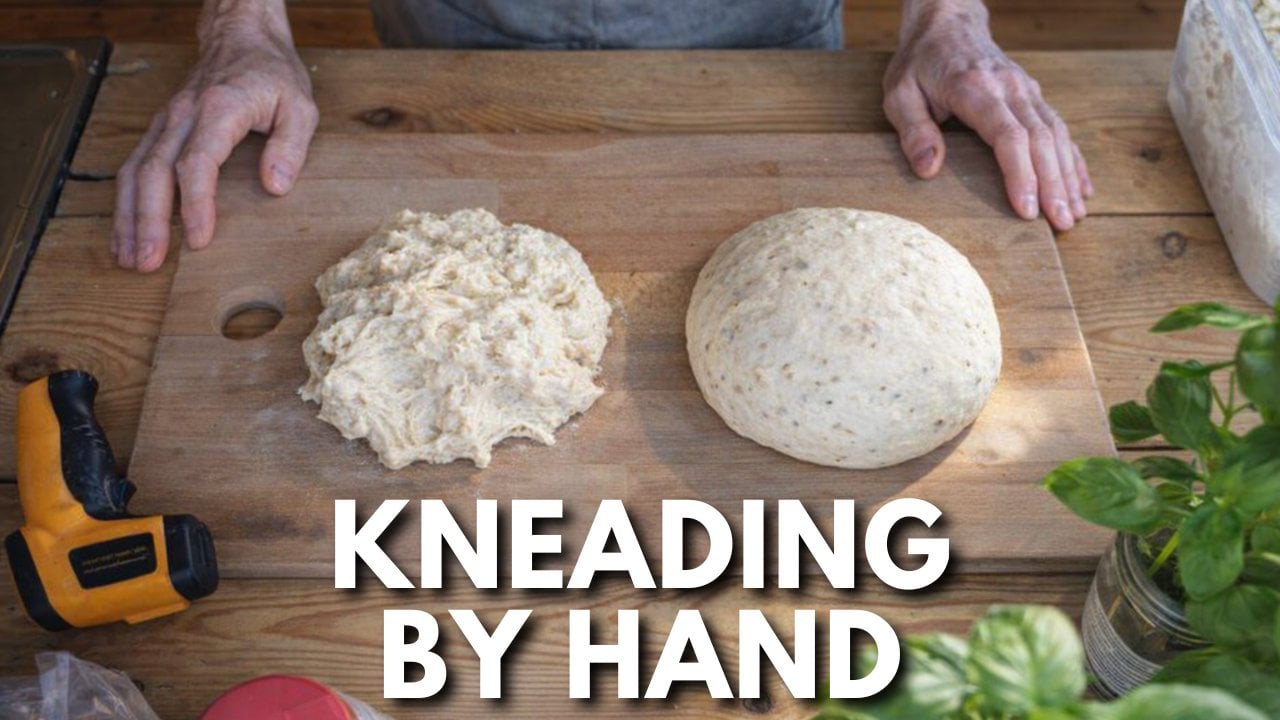
3. Kneading: You pour the water in
the bowl of your mixer. I recommend you to put the
water first all the time because sometimes when you put the flour first in your mixer
and then you put water, it depends on the mixer, really, but sometimes you
can have some piece of dough that's still in the bottom and that's
never going to mix together with the
rest of the dough. So it can be a
problem. And when you pour the water first,
it doesn't happen. You put all the ingredients, the flour, yeast,
salt, ga together. And for this,
you're going to mix pretty much foamint
in the first seed. That means in a slow speed. And once it's mixed properly, you're going to go
to the fast speed with a mixer. So second speed. If you have a kitchenette,
maybe it's five, six, something like this, if you have a kitchenette,
don't put a ten. Otherwise, it's far too fast. So the focaccia is
very particular because it's a very soft dough. So when you're going to start
mixing in second speed, it's going to take a long, long time to mix
properly your dough. And depending on the
gluten of your flour, also, it can take even
more time or less. Half mixing of your dough, pretty much in second speed, you can add the herbs if you want to put some
herbs in your recipe. Like this is going
to spread everywhere and give a little
bit extra flavor. Then you can add the oil. But here, there are two schools, I would say, for the focaccia. First school, you
can put the oil like I do before it's
finished to mix, and it's going to finish
mixing with the oil, and some people wait until
the dough is properly mixed, and then they add the oil. So you need to try and you
will see the difference. Me at work, I put oil before just to gain a little bit
of time on my recipe. And then you keep mixing in second speed until your
dough is beautiful, smooth, it doesn't stick
anywhere into the bowl. Make sure your though it doesn't get higher than 28 degrees. It can be problematic otherwise, 28, in general, it's
quite a lot in bakery. For this focaccia,
for this recipe, direct recipe, it's alright. The mixing is quite long for the focaccia, so
it might happen. But try not to get more than 28.
4. Bulk fermentation: My mixing is finished,
I like to take out my dough from the bowl with
a scrapper and some water. I don't use the flour
everywhere because it's dirty. So I just take out my dough. I put it in the container. Of course, I check
the gluten network. I explain how to do and what is it in mini
Video, so you can
5. Topping preparation: My mixing is finished, I like to take out my dough from the bowl with a scrapper
and some water. I don't use the flour
everywhere because it's dirty. So I just take out my dough. I put it in the container. Of course, I check
the gluten network. I explain how to do and
what is it in many video. So you can check also
the other videos. Then I close the lid
of the container, and I leave it for
rest of 1 hour. During this time,
you can do your prep for the topping you want
to put on the focaccia. So me, there is
some black olives, green olive, dried tomatoes,
and capers capers. Don't hesitate to put
a lot of topping. You can put the topping
inside the dough. It's always better
with a lot of topping. So 30 minutes later, I'm going to give first stretch
and fold to this dough.
6. Stretch & fold: And as you can see, the dough is already a little bit
bigger with some bubbles. Water your hand and
stretch and fold. If you don't put
water on your hand, it's going to stick everywhere, and you're going to
have some dough, and it's not going
to be nice to do. So as you can see, stretch and fold and look at this
beautiful dough. You can see there's lots of strength, and it's very smooth. That's exactly what we want. You leave it for
another half an hour. You're going to give another
quick stretch and fold. And you're going to prepare the tray where you're going to put your foca cha for baking directly that you can use
the tray from your oven, probably, you know,
the black tray, which is this size. You put some baking
paper on the bottom, and you put some olive oil
pretty much everywhere. You're gonna stretch
and fold your dough, and then you're going to
put it on top of your tray, and then you're going
to put it to prove. And to prove efficiently, I'm going to give this
tip, which is for udemi.
7. TIP Proofing: The best thing to do
is you take your tray, once you put the dough, you put it in your oven, and then you're
going to boil some hot water, like, very warm. And then you're going to put
a bowl full of boiled water. You put it into the
oven with your dough, but you don't turn on your oven. You just leave the boiled
water in your dough and it's going to prove by itself
with the right humidity.
8. Baking preparation: Pretty much 50 minutes later, 1 hour, maybe a little bit more. It depends how it proved.
It has to double up inside. And when it's much, much bigger, you're ready to take
out your dough and then process to make the
focaccia before baking. So at this point, what I do I just spread the oil everywhere
on the baking paper, and then you can just
stretch your dough everywhere on each
corner of your tray. It's very simple to do. Don't need to be too gentle.
The dough is strong. You just spread it each corner, like to make a beautiful square, at least the shape of your tray. Don't forget to
use a lot of oil. Otherwise, it's going
to be very sticky. Then after this, it's the time where you want to put the
topping of your focater. As you can see, I put
everything evenly, and then I put my red
onions everywhere. You can also put
some big grain of salt on the top.
It's quite nice. So you stretch your dough
to the size of your tray, and you put the topping. And you're going to
put it to prove again for pretty much half an hour, 1 hour, it will
depend on your dough. You need to check regularly, but do the exact same way I told you just
before to prove it. And after 30 minutes, you start to check
it to see how it.
9. Baking: So after sorry minute, your dough is going
to double up again. It's going to be very fluffy. And then you're going to make
with your finger like this, you're going to make
some holes inside. Very simply, you just push. You just push into the dough
and you just press it. That's all. You can put also some extra olive oil
everywhere, of course. The more olive oil there is,
the better it's gonna be. Olive oil is the key of the
focaccia recipe, really. So if you don't put olive oil, if you use another type of oil, it is not going to be a focacc. You're going to preheat
your oven at 2:35 degrees without fun with the heat on the top
and the bottom. Here, it's a professional oven, of course, so it's different. But for the focaccia,
you use your home oven, so you put your
focaccia into the oven, and do not forget to humidify your focaccia
and your oven inside. This video, I'm going to give
you the basic technique. You take another tray, you put it on the
bottom of your oven, and then you're going
to put your focaccia in the middle and you pour some
water into the bottom tray. You close your oven, and
it's ready for baking. Like this, the tray is going
to warm and it's going to make some humidity
inside your oven. And you should have
something like this. The focaccia start to make some bubbles everywhere.
It's going to be beautiful. Putting much 25 minutes, you need to check from
20 minutes just in case, and then you should
take it out when it's discolor or maybe more baked,
if that's what you want. One other very important
thing to do after baking, we don't see in this video. You need to pour
again some oil on the dough while it's
warm, very important. So as soon as you take
out from the oven, you put some olive oil a
little bit everywhere. Don't need to put one liter, of course, but you
pour some oil. It's gonna be
absorbed by the dough and mama mia. It's
gonna be delicious.
10. So: Then after this, you
can cut your focaccia, and you should have beautiful
focaccia very soft with big holes and lots
of lots of flavor. That's something you
can do on Sunday, that's something you can
do anytime, actually. But yeah, you're going
to make your family and your friends very
happy with this because this is really
something delicious. So thank you very much
for watching this video. This recipe is
quite simple to do, so you can make it
very easily at home. I'm very happy and
pleased to help you making a beautiful focaccia. Hope you will make
your family and friends happy and try
the other recipe. You might be surprised. There
are some really good stuff. Thank you very
much for watching. See you in the next one. Chow.
 Vincent Baker, Artisan Baker & Home Bakery Mentor